Middletown's #1 Tree Expert Company
FREE Inspection & Estimate | Certified Arborists | Trimming, Pruning, Removal, More!
Sponsored
The Hole in the Trunk Is Not the Verdict
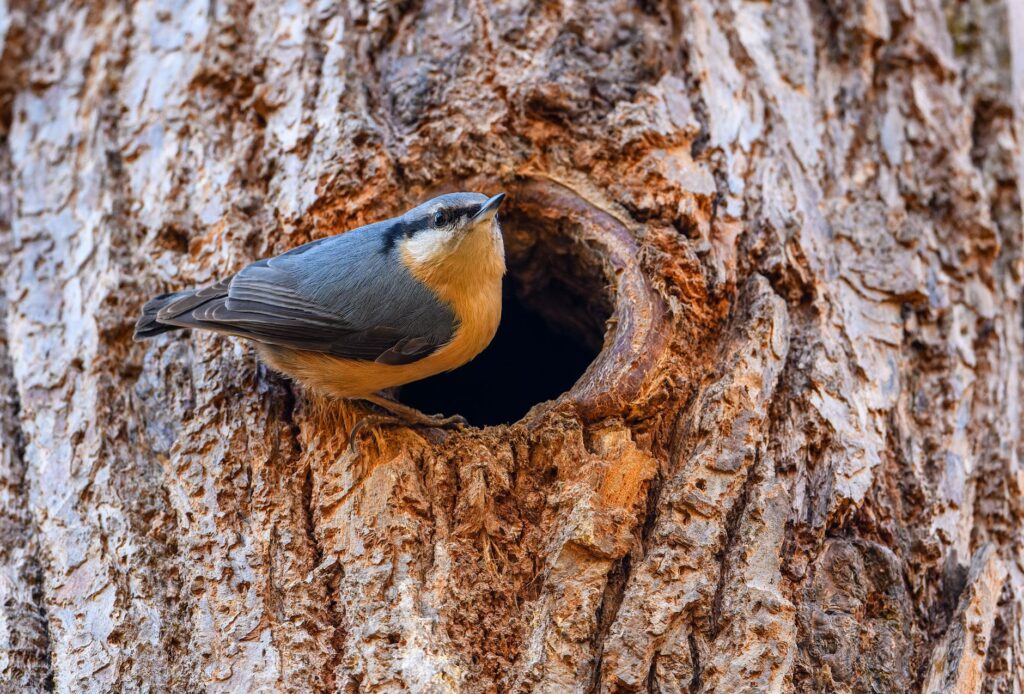
Sooner or later every Middletown homeowner with a mature tree finds the hole. It might be a dark oval on the trunk of a red maple (Acer rubrum) in Lincroft, a seam in an old black locust along a Port Monmouth fence line, or a ragged opening where a big limb tore off years ago. The first reaction is almost always the same: that tree is finished and it has to come down before it hits the house.
After years of looking into these openings, I can tell you the answer is usually more interesting than that. A cavity tells you that decay has happened. It does not, by itself, tell you how much sound wood is left or whether the tree is about to fail. Those are two very different questions, and getting them confused costs people healthy trees on one side and costs them a roof on the other.
This article walks through how a hollow forms, what actually decides whether a hollow tree stays standing, which warning signs matter on the Bayshore, and when a cavity is an asset rather than a liability.
How a Tree Ends Up Hollow
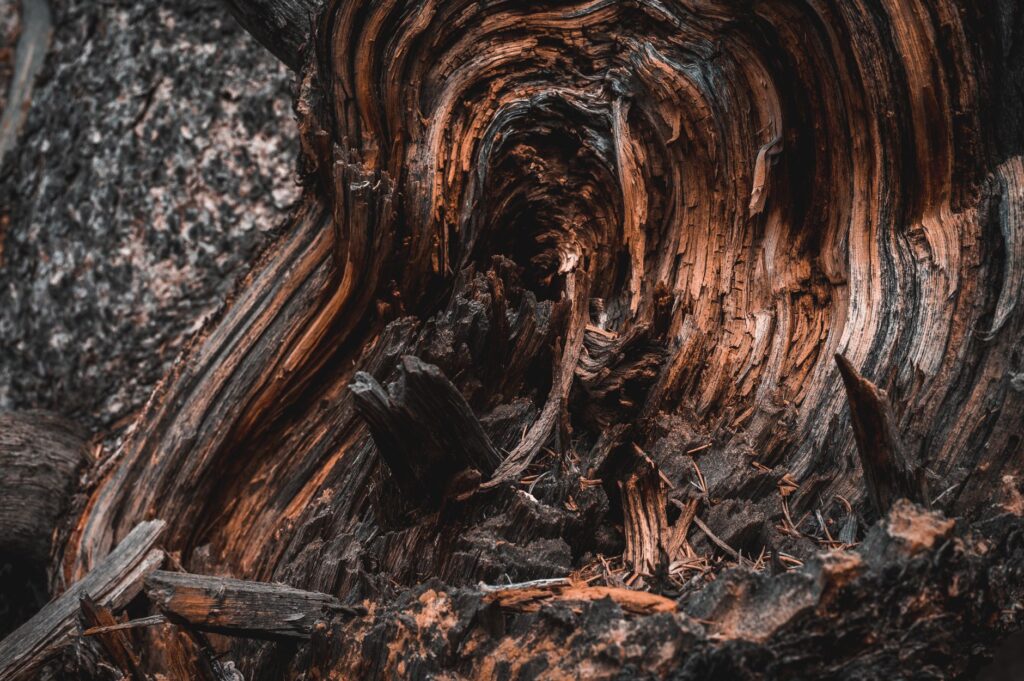
Trees do not heal wounds the way we do. They wall them off. When a limb breaks, a branch is pruned badly, or a mower and a trencher scrape the bark, the tree seals the damaged zone with chemically defended wood and keeps growing around it. If the wound is small and the tree is vigorous, the barrier holds and the wound closes over. If the wound is large, repeated, or opens a path for fungi, the decay organisms can move through the old heartwood at the center of the trunk faster than the tree can wall them off.
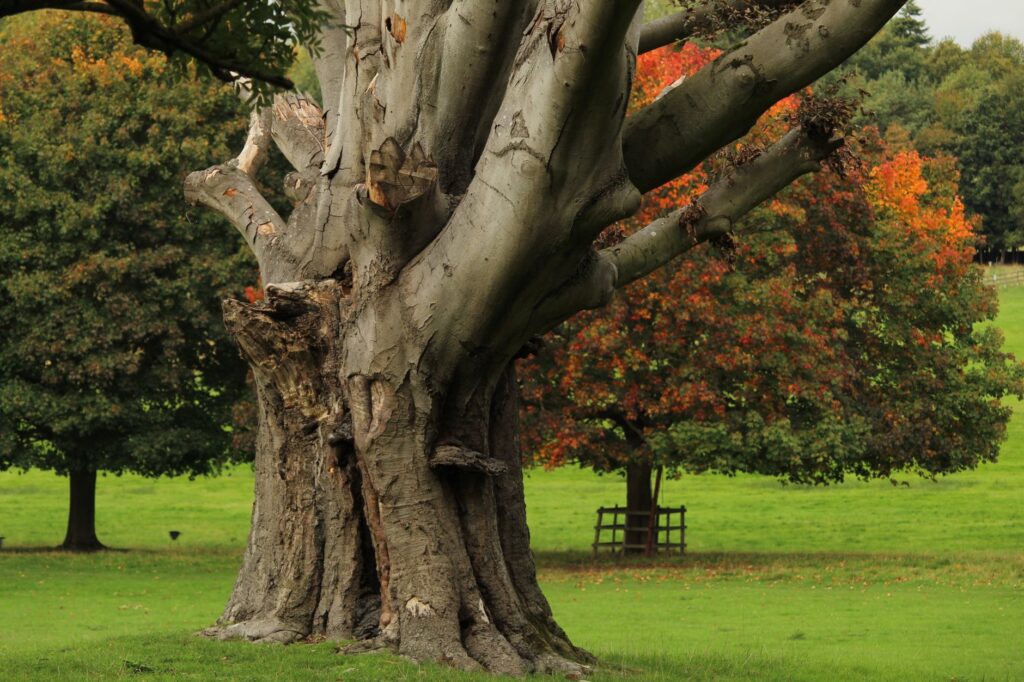
Here is the part that surprises people. The living, working tissue of a tree is a thin layer just under the bark. The heartwood in the middle is largely structural, and a tree can lose a good portion of it and keep growing for decades. That is why you see centuries-old oaks and sycamores with openings you could stand a child in, still leafing out every May.
On the Raritan Bayshore, the usual starting points are old storm tears from nor’easters, topping cuts made by a previous owner, and root damage from driveway or utility trenching. Sandy, wind-exposed sites also mean limbs get twisted and split more often than they would in a sheltered woodlot, which gives decay more doors to walk through.
What Actually Decides Whether It Stands
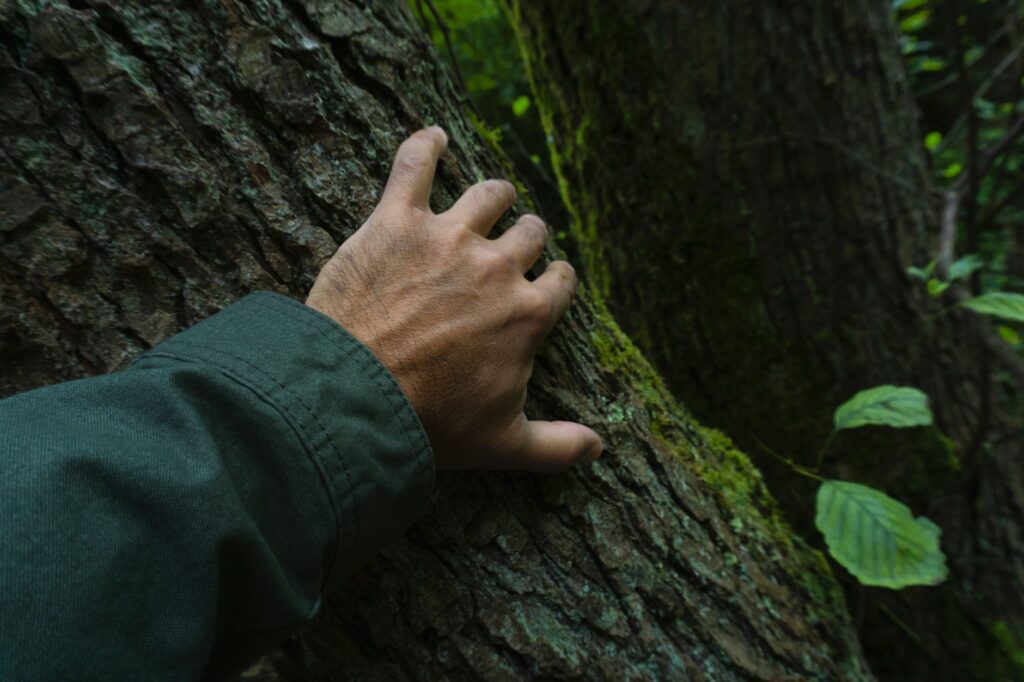
The question that matters is not how big the hole is. It is how much sound wood remains, and where it sits. A trunk is a lot like a steel pipe: a hollow tube can be remarkably strong in bending, but only if the wall is thick enough, evenly distributed, and free of cracks. An opening on one side that removes a big fraction of the wall is a much bigger problem than a small hole in a thick, intact cylinder.
Arborists weigh several things together. They look at the thickness of the remaining wall compared with the trunk diameter, the location of the cavity on the stem, whether the opening faces the prevailing wind, whether there are cracks running from the opening up or down the trunk, and how the crown is shaped. A heavy, wind-catching crown on top of a weakened stem is a very different picture from a modest crown on the same trunk. The International Society of Arboriculture’s homeowner pages on tree risk management explain that risk comes from the combination of the tree’s likelihood of failure and what is underneath it if it does.
That second half matters. A hollow oak at the back of a half-acre lot, nowhere near a structure, is a low-consequence tree. The same tree leaning over a bedroom, a driveway or the school bus stop is not. Many Middletown lots are small enough that nearly every large tree has a target, so the bar for taking a cavity seriously is lower here than on a rural property.
Middletown's #1 Tree Expert Company
FREE Inspection & Estimate | Certified Arborists | Trimming, Pruning, Removal, More!
Sponsored
Warning Signs That Change the Conversation
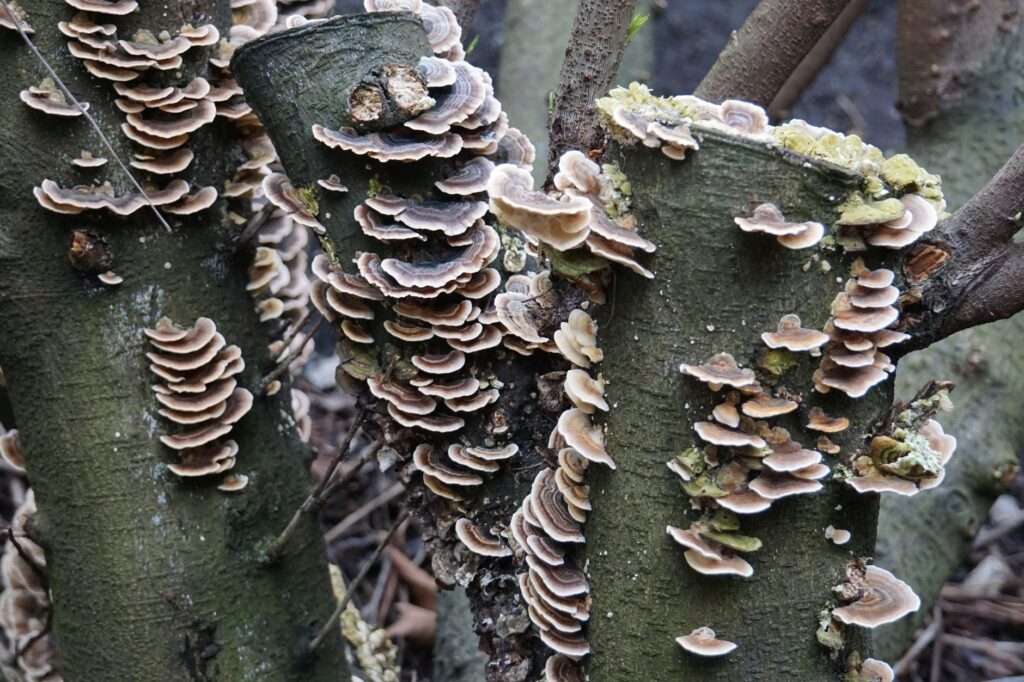
A cavity alone is one data point. These are the companions that make me lean toward a professional assessment sooner rather than later:
- Cracks or splits running along the trunk from the opening, especially ones that open wider after wind.
- Mushrooms or shelf fungi (conks) on the trunk or at the root flare, which point to active decay in the wood behind them.
- Oozing sap or dark staining on the bark around the opening.
- Sparse or dying crown, with dead branches in the upper canopy or small, off-color leaves.
- A new lean, or soil heaving and cracking on the side opposite the lean.
- Carpenter ant activity or sawdust at the base. Ants usually follow decay rather than cause it, but they signal softened wood.
- Cavities low on the trunk or at the root flare, where the stress on the tree is highest.
Extension foresters in other states describe the same list. The Alabama Cooperative Extension guide to identifying hazard trees names visible cavities, cracks, sap leaking through bark, carpenter ants and cavity-nesting wildlife among the indicators of internal decay. None of these is a death sentence either. Several together, on a tree near a target, is when you stop guessing.
Why a Cavity Can Be a Good Thing
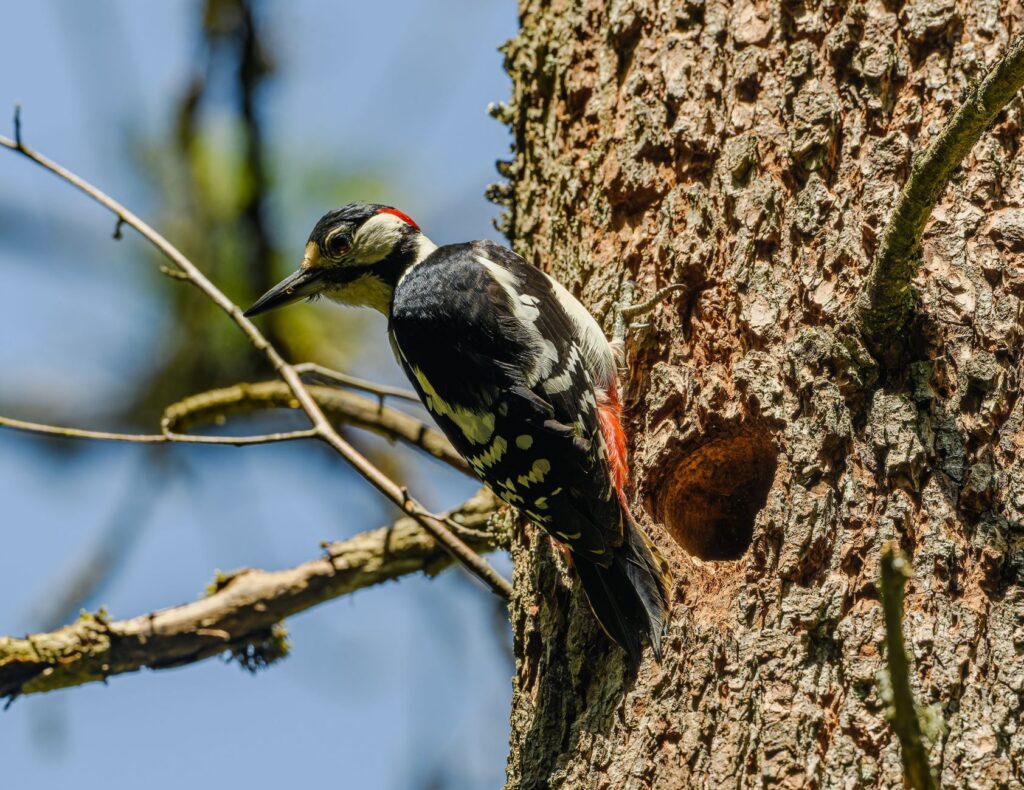
Hollow and decaying trees are some of the most valuable wildlife real estate in a suburban yard. More than 85 species of birds use cavities in standing dead and dying wood, according to New Jersey Audubon, including woodpeckers, chickadees, nuthatches and screech owls. Flying squirrels, raccoons, bats and a long list of insects use them too. In a township that has lost a lot of old canopy to development, a living tree with a cavity can be the only nest site for a block.
The trade-off is real, and the science says so plainly. A US Forest Service study, A broad scale analysis of tree risk, mitigation and potential habitat for cavity-nesting birds, found that trees used for nesting tended to rate as higher hazards than comparable nearby trees. The authors’ point is that it may be possible to reduce those impacts without raising the hazard to people and property, which is exactly the judgment call a good arborist makes: keep the habitat where nothing is underneath, and manage the risk where something is.
If your hollow tree stands well away from the house, driveway and play areas, leaving it alone may be the right call. A big old one in the back corner of your lot is doing the same work that the older trees in Tatum Park and Hartshorne Woods Park do for wildlife.
What Not to Do to a Hollow Tree
Every few years someone tells a homeowner to fill the hole. Please do not. Concrete, expanding foam and brick were once common, and none of them make the tree stronger. They trap moisture against the wall, they do not flex with the trunk in the wind, and the tree’s defenses work by growth around the wound, not by sealing it with a plug. Tree care guidance has said for decades that cavities do not need to be filled.
Also resist the urge to dig out the rotten wood to clean it. Scraping into the cavity can break through the protective barrier the tree has built and open fresh wood to decay. Leave the inside alone.
Do not top the tree to reduce the load either. Topping leaves large wounds, triggers weak sprouts, and usually speeds the decline of a tree that was already compromised. If the crown is too heavy for the remaining wall, the options are targeted crown reduction done to proper pruning standards, cabling or bracing, or removal. Those are decisions to make with a certified arborist, not with a ladder and a chainsaw on a windy Saturday. Work near a cavity also means checking first for wildlife; a bee colony or a nesting owl is not a surprise you want mid-cut.
Middletown's #1 Tree Expert Company
FREE Inspection & Estimate | Certified Arborists | Trimming, Pruning, Removal, More!
Sponsored
When to Call a Certified Arborist About a Cavity
Call a pro if the tree is within falling distance of a house, garage, driveway, play set or the street, and any of these is true: the opening is large, there are cracks, fungi or a new lean, the crown is thinning, or you simply cannot tell. A certified arborist, ideally one with the ISA’s tree risk assessment qualification, will do more than glance at the hole. They can probe the cavity, sound the trunk, and use tools like a resistance drill or sonic tomography to measure the remaining wall without cutting the tree open. You can find credentialed arborists through the International Society of Arboriculture.
Ask for a written assessment. It should state the defect, the target, the likelihood of failure and the recommended action, whether that is monitoring, pruning, cabling, protecting the area underneath or removal. If you may need to deal with insurance or a neighbor later, that paper trail is worth far more than a verbal opinion.
Meanwhile, a few free steps help. Photograph the cavity each season from the same spot so changes are easy to spot. Keep mulch and mowers off the root flare. Watch the tree after every big wind event. A hollow tree that is monitored by someone who is paying attention is often a long-term neighbor, not a countdown.
Photo credits: Featured image by Ruben Flores de Guirior on Pexels; Section 1 by Petr Ganaj on Pexels; Section 2 by Alfo Medeiros on Pexels; Section 3 by mali maeder on Pexels; Section 4 by Marian Florinel Condruz on Pexels; Section 5 by Petr Ganaj on Pexels; Section 6 by Castorly Stock on Pexels; Section 7 by Peter Xie on Pexels.