
Middletown's #1 Tree Expert Company
FREE Inspection & Estimate | Certified Arborists | Trimming, Pruning, Removal, More!
Sponsored
The Pile at the Curb Is Worth a Second Look
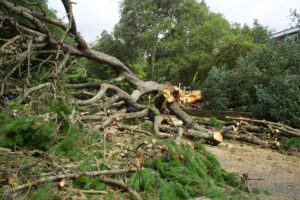
After a fall wind event, nearly every Middletown street has the same pile at the curb: limbs, split trunk sections, and the odd whole stem from a red maple or pin oak that finally gave up. Most of it heads to the township brush pickup or a chipper truck. Some of it, though, is perfectly good fuel, and some of it carries risks that have nothing to do with the saw.
Storm wood is a mixed bag. A freshly broken white oak (Quercus alba) limb is dense, slow-burning hardwood that will heat a stove for hours once it has dried. A split sweetgum or a limb from a stressed Bradford pear is a different story: stringy, wet and not worth the trouble. Knowing which pile is which saves a lot of splitting.
This guide walks through what is worth keeping, how long it really takes to dry in the humid Bayshore air, how to stack it, and the one rule that matters most in New Jersey right now: where that wood is allowed to travel.
Sort the Wood Before You Touch a Saw
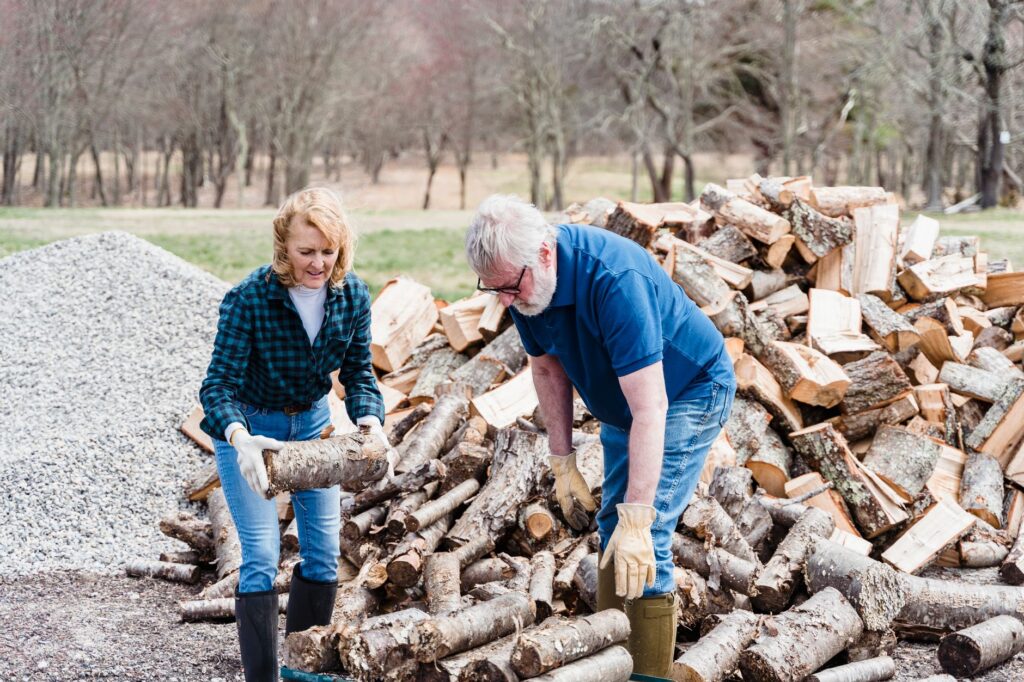
Start by sorting the debris into three groups: wood to keep, wood to chip, and wood to leave alone. Sound hardwood limbs four inches and thicker go in the keep pile. Thin twigs and leafy branches belong in the chip pile, where they become useful mulch. The leave-alone pile is anything you cannot identify as safe to handle or burn.
That last group includes limbs still tangled in a standing tree, anything touching or near a service wire, and trunk sections that are under tension from other debris. A limb that is bent against another limb or the ground stores a surprising amount of energy, and the first cut can snap it sideways. Branches caught up in a tree canopy are a separate hazard that deserves its own plan, and the International Society of Arboriculture’s homeowner guidance is a sound place to start when you are deciding what is a do-it-yourself job and what is not.
Poison ivy deserves a mention as well. Old, hairy ivy vines on a fallen trunk still carry the oil that causes the rash, and burning vine-covered wood puts that oil into the smoke. Strip the vines before the wood goes anywhere near a fireplace or fire pit.
Which Local Species Burn Well and Which Do Not
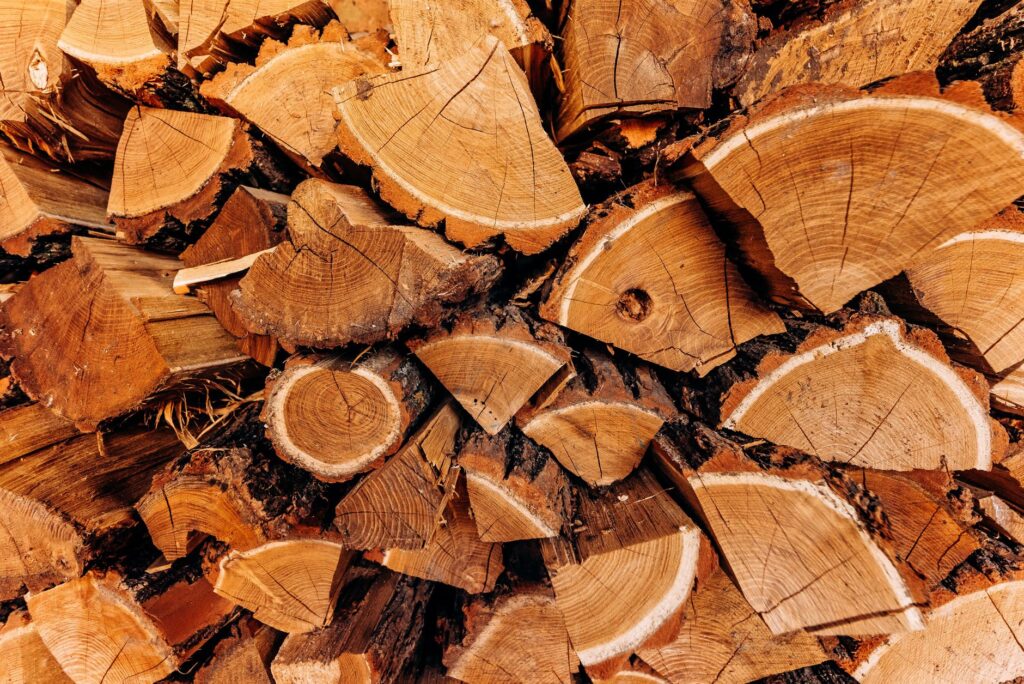
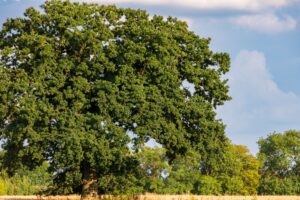
Firewood quality comes down to density. Heavier woods hold more energy per cord and burn longer. In Middletown’s mixed hardwood yards, the best fuel generally comes from oaks, hickories, black locust and American beech. These are dense, burn hot and leave good coals, but they are also slow to dry, so they need the most planning.
Red maple (Acer rubrum), the most common storm casualty on local streets, is a middle-of-the-road fuel. It dries faster than oak and splits easily, which makes it a good first-season option. Sweetgum, silver maple, tulip poplar and white pine burn quickly and leave little behind. They are fine for shoulder-season fires and kindling, but they are not what you want on a January night.
- Best: oak, hickory, black locust, beech, sugar maple
- Good: red maple, cherry, ash, birch
- Fair to poor: silver maple, sweetgum, tulip poplar, willow, white pine
One note on ash. Many standing ash trees across Monmouth County have been killed by emerald ash borer, and the dead wood dries fast but turns brittle and unpredictable while it is still on the stump. Ash that is already on the ground is fine to burn once split and dried, but do not climb or cut a dead standing ash yourself. The national emerald ash borer information network explains why these trees fail the way they do.
Middletown's #1 Tree Expert Company
FREE Inspection & Estimate | Certified Arborists | Trimming, Pruning, Removal, More!
Sponsored
Seasoning: Why Green Wood Will Disappoint You
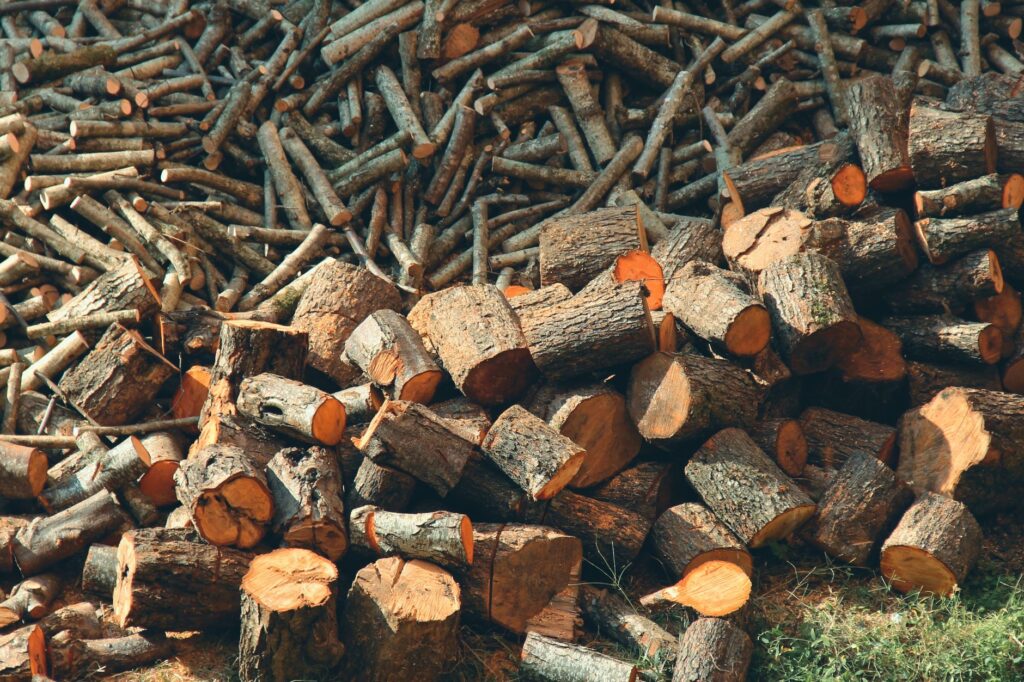
Wood fresh off a storm-felled tree is mostly water, often half its weight or more. Burn it and most of the heat goes into boiling off moisture, leaving a smoky, sputtering fire and a sticky creosote coating inside the flue. Dry wood burns cleaner and hotter, and it is much kinder to a chimney.
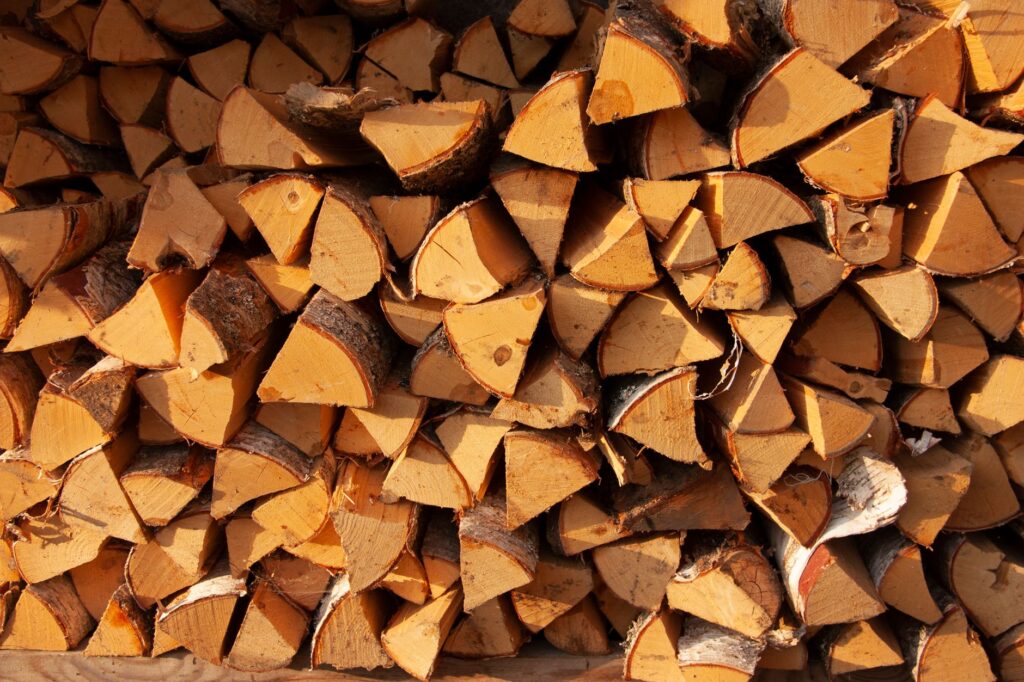
As a rough guide, split maple, cherry and birch can be ready in six to nine months of good airflow. Oak and hickory commonly need a year, and often closer to two, before they burn well. Splitting is the step people skip. A whole round dries very slowly because the bark seals the ends and sides, so split everything as soon as you can, ideally within a few weeks of the storm.
The only reliable test is moisture. A cheap pin-type moisture meter, read on a freshly split face, should show roughly twenty percent or below. Dry logs also feel light, sound hollow when two are knocked together, and show cracks radiating from the center of the end grain.
Stack It Right and Keep It Away From the House
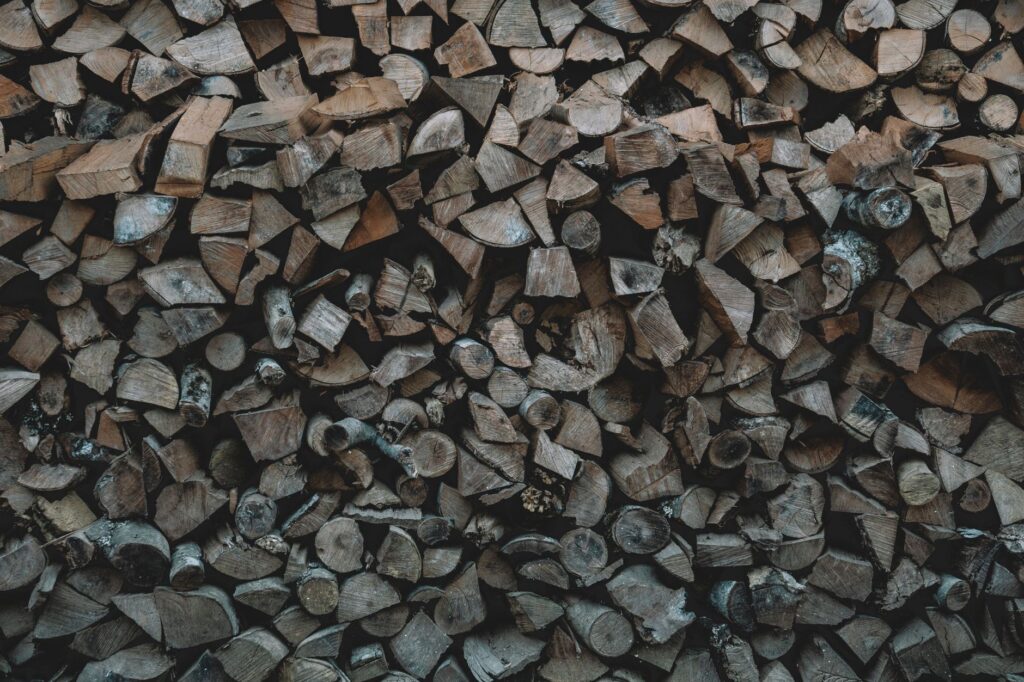
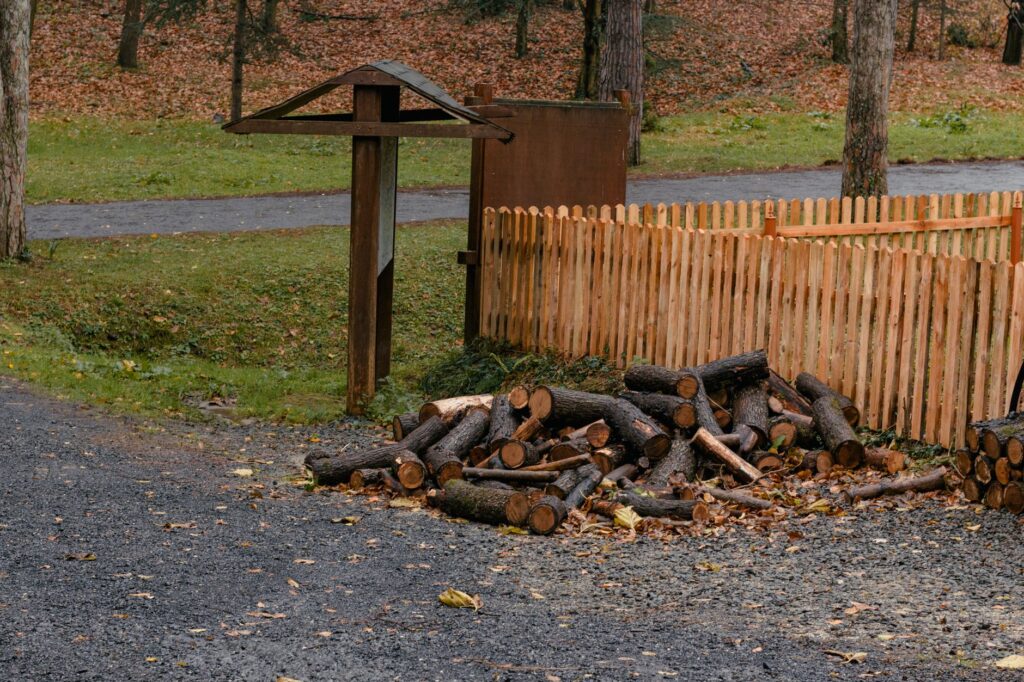
A good wood stack is a drying rack. Lift it off the ground on pallets, pressure-treated runners or concrete blocks so air can move underneath. Stack split side down or bark up, leave gaps between rows, and cover only the top. A tarp that wraps the sides traps moisture and defeats the whole purpose of seasoning.
Where you put the stack matters as much as how you build it. Wood piled against a house foundation or siding invites termites, carpenter ants and mice right to the wall. Keep the stack at least twenty feet from the house if the yard allows, and bring in only a week’s supply at a time. Wood kept indoors for months also releases insects that overwinter inside the bark, and indoor warmth wakes them up in the middle of January.
In a tight Middletown lot, a short, wide stack along a back fence or the side of a shed works better than a tall pile that leans. Stability is a safety issue too, since a cord of wood that topples is heavy enough to hurt someone.
The Rule That Matters Most: Do Not Move Firewood
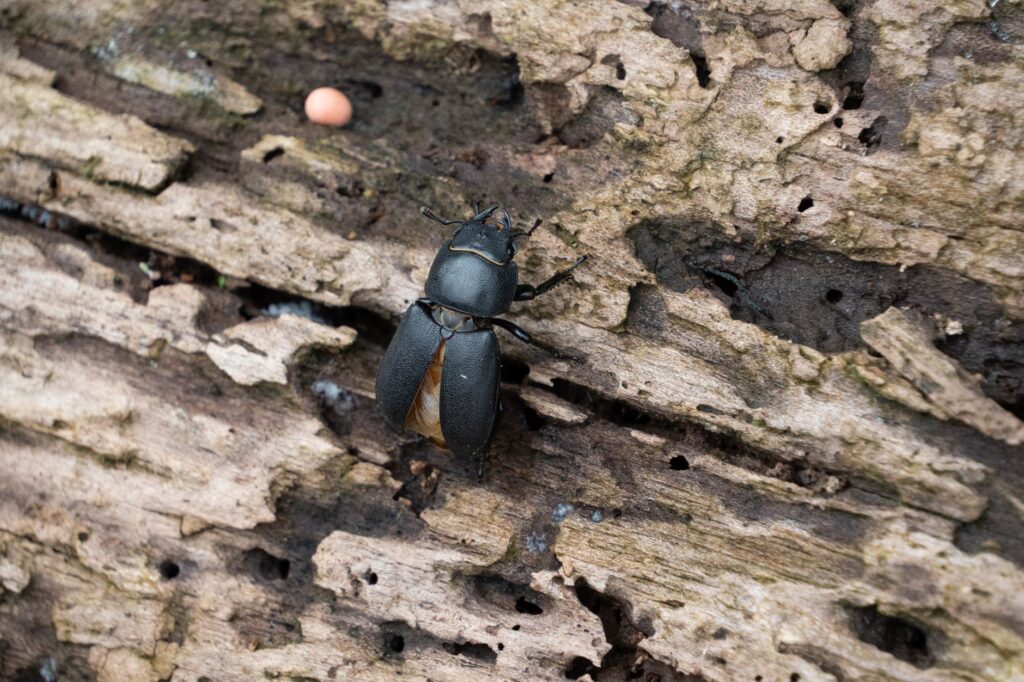
The fastest way for wood-boring insects to spread is by hitching a ride in firewood. Emerald ash borer larvae live under the bark of ash, and spotted lanternfly lays egg masses on almost any hard surface, including logs and stacked wood. Both pests are already established in New Jersey, which makes this less of a distant worry and more of a daily responsibility.
The practical rule is simple. Use storm wood on the property where it fell, or very close to it, and never carry it to a campground, a second home, or a friend’s yard in another county. The state agriculture department’s spotted lanternfly page lists current quarantine and inspection guidance, and it is worth a read before any wood leaves your driveway.
If you do have more than you can burn, give it away within the neighborhood or have it chipped. Chips from sound wood make excellent mulch around established trees, kept a few inches back from the trunk. The USDA Forest Service publishes extensive material on invasive forest pests if you want to understand what is at stake.
Middletown's #1 Tree Expert Company
FREE Inspection & Estimate | Certified Arborists | Trimming, Pruning, Removal, More!
Sponsored
Cutting Safely, and When to Call a Certified Arborist
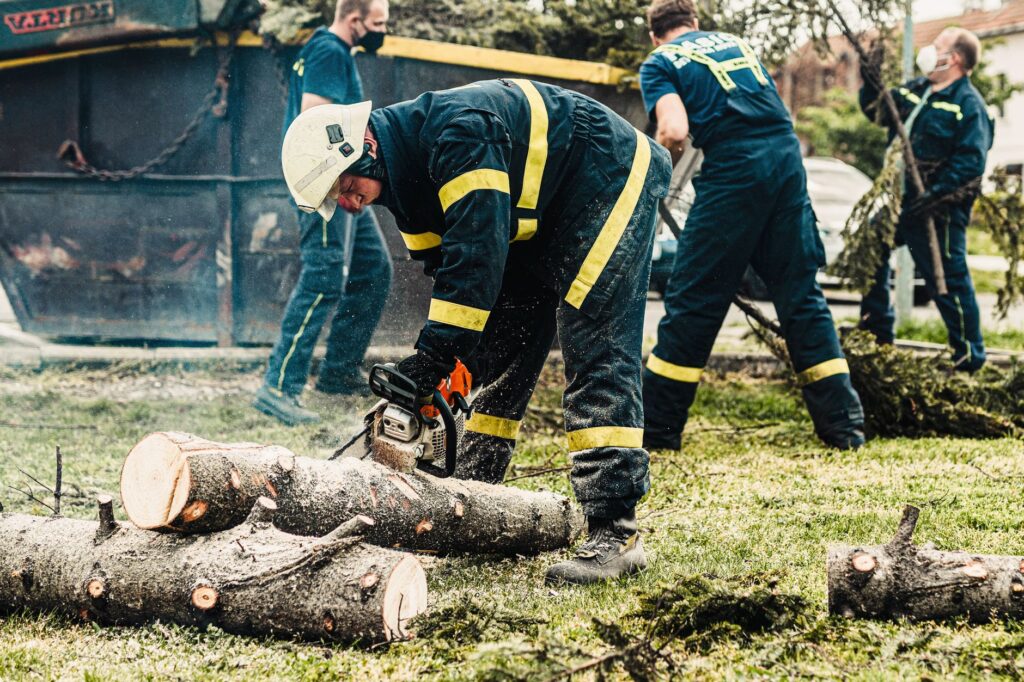
Cutting storm wood is among the most injury-prone jobs a homeowner takes on. Wear a helmet with face shield, hearing protection, cut-resistant chaps and sturdy boots. Never cut above shoulder height, never work alone, and stop when you are tired. Chainsaws kick back, and fatigue is when people make the mistakes they regret.
Some jobs are not for a homeowner at all. If a broken limb is hung up in a standing tree, if a leaning trunk has a split base, or if anything is touching or near an electric line, treat it as a professional job. The right call is a certified arborist who carries insurance and can assess the whole tree, not just the piece on the ground.
Finally, before you light anything, check the local rules. New Jersey restricts open burning of brush and debris, and Middletown has its own fire safety requirements. Using seasoned firewood in a stove, fireplace or approved fire pit is a very different thing from burning a brush pile, and the township fire official can tell you exactly where the line sits.
Photo credits: Featured image by Anastasiia on Pexels; Section 1 by Leila Abboud on Pexels; Section 2 by Greta Hoffman on Pexels; Section 3 by Вадим Биць on Pexels; Section 4 by Rashad Baynazarli on Pexels; Section 5 by Yusuf Gündüz on Pexels; Section 6 by René Lussi on Pexels; Section 7 by Helena Jankovičová Kováčová on Pexels.