Middletown's #1 Tree Expert Company
FREE Inspection & Estimate | Certified Arborists | Trimming, Pruning, Removal, More!
Sponsored
The Morning After: A Yard Full of Wood and No Clear Plan
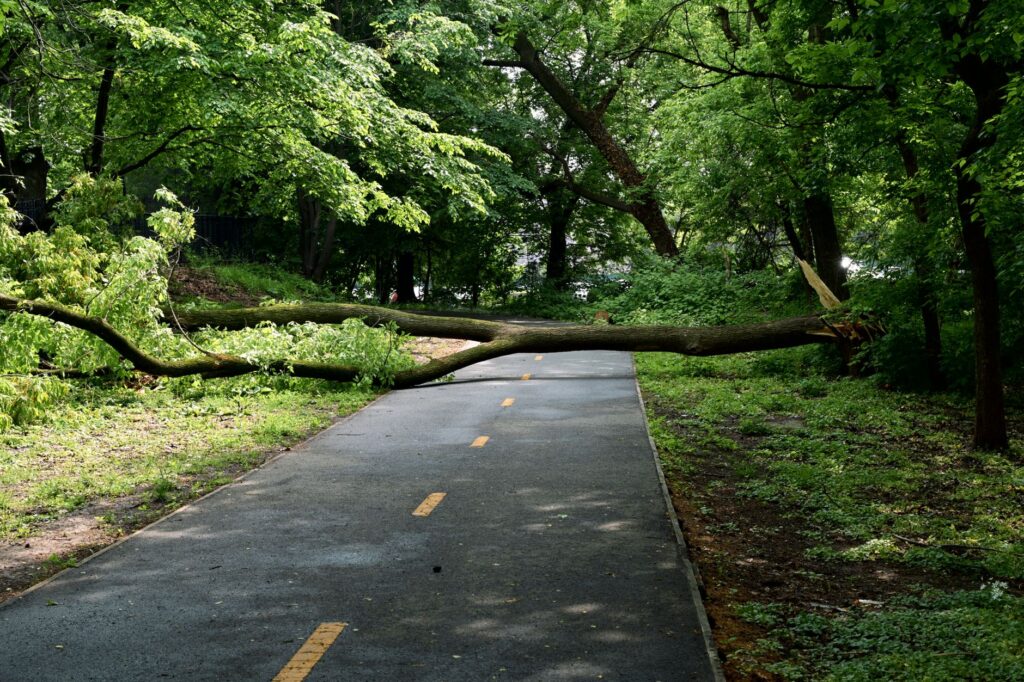
The Bayshore’s first real nor’easter of the season usually leaves the same scene behind: a ring of torn leaves under the maple, a split limb hanging over the driveway, and a homeowner standing in the yard trying to figure out where to start. Middletown Township gets more than its share of these mornings, sitting exposed to wind funneling up Raritan Bay and across the flat coastal plain from Port Monmouth to Leonardo. The trees usually survive. The cleanup is where most people go wrong.
It is tempting to treat storm debris as one big pile to drag to the curb, but that instinct skips three things that matter: whether the site is actually safe to be in, whether the damage needs to be documented before anything moves, and whether the material at the curb even meets what the township will pick up. Skipping any of those steps turns a routine cleanup into either a hazard or a wasted trip with a truck full of brush the Department of Public Works has to leave behind.
This isn’t a call to hire out every twig. Most storm cleanup on a residential lot is well within a homeowner’s ability. It’s a matter of doing the first hour in the right order.
Before Anything Moves: Check for the Hazards You Can't See From the Porch

Walk the property before touching a branch, and walk it slowly. The first thing to rule out is contact with utility lines. A downed or drooping line tangled in a branch is not something to move, cut around, or even approach closely — treat any line touching a tree as energized until the utility confirms otherwise, and call it in rather than working near it.
The second thing to look for is overhead, not on the ground: broken limbs that never fell, sometimes called widowmakers, hung up in the canopy above where cleanup crews will be standing. A limb resting on ground brush is a cleanup job. A limb wedged fifteen feet up in a neighboring crown is a reason to stay out from under that tree until it comes down on its own terms, ideally with a professional handling the rigging.
Finally, check the trunk and root zone for signs the whole tree is compromised rather than just a limb: a lean that wasn’t there before the storm, soil heaving or cracking near the base, or bark torn away from the trunk. Those signs mean the debris on the ground is the smaller problem. The International Society of Arboriculture’s guide to storm-related tree damage is a useful reference for telling a tree that will recover from one that needs a professional assessment first.
Photograph Everything Before You Drag a Single Branch
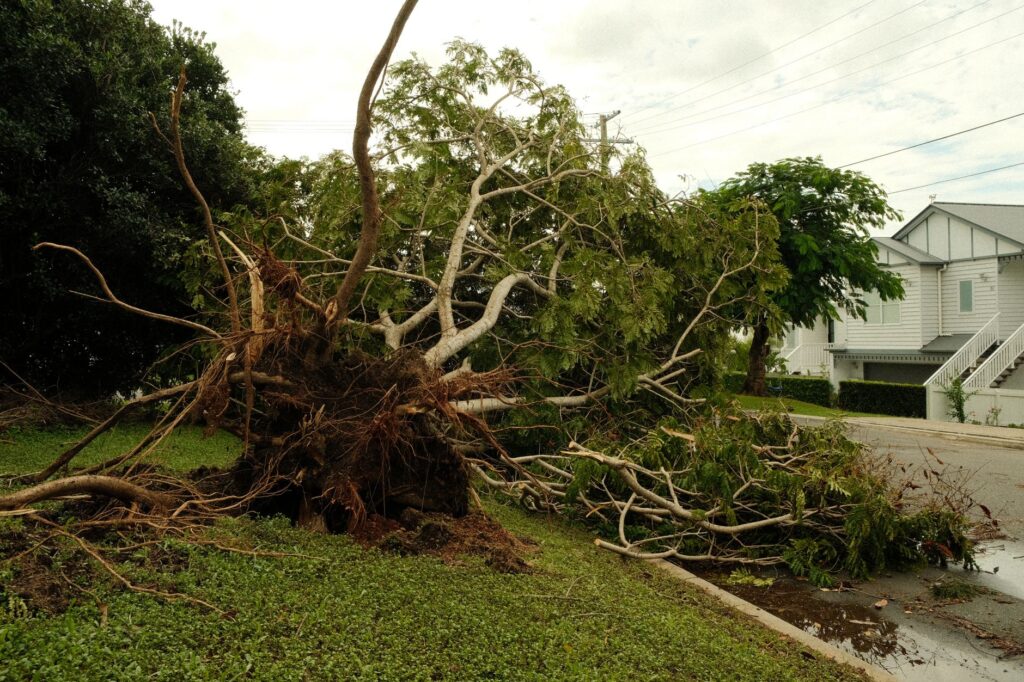
Once the site is confirmed safe, resist the urge to start cleanup immediately. Photograph the damage first, from multiple angles, before anything is moved, cut, or hauled away. This matters most if the tree that failed sits near a property line, if any part of it touched a structure, a car, or a neighbor’s yard, or if the tree was already showing decline before the storm.
Homeowners insurance claims for storm damage move faster and get contested less often when there’s a timestamped photo record showing the original condition. If the damage is significant enough that an insurer or a neighbor’s insurer gets involved, an arborist’s written assessment of the tree’s condition carries more weight than a phone photo alone, and it’s worth having one on file before repairs or removal begin, particularly for anything that could become a liability dispute.
This step takes ten minutes and costs nothing. Skipping it is the single most common regret homeowners report after a contested claim.
Middletown's #1 Tree Expert Company
FREE Inspection & Estimate | Certified Arborists | Trimming, Pruning, Removal, More!
Sponsored
Whose Debris Is It? Property Lines Complicate the Easy Answer
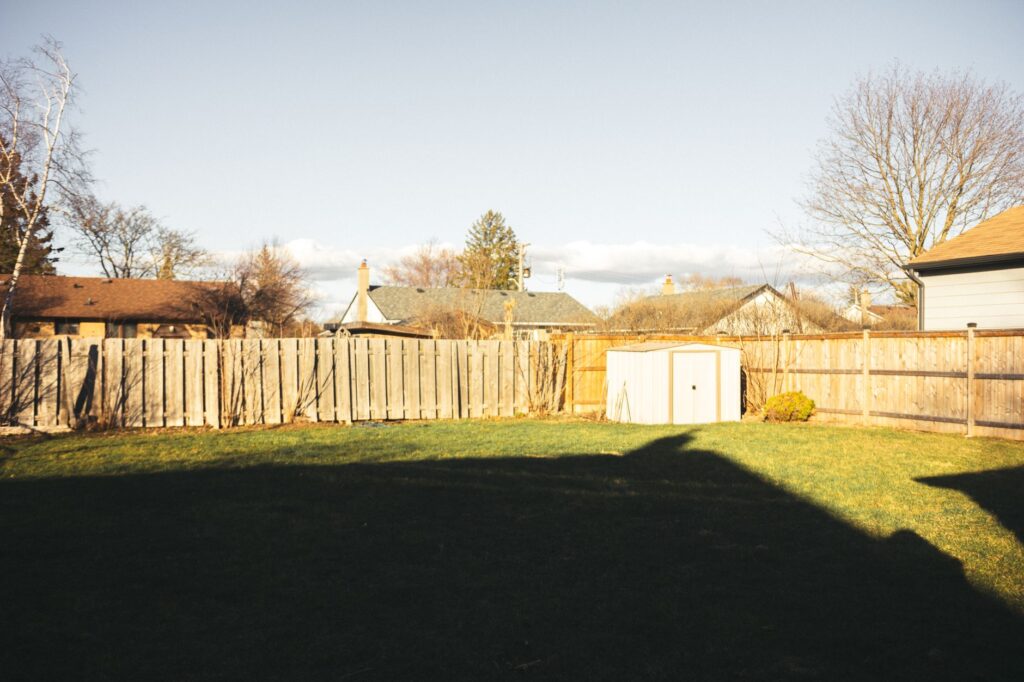
Storm debris doesn’t respect property lines, and neither does the question of who’s responsible for cleaning it up. As a general rule in New Jersey, a fallen tree or limb belongs to whoever’s property it lands on, not whoever’s property it fell from — with an important exception if the tree that failed was already dead, diseased, or visibly hazardous and the owner knew about it or should have. That distinction is why the photographs from the previous step matter twice over when a limb crosses a fence line.
Curbside trees and anything growing in the municipal right-of-way carry their own separate rules in Middletown, since those trees are technically township property even though they sit in front of a private home. If storm damage involves a tree at the curb rather than one clearly on private property, it’s worth a call to the township before doing any cutting there, since removing wood from a right-of-way tree without authorization can create complications separate from the storm itself.
Neighborly cleanup coordination is usually simpler than the legal questions suggest — most people just want the wood gone — but a quick conversation and a set of photos before anyone touches anything avoids the rare dispute that drags on for months.
What Middletown's Curb Actually Accepts

Once the safety checks and documentation are done, the cleanup itself runs into a rule most residents only learn the hard way: Middletown’s curbside brush collection has real limits, and storm debris that exceeds them simply gets left at the curb.
- Brush must be loose at the curb, never bagged, and set out no more than one week ahead of the scheduled collection for that zone.
- The accepted volume tops out around four cubic yards per collection — roughly a pile three feet wide, two feet high, and eighteen feet long — with individual limbs kept to about three feet.
- Material can’t be placed in the street or on sidewalks, which matters more than usual after a storm when other households are competing for the same curb space.
- Stumps and logs larger than eight inches in diameter are not accepted curbside, and the township’s recycling center won’t take them either; those pieces are the resident’s responsibility to arrange separately.
The Township’s brush collection page has the current zone map and schedule, and the recycling center accepts brush drop-off free of charge during its posted hours for anyone who doesn’t want to wait for a collection date. After a widespread storm, those schedules can slip, so it’s worth checking before assuming a normal pickup date still holds.
The Log Pile Nobody Warns You About
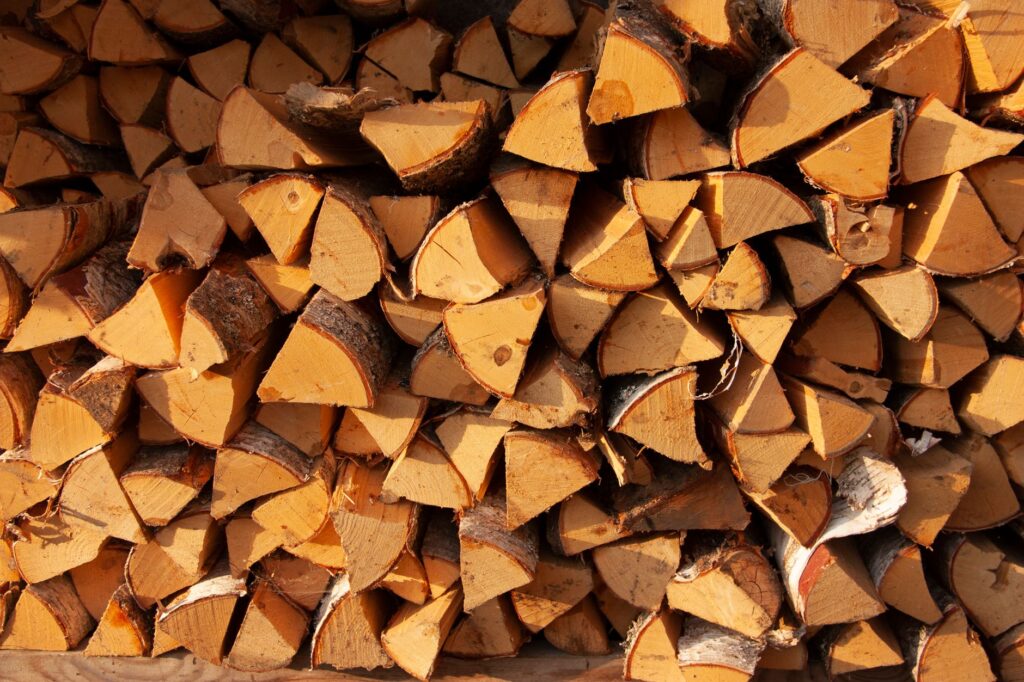
The brush goes to the curb easily enough. It’s the larger wood — rounds too big for the curbside limit, a split trunk section, anything over that eight-inch threshold — that homeowners tend to mishandle. The most common mistake is loading it into a truck and driving it somewhere else, whether to a relative’s property, a hunting camp, or a firewood swap. Moving untreated wood off-site is exactly how borers and other tree pests spread between counties, since insects like the emerald ash borer travel very effectively inside firewood and far less effectively on their own. Wood from a storm-damaged tree should be split, stacked, and used at or near the property where it fell, not transported.
There’s also a case for not sending every piece of that wood away at all. A stacked brush pile or a few rounds left at the edge of a wooded property line provide genuine habitat value — cover for ground-nesting birds and overwintering insects that feed the rest of the yard’s ecosystem — something increasingly recognized as good practice rather than an eyesore to eliminate. For a lot backing onto Bayshore woodland or a park buffer, leaving some of the smaller material in place is often the lower-effort, more ecologically useful choice.
Middletown's #1 Tree Expert Company
FREE Inspection & Estimate | Certified Arborists | Trimming, Pruning, Removal, More!
Sponsored
When to Call a Pro Instead of Finishing It Yourself
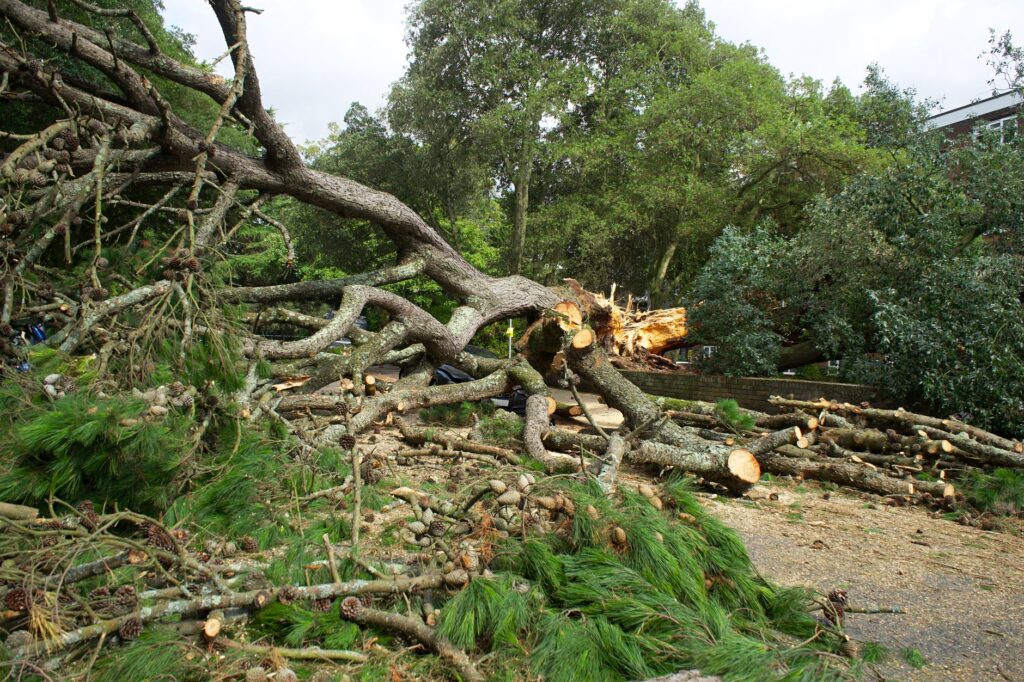
Most of what falls in an average nor’easter — twigs, small limbs, a modest branch or two — is squarely within reach of a homeowner with loppers, a pruning saw, and a wheelbarrow. The line to hire a certified arborist is clear once a few conditions show up: anything requiring a chainsaw overhead or off a ladder, any limb still under tension or hung in the canopy, any work near a utility line regardless of whether it looks live, or any tree whose trunk or root plate was compromised rather than just a branch.
Bringing in a professional for that portion of the job isn’t an admission that the rest of the cleanup was unnecessary DIY work — it’s matching the right tool to the right risk. Rutgers Cooperative Extension’s guide to hiring a tree care professional is a good reference for vetting credentials before signing anyone up, and the New Jersey Department of Health’s post-storm tree hazard resources lay out the risks that make professional help worth the cost after a significant storm.
Handled in the right order — safety, documentation, then cleanup within the township’s actual rules — a yard full of storm debris stops being an overwhelming mess and becomes a checklist. That’s usually all it takes to get a Middletown property back to normal before the next system rolls in off the water.
Photo credits: Featured image by April Yang on Pexels; Section 1 by Y on Pexels; Section 2 by pipop kunachon on Pexels; Section 3 by April Yang on Pexels; Section 4 by Shazard R. on Pexels; Section 5 by Alex Albert on Pexels; Section 6 by Anastasiia on Pexels; Section 7 by Mike Bird on Pexels.