
Middletown's #1 Tree Expert Company
FREE Inspection & Estimate | Certified Arborists | Trimming, Pruning, Removal, More!
Sponsored
The Flood Recedes, but the Damage Is Just Getting Started
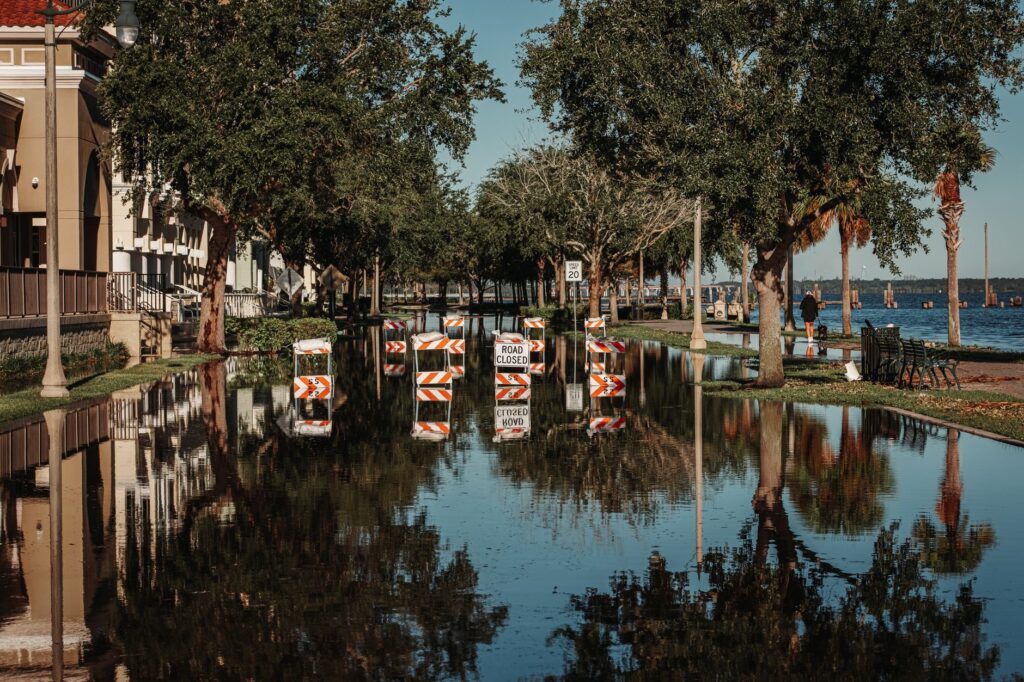
When Raritan Bay pushes up over the bulkheads in Port Monmouth or backs up through the storm drains in Leonardo, the water usually drains within a day or two. The lawn dries out, the driveway is passable again, and life goes back to normal. Except for the trees. A tree that just sat in several inches of bay water for even a few hours absorbed something the rainstorm version of a flood never delivers: salt. And salt doesn’t drain away as fast as the water does.
This is the part of coastal flooding that catches Bayshore homeowners off guard. The visible mess is gone in days, but the damage inside the root zone is only beginning, and it often doesn’t show up in the canopy until weeks or even a full season later. By the time the leaves tell the story, most people have already forgotten which storm caused it.
What Salt Actually Does to a Root System
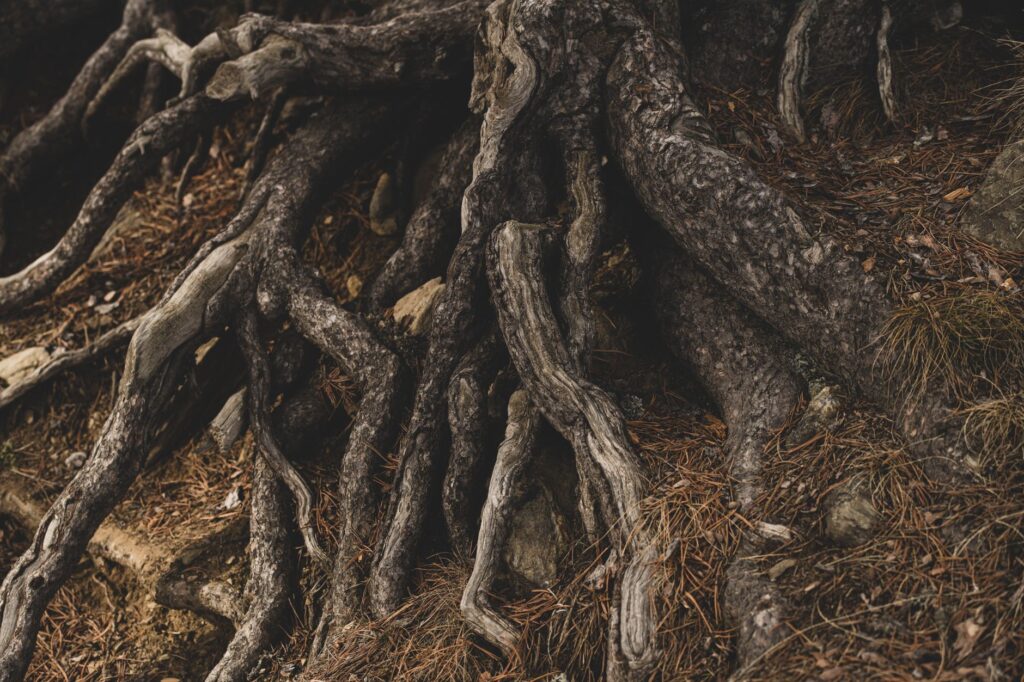
Roots take up water because the soil around them is more dilute than the fluid inside the root cells — water naturally moves toward the saltier side, and normally that means it moves into the root. Flood a root zone with brackish or full-strength bay water, and that balance flips. Suddenly the soil solution is saltier than the inside of the root, and water gets pulled the wrong way, out of the root and back into the soil. Arborists call the result physiological drought: a tree standing in saturated ground can still show every symptom of dehydration, because its roots have lost the ability to pull water in at all.
Beyond that osmotic effect, sodium and chloride ions are directly toxic to root tissue in high enough concentrations. They damage the fine absorbing roots first — the same delicate root hairs responsible for most of a tree’s water and nutrient uptake — and displace other nutrients the tree needs, particularly calcium and potassium. Rutgers Cooperative Extension has documented how repeated saltwater exposure degrades soil structure and root function along the New Jersey shore in more detail in its coastal landscape salinity guidance.
Why the Symptoms Show Up Weeks Later
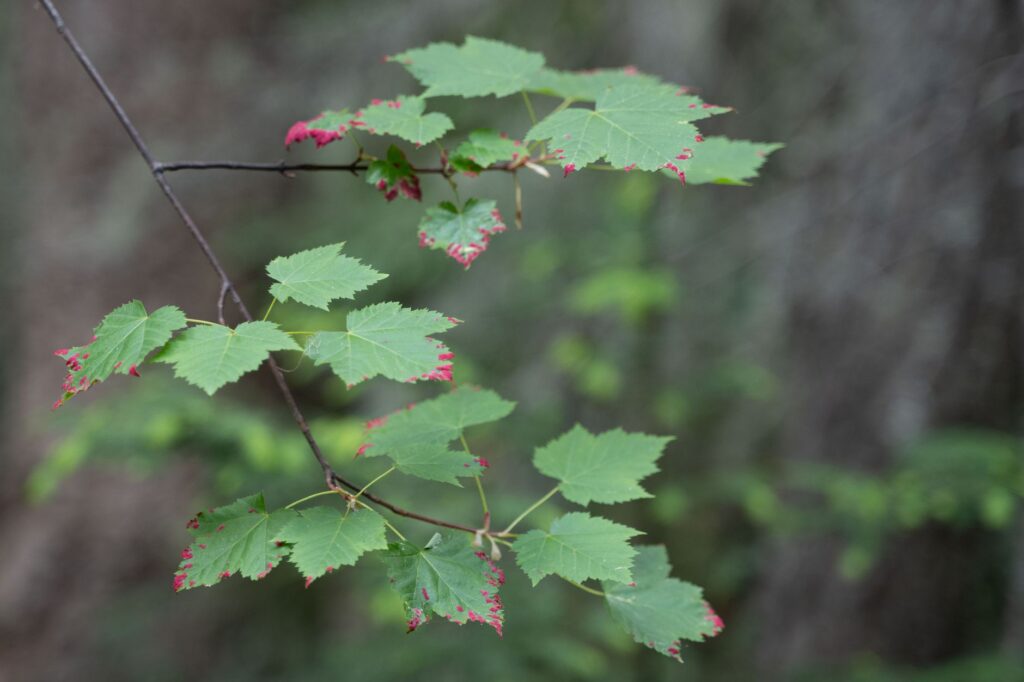
A tree with a damaged root system doesn’t collapse immediately, because it’s still running on the water and carbohydrate reserves stored in its trunk and branches from earlier in the season. Leaf symptoms lag behind root damage by anywhere from two to eight weeks, depending on species, tree size, and how hot and dry the following stretch of weather turns out to be.
What eventually shows up looks a lot like ordinary late-summer drought stress: marginal leaf scorch (a browning band along the outer edge of the leaf, working inward), early and heavier-than-usual leaf drop, and undersized leaves the following spring if the damage was severe. Red maple (Acer rubrum) and flowering dogwood (Cornus florida) — both common in Bayshore yards — tend to be more salt-sensitive and show scorch faster than tougher species like Eastern red cedar (Juniperus virginiana) or black gum (Nyssa sylvatica), which have more natural tolerance for brackish exposure.
The timing gap is exactly why so many homeowners never connect the dots. A late-August storm tide gets blamed on a random dry spell in October, and the actual cause — salt sitting in the root zone since the flood — never gets addressed.
Middletown's #1 Tree Expert Company
FREE Inspection & Estimate | Certified Arborists | Trimming, Pruning, Removal, More!
Sponsored
The One Thing That Actually Helps After a Flood
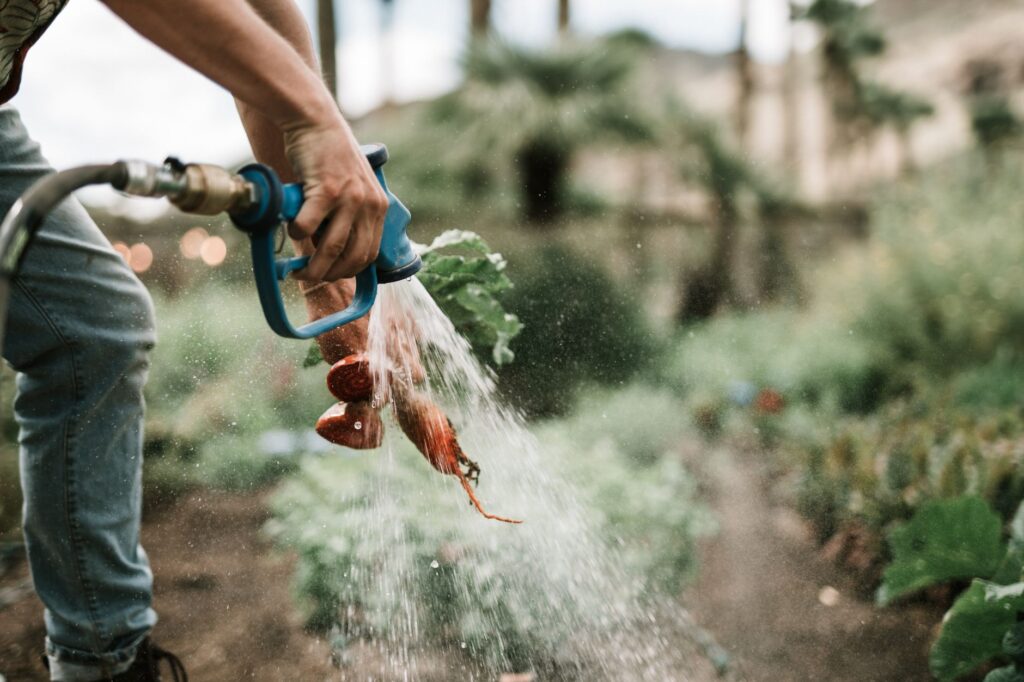
Salt moves through soil the same way it moves into the root: with water. The single most effective response after a coastal flood is a deep, slow flush of fresh water through the root zone as soon as the standing floodwater has drained and the ground can absorb more without pooling. A soaker hose or a slow trickle from a garden hose run for several hours, moved around the drip line, does far more good than a quick sprinkler pass — the goal is to push accumulated salts down past the root zone, not just wet the surface.
A few things make this more effective:
- Flush as soon as the soil will accept water again, rather than waiting for the next scheduled watering day
- Focus on the drip line and beyond, not just the trunk, since most active absorbing roots are near the edge of the canopy, not directly underneath it
- Avoid fertilizing right after a flood — added salts from fertilizer compound the problem while the tree is already under salt stress
- Repeat the flush over several days if the property flooded more than once in a short period, which is common during a multi-day nor’easter
The USDA Forest Service’s research on urban and coastal tree stress backs up deep, infrequent watering over light daily watering as the better recovery strategy in saline soils — details are in its Forest Service Research and Development database on urban tree stress responses.
When It's Not a One-Time Event
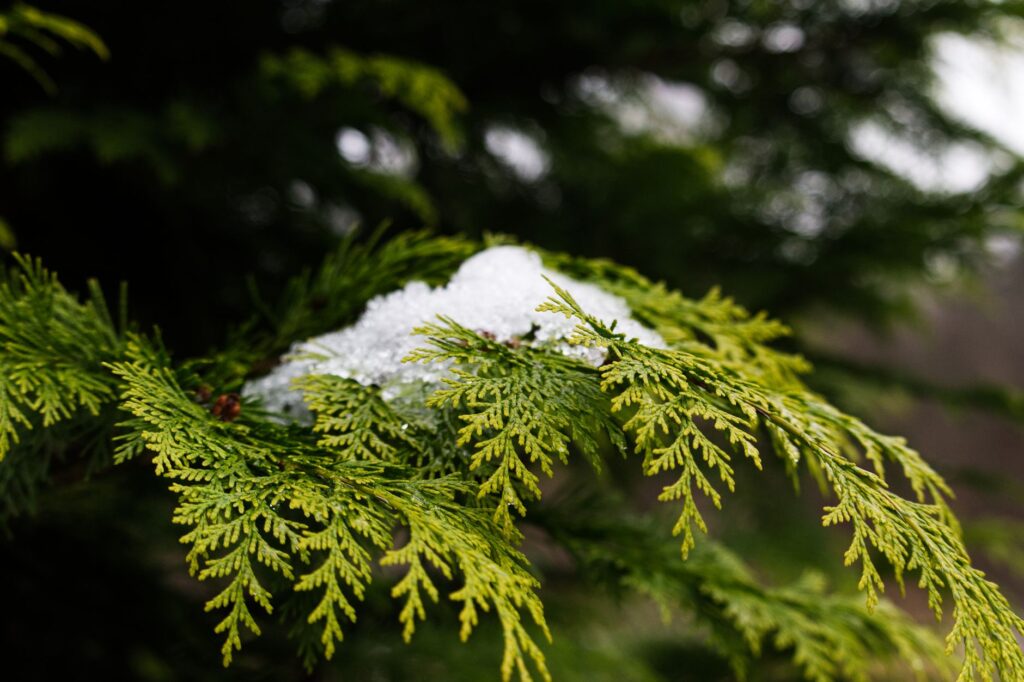
A single flood is a stress event a healthy, established tree can usually recover from with a proper flush and a season of reduced demands — no heavy pruning, no fertilizing, just time. Repeated flooding is a different problem entirely, and it’s becoming a more regular occurrence along Middletown’s Bayshore, from Port Monmouth to Belford to the low-lying stretches near the Navesink and Shrewsbury Rivers. Chronic high-tide flooding events, sometimes called nuisance flooding or king tides, are increasing in frequency along the New Jersey coast as documented by the state’s own coastal monitoring programs.
For a yard that floods more than once every year or two, salt doesn’t fully flush out between events, and it accumulates in the soil profile faster than rain alone can dilute it. At that point the conversation shifts from recovery to replacement planning: which species in that specific spot can actually tolerate periodic salt exposure long-term, not just survive one bad storm. Eastern red cedar, American holly (Ilex opaca), black gum, and bayberry (Morella pensylvanica) all have a track record of handling Bayshore conditions that red maple and dogwood simply don’t.
Signs the Damage Went Deeper Than a Flush Can Fix
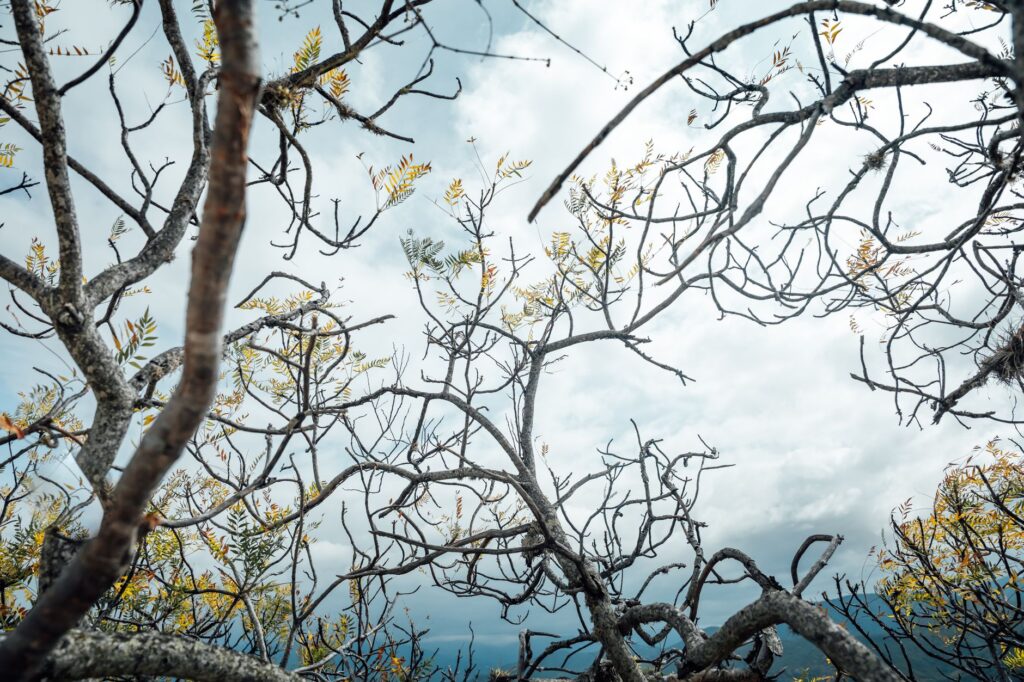
Not every flooded tree bounces back with a good watering routine, and it helps to know what points to more serious, longer-term injury. Watch for a canopy that thins progressively over more than one growing season rather than recovering the following spring, bark that separates or cracks near the root flare, and any fungal growth at the base of the trunk, which can indicate the root system was weakened enough to invite decay organisms. A tree that leans more than it did before the flood, especially with visible soil heaving on one side of the root plate, needs an in-person look before the next storm arrives, not a wait-and-see approach.
The International Society of Arboriculture’s guidance on assessing storm and flood-related tree stress is a useful starting point for homeowners trying to sort out normal recovery from a genuine structural concern, available at Trees Are Good’s trees-and-storms resource.
Middletown's #1 Tree Expert Company
FREE Inspection & Estimate | Certified Arborists | Trimming, Pruning, Removal, More!
Sponsored
When to Bring in a Certified Arborist
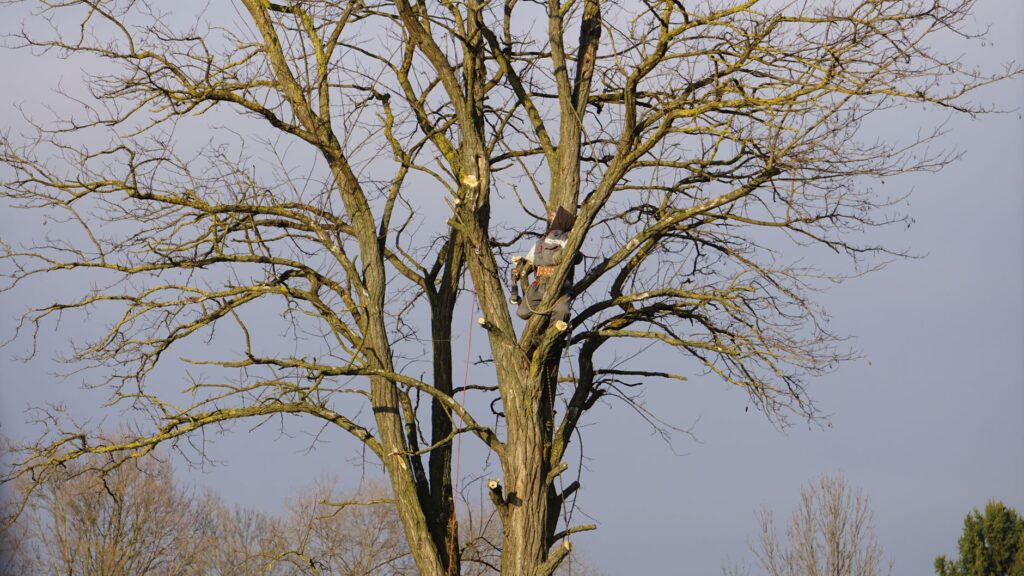
A flooded lawn and a few scorched leaf edges rarely need more than the flush-and-wait approach described above. But a mature shade tree that flooded repeatedly this season, shows dieback that isn’t reversing, or sits close enough to a house or driveway that a root failure would matter, is worth a professional look. A certified arborist can pull a soil sample to check salinity directly, evaluate whether the root system has lost enough function to be a structural concern, and recommend whether the right move is continued monitoring, root zone treatment, or planning a replacement with a genuinely salt-tolerant species.
Saltwater flooding is one of the quieter threats to Bayshore trees precisely because the worst of it happens out of sight, underground, long after the water itself is gone. A little attention in the weeks right after a flood — and a second look at species choice for anything replanted close to the water — goes a long way toward keeping Middletown’s coastal canopy standing through the next storm tide.
Photo credits: Featured image by Connor Scott McManus on Pexels; Section 1 by Lionel Dumont on Pexels; Section 2 by Walter Cunha on Pexels; Section 3 by Graham Roy on Pexels; Section 4 by Taryn Elliott on Pexels; Section 5 by Kristine Bruzite on Pexels; Section 6 by Miguel González on Pexels; Section 7 by Dmytro Glazunov on Pexels.