Middletown's #1 Tree Expert Company
FREE Inspection & Estimate | Certified Arborists | Trimming, Pruning, Removal, More!
Sponsored
When the Storm Passes and the Real Work Begins
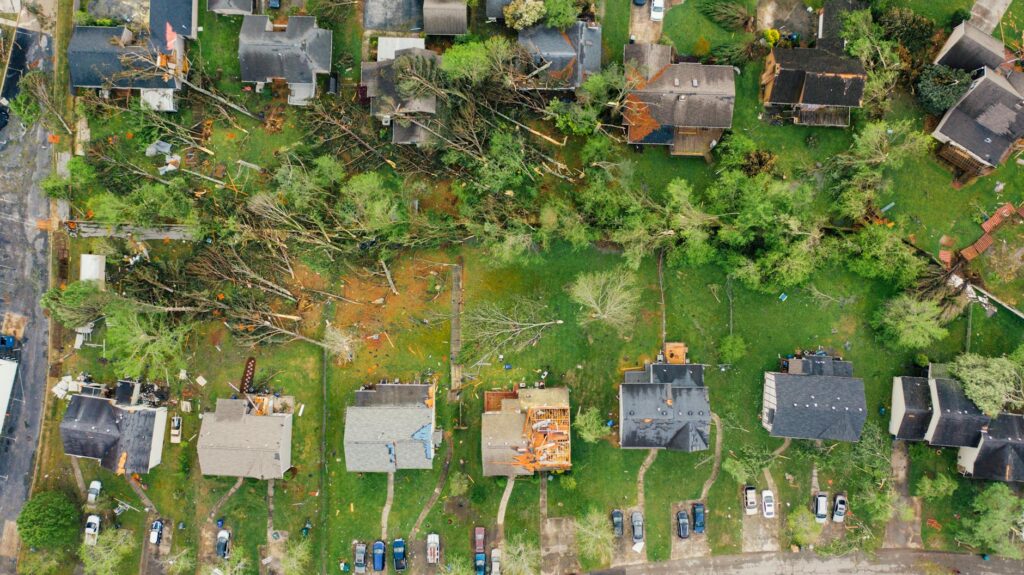
There is a particular quality to a Middletown morning after a night of thunderstorms — the air scrubbed clean, Poricy Brook running high, and somewhere in the neighborhood, the soft crack of a 40-foot tulip poplar (Liriodendron tulipifera) that didn’t make it through the night. By the time most homeowners step outside with their first cup of coffee, the visible damage is obvious. What’s far less obvious — and what matters most over the next 48 hours — is what’s lurking above your head that still looks attached but isn’t.
Late May and June mark the real beginning of Middletown’s thunderstorm season. We sit in a geographic sweet spot: warm, moist air off Raritan Bay collides with afternoon heat inland, producing storms that can generate wind gusts over 50 mph without ever spinning into a named storm. For trees, that means sudden, violent loading from directions they’ve never been tested from before. Even a tree that looks fine after a storm may be hiding torn root tissue, a cracked scaffold limb held in place by tension, or a co-dominant stem that has opened just enough to catch the next gust the wrong way.
What you do in the first 48 hours after a thunderstorm matters enormously. Rushed decisions — grabbing a chainsaw, calling a random crew, or ignoring the damage and hoping for the best — can turn a manageable situation into a dangerous one. This is the assessment window that trained arborists use, and it is one any homeowner can apply with a little knowledge and patience.
Wind, Lightning, and Saturated Soil: How Storms Do Their Damage
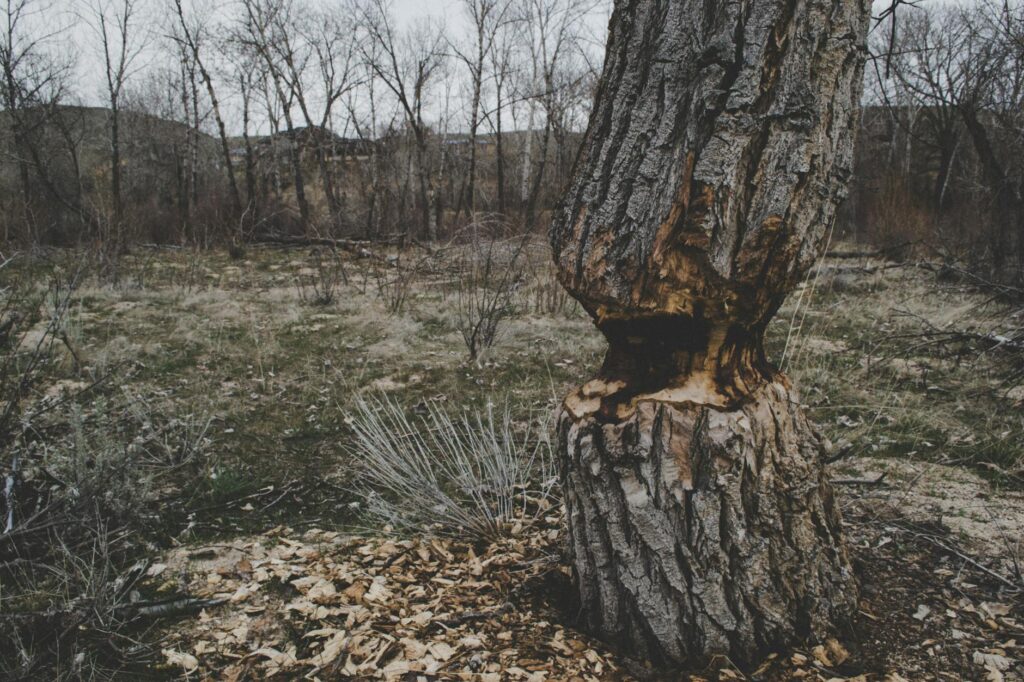
Most homeowners think of storm damage as a simple equation: big storm equals fallen tree. But trees fail in at least four distinct ways during a Middletown thunderstorm, and each failure mode tells you something different about what to do next.
Wind shear is the most common culprit in our area. Sudden gusts during fast-moving lines of storms create dynamic loading — a sharp horizontal force that tests every structural attachment in the canopy. Trees with included bark (where two stems grow so close together that bark is trapped between them, preventing a proper wood-to-wood bond) or long histories of unbalanced crowns are particularly vulnerable. A limb that has been quietly weakening for years may hold through dozens of minor storms and then snap at 3 a.m. during the first real June event.
Lightning strikes cause some of the most dramatic and confusing damage. A direct strike can peel the bark off a tree in a long spiral strip from crown to root collar, or it may leave no visible mark at all while flash-heating the water inside the sapwood. Trees that survive a visible lightning strike have variable outcomes: some compartmentalize the wound and recover with minimal intervention; others die slowly over one to three growing seasons. The International Society of Arboriculture’s guidance on storm-damaged trees is clear that the extent of cambium damage — not just what you can see externally — determines survivability.
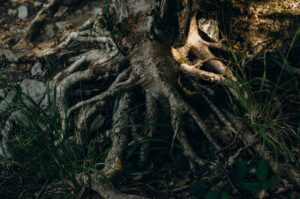
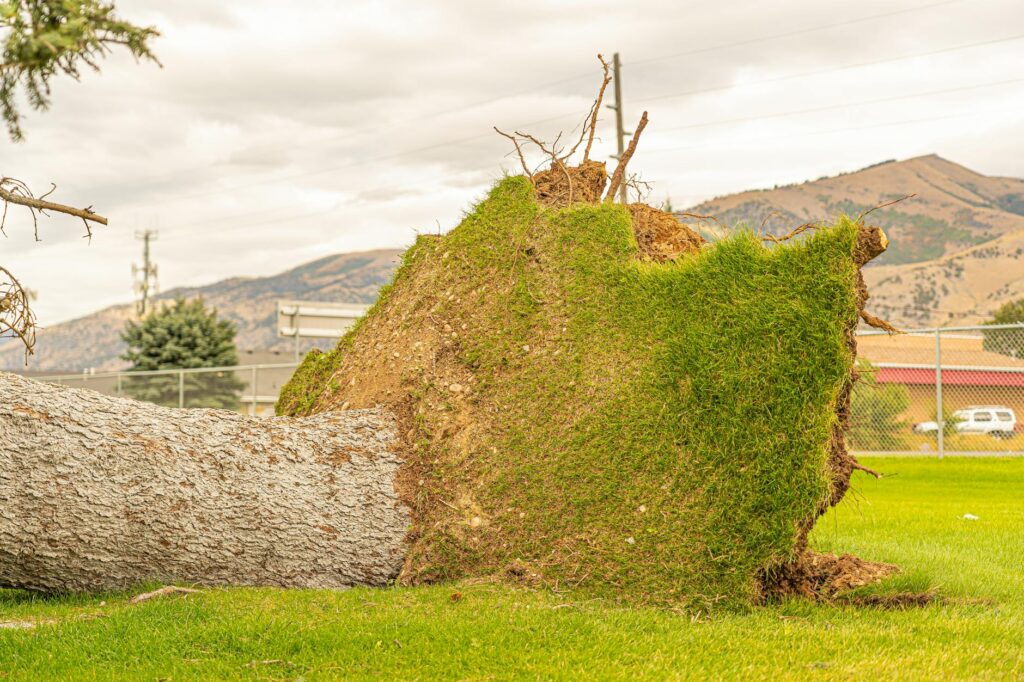
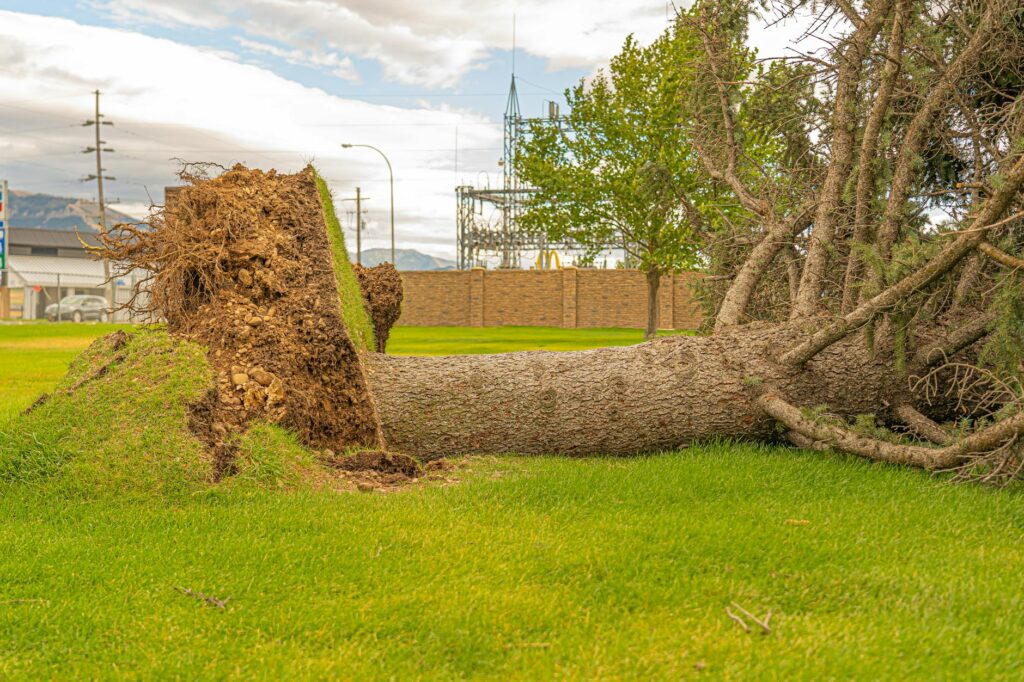
Root heave is the failure mode most likely to be missed in the morning walkthrough. When soils are saturated by hours of heavy rain and then hit with a sudden gust, roots simply cannot grip. You’ll see this as a mound of raised soil on the windward side of the trunk, or a new lean that was not there yesterday. A tree that has uprooted even a few inches has severed major structural roots, and the damage is almost always fatal even if the canopy still looks green.
Your 48-Hour Walk-Around: What to Look For
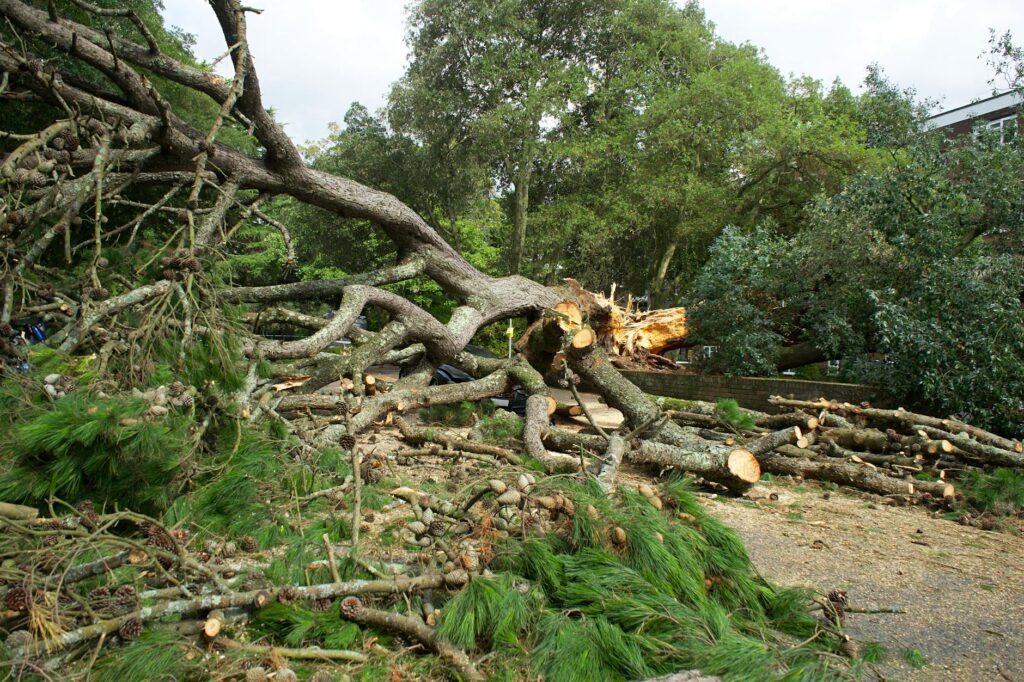
You don’t need a chainsaw or a ladder for this assessment — you need a clear view, some patience, and the discipline to look up. Before approaching any storm-damaged tree, scan from a safe distance for what arborists call widow makers: limbs that are cracked or torn but still partially attached, often supported only by a strip of bark or resting against a branch above. These can drop without warning, even days after the storm. If you cannot safely circle the tree without passing under hanging limbs, stop, mark the area with bright flagging tape or a cone, and wait for a professional.
Once you have confirmed a safe sight line, here is what to examine on your walk-around:
- Hung limbs: A branch that broke but did not fall — often resting in the canopy above. These are the most dangerous storm outcome, full stop.
- Split crotches: A co-dominant union that has opened or torn partway. Look for exposed white wood at the union, bark separation, or a visible gap between stems.
- Root heave: Raised, mounded soil at the base of the trunk; a new lean that was not present before the storm; visible large lateral roots now at the surface.
- Lightning scars: A long vertical groove or bare wood running down the trunk, sometimes with bark peeled entirely away on one side.
- Crown loss: Major scaffold branches missing. A tree that has lost more than a third of its canopy in a single event is structurally compromised and deserves professional evaluation before you assume recovery is likely.
Rutgers NJAES home and lawn resources for New Jersey provide regional guidance on tree evaluation after storm events, calibrated to NJ soils, species, and seasonal conditions — a useful starting point for Monmouth County homeowners working through the assessment process.
Middletown's #1 Tree Expert Company
FREE Inspection & Estimate | Certified Arborists | Trimming, Pruning, Removal, More!
Sponsored
Saveable vs. Gone: Reading the Damage Honestly
One of the hardest conversations a certified arborist has is telling a homeowner that a beloved tree — especially a mature white oak or red maple that has shaded the yard for three generations — cannot be saved after storm damage. But identifying that reality early is far more humane than watching it decline slowly over two seasons before becoming a genuine fall hazard.
The general rules of thumb that guide professional assessments:
- Lost less than one-third of its live crown? Likely salvageable with proper pruning and follow-up care. Most trees with sound structure and healthy root systems can close wounds and compensate for lost branches.
- Lost 50 percent or more of major scaffolding? Survivability is poor. The tree may leaf out again but will carry structural deficits for the rest of its life.
- Root heave or significant new lean? These are almost always fatal structural failures. Some species can occasionally be cabled upright from a partial lean, but it is the exception, not the rule.
- Lightning strike with major cambium loss? Evaluate by species. Oaks and beeches often recover from glancing strikes; trees with long spiral strikes that wrap the trunk below the crown typically do not.
Species matters in Middletown’s coastal plain soils. Tulip poplars and silver maples (Acer saccharinum) are notorious for brittle wood that holds poorly once scaffold branches are torn away. White oaks (Quercus alba) and shagbark hickories (Carya ovata) are far more structurally resilient after comparable damage. USDA Forest Service urban forestry resources on structural assessment provide a technical framework that backs up field evaluation, particularly for large-diameter trees where the stakes are highest.
Why DIY Storm Cleanup Is More Dangerous Than It Looks
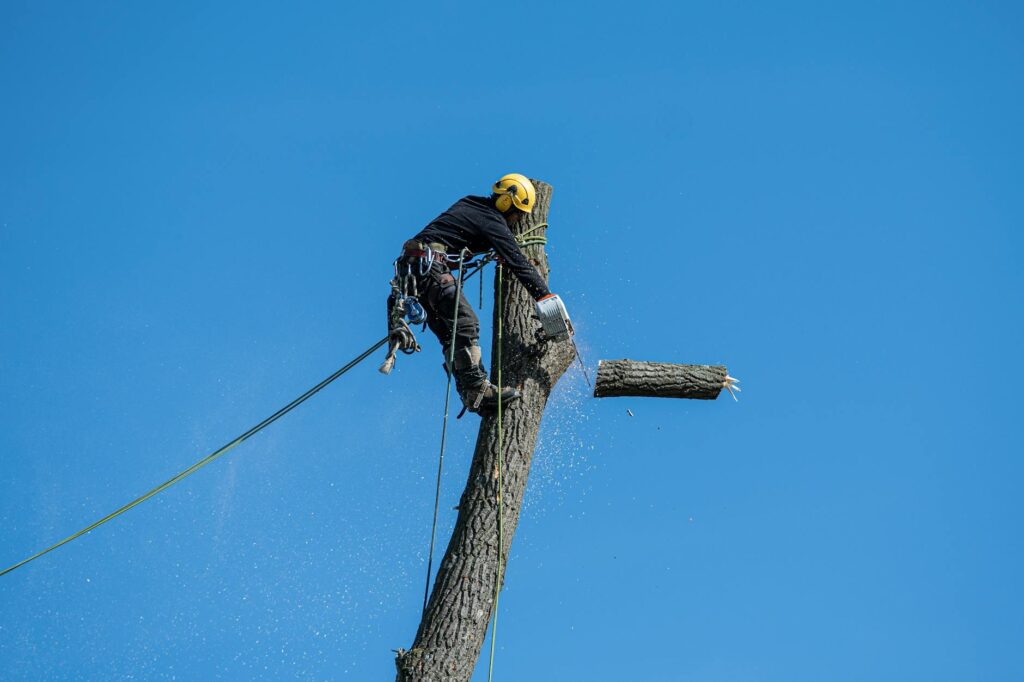
After a major storm, the familiar sight of neighborhood chainsaws firing up before 8 a.m. is understandable — homeowners want to take control, and a downed limb across the driveway feels like a solvable problem. But storm cleanup is statistically one of the most dangerous moments in the tree-care calendar, and the risk spike falls almost entirely on untrained individuals, not professionals.
The primary danger is spring tension in hung limbs. When a large limb is cracked or partially attached, it often still holds enormous tension — compressed on one side, in tension on the other, like a partially bent spring. Making a cut without understanding where that stored energy lives can cause the wood to kick violently in an unpredictable direction, even on a limb only 12 feet off the ground. Certified arborists and tree workers are trained in tension-release cuts, rigging, and sequencing specifically for these scenarios. Homeowners are not, and they are working without the personal protective equipment or positioning systems that keep professionals safe.
There is also the proximity-to-power-line problem. In Middletown, residential trees along Shore Road, Port Monmouth Road, and throughout the older neighborhoods near Leonardo and Belford frequently grow near or into utility lines. What looks like a simple broken-branch situation can involve a conductor hidden in the canopy. Never approach a tree where a power line may be involved until you have confirmed with JCP&L that the conductor is de-energized.
Finally, a practical note on insurance: homeowner policies often include specific language about who performs tree removal before and after a covered storm event. Working with a licensed, insured contractor protects your claim. A receipt from a legitimate tree care company also documents the loss in a way that an afternoon of DIY cleanup simply does not.
What to Fix Before the Next Storm Arrives
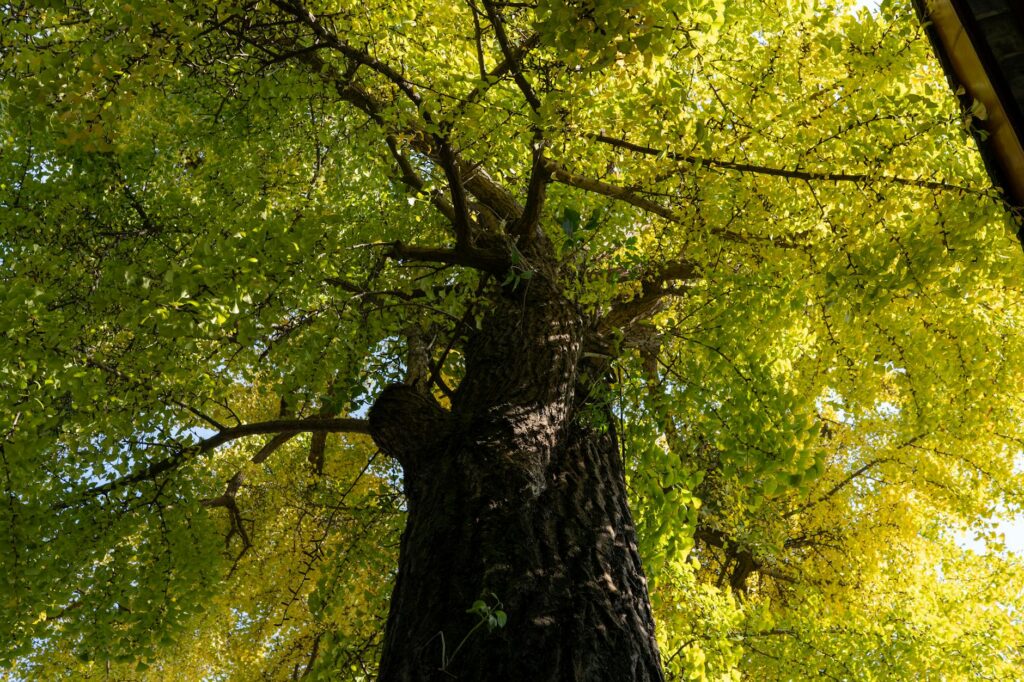
The interval between a June thunderstorm and the next round of severe weather may be as short as two or three days. If you have a tree that survived this event but showed signs of structural weakness — a co-dominant stem that held together but has visible bark inclusion at the union, a large branch with a narrow attachment angle, a significant accumulation of dead wood in the upper canopy — that tree is a candidate for preventive work before hurricane season arrives in earnest in August and September.
Cabling and bracing is one of the most cost-effective interventions available for trees with repairable structural defects. A high-tensile cable installed between two co-dominant stems distributes dynamic load during wind events and prevents the kind of split that a single storm would otherwise cause. Modern dynamic cabling systems have largely replaced rigid steel-rod hardware in professional arboriculture, allowing stems to flex naturally while still limiting the range of separation under extreme loading. This work must be done by a certified arborist — cables installed at the wrong height or with incorrect hardware actually concentrate stress and can accelerate failure.
Crown cleaning — the systematic removal of dead, diseased, and structurally marginal branches — matters too. A dead limb does not need a hurricane to fall; ordinary summer convective storms knock dead wood loose constantly, and over a Middletown driveway or patio, even a 15-pound branch can cause serious injury or property damage. Late May through early June, before the heat of summer sets in, is an excellent window for an arborist to walk your property and prioritize these removals.
When replacing trees lost to storm damage, Rutgers NJAES cooperative extension publications offer regionally appropriate guidance on storm-resilient native species for Monmouth County. Eastern red cedar (Juniperus virginiana), swamp white oak (Quercus bicolor), and river birch (Betula nigra) are among the better long-term investments for bayshore properties where wind exposure is a recurring fact of life.
Middletown's #1 Tree Expert Company
FREE Inspection & Estimate | Certified Arborists | Trimming, Pruning, Removal, More!
Sponsored
Summary / When to Call a Pro
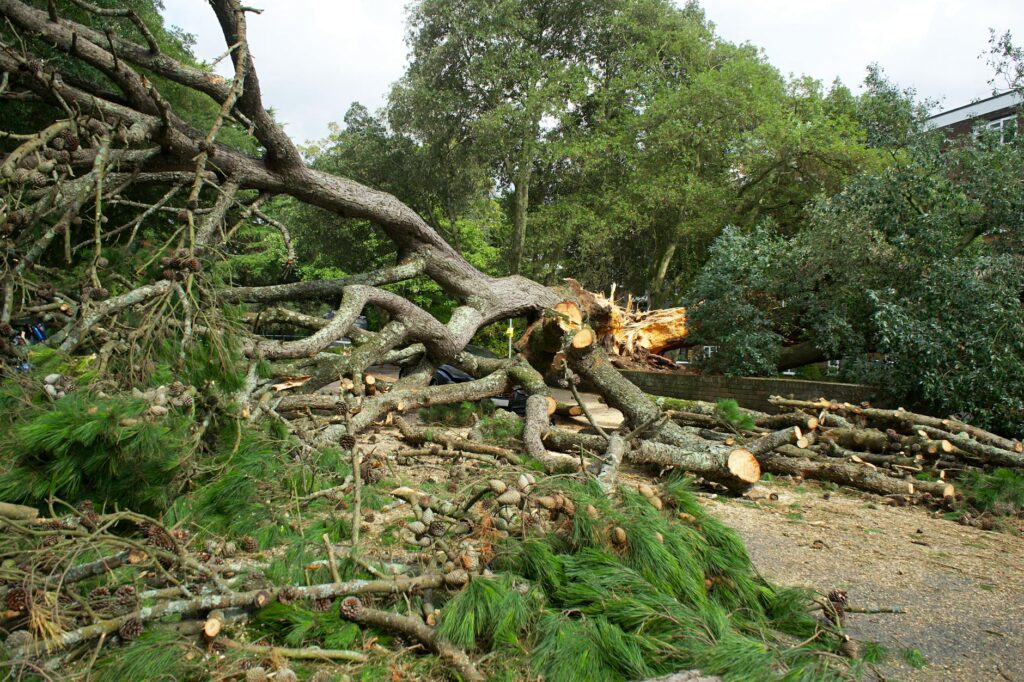
The window after a thunderstorm is not the time for hasty decisions. A mature tree that has shaded your yard for 50 years deserves an honest evaluation before a saw is started. A tree that looks damaged but can be saved is worth saving; a tree that presents a genuine hazard to your home, your neighbor’s fence, or anyone who walks beneath it needs to come down efficiently and safely — with the right equipment and the right hands on it.
If you are in Middletown and last night’s storm left you with hung limbs, a split crotch, a leaning trunk, or a lightning scar you are not sure about, the right call is a certified arborist. Not a landscaper with a chainsaw, not a well-meaning neighbor with equipment — a credentialed tree care professional who can evaluate the whole tree, not just the visible damage. Look for an ISA-Certified Arborist or a New Jersey Licensed Tree Expert; both credentials require demonstrated knowledge, continuing education, and professional liability coverage.
Document what you see now: photos of the damage, any new lean, soil mounding at the root collar, cracked unions. This documentation helps the arborist understand the sequence of events and helps your insurance carrier assess the claim. If there is any question at all about whether a hanging limb could fall on a person or a structure, treat the entire area as unsafe until it has been cleared by a professional.
Storms are part of life along the Bayshore. The trees we plant and manage today are the ones that will either stand or fall in the next nor’easter or tropical system that moves up the coast. A little honest assessment after each storm event — timely hazard removal, structural support for trees worth keeping, and smart species selection going forward — is what separates a long-lived, resilient urban canopy from a neighborhood liability.
Photo credits: Featured image by Castorly Stock on Pexels; Section 1 by K on Pexels; Section 2 by Brett Sayles on Pexels; Section 3 by Mike Bird on Pexels; Section 4 by Castorly Stock on Pexels; Section 5 by Jacky on Pexels; Section 6 by Peter Xie on Pexels; Section 7 by Mike Bird on Pexels.