Middletown's #1 Tree Expert Company
FREE Inspection & Estimate | Certified Arborists | Trimming, Pruning, Removal, More!
Sponsored
The Yellow That Isn't Normal Leaf-Out
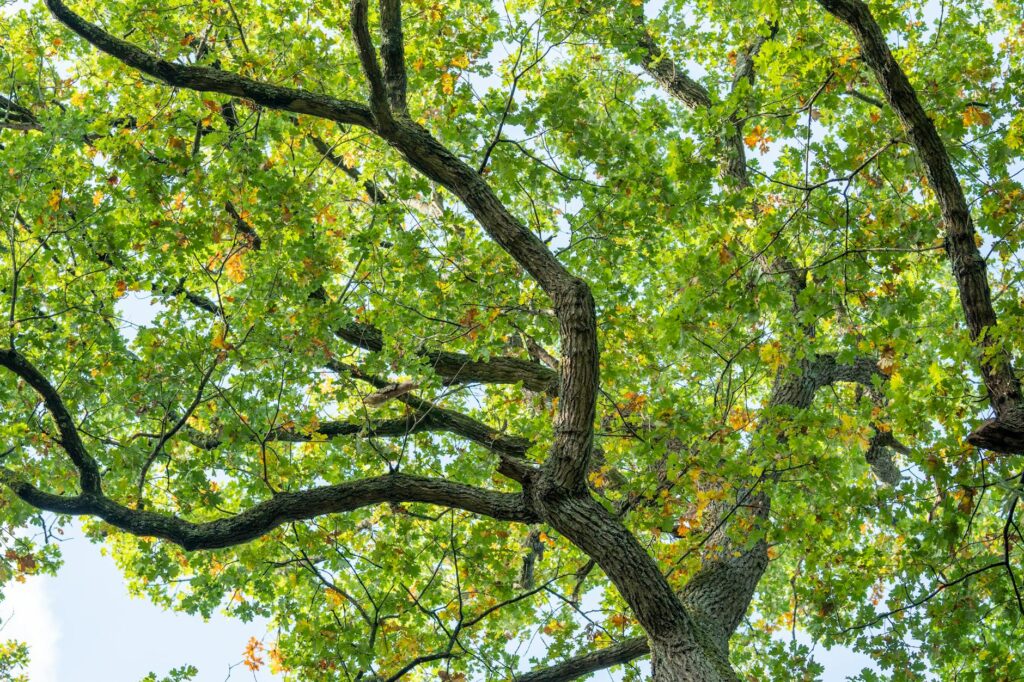
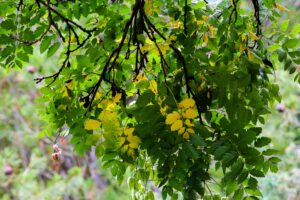
It’s mid-May in Middletown, and your pin oak (Quercus palustris) should be draped in the kind of deep, saturated green that makes a yard feel like a shaded canopy. Instead, you’re noticing something off — leaves that came in pale, almost washed out, with darker green veins threading through tissue that should be matching them. It looks like the tree forgot how to color inside the lines.
This pattern has a name: iron chlorosis. And in Middletown Township, particularly along the Bayshore corridor, in neighborhoods where fill soil was trucked in during construction, and wherever concrete flatwork surrounds a tree’s root zone, I see it every spring. The pin oak is Monmouth County’s most reliably planted street and lawn tree — and it’s also the species most prone to this condition in our local soils.
The good news is that iron chlorosis is diagnosable, treatable, and — with the right information — preventable for future planting decisions. But acting before the tree loses too much energy to the growing season matters. Here’s what Middletown homeowners need to know.
What Iron Chlorosis Is — and Why Pin Oaks Are So Vulnerable
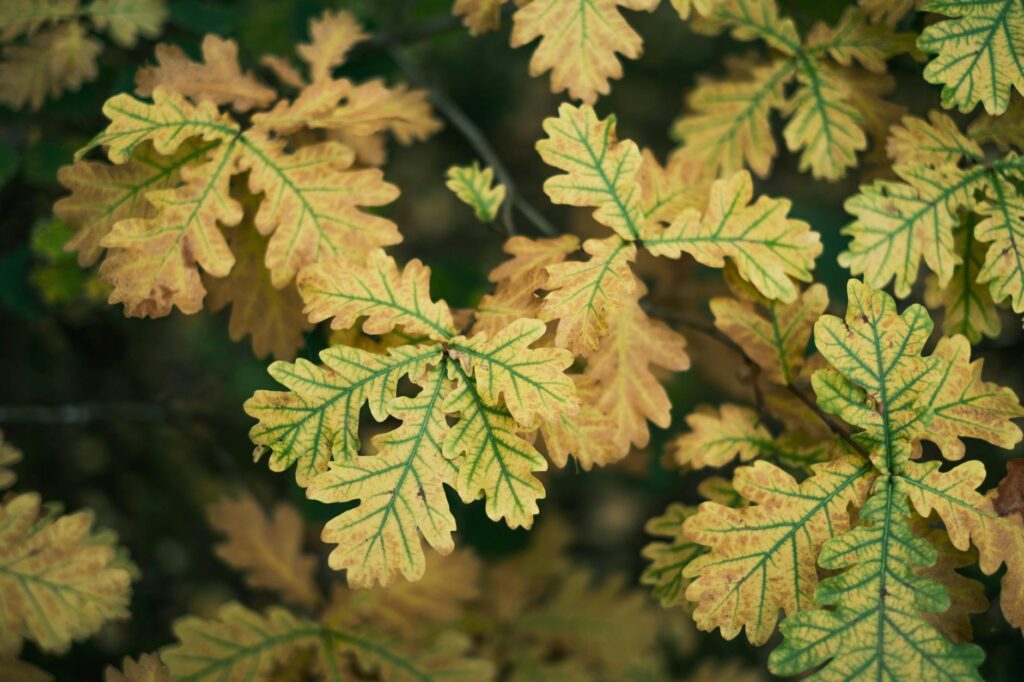
Chlorosis is a failure of chlorophyll production in leaf tissue. Iron is a critical cofactor in that process — without adequate available iron, leaves cannot produce the green pigment they need to photosynthesize effectively. The result is that characteristic interveinal yellowing: the leaf veins stay green because they receive the highest direct flow of whatever iron the tree can muster, while the tissue between them fades to yellow or cream.
The key word is available. Iron is not rare in Middletown’s soils. What is rare is iron in a form that tree roots can actually absorb. Iron solubility drops sharply in alkaline conditions — once soil pH climbs above roughly 6.5 to 7.0, iron molecules bind chemically to other compounds and become inaccessible to roots. The tree is sitting in a room full of food it cannot eat.
As the International Society of Arboriculture explains in its homeowner resources, pin oaks evolved in naturally acidic, well-drained soils, and their root chemistry is finely tuned to low-pH environments. A sugar maple might tolerate a soil pH of 7.2 without visible complaint; a pin oak planted in the same conditions will often look pale and sickly by its second or third growing season. In Middletown, where pin oaks line suburban streets from Lincroft to Leonardo, this is not a rare edge case — it is a predictable outcome for many of these trees.
Why Middletown Soils Create the Conditions for Chlorosis
Monmouth County’s native soils vary widely across Middletown Township. The upland areas around Hartshorne Woods Park, the Navesink River corridor, and the Lincroft plateau tend toward loamy, moderately acidic soils that pin oaks tolerate naturally. But the soils where most Middletown homes actually sit are a different story.
Large portions of Middletown’s residential neighborhoods were developed on disturbed ground. Fill soil imported during construction is often far more alkaline than the native soil profile, and it lacks the organic matter that buffers pH over time. In the bayshore communities — Port Monmouth, Keansburg, Belford, Leonardo — coastal sediments and marine deposits can trend alkaline on their own. And wherever a concrete driveway, a sidewalk, or a foundation wall borders a tree’s root zone, calcium leaches slowly from the concrete and raises soil pH year by year.
The result is that a pin oak planted by a developer thirty years ago in front of a house on a poured-concrete apron may look acceptable for its first decade, then begin showing progressive chlorosis as pH creeps upward and root competition with nearby hardscape intensifies. If you have a mature pin oak that yellows a little more each spring, this dynamic is almost certainly at work.
The Rutgers Cooperative Extension Soil Testing Laboratory offers inexpensive soil pH testing for New Jersey homeowners — a baseline test costs only a few dollars and gives you the actual pH reading you need before committing to any treatment. It is the necessary first step.
Middletown's #1 Tree Expert Company
FREE Inspection & Estimate | Certified Arborists | Trimming, Pruning, Removal, More!
Sponsored
Telling Iron Chlorosis Apart from Other Problems
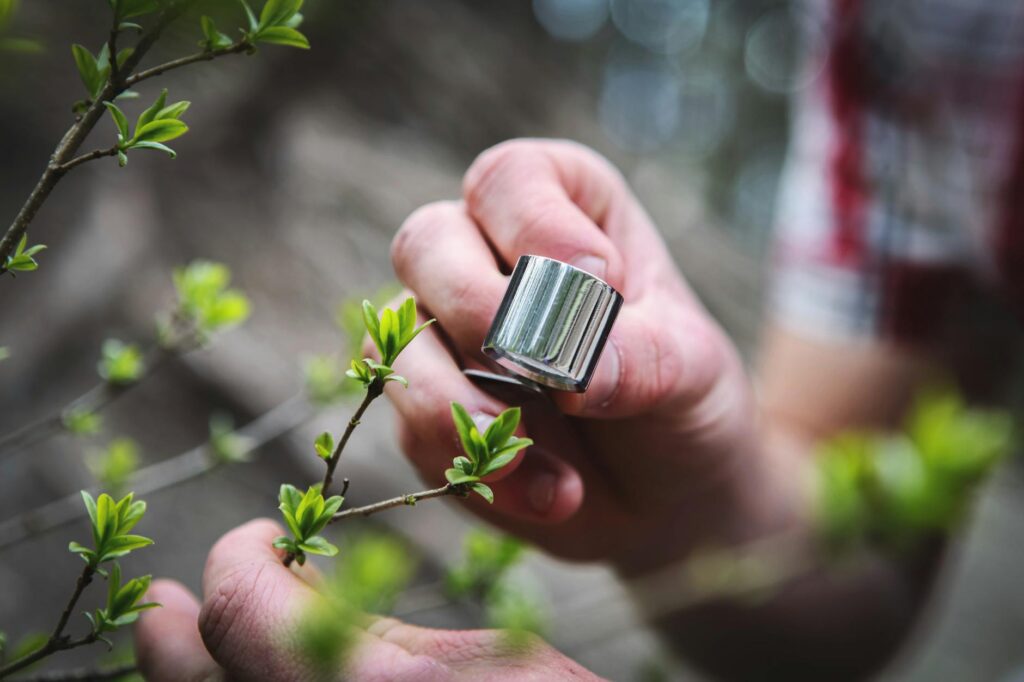
Interveinal yellowing sounds distinctive, but it can be confused with other conditions if you are not accustomed to looking at tree foliage closely. Getting the diagnosis right before treating saves money and avoids applying the wrong remedy to a different problem.
Here’s a field guide for Middletown homeowners:
- Iron chlorosis: Yellow leaf tissue with distinctly green veins, typically appearing first on younger leaves near branch tips. Usually affects the whole canopy, though sun-exposed upper crown often shows it most clearly.
- Leaf scorch: Browning or crisping at leaf margins, not between veins. A moisture stress symptom driven by drought, root compaction, or soil problems affecting water uptake — the edges are the diagnostic clue.
- Verticillium wilt: Sudden wilting or leaf drop in one sector of the crown, often a single large limb. It is a soil-borne fungal disease, not a nutrient issue, and tends to present asymmetrically.
- Oak lace bug feeding: Causes stippling and bleached patches on the upper leaf surface with dark frass visible underneath. The pattern is not interveinal — it is more uniformly bleached with speckling across the entire blade.
- Manganese deficiency: Also produces interveinal chlorosis, but tends to appear on older, lower leaves first rather than younger growth at branch tips. A soil test can distinguish manganese from iron as the limiting nutrient.
If you are seeing pale yellow tissue with green veins on young leaves at the tips of branches — especially on a pin oak near concrete or in a lawn that has been repeatedly limed for turf — iron chlorosis is a strong diagnosis.
Treatment Options: What Actually Works
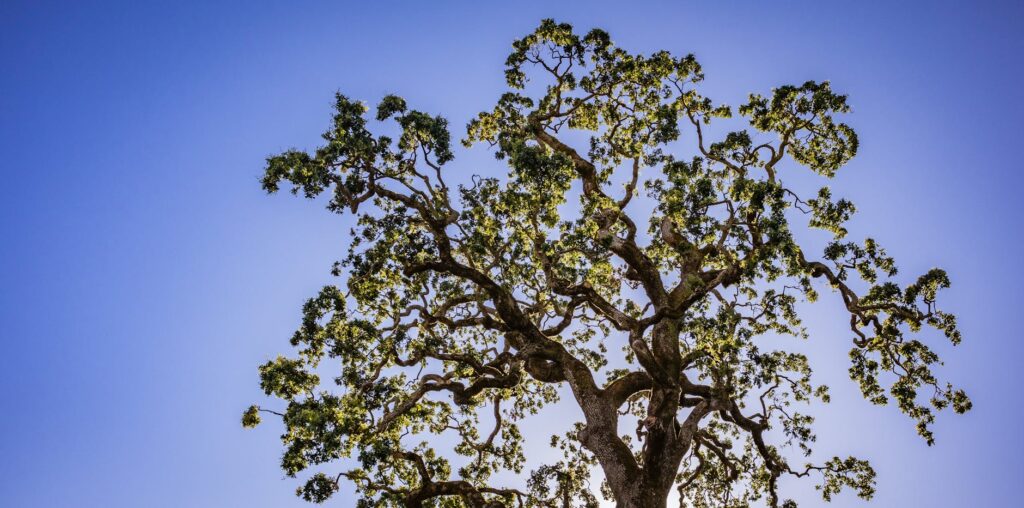
Managing iron chlorosis in a mature pin oak means addressing the real problem — soil pH — not just supplementing iron. That said, there are several practical approaches with different timelines and cost profiles.
Soil acidification: Applying elemental sulfur around the root zone can lower pH over time, as soil bacteria convert it to sulfuric acid. This is the most sustainable long-term fix, but it is slow — expect a year or more to shift pH meaningfully. It works best when the alkalinity source is not ongoing. If concrete is continuously leaching calcium into the root zone, acidification becomes a losing battle.
Chelated iron soil applications: Iron chelate products applied as a soil drench or incorporated at feeder root depth provide a short- to medium-term boost. The chelated form keeps iron soluble even in alkaline conditions. Soil applications last longer than foliar sprays but must be placed where feeder roots actually are — typically in the outer third of the dripline. These treatments usually need seasonal repetition unless underlying pH is corrected. The Tree Care Industry Association recommends combining acidification with chelated iron supplements for the most reliable results on established trees.
Trunk injection: For moderate to severe chlorosis, direct trunk injection of chelated iron delivers the nutrient directly into the vascular system, bypassing soil chemistry entirely. Results appear within weeks. This is the fastest and often most visually dramatic treatment, particularly on trees with years of established deficiency. It requires professional equipment, proper placement, and sound judgment — overtreating or injecting into stressed wood can cause secondary complications.
What does not work: Applying standard balanced fertilizer, spraying generic micronutrient mixes without a soil diagnosis, or adding lime (which will worsen alkalinity). If a garden center product did not help a neighbor’s pin oak, this is almost always the reason.
When to Consider a More Tolerant Oak Instead
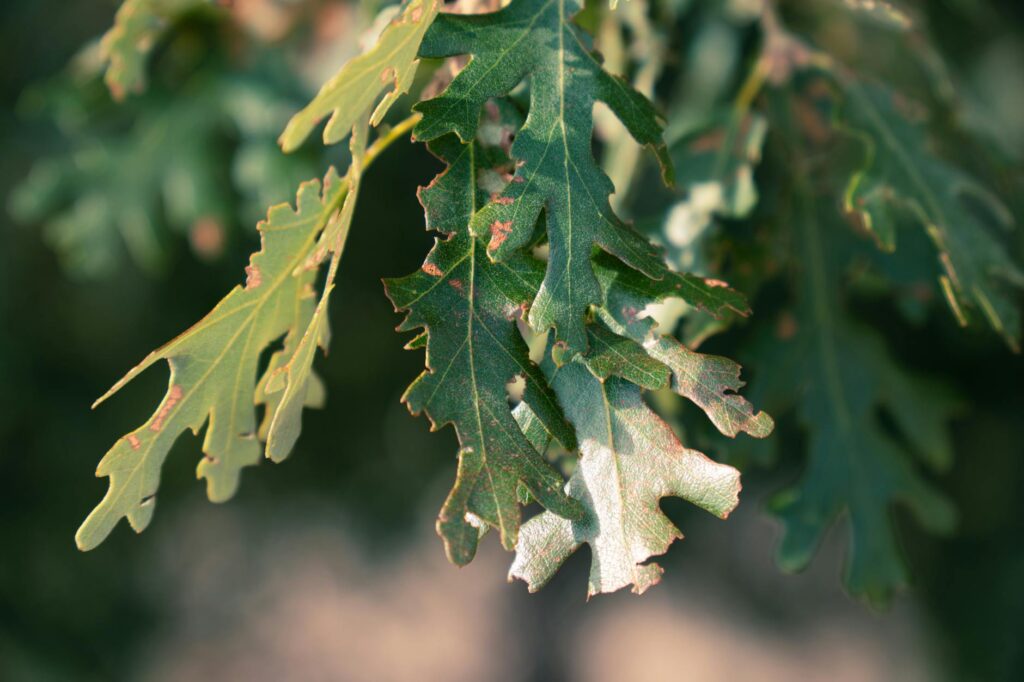
Sometimes the honest conversation is about whether it makes sense to continue treating a pin oak in a location that will never support it well. If a tree sits between a sidewalk and a curb, or directly against a foundation built on alkaline fill, the pH problem is structural and ongoing. You can trunk-inject iron every growing season indefinitely, and the tree will survive in a diminished state — but it will never fully thrive, and the cumulative treatment cost adds up significantly over a decade.
When replanting is an option, the better long-term solution is choosing a more pH-tolerant oak species. White oaks (Quercus alba) and scarlet oaks (Quercus coccinea) handle a much wider soil pH range than pin oaks and are both native to Monmouth County’s upland forests — they grow in the woods at Hartshorne, at Poricy Park, and throughout Middletown’s undisturbed woodland edges. Red oaks (Quercus rubra) are similarly adaptable and offer exceptional fall color. The USDA Urban and Community Forestry program emphasizes matching tree species to actual site conditions as the single most effective strategy for long-term urban tree health — a principle that applies directly to pin oak placement in Middletown’s chemically complex residential soils.
If you are losing a pin oak and planning to replant, late spring or fall are both good planting windows in Middletown’s climate. A white oak or scarlet oak planted now in a corrected location will still be shading that yard for generations.
Middletown's #1 Tree Expert Company
FREE Inspection & Estimate | Certified Arborists | Trimming, Pruning, Removal, More!
Sponsored
Summary / When to Call a Pro
Iron chlorosis is not a death sentence for a Middletown pin oak, but it is a signal that the tree’s relationship with its soil has gone wrong. The interveinal yellowing you notice on young leaves in May means the tree is running short on a nutrient it cannot access — not because the soil is depleted, but because soil pH has made iron chemically unavailable to roots.
If you see the symptoms, start with a soil test through Rutgers Cooperative Extension before spending money on treatment. Know your actual pH. Then match the intervention to the severity: soil acidification for mild cases with correctable sources, chelated iron applications for moderate deficiency, trunk injection for established chlorosis or sites where pH cannot realistically be fixed.
For any pin oak showing dieback alongside the chlorosis — branch tips dying back, reduced twig growth, or early partial leaf drop — it is worth having a certified arborist assess the full picture in person. Chlorosis weakens trees over time, and weakened trees become more vulnerable to secondary pathogens and borer insects. An ISA-certified arborist can evaluate the site conditions, assess feeder root health, recommend a targeted treatment plan, and tell you honestly whether the tree’s location gives it a viable future. Catching the problem while the tree still has good structural health leaves you the most options — and the most trees.
Photo credits: Featured image by Masood Aslami on Pexels; Section 1 by Masood Aslami on Pexels; Section 2 by Ludvig Hedenborg on Pexels; Section 3 by Teona Swift on Pexels; Section 4 by Andreas Schnabl on Pexels; Section 5 by Robert So on Pexels; Section 6 by Cafer SEVİNÇ on Pexels; Section 7 by Peter Xie on Pexels.