
Middletown's #1 Tree Expert Company
FREE Inspection & Estimate | Certified Arborists | Trimming, Pruning, Removal, More!
Sponsored
The Problem That Starts Underground in Mid-May
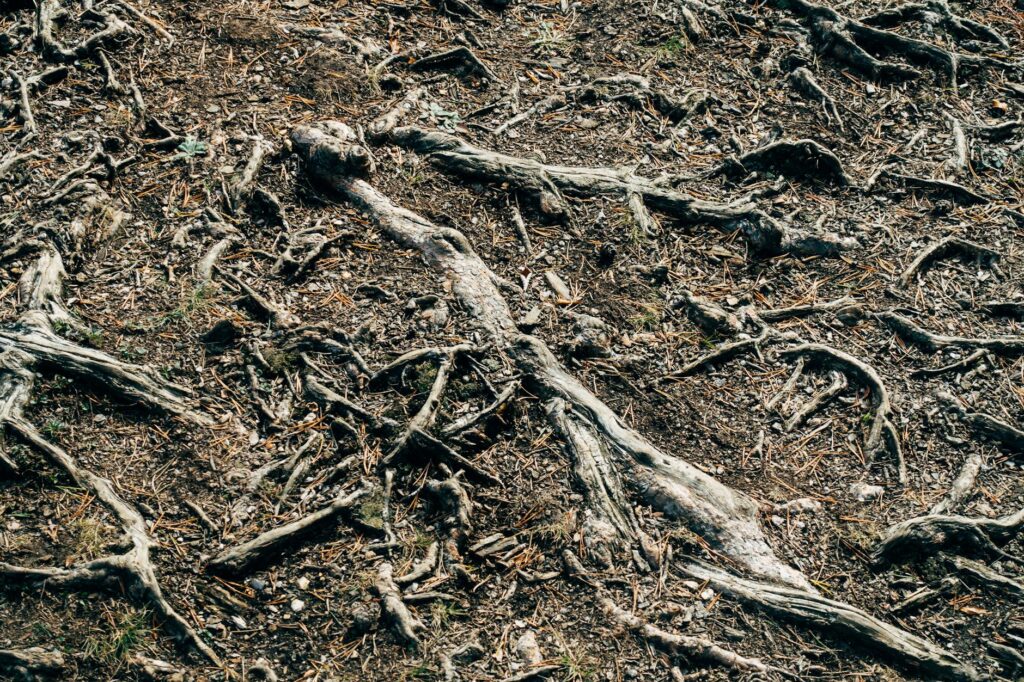
If you’ve been spending time in your yard this May and noticed patches of soil near tree bases that look like loose coffee grounds — dry, granular, and oddly lifeless — you may already have Asian jumping worms working under the surface. These invasive worms, known scientifically as Amynthas species, are not the plump red earthworms most Middletown homeowners grew up associating with healthy soil. They’re something else entirely, and in mid-May they’re in the middle of their annual hatch across Monmouth County.
I’ve been fielding more questions about this in the last two or three seasons than ever before. Homeowners along the Navesink corridor, in Lincroft, and in neighborhoods bordering Poricy Park have all described the same thing: a strange patch near the base of a well-established tree where the soil is loose, dry, and won’t hold moisture. In many of those cases, Asian jumping worms are the culprit — and the tree roots nearby are paying the price.
Mid-May is exactly the moment to pay attention. The worms hatch from overwintered cocoons in late spring and reach maturity by midsummer, doing the bulk of their damage to the soil ecosystem between now and October. Getting familiar with the signs now can help you act before they spread further into your landscape.
What Asian Jumping Worms Are — and Why They're Not Your Garden-Variety Earthworm
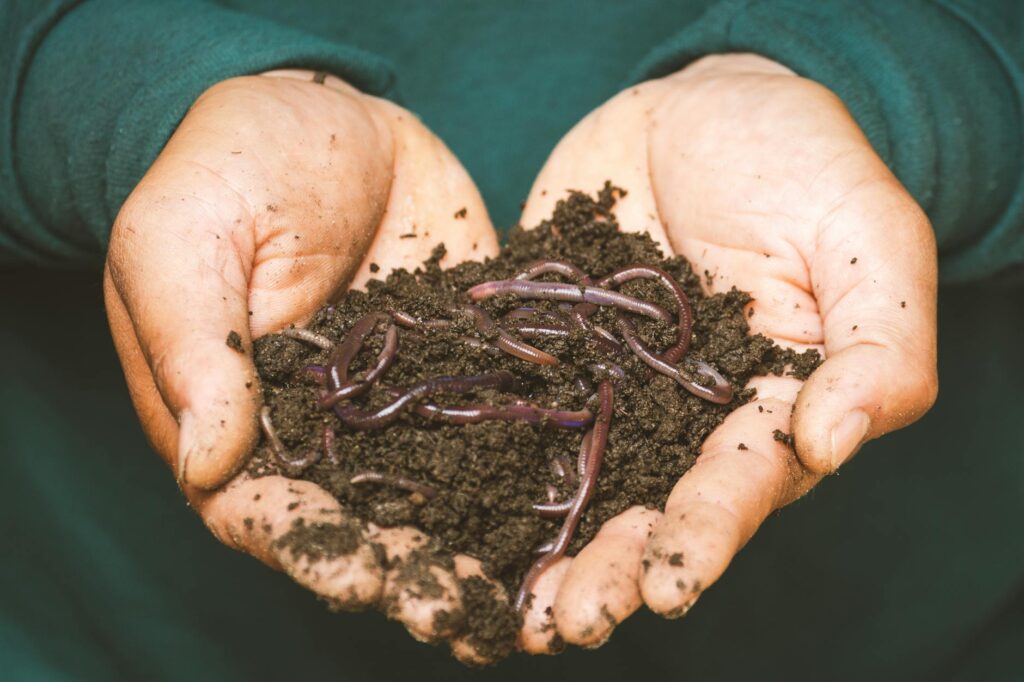
Asian jumping worms are a group of closely related invasive earthworm species — primarily Amynthas agrestis, Amynthas tokiensis, and Metaphire hilgendorfii — native to East Asia and first documented in the United States in the mid-20th century. Unlike the European earthworms most gardeners welcome, jumping worms are annual: every adult dies in the fall, but they leave behind tiny, soil-colored cocoons that survive the winter and hatch the following spring. Right now, in mid-May, the hatchlings from this year’s cocoons are active in the top few inches of soil across much of New Jersey.
The name comes from their behavior. When disturbed, they thrash wildly — more like a snake than a worm — and may leap several inches off the ground. Pick one up and it will usually shed its tail segment as a defense mechanism. Their clitellum, the distinctive band around the body, is flat and pale compared to the raised, pinkish clitellum of a common nightcrawler, and it wraps completely around the body rather than sitting on top. That’s the easiest field identification if you’re not sure what you’re looking at.
For current identification guidance, Rutgers Cooperative Extension’s Plant Pest Advisory has documented jumping worm spread across New Jersey and maintains updated resources for homeowners and land managers. Their confirmed presence in Monmouth County has been established in multiple field surveys over the past several years, including in woodland parks and residential areas throughout the Middletown area.
How Jumping Worms Destroy the Soil Your Trees Depend On
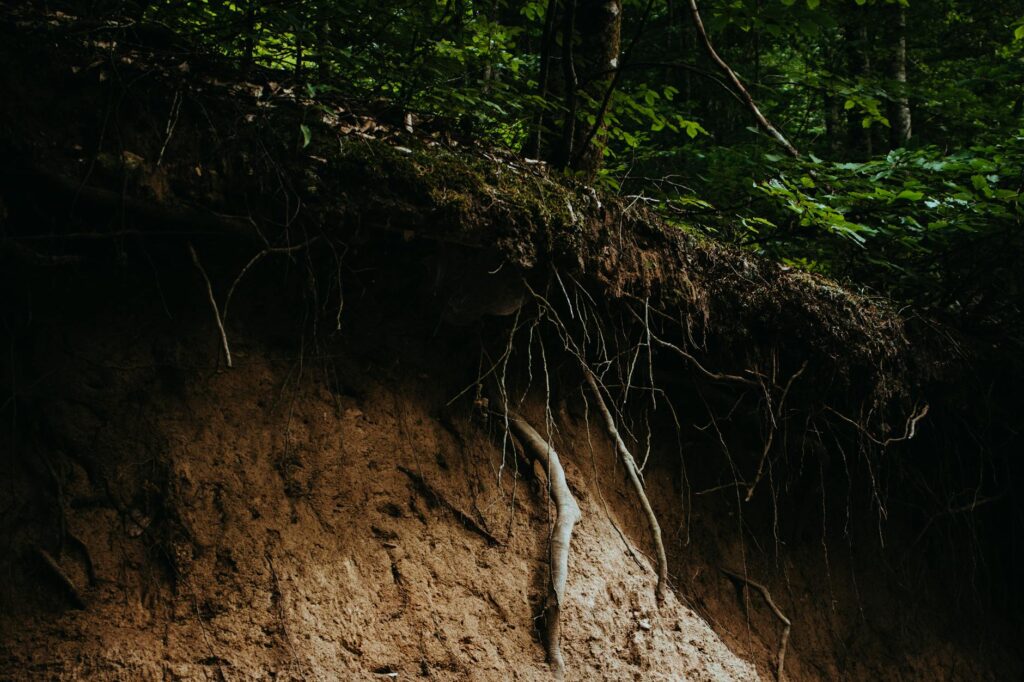
European earthworms improve soil by pulling organic matter deeper and aerating compacted layers — which is why generations of gardeners have treated them as allies. Asian jumping worms work the opposite way. They feed aggressively on the organic layer at the surface, consuming the leaf litter, decomposing wood, and humus that forms the foundation of healthy forest soil. What they leave behind is a loose, granular substrate — coarse and clumpy, like worn-out coffee grounds — that lacks the structure, water-holding capacity, and microbial life that trees and woodland plants require.
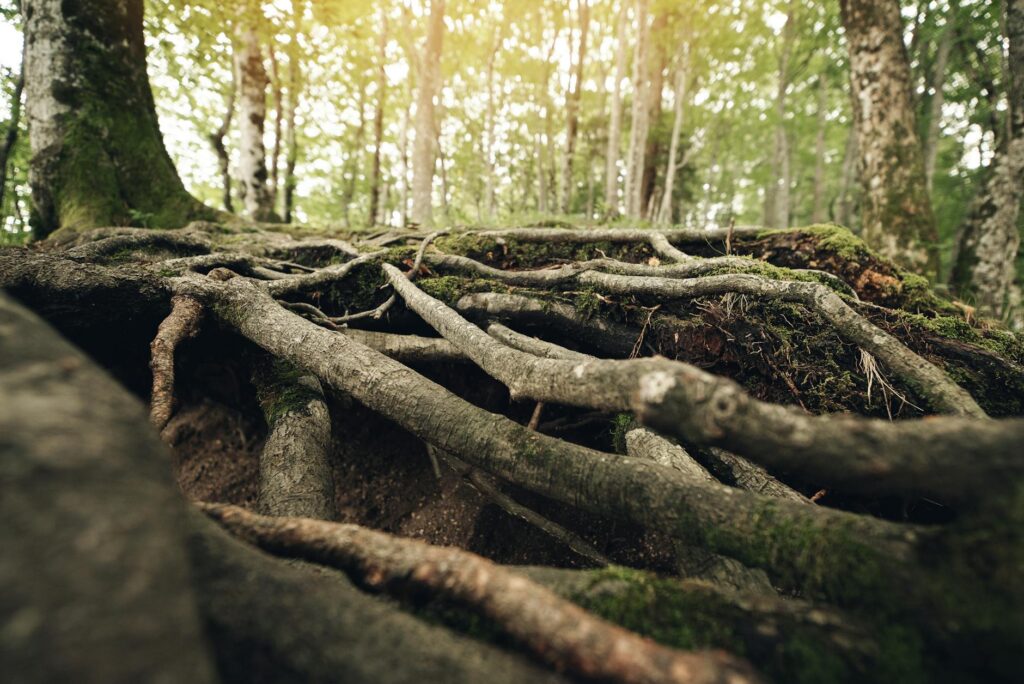
For trees, this is particularly damaging at the root zone. The fine feeder roots of most deciduous trees — white oak (Quercus alba), red maple (Acer rubrum), flowering dogwood (Cornus florida), and others common throughout Middletown — live in the upper few inches of soil, precisely where jumping worms are most active. When that organic layer is consumed and replaced with granular castings, those feeder roots lose their moisture retention and nutrient supply simultaneously.
The castings also repel water rather than absorbing it, meaning rain runs off rather than soaking in. During May dry spells and summer droughts — both increasingly common along the Bayshore — this leads to drought stress even in trees that are otherwise well-situated. It’s a cascade: degraded soil leads to root stress, root stress leads to reduced canopy vigor, and a weakened canopy becomes a target for secondary pests like borers and canker fungi.
The NJ DEP Forest Service has flagged invasive earthworms as a significant threat to forest floor ecology statewide, particularly in woodland edges and parks where soil disturbance is common — exactly the habitat type found throughout Middletown’s wooded neighborhoods and greenway corridors.
Middletown's #1 Tree Expert Company
FREE Inspection & Estimate | Certified Arborists | Trimming, Pruning, Removal, More!
Sponsored
How They Spread — and How They Get Into Your Yard
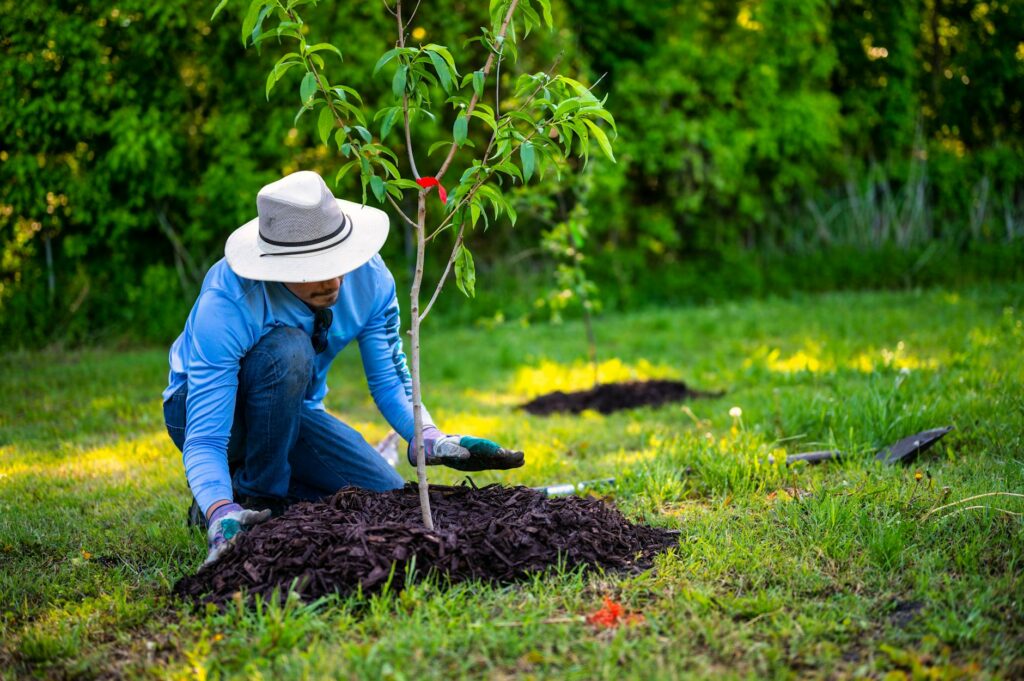
Asian jumping worms don’t travel far on their own — an adult might move 10 or 15 yards in a season. What makes them spread rapidly through residential areas is human activity. The single most common vector is purchased mulch or compost. Jumping worm cocoons are tiny, barely 2–3 millimeters across, and essentially invisible in bulk mulch. Once that mulch is spread around a tree or in a garden bed, any cocoons it contains will overwinter in place and hatch the following spring.
Plant swaps and shared divisions are another common pathway. Passing a clump of hostas or ornamental grasses to a neighbor can inadvertently transfer cocoons in the root ball. The same is true of potted plants with spent nursery soil — and even bare soil tracked in on boots or tools after a visit to an infested area. Poricy Park and other woodland areas in Middletown have documented jumping worm activity, and trails through these areas can carry cocoons out on footwear and gear.
In practice, jumping worms follow the flow of gardening activity — and in a densely landscaped township like Middletown, they have plenty of pathways. The USDA National Invasive Species Information Center maintains current distribution maps and identification resources for land managers and homeowners tracking the spread of this species across the Northeast.
If you’ve recently added new mulch, soil amendments, or plants to areas near your trees — particularly from sources you can’t fully verify — it’s worth inspecting those areas over the coming weeks for the telltale granular casting texture at the soil surface.
What You Can Do Right Now to Slow the Spread

I want to be upfront about something: there is no chemical treatment approved for use against jumping worms in a residential landscape. Soil drench products that affect earthworms are not selective — they harm everything in the soil food web, including native species and beneficial microbes. The management approach for jumping worms is almost entirely preventive and cultural, which is frustrating, but it also means that paying attention now genuinely matters.
The most important steps involve sourcing decisions. Buy mulch and compost only from operations that heat their materials to temperatures that kill cocoons — above 104°F (40°C) for at least 72 hours, following established composting guidelines. For the same reason, avoid sharing or accepting soil, compost, or plants from areas you know to be infested, which may now include significant portions of central and coastal Monmouth County.
- Inspect new plants carefully before introducing them to your landscape — remove as much nursery soil as possible before planting
- Clean boots, tools, and equipment after visiting potentially infested parks or wooded areas
- Avoid moving soil or plant material from one part of your property to another if you’ve spotted jumping worm signs
- Apply fresh mulch in layers no deeper than 2–3 inches — deep mulch creates ideal jumping worm habitat
If jumping worms are already established near valued trees, a targeted mustard drench — a solution of dry mustard powder and water — can irritate and surface jumping worms for physical removal, though it does not eliminate cocoons. Some land managers apply this in the fall to reduce adult populations before egg-laying. It’s labor-intensive and only partially effective, but it’s the most practical hands-on option currently available.
The Bigger Picture: Why Middletown's Trees Are Already Carrying Extra Weight
This isn’t happening in isolation. Middletown’s trees are dealing with a confluence of stressors right now that makes soil degradation from jumping worms significantly more serious than it might otherwise be. The township saw below-average rainfall this past spring, following two years of irregular precipitation along the Bayshore — and drought-stressed trees are dramatically more vulnerable to root zone disruption. When jumping worms consume the organic layer near a tree already under moisture stress, the compound effect can accelerate decline faster than either problem alone would cause.
I’ve seen older white oaks in Lincroft and pin oaks along the ridgelines near Hartshorne Woods showing early signs of canopy thinning this May — not from one cause but from three or four overlapping stressors working simultaneously: drought, degraded soil structure, secondary insects, and in several cases the granular casting texture near the root flare that points directly to jumping worm activity.
Mature trees are at particular risk because their feeder roots occupy a large area of shallow soil. A young tree with a small root zone loses relatively little. A 60-year-old oak with surface roots spreading 30 or 40 feet in every direction depends on a vast expanse of organic matter — and losing that layer systematically is not something the tree can easily compensate for over a few seasons.
Understanding these interactions is part of what separates a credentialed arborist’s assessment from a simple visual inspection. The International Society of Arboriculture’s consumer resource at Trees Are Good can help homeowners find ISA-Certified Arborists and understand what a professional root zone and soil health evaluation involves.
Middletown's #1 Tree Expert Company
FREE Inspection & Estimate | Certified Arborists | Trimming, Pruning, Removal, More!
Sponsored
Summary: What to Watch for and When to Call a Pro
Asian jumping worms are not a headline pest — they don’t cause the visible, dramatic damage of a storm limb failure or a skeletonized canopy. Their damage is quiet and cumulative, happening at the soil surface where most homeowners rarely look closely. But mid-May in Monmouth County is exactly the right time to check. Walk the root zones of your most valued trees. Look for that distinctive coffee-ground texture, for unusually dry or loose soil near the base, and for worms that thrash when disturbed rather than retreating smoothly into the soil. Early awareness won’t reverse the spread, but it can help you stop accelerating it through mulch sourcing and plant-sharing practices.
If you have mature trees on your property — oaks, maples, beeches, tulip poplars — showing signs of stress this spring, a professional evaluation is worth scheduling sooner rather than later. Canopy thinning, early leaf drop, dead tips on outer branches, or unusual dieback are signs that a tree is in physiological distress, and the cause isn’t always obvious from the outside. A certified arborist can assess the root zone, evaluate soil conditions, and help you understand whether jumping worm activity is contributing to what you’re observing. Trees in decline can often be stabilized — but the window for effective intervention is narrowest in the early stages, and late May through June is when the picture becomes clear.
Photo credits: Featured image by Robin Godefridi on Pexels; Section 1 by Markus Winkler on Pexels; Section 2 by Sippakorn Yamkasikorn on Pexels; Section 3 by Barış Türköz on Pexels; Section 4 by Alfo Medeiros on Pexels; Section 5 by Yaroslav Shuraev on Pexels; Section 6 by Robert So on Pexels; Section 7 by Walter Cunha on Pexels.