
Middletown's #1 Tree Expert Company
FREE Inspection & Estimate | Certified Arborists | Trimming, Pruning, Removal, More!
Sponsored
The Leaves That Turn Too Early
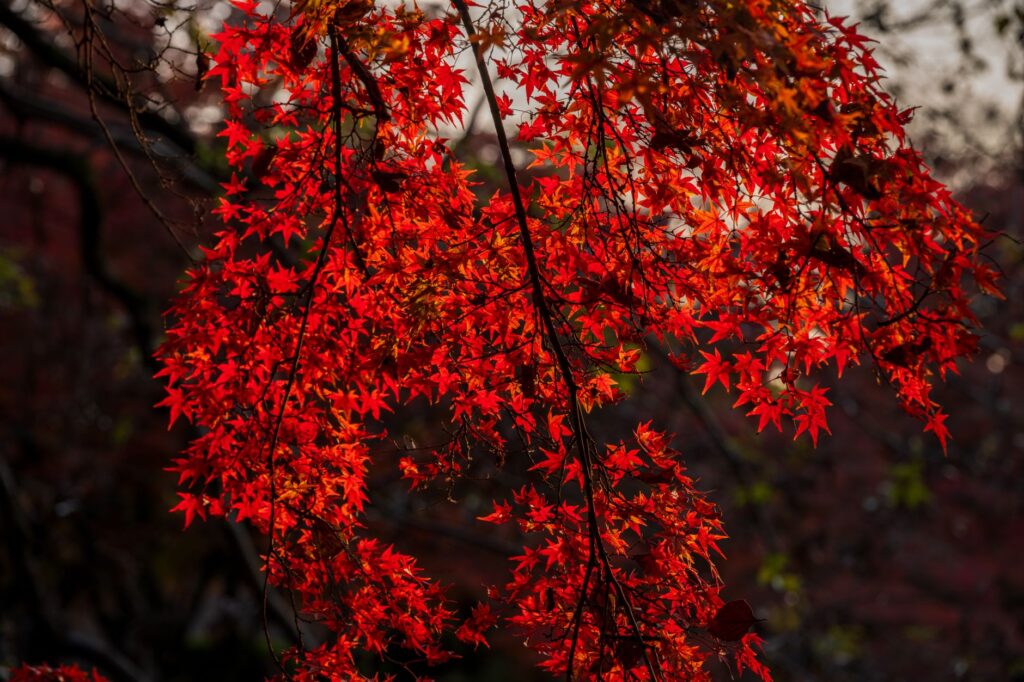
Walk any street in Middletown Township in the first weeks of September and two kinds of color show up on the same block. One red maple (Acer rubrum) is starting a clean, even blush from the tips inward — the ordinary rhythm of a New Jersey fall arriving a little ahead of schedule. Three houses down, another red maple looks like it’s been scorched: leaf margins crisped brown, veins still green, whole branches curling before the rest of the crown has budged. Homeowners tend to lump both under “the leaves are changing early this year.” They are not the same event, and telling them apart matters.
True fall senescence is a tree’s own decision, triggered by shortening daylight and cooling nights. It moves from the outside of the crown in a fairly even wave, and it costs the tree nothing — chlorophyll breaks down on schedule, nutrients get pulled back into the wood before the leaf drops. Marginal browning driven by stress is different. It is the tree cutting losses on tissue it can no longer support, and it usually points to something that started months earlier and is only now showing up where it’s easy to see.
September is a useful checkpoint precisely because both patterns are visible side by side. Distinguishing them early gives a homeowner a real decision to make before winter — water, watch, or call someone — instead of a vague sense that something looks off.
What Normal Senescence Actually Looks Like
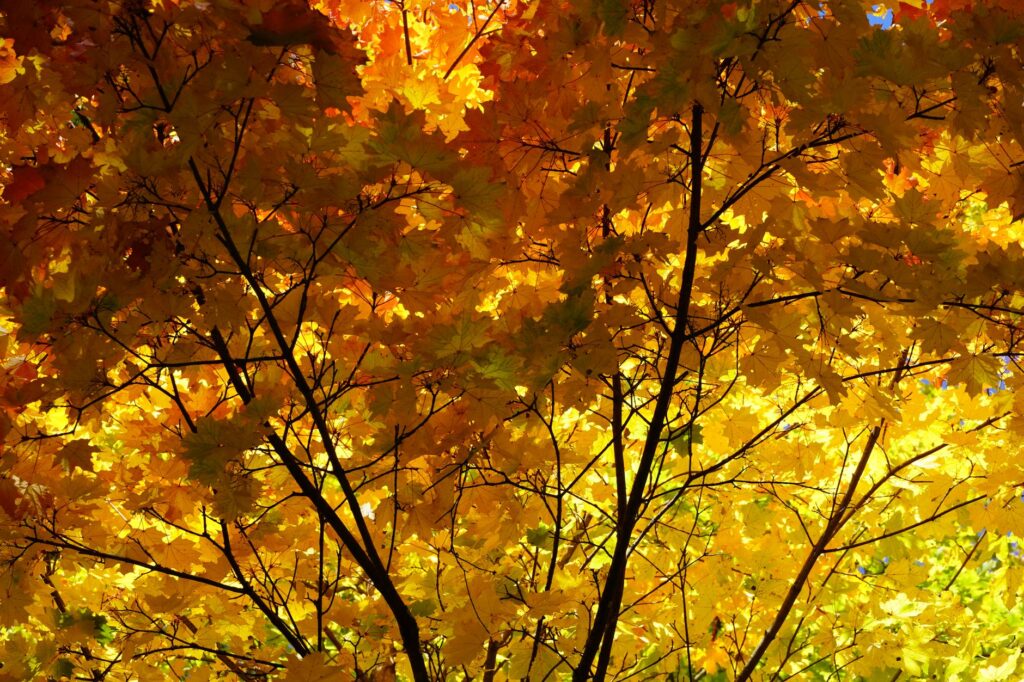
Healthy fall color follows a predictable order tied to species and light exposure. Leaves in full sun at the top and outer edge of the canopy color first, since they experience temperature swings sooner than shaded interior foliage. Color develops evenly across the leaf blade rather than starting at the margin and creeping inward, and veins tend to hold their green longer than the tissue between them before the whole leaf shifts.
Timing matters too. A tree that’s a little early compared to its neighbors isn’t necessarily unhealthy — genetics, microclimate, and even how much sun a particular yard gets all shift the calendar by a week or two in either direction. Sugar maples (Acer saccharum) and black gum (Nyssa sylvatica) are both known for coloring ahead of the pack in Monmouth County, sometimes by late August in a dry year, without it signaling trouble.
The Rutgers Cooperative Extension’s home landscape and lawn resources are a good baseline for what typical seasonal changes look like in New Jersey’s soils and climate, and they’re worth a look before assuming the worst about a tree that’s simply changing on its own timeline.
What Stress Browning Looks Like Instead
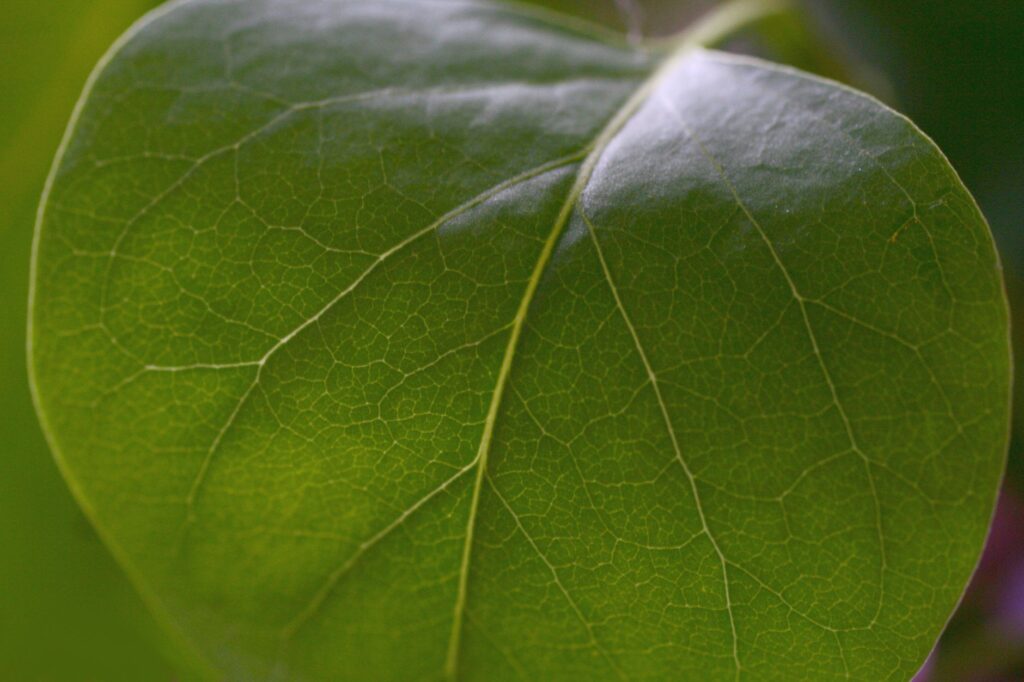
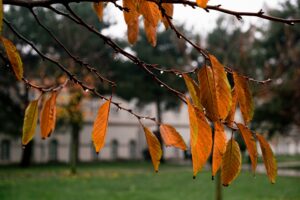
Stress-driven browning breaks the pattern in a few specific ways. It starts at the leaf margin and tip and works inward, often leaving a green center or green veins even as the edge turns crisp brown — a symptom arborists call marginal necrosis. It shows up unevenly across the crown: one side of the tree, one major limb, or the branches nearest a driveway or a stretch of compacted lawn look far worse than the rest. And it’s frequently accompanied by early leaf drop that happens weeks ahead of when the same species colors normally in the neighborhood.
The most common driver in this part of the Bayshore is a summer of insufficient or uneven watering catching up with the tree. Middletown’s clay-loam soils hold water differently than sandy soil further south in the county — they can look adequately moist at the surface while the root zone several inches down stays dry, especially under a lawn that gets frequent shallow watering rather than deep, infrequent soaking. A tree that spent July and August rationing water finally runs out of reserves in September and sheds the leaves it can no longer support.
Salt exposure is the other frequent culprit closer to Port Monmouth, Leonardo, and the Raritan Bay shoreline, where road salt residue and salt spray accumulate over a season. Marginal leaf burn from salt looks almost identical to drought scorch, which is why the two are so often confused — and why a tree near the water showing this pattern deserves a second look rather than an assumption that it’s just early color.
Root zone problems compound both issues. Soil compaction from lawn equipment, construction traffic, or simply years of foot traffic reduces the roots’ ability to take up whatever water is present, so a tree can show drought symptoms even in a season with normal rainfall. The USDA Forest Service’s research database has extensive work on how compacted urban and suburban soils limit root function long before it’s visible above ground.
Middletown's #1 Tree Expert Company
FREE Inspection & Estimate | Certified Arborists | Trimming, Pruning, Removal, More!
Sponsored
A Five-Minute Way to Tell Them Apart
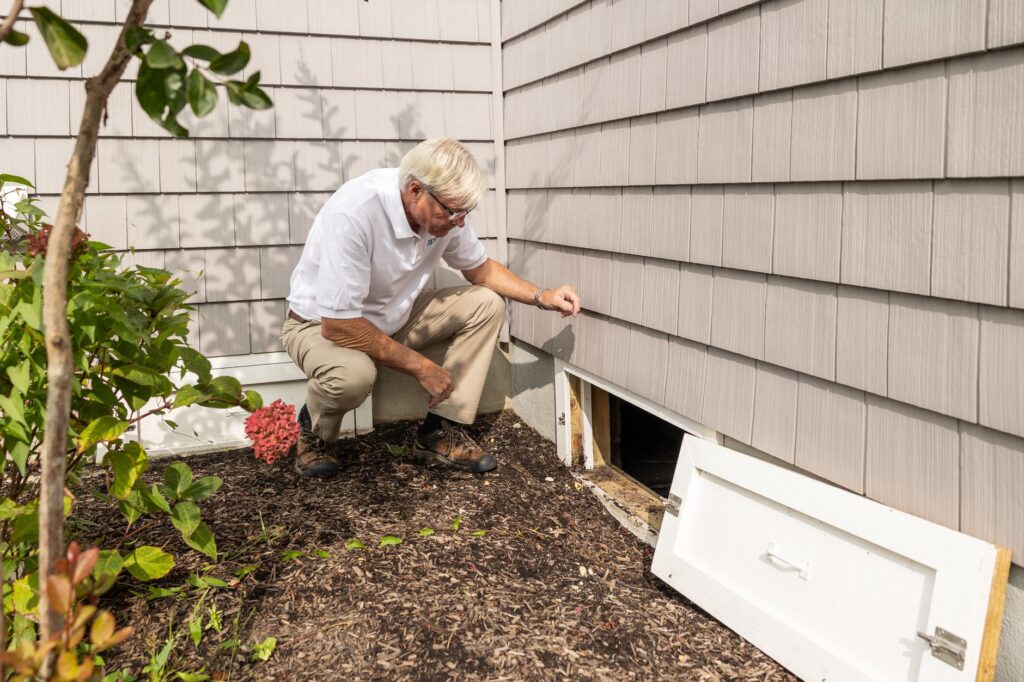
Start with the pattern, not the color. Stand back and look at the whole crown: is the change even across the tree, or concentrated on one side, one limb, or the branches closest to a hardscape edge like a driveway or patio? Uneven distribution points toward a localized stress — root damage on one side, a buried irrigation line break, construction disturbance from a few seasons back — rather than a normal seasonal cue, which affects the whole tree roughly together.
Next, look at individual leaves up close. Margin-in browning with a green center or green veins is the stress signature. Color that develops more uniformly across the leaf blade, without a crisp brown border, is more consistent with normal senescence.
Then check the ground and the bark. Premature drop of otherwise green, undamaged-looking leaves — not brown ones — is often a stress response distinct from either pattern above, sometimes tied to a sudden change like root disturbance or a herbicide drift event. And take a look at the base of the trunk for the root flare: soil or mulch piled against the trunk (a mulch volcano) restricts oxygen to the roots and shows up above ground as this same kind of scattered, marginal browning.
Finally, think back over the summer. Was there a stretch of several weeks with no meaningful rain that this particular tree didn’t get supplemental water for? Was there any digging, trenching, or heavy equipment near the root zone, even outside the drip line? Roots for most shade trees extend two to three times the width of the canopy, so work well outside what looks like “near the tree” can still affect it.
- Even color across the whole crown, following neighborhood timing — likely normal senescence
- Margin browning with green centers, concentrated on one side or limb — likely stress
- Premature drop of green leaves — investigate for a specific triggering event
- Worse symptoms near a driveway, new hardscape, or disturbed soil — check for root zone damage
None of this requires special equipment — just a slower walk around the tree than most people give it on the way to the mailbox.
What to Do About Genuine Stress Browning

If the pattern points to drought stress, the most useful thing to do in September is a deep, slow watering session rather than a quick surface spray — enough to soak the top 12 to 18 inches of soil across the root zone, not just near the trunk. This won’t reverse leaves that have already browned, but it helps the tree rebuild the carbohydrate reserves it needs to get through winter and leaf out normally next spring. The Tree Care Industry Association publishes homeowner guidance on watering technique and timing that’s worth following through October, since Middletown trees don’t fully shut down water uptake until the ground gets consistently cold.
If salt exposure near the Bayshore looks like the driver, a thorough watering also helps by flushing accumulated salts down past the root zone rather than letting them concentrate at the surface. For trees within reach of winter road salt spray, a burlap windscreen installed before the first treatment season can reduce next year’s exposure.
For compaction or a buried root flare, correcting the physical problem matters more than watering alone. Pulling mulch back from the trunk to expose the root flare is a five-minute DIY fix. Fixing deeper compaction across a wider root zone is a bigger job — often addressed with vertical mulching or air spading — and is worth a professional opinion rather than guesswork, since improper intervention can do additional root damage.
Whatever the cause, resist the urge to fertilize a stressed tree in September. Late-season fertilization can push new, tender growth that won’t harden off before frost, adding another stress on top of the one already showing in the leaves. The dormant season is the right window for that kind of intervention, not now.
When the Pattern Points to Something Bigger
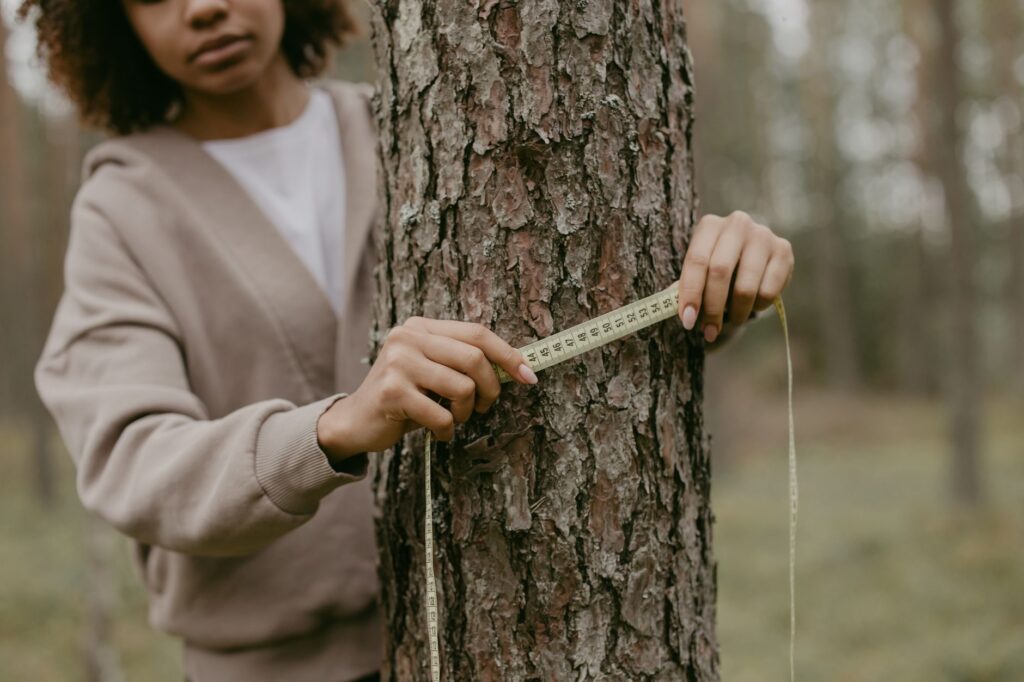
Isolated marginal browning on an otherwise healthy tree is usually manageable with better watering and patience. A few patterns are worth escalating to a certified arborist rather than treating as a DIY watering problem.
Browning paired with bark that’s cracking, weeping, or peeling in patches suggests a canker or vascular problem rather than simple moisture stress, and those often need a trained eye to identify correctly. Sudden, total browning of an entire limb or the whole crown over a matter of days — rather than the gradual creep described above — is a red flag for a girdling root, a trunk injury, or a vascular disease cutting off water transport internally, not a slow-building drought response. And any of these symptoms on a tree that’s already leaning, has visible root heaving at the base, or sits near a house, driveway, or property line raises the stakes enough that a professional risk assessment is worth the cost of avoiding a guess.
The International Society of Arboriculture’s Trees Are Good directory is a straightforward way to find an ISA-certified arborist for a proper on-site look, and it’s a reasonable next step whenever the pattern doesn’t cleanly match ordinary seasonal change or simple drought stress.
Middletown's #1 Tree Expert Company
FREE Inspection & Estimate | Certified Arborists | Trimming, Pruning, Removal, More!
Sponsored
The Short Version for a September Walk Around Your Yard

Most of what looks alarming on a Middletown tree in early September is nothing more than a slightly early, slightly uneven start to a completely normal fall. The distinction that actually matters is whether the browning is even and whole-crown, or margin-first and lopsided. The first is a tree on its own clock. The second is a tree that’s been asking for something — usually water, sometimes root space — since sometime in July, and is only now loud enough to notice.
A slow lap around each significant tree on the property, looking at pattern rather than just color, takes less time than most other fall chores and catches problems while there’s still a window to help the tree recover before winter sets in. When the signs point past ordinary stress — bark damage, sudden total crown failure, or a tree near a structure — a certified arborist’s assessment is worth having on record before storm season makes the decision more urgent than it needs to be.
Photo credits: Featured image by Tuğba on Pexels; Section 1 by Guohua Song on Pexels; Section 2 by Ekaterina Swiss on Pexels; Section 3 by Ekaterina Belinskaya on Pexels; Section 4 by Kathleen Austin Kuhn on Pexels; Section 5 by Gustavo Fring on Pexels; Section 6 by cottonbro studio on Pexels; Section 7 by Mathias Reding on Pexels.