
Middletown's #1 Tree Expert Company
FREE Inspection & Estimate | Certified Arborists | Trimming, Pruning, Removal, More!
Sponsored
Your Tree Has Been Keeping a Diary Since the Day It Sprouted
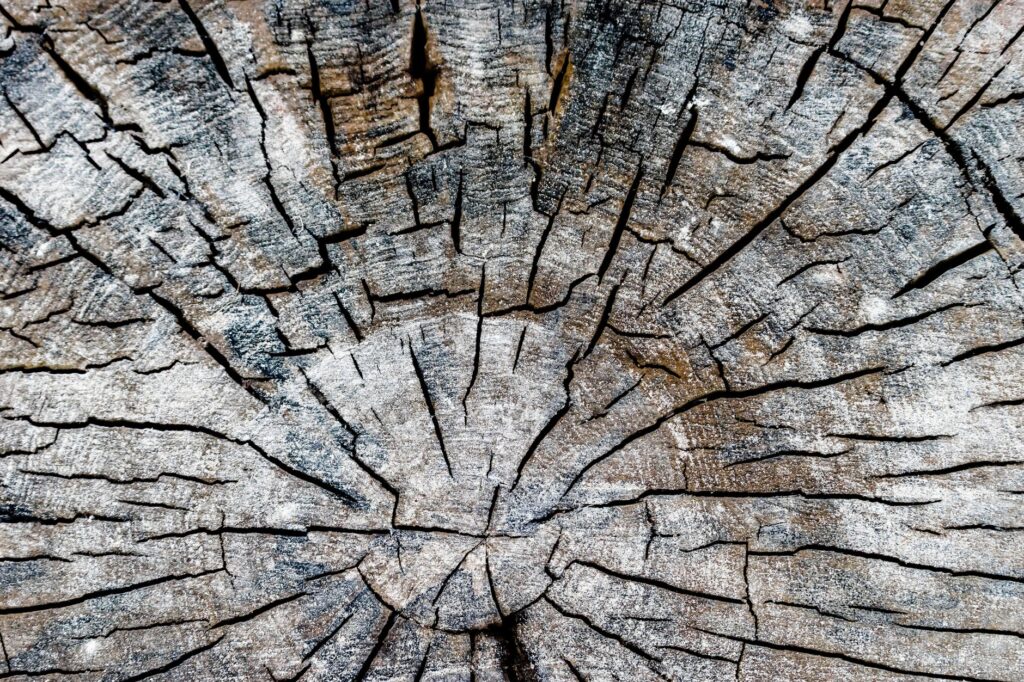
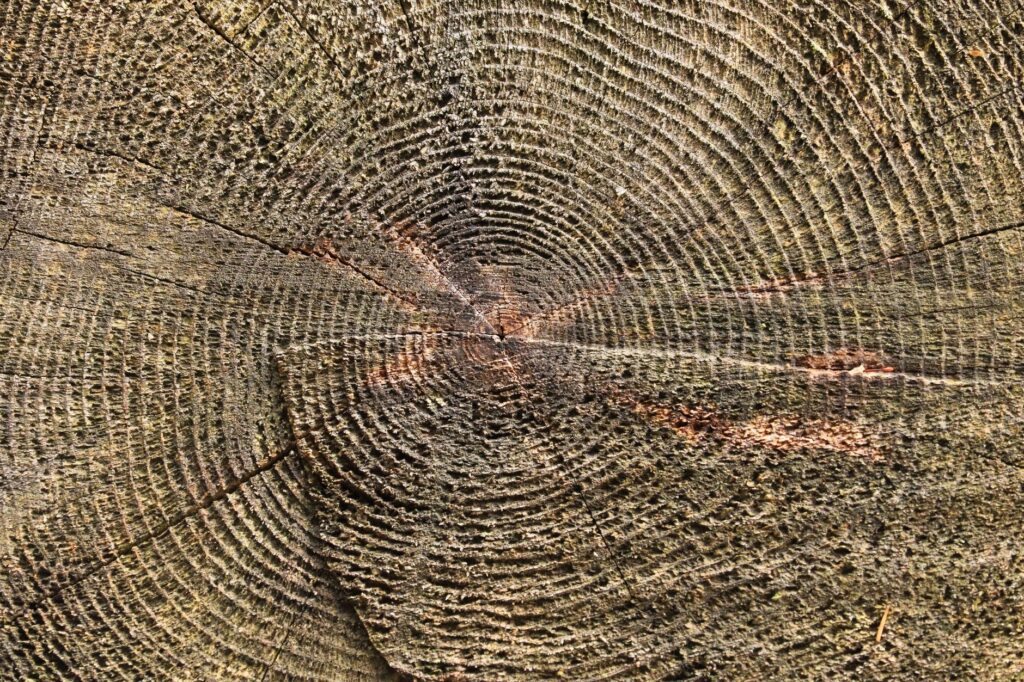
Walk past a stump on Kings Highway or along the edge of Poricy Park and most people see firewood. An arborist sees a ledger. Every concentric ring inside that trunk marks one growing season, and the width, color, and shape of each ring is a physical record of what that specific year handed the tree — a wet spring, a scorching August, a nor’easter that snapped its neighbor in half, a drought that made every leaf curl by July.
Middletown Township sits in an unusually eventful stretch of coastal New Jersey. In the last two decades alone, local trees have lived through Hurricane Irene, Superstorm Sandy, a string of punishing nor’easters, and several multi-month droughts. A mature white oak (Quercus alba) standing near the Bayshore today has a growth ring for every one of those events, whether anyone ever looks at it or not.
You don’t need a laboratory to appreciate this. Once you understand what you’re looking at, a stump, a fallen limb, or even an increment-boring sample pulled by a certified arborist during a health assessment turns into a year-by-year account of exactly what that tree endured — and how well it coped.
How a Ring Actually Forms
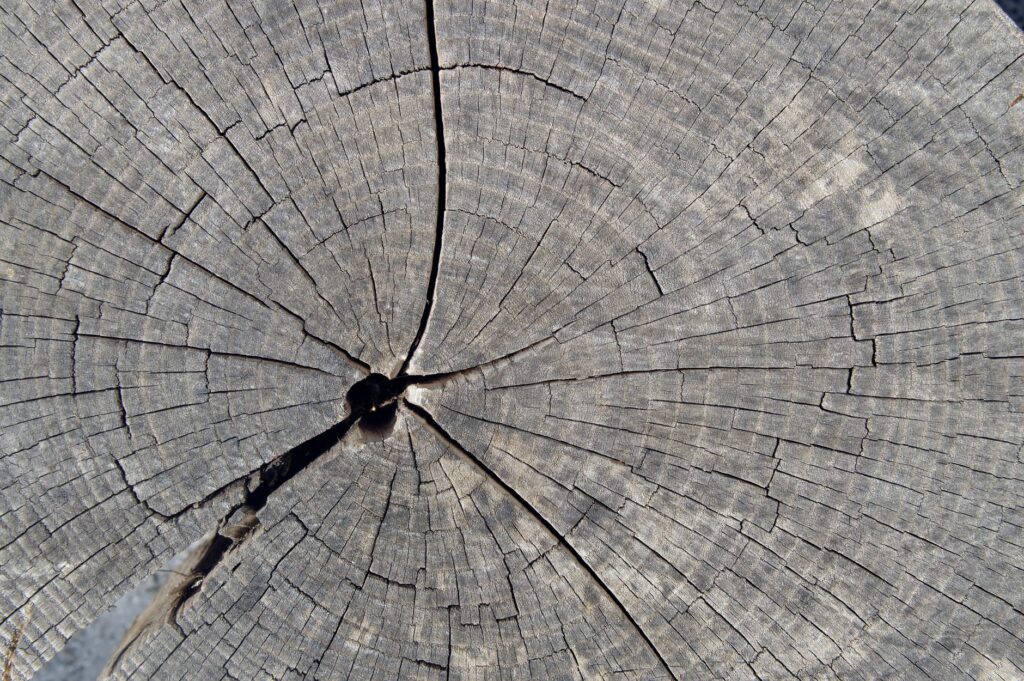
A tree doesn’t grow continuously. In temperate climates like ours, growth happens in a single annual pulse, produced by a thin layer of actively dividing cells called the vascular cambium, sandwiched just under the bark. Early in the growing season — roughly April through June here in Monmouth County — the cambium produces large, thin-walled cells built for moving lots of water quickly. This is earlywood, and it’s pale and porous.
As summer progresses and growth slows, the cambium switches to producing smaller, thicker-walled cells built for strength rather than water transport. This is latewood, and it’s dense and dark. The abrupt boundary between one year’s latewood and the next year’s earlywood is what you see as a distinct ring line. One earlywood-to-latewood cycle equals one year, which is the whole basis of dendrochronology — the science of dating and interpreting these annual layers, a field the USDA Forest Service uses extensively to reconstruct historical climate and disturbance patterns across U.S. forests.
The Rutgers New Jersey Agricultural Experiment Station has documented how New Jersey’s shoulder-season temperature swings — a warm April followed by a cold snap, for instance — can even produce a faint false ring within a single growing season, which is one reason ring-reading is a skill and not a simple count-and-done exercise.
Why Some Rings Are Wide and Others Are Barely There
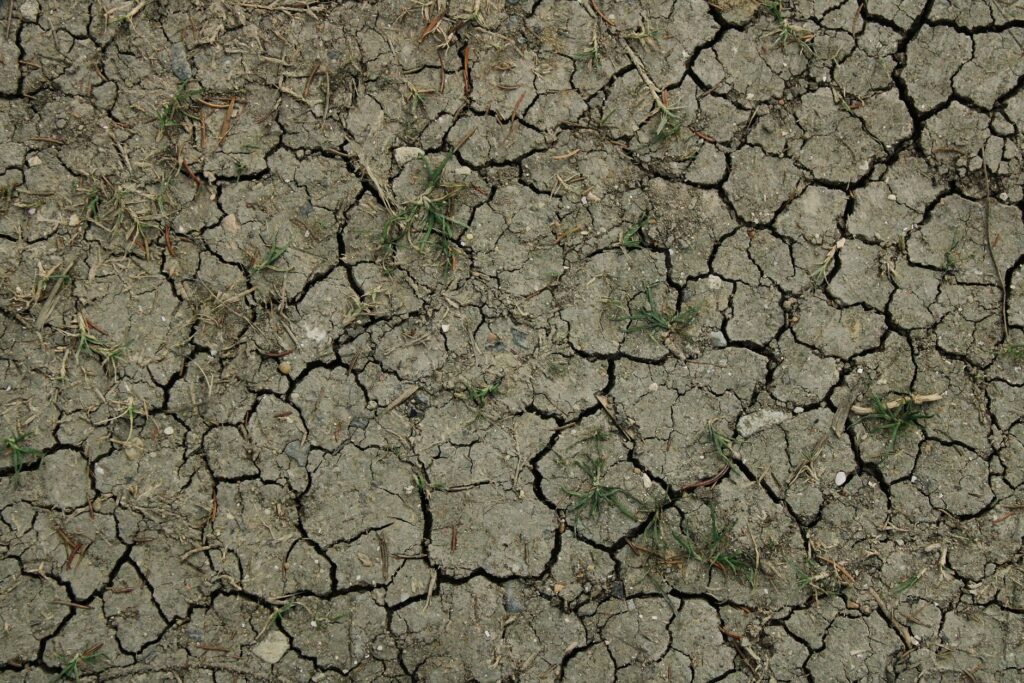
Ring width is really a record of resources: water, sunlight, and root capacity. A wide ring means the tree had what it needed and put on vigorous growth. A narrow ring, sometimes little more than a hairline, means the tree was stressed and prioritized survival over expansion.
In Middletown’s heavy clay-loam soils, drought years show up unmistakably as a run of thin rings, because clay holds water tightly enough that roots can struggle to pull it out once the topsoil dries. Compaction tells a similar story over a longer arc: a tree growing near a driveway poured a decade after planting, or in a yard that saw years of heavy foot or vehicle traffic over its root zone, often shows a slow, steady narrowing of rings as compacted soil chokes off oxygen and water infiltration to the roots.
- Wide, even rings — favorable growing conditions, adequate water, healthy root zone
- Abruptly narrow rings — a single stress event: drought year, defoliation from a pest outbreak, or major root disturbance
- Gradually narrowing rings over many years — chronic decline, often from soil compaction, grade change, or competition
Reading that pattern is part of what makes a proper tree risk assessment more than a visual guess — it’s forensic.
Middletown's #1 Tree Expert Company
FREE Inspection & Estimate | Certified Arborists | Trimming, Pruning, Removal, More!
Sponsored
Storm Scars Leave Their Own Signature in the Wood
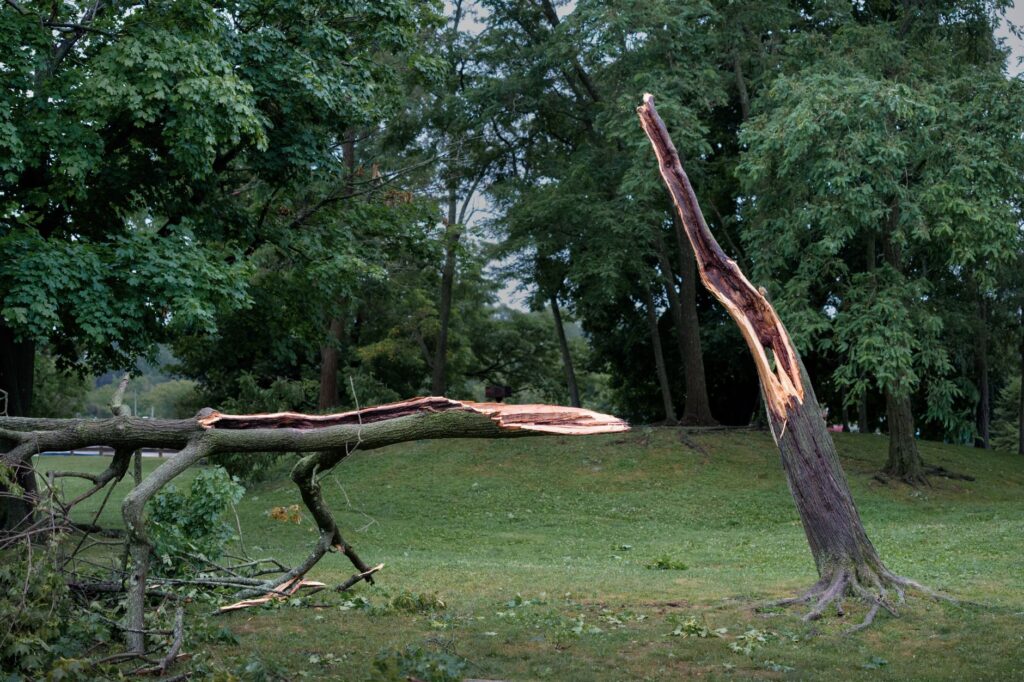
Wind damage writes itself into a trunk differently than drought does. When a tree loses a major limb in a storm, or when it’s bent hard enough by wind to lean without snapping, it responds by laying down reaction wood — asymmetric growth rings that are noticeably thicker on one side of the trunk than the other, essentially the tree building a brace where it needs one. In hardwoods like the oaks and maples common across Middletown, this shows up as tension wood on the upper side of a leaning stem; in conifers like the white pines around Hartshorne Woods, it shows up as compression wood on the underside.
A large wound from a torn limb also leaves a visible scar in the rings that follow: the tree seals the injury with a raised callus of tissue, and subsequent rings curl around that old wound rather than running straight across it, a process called compartmentalization. You can often date a storm almost to the year just by counting inward from the bark to the ring where that callus begins.
Researchers with the International Society of Arboriculture use exactly this kind of evidence, combined with an increment borer that extracts a pencil-thin core without seriously harming the tree, to age trees and reconstruct a site’s storm and stress history without ever having to cut one down.
What a 60-Year-Old Middletown Oak Has Actually Lived Through
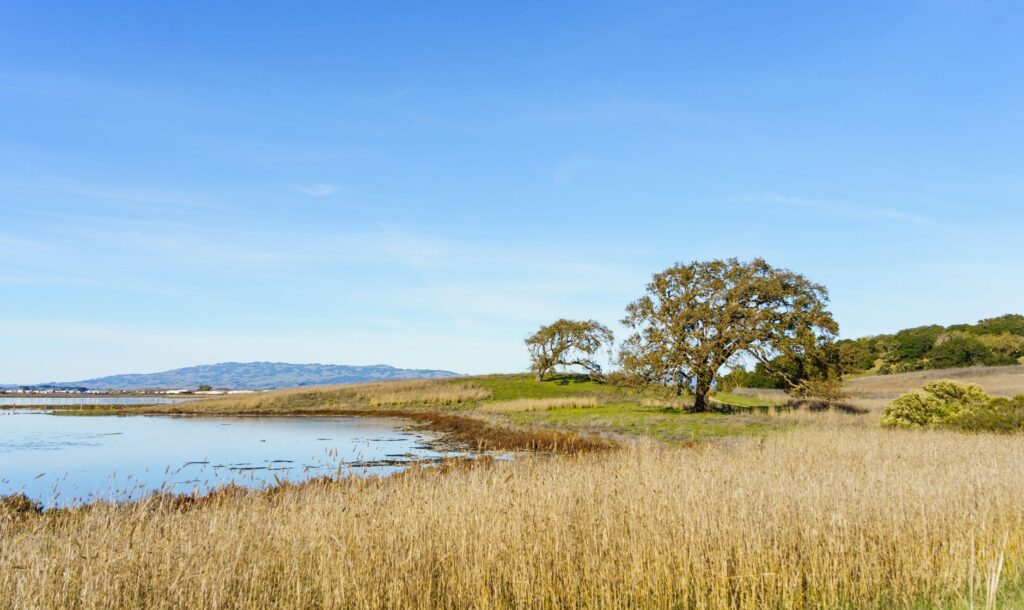
Picture a white oak that took root around a Bayshore backyard in the mid-1960s. Its rings would show a fairly ordinary run of growth until 1985 and 1989, both drought years across central New Jersey, and again through the extended dry stretches of the mid-1960s and 2001–2002. Then a sharper disruption: a band of reaction wood and a healed wound scar dated to 2012, the year Superstorm Sandy pushed storm surge and sustained wind across the Raritan Bayshore and toppled or badly damaged thousands of trees across Monmouth County.
More recent rings might show the fingerprints of 2016’s severe regional drought, followed by a run of unusually wide, vigorous rings in wetter years that followed — a tree capitalizing on a good stretch after a hard one. The NJ Department of Environmental Protection’s Forest Service tracks this kind of regional stress pattern across the state’s forests, and individual trees in Middletown yards are, in miniature, telling the same story their wilder counterparts in Cheesequake State Park are telling on a larger scale.
None of this is abstract. It’s a physical explanation for why an older tree that “looks fine” from the street can still be carrying decades of accumulated stress and old injury that only shows up once you know where to look.
Reading the Story Without Cutting the Tree Down
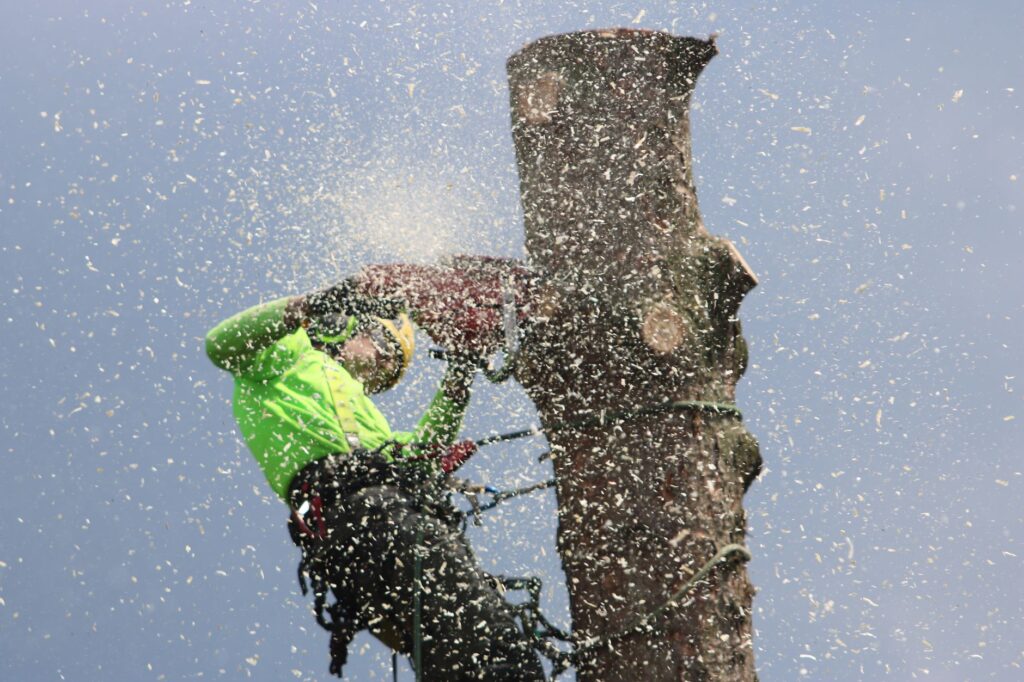
You don’t have to fell a healthy tree to learn from its rings. A few low-impact ways this information gets used on living trees around Middletown:
- Increment core sampling — a certified arborist uses a hollow borer to extract a thin core of wood, read the ring pattern, and remove the tool, leaving a small hole the tree seals over on its own
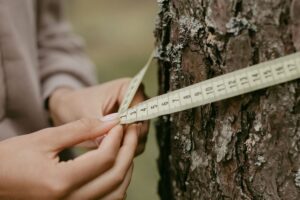
- Stump reading after necessary removal — if a hazardous tree does need to come down, the stump left behind is a free, complete record worth a few minutes with a tape measure and a magnifying glass before it’s ground out
- Comparing trunk flare and lean — visible asymmetry at the base often hints at reaction wood underneath, even before any coring happens
The Cornell Cooperative Extension publishes accessible guides on basic dendrochronology techniques for anyone curious enough to try counting rings on a downed limb or a neighbor’s stump — it’s a genuinely fun rainy-afternoon project, and it tends to change how you look at every tree on the block afterward.
Middletown's #1 Tree Expert Company
FREE Inspection & Estimate | Certified Arborists | Trimming, Pruning, Removal, More!
Sponsored
The Diary Is Also a Diagnosis
What makes ring reading more than a curiosity is that it’s diagnostic. A run of narrowing rings that starts the same year a driveway was repaved, or a reaction-wood band that lines up with a known storm, gives real information about a tree’s structural history — information that matters when deciding whether a lean is old and stable or new and worth watching closely.
A certified arborist doing a full tree health and risk assessment will often pair what’s visible above ground — canopy density, bark condition, deadwood, trunk lean — with exactly this kind of internal history, sometimes using a resistance drill or increment borer to check for internal decay alongside the ring record. For a tree with real sentimental or structural value, that combination gives a far more complete picture than a glance from the sidewalk ever could.
Next time a storm takes down a limb, or a stump finally gets ground out after years of eyeing that leaning silver maple, take a minute before it disappears. Count the rings in from the bark. Somewhere in that pattern is Sandy, a drought year or two, maybe a rough winter storm — the whole quiet biography of a tree that was standing in that yard longer than most of its neighbors realized.
Photo credits: Featured image by MAURO FOSSATI on Pexels; Section 1 by Scott Webb on Pexels; Section 2 by Davis Vidal on Pexels; Section 3 by neslihan ໒꒱ on Pexels; Section 4 by David Kanigan on Pexels; Section 5 by Robert So on Pexels; Section 6 by Henk Schuurmans on Pexels; Section 7 by Peter Xie on Pexels.