Middletown's #1 Tree Expert Company
FREE Inspection & Estimate | Certified Arborists | Trimming, Pruning, Removal, More!
Sponsored
The Word "Assessment" Doesn't Mean What You Think It Means
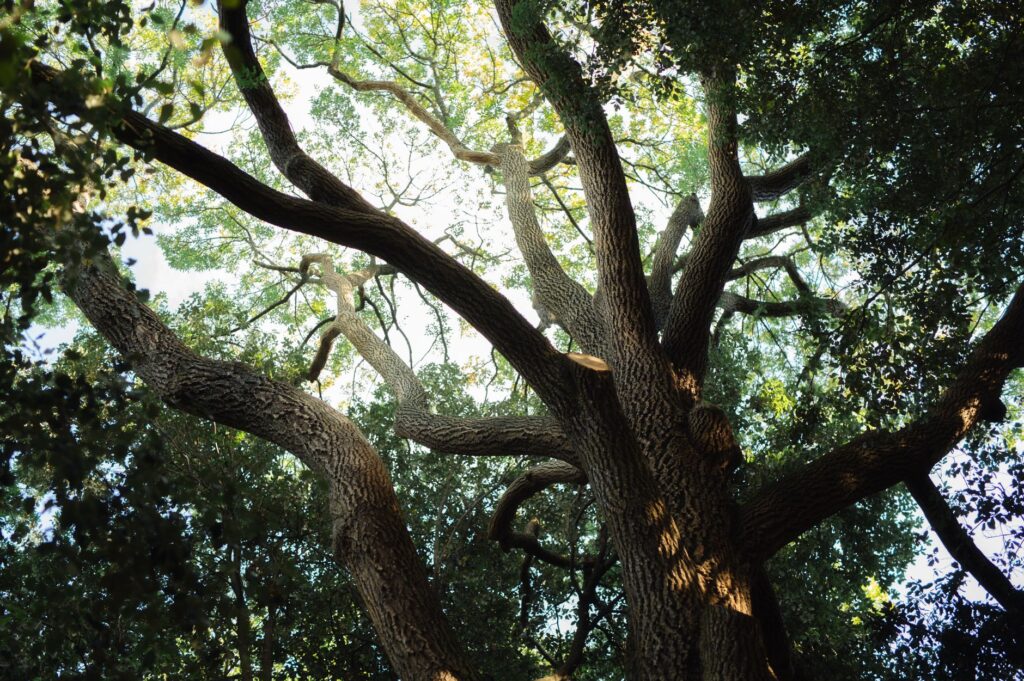
Every August, as the humidity sits heavy over the Bayshore and the tropics start throwing storms up the coast, I get some version of the same phone call. A homeowner in Lincroft or Port Monmouth has had two different tree people look at the same oak in their backyard. One says it’s fine. The other says it needs to come down. Both call themselves arborists. Neither one explains how they reached their conclusion.
That gap is exactly what the International Society of Arboriculture built the Tree Risk Assessment Qualification, or TRAQ, to close. It isn’t a marketing badge. It’s a specific, standardized method for evaluating whether a tree or a limb is likely to fail, what it would hit if it did, and how bad that would actually be — three separate questions that a lot of casual “it looks okay to me” opinions quietly skip.
If you own a mature tree anywhere near a house, a driveway, or a property line in Middletown Township, understanding what TRAQ actually evaluates will change how you read an arborist’s report — and how you shop for one.
TRAQ Isn't a General Certification — It's a Specific Methodology

A lot of homeowners assume “certified arborist” and “tree risk assessor” are the same credential. They’re related, but they’re not identical. ISA Certified Arborist status is a broad credential covering tree biology, pruning standards, and general tree care knowledge. TRAQ is narrower and more technical — it’s built specifically around ISA’s Best Management Practices for Tree Risk Assessment, and it trains an assessor to walk through the same structured process every single time, rather than relying on gut instinct built up over years on the job.
To earn it, an arborist sits through a two-day, in-person course covering lectures, small-group case studies, and hands-on field evaluation, then has to pass a written exam and a live, performance-based assessment of an actual tree. The qualification is good for seven years, after which the arborist has to recertify — because risk-assessment methodology, like everything else in this field, keeps getting refined as more failure data comes in.
The practical upshot: an arborist walking your property with TRAQ training isn’t just eyeballing the canopy and offering an opinion. They’re running your tree through a repeatable framework designed to produce the same conclusion regardless of which trained assessor is standing under the tree.
The Two Questions Every TRAQ Assessment Actually Answers
The heart of the TRAQ method is a pair of linked evaluations, not a single pass/fail check. The first matrix weighs the likelihood of failure against the likelihood of impact — in plain terms, how probable is it that this branch or trunk actually breaks, and if it does, how probable is it that it lands on something (a roof, a driveway, a play set) rather than an empty patch of yard.
The second matrix takes that combined likelihood rating and weighs it against the consequences of failure — what’s actually at stake if it happens. A dead limb over an open field and the same dead limb over a bedroom window are the same defect biologically, but they are not the same risk. TRAQ formalizes that distinction instead of leaving it to instinct.
This is also why two competent assessors can look at the same tree and land on different recommendations without either one being wrong — risk tolerance is partly a judgment call, and TRAQ is designed to make the reasoning behind that call visible and comparable, not to produce one universally “correct” number.
Middletown's #1 Tree Expert Company
FREE Inspection & Estimate | Certified Arborists | Trimming, Pruning, Removal, More!
Sponsored
What a Real Assessment Looks Like on Your Property
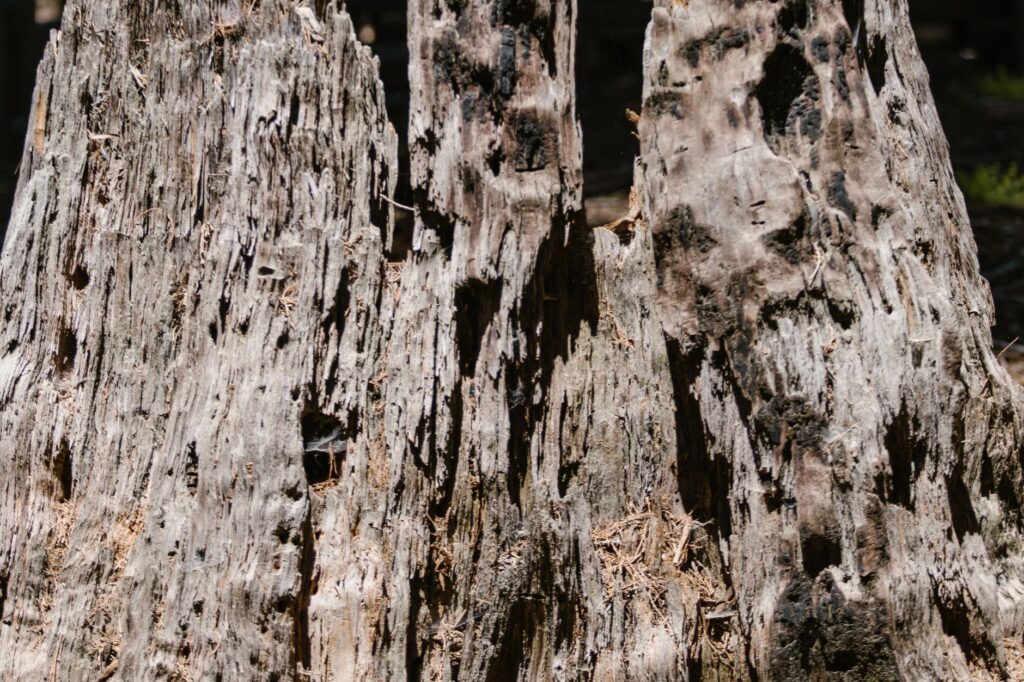
A TRAQ-based visit doesn’t start at the tree — it starts at the target. The assessor identifies what’s within striking distance of the tree: your house, a neighbor’s fence, the spot where your kids’ trampoline sits, the driveway where cars are parked overnight. Then they work outward from the base, checking root flare and soil grade for signs of girdling roots or past construction disturbance, moving up the trunk for cracks, cankers, cavities, and included bark, and finishing in the canopy for deadwood, codominant stems, and crown density that might be catching more wind than it should.
For most residential assessments, this is a Level 1 or Level 2 visual assessment — thorough, but non-invasive. If something concerning turns up (a large cavity, a lean that’s worsened, root damage from recent grading work), the assessor may recommend a Level 3 advanced assessment, which can involve resistance drilling, sonic tomography, or an aerial inspection to actually measure how much sound wood is left holding the tree up.
Whatever the depth, a TRAQ-trained assessor should leave you with something in writing: the specific defects found, the risk rating assigned, and a recommendation with a timeframe — not just a verbal “it’s probably fine.”
When You Actually Need This Level of Assessment
Not every tree on your property needs a formal risk rating. A healthy shade tree with no visible defects and nothing valuable underneath it doesn’t need a two-matrix evaluation — that’s overkill, and a good arborist will tell you so. A TRAQ-level assessment earns its cost in a handful of specific situations:
- You’ve got a large limb or a whole tree leaning toward the house, and hurricane season is underway (peak Atlantic activity runs August through October, right when the Bayshore’s soil is often already saturated from summer storms)
- You’re selling your home and a buyer’s inspector flagged a tree as a concern
- A neighbor has raised a dispute about a tree near the property line and you want documentation, not just an opinion, on file
- A tree has visible new damage — a fresh crack, a sudden lean, mushrooms at the base — after a storm
- You’re planning construction or grading near a mature tree’s root zone and need to know if the work will compromise its stability
For routine seasonal care — mulching, watering, minor pruning — you don’t need this. TRAQ is for the moments when the question isn’t “how do I take care of this tree” but “is this tree actually a liability.”
Checking Credentials Before You Hire, Not After
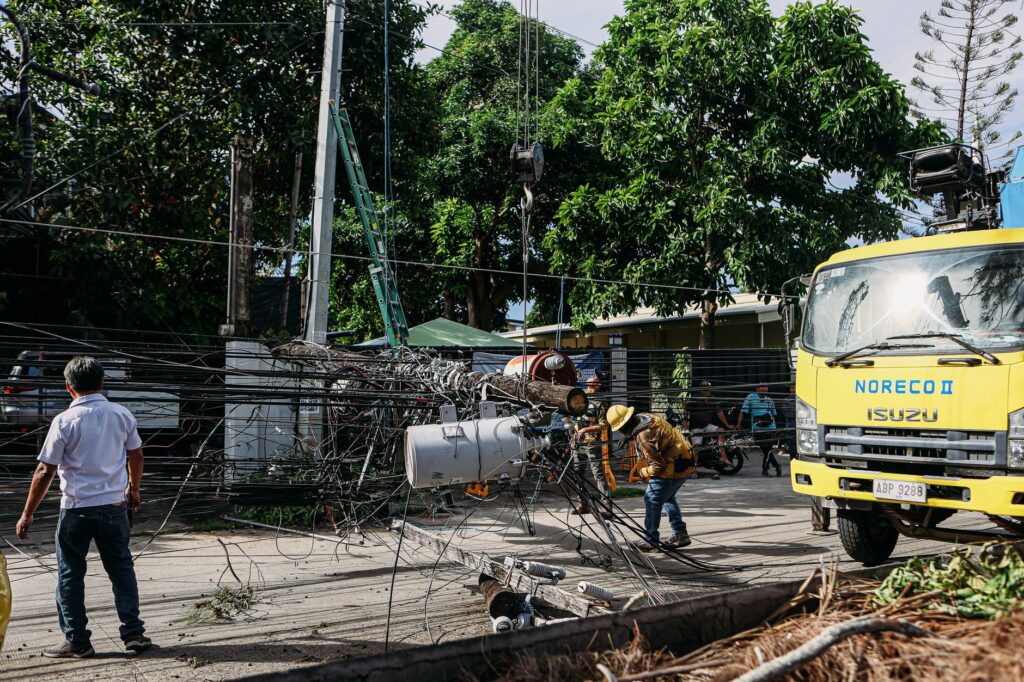
Storm season brings out door-knockers — crews that show up in a work truck the day after a nor’easter, point at a tree, and quote a same-day removal. Some are legitimate. Plenty aren’t trained in risk assessment at all, and a rushed, fear-driven removal call has cost more than one Middletown homeowner a perfectly healthy tree that just needed a cable or a prune.
Before you hire anyone to evaluate — let alone remove — a tree you’re worried about, ask directly whether they hold current ISA certification and TRAQ qualification, and ask to see it. ISA maintains a searchable credential directory, so you can verify rather than take someone’s word for it. The Tree Care Industry Association also publishes guidance on vetting tree service companies, including proof of insurance, which matters just as much as the credential if a large limb is coming down near your roofline.
Rutgers Cooperative Extension’s county offices can also be a useful second opinion if you want a non-commercial read on a tree’s condition before committing to any recommended work.
Middletown's #1 Tree Expert Company
FREE Inspection & Estimate | Certified Arborists | Trimming, Pruning, Removal, More!
Sponsored
The Bottom Line for Middletown Homeowners
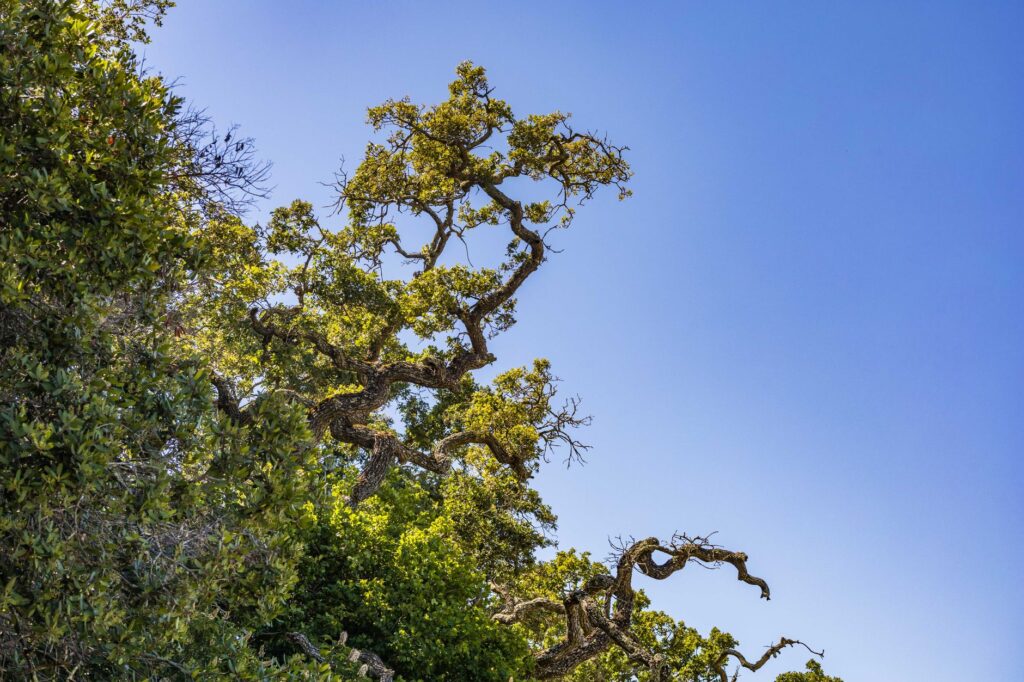
A TRAQ qualification doesn’t make an arborist infallible, and it isn’t required for every tree conversation you’ll ever have about your yard. But it does mean the person under your tree is following a documented, repeatable process instead of a gut call — and that distinction matters most exactly when the stakes are highest: a big tree, a target worth protecting, and a storm season that isn’t finished with the Bayshore yet.
If you’ve got a tree that’s been on your mind — a lean that seems worse than last year, a limb hanging over the spot where the cars park, bark that doesn’t look right anymore — that’s worth a real assessment, not a guess. Ask for the credential, ask for the reasoning, and get it in writing before you decide anything permanent about a tree that took decades to grow.
Photo credits: Featured image by Robert So on Pexels; Section 1 by Grigoriy on Pexels; Section 2 by Gustavo Fring on Pexels; Section 3 by Sergej ***** on Pexels; Section 4 by RDNE Stock project on Pexels; Section 5 by Veronika Bykovich on Pexels; Section 6 by Denniz Futalan on Pexels; Section 7 by Robert So on Pexels.