
Middletown's #1 Tree Expert Company
FREE Inspection & Estimate | Certified Arborists | Trimming, Pruning, Removal, More!
Sponsored
Spring Budbreak: The Best Free Tree Diagnostic in Your Yard
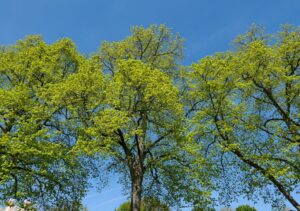
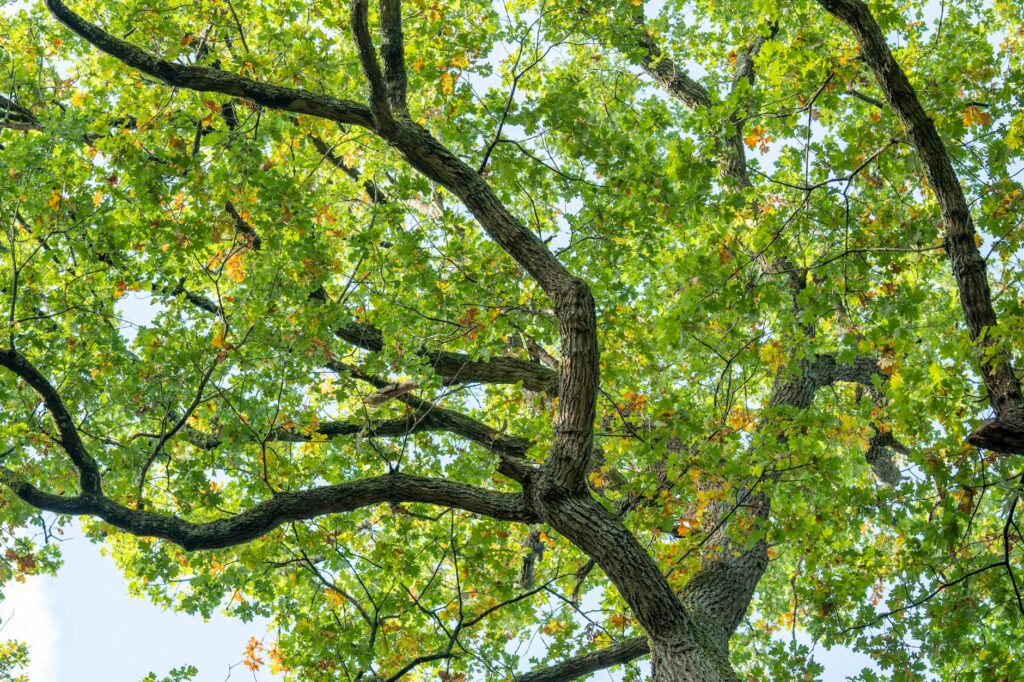
Late April in Middletown Township is one of my favorite times of year as an arborist. The red maples along Navesink River Road are fully leafed out. The white oaks in Hartshorne Woods are just unfurling their first lobed leaves. Tulip poplars on the ridgelines above Lincroft are throwing out that lime-green first flush, and even the stubborn pitch pines near Cheesequake State Park are pushing plump new candles skyward.
But mixed into all that gorgeous new growth, I see trees that trouble me — ones leafing out a full two weeks late, putting out a canopy half as dense as last summer’s, or pushing yellowed, undersized leaves that signal something is wrong well below the soil line. Spring budbreak is honest. Trees can’t fake it.
The good news: that honesty makes late April one of the best diagnostic windows of the entire year. If you know what to look for during leaf-out, a 15-minute walk through your property is worth more than any inspection you’d do in July, when symptoms are harder to pinpoint. This is what I walk homeowners through when they call me in spring wondering whether to worry about a tree they’ve been watching.
Normal Budbreak Timing for Middletown's Common Species
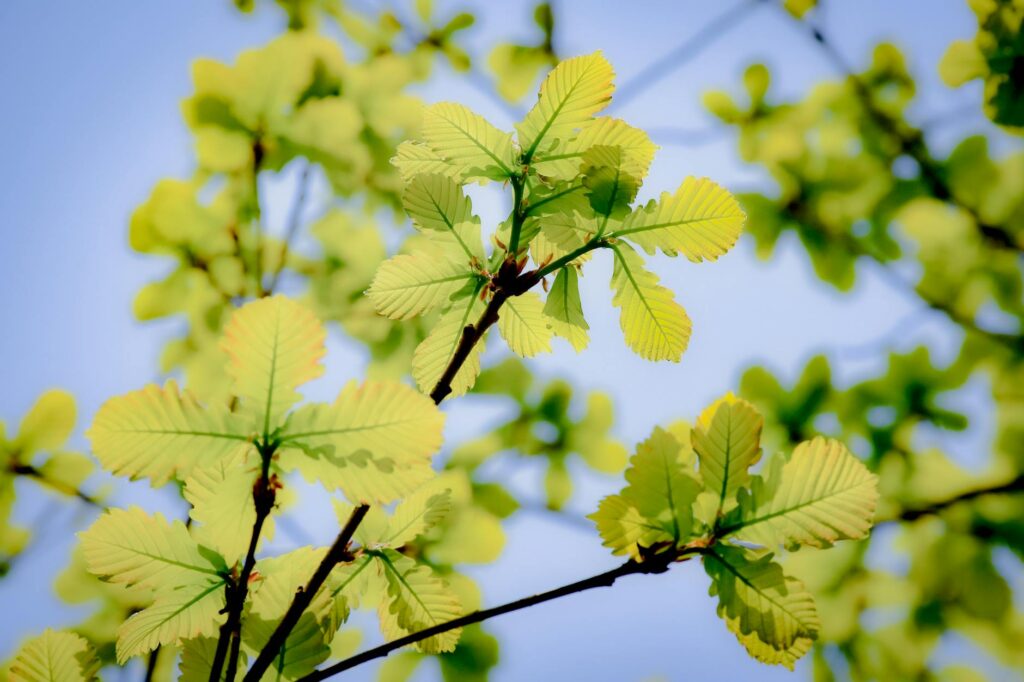
Before you can spot a problem, you need a baseline. Not every tree in Middletown Township wakes up on the same schedule, and knowing the normal leaf-out sequence keeps you from panicking about a tree that’s simply doing what its species always does — and from missing something genuinely alarming on a different tree.
Red maples (Acer rubrum) are among the earliest, often in full leaf by mid-April in Monmouth County. By the last week of April, a red maple still showing bare branches is sending up a real warning flare. Norway maples leaf out around the same time — yet another way they outcompete natives in the landscape. White oaks (Quercus alba) are slower by nature; they typically hold their buds well into late April and sometimes the first week of May here in Middletown, so don’t mistake a late-leafing white oak for a sick one. Red oaks (Quercus rubra) break bud a bit earlier than whites.
American beeches (Fagus grandifolia) leaf out in mid-April with that lovely translucent pale green; leaves should be approaching their full size by late April. Tulip poplars (Liriodendron tulipifera) are mid-to-late April, typically vigorous and fast. Pitch pines (Pinus rigida), common in the sandy soils near Cheesequake and along the coastal plain to the south, push new candles — the upright new growth tips — through April and May; plump, uniform candles across the crown are a sign of a healthy tree.
Rutgers New Jersey Agricultural Experiment Station tracks phenological patterns across the state and is an excellent resource for understanding how seasonal timing shifts year to year across Monmouth County’s varied microclimates — useful context when you’re trying to decide whether your tree is simply late or genuinely struggling.
Red Flags to Watch for During Leaf-Out
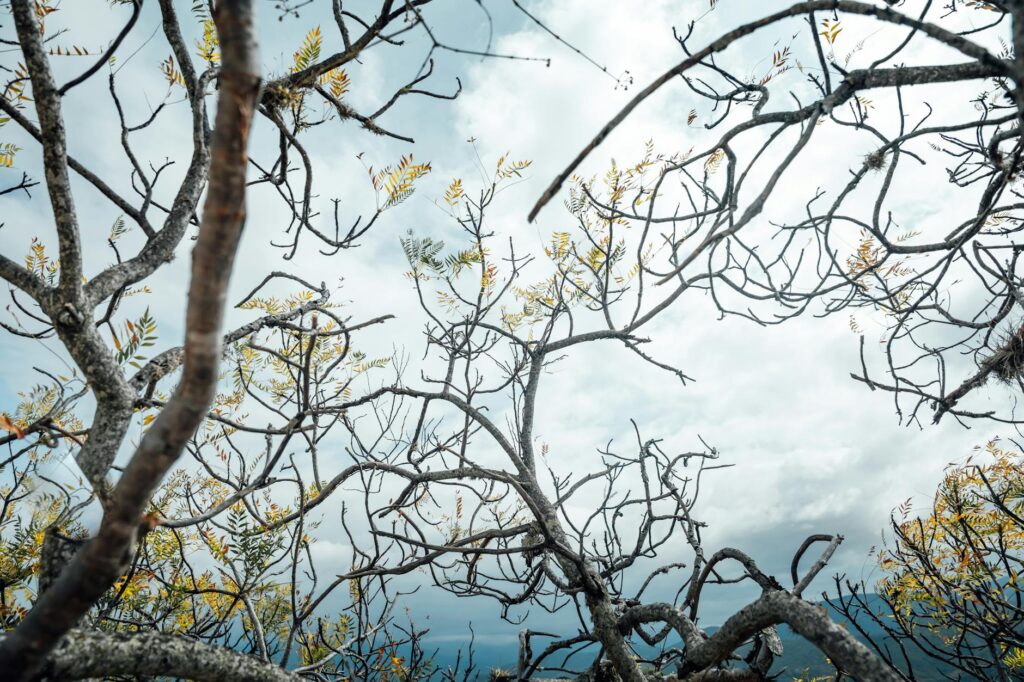
Here are the warning signs I look for as trees leaf out across Middletown. Any one of these warrants a closer look; two or more together usually warrants a professional evaluation.
Delayed or absent budbreak on one section of the canopy. Asymmetrical leafing — full leaves on one side of the crown while the other side stays largely bare — points to a localized vascular problem. In maples, this pattern is a classic early sign of verticillium wilt. In oaks, it can indicate past root damage on the bare side, or early crown dieback from boring insects or advancing internal decay.
Undersized, pale, or yellow-green new leaves. Leaves that emerge small and chlorotic instead of a healthy deep green signal a nutrient or water delivery problem. This can be soil-related — compacted, waterlogged clay soils common in Middletown’s inland neighborhoods restrict root function — or a sign that something is blocking vascular flow in the trunk or root system, such as girdling roots, internal decay, or old mechanical injury from mower damage at the trunk base.
Sparse leaf flush — less than half the normal canopy density. A tree that was visibly full last summer but is putting out a noticeably thin canopy this spring is showing you multi-year decline in real time. The International Society of Arboriculture’s tree owner resources note that canopy dieback of 25% or more often indicates serious underlying stress that a certified arborist should evaluate before the situation becomes an emergency.
Leaves that open and then immediately wilt or brown at the margins. This can mean late frost damage — Middletown can see frost into late April, and a surprise cold night can scorch tender new growth — but it can also be an early indicator of bacterial leaf scorch, anthracnose, or root rot, particularly on dogwoods and oaks.
Middletown's #1 Tree Expert Company
FREE Inspection & Estimate | Certified Arborists | Trimming, Pruning, Removal, More!
Sponsored
Why Trees Leaf Out Late — and When It Actually Matters
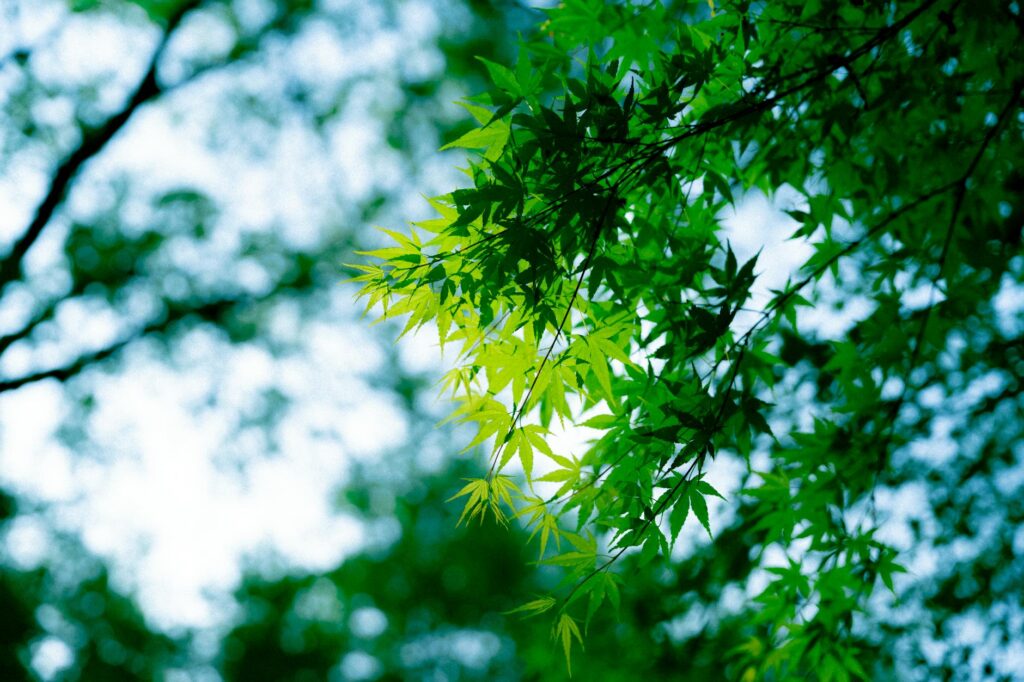
Late budbreak isn’t always an emergency. White oaks are legitimately slow. A cold, wet April can push every species back a week compared to a warm year. But certain circumstances turn late budbreak into a genuine warning rather than a quirk of weather or genetics.
Root zone damage from construction or grade changes. This is the most common cause of mysterious decline I see in Middletown. Renovations, driveway expansions, retaining walls built over root systems, or heavy equipment operated over a mature tree’s root zone — any of these can sever or suffocate a significant fraction of its feeder roots. The damage unfolds slowly: first a slightly thin canopy, then a late or one-sided budbreak the following spring, then progressive dieback over years. By the time most homeowners call me, the original cause may have occurred four or five years earlier.
Drought stress carried over from the previous summer. After a dry summer, trees enter fall with depleted carbohydrate reserves. They spend winter essentially running low on fuel, and the following spring’s leaf-out can be thin and late as a result. Properties near the Bayshore — Port Monmouth, Leonardo, Belford — also face late-winter salt spray from northeast winds that can coat and damage buds directly, delaying or distorting leaf-out on exposed trees.
Girdling roots. A root that grows in a circle around the trunk base rather than radiating outward gradually compresses the tree’s vascular tissue, restricting water and nutrient flow. The effect on budbreak is often slow and asymmetrical — one side of the crown lags behind the other. The USDA Forest Service’s urban forest management resources identify girdling roots as one of the leading causes of unexplained decline in suburban landscape trees across the country.
Verticillium wilt. This soilborne fungal pathogen is particularly common in maples throughout Monmouth County. It invades root tissue and colonizes the xylem — the vessels that carry water up the trunk — producing exactly the symptoms above: one-sided or delayed budbreak, wilting, yellow leaves, and progressive crown dieback. There is no cure once a tree is infected, but early diagnosis helps homeowners make informed decisions about management and plan thoughtful replanting with resistant species.
What You Can't See Is Driving What You Can
Most of what causes tree decline is invisible from the ground. By the time a tree shows symptoms in its canopy, the problem has usually been developing for months or years underground — or inside the trunk. Spring budbreak is your canary. The root zone is the coal mine.
Middletown Township sits on a range of soil types that affect tree health in very different ways. The higher terrain through Lincroft, Middletown Village, and toward the Navesink highlands tends toward heavier clay loam soils — soils that drain slowly in wet winters and become compacted and crack-dry during summer drought. That freeze-thaw-drought cycle stresses shallow feeder roots repeatedly over decades. Closer to the Bayshore, the soils shift to sandy loams: fast draining, nutrient-poor, and quick to dry out during hot-summer dry spells. Both present real challenges for tree health.
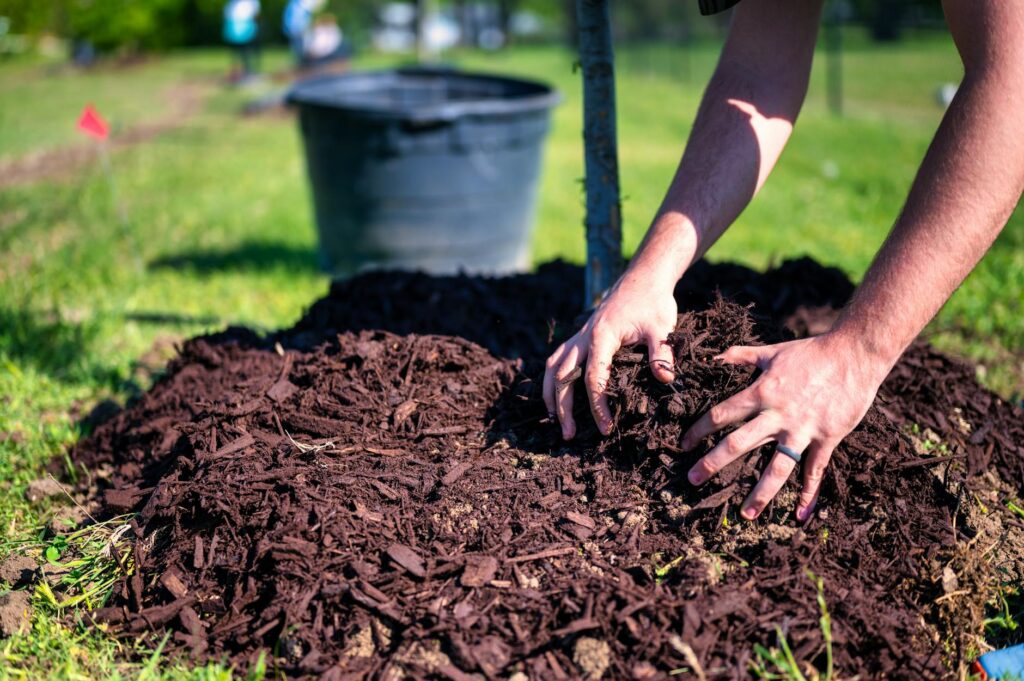
Both soil types respond well to one basic intervention that costs almost nothing: a proper organic mulch ring. Two to three inches of wood chip mulch spread from just outside the root flare out toward the drip line moderates soil temperature, retains moisture during dry spells, adds organic matter over time, and — critically — keeps mowers and string trimmers away from the trunk base. If you planted a new tree this past fall and you’re watching its first spring budbreak now, a refreshed mulch ring is one of the most productive investments you can make for it.
Soil compaction from foot traffic, parked vehicles, or past construction equipment is pervasive in established Middletown neighborhoods and is severely underappreciated as a cause of decline. Compacted soil restricts gas exchange in the root zone, limiting a tree’s ability to absorb water just when demand peaks during leaf-out. Rutgers Cooperative Extension offers homeowner guidance on alleviating soil compaction around landscape trees — including practical approaches that don’t require disturbing existing roots.
What to Do When You Spot Trouble This April
If you notice warning signs during leaf-out — a patchy canopy, unusually pale leaves, a tree still mostly bare while its neighbors are fully leafed — here are practical steps to take now, before small problems become expensive ones.
Document what you see. Take photos from the same angle and distance you’ll use again in four to six weeks. A phone photo series showing progression is far more useful in an arborist consultation than a single snapshot — it shows rate of change, and rate of change is often the most informative variable of all.
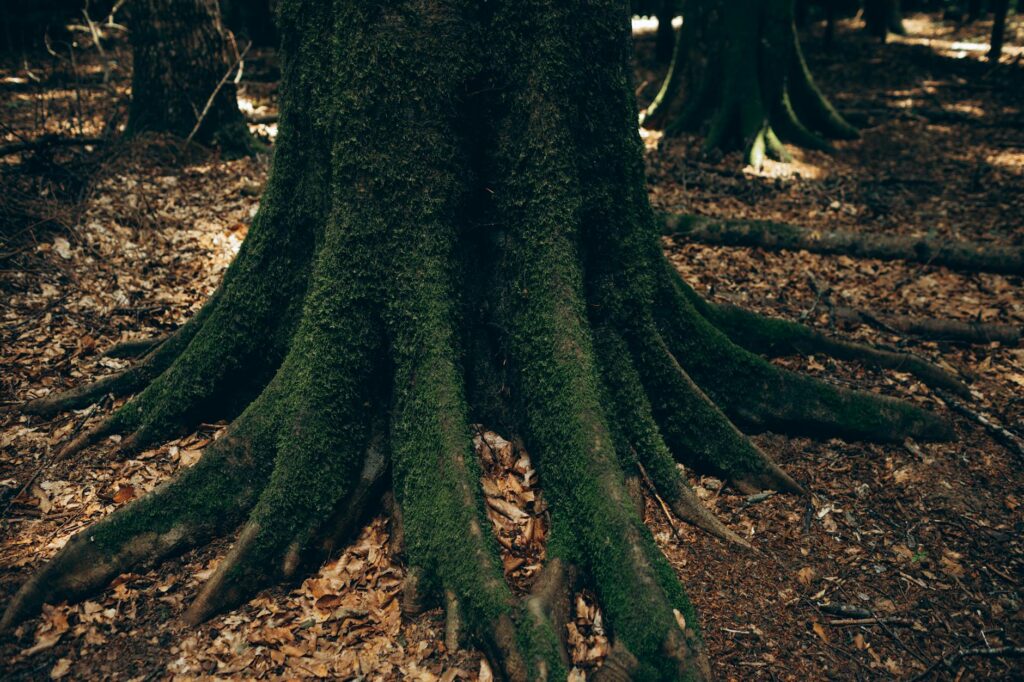
Check the root flare. Walk to the base of the troubled tree. The trunk should flare visibly outward as it meets the soil. If it goes straight into the ground like a fence post — no visible flare — the tree was either planted too deep or has been gradually buried under added soil and mulch over the years. A buried root flare is a chronic, long-term stressor that suppresses root function, promotes fungal decay at the trunk base, and can kill even a mature healthy tree over time.
Don’t fertilize without knowing the cause. The instinct to feed a struggling tree is understandable, but it can backfire badly. A tree in decline from verticillium wilt or root rot can be further stressed by high-nitrogen fertilizer, which pushes top growth the compromised vascular system can’t support. If you’re unsure what’s causing the problem, get a diagnosis before any intervention. A soil test through Rutgers Cooperative Extension (available for about $20 through your county extension office) can reveal pH imbalances, nutrient deficiencies, or drainage problems that are easy to address once you know they’re there.
Middletown's #1 Tree Expert Company
FREE Inspection & Estimate | Certified Arborists | Trimming, Pruning, Removal, More!
Sponsored
Summary: When to Call a Certified Arborist
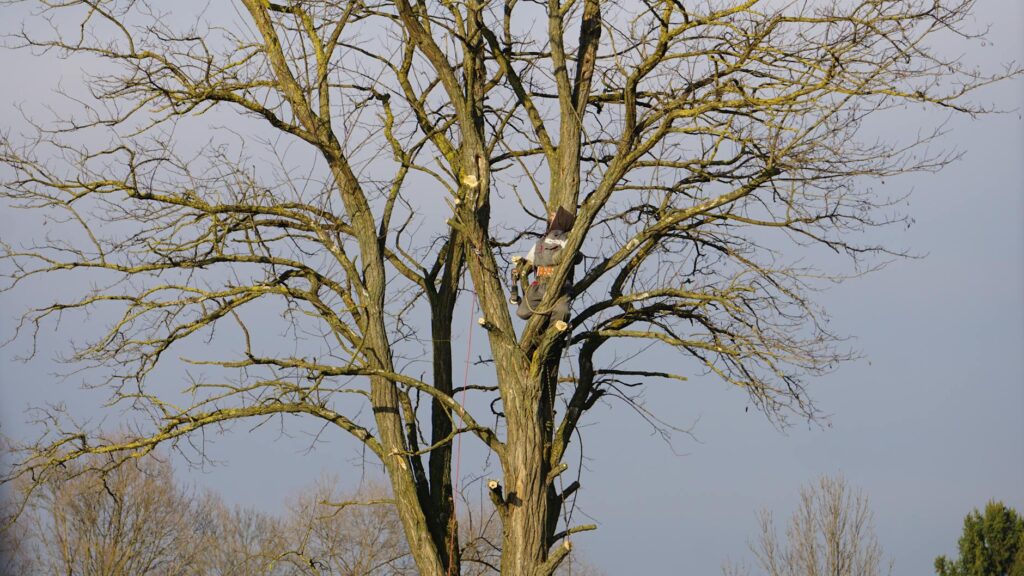
Spring budbreak gives you honest information — but it doesn’t give you the full picture. Many of the problems that produce thin or delayed canopies in April are invisible from the ground: internal decay columns, girdling roots at the root flare, vascular disease colonizing the sapwood. A certified arborist has the training and tools to evaluate what you can’t see from a walk-around.
The threshold I give homeowners is straightforward: if a tree is showing delayed or abnormal budbreak across more than 25% of its canopy, or if you’ve noticed the canopy getting progressively thinner over two or more consecutive springs, it’s time for a professional assessment. Catching problems at this stage — before the tree becomes a hazard — almost always costs less and leaves you with more options than waiting for an emergency call after a branch failure.
A certified arborist can also help you think through the bigger picture: whether a declining tree can be supported with structural hardware, fertilization, or targeted pruning; whether it should eventually come down; and what to replant in its place given your specific soil type and site exposure. In a community like Middletown Township, where large canopy trees are a defining feature of neighborhoods from Chapel Hill to the Bayshore waterfront, understanding what your trees are telling you in late April is one of the most practical things you can do as a homeowner. If something on your property looks off right now, don’t wait until summer to find out why.
Photo credits: Featured image by Masood Aslami on Pexels; Section 1 by Lena Glukhova on Pexels; Section 2 by 袁 勇博 on Pexels; Section 3 by Miguel González on Pexels; Section 4 by Dawn Lio on Pexels; Section 5 by Alfo Medeiros on Pexels; Section 6 by Irina Novikova on Pexels; Section 7 by Dmytro Glazunov on Pexels.