When Good Intentions Go Wrong in Middletown Tree Care
In Middletown Township, NJ, homeowners take pride in maintaining their properties. From the leafy streets of River Plaza to the shaded yards near Navesink and Chapel Hill, trees add beauty and shade to our landscapes. But every spring and fall, residents try their hand at trimming and pruning, often with more enthusiasm than expertise.
Tree trimming and pruning may seem simple at first glance, but it involves understanding growth patterns, timing, and structural balance. When done incorrectly, cutting can leave trees vulnerable to disease, instability, and long-term decline. Many of these issues are preventable with professional guidance, especially from certified arborists who understand how to maintain tree health safely.
Middletown's #1 Tree Expert Company
FREE Inspection & Estimate | Certified Arborists | Trimming, Pruning, Removal, More!
Sponsored
Top 10 Mistakes To Avoid When Trimming & Pruning Your Trees
Before you grab a saw or clippers, it’s worth reviewing the ten most common mistakes people make when cutting their own trees. Knowing these will help you avoid costly damage and ensure your trees stay healthy and beautiful for years to come.
Many Middletown homeowners prune in late summer or early fall, thinking cooler weather helps trees recover. In reality, most species should be trimmed during dormancy in late winter. Cutting during active growth can stress the tree and attract pests.
Tree service professionals schedule pruning based on seasonal growth patterns and local weather conditions. For example, maples and oaks along Middletown-Lincroft Road bleed sap heavily in spring if cut too soon. Certified arborists know how to time cuts so trees heal properly without inviting decay.
One of the worst mistakes is topping—a severe cut that removes the entire upper crown to reduce height. It may look like a quick fix, but it leaves ugly stubs and weak sprouts that can break during storms.
In Middletown’s coastal wind zones, topped trees become hazardous over time. Proper canopy reduction, done by an expert, preserves structure and directs growth naturally. Arborists shape trees to fit their space without weakening them.
Removing too many inner branches leaves a tree looking bare and unbalanced. This practice, called lion-tailing, concentrates weight at the ends of branches and makes them more likely to snap in strong wind.
Local experts understand how to thin a canopy for airflow while maintaining even weight distribution. Pruning too much can shock the tree and reduce its ability to photosynthesize, especially for older oaks and maples found in neighborhoods like Oak Hill and Lincroft.
Homeowners often cut branches flush with the trunk, thinking it looks tidy. Unfortunately, this removes the branch collar—the protective area that helps trees heal naturally. Without it, decay spreads into the trunk.
A certified arborist makes clean, angled cuts just outside the branch collar, encouraging quick healing and preventing rot. Proper technique can be the difference between a healthy tree and one that declines within a few seasons.
Improper tools are one of the most overlooked hazards in DIY trimming. Dull blades tear bark instead of cutting cleanly, and dirty tools can spread fungi or bacterial infections between trees.
Professionals keep equipment sharp and sanitized between every job. It may sound simple, but it’s one of the key reasons to hire a tree service for larger pruning projects. It protects your investment and prevents cross-contamination.
In Middletown, many residential streets have overhead power lines. Trimming near these lines is extremely dangerous. Even a small branch touching a wire can cause injury or property damage.
Certified tree service crews are trained to work safely around utilities. They know how to coordinate with JCP&L and use proper clearance methods. No tree trimming project is worth risking electrocution or outages.
A common rule among arborists is never remove more than 25% of a tree’s canopy in a single season. Over-pruning shocks the system, reduces food production, and invites sunburn on newly exposed bark.
DIY trimmers often strip too much without realizing the long-term impact. Certified professionals plan phased trimming schedules to gradually shape the tree, maintaining stability and vigor.
Tree defects are not always visible to the untrained eye. Cavities, weak unions, or internal rot can make pruning dangerous. Cutting the wrong limb on a compromised tree can trigger a full break or fall.
Tree experts in Middletown use diagnostic tools and experience to assess structure before cutting. They can identify where to trim safely or if stabilization or restoration is needed first.
When people hesitate to cut close enough, they leave long stubs that cannot heal. These stubs eventually rot, creating entry points for pests and disease.
Proper trimming eliminates stubs while preserving the branch collar. This small detail dramatically improves recovery time and keeps the tree’s natural shape intact.
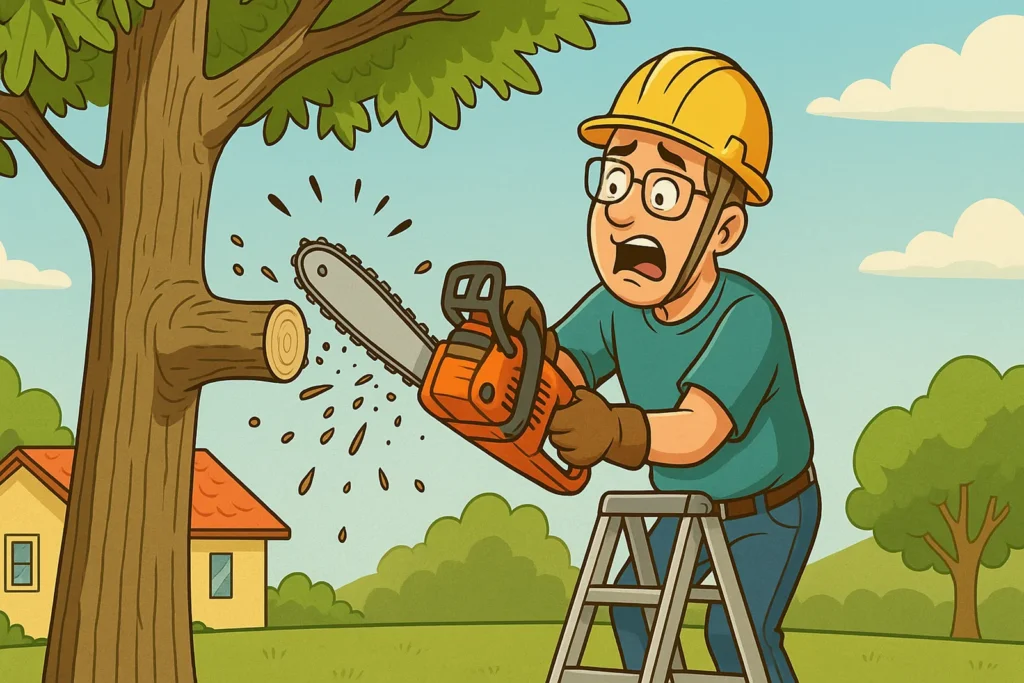
Perhaps the most immediate danger in DIY tree trimming is failing to use safety gear. Homeowners often climb ladders without helmets or harnesses, or underestimate the weight of falling limbs. Every year, emergency rooms see injuries from falls, cuts, and electrical contact related to tree work.
Professional crews use harnesses, hard hats, rigging systems, and chainsaw-resistant clothing for a reason. Safety is non-negotiable in arboriculture. Hiring a certified tree service protects not only your trees but your own well-being.
Middletown's #1 Tree Expert Company
FREE Inspection & Estimate | Certified Arborists | Trimming, Pruning, Removal, More!
Sponsored
Trust Experience, Not Guesswork
Tree trimming in Middletown Township is both an art and a science. From Red Hill to Fairview, our region’s mix of mature oaks, maples, and ornamental species requires careful handling to stay strong through every season. While it may seem tempting to tackle pruning yourself, even small errors can shorten a tree’s lifespan or create safety hazards.
Certified arborists combine skill, training, and local knowledge to keep your trees healthy, balanced, and storm-ready. They know how to evaluate soil conditions, branch structure, and species-specific needs, ensuring your property stays beautiful year-round.
When it comes to tree care, it’s better to call a professional before problems arise than after. Whether you’re maintaining a single maple in your yard or caring for a row of evergreens near your driveway, professional trimming and pruning is the smartest investment you can make for your landscape.