Middletown's #1 Tree Expert Company
FREE Inspection & Estimate | Certified Arborists | Trimming, Pruning, Removal, More!
Sponsored
That Cut on Your Oak Isn't Going Away
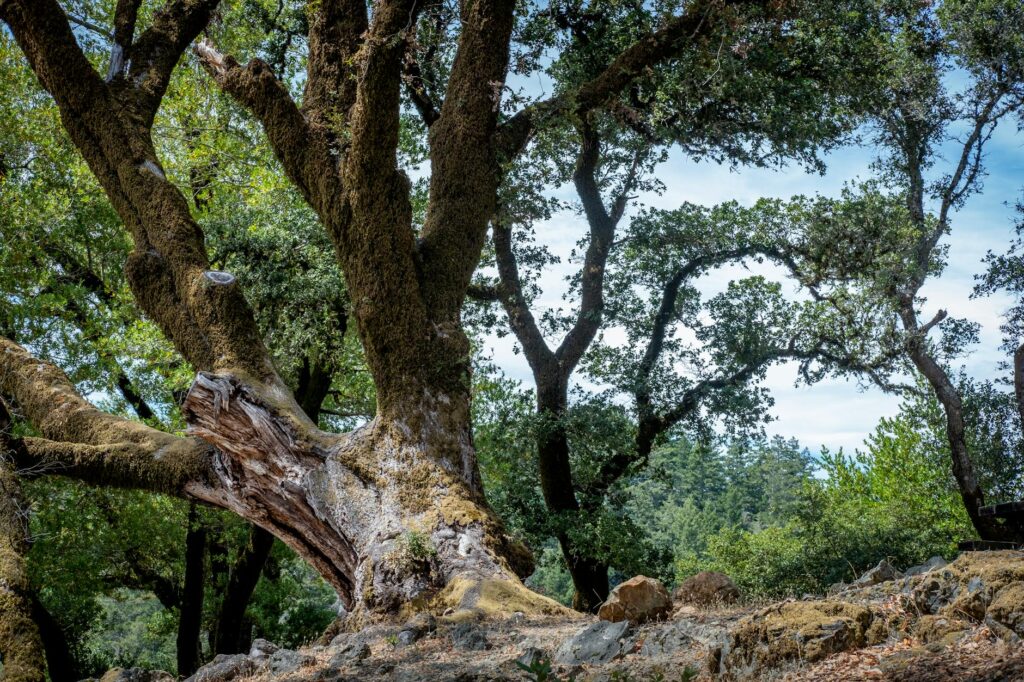
Every spring I walk Middletown neighborhoods after the dormant pruning season wraps up, and I see the evidence everywhere — fresh cuts on oaks along Navesink River Road, trimmed limbs on maples in yards backing up to Poricy Park, lopped branches on the flowering cherries lining suburban driveways in Lincroft. Most homeowners feel good about this work. The dead wood is gone, the canopy looks cleaner, and the tree looks properly tended.
But here is what I want every one of those homeowners to understand: those cuts are not healing. Not the way a scraped knee heals, anyway. Unlike human tissue, which regenerates and replaces damaged cells, trees do something fundamentally different. They wall off the wound and grow around it. The damaged wood never disappears — it stays locked inside the tree, sealed away from the healthy living wood, sometimes for centuries.
This process is called compartmentalization, and understanding it is one of the most important pieces of tree biology a Middletown homeowner can learn. It explains why the location of a pruning cut matters enormously, why topping is so destructive that the effects show up decades later, and why some trees that look perfectly healthy from the curb are quietly rotting from the inside.
Trees Don't Heal — They Seal
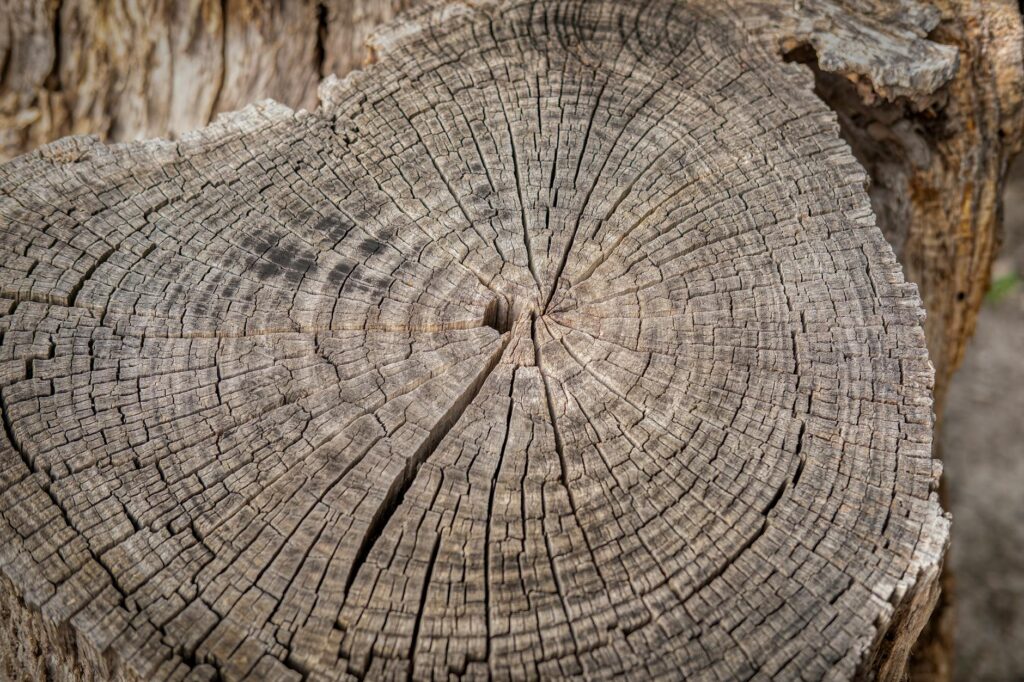
The fundamental insight came from a USDA Forest Service researcher named Alex Shigo, who spent decades studying how trees respond to wounding by systematically dissecting thousands of trees across the northeastern United States. What he found overturned more than a century of arboricultural practice: trees cannot regenerate damaged tissue. A wounded tree cannot regrow wood cells over a cut the way your skin regrows across a scraped knee. Instead, it builds chemical and physical barriers around the wound, isolating the damaged zone from the rest of the living tree.
Shigo named this process CODIT — Compartmentalization of Decay in Trees. USDA Forest Service urban and community forestry research built substantially on Shigo’s model, which showed that a tree’s response to wounding is not passive — it is an active, sophisticated defense system. The tree redirects resources to build walls around the wound site, preventing the decay organisms that naturally enter any open wound from spreading into healthy wood.
The critical takeaway: the wood that was damaged stays damaged. Even if a tree eventually grows a complete callus ring around a pruning cut and the wound looks healed from the outside, the wood inside that ring was wounded and remains permanently altered. In a healthy tree with a correctly made cut, the altered zone is small enough that it never becomes a structural problem. In a tree that was topped, repeatedly flush-cut, or wounded under drought stress, those compromised zones can expand into significant internal decay that weakens the trunk for decades.
The Four Walls of CODIT
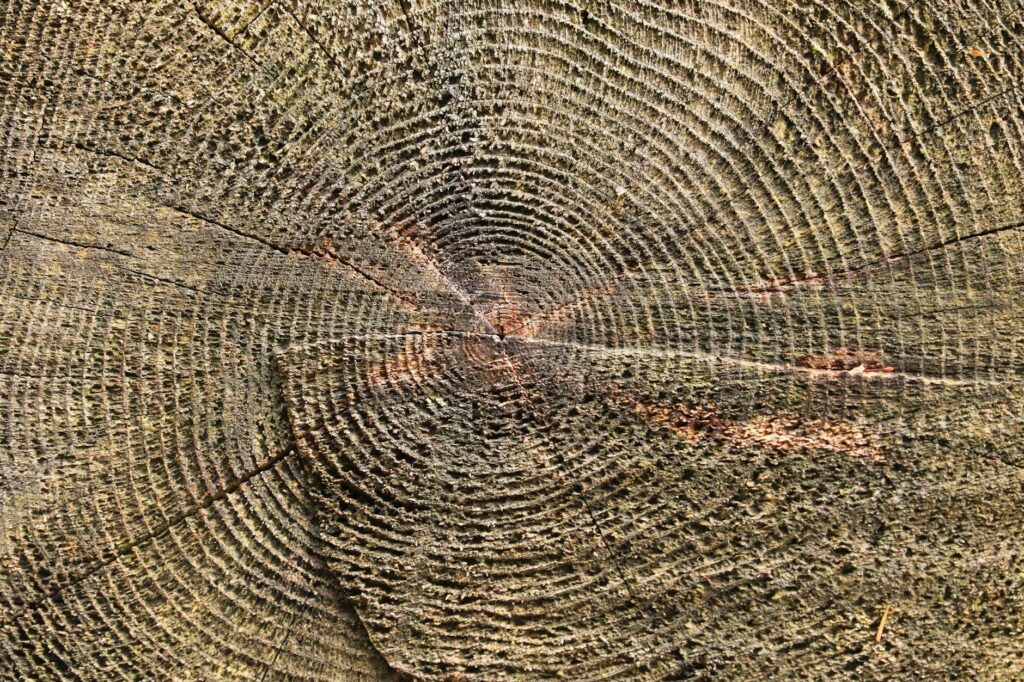
Shigo described four reaction zones — four “walls” — that a tree builds in response to wounding, each defending against decay spreading in a different direction through the wood. Wall 1 blocks decay from moving up and down through the tree’s water-conducting vessels. Wall 2 prevents decay from moving inward toward the pith. Wall 3 limits lateral spread through the rays. Wall 4, often considered the most important, is the barrier zone — a chemically distinct layer of new wood the tree grows specifically to wall off the wound from all future wood formation after the injury occurs.
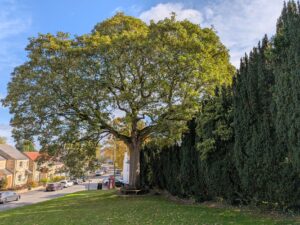
The strength of these four walls varies significantly by species, and this variation has real consequences for how Middletown’s trees respond to pruning. White oaks (Quercus alba) — the giants you see in the older sections of Middletown Township and throughout Hartshorne Woods Park — are notably strong compartmentalizers. A healthy white oak with a properly placed pruning cut will often seal remarkably well, and its dense heartwood resists fungal invasion even when small amounts of decay enter a wound.
Red maples (Acer rubrum), which are probably the single most common yard tree in Monmouth County, tend to have weaker Wall 2 responses and are considerably more susceptible to internal decay when wounds are large or improperly made. Ornamental cherries and flowering pears — extremely common in Middletown’s newer developments — are notoriously poor compartmentalizers. A bad pruning cut on a flowering cherry can open a pathway for serious fungal decay within just two or three growing seasons, which is part of why so many ornamental cherries in this area develop hollow sections by the time they reach twenty years old.
Middletown's #1 Tree Expert Company
FREE Inspection & Estimate | Certified Arborists | Trimming, Pruning, Removal, More!
Sponsored
Why the Branch Collar Is Everything
If compartmentalization is the biological process, the branch collar is the anatomy that makes it work. The branch collar is the slightly swollen ring of tissue at the base of every branch where it meets the trunk or a larger parent branch. It’s not decorative — it is the precise location where the tree concentrates the chemical and structural defenses it needs to wall off a wound after a branch is removed.
A proper pruning cut removes the branch just outside the collar, leaving the collar tissue completely intact. When this is done correctly, the collar activates and begins building the CODIT response almost immediately. Callus tissue forms from the outer edges of the collar and gradually expands across the wound face over subsequent growing seasons. On a healthy, well-watered tree with a correctly placed cut, a branch the diameter of your thumb may be completely covered by callus within two to three growing seasons. The International Society of Arboriculture’s guidance on proper pruning centers the branch collar as the key anatomical landmark for every cut.
Flush cuts — removing the branch flush with the trunk, cutting through or removing the collar entirely — destroy the tree’s primary defense mechanism at the wound site. No collar tissue remains to initiate the CODIT response. Decay enters directly into the trunk wood. What looks like a clean, tidy cut that a homeowner might prefer aesthetically is actually the most damaging cut a tree can receive. Tragically, flush cuts were the standard recommendation in older arboricultural texts, and their legacy is visible in the hollowed-out trunks on many Middletown properties that were maintained by well-meaning but outdated practices twenty or thirty years ago.
Stub cuts — cutting too far out and leaving a long dead stub — are only marginally better. The collar cannot reach a wound site that far out from the trunk. The stub desiccates, fungi colonize it, and decay eventually bridges back into the trunk tissue. The dead stub is essentially a wick drawing decay toward the tree’s core.
How Long Does Compartmentalization Actually Take?
One of the most common questions I get from Middletown homeowners is: how long does it take for a pruning cut to close over? The honest answer is that compartmentalization timelines vary enormously based on species, tree health, wound size, and the timing of the cut.
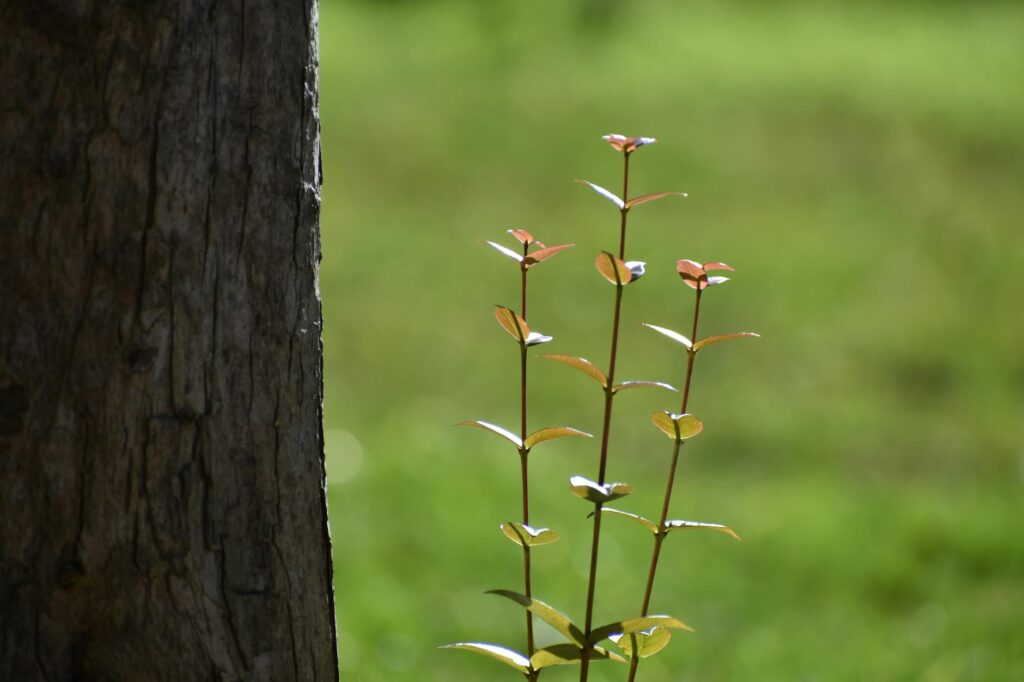
A properly placed cut on a vigorous young red maple pruned in late winter — just as the tree breaks dormancy and begins its spring growth flush — can show significant callus development within a single growing season. A large pruning wound on a mature, drought-stressed white oak pruned in August might show very little callus progress for two or three seasons before meaningful closure begins. As a practical guide for Monmouth County’s climate, a correctly made cut one to two inches in diameter will typically achieve full callus coverage in three to seven years on a healthy, adequately watered tree. Wounds four inches or larger may take a decade or more — and may never fully close if the tree’s vigor declines. Rutgers NJAES Cooperative Extension resources on home lawn and garden care consistently emphasize that maintaining a tree’s overall vigor — through proper watering, avoiding soil compaction, and appropriate fertilization — directly supports its capacity to mount an effective compartmentalization response.
This is why late May and early summer matter so much right now. Trees are at peak biological activity. Arborists commonly describe the late winter through early summer window as the optimal time for most pruning work, not just because certain pests are less active, but because the tree has maximum resources available to respond. Wounds made during active spring growth initiate the CODIT defense more rapidly and completely than wounds made during late-summer drought or early fall when the tree is redirecting energy toward dormancy preparation.
What Defeats the Tree's Defense System
Compartmentalization is a remarkable biological system, but it has real limits — and several common practices routinely overwhelm it in Middletown landscapes.
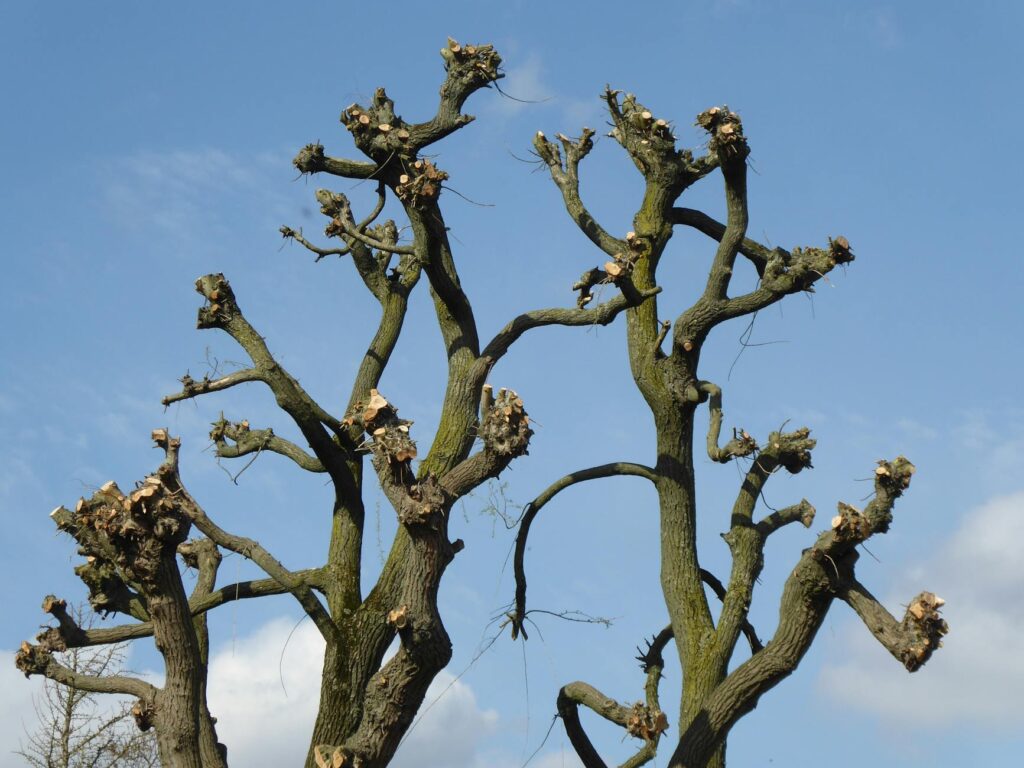
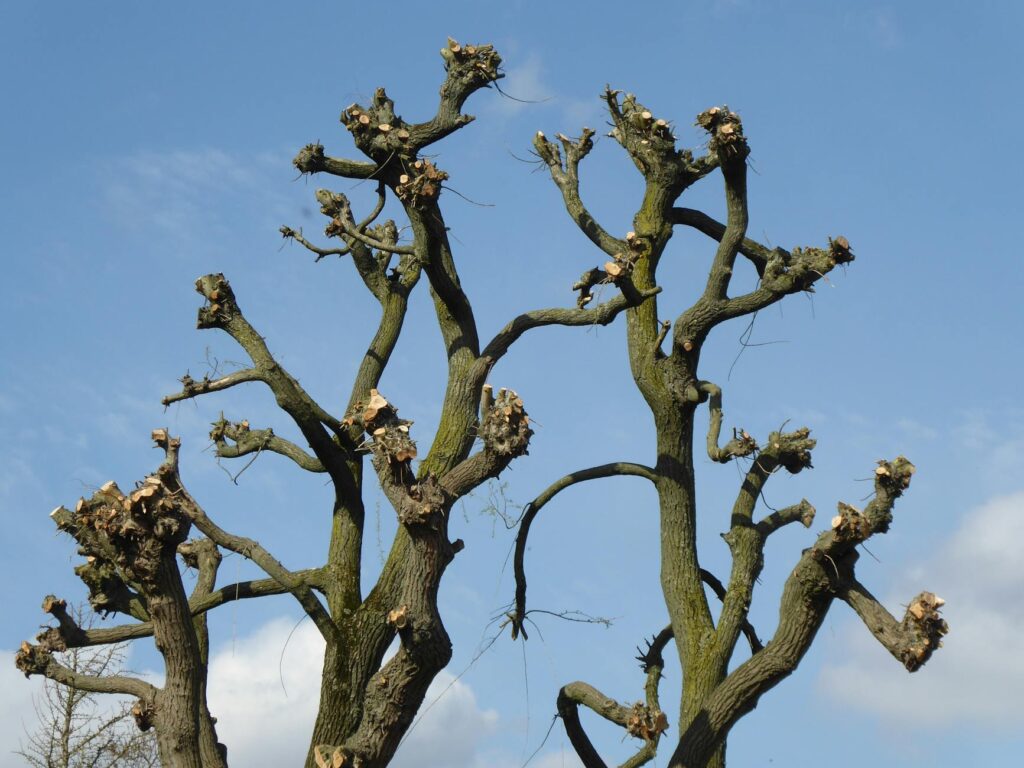
Topping is the most destructive single practice. When a tree is topped — large-diameter cuts made through the middle of main scaffold branches or the primary leader — the resulting wounds are far too large for effective compartmentalization. The tree’s reserves cannot build adequate CODIT walls around cuts of that scale. Decay enters rapidly, the fast-growing water sprouts that emerge from topped trees are structurally weak and prone to failure in wind, and the tree’s long-term structural integrity is compromised. The ISA’s consumer tree care resources are unambiguous on this point: topping is harmful to trees and should never be performed. If you see a contractor offering to “top” your tree to make it safer, that is a red flag.
- Wound dressings and tree paint — applied with the best of intentions — actually impede compartmentalization by trapping moisture and excluding the oxygen that wound-defense chemistry requires. Modern arboricultural guidance is clear: leave wounds open to air.
- Repeated wounding in the same zone overwhelms the defense. A tree can only build so many CODIT walls before the layers begin to intersect and fail, especially in smaller-diameter wood.
- Drought stress during the growing season suppresses the entire compartmentalization response. Water isn’t just for growth — it is the biological medium that drives wound defense chemistry.
- Late summer pruning creates wounds that cannot mount a full compartmentalization response before dormancy, leaving the exposed wood through an entire winter with minimal protection.
Many older properties in Middletown have trees carrying the accumulated damage of decades of suboptimal maintenance — topped in the 1990s, flush-cut by well-meaning homeowners, or storm-damaged and never properly cleaned up. In these trees, the internal decay is often far more extensive than the exterior suggests. A tree that appears completely solid from the sidewalk can have significant internal cavities that pose a real risk during a coastal nor’easter or a summer thunderstorm off Raritan Bay.
Middletown's #1 Tree Expert Company
FREE Inspection & Estimate | Certified Arborists | Trimming, Pruning, Removal, More!
Sponsored
Summary / When to Call a Pro
Compartmentalization is the reason pruning is a genuine skill, not just cutting. Every cut you make on a tree is a permanent wound. The tree will seal it — but only if the cut is made in the right place, at the right time, and with sharp, clean tools. A properly maintained tree accumulates a lifetime of well-sealed, small wounds and remains structurally sound for generations. A tree that has been topped, repeatedly flush-cut, or damaged during drought stress accumulates compromised compartments and expanding internal decay that makes it progressively more dangerous over time.
For the homeowner, this translates into a few practical rules. Prune small branches yourself if you are comfortable doing it correctly — and correct means cutting just outside the branch collar, with clean sharp tools, during the late-winter or spring window. Never apply wound paint. Never top. Do not let any contractor top your trees, regardless of how the service is described.
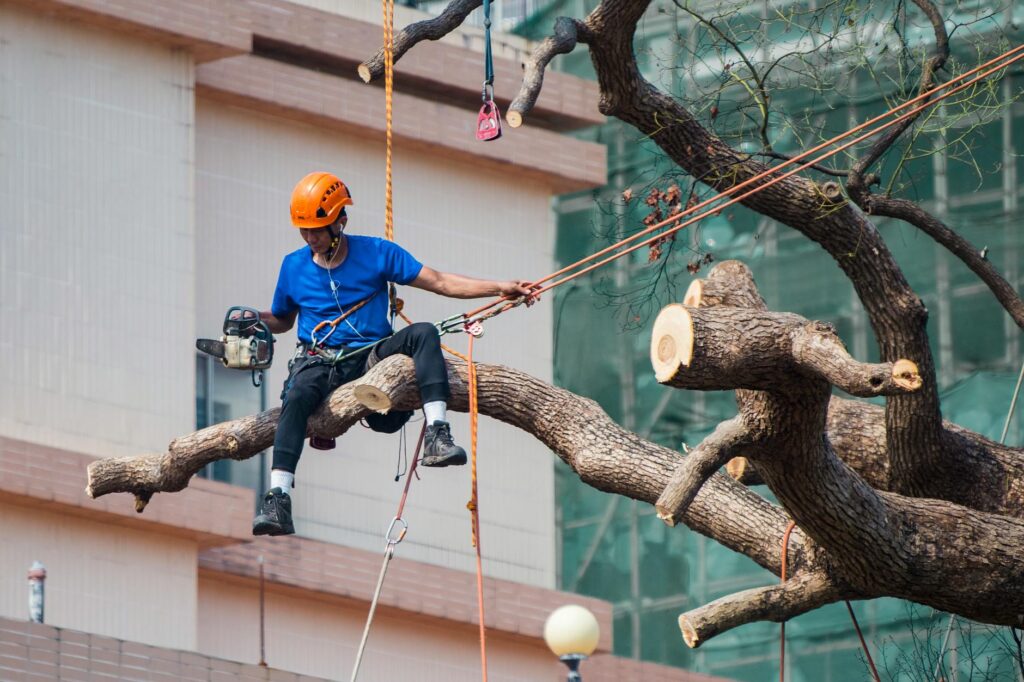
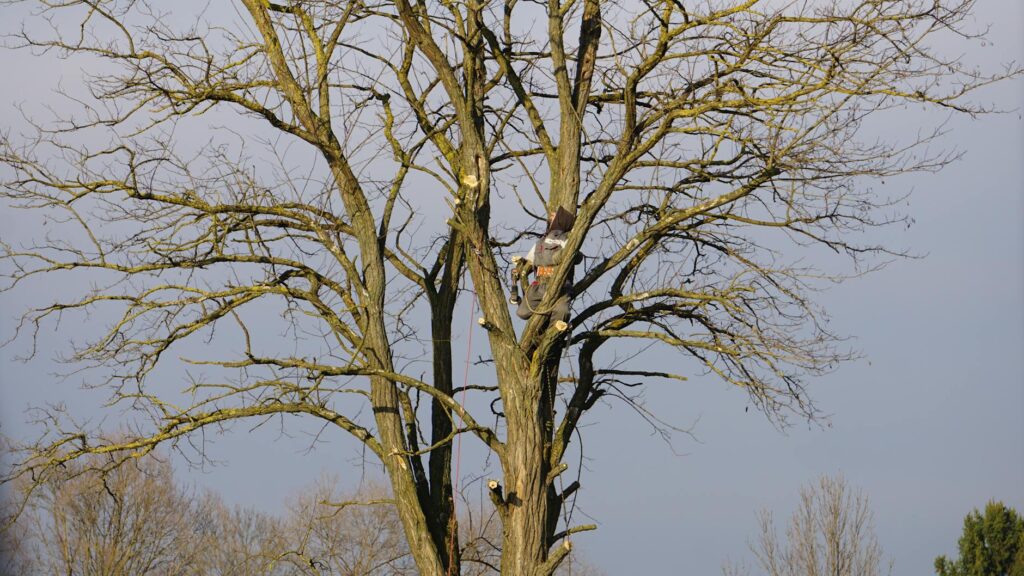
For larger work — branches more than three or four inches in diameter, mature tree canopy work, or evaluation of any tree with a history of topping, repeated storm damage, or visible decay — consult an ISA-certified arborist. A certified arborist can assess the existing compartmentalization around old wounds, determine whether internal decay is present and whether it poses a structural risk, and recommend what pruning is actually appropriate for the tree’s long-term health. In Middletown Township, where large mature oaks and maples represent significant property value and real storm-risk potential, a professional assessment is not a luxury — it is basic stewardship of an asset that took a century to grow.
Photo credits: Featured image by Jimmy Chan on Pexels; Section 1 by David McElwee on Pexels; Section 2 by David McElwee on Pexels; Section 3 by MAURO FOSSATI on Pexels; Section 4 by Timothy Huliselan on Pexels; Section 5 by Timothy Huliselan on Pexels; Section 6 by Cecilia Callier on Pexels; Section 7 by Dmytro Glazunov on Pexels.