
Middletown's #1 Tree Expert Company
FREE Inspection & Estimate | Certified Arborists | Trimming, Pruning, Removal, More!
Sponsored
The Tree You Plant Isn't the Tree You'll Get
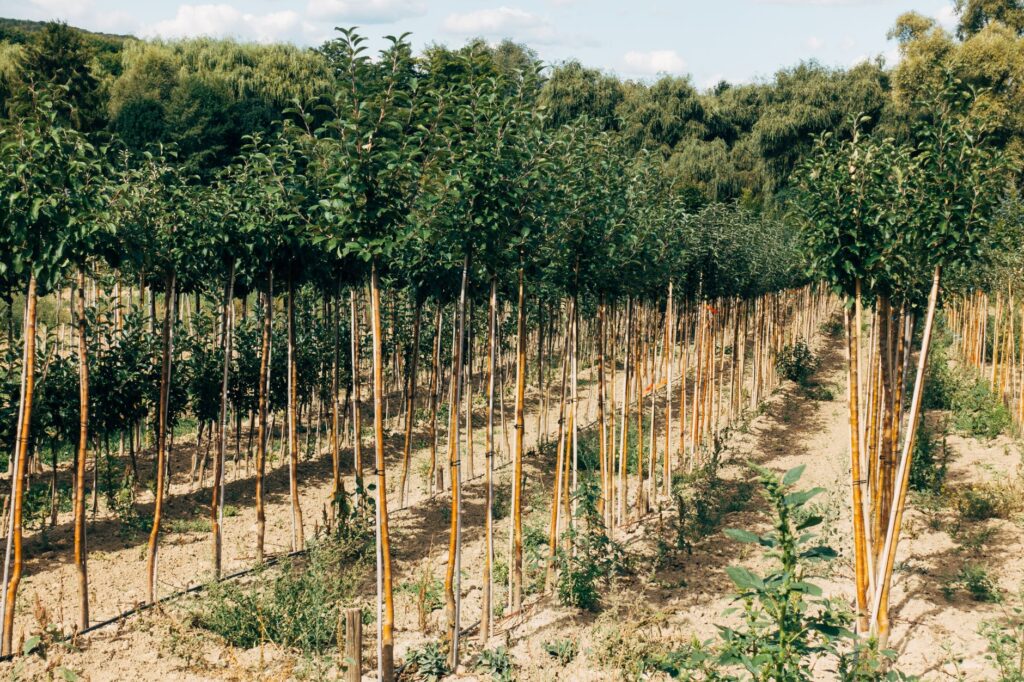
Drive through any new construction pocket in Middletown Township — the newer streets off Kanes Lane, a fresh cul-de-sac near Lincroft, a builder’s row of street trees along Leonardo — and you’ll see the same thing: a row of young trees, all planted the same week, all staked the same way, and all left completely alone after that. Nobody touches them again until something goes wrong.
That’s the gap I see most often as an arborist working this part of Monmouth County. Homeowners understand watering. They understand mulching, more or less. But almost nobody trains a young tree’s structure in its first few years, and that’s exactly the window when it matters most. A red maple (Acer rubrum) or pin oak (Quercus palustris) planted today is making branching decisions right now that will either cost you nothing or cost you a bucket truck in fifteen years.
This isn’t about the heavy, dormant-season pruning I’ve written about before — that’s a different job on a different calendar. Formative pruning on a young tree is light, quick, and can happen through most of the growing season, including now. It’s also the single cheapest thing you can do for a tree’s long-term health and safety, and it’s almost entirely a homeowner-scale task if you catch it early.
What "Structural Pruning" Actually Means on a Young Tree
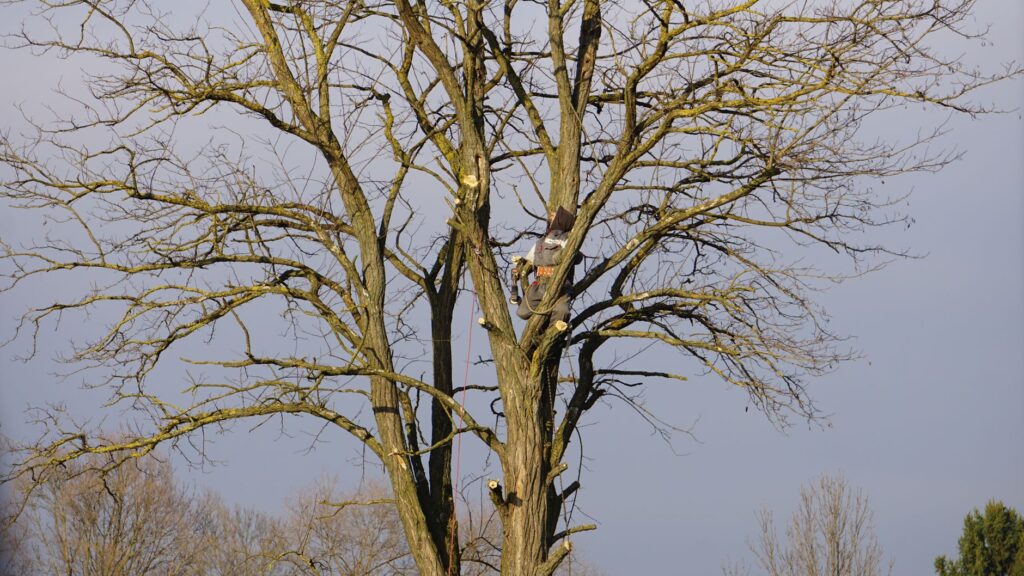
Structural pruning has nothing to do with shaping a tree for looks. It’s about deciding, early, which branch becomes the trunk and which branches become the frame the tree hangs its canopy on for the next hundred years.
Most young shade trees do best with a single dominant leader — one central stem growing straight up, with side branches spaced out below it like rungs on a ladder rather than clustered at one point. According to the International Society of Arboriculture’s guidance for tree owners, the goal in these early years is simple: keep one leader dominant, keep scaffold branches evenly spaced along the trunk, and remove anything that competes with that leader before it has the chance to win.
The branch structures I get called out to fix later — the codominant stems that split down the middle in a nor’easter, the low branch that grew into a fence line, the tangle of crossing limbs over a patio — almost all trace back to a tree that was never touched in its first three to five years. A few five-minute pruning sessions early on prevent nearly all of it.
Yes, You Can Do This in July
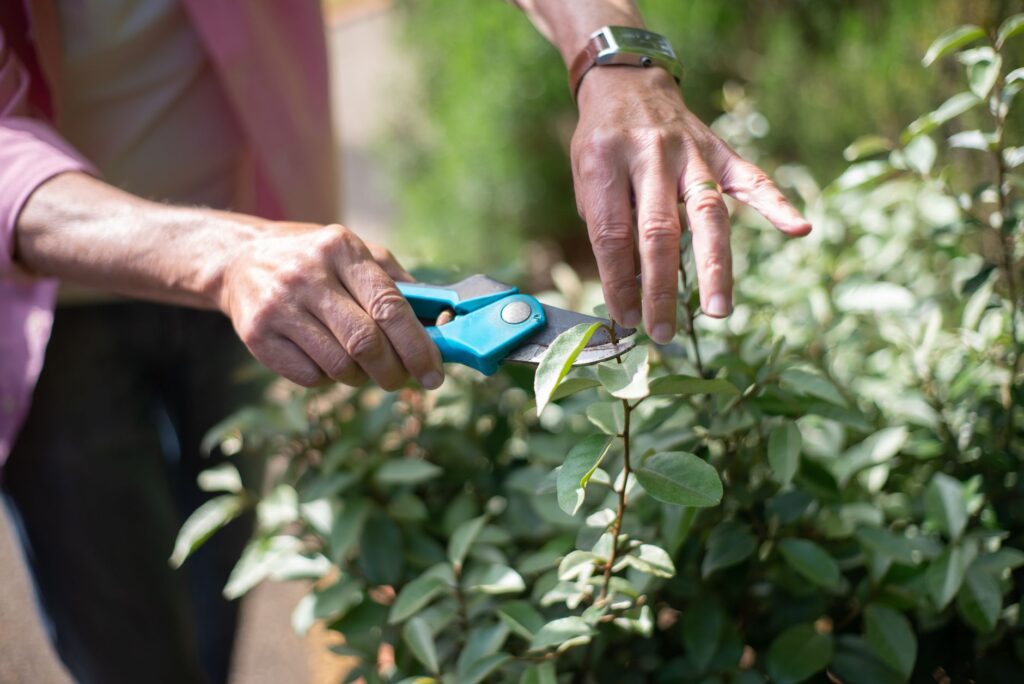
I’ve written before about why heavy pruning on mature trees should wait for the dormant season — removing a lot of live tissue from a big tree in midsummer stresses it and, on species like oak, raises disease risk. Young tree training is a different animal entirely.
On a whip or a nursery-grade sapling, you’re typically removing pencil-thick growth: a competing leader, a sucker at the base, a branch that’s crossing another. That’s a small amount of live tissue relative to the whole tree, and the USDA Forest Service’s guide to pruning trees treats this kind of light corrective work on young trees as something that can be done through the growing season, not just in dormancy. The old rule of thumb still applies — don’t remove more than about a quarter of a young tree’s foliage in one season — but a few strategic snips well under that threshold won’t set a Middletown tree back at all, heat and humidity included.
What you want to avoid in July is the opposite mistake: heavy cuts, big pruning saws, or anything that opens large wounds. This is hand-pruner work, not chainsaw work.
Middletown's #1 Tree Expert Company
FREE Inspection & Estimate | Certified Arborists | Trimming, Pruning, Removal, More!
Sponsored
The Mistakes I See on Almost Every Block
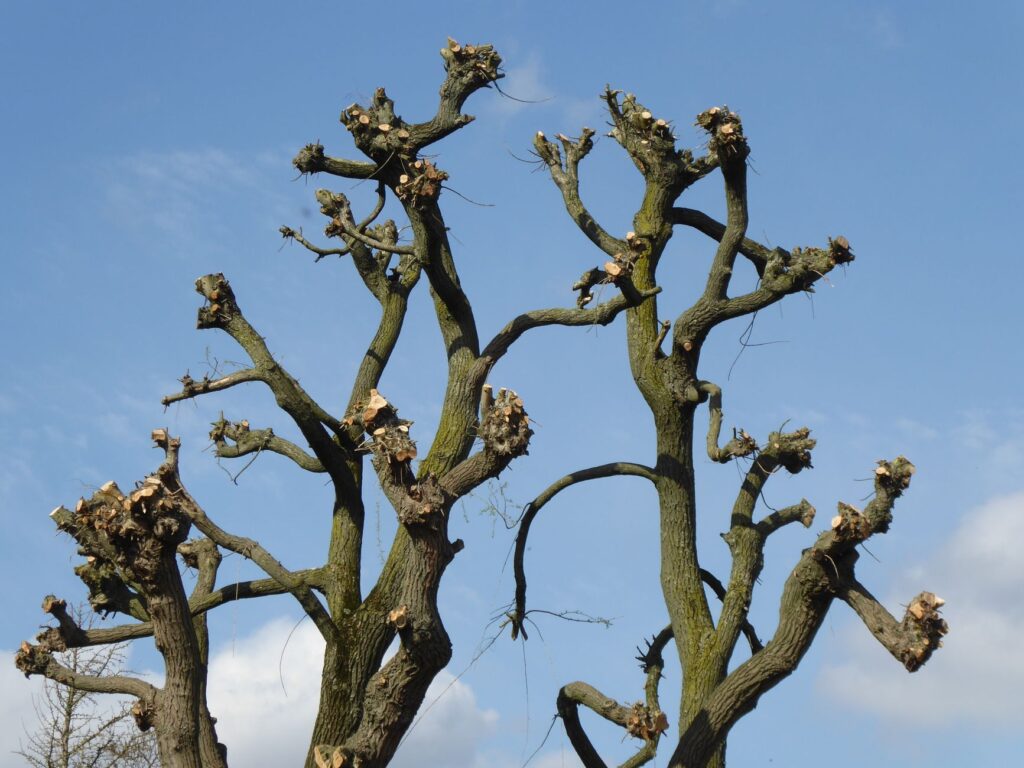
A few patterns show up on nearly every young tree I inspect in Middletown, whether it’s a builder-installed street tree in a new development or a homeowner’s own planting from the local nursery.
- Ignoring codominant stems. Two stems of roughly equal size competing for the same spot at the top of the trunk almost always include a seam of included bark that never fuses properly — it’s a split waiting for a windy afternoon off the Bayshore.
- Leaving low branches too long. A low branch that seems harmless at year two is a branch you’ll be paying someone to remove at year twelve, once it’s four inches thick and growing into a walkway or a neighbor’s fence.
- Over-thinning in one pass. Some homeowners overcorrect — once they learn to prune, they take off far too much at once. A stressed young tree with most of its leaves gone doesn’t have the energy reserves to recover well.
- Topping disguised as pruning. Cutting the leader back “to control height” is the single fastest way to trade one straight trunk for a cluster of weakly attached vertical shoots.
None of these are exotic problems. They’re the predictable result of a tree that gets planted, staked, watered for a season, and then never looked at again.
Doing It Right: Where and How to Cut
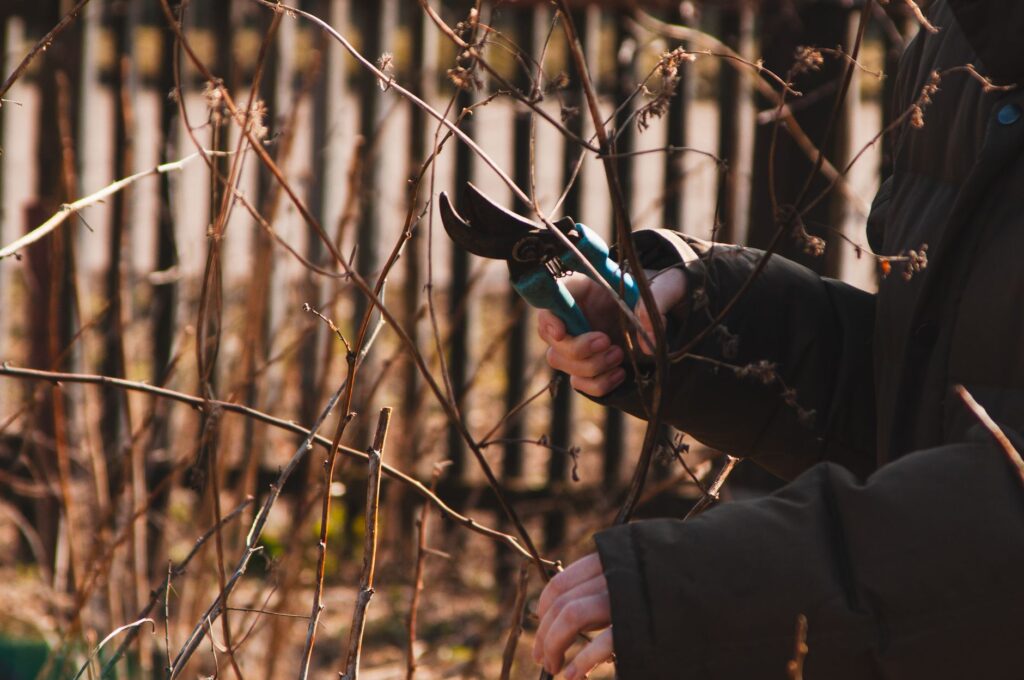
The technique itself is straightforward once you know what you’re looking for. Every cut should land just outside the branch collar — the slightly swollen ring of tissue where a branch meets the trunk or a larger limb. Cutting flush against the trunk removes that collar and slows the tree’s ability to wall off the wound; leaving too long a stub does the same thing in a different way, giving decay a foothold.
For anything larger than pencil-thickness, use the three-cut method: an undercut a few inches out from the final cut point, a top cut just beyond it to remove the weight of the branch, then a clean finishing cut just outside the collar. On a young tree, most of what you’re removing is small enough to skip the undercut entirely and take off cleanly with sharp hand pruners or loppers.
A few practical notes for Middletown’s clay-loam soils and humid summers: wipe your blades with rubbing alcohol between trees if you’re working on more than one, especially if any of them show signs of disease. And resist the urge to paint or seal the cut — modern research is consistent that trees seal their own wounds better without it.
When This Becomes a Job for a Professional
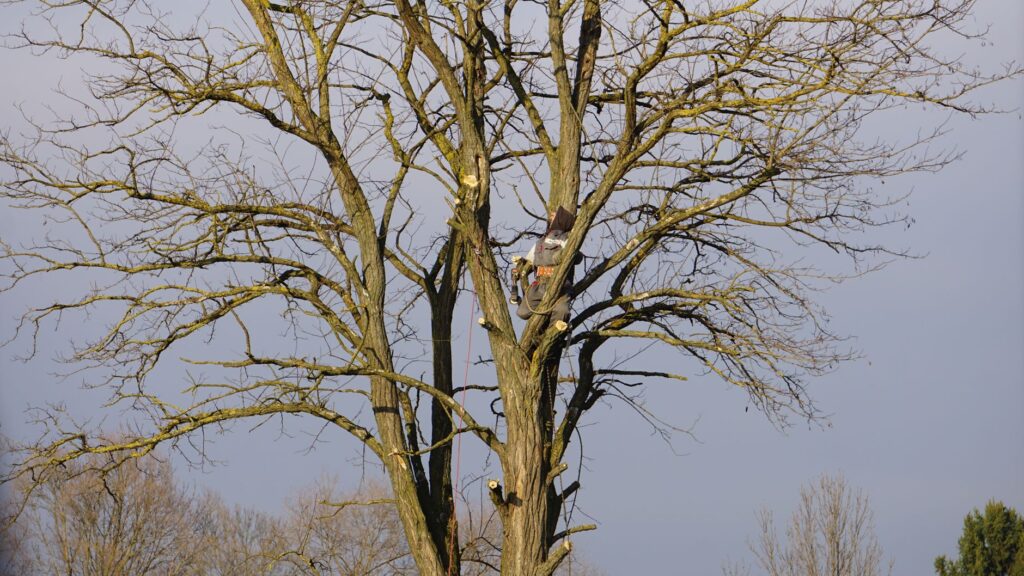
Plenty of formative pruning is genuinely homeowner-scale. But a few situations call for a trained eye before you make a cut you can’t take back.
If a young tree already has a significant codominant stem situation — two leaders of nearly equal size, especially on a species prone to weak unions like Bradford pear or silver maple — the correction sometimes needs cabling or a staged approach rather than a single cut. The same goes for any young tree growing near a foundation, a driveway, or overhead utility lines, where a wrong decision about which branch to keep has consequences beyond the tree itself. And if a storm has already damaged a young tree’s leader, figuring out whether a side branch can be trained to take over as the new leader is a judgment call worth getting right the first time.
The Rutgers Cooperative Extension’s guide to hiring a tree care professional is a good reference if you’re trying to figure out whether a job is DIY-sized or not — as a rule, if you’re reaching for anything bigger than hand pruners on a tree you can’t easily see the top of, it’s time to call a certified arborist.
Middletown's #1 Tree Expert Company
FREE Inspection & Estimate | Certified Arborists | Trimming, Pruning, Removal, More!
Sponsored
The Payoff Is Decades Away — That's the Point
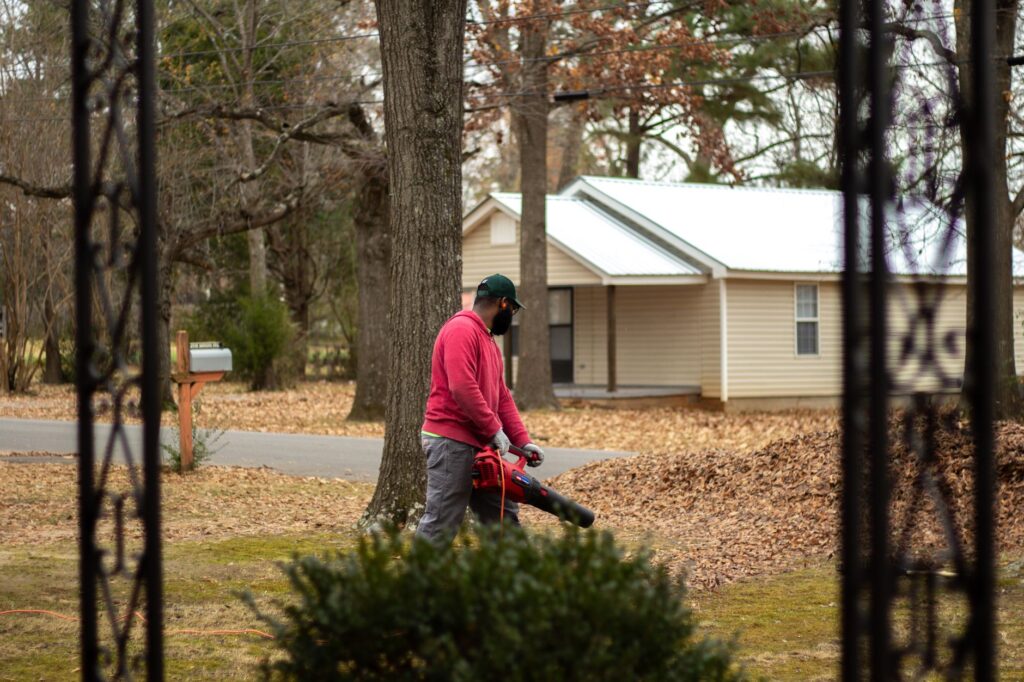
Structural pruning is one of the rare pieces of tree care where a few minutes of attention now buys you out of real money later. A well-trained young oak or maple grows into a tree with one strong trunk, evenly spaced scaffold branches, and a canopy that sheds storm wind the way it’s supposed to. An untrained one grows into the kind of tree that ends up on my inspection list after every nor’easter — the one with the split crotch, the low limb over the roof, the lean nobody noticed until it was obvious.
If you’ve got young trees in the ground anywhere in Middletown — Lincroft, Belford, Port Monmouth, or a new build near Thompson Park — walk them this week with a clean pair of hand pruners and look for competing leaders, crossing branches, and anything growing low enough to be a problem in ten years. If what you find looks more complicated than a few small cuts, that’s exactly the moment to have a certified arborist take a look before the tree makes the decision for you.
Photo credits: Featured image by Boryslav Shoot on Pexels; Section 1 by Markus Winkler on Pexels; Section 2 by Dmytro Glazunov on Pexels; Section 3 by Kampus Production on Pexels; Section 4 by Timothy Huliselan on Pexels; Section 5 by Boryslav Shoot on Pexels; Section 6 by Dmytro Glazunov on Pexels; Section 7 by Paris Lopez on Pexels.