
Middletown's #1 Tree Expert Company
FREE Inspection & Estimate | Certified Arborists | Trimming, Pruning, Removal, More!
Sponsored
The Mulch Ring That Looked Perfect in October
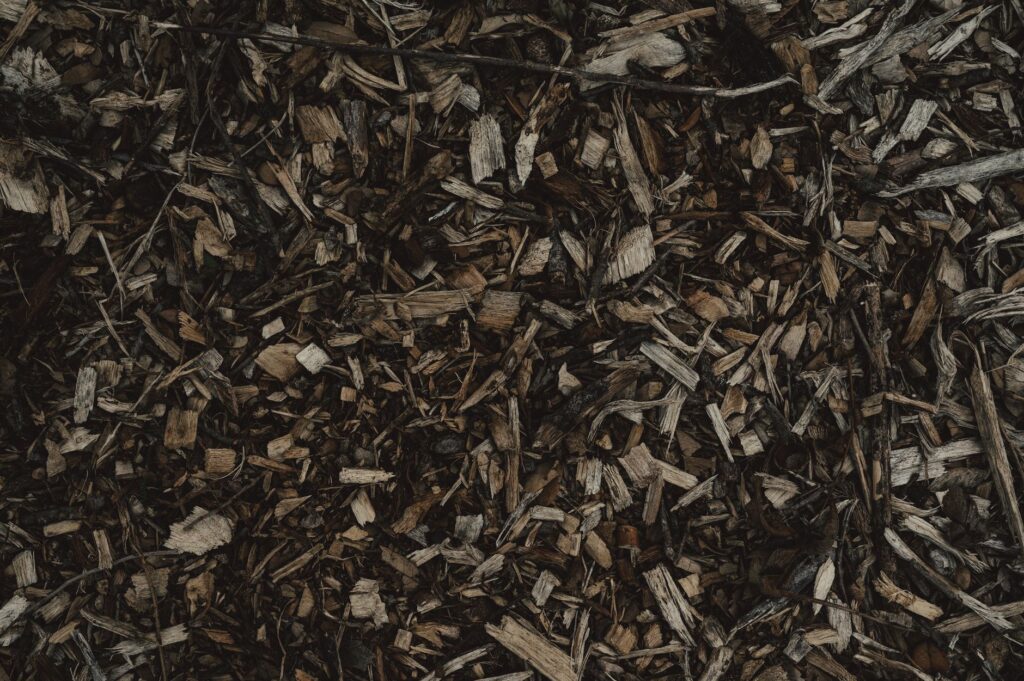
Every fall, Middletown yards get a fresh round of mulch — dark, tidy rings pulled up around young maples, new plantings, and the specimen trees homeowners are proudest of. It looks like good stewardship, and mostly it is. But pile that mulch too thick or push it right up against the trunk, and by January that same ring can turn into something else entirely: a heated, hidden runway system for meadow voles, tunneling under the snow and gnawing bark at the exact spot where a tree can least afford to lose it.
The damage doesn’t show in October. It shows in April, when a ring of chewed, pale wood appears at the base of a tree that looked completely healthy all winter — and by then the girdling may already be severe enough to threaten the tree’s life. Getting fall mulching right isn’t complicated, but it does mean unlearning a habit that most well-meaning homeowners have picked up from watching landscape crews pile mulch high against a trunk for a clean, finished look.
This is one of those small, fixable details that separates a tree that sails through a Bayshore winter from one that spends the following spring trying to recover from damage nobody saw coming.
Why Voles Move Into Mulch in the First Place

Meadow voles (Microtus pennsylvanicus) are active all winter, not just in the growing season. They don’t hibernate, and once snow cover or a dense mulch layer builds up over them, they get something even better than shelter — cover from hawks, owls, and foxes that would otherwise pick them off in the open. A thick mulch bed functions almost exactly like snow cover: it insulates the ground, hides their tunnels, and lets them move around a yard undetected all winter long.
The trouble starts when their preferred food — seeds, grasses, tender roots — gets scarce under frozen ground. At that point, voles switch to whatever’s left within reach of their tunnels, and the bark at the base of a young or thin-barked tree is often exactly that. Voles feed low, usually within an inch or two of the soil line, gnawing through the outer bark and into the cambium layer underneath — the thin band of living tissue that moves water and sugars between roots and canopy. Damage that goes most of the way around the trunk, known as girdling, cuts off that flow and can kill a tree outright, even though nothing above ground looked wrong all winter.
The Mulch Mistakes That Set This Up
Two habits create the exact conditions voles look for, and both are extremely common in Middletown landscapes. The first is mulch piled directly against the trunk — the “mulch volcano” look that’s become a default in a lot of commercial landscaping, where a cone of bark mulch rises several inches up the trunk itself. That pile holds moisture against the bark, invites rot and fungal problems on its own, and gives voles a sheltered highway straight to the trunk with zero exposure to predators.
The second is simply too much mulch, full stop. According to Rutgers Cooperative Extension’s fact sheet on over-mulching trees and shrubs, total mulch depth — including whatever is left over from previous years — shouldn’t exceed about 3 inches, and on compacted or poorly drained soil, 2 inches is the safer ceiling. Layer a fresh 3 inches on top of last year’s un-raked mulch and it’s easy to end up with 5 or 6 inches without meaning to, which is more than enough depth for voles to tunnel through undetected all winter.
Middletown's #1 Tree Expert Company
FREE Inspection & Estimate | Certified Arborists | Trimming, Pruning, Removal, More!
Sponsored
How to Build a Mulch Ring That Actually Protects the Tree
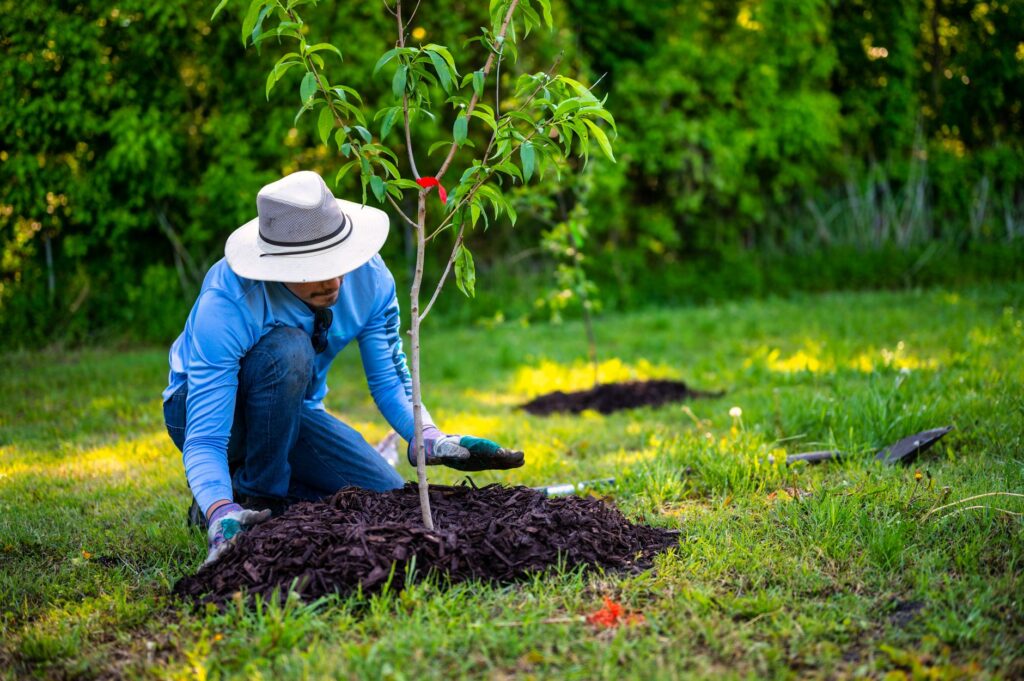
The fix is a shape change, not a mulch ban. A proper ring looks like a shallow donut, not a volcano: mulch spread in a wide, flat layer across the root zone, tapering down to bare soil well before it reaches the trunk. Rutgers’ guidance is specific on the gap — keep mulch 8 to 12 inches away from the trunk of a mature tree, and at least 3 to 5 inches away for young trees and shrubs, with some extension programs recommending a full 6 inches of clearance on small trees specifically because of vole risk.
Before mulching, it’s worth locating the root flare — the point where the trunk widens and the first structural roots start to spread — and making sure it stays visible above the soil and mulch line, not buried under either. The International Society of Arboriculture’s guidance on proper mulching makes the same donut-not-volcano point and flags a buried root flare as an invitation for bark decay, insects, and rodents alike. A tree planted a little high, with the flare showing, sheds water and pests away from the trunk far better than one that’s been mulched or backfilled up past that point.
- Keep total mulch depth to 2–3 inches, checking what’s already there before adding more.
- Leave 3–6 inches of bare soil between the mulch edge and a young tree’s trunk (8–12 inches for mature trees).
- Use shredded hardwood or wood chips rather than whole bark nuggets, which mat down less and hold less standing moisture against the bark.
- Rake back and refresh existing mulch rather than stacking a new layer on top every fall.
This single adjustment does double duty — it removes the vole runway and it eliminates the bark-rot and girdling-root risk that mulch volcanoes cause on their own, storm-hazard concerns for another season entirely.
Extra Protection for Young and Thin-Barked Trees
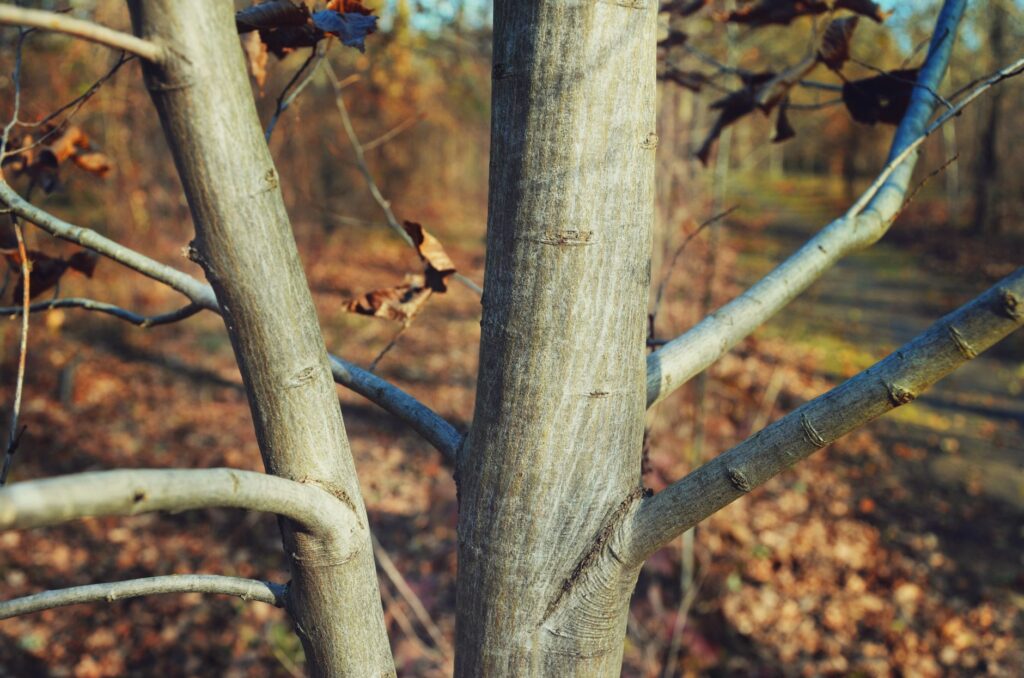
Newly planted trees and species with thin, smooth bark — young maples, cherries, and many ornamentals common in Middletown’s newer developments — are the most vulnerable to vole girdling, simply because their bark hasn’t thickened enough to resist gnawing. For these, a mulch gap alone may not be enough insurance in a yard with an active vole population.
A cylinder of quarter-inch hardware cloth, wrapped loosely around the trunk from just below soil level to about 18–24 inches up, is the extension-recommended physical barrier — it should stand slightly off the bark, not wrapped snugly, so the tree isn’t restricted as it grows. It’s a step that Iowa State’s yard and garden extension program and other cold-climate extension services recommend specifically for young trees heading into their first few winters, when bark is thinnest and damage is most likely to be fatal rather than cosmetic. Keeping the grass and weeds mowed low around the trunk into late fall also removes cover voles rely on to approach a tree undetected in the first place.
What Vole Damage Looks Like Once It's Done
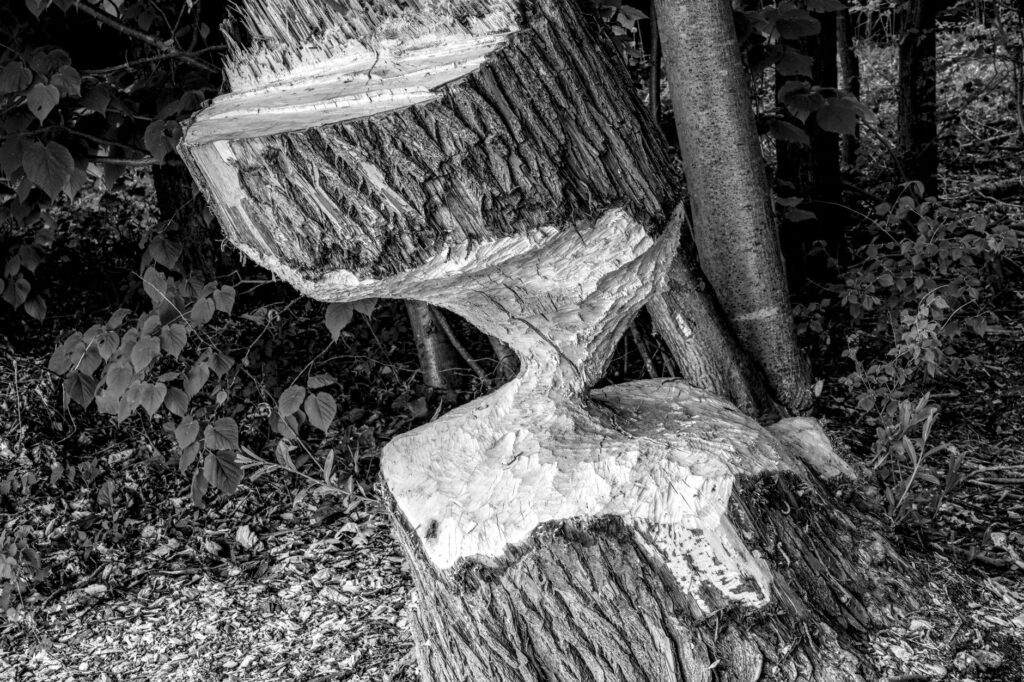
By the time vole damage is visible, it’s usually late winter or early spring, and the tunnels themselves may already be gone with the thaw. What’s left is a band of chewed, irregular tooth marks in the bark near the soil line — distinct from the smooth, parallel scrape of a lawn mower or the vertical strip pattern of deer rub higher up the trunk. If the gnawing goes most of the way around the circumference, the tree is girdled, and the outlook depends entirely on how much intact cambium remains.
A partial girdle, covering less than roughly a quarter to a third of the trunk’s circumference, often allows a healthy, otherwise vigorous tree to compartmentalize the wound and recover over a couple of growing seasons, particularly with extra water and reduced stress while it heals. A full or near-full girdle is a different situation — the tree has effectively had its plumbing cut, and while the roots may keep pushing water up for a while, the canopy is running on borrowed time without intervention like bridge grafting, which is a specialized repair best left to a trained professional.
Middletown's #1 Tree Expert Company
FREE Inspection & Estimate | Certified Arborists | Trimming, Pruning, Removal, More!
Sponsored
When to Just Have a Professional Look
Most vole prevention is genuinely DIY-friendly — it’s a matter of shape, depth, and a few inches of clearance, not equipment or expertise. Where it’s worth bringing in a certified arborist is after the fact: assessing how much cambium survived a winter’s damage, deciding whether a partial girdle needs help or will heal on its own, and — for a young or high-value tree with a full girdle — evaluating whether bridge grafting or replacement makes more sense.
It’s also worth a second look if a yard has an unusually active vole population regardless of mulching habits; heavy ground cover, unmown edges near woods or wetlands, and mild winters with less snow cover (which paradoxically increases exposed tunneling activity in leaf litter and mulch) can all push vole pressure higher than a standard mulch fix will handle alone. A quick fall walk-through with a professional, before the ground freezes, catches both the mulch habit and the yard conditions that make this problem more likely in the first place.
Photo credits: Featured image by https://kaboompics.com/ on Pexels; Section 1 by Alfo Medeiros on Pexels; Section 2 by Павел Гавриков on Pexels; Section 3 by https://kaboompics.com/ on Pexels; Section 4 by Alfo Medeiros on Pexels; Section 5 by photoGraph on Pexels; Section 6 by Jean-Paul Wettstein on Pexels; Section 7 by Peter Xie on Pexels.