
Middletown's #1 Tree Expert Company
FREE Inspection & Estimate | Certified Arborists | Trimming, Pruning, Removal, More!
Sponsored
The Stake Still in the Ground
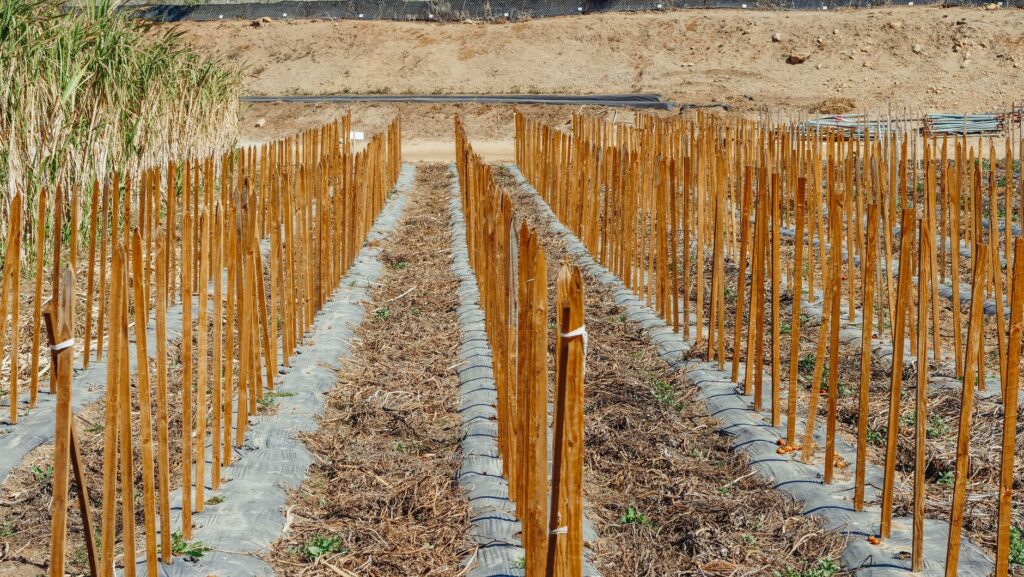
Every spring, homeowners across Middletown Township — from Lincroft’s quiet residential blocks to the neighborhoods ringing Raritan Bay in Port Monmouth and Leonardo — head to the nursery, pick out a handsome young tree, and plant it with care. They hammer in the stakes, thread the ties, and feel satisfied with the job. Then summer arrives, the tree leafs out beautifully, and those stakes quietly get forgotten.
By the following June, the stakes are still in the ground. By year two or three, the ties may have started pressing into the bark, cutting a groove that will never fully heal. This is one of the most common — and least discussed — ways that homeowners inadvertently damage the very trees they worked so hard to establish.
Right now, in early June, we are at the precise point in the season when this matters most. If you planted a tree this past March or April — or anytime in the last one to two years — this is the moment to go outside, look at your stakes, and honestly evaluate whether they’re still doing any good. Most of the time, they aren’t. This guide will walk you through when staking is truly necessary, how to do it correctly when it is, and — most importantly — how to recognize when it’s time to pull those stakes out for good.
Does Your Newly Planted Tree Actually Need Stakes?

Here is something that surprises many homeowners: most container-grown trees sold at New Jersey nurseries don’t require staking at all. If the root ball is intact and the tree stands upright after planting, you may not need stakes — or you can remove them well within the first growing season.
Staking is genuinely appropriate in a few specific situations:
- Bare-root trees — shipped or sold without soil around the roots — need initial support while the root system anchors into surrounding soil.
- Unusually tall, top-heavy trees with a narrow trunk caliper relative to their crown size may need temporary support to prevent wind-rocking that tears new root hairs before they can grip the ground.
- Trees planted on exposed, windy lots — particularly near Raritan Bay in Port Monmouth and Leonardo — may benefit from one season of support.
- Large-caliper nursery specimens over about 2.5 inches in trunk diameter that were difficult to establish with a complete root ball may need brief additional anchoring.
According to Rutgers New Jersey Agricultural Experiment Station, unnecessary staking is among the most common tree planting mistakes in the region. The practical test is simple: after you plant and backfill, give the trunk a firm but gentle push. If the root ball stays put and the tree springs back upright on its own, skip the stakes or plan to pull them within a few months. If the entire root ball rocks with the trunk, then the tree genuinely needs temporary support.
What the tree never needs is metal wire of any kind — not wire threaded through a rubber hose, not rebar looped around the trunk. Those approaches cause bark damage and girdling, and I’ve seen the results in Middletown yards where well-meaning homeowners used whatever was available in the garage.
The Right Way to Stake: Two Posts, Soft Ties, and Room to Flex
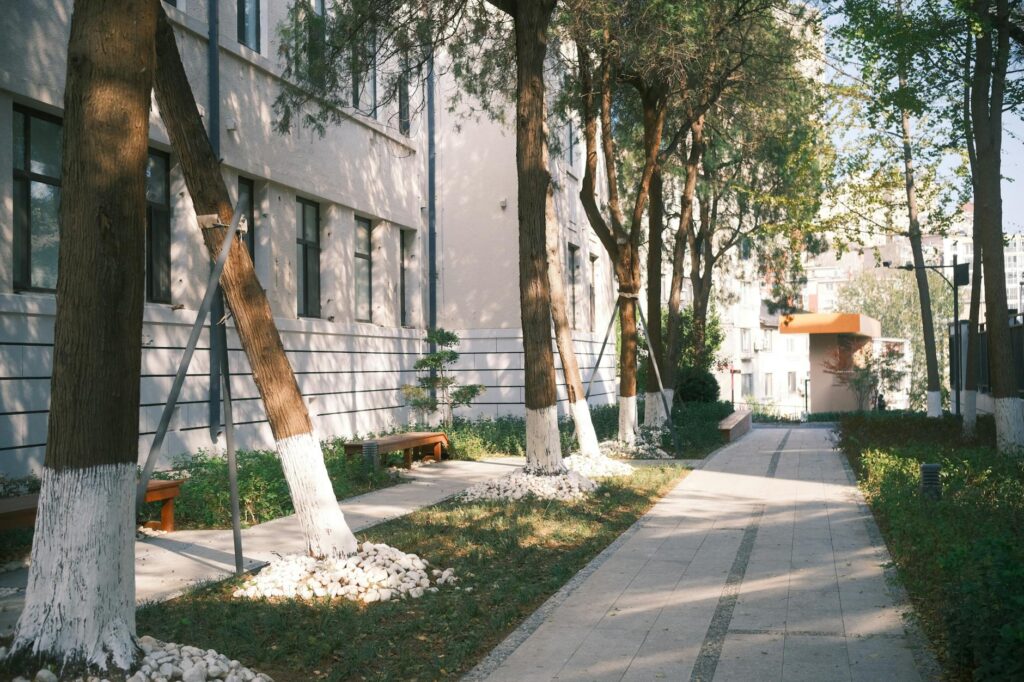
When staking is warranted, the mechanics matter. The standard approach recommended by certified arborists is two stakes placed opposite each other, perpendicular to the direction of prevailing wind. For most Middletown properties, that means one stake facing roughly northwest and one facing southeast — positioned to resist the dominant spring and fall wind direction. Drive each stake outside the root ball perimeter; you don’t want to punch through roots you just planted.
Use soft, wide ties — purpose-made tree straps, flat rubber strapping, or even strips cut from an old cotton T-shirt. Never use wire, zip ties, rope, or twine, all of which will cut into bark within a single growing season. Thread the tie in a loose figure-eight between the stake and the trunk so there are a few inches of play in every direction. The tree should be able to flex one to two inches when you push the trunk with your hand. That movement is not a problem to be fixed — it is the entire point of the exercise.
Position the ties at the lowest point on the trunk where the tree can still stand upright. For most young trees, that’s somewhere in the lower third of the trunk’s height. The International Society of Arboriculture notes that placing ties too high forces the trunk to remain rigid all the way to the tie point, which delays the development of trunk taper exactly where structural strength matters most. Low ties, loose fit, some flex — that’s the formula.
Middletown's #1 Tree Expert Company
FREE Inspection & Estimate | Certified Arborists | Trimming, Pruning, Removal, More!
Sponsored
The One-Year Rule — and the Science Behind Why It Matters
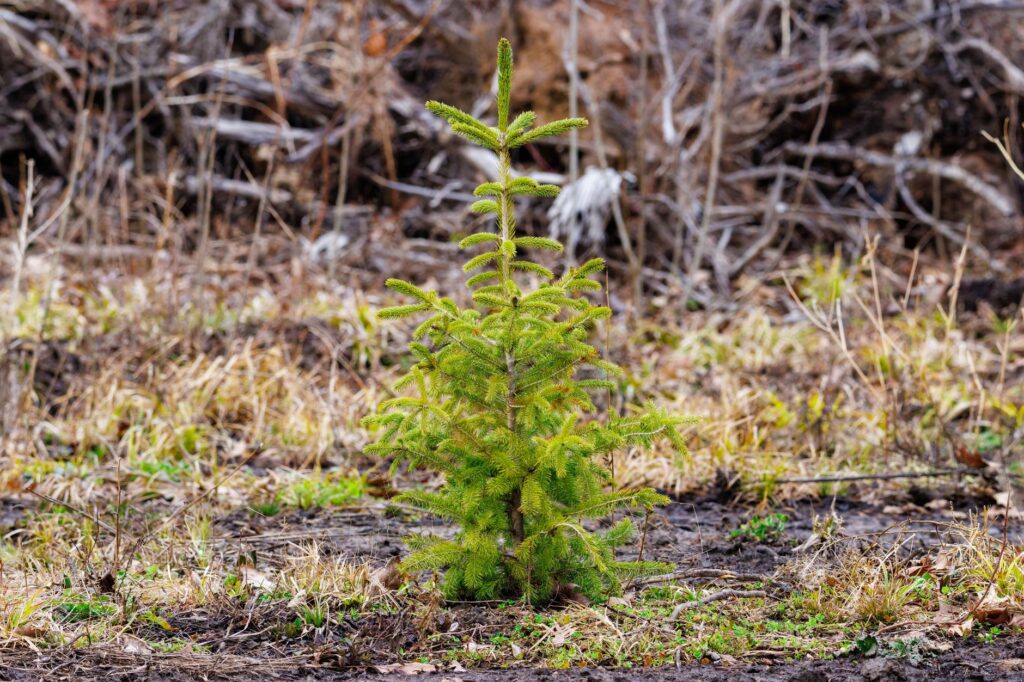
Here is the most important rule in tree staking: twelve months. In most cases, stakes should come out within one year of planting — and often sooner if the tree is doing well. For trees planted this past March or April, that means stakes should be out by next spring at the absolute latest. For trees planted in the fall of last year, you may already be past the deadline.
The reason is rooted in a concept called thigmomorphogenesis — the process by which trees respond to mechanical stress by building denser, more tapered wood. When wind pushes a young trunk and the trunk flexes, the tree registers that movement and responds by laying down thicker wood fibers at the base, gradually creating the taper from base to crown that gives a mature tree its structural integrity. A well-developed young tree should be noticeably wider at the base than at mid-trunk — a taper you can feel by running your hand up the stem.
Trees left staked too long develop what arborists sometimes call pencil syndrome — a trunk that stays uniformly thin from base to crown because it never had to bear its own weight. When the stakes finally come out, the tree may literally be unable to support its own canopy. This isn’t hypothetical. I’ve watched it happen with three-year-old trees in Middletown yards where the original stakes rusted in place and nobody noticed until the whole tree went sideways in a summer thunderstorm. The fix, if there is one, is years of remedial work — not an afternoon project.
Warning Signs Your Stakes Have Been On Too Long
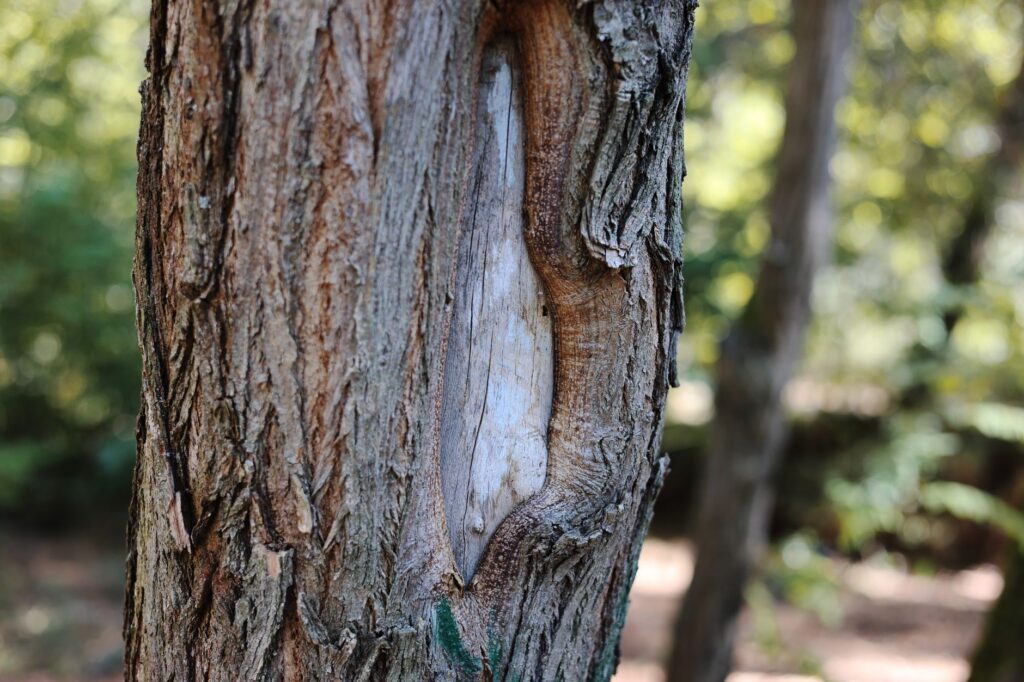
If you have stakes in the ground right now and aren’t sure how long they’ve been there, look for these specific warning signs before deciding whether to pull them:
- Tie material pressing into bark — any indentation, groove, or partially embedded strap means girdling has already begun and the stake is overdue to come out.
- Uniform trunk diameter — run your hand from the soil surface to chest height. The trunk should widen noticeably toward the base. If it doesn’t taper at all, trunk development has been suppressed by the absence of natural movement.
- Lean toward one stake — the tree has been resting against its support rather than building structural wood, and may need a recovery period with a repositioned, lighter stake before standing independently.
- Stake material touching bark — a decaying wooden stake or rusting metal stake pressing directly against bark holds moisture and can introduce disease organisms into the cambium layer.
If you find tie material embedded in bark, don’t pull it straight out — that strips living tissue. Use pruning shears to carefully cut the material away in sections, working from the outermost layer inward. Then leave the wound alone and let the tree compartmentalize the injury on its own. Middletown’s clay-loam soils hold moisture reasonably well, which helps wound tissue stay hydrated during recovery — provided the bark damage hasn’t reached deeply into the cambium.
If you’re not sure how deep the damage goes, or if the indentation is more than a few millimeters, this is the kind of situation worth getting a professional set of eyes on before the growing season advances further.
Bayshore Properties and Coastal Wind: When the Calculation Changes
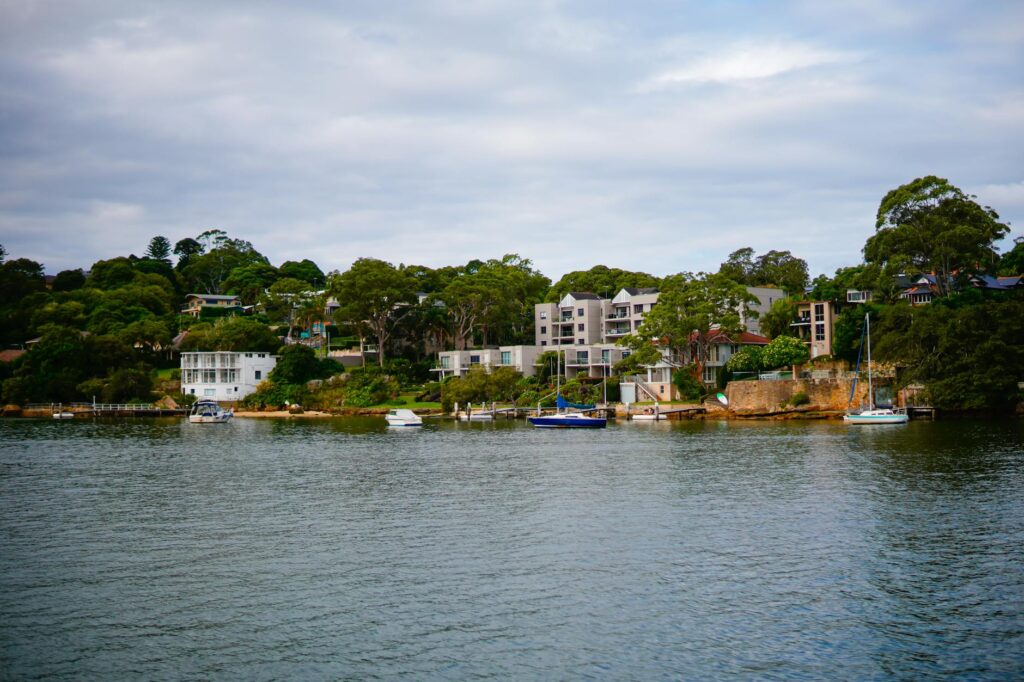
Properties along the Raritan Bay shoreline — in Port Monmouth, Leonardo, and the exposed flanks of Atlantic Highlands — face a genuinely different wind environment than inland Middletown neighborhoods near Lincroft or Tatum Park. The Sandy Hook corridor generates consistent onshore breezes, and a nor’easter or tropical-derived storm can hit exposed bayside lots with sustained gusts that would barely register a block inland. If you’re planting trees in one of these locations, the staking math shifts slightly.
For exposed Bayshore locations, a three-stake system — three posts spaced evenly around the perimeter of the root ball, forming a triangle — provides more stable support against multi-directional gusts than the standard two-post setup. Use the same soft ties with the same degree of flex, but the stakes can be a slightly heavier gauge to resist lateral loading. Even with this heavier setup, the one-year rule still applies absolutely. If a tree at a coastal site still cannot stand independently after a full growing season, that’s a signal the species choice needs revisiting — not a reason to leave the stakes in permanently.
The USDA Forest Service’s urban forestry program emphasizes species selection as the single most important factor in coastal urban tree survivability. Native species adapted to Bayshore conditions — swamp white oak (Quercus bicolor), serviceberry (Amelanchier canadensis), or Eastern red cedar (Juniperus virginiana) — develop root systems more naturally resistant to wind-throw than non-native ornamentals, and they require less intensive staking support from the start. Right tree, right place reduces the entire staking problem significantly before it begins.
Middletown's #1 Tree Expert Company
FREE Inspection & Estimate | Certified Arborists | Trimming, Pruning, Removal, More!
Sponsored
Summary: When to Pull the Stakes — and When to Call a Pro

The short version: stake only when genuinely necessary, use soft ties with flex room, and get those stakes out within a year. For most container-grown trees planted in a protected or semi-protected Middletown yard, this is entirely manageable without professional help. Go check your stakes today. If they’ve been in for a year or more and the tree is holding its own, pull them. The tree will thank you.
There are situations, though, where a certified arborist earns their fee. Large-caliper trees — anything over three inches in trunk diameter — involve enough structural mass that improper staking or premature stake removal can cause expensive failures. Trees planted on slopes, near retaining walls, or in areas with known soil instability need professional evaluation before you start pulling hardware out of the ground. And if you’ve already removed a stake and the tree has promptly taken a significant lean, something else is going on — possibly a compromised root ball, soil compaction, or a girdling root issue — that needs hands-on diagnosis, not a second round of staking.
The goal of every staking setup is to make itself unnecessary as quickly as possible. A well-planted, well-sited tree in Middletown’s Monmouth County clay-loam should be standing confidently on its own within one to two seasons — roots anchored, trunk tapered, canopy spreading without assistance. If yours isn’t getting there, don’t just leave the stakes in and hope for the best. Get a certified arborist out to take a look before winter arrives and another season of compromised development passes.
Photo credits: Featured image by Kindel Media on Pexels; Section 1 by Elly Sartain on Pexels; Section 2 by Markus Spiske on Pexels; Section 3 by mitbg000 on Pexels; Section 4 by Aaron J Hill on Pexels; Section 5 by Ivan Georgiev on Pexels; Section 6 by Talha Resitoglu on Pexels; Section 7 by Kindel Media on Pexels.