
Middletown's #1 Tree Expert Company
FREE Inspection & Estimate | Certified Arborists | Trimming, Pruning, Removal, More!
Sponsored
The Ivy That Looks Fine Until It Isn't
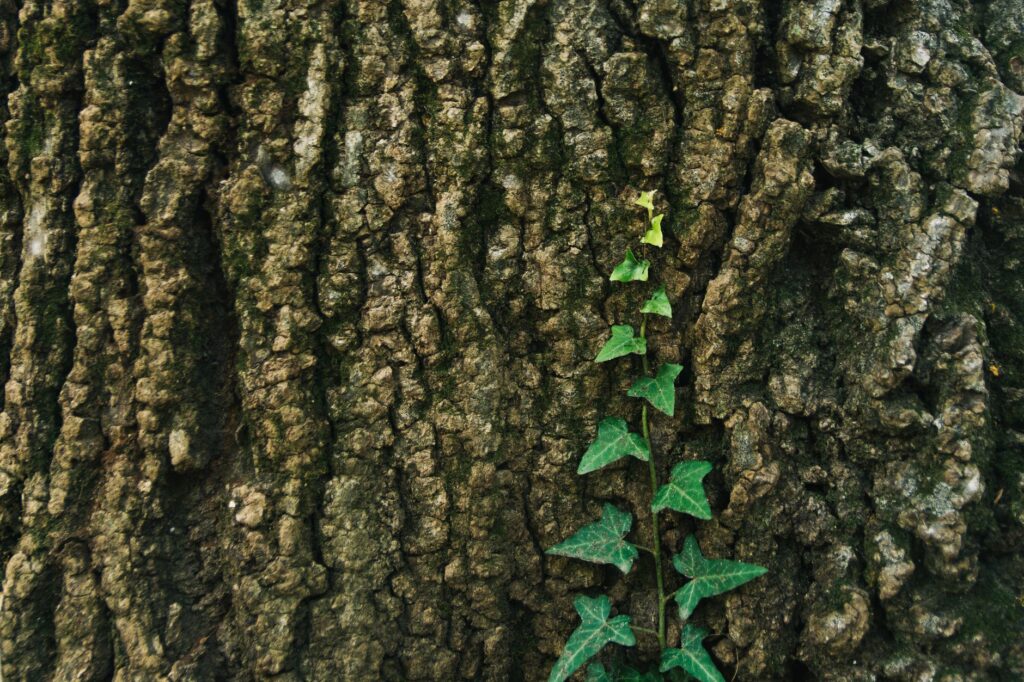
By mid-July, I start getting the same phone call every year. A homeowner in Lincroft or Leonardo walks the property line, looks up at a white oak (Quercus alba) they’ve never really examined closely, and notices the entire trunk is wrapped in glossy, dark green leaves from the ground to well above the first branches. It’s been there for years. It looked tidy. Now, after a wet June and a humid, sticky July, it’s suddenly climbing into the canopy, and they want to know if it’s a problem.
It is. English ivy (Hedera helix) is one of the most common vines I find strangling trees across Monmouth County, and the Bayshore’s warm, humid summers are close to ideal growing conditions for it. It’s not native to New Jersey, it doesn’t slow down in summer heat the way many of our trees do, and by the time it’s visibly reaching into the crown, it’s usually been quietly working on that tree for five to ten years.
The good news is that removing ivy from a tree trunk is one of the few tree health problems a homeowner can safely and effectively handle without special equipment. The bad news is that most people do it wrong — either by yanking vines down out of the canopy (which tears bark and can bring live branches down with it) or by ignoring it because it looks harmless. Here’s how to actually assess it and remove it the right way.
What Ivy Is Actually Doing to Your Tree
A mature English ivy vine climbing a tree isn’t a parasite in the strict sense — it doesn’t tap into the tree’s vascular system the way mistletoe does. But it competes hard, and it does real structural damage in three specific ways I see constantly around Middletown.
First, weight and wind sail. A heavy ivy mat can add hundreds of pounds to a tree’s crown and dramatically increases the surface area that wind catches during a Nor’easter or summer thunderstorm. That’s a load the tree’s root system and trunk were never designed to carry, and it’s a major reason ivy-covered trees fail disproportionately during storms.
Second, light competition. Once ivy reaches the canopy, its leaves compete directly with the tree’s own foliage for sunlight, which over years can thin the crown and stress the tree. Rutgers NJAES lists English ivy among the invasive plants that outcompete and displace the native species a healthy landscape depends on, exactly the dynamic playing out on a smothered trunk.
Third, and the one homeowners miss most: concealment. A trunk fully wrapped in ivy hides bark. You cannot see cracks, cankers, carpenter ant activity, or early decay signs on a trunk you can’t see. I’ve found significant structural defects on ivy-covered trees that the owner had no idea existed, simply because the vine had covered the evidence for a decade.
Know What You're Looking At Before You Touch It
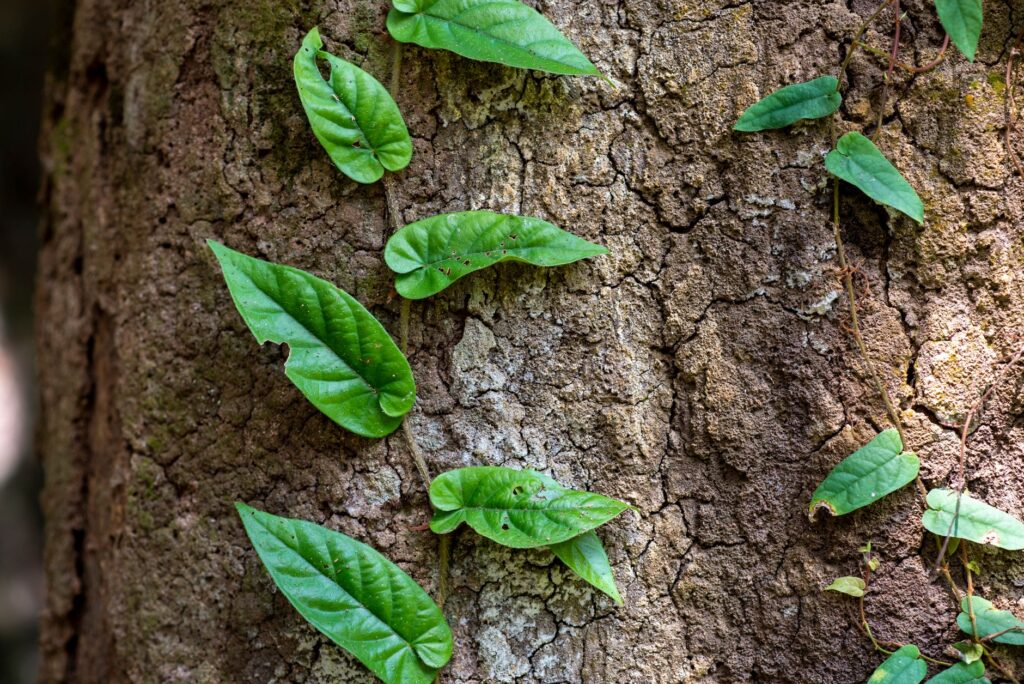
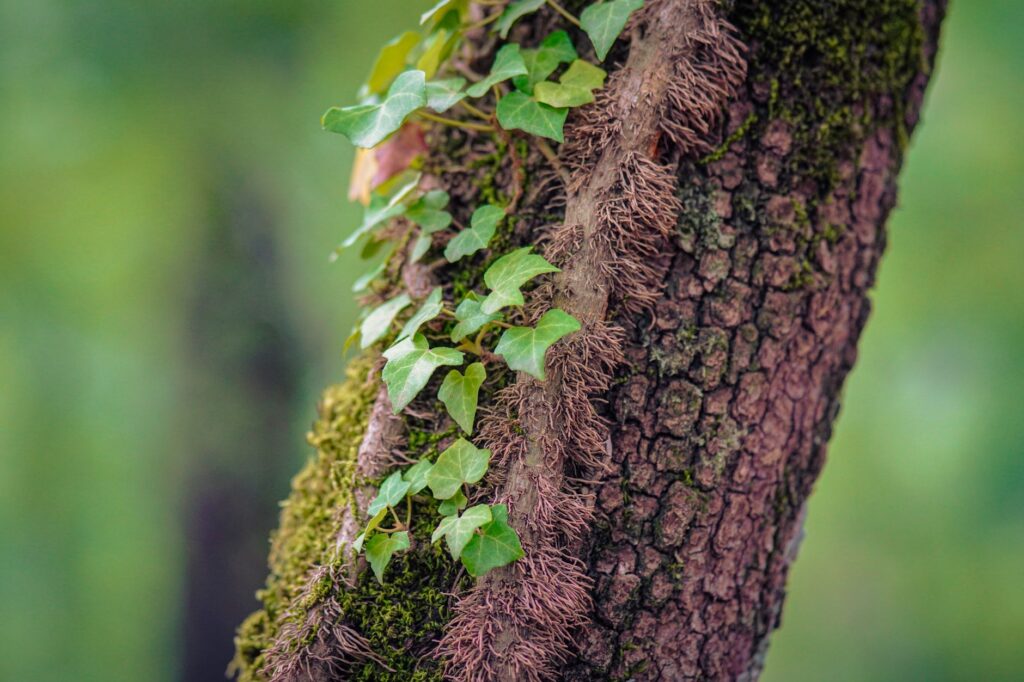
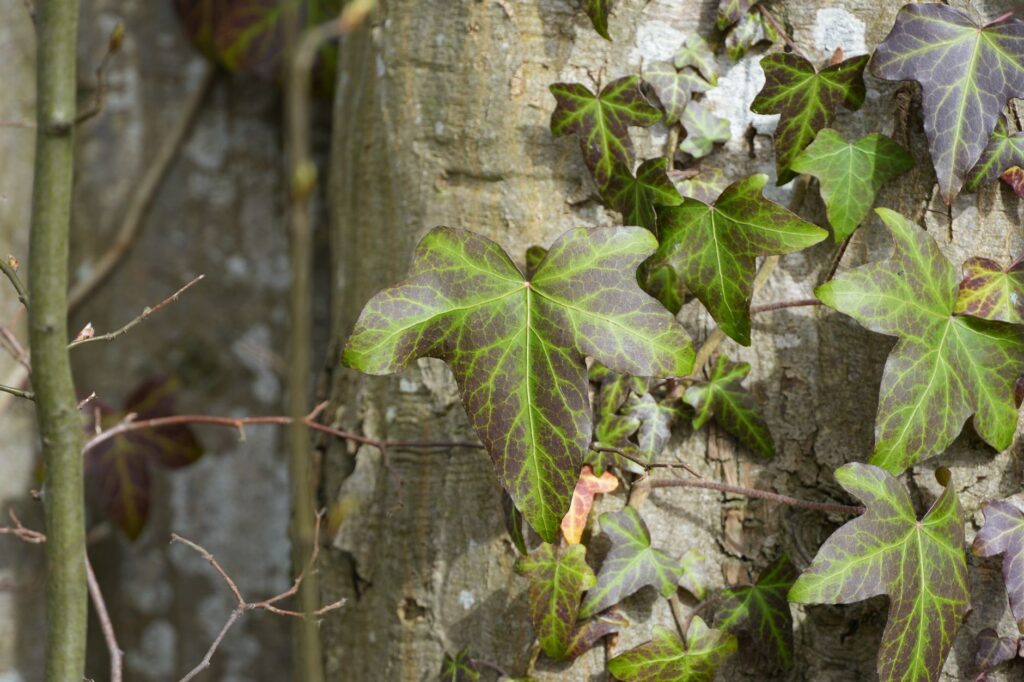
Before you cut anything, confirm what vine you actually have. English ivy has thick, waxy, lobed evergreen leaves and a fuzzy, root-like holdfast that clings directly to bark — it stays green all winter, which is actually the easiest time to spot it against bare branches.
Don’t confuse it with two look-alikes. Virginia creeper (Parthenocissus quinquefolia) is a native vine with five-leaflet compound leaves; it climbs similarly but is far less aggressive and provides real wildlife value, so I generally leave it alone unless it’s overwhelming a small or young tree. Poison ivy (Toxicodendron radicans) also climbs trunks with a similar hairy-looking holdfast, has compound leaves of three leaflets, and will cause a serious skin reaction — always inspect closely and wear long sleeves and gloves before cutting any climbing vine on a Middletown property.
Oriental bittersweet is another vine I see wrapped around Bayshore trees, but it behaves differently — it twines and girdles rather than climbing flat against bark, and it needs a different removal approach than what follows here. If you see woody, twisting coils constricting a trunk or branch, that’s bittersweet, not ivy, and often needs a saw rather than loppers.
Middletown's #1 Tree Expert Company
FREE Inspection & Estimate | Certified Arborists | Trimming, Pruning, Removal, More!
Sponsored
The Safe Way to Cut Ivy Off a Tree
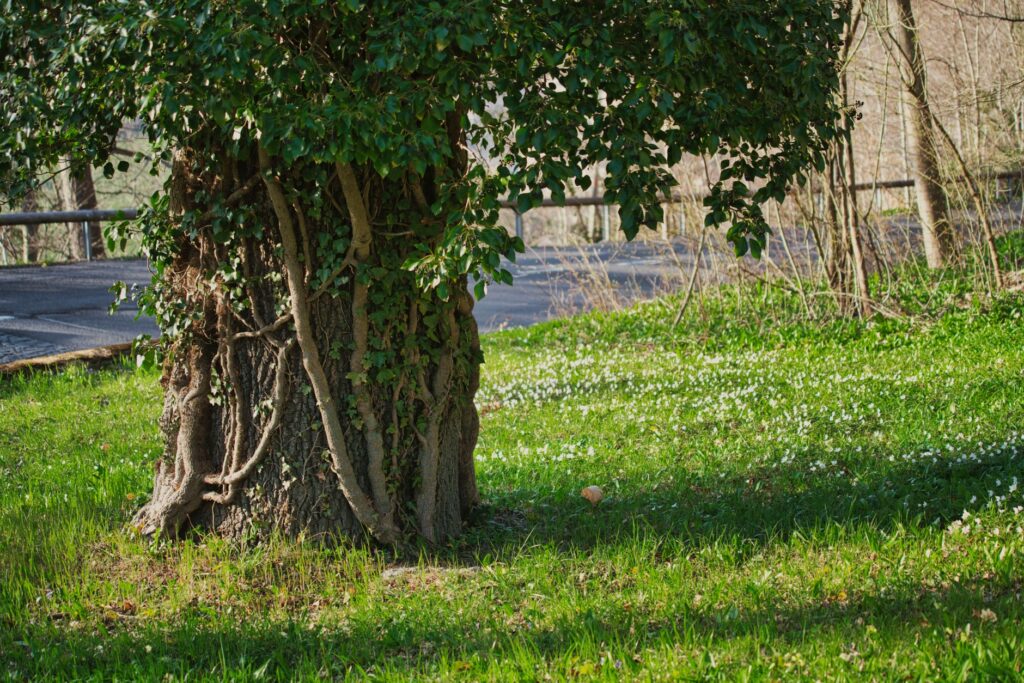
Once you’ve confirmed it’s English ivy, the standard method arborists use is what I call the collar cut, and it works because it lets gravity and time do the hard part instead of you.
- Locate the vine stems at the base of the tree, right where they emerge from the ground against the trunk.
- Cut through every stem at that point using loppers or a pruning saw for thicker, woody stems.
- Cut a second time at a comfortable working height — roughly waist to chest level — removing that section of vine completely from the trunk.
- Leave everything above the second cut alone. Do not pull it down.
That upper section, cut off from its root supply, will die in place over the following weeks and gradually lose its grip on the bark. It will look a little rough for a season, but this approach avoids the bark tearing and small-branch breakage that comes from forcibly stripping live ivy out of a canopy — a real risk once vines have wrapped around actual limbs. For general guidance on caring for landscape trees under stress from vines or other competitors, the International Society of Arboriculture’s consumer site is a good homeowner resource.
For a tree with only ground-level ivy that hasn’t reached the canopy yet, you can often just clear a two-to-three-foot collar around the base and pull those lower vines by hand — at that stage they haven’t developed the woody grip that makes higher removal risky.
Getting the Roots Out — and What to Do With the Debris
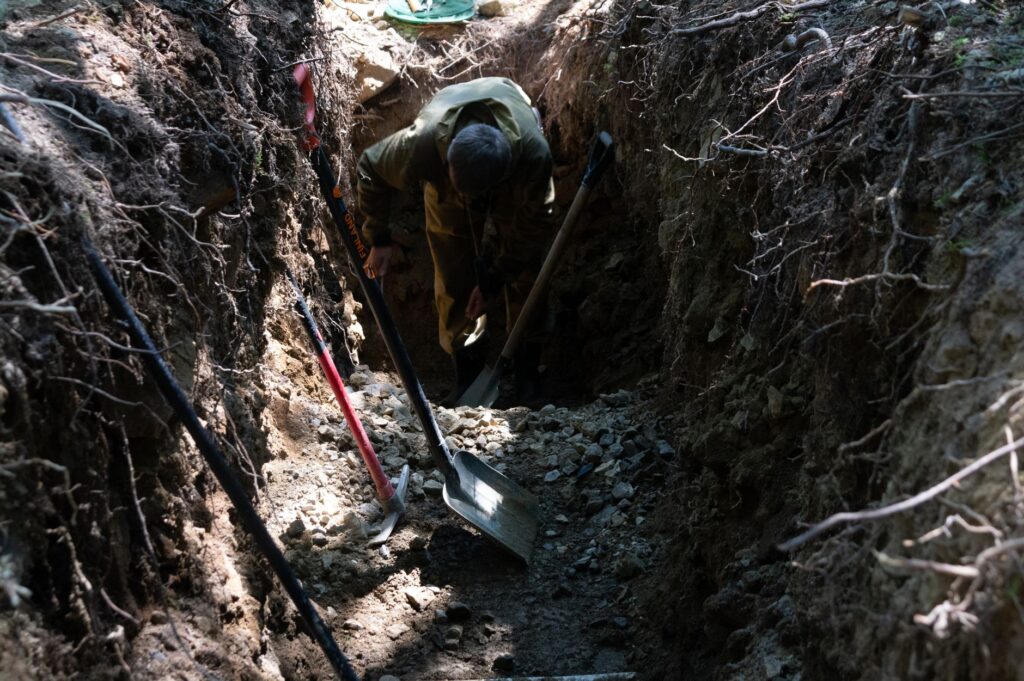
Cutting the climbing vine stops the damage to the tree, but English ivy left rooted in the ground will simply send up new shoots within weeks. If you want it gone for good, plan to dig out the root mat in the area immediately surrounding the trunk.
Ivy roots are shallow and fibrous, so a garden fork works better than a shovel — work it under the mat and lift in sections rather than trying to pull by the vines, which just breaks the foliage off and leaves the root crown intact. Expect to do a second pass in three to four weeks for whatever resprouts; established ivy rarely comes out completely in one session.
Disposal matters more than people expect. English ivy roots easily from cut stem sections left on damp soil, and its berries are bird-dispersed, which is exactly how it escapes cultivated yards and forms dense monocultures in preserved woodlands like Poricy Park and Hartshorne Woods. USDA Forest Service research on English ivy documents exactly this pattern — reduced native plant diversity where the vine escapes into natural areas. Bag cut vine and root material for curbside yard waste rather than leaving it in a brush pile or adding it to home compost.
When Ivy Removal Turns Into a Job for a Professional
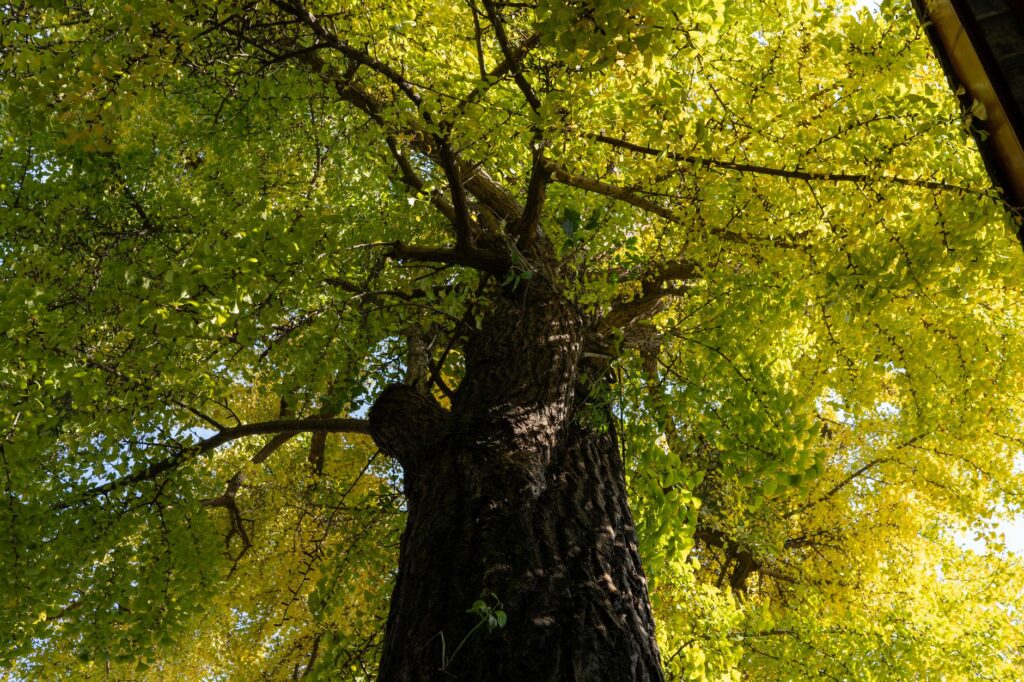
Most ground-level ivy control is a reasonable weekend project. A few situations call for a certified arborist instead, and it’s worth recognizing them before you’re forty feet up a ladder with loppers.
If ivy has climbed well into the upper canopy of a large shade tree, removal at height involves working near live branches and often requires aerial equipment or climbing gear to do safely — this isn’t a ladder job. If the trunk has been fully covered for years, I’d also want to physically inspect the bark once it’s exposed, since that’s exactly the scenario where hidden cankers, cavities, or decay tend to surface. And if you’re dealing with a heavily ivy-laden tree near a house, driveway, or property line, the combination of concealed defects and added wind load is worth a professional risk assessment before storm season, not after a limb comes down.
A straightforward call to make: if you can clear it with hand tools from the ground, do it yourself and do it this month while the vine is actively growing and easy to identify. If it’s already in the crown of a mature tree, that’s worth a consult.
Middletown's #1 Tree Expert Company
FREE Inspection & Estimate | Certified Arborists | Trimming, Pruning, Removal, More!
Sponsored
A Ten-Minute Job Now Beats a Bigger One Later
English ivy is patient. It doesn’t kill a tree in a single season, which is exactly why it gets ignored for years until a homeowner is standing in the yard after a summer storm looking at a limb they never knew was compromised. Late July is a good time to walk your property and actually look at your trees’ trunks — not just the canopy — while the growing season makes any new vine growth obvious.
If you’ve got a mature tree with a trunk you haven’t seen in years, or you’re not sure whether what’s climbing it is English ivy, Virginia creeper, or something with a woodier grip, it’s worth having a certified arborist take a look. A quick assessment can catch what a decade of ivy cover has been hiding — and it’s a lot cheaper than dealing with the aftermath the next time the wind picks up off the Bayshore.
Photo credits: Featured image by Gianluca Buonaiuto on Pexels; Section 1 by Helmut Retsch on Pexels; Section 2 by Алексей Вечерин on Pexels; Section 3 by ธันยกร ไกรสร on Pexels; Section 4 by Sergio Zhukov on Pexels; Section 5 by Plato Terentev on Pexels; Section 6 by Peter Xie on Pexels; Section 7 by Andy Lee on Pexels.