

Middletown's #1 Tree Expert Company
FREE Inspection & Estimate | Certified Arborists | Trimming, Pruning, Removal, More!
Sponsored
Why a Garden Hose Isn't Reaching Your Tree's Roots
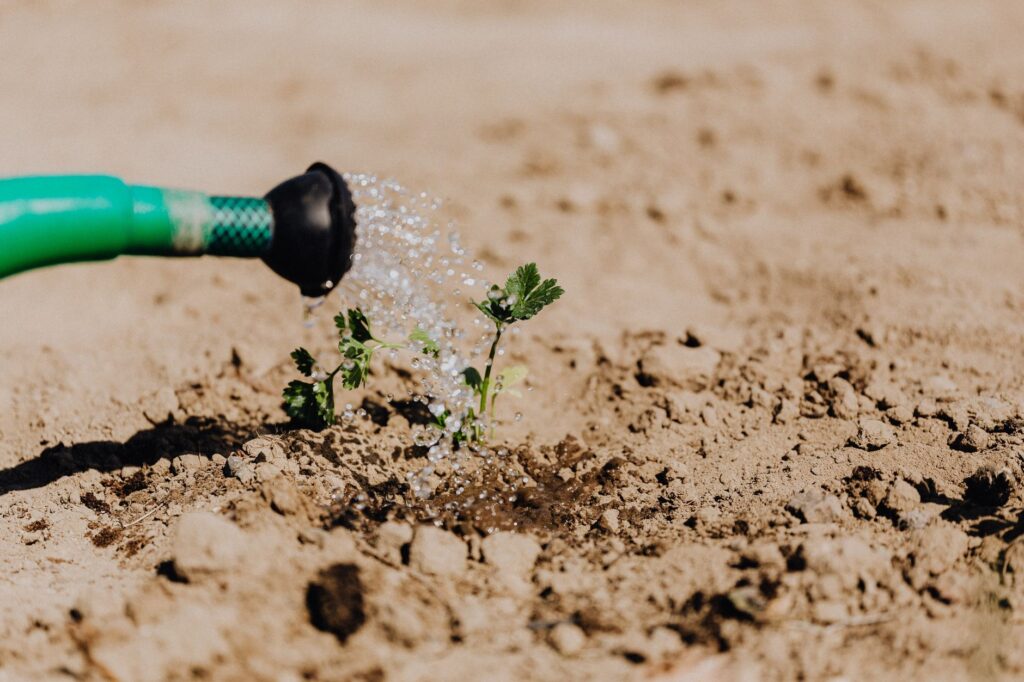
By late July, I’m getting the same call from three or four different streets in the same week: “I water it almost every day and it still looks stressed.” Nine times out of ten, when I dig a few inches down with a trowel, the soil is bone dry just past the surface. The homeowner isn’t wrong that they’re watering — they’re watering the lawn, not the tree.
A tree’s absorbing roots aren’t clustered at the trunk. They spread out through the top 12 to 18 inches of soil, often reaching well past the edge of the canopy. A garden hose sprayed at the base for thirty seconds a day wets a few inches of surface soil and evaporates before it ever reaches root depth, especially in the compacted clay-loam that covers most of Middletown Township — from the higher ground around Lincroft down through the flatter parcels near Port Monmouth and the Bayshore.
The fix isn’t more frequent watering. It’s building a simple basin that holds a large volume of water in one spot and lets gravity do the rest — pulling it down slowly to where the roots can actually use it.
What a Watering Basin Is and Why It Works Better Than a Sprinkler
A watering basin, sometimes called a berm or a watering ring, is just a shallow earthen dam built in a circle around a tree, usually at or just past the edge of the root ball for a newly planted tree, or at the drip line for an established one. Instead of water running off across the yard, it pools inside the ring and soaks straight down.
This matters most on the clay-heavy soils common across the township. Clay particles are fine and packed tight, so water runs off the surface faster than it infiltrates — that’s why you’ll often see puddling on a Middletown lawn during a downpour even though the tree ten feet away is dry underneath. A basin removes the runoff problem entirely by giving the water nowhere to go but down.
Rutgers Cooperative Extension recommends this exact approach for trees planted within the last two to three years, since their root systems haven’t yet spread far enough to rely on rainfall alone. You can find their planting and establishment guidance through the Rutgers New Jersey Agricultural Experiment Station.
Building the Basin: A 20-Minute Weekend Job
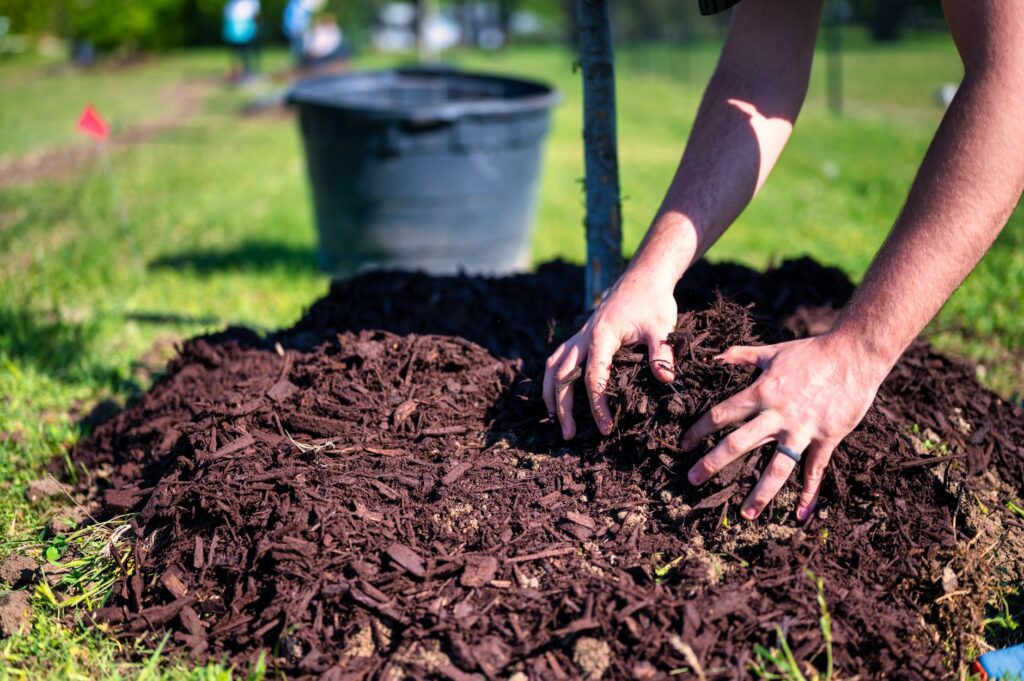
You don’t need special tools for this, just a garden rake or hoe and some patience. Here’s the version I walk homeowners through on site visits:
- Mark the ring. For a tree planted in the last year or two, build the berm roughly at the edge of the original root ball — usually 18 to 30 inches out from the trunk. For an established tree, build it at the drip line, where rain would naturally fall off the outer leaves.
- Mound the soil. Pull soil up into a ridge 3 to 4 inches tall and about 6 inches wide, forming a complete circle. Pack it down gently so it holds its shape under running water.
- Clear the inside. Rake out grass, weeds, and any leftover nursery burlap or twine inside the ring — competing vegetation steals the water you’re about to deliver.
- Mulch inside the basin. A 2 to 3 inch layer of shredded hardwood mulch inside the ring slows evaporation dramatically. Keep it pulled back a few inches from the trunk itself — bark contact invites rot and gives voles a place to hide over winter.
- Fill it slowly. Run a hose at a trickle into the basin and let it fill completely, then let it drain fully before refilling once. That two-fill cycle typically delivers 15 to 20 gallons, which is roughly what a young shade tree needs per watering session in peak summer heat.
Do this once or twice a week during dry stretches rather than a splash every day. Deep, infrequent watering trains roots to grow downward and outward in search of moisture, which builds a more drought-resilient tree long term. Frequent shallow watering does the opposite — it keeps roots shallow and dependent.
Middletown's #1 Tree Expert Company
FREE Inspection & Estimate | Certified Arborists | Trimming, Pruning, Removal, More!
Sponsored
Reading the Basin: How to Know It's Actually Working
The nice thing about a basin, compared to guessing with a hose, is that it gives you visual feedback. If the water disappears in under a minute, your soil has channels — often old construction backfill or a buried root — moving it somewhere other than straight down, and you may need a wider or deeper ring. If water sits for more than 10 to 15 minutes without soaking in at all, that’s a compaction signal, and the basin is doing its job by forcing that slow soak instead of letting it run off toward the storm drain.
About 24 hours after filling, push a long screwdriver or a soil probe into the ground at the edge of the basin. It should slide in with light pressure to a depth of at least 6 to 8 inches. If it stops hard at an inch or two, the water isn’t reaching the root zone yet and you likely need another fill cycle or a wider basin.
The USDA Forest Service notes that inconsistent soil moisture, not just outright drought, is one of the most common stress triggers in young urban and suburban trees — a basin’s whole purpose is removing that inconsistency.
Basins for Established Trees on Bayshore and Sandy Lots
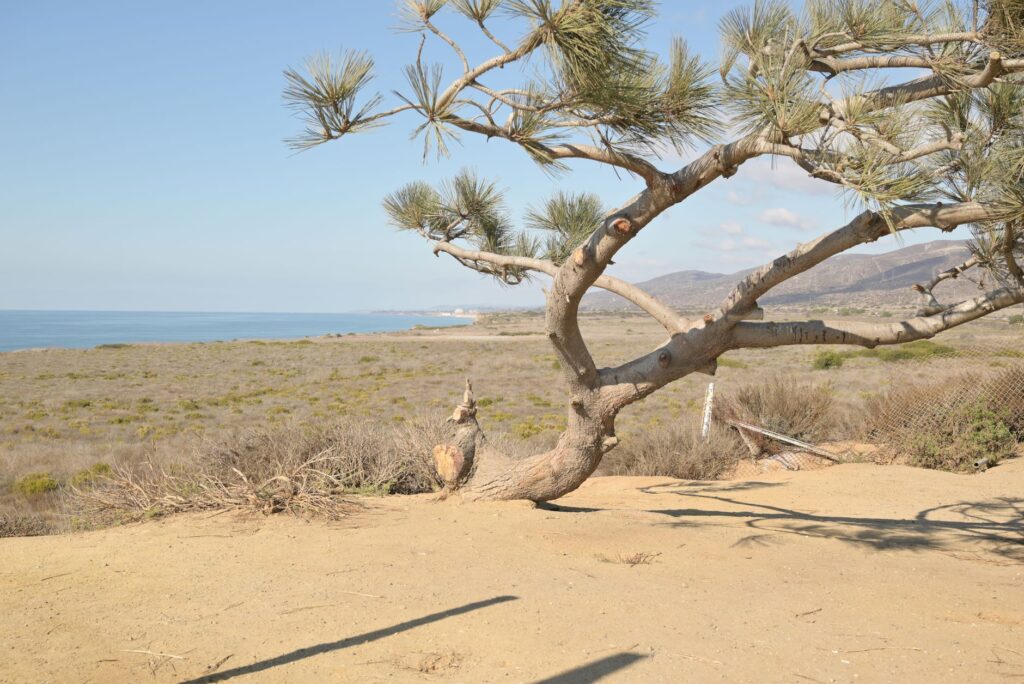
Homeowners closer to the Bayshore — around Leonardo, Port Monmouth, or the lower-lying streets near Raritan Bay — often deal with the opposite soil problem in patches: sandier, faster-draining pockets mixed in with clay. On those lots, a basin still helps, but you’ll notice water disappears faster and you may need three fill cycles instead of two to get a meaningful soak.
For mature trees, don’t build the basin against the trunk. Established trees have already outgrown a tight berm, and pooling water directly against old bark for hours invites decay organisms. Build the ring out at the drip line instead, where the actively feeding roots actually live. This is also the right spot to focus any supplemental watering during a multi-week dry spell, which coastal Monmouth County sees most summers between heat waves rolling in off the mainland.
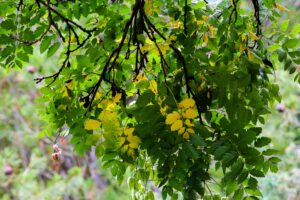
If you’re not sure whether a specific tree on your property is struggling from drought versus something else, the International Society of Arboriculture’s Trees Are Good resource has a solid rundown of visible drought stress signals — leaf scorch along the margins, early fall color, and premature leaf drop are the big three to watch for.
Mistakes That Undo All That Work
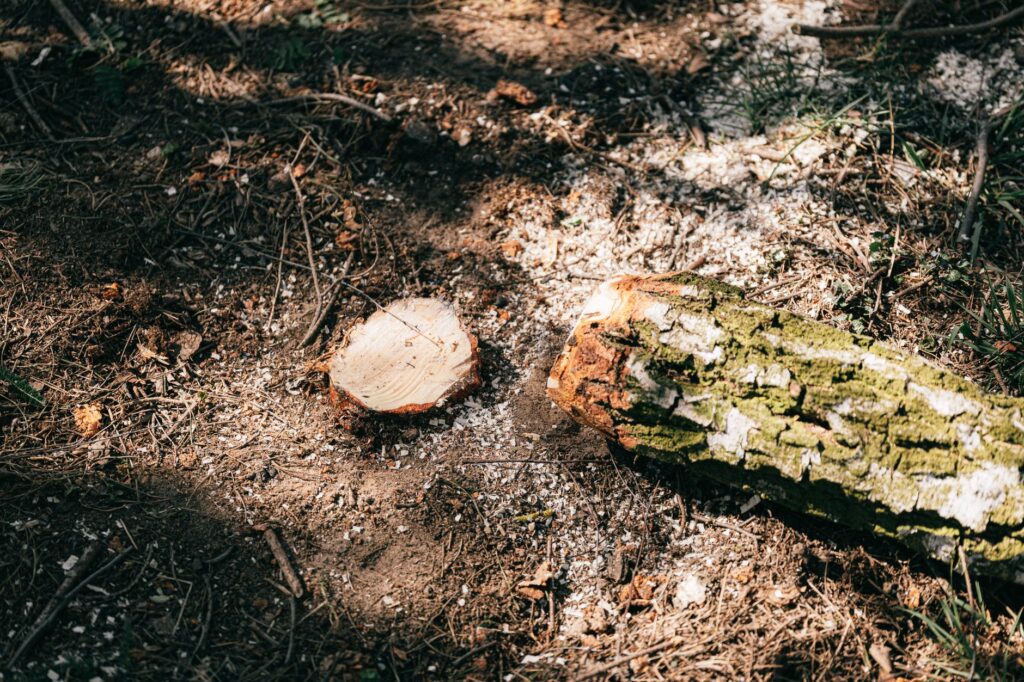
I see the same three mistakes undo a perfectly good basin. First, mulch volcanoes — piling mulch up against the trunk like a cone instead of spreading it in a flat ring. That traps moisture against bark and invites rot and girdling roots, which defeats the entire purpose of the basin underneath it.
Second, leaving the basin in place through fall and winter without flattening it. A raised berm holds water against the trunk during heavy autumn rain and can contribute to root collar issues going into winter. Once regular rainfall resumes in October, rake the berm back down flush with the surrounding grade.
Third — and this one catches people who did everything else right — forgetting that lawn irrigation running nearby doesn’t substitute for basin watering. A sprinkler zone set to run for 10 minutes a few times a week keeps grass alive, but it wets only the top inch or two of soil, which is exactly the shallow-watering problem a basin is built to solve. Treat basin watering as a separate task on your list, not something your irrigation system already covers.
Middletown's #1 Tree Expert Company
FREE Inspection & Estimate | Certified Arborists | Trimming, Pruning, Removal, More!
Sponsored
When a Struggling Tree Needs More Than Water
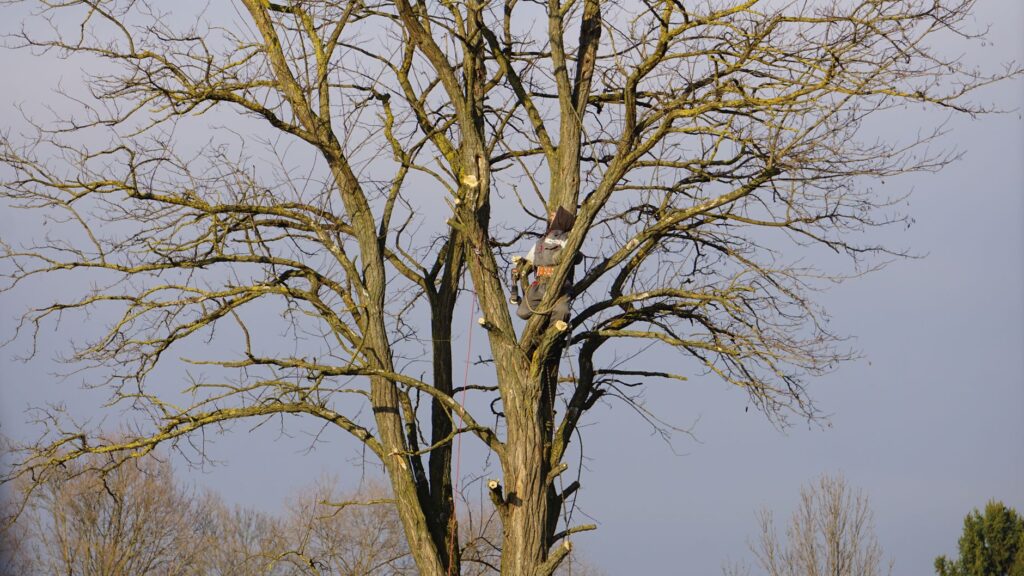
A watering basin solves a real and common problem, but it isn’t a fix for everything that can make a tree look stressed in midsummer. If you’ve been watering properly with a basin for two to three weeks and a tree still shows wilting, widespread leaf scorch, or branch dieback, something else is likely going on — root damage from nearby construction, girdling roots from the nursery pot, a disease issue, or a root system too compacted for even a well-built basin to penetrate.
That’s the point where it’s worth having a certified arborist take a look before the tree loses another growing season. An assessment can tell you whether the issue is fixable with better cultural care or whether the tree’s root system has deeper structural problems that watering alone won’t solve. You can find a certified arborist near Middletown through the ISA’s Find an Arborist directory, or check credentials through the Tree Care Industry Association.
Either way, the basin is worth building regardless — it’s twenty minutes of digging that gives every dollar and gallon you spend on that tree a much better chance of actually reaching its roots.
Photo credits: Featured image by Eman Genatilan on Pexels; Section 1 by www.kaboompics.com on Pexels; Section 2 by www.kaboompics.com on Pexels; Section 3 by Alfo Medeiros on Pexels; Section 4 by David Castro on Pexels; Section 5 by Joel Martinez on Pexels; Section 6 by www.kaboompics.com on Pexels; Section 7 by Dmytro Glazunov on Pexels.