
Middletown's #1 Tree Expert Company
FREE Inspection & Estimate | Certified Arborists | Trimming, Pruning, Removal, More!
Sponsored
Before You Reach for the Light Strings: What Your Tree Is Doing in November
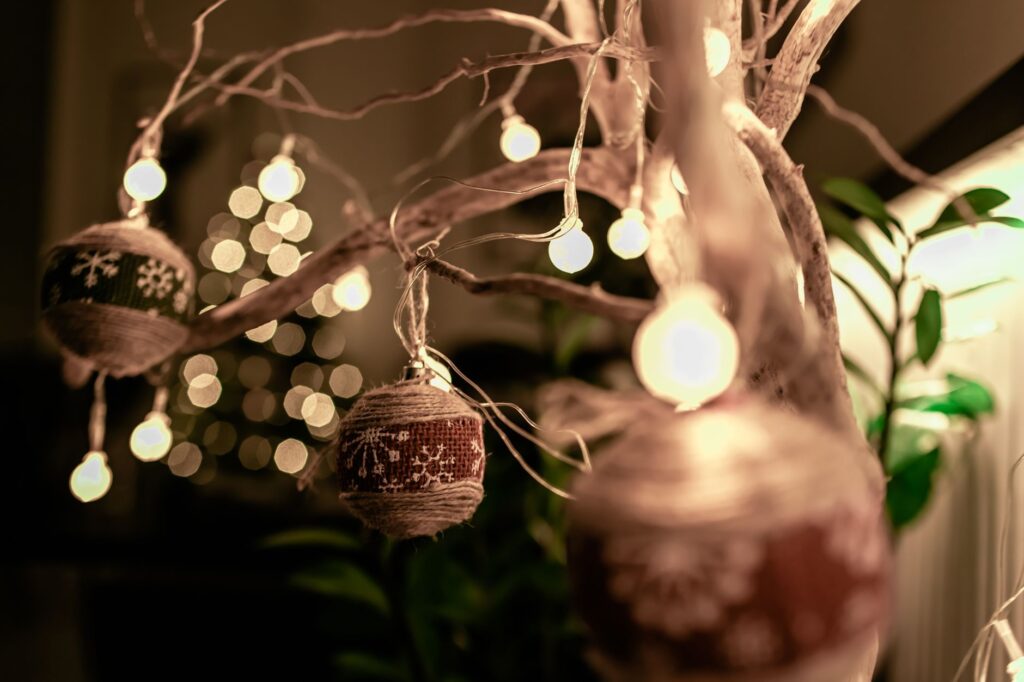
The first week of November is when Middletown porches start to glow. Some of that glow ends up in the trees: strings of white lights wound up a maple trunk, a spiral of color around the dogwood by the front walk, a net of bulbs thrown over a boxwood. It looks wonderful from the street, and most of the time the tree comes through fine. But a tree is not a lamp post, and a few small choices about how and when the lights go on can decide whether the tree thanks you in May or shows you a scar.
In early November a tree is mid-handoff. Deciduous species such as red maple (Acer rubrum) and white oak (Quercus alba) have dropped or are dropping their leaves, and they are sealing off the leaf attachment points and moving sugars down into the roots and trunk. The living layer just under the bark, the cambium, is not dormant yet. It is still thin, soft and easy to bruise, especially on young trees whose bark has not thickened into the plated texture you see on a mature oak.
This guide is written for Middletown Township homeowners who want the lights and the tree. It covers when to put lights up, what kind to use, how to wrap a trunk and branches, what to avoid on young and stressed trees, and the signs that a tree is not a good place for lights at all. None of it is difficult, and all of it is cheaper than replacing a tree.
Why Wrapping Tight Is the Mistake That Lingers

The most common problem with holiday lighting on trees is not the lights. It is the wrapping. A strand pulled snug around a trunk or a small branch looks neat in November. By the following August it can be a ring of compression, because trees grow in girth every year, and a wire that was loose at installation becomes a constriction as the stem thickens beneath it.
The International Society of Arboriculture’s consumer site, Trees Are Good, explains in plain language how trees move water and sugars through the thin outer layers of the trunk and branches. Anything that squeezes those layers, whether a tight wire, a plastic tie or a rope, can slow that flow above the constriction. On young trees the damage is faster and more visible: a dead tip, a flag of brown leaves in July, a branch that snaps at the wire during a nor’easter.
The fix is a simple rule. Wrap loosely enough that you can slide a finger between the cord and the bark at every turn. Keep the strand moving along the surface without cinching it, and never use staples, nails or wire ties on living wood. If a light strand needs to be held in place, use soft cloth ties or reusable hook-and-loop straps that you can see and remove, and write yourself a note on the calendar for removal.
Choosing Lights That Are Safe for Bark, Branches and Your Family

Not every light strand belongs outdoors, and the label matters more than the price. Look for a rating that says the strand is approved for outdoor use, and read the maximum number of strands that can be connected end to end. Overloading a string is the usual cause of the overheated plug and the cracked insulation that start small electrical fires, and a fire in a tree canopy full of dry leaf litter is a bad outcome for everyone. The U.S. Consumer Product Safety Commission publishes yearly holiday safety guidance, and its holiday safety page is a sensible place to check the basics before you plug anything in.
LED strands run much cooler than the old incandescent mini lights. That matters for a tree because heat against living bark can scorch it, especially on thin-barked species such as American beech (Fagus grandifolia), flowering dogwood (Cornus florida) and young cherry or maple. A cool LED strand also draws a fraction of the power, which keeps your outdoor outlet from being the weak link on a cold night.
A few practical points when buying and setting up:
- Choose strands with a thick, flexible, weatherproof cord rather than thin wire that cuts into bark.
- Plug into a ground-fault circuit interrupter (GFCI) outlet or use a GFCI-protected extension cord.
- Keep connections off the ground and out of puddles or standing snow, using the plastic covers made for outdoor plugs.
- Inspect every strand in daylight before use and discard anything with frayed insulation or exposed copper.
A timer is the cheapest upgrade you can buy. Lights that run from dusk until 10 p.m. rather than all night save energy, reduce heat and keep the tree on a normal rhythm. Keeping the light schedule short is a kind choice for a tree that is trying to settle into dormancy.
Middletown's #1 Tree Expert Company
FREE Inspection & Estimate | Certified Arborists | Trimming, Pruning, Removal, More!
Sponsored
Match the Method to the Tree: Young, Mature and Evergreen
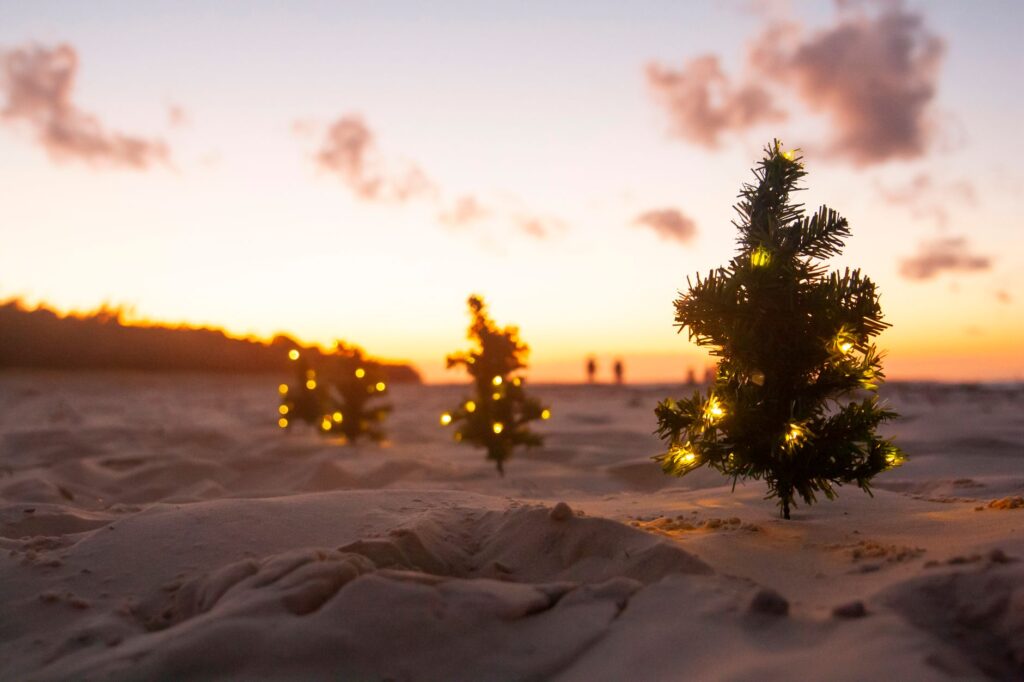
A newly planted tree, one in its first three or four years in the ground, is the one to be most careful with. Its bark is thin, its roots are still reaching out into the surrounding soil, and it usually carries a stake or a trunk guard. If you must light it, drape a loose strand over the lowest branches and leave the trunk alone. If the tree still has nursery twine, wire or a tag cinched around a branch, remove it first. Middletown soils, a mix of sandy Bayshore ground and heavier greensand clay inland, stress new roots in different ways, and a decorated young tree that was also under-watered in October has little reserve to spare.
Mature deciduous trees can take lights well because their bark is thick and their branch structure is strong. The best technique is to light the outer shell of the canopy rather than winding every limb. Use a long pole to hang a strand from a few high attachment points, and let it drape. Do not climb into a tree to place lights. A professional tree worker uses ropes, a harness and training, not an extension ladder, and falls from ladders are a leading cause of holiday decorating injuries.
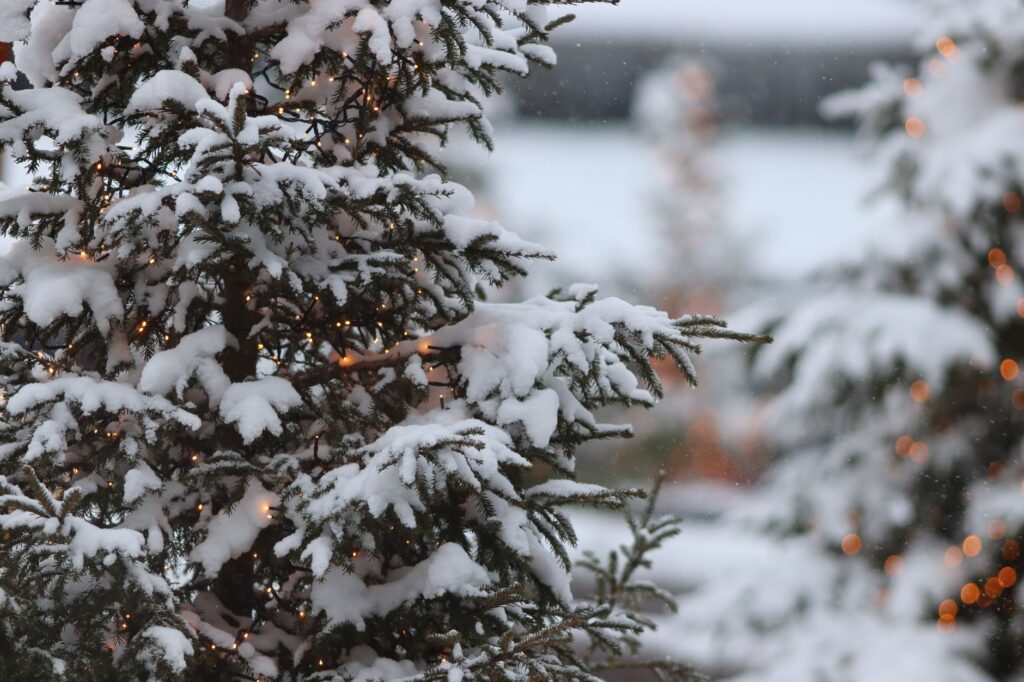
Evergreens need extra thought. A dense arborvitae, spruce or holly holds a great deal of snow and ice, and added strands plus snow load can pull branches out of shape. The USDA Forest Service’s urban forests program describes how much value mature canopy trees bring to a community, which is a good reason to avoid weighting a conifer with anything it does not need. Use lighter wrapping, avoid the central leader on young spruce and fir, and never wrap tightly around a hemlock’s new growth.
Finally, think about trees you should not decorate at all. A tree with a visibly dead limb, a split in the trunk, a fungal conk at the base or a lean that has changed this year is not the place to hang a ladder or a pole. Those are conditions to have looked at by a professional before winter weather arrives.
Take Care of the Roots, the Grass and the Outlet Below
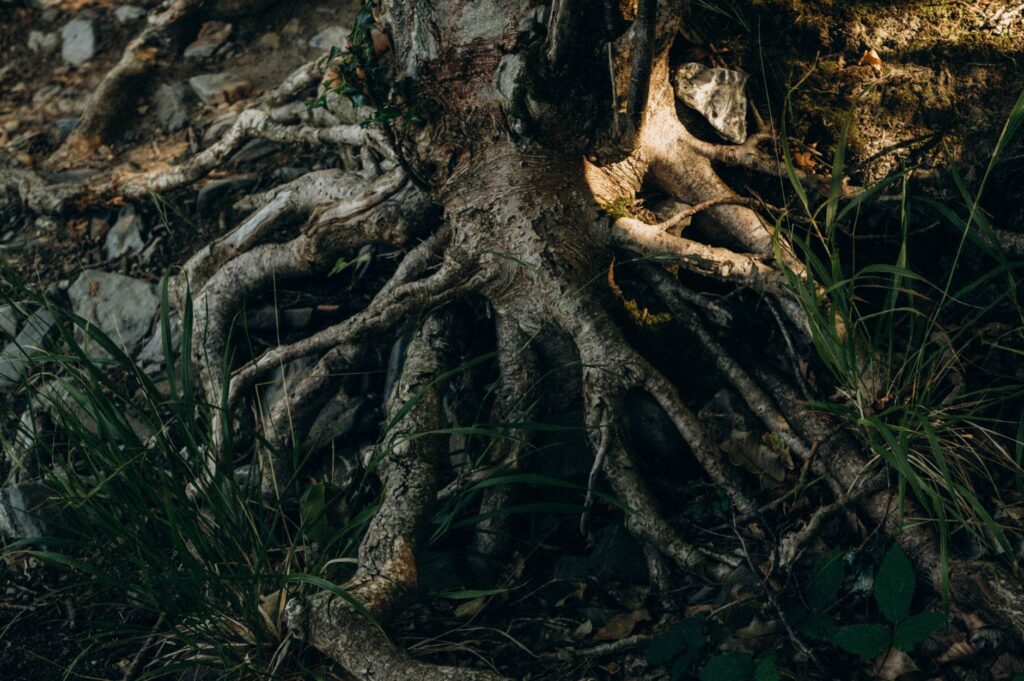
Everything beneath a decorated tree needs to be considered too. A cord run across the root zone and a crowd of foot traffic can compact soil that the tree depends on, and compaction is one of the quietest stressors on suburban trees. If you are setting up a display, keep the foot traffic to a single path, and mulch the area beneath the canopy to a depth of two or three inches, pulled back from the trunk so you do not create a mulch volcano against the bark.
Power is the other underground consideration. If you are tempted to install a permanent outdoor outlet near a prized oak or maple, plan the trench away from the dripline. Digging across the root zone to run a conduit can sever structural roots, and the damage often shows up years later as a crown that thins or a tree that leans after a storm. A plug at the edge of the patio and an outdoor-rated extension cord is a far better choice than a new trench through the roots.
The Rutgers Cooperative Extension office in Monmouth County, part of Rutgers NJAES, offers local, research-based guidance on how soils, mulch and landscape practices affect trees across New Jersey. It is the right place to look if you want to plan a larger landscape project around the trees you already have.
Taking the Lights Down: Timing and Technique
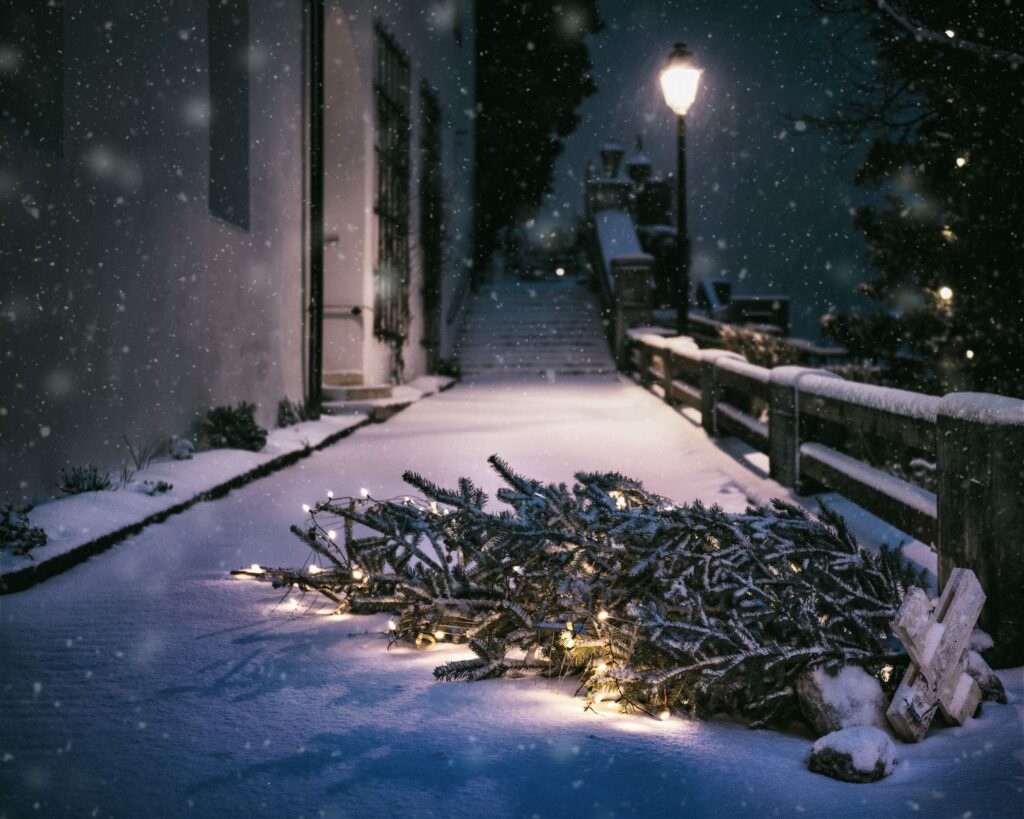
The lights need a plan to come back down before they go up. A good rule of thumb is to remove everything by the end of January or at the first sign of buds swelling, whichever comes first. A strand left on a tree through the growing season is the one that ends up embedded in the bark by autumn. In coastal Monmouth County a warm spell in late February can wake a maple earlier than you expect, so do not wait for spring to take them off.
Work from the top down and from the tip inward. Unwind each strand rather than yanking it, because pulling a wrapped cord across bark tears the thin outer layer and snags buds. If a strand has frozen into a tangle of ice, wait for a warmer day. If a cord has already grown into the wood, do not pull it out. Cut the cord on either side of the embedded section and call a certified arborist, because forcing it can strip the cambium.
Check the tree once the lights are off. Look at the places where strands touched bark. A faint line of flattened bark is normal and fades. A groove, a weeping crack or a patch of bark that is peeling away deserves a closer look in spring, when the tree is growing again and showing you how it has responded.
Middletown's #1 Tree Expert Company
FREE Inspection & Estimate | Certified Arborists | Trimming, Pruning, Removal, More!
Sponsored
When to Call a Certified Arborist About Lights and Winter Trees

Most Middletown homeowners can light a small ornamental tree safely with a little care. The jobs that are worth handing to a professional are the ones that involve height, power lines, or a tree whose condition you are unsure about. A tree that is tall enough to need a bucket truck or a climbing line is not a DIY lighting project, and any tree with branches near a utility line should be left to people with the training and equipment to work near it.
The same goes for a tree you have a question about. If you notice dieback in the crown, mushrooms at the base, cracks in the trunk, leaning that is new or branches hanging over the roof or driveway, have the tree looked at before you add anything to it. A certified arborist can tell you whether the tree is a good candidate for decorations and whether any pruning or support would make it safer going into winter. The ISA maintains a directory on isa-arbor.com where you can find credentialed arborists in New Jersey, and the state licenses tree experts and operators separately, so ask to see credentials.
The good news is that a little care makes the lights almost invisible to the tree. Wrap loosely, use cool LED strands on a timer, keep the roots undisturbed, and take everything down before spring. Do those four things and the tree will carry your holiday display for decades without ever knowing it was there.
Photo credits: Featured image by Thủy Papaya on Pexels; Section 1 by Karen Laårk Boshoff on Pexels; Section 2 by Brett Sayles on Pexels; Section 3 by Mateusz Feliksik on Pexels; Section 4 by Tino Álvarez on Pexels; Section 5 by Liudmyla Shalimova on Pexels; Section 6 by Simon Berger on Pexels; Section 7 by Ashutosh Sonwani on Pexels.