
Middletown's #1 Tree Expert Company
FREE Inspection & Estimate | Certified Arborists | Trimming, Pruning, Removal, More!
Sponsored
The Storm Drain You Never Think About

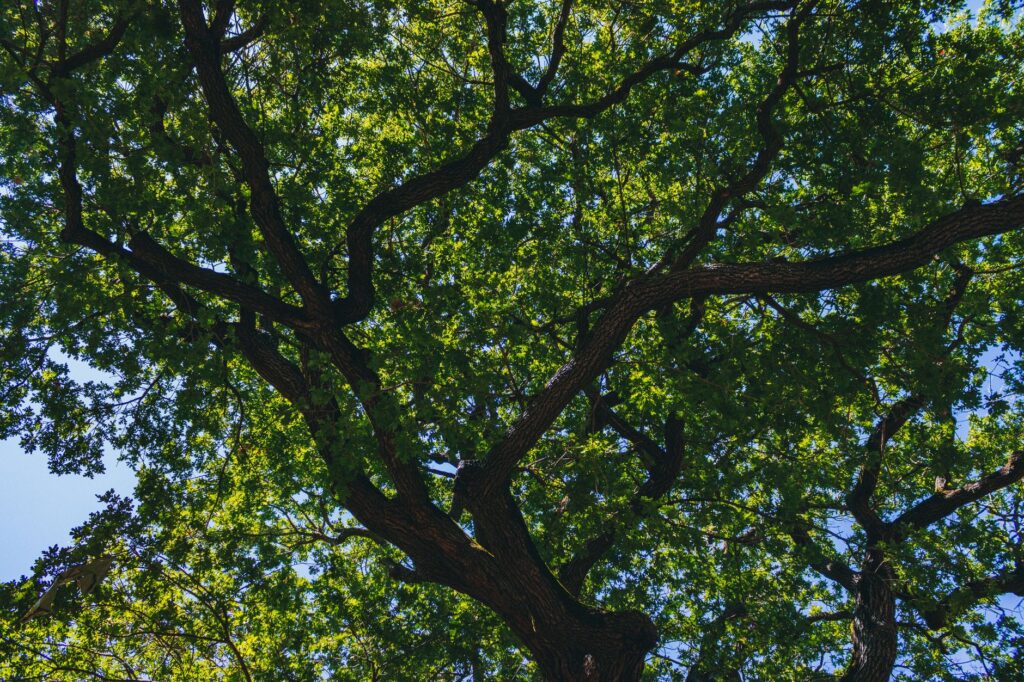
Drive through Port Monmouth or Leonardo after one of our July cloudbursts and you’ll see the usual: standing water at the low intersections, a slow creep up the curb near Compton Creek, someone’s driveway turned temporarily into a wading pool. What you won’t see is the infrastructure that kept it from being worse — the one that isn’t concrete, doesn’t show up in a capital budget, and never gets a ribbon-cutting. It’s the tree canopy over your street.
I’ve spent enough storm seasons walking properties along the Bayshore to have a rough mental map of which blocks flood hard and which ones shrug off the same downpour. It correlates less with elevation than people expect, and more with canopy cover. A neighborhood with mature oaks, maples, and tulip poplars over the yards and parking strips absorbs a meaningfully different amount of water than one that was clear-cut for construction and replanted thin. That difference matters here specifically, because Middletown Township sits low against Raritan Bay and the Shrewsbury River, and our clay-loam soils are already slow to drain even before a storm shows up.
This article is about the mechanics of that — what a tree canopy actually does to rainfall before it ever reaches a storm drain, why it matters more in a Bayshore township than almost anywhere else in Monmouth County, and what that means for the trees on your own property.
Interception: The First Line of Defense
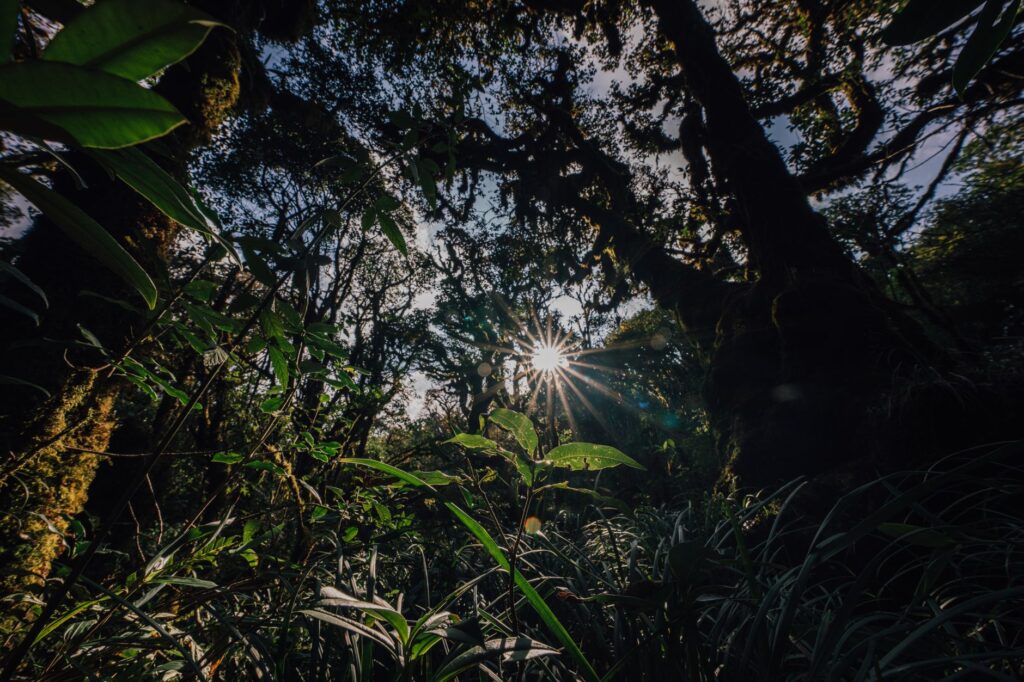
The first thing a canopy does to a rainstorm is simply get in the way. Leaves, branches, and bark intercept a portion of every storm before a single drop hits the ground — some of it evaporates straight back into the air, some runs down the trunk more slowly and soaks in near the root flare instead of sheeting across the lawn. Researchers with the USDA Forest Service have measured urban canopy interception rates ranging from roughly 10% to over 30% of total rainfall depending on species, canopy density, and storm intensity — a mature deciduous canopy in full leaf, which is exactly what we have on the ground right now in mid-July, performs near the top of that range.
That percentage sounds modest until you picture it at the scale of a neighborhood. A single large white oak (Quercus alba) can hold back several hundred gallons of water during a single storm event just through its leaf surface area. Multiply that across every mature street tree on a block and you’re talking about a meaningful reduction in the volume of water reaching the storm system in that critical first hour of a downpour — which is exactly the window when Middletown’s older stormwater infrastructure gets overwhelmed.
It’s also why the trees that get topped, over-thinned, or removed for a driveway expansion cost the neighborhood more than just shade. A crown that’s been reduced by a third doesn’t intercept a third less water — canopy loss compounds, because the remaining leaf surface can’t compensate for the geometry that’s gone.
What Happens Underground Matters Just as Much

Interception buys time, but the real volume reduction happens below grade, at the root zone. A healthy, uncompacted root system acts like a sponge — tree roots and the fungal networks associated with them create channels and pore space in the soil that let water infiltrate rather than run off. This is where Middletown’s geology works against us if we’re not careful. Our native clay-loam holds water well once it’s wet, but it’s slow to accept it in the first place, especially in yards where decades of foot traffic, mowing, and construction have compacted the topsoil.
A tree’s root system counteracts that compaction over time. Established roots, especially on older trees, create the structure that keeps clay soil from sealing over into an impermeable crust. Rutgers Cooperative Extension’s water resources program has documented how tree-covered soils in New Jersey infiltrate stormwater at significantly higher rates than turf or bare soil, which is one reason a shaded, root-laced yard drains a hard rain faster than a manicured lawn next door with the same slope and soil type.
This is also where a stressed or declining tree quietly stops earning its keep. A tree fighting girdling roots, construction damage, or chronic drought stress isn’t just at higher risk of failure in a storm — its root system is doing less infiltration work day to day, long before it shows visible dieback.
Middletown's #1 Tree Expert Company
FREE Inspection & Estimate | Certified Arborists | Trimming, Pruning, Removal, More!
Sponsored
The Bayshore's Specific Vulnerability
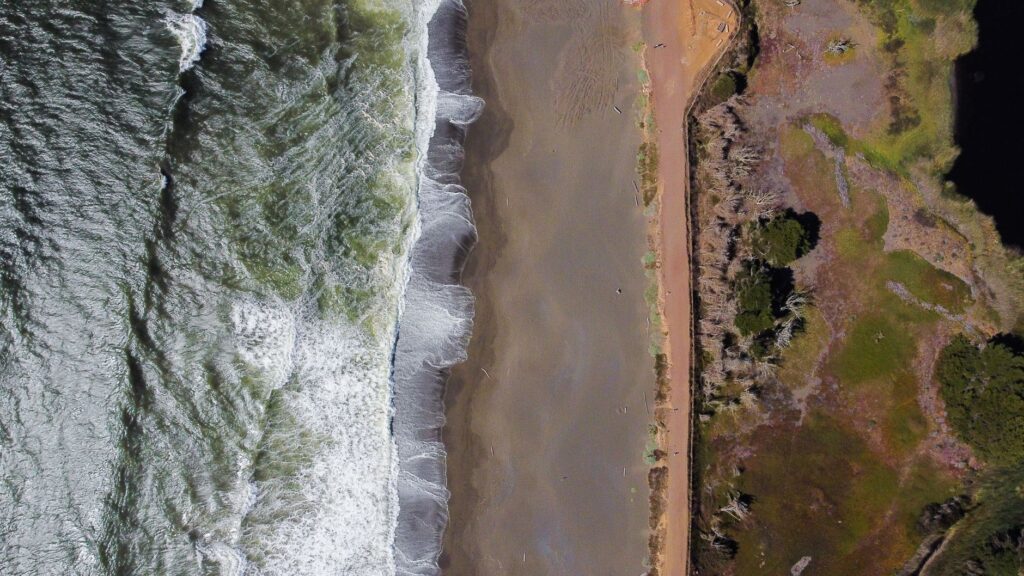
Most New Jersey towns deal with stormwater runoff as a nuisance. Along Raritan Bay, it’s a compounding problem, because our low-lying neighborhoods — Port Monmouth, Belford, parts of Leonardo — deal with runoff and tidal flooding at the same time. A summer thunderstorm that arrives close to high tide has nowhere efficient to drain, because the bay itself is already pushing back against the outfalls. Every gallon of rain that a canopy keeps out of the storm system in that scenario isn’t just a convenience — it’s the difference between water in the street and water in a basement.
The NJ Department of Environmental Protection’s stormwater management program has increasingly pushed municipalities toward green infrastructure — trees, rain gardens, permeable surfaces — specifically because gray infrastructure (pipes and drains sized for historical rainfall patterns) is proving inadequate for the rainfall intensities we’re now seeing regularly. Coastal townships like ours are exactly the case study: canopy cover isn’t landscaping, it’s flood mitigation that happens to also shade your house.
- Mature canopy over impervious surfaces (driveways, roofs) intercepts water before it becomes fast-moving runoff
- Root zones in unpaved areas keep soil permeable enough to accept water during the storm, not just after
- Canopy cover near tidal creeks like Compton Creek and Pews Creek slows the pulse of freshwater arriving at the same time as a high tide
None of this means trees can single-handedly fix a flood-prone street. It means the trees already standing on your property and your neighbors’ are doing real, measurable work, and losing them shifts that burden onto pipes that weren’t sized for it.
Species and Placement: Not All Canopy Performs Equally
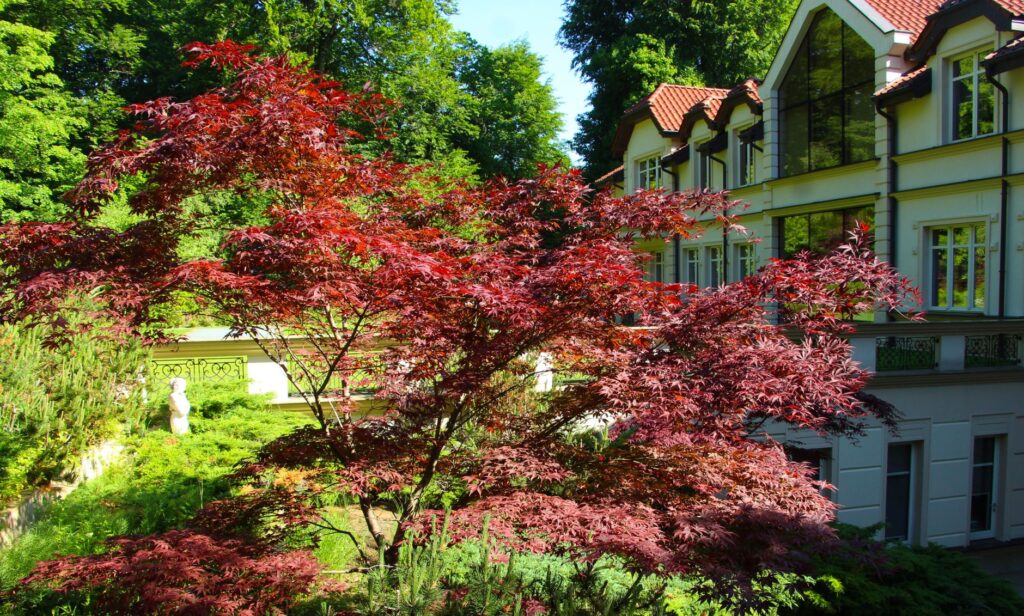
If you’re planting with stormwater performance in mind — or just deciding which tree is worth fighting to save — canopy density and root habit both matter. Large-canopied natives like white oak, red maple (Acer rubrum), and tulip poplar (Liriodendron tulipifera) offer high leaf surface area and, once established, extensive root systems that handle our clay-loam well. Species with naturally deep, wide-spreading root systems tend to outperform shallow-rooted ornamentals for infiltration purposes, though shallow-rooted trees still contribute meaningfully through canopy interception alone.
Placement matters as much as species selection. A tree positioned to intercept runoff before it reaches a driveway, patio, or the street — rather than tucked against a foundation where it competes with structural drainage — does more net stormwater work and creates less conflict with your home. The Monmouth County Park System has planted stormwater buffer plantings along several of its Bayshore-adjacent properties, including areas near Hartshorne Woods and Thompson Park, as working examples of exactly this principle at a larger scale.
For homeowners replacing a tree that came down in a storm, this is worth factoring in alongside the usual questions of mature size and utility line clearance. A well-placed shade tree on the low side of your yard, positioned to catch sheet flow before it reaches pavement, is doing double duty — shade in August, mitigation in a downpour.
Reading Your Own Yard's Drainage Story
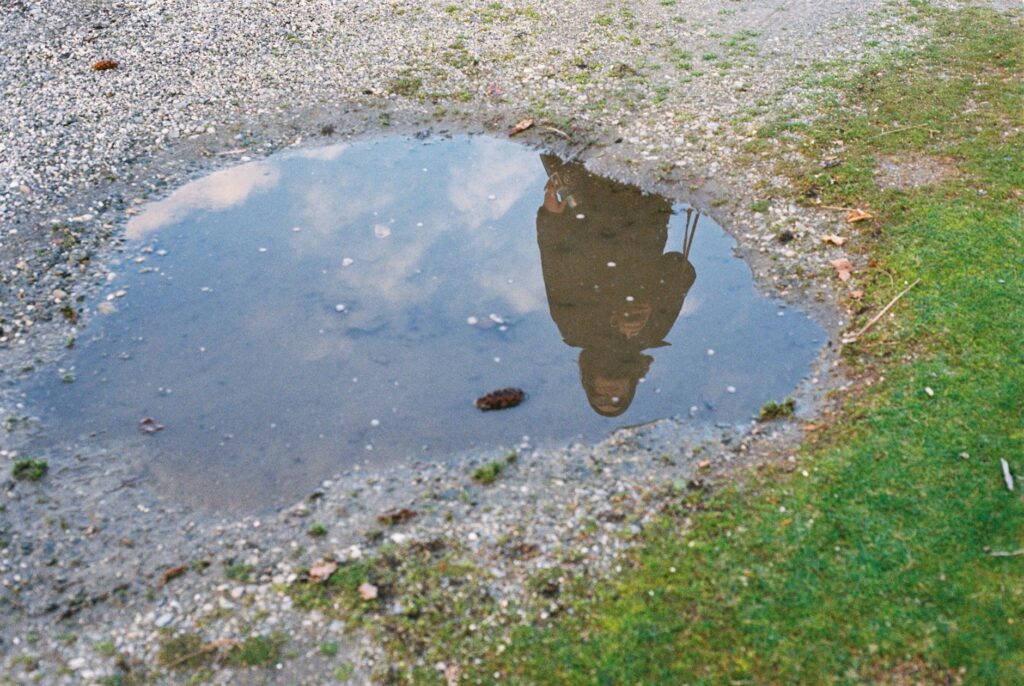
You don’t need an engineering degree to get a rough sense of how your property handles water — you mostly need to watch it during the next storm. Note where water pools and how long it takes to disappear. Compare a spot under canopy to an open, sunny stretch of lawn with the same slope. If the shaded ground drains noticeably faster and stays firmer underfoot, that’s your root zone doing infiltration work in real time.
Pay attention, too, to trees that seem to be losing the fight — thinning crowns, earlier-than-normal leaf drop, fungal conks at the base, or a lean that’s gotten more pronounced since last summer. A tree in decline isn’t just a future removal cost; its stormwater contribution is already declining well before it becomes visibly hazardous. That’s a good moment to have it looked at rather than waiting for it to become an emergency during the next nor’easter.
If you’re dealing with a yard that holds water for a day or more after a storm, that’s usually a soil compaction or grading issue more than a tree problem — but a certified arborist can help distinguish between the two, and can often recommend root-zone aeration or targeted plantings that improve both tree health and drainage at the same time.
Middletown's #1 Tree Expert Company
FREE Inspection & Estimate | Certified Arborists | Trimming, Pruning, Removal, More!
Sponsored
When to Call a Pro

Most of what your trees do for stormwater happens invisibly, which is exactly why it’s easy to undervalue until a storm makes the absence of canopy obvious. If you’re planning to remove a mature tree for a renovation, it’s worth getting a second opinion first — not because every tree is worth saving, but because the stormwater and drainage consequences of losing a large canopy often aren’t part of the conversation until the next flood.
A certified arborist can assess whether a struggling tree’s root system is still functioning well enough to justify treatment, whether a replacement planting in a different spot on your property would perform better for both shade and drainage, and whether the trees you already have are structurally sound enough to keep doing this work through hurricane season. That’s a different question than whether a tree looks nice — it’s whether it’s still pulling its weight below the surface, storm after storm.
If your property backs up to a creek, sits low relative to the street, or has flooded even briefly in the last few years, an arborist walk-through alongside your regular storm prep is worth the hour. The canopy over your yard is already part of Middletown’s flood defense whether you’ve thought of it that way or not — it’s worth knowing whether it’s in good enough shape to keep doing the job.
Photo credits: Featured image by İdil Ceren Çelikler on Pexels; Section 1 by Helena Jankovičová Kováčová on Pexels; Section 2 by VANNGO Ng on Pexels; Section 3 by Walter Cunha on Pexels; Section 4 by Griffin Wooldridge on Pexels; Section 5 by Gosia K on Pexels; Section 6 by Paul Campbell on Pexels; Section 7 by Grant on Pexels.