
Middletown's #1 Tree Expert Company
FREE Inspection & Estimate | Certified Arborists | Trimming, Pruning, Removal, More!
Sponsored
The Tree That Leans Toward the Bay
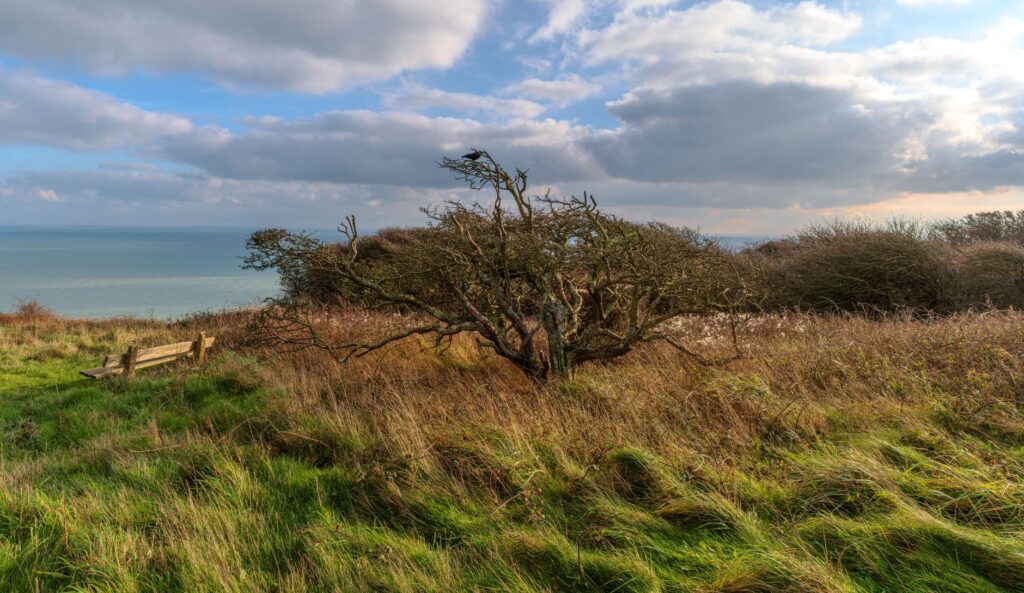
Drive along Route 36 through Leonardo or Port Monmouth and you will see it: a row of trees whose crowns sweep inland, all pointing the same direction like hair combed by a hand. Walk a trail at Hartshorne Woods Park on a windy day in November and the pattern repeats. Some trees look like they are permanently braced against a gale that is not blowing today.
That shape is not damage in most cases. It is a record. Every tree responds to the wind it grows in, and Middletown Township sits at the edge of Raritan Bay and the Atlantic, where winter air moves hard across open water and meets very little in the way of hills. Over decades, exposed trees build a lopsided crown and a heavier root plate on the windward side.
The trick for a homeowner is telling a tree that has been shaped by wind from a tree that is being moved by it. One is a healthy adaptation. The other is a warning. This guide covers how wind shapes a tree, what normal wind flagging looks like, the signs that a lean has turned dangerous, and what to do before the next cold front arrives.
How Wind Builds a Tree Over Decades
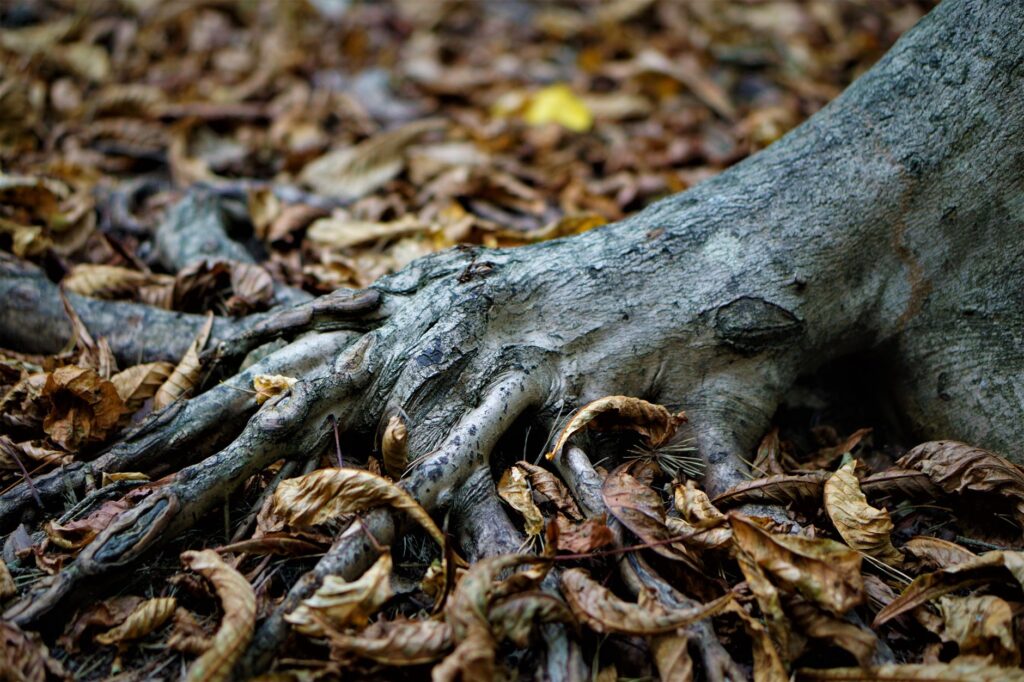
A tree is not a rigid post. Trunks and limbs flex constantly, and that flexing sends a signal to the wood. Researchers call the response thigmomorphogenesis, which is a long word for a simple idea: a tree that is pushed around grows shorter, thicker and tougher than one raised in still air. A white oak (Quercus alba) on an open Bayshore lot will often have a stouter trunk taper and shorter, stiffer limbs than the same species grown in a sheltered woodlot in Lincroft.
Below ground the tree does the same thing. Roots on the windward side thicken to hold the tree in tension, and roots on the leeward side grow wide and flat to resist being pushed. The result is an uneven root plate that works like a keel. This is also why a tree that has been wind-shaped for forty years is hard to move, and why changing the conditions around it, with a new building, a cut trench or a removed neighbor, can be so risky.
Foresters at the USDA Forest Service urban forestry program have long worked with the idea that trees acclimate to the wind loads they know. They do not acclimate well to new ones. That single fact explains most of the trouble that follows.
Flagging, Lean and Lopsided Crowns: What Is Normal
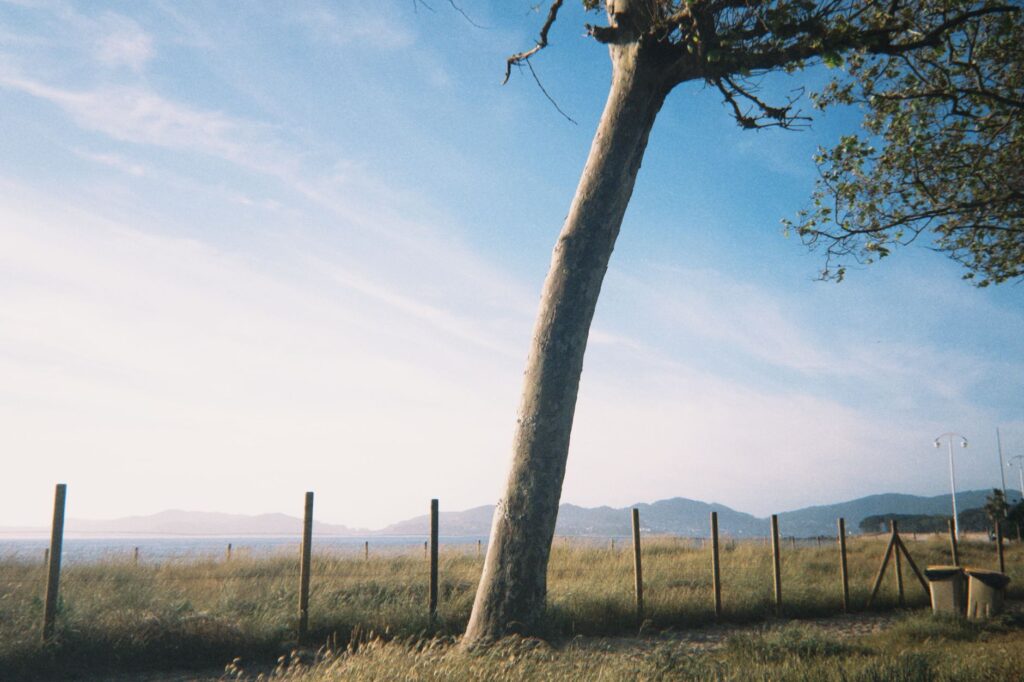
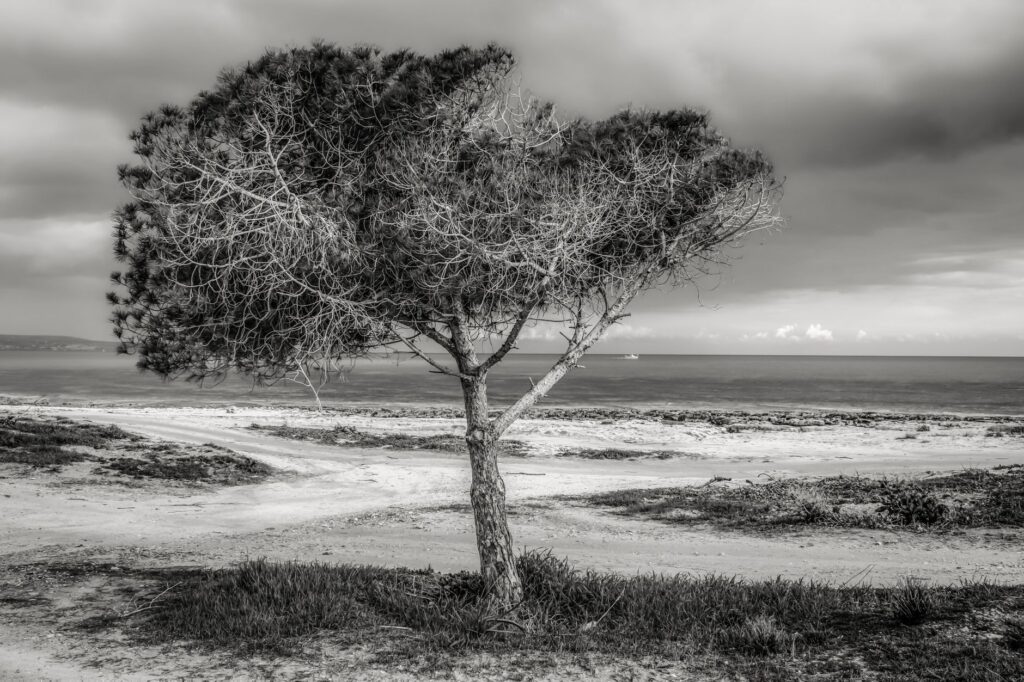
Wind flagging is the most visible sign. The branches on the windward side of the tree are shorter, sparser or missing, while the leeward side carries the full crown. Evergreens such as eastern white pine (Pinus strobus) and Austrian pine show it most dramatically, and it is common on trees growing at the edge of open fields or waterfront lots.
A lean is usually normal when it meets a few conditions:
- The tree has leaned in the same direction for as long as you can remember, often decades.
- The trunk curves back toward vertical higher up, which shows the tree has been correcting for its own weight.
- The soil around the base is flat and undisturbed, with no cracks, mounds or gaps.
- The crown is dense and the leaf or needle color is healthy for the season.
When all four boxes are checked, a leaning tree is usually stable. Many of the oldest, most characterful trees in Monmouth County have leaned for a century. Removing one because it looks tilted can be an expensive mistake, and the loss of an old Bayshore tree is not something a young replacement makes up for.
The question to ask is not whether a tree leans, but whether the lean has changed.
Middletown's #1 Tree Expert Company
FREE Inspection & Estimate | Certified Arborists | Trimming, Pruning, Removal, More!
Sponsored
Signs a Wind-Shaped Tree Is Becoming Unstable
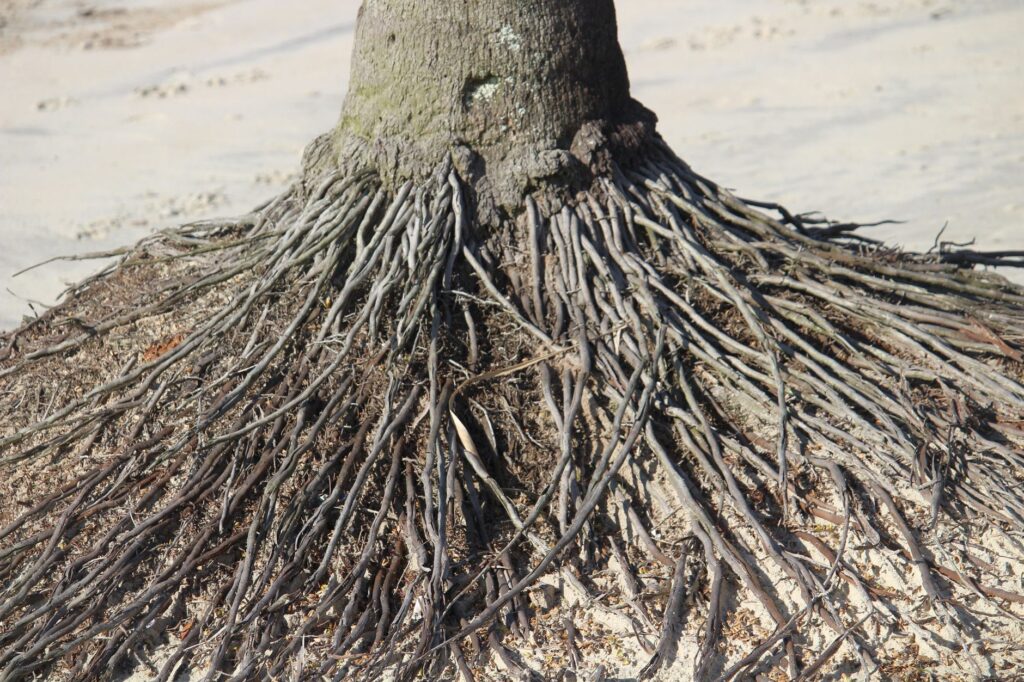
A change in the lean is the red flag. If a tree that stood straight last summer now tilts, or a long-time lean has visibly increased, something has shifted underground. Look at the soil on the side opposite the lean. A crescent-shaped crack, a raised mound of earth or a gap between the trunk and the ground can mean the root plate is lifting. After a wet autumn, saturated clay-loam soils like ours hold a tree far less firmly than they did in August.
Other signs deserve attention in the same visit:
- Mushrooms or conks (shelf-like fungal growths) at the base, which can point to root or butt decay.
- Cracks or splits where large limbs join the trunk, especially on codominant stems.
- Dead branches in the upper crown that catch wind and rock the tree harder.
- Roots that have been cut by trenching, driveway work or utility lines within the last few years.
The International Society of Arboriculture explains how to recognize these defects in its guide to hazard trees, and it stresses that a tree with a target beneath it, such as a roof, a play area or a parked car, deserves much closer scrutiny than the same tree in an open field.
When Wind Exposure Changes: Construction, Clearing and Storm Gaps
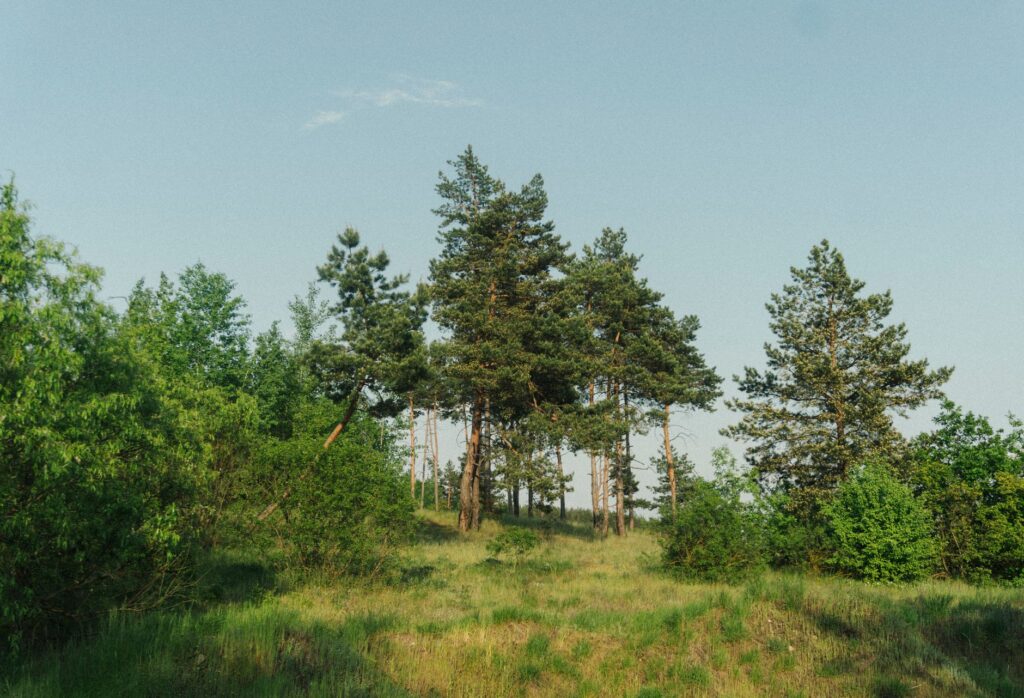
Most failures of long-standing trees are not caused by the wind getting stronger. They happen because the tree’s shelter disappeared. A neighbor takes down a row of mature trees, a developer clears a lot, or a past storm opens a gap in a windbreak. The trees that remain at the new edge suddenly face wind loads they never grew up with, and they have no taper, no thick windward roots and no compact crown to handle them.
Arborists call these newly exposed trees edge trees, and they are a well-known weak point after clearing. In Middletown Township this happens more than people expect. Teardown and rebuild projects on the Bayshore, utility corridors and subdivision work all change the airflow across a lot. Soil grade changes of even six inches around the root zone can add stress that shows up two or three years later.
If wind exposure on your property has changed in the last few years, have the nearest large trees looked at, even if they appear fine. The New Jersey Forest Service offers state level guidance on caring for community and urban forests, and the same principle runs through it: gradual, planned changes are safer for mature trees than sudden clearing.
What a Homeowner Can Do Before a Winter Wind Event
You cannot make a tree wind-proof, but you can lower the odds. Start with a walk-around on a calm, dry day this month, with a notepad and a phone for photos. Photograph each large tree from two sides, with a fixed landmark such as a fence post or a house corner in frame. Repeat the photos in February and compare. A shift that you cannot see day to day will show up clearly side by side.
Keep the area under and around the root zone quiet. Avoid piling soil, parking vehicles or storing firewood under a tree you are worried about. Spread two to three inches of mulch, pulled back from the trunk, so the soil stays loose and moist but the root flare stays visible. Do not top the tree to reduce its wind load. Topping removes the leaf area the tree needs and creates weakly attached sprouts that fail more easily than the original limbs.
If dead wood is visible in the crown, plan to have it removed by a qualified pruner during the dormant season, and do not climb or cut anything near utility lines yourself. Winter is a good time to schedule this work because the structure of the tree is easy to see and the ground is firm enough for equipment.
Middletown's #1 Tree Expert Company
FREE Inspection & Estimate | Certified Arborists | Trimming, Pruning, Removal, More!
Sponsored
Summary: When to Call a Pro About a Wind-Shaped Tree
A tree that has leaned or flagged for decades is usually telling you about the weather it has lived through, not about a failing structure. Appreciate it, protect its roots and keep an eye on it. The trees to worry about are the ones whose lean is changing, whose soil is cracking, or whose protection has recently been removed.
Call a certified arborist if you see new soil movement at the base, fungal growth on the trunk or roots, large dead limbs in the crown, or any change to the wind exposure around a tree that stands near a house, a driveway or a property line. An ISA Certified Arborist, or one holding the TRAQ qualification, can assess the tree and tell you whether it needs pruning, cabling, monitoring or removal. You can find one through the Trees Are Good arborist search.
Do your photo check once a month through the winter, and again after every strong nor’easter. A few minutes of attention now is far cheaper than a call after a limb or a whole tree comes down in January.
Photo credits: Featured image by Jordan Coleman on Pexels; Section 1 by Pixabay on Pexels; Section 2 by Sony Shooter on Pexels; Section 3 by David Lago Rodríguez on Pexels; Section 4 by Landiva Weber on Pexels; Section 5 by Дмитрий Рощупкин on Pexels; Section 6 by Alexy Almond on Pexels; Section 7 by Petr Ganaj on Pexels.