Middletown's #1 Tree Expert Company
FREE Inspection & Estimate | Certified Arborists | Trimming, Pruning, Removal, More!
Sponsored
Why the Branches Over Your Roof Deserve a Second Look
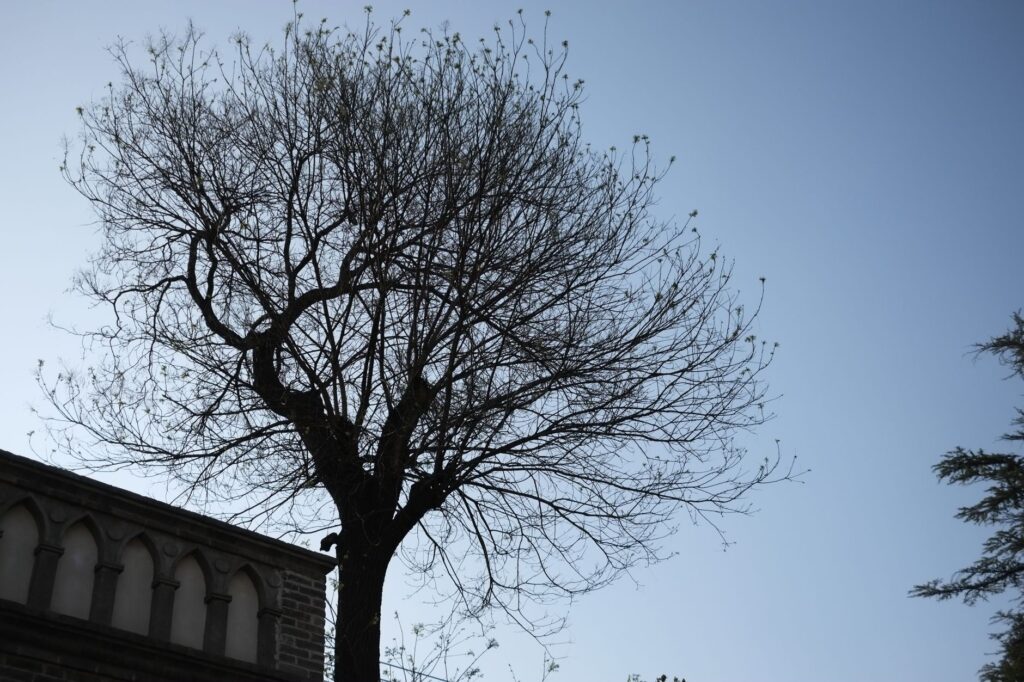
Late fall is the easiest time of year to see what your trees have been doing above your house. The leaves are down, the sky shows through the crown, and every limb that reaches toward the shingles is suddenly obvious. Across Middletown Township, where so many homes sit under mature oaks and maples from the postwar building years, that view is worth a slow walk around the property with a coffee in hand.
Branches over a roof cause trouble in two quiet ways. The first is the slow one: leaves, twigs, seed and bud scale pile up in gutters and valleys, hold moisture against roofing, and give moss and rot a place to start. The second is the fast one, a limb that fails in a nor’easter and lands where it should never have been able to reach.
Neither problem calls for panic, and neither calls for cutting everything back to a bare trunk. What it takes is a clear idea of how much clearance a roof really needs, how to judge your own trees, and which jobs belong to a certified arborist. This article walks through each.
How Much Clearance Is Enough Between a Branch and a Roof
There is no single legal number, but arborists work from a practical rule of thumb. A branch tip should sit several feet clear of the roof surface, and a limb directly above the roof needs more room than one that merely runs alongside it. The reason is movement. A branch loaded with wet leaves or snow, or one pushed by a Bayshore gust, can swing or droop a long way, and the tip that looked comfortably clear on a calm day can scrape shingles in a storm.
As a working guide, think about it in three zones:
- Branch tips touching or rubbing the roof, siding or chimney need attention now, because every windy day sands away at the surface.
- Branches within a few feet of the roof are in the watch zone, especially if they are growing in your direction each year.
- Limbs well clear but heavy and long, extending out over the roofline, matter for a different reason: if they fail, they come down on the house.
Growth is the part people forget. A branch that clears the roof by four feet today may be touching it in five years, and the thicker it gets, the harder it is to remove cleanly. The International Society of Arboriculture advice on pruning mature trees explains why removing a few well-chosen branches over time is kinder to the tree than one drastic cut later.
Chimneys, vent pipes, satellite dishes and electrical service drops add to the picture. Anything near a service wire is not a homeowner job at any clearance, and that rule is covered in a later section.
The Gutter Problem: What Falls From Overhanging Trees
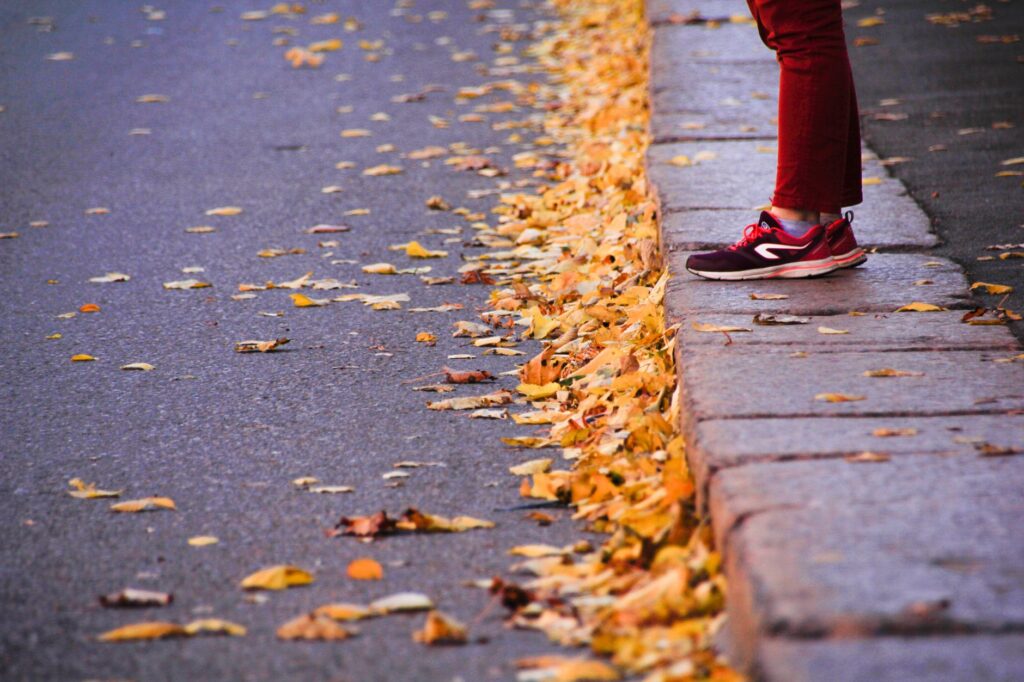
Gutters are where overhanging trees do their steadiest damage. A mature oak (Quercus species) can drop acorns, catkins, bud scales and leaves for months, and the fine debris packs down into a dense mat that holds water. Standing water in a gutter freezes in January, and the weight and expansion pull on the fasteners. In spring the same mat grows seedlings, which every Middletown homeowner with a pin oak has seen at least once.
Different trees create different messes, and knowing yours helps you plan the cleaning schedule:
- Oaks and beeches shed acorns, nuts and heavy catkins that jam downspout elbows.
- Maples (Acer species) release helicopter seeds in spring and early summer that clump with wet leaves.
- Pines and other conifers drop fine needles that slip through gutter guards and compact in the trough.
- Sweetgum and tuliptree drop spiky balls and large leaves that block downspouts outright.
Gutter guards help with some of this but not all of it, because fine seed and needle debris builds up on top of the guard and still sheds water over the edge. The honest fix is a combination of a twice-a-year cleaning, usually late fall after leaf drop and again in late spring, and pruning back the branches that sit directly over the trough.
Roof valleys deserve the same attention. Debris that lodges in a valley dams water, and shingles that stay wet through winter age faster. A walk on a Monmouth County Park System woodland trail is a good reminder that leaf litter naturally decomposes on the ground, which is where it does the most good and the least harm.
Middletown's #1 Tree Expert Company
FREE Inspection & Estimate | Certified Arborists | Trimming, Pruning, Removal, More!
Sponsored
Reading the Limb: Is This Branch Safe to Leave Over the House?
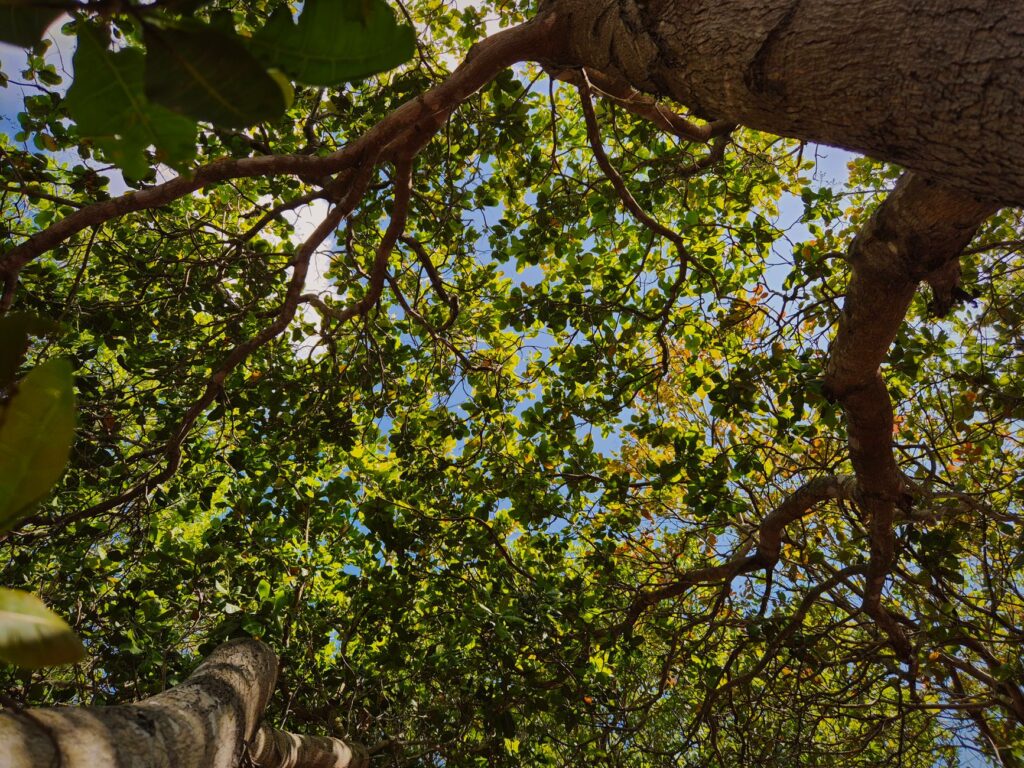
Distance is only half the question. The other half is whether the branch is likely to stay attached. With the leaves gone, November is a good time to look at the structure of each limb that reaches toward your house, and you can do most of that from the ground with binoculars.
Warning signs worth noting include:
- Dead wood that is bark-free, brittle, or without buds, especially a limb that held no leaves this past summer.
- A crack, split or long seam where a branch meets the trunk, or a limb that has started to sag below its original angle.
- Mushrooms or conks on the limb or the nearby trunk, which point to internal decay.
- A narrow union where two stems of equal size meet, with bark pinched between them. This codominant form is a classic weak point on mature maples.
- A long, heavy limb with most of its foliage at the far end, which acts like a lever on its own attachment.
None of these is a verdict on its own. A dead twig is housekeeping. A dead limb as thick as your arm over the bedroom is a different matter. The ISA overview of hazard trees lays out the difference between a defect and a real risk, and the key idea is that risk depends on both the odds of failure and what sits underneath. A rotten limb over an open lawn is a tree issue. The same limb over a roof is a safety issue.
If you cannot tell which one you are looking at, that is exactly the situation a certified arborist assessment is designed for.
Cutting Back Safely: What Homeowners Can Do and What to Leave Alone
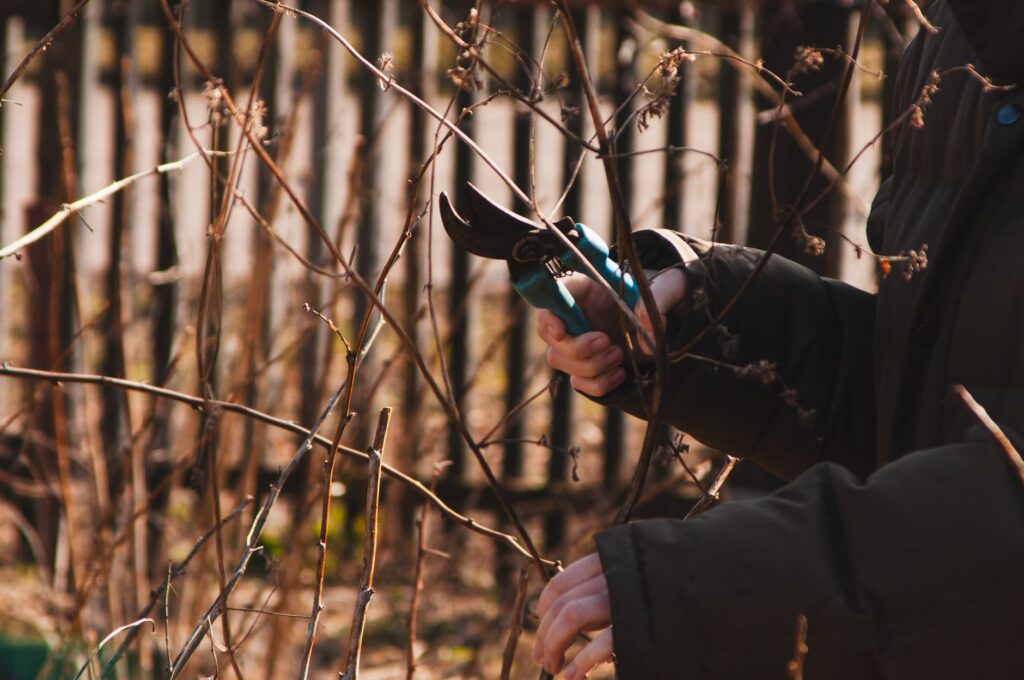
Small pruning jobs are reasonable for a careful homeowner. Removing a dead twig, a thin sucker, or a branch you can reach with a pole pruner while standing flat on the ground is ordinary maintenance. The three-cut method keeps the bark from tearing, and cutting just outside the branch collar lets the tree seal the wound the way it evolved to.
Beyond that, the line should be drawn clearly:
- Do not climb a ladder with a chainsaw. Ladder falls are among the most common serious injuries in home tree work.
- Do not cut anything near a utility line, service drop or the wire that feeds your house. Contact with a live wire can be fatal.
- Do not take a limb that is thicker than your wrist and heavier than you can control as it falls. Gravity moves it toward the roof every time.
- Do not top the tree. Cutting large limbs back to stubs triggers weak, fast regrowth that is more dangerous than what you removed.
Timing matters too. For most deciduous trees, the dormant season from late fall through winter is the best time for structural pruning because the tree can see its own shape and the cuts close before the spring growth flush. A few species bleed sap heavily in late winter, and oaks have a seasonal restriction in spring and early summer, so the details depend on what you are looking at.
For the cuts you cannot do safely, the ISA guide to hiring an arborist explains what to look for: a certified arborist credential, proof of insurance, and a written scope that names the cuts rather than promising to clean up the tree.
Township Rules, Utility Lines and Your Own Property Line
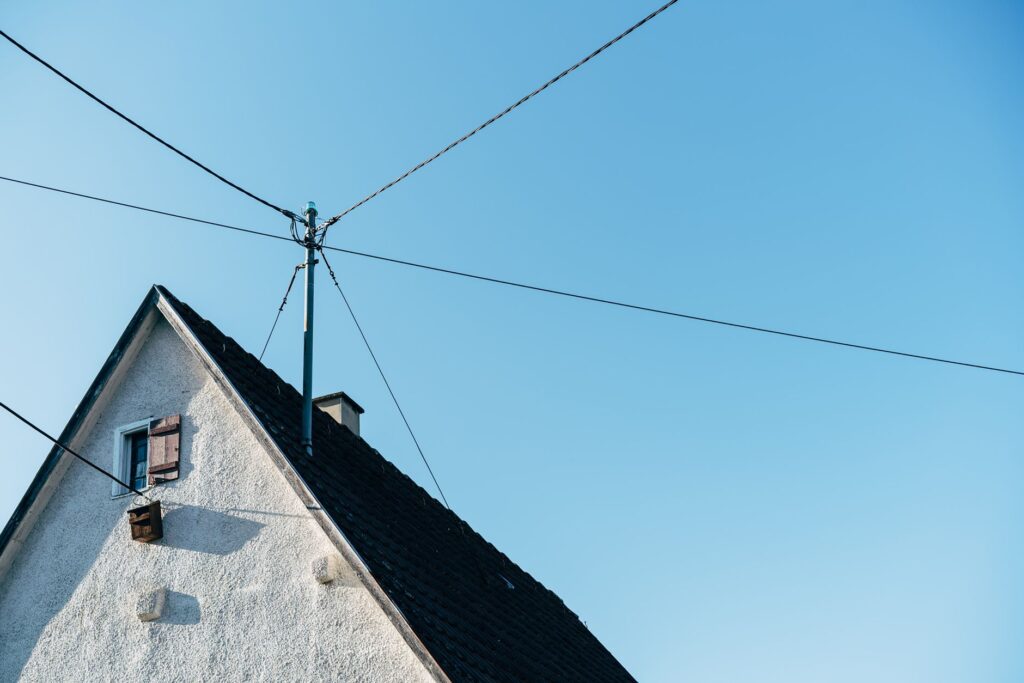
Two pieces of local context shape what you can do about branches over a roof. The first is ownership. If the tree trunk stands on your property, the tree and its upkeep are yours. If the trunk is on a neighbor’s lot and the limbs hang over your roof, you generally may trim what crosses your property line, but cutting in a way that kills or destabilizes the tree can create liability. Talking to the neighbor first costs nothing and often solves the problem.
The second is the township’s tree rules. Middletown has an ordinance about removing certain trees, and ordinary pruning is treated differently from removal, but it is always worth confirming before you commit to a big job. The Middletown Township website is the place to check current requirements and who to contact.
Utility lines are the third factor, and they override everything else. If a branch is touching or leaning on a wire, treat the wire as live, keep yourself and any helper well away, and call the utility instead of a tree crew. Utility crews have the training and the authority to deal with energized lines, and a branch resting on a service drop is their problem to solve first.
Insurance adds one more reason to act early. A claim for a limb that was visibly dead or touching the roof for years is harder to argue than one for a healthy tree that failed in an extreme storm. Photographing your trees each fall and keeping notes on what you were told by an arborist builds a paper trail that helps you either way.
Middletown's #1 Tree Expert Company
FREE Inspection & Estimate | Certified Arborists | Trimming, Pruning, Removal, More!
Sponsored
When to Call a Pro, and a Simple November Routine
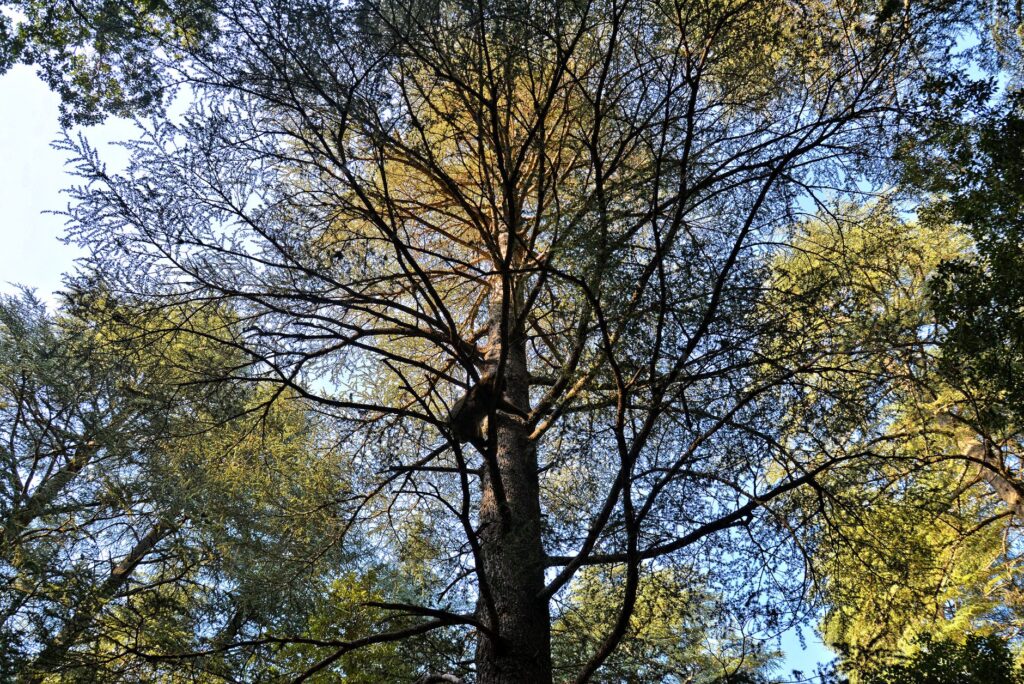
You do not need to turn this into a project. A simple November routine takes about twenty minutes and covers most of what matters. Walk the property after leaf drop and look up. Note any branch touching or within a few feet of the roof, any dead or cracked limb over the house, and any limb near a wire. Take a photo of each, clean the gutters and valleys, and write down the date.
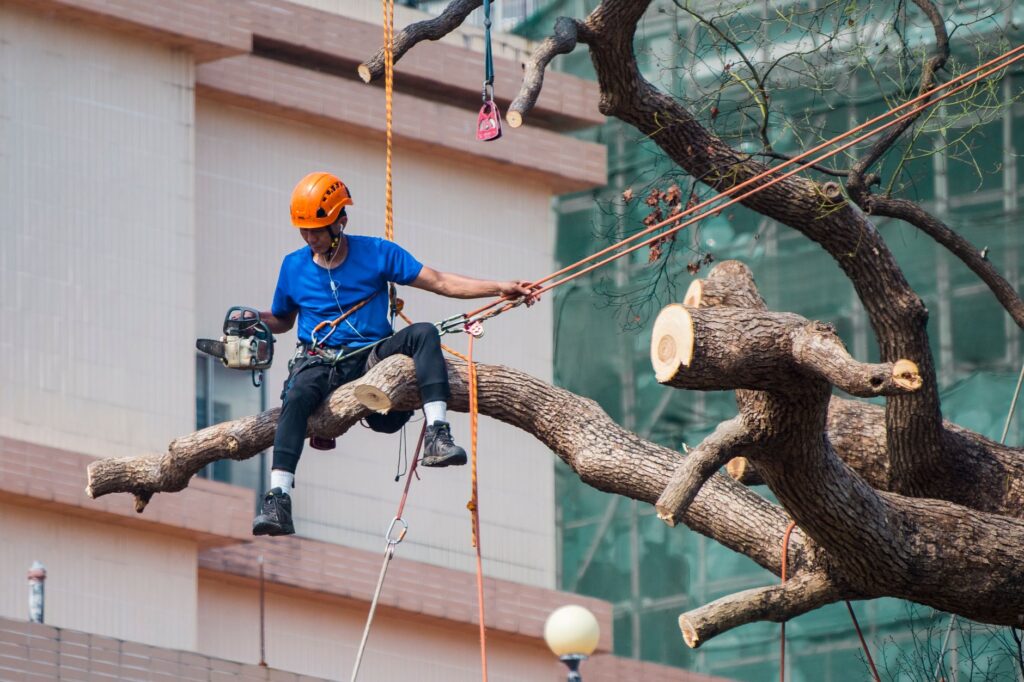
Then sort what you found. Dead twigs and low, reachable branches are yours to handle. Everything else, meaning anything high, heavy, near wires, or showing a crack or decay, is a job for a certified arborist who can climb safely, rig the limb down in controlled pieces, and tell you whether pruning will actually fix the problem or whether the tree has a deeper structural issue.
Late fall through winter is also an easier time to get this done, since crews are usually less busy than after the first big storm of the year. A tree that has been assessed and trimmed in November goes into the nor’easter season in a far better position than one nobody has looked at. Call a certified arborist, ask for the cuts in writing, and keep the paperwork with the rest of your home records. The trees will thank you in March, and so will the roof.
Photo credits: Featured image by Dieu Mien on Pexels; Section 1 by mingche lee on Pexels; Section 2 by Jimmy Chan on Pexels; Section 3 by Anna Vatochkina on Pexels; Section 4 by Lan Nguyen Tran on Pexels; Section 5 by Boryslav Shoot on Pexels; Section 6 by Markus Winkler on Pexels; Section 7 by Moussa Idrissi on Pexels.