Middletown's #1 Tree Expert Company
FREE Inspection & Estimate | Certified Arborists | Trimming, Pruning, Removal, More!
Sponsored
The Habit Most Middletown Homeowners Skip Between Cuts
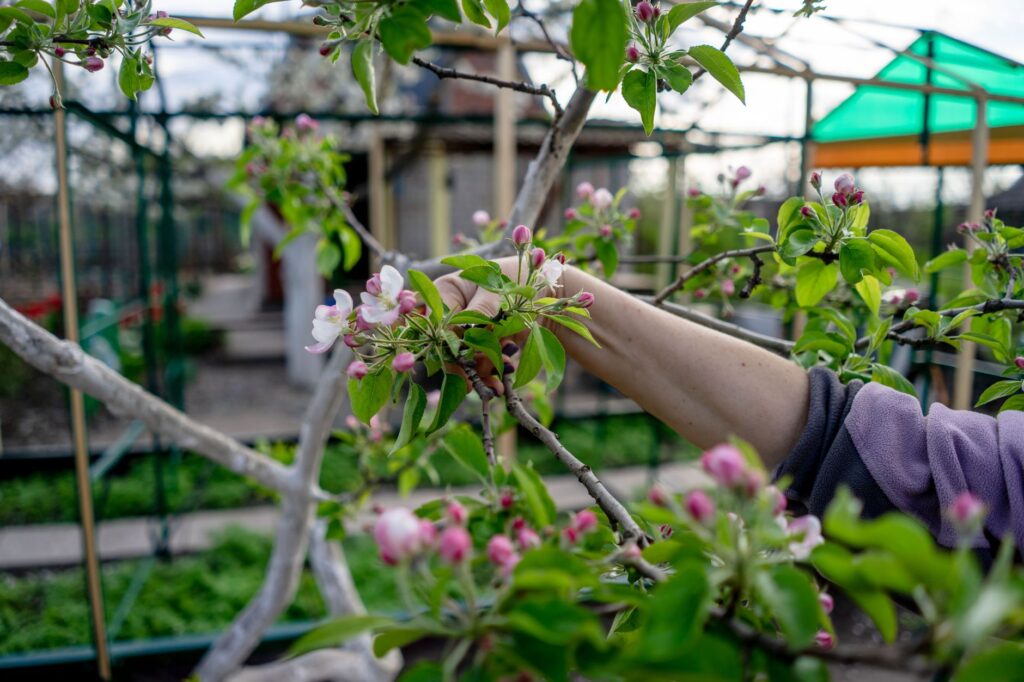
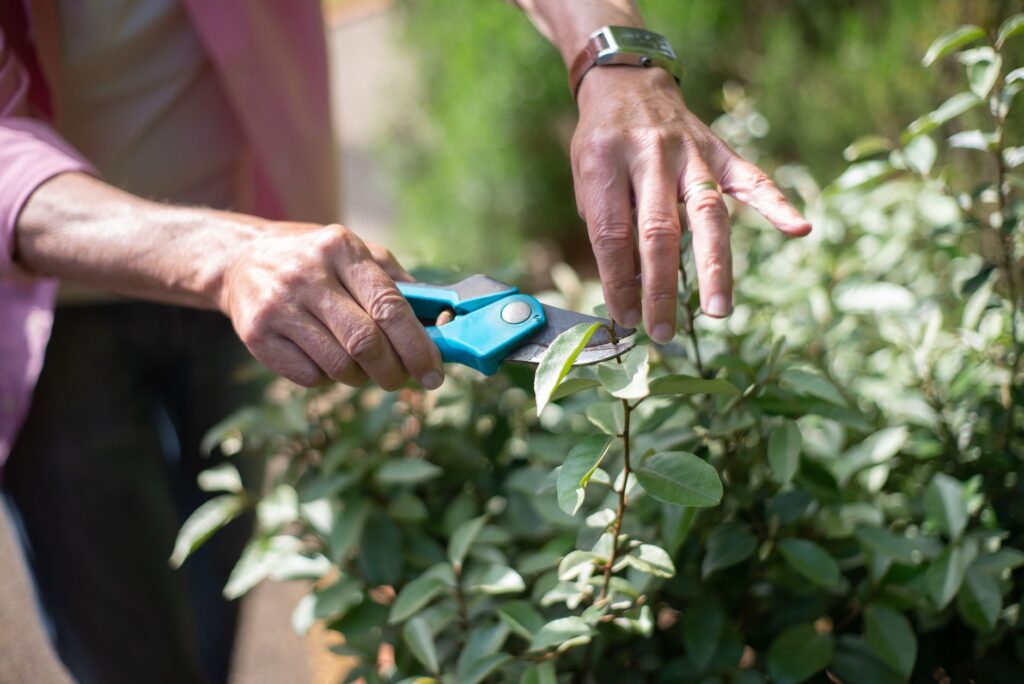
Late August is a busy stretch for pruners in Middletown Township. Homeowners are cleaning up the last of the summer’s storm-snapped twigs, taking a saw to a few crossing branches before the leaves start to turn, and getting a jump on the deadwood they’ll want gone before nor’easter season. Almost nobody wipes the blade down between trees.
It’s an understandable oversight. A pair of bypass pruners looks clean enough after a cut — no visible sap, no obvious debris. But at the microscopic level, that blade can be carrying bacteria, fungal spores, or viral particles from the last wound it made, and every fresh cut on the next tree is an open door for whatever hitched a ride. On a property with a mix of oaks, maples, and ornamentals — which describes most yards from Lincroft to Port Monmouth — one contaminated blade can turn a routine cleanup into a slow-motion outbreak.
This isn’t a call to buy special equipment or treat every trim job like a surgical procedure. It’s a five-minute habit, done at the right moments, that costs almost nothing and prevents a problem that’s expensive and sometimes impossible to reverse once it starts.
How a Clean Blade Becomes a Disease Vector
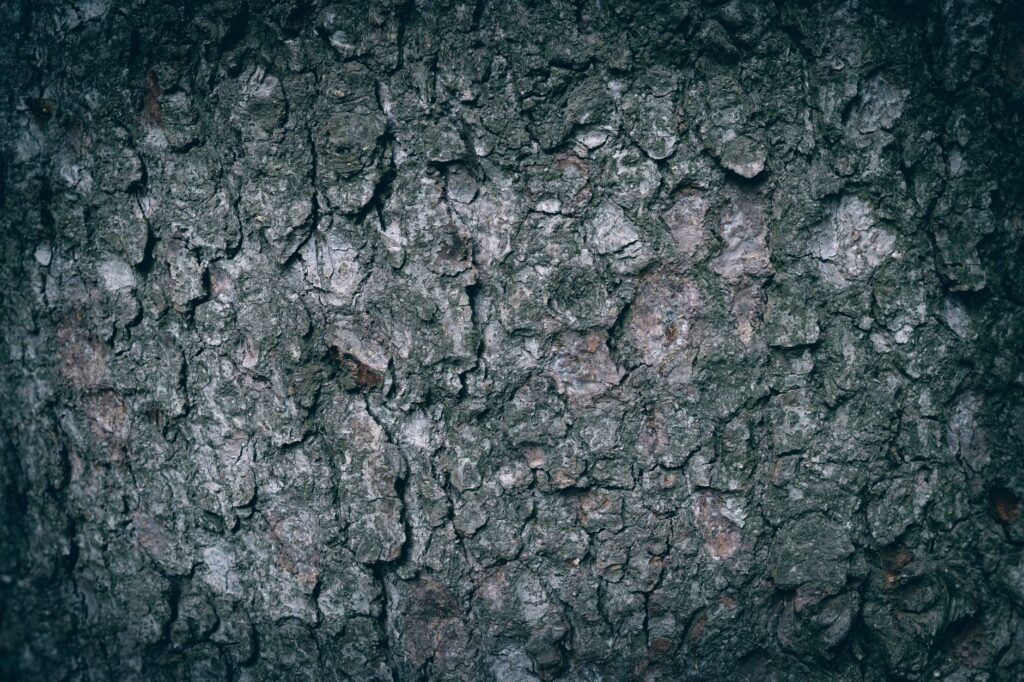
A pruning cut is a wound, and every wound is an entry point. Healthy bark is a tree’s primary defense against pathogens — it’s a physical barrier that keeps bacteria and fungal spores from reaching the vascular tissue underneath. The moment you make a cut, that barrier is gone, at least until the tree can wall off the injury through a process called compartmentalization.
Some of the pathogens that cause the most damage in Monmouth County move specifically through pruning wounds. Fire blight, a bacterial disease that has hit ornamental pears and other rosaceous trees hard across the township, spreads readily on contaminated tools — a single infected cut can carry bacterial ooze onto the next blade pass. Cankers, the sunken, discolored lesions that girdle branches and trunks over time, are frequently introduced the same way. Verticillium wilt, a soil-and-vascular pathogen that has been quietly killing Middletown maples branch by branch, can also move on tools that have contacted infected sapwood.
The risk is highest when you’re pruning multiple trees in one session, moving between a tree you know is stressed or symptomatic and one that looks perfectly healthy. According to the International Society of Arboriculture, tool sanitation is a standard part of professional pruning protocol precisely because so many common tree pathogens are mechanically transmissible — meaning they don’t need wind or insects to spread, just a shared cutting edge.
What Actually Works — and What Doesn't

Not every disinfectant homeowners reach for is effective, and some can actually damage your tools. A few that hold up:
- Isopropyl alcohol (70% or higher): Wipe or dip the blade for about 30 seconds. It evaporates fast, doesn’t leave residue, and is gentle on metal — the best all-around choice for most homeowners.
- Diluted household bleach (1 part bleach to 9 parts water): Effective against bacteria and fungal spores, but it’s corrosive. If you use it, rinse and dry the blade thoroughly afterward or you’ll be dealing with rust by next season.
- Disinfecting wipes (the kind sold for household cleaning): Convenient for quick between-cut wiping on a multi-tree job, though less reliable for a heavily contaminated blade than a full alcohol dip.
What doesn’t work as well as people assume: plain water, WD-40, and household soap. None of these reliably kill the bacteria or fungal spores responsible for the diseases described above. Water can rinse away visible sap, but it won’t disinfect. WD-40 is a lubricant, not a sanitizer.
Whatever you use, let the blade air-dry or wipe it dry before making the next cut — a wet blade can still transfer whatever it was carrying, just diluted.
Middletown's #1 Tree Expert Company
FREE Inspection & Estimate | Certified Arborists | Trimming, Pruning, Removal, More!
Sponsored
When Sanitizing Matters Most (and When It's Less Critical)
You don’t need to disinfect your pruners between every single cut on a healthy tree. Sanitation matters most in a few specific situations:
- Moving between trees, especially different species. A blade that just cut a symptomatic ornamental pear should be cleaned before it touches your oak.
- Pruning any tree with visible disease symptoms — cankers, oozing bark, wilted branches, dieback — before and after working on it.
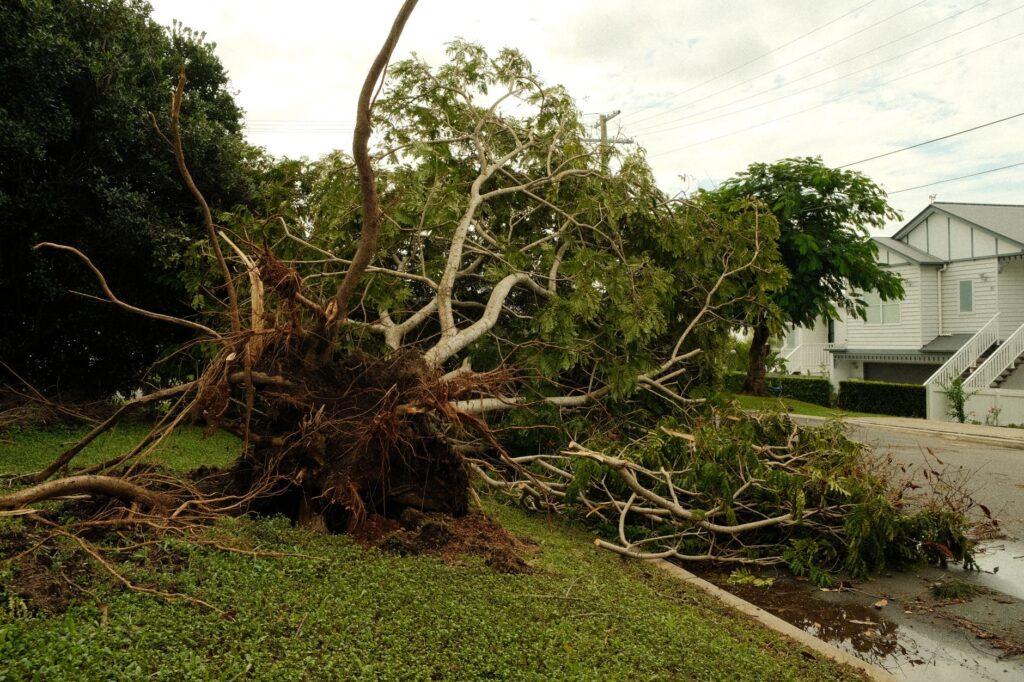
- After storm cleanup when you’re cutting damaged wood from several trees in one pass, since you often can’t tell by looking which limbs are freshly broken versus already stressed or infected.
- Working in a yard with a known disease history — if a previous tree on the property was removed for Verticillium wilt or a fungal canker, treat every subsequent cut with more caution.
On a single healthy tree, cutting several small branches in one session, the risk is much lower — you’re not introducing anything new between cuts on the same plant. Where the habit pays off is in exactly the situations most homeowners hit this time of year: a mixed cleanup across several trees after wind damage, or trimming a tree that looks a little off without being sure why.
Building the Habit Without Overcomplicating It
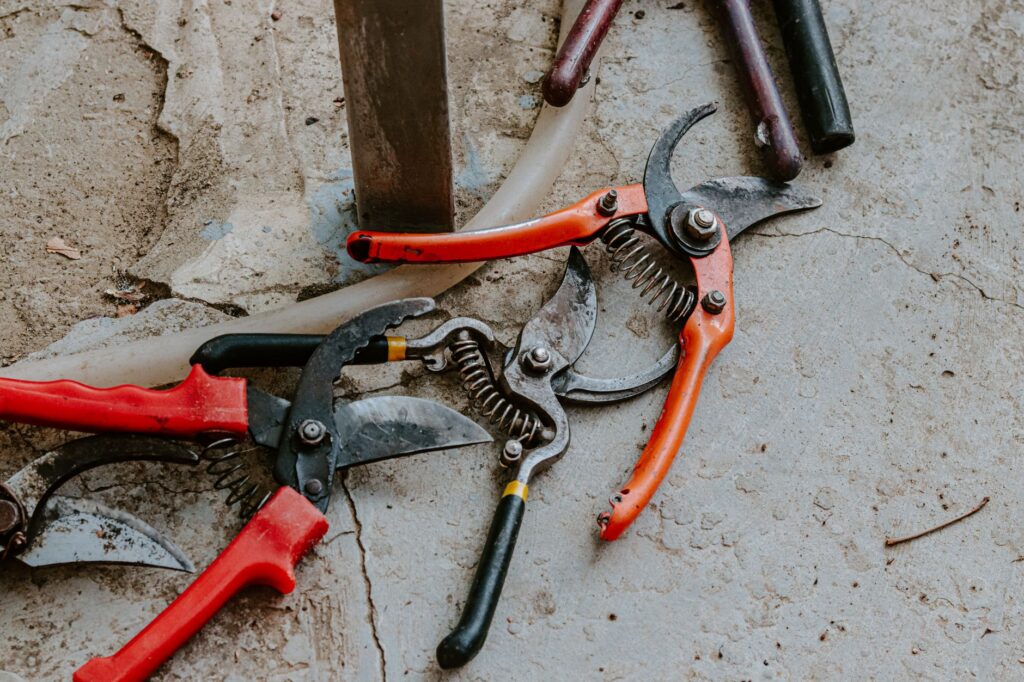
The homeowners who actually keep this up long-term don’t treat it as a ritual for every snip — they build in a couple of natural checkpoints. A small spray bottle of isopropyl alcohol and a rag, kept in the same bucket as your pruners, removes the excuse of walking back inside for supplies. Wipe down before you start, again if you move to a different tree, and once more when you’re done and about to put the tools away.
It’s also worth inspecting the blade itself while you’re at it. A dull or nicked blade tears bark and wood fibers instead of making a clean cut, and ragged wounds are slower to close and more vulnerable to infection regardless of what’s on the blade. The Tree Care Industry Association and most extension programs recommend keeping pruning tools sharpened as a baseline practice — sanitation and sharpness work together, not separately.
Store tools dry after cleaning. A lightly oiled blade (a drop of mineral oil on the pivot and cutting edge, wiped thin) resists rust through Middletown’s humid summers and salty Bayshore air without interfering with the next disinfecting pass.
The Cuts That Are Better Left to a Professional
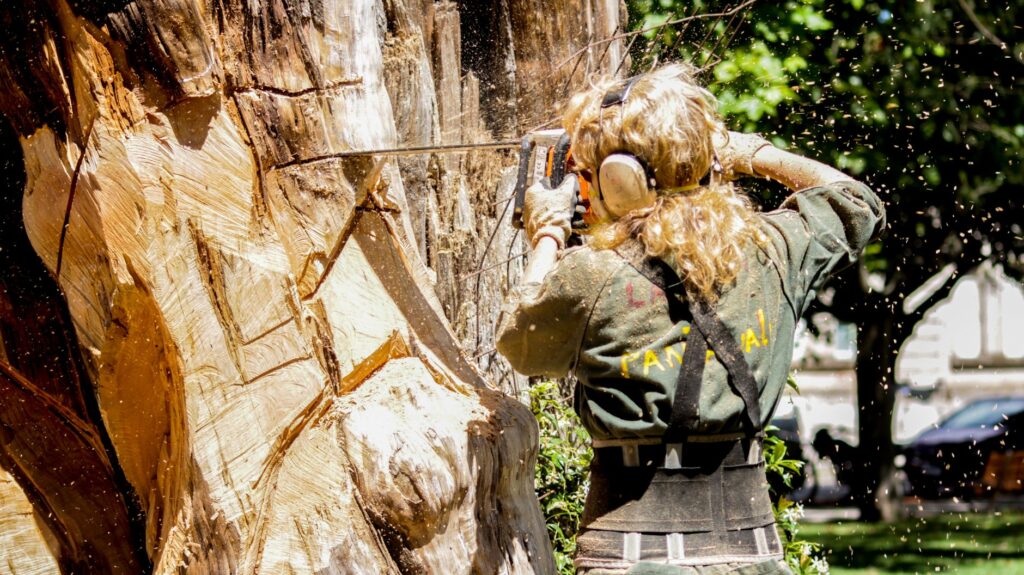
Hand pruners and a small folding saw cover most of what a homeowner should be doing directly — thin branches, deadwood within reach, light shaping. Once you’re talking about anything requiring a ladder, a chainsaw overhead, or a branch over about two inches in diameter, the calculus changes, and not just because of fall risk. Larger wounds take longer to compartmentalize and are more consequential if a pathogen gets in.
If you’re already seeing dieback, cankers, or unexplained wilting on a valuable tree, that’s also a good moment to bring in a certified arborist rather than diagnosing and pruning it yourself. A professional can identify whether what you’re looking at is a disease that spreads on tools, one that doesn’t, or something unrelated to pruning altogether — information that changes how the whole job should be handled. Programs like Rutgers Cooperative Extension maintain diagnostic resources for exactly this kind of identification question, and a certified arborist can apply that knowledge on-site.
Middletown's #1 Tree Expert Company
FREE Inspection & Estimate | Certified Arborists | Trimming, Pruning, Removal, More!
Sponsored
A Small Habit, a Real Payoff
None of this requires new equipment or a change in how you prune — just a bottle of alcohol, a rag, and a beat before moving from one tree to the next. It’s the kind of habit that costs almost nothing when you do it and can cost a mature tree when you don’t, particularly during a season like this one, when so much pruning in Middletown yards is storm cleanup across several trees at once rather than careful, single-tree shaping.
If you’re not sure whether something you’re seeing on a tree warrants extra caution — an odd canker, sap that looks wrong, branches that are dying back in a pattern rather than randomly — that’s worth a second opinion before you reach for the pruners at all. A certified arborist can walk the property, tell you what’s routine maintenance and what’s a sign of something spreading, and make sure the next round of pruning helps your trees instead of quietly working against them.
Photo credits: Featured image by Kampus Production on Pexels; Section 1 by Atlantic Ambience on Pexels; Section 2 by Wyxina Tresse on Pexels; Section 3 by Gustavo Fring on Pexels; Section 4 by April Yang on Pexels; Section 5 by Ejov Igor on Pexels; Section 6 by Gastón Mousist on Pexels; Section 7 by Aynur Latfullin on Pexels.