
Middletown's #1 Tree Expert Company
FREE Inspection & Estimate | Certified Arborists | Trimming, Pruning, Removal, More!
Sponsored
The Tree That Never Bounced Back After the Driveway Went In

I get a version of this call every year from somewhere around Lincroft or Navesink: a homeowner had a driveway repoured, or a fence line dug, or a landscaping crew ran a skid steer back and forth across the yard for a week — and the big shade tree nearby has looked tired ever since. Smaller leaves, thinning canopy, dieback creeping in from the branch tips. Nothing about the tree itself changed. The soil under it did.
Middletown’s clay-loam soils compact easily under repeated traffic, and once they do, the pore space that used to hold air and water for root respiration gets crushed flat. Roots don’t grow through concrete-hard soil any better than roots that are drowning — both situations suffocate them. This is where a technique called vertical mulching, sometimes paired with soil decompaction, gets discussed as a fix. It’s worth understanding what it actually is, because the honest answer is more nuanced than the marketing around it suggests.
What Compaction Actually Does Underground

Most of a tree’s functional root system — the fine, absorptive roots that take up water, oxygen, and nutrients — lives in the top eight to twelve inches of soil, spreading well past the edge of the canopy. That zone is exactly where construction equipment, parked cars, foot traffic, and even repeated lawn mowing do their damage. Compacted soil loses macropore space, which means less oxygen reaches root cells and water has a harder time infiltrating instead of running off.
The tree’s response is slow and easy to miss until it isn’t: reduced shoot growth, undersized leaves, early fall color, and a canopy that thins from the inside out over several seasons. By the time a homeowner notices, the compaction event that caused it may have happened three or four years earlier. The Rutgers Cooperative Extension has documented how much soil condition around a tree’s root zone — not just what’s applied at the surface — drives long-term decline, which is why an arborist evaluating a struggling tree starts by asking what’s happened to the ground, not just the canopy.
What makes this frustrating for homeowners is that the damage is invisible until the tree tells you about it. A driveway crew doesn’t leave a mark on the bark or a scar on a branch — they leave behind soil with a bulk density high enough to stop a root tip cold. Oaks and maples, the two species that dominate Middletown’s older neighborhoods, are especially sensitive because their root systems are shallow and wide rather than deep, which puts most of their absorptive roots directly in harm’s way whenever equipment moves across a yard.
What Vertical Mulching Actually Is

Vertical mulching is exactly what it sounds like: drilling a grid of narrow vertical holes throughout the root zone, typically a few inches wide and twelve to eighteen inches deep, spaced roughly three feet apart. The holes get backfilled with a porous material — coarse sand, perlite, or compost — that won’t collapse and reseal the channel the way loose soil would.
The idea is to create permanent pathways that let air and water move down into the compacted layer instead of sheeting off the surface. Some arborists pair this with an air spading tool, which uses compressed air to fracture compacted soil around larger structural roots without cutting through them the way a shovel or trencher would. It’s slower and more deliberate work than it sounds — done wrong, drilling can sever roots and make the problem worse rather than better.
Middletown's #1 Tree Expert Company
FREE Inspection & Estimate | Certified Arborists | Trimming, Pruning, Removal, More!
Sponsored
What the Research Actually Shows

Here’s where I’ll be straight with you instead of selling the technique as a miracle fix, because the research doesn’t support that. A controlled study published in Arboriculture & Urban Forestry found that vertical mulching alone produced only modest, localized improvement in root growth and water status — the benefit stayed close to the drilled channels and didn’t radiate through the whole root zone.
A more recent evaluation from the International Society of Arboriculture compared traditional decompaction methods against combined approaches and found that vertical mulching paired with a woodchip mulch layer and organic soil amendment performed meaningfully better over a multi-year period than vertical mulching by itself. In other words, the drilling is one ingredient, not the whole recipe. Any arborist who tells you a single afternoon of soil drilling will reverse years of compaction is overselling it.
When It's Worth Doing — and When It Isn't
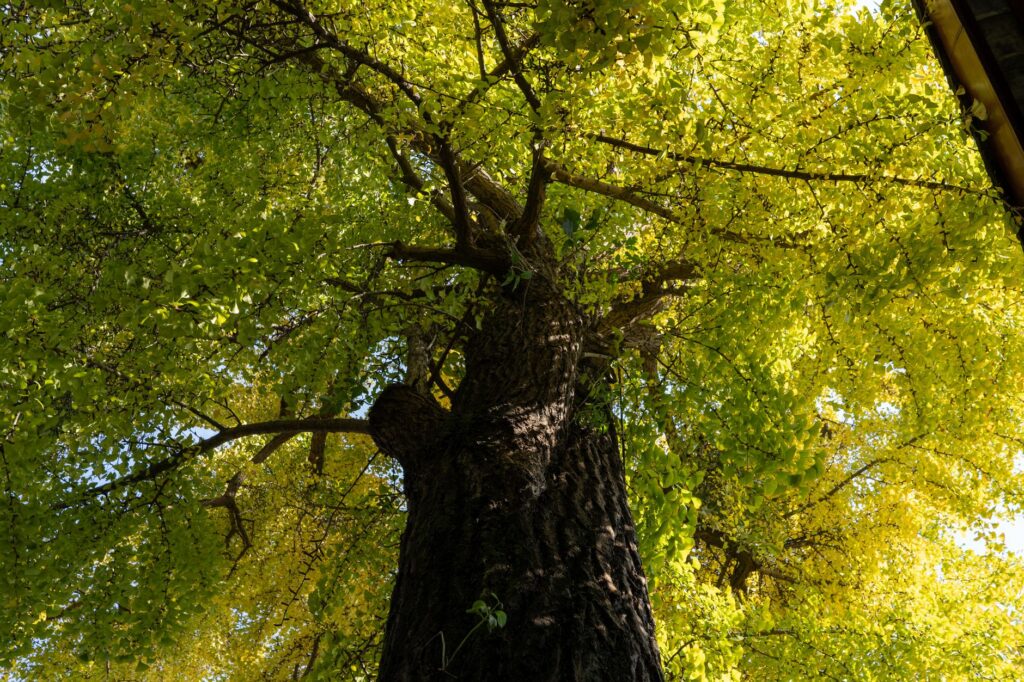
Vertical mulching earns its place when a tree shows early, mild decline tied to a clear compaction event — a driveway project, a construction easement, a few seasons of heavy equipment access — and the root zone is otherwise intact. Combined with a proper mulch ring, reduced foot traffic, and sometimes an organic soil amendment, it can measurably improve conditions over two or three growing seasons.
It’s the wrong tool for a tree that’s already lost major structural roots, one growing in genuinely poor drainage rather than compaction, or one showing advanced canopy dieback where the underlying problem may be disease or root rot rather than compaction alone. A Tree Care Industry Association overview of decompaction techniques makes the same point professionals learn early: matching the technique to the actual cause of decline matters more than the technique itself.
Timing matters too. Decompaction work is best done in fall or early spring, while the tree is putting energy into root growth rather than leaf and canopy production. Drilling into a heat-stressed tree in the middle of August, when it’s already struggling to keep enough water moving through its canopy, adds one more stress on top of another instead of relieving anything.
What a Homeowner Can Do Before It Gets to This Point

The cheapest fix for soil compaction is never letting it happen in the first place. Before any construction, landscaping, or heavy equipment work near a mature tree, mark off the root protection zone — roughly out to the edge of the canopy, sometimes further — and keep vehicles and material staging out of it entirely. A few sheets of plywood over the root zone during a project spreads the load and prevents the worst of the damage if equipment access is unavoidable.
For trees already showing early stress, a proper mulch ring does real work: three inches of wood chips spread from a few inches off the trunk out to the drip line protects soil structure, moderates temperature swings, and slowly improves organic content as it breaks down — without the volcano-mulch mistake of piling it against the bark. Aerating the surrounding lawn with a core aerator (not a spike aerator, which can compact soil further) helps too, though it only reaches the top few inches.
Middletown's #1 Tree Expert Company
FREE Inspection & Estimate | Certified Arborists | Trimming, Pruning, Removal, More!
Sponsored
When to Call a Certified Arborist
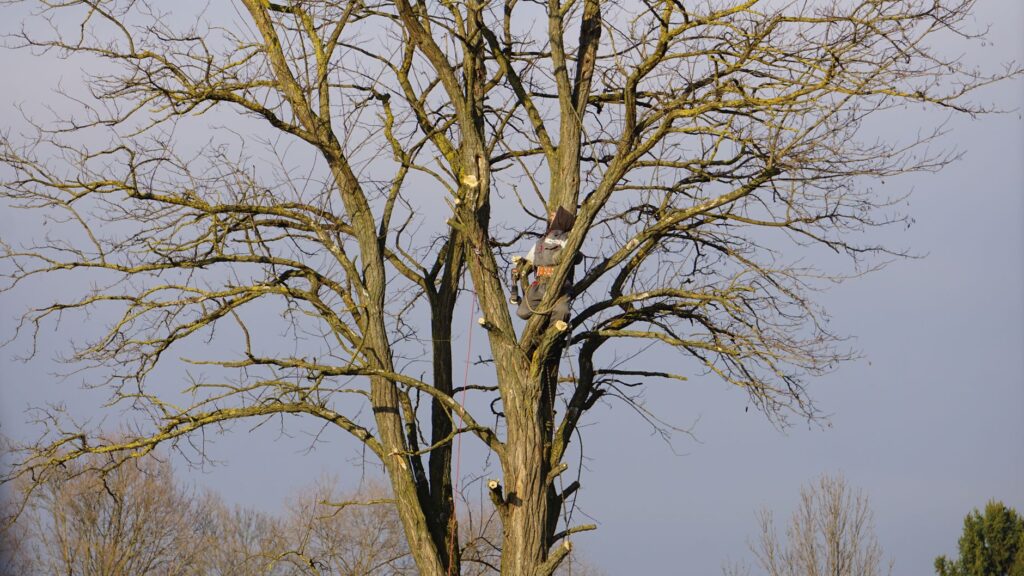
If a tree near a recent construction project or heavily trafficked area has started thinning, dropping smaller leaves, or showing dieback at the branch tips, it’s worth having a certified arborist assess the root zone before the decline goes further. They can distinguish compaction stress from disease, root rot, or girdling roots — conditions that look similar from the canopy but need very different treatment.
An arborist can also tell you honestly whether vertical mulching and decompaction are likely to help a specific tree, or whether the compaction is severe enough that the better investment is protecting what root system remains and managing the tree’s long-term decline. Either way, that’s a conversation worth having before the canopy tells you the answer on its own.
Photo credits: Featured image by Nothing Ahead on Pexels; Section 1 by Curtis Adams on Pexels; Section 2 by Walter Cunha on Pexels; Section 3 by Teona Swift on Pexels; Section 4 by cottonbro studio on Pexels; Section 5 by Peter Xie on Pexels; Section 6 by Alfo Medeiros on Pexels; Section 7 by Dmytro Glazunov on Pexels.