
Middletown's #1 Tree Expert Company
FREE Inspection & Estimate | Certified Arborists | Trimming, Pruning, Removal, More!
Sponsored
The Fork in the Trunk Nobody Notices Until It's Too Late
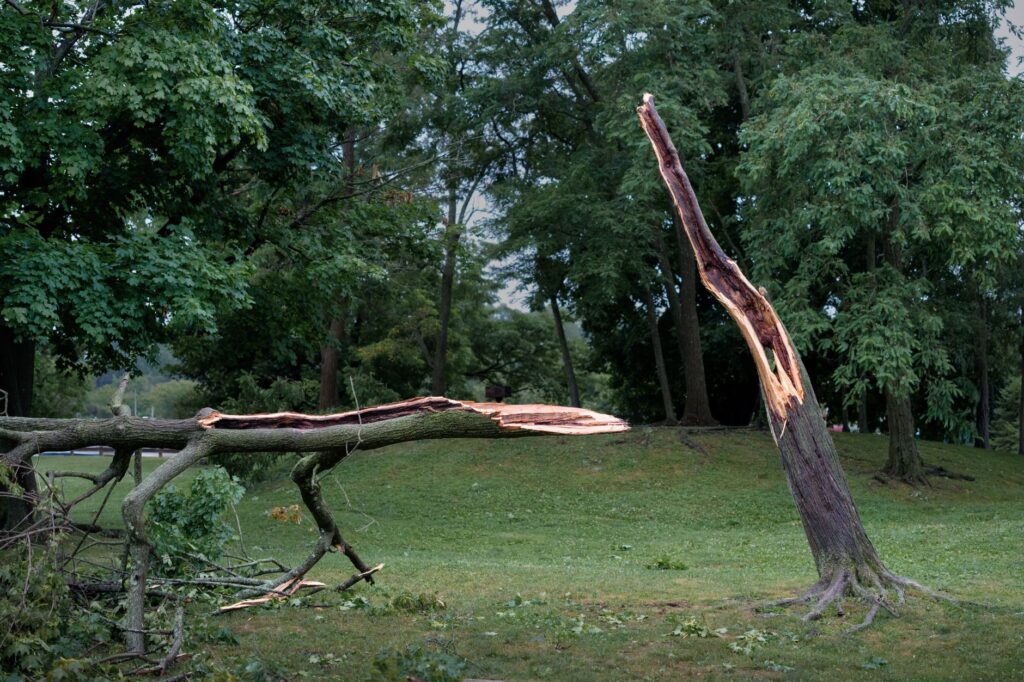
Stand under a lot of the mature red maples (Acer rubrum) and Bradford pears lining streets in Lincroft and Leonardo and you’ll see the same shape over and over: a single trunk that rises a few feet, then splits cleanly into two trunks of nearly identical size, each one heading off at its own angle to form half the crown. It looks balanced. Symmetrical, even — the kind of shape a landscaper might sketch on purpose. It is, in fact, one of the most common reasons a Middletown Township shade tree loses half its canopy in a summer storm with no warning at all.
That split-trunk shape has a name: a codominant stem, or codominant union. Two or more stems of roughly equal diameter, originating from essentially the same point, competing for the top job instead of one clearly winning out. It’s different from a normal branch, which grows out from a dominant trunk at a smaller diameter and a wider angle, anchored by a strong band of interlocking wood fiber. A codominant union usually never gets that kind of anchor, and the tree can carry that weakness for decades before anyone notices.
Plenty of the trees planted across Middletown during the postwar building boom and the ornamental-pear planting wave of the 1980s and ’90s are now reaching the size and age where a long-standing codominant union stops being a curiosity and starts being a real structural liability — right as hurricane season peaks over the Bayshore.
What's Actually Happening Inside That Union
A healthy branch attachment relies on a structure called a branch collar — a slightly swollen ring of overlapping wood fibers where the branch and trunk grow into and around each other, locking the two together as both add growth rings year after year. A codominant union usually doesn’t have one, because neither stem is subordinate to the other. Both are growing at close to the same rate, both are laying down wood at close to the same diameter, and neither is willing to let the other take over as trunk.
When the angle between the two stems is narrow — a tight V rather than a wide U — something worse than a missing branch collar happens: included bark. As both stems expand, bark gets folded and trapped inside the seam between them instead of being pushed outward and replaced by solid wood. That strip of live bark sitting inside the union means the two stems are never actually fused together by wood at all. They’re just pressed against each other, held in place by whatever thin connection remains at the edges.
From the ground, a union like that can look completely normal, especially once bark and foliage fill in around it. It’s often easiest to spot in late winter or early spring, before leaves are out, when the fork’s true shape and any bark seam running down into the union are fully visible.
Why a Codominant Union Fails Differently Than a Broken Branch
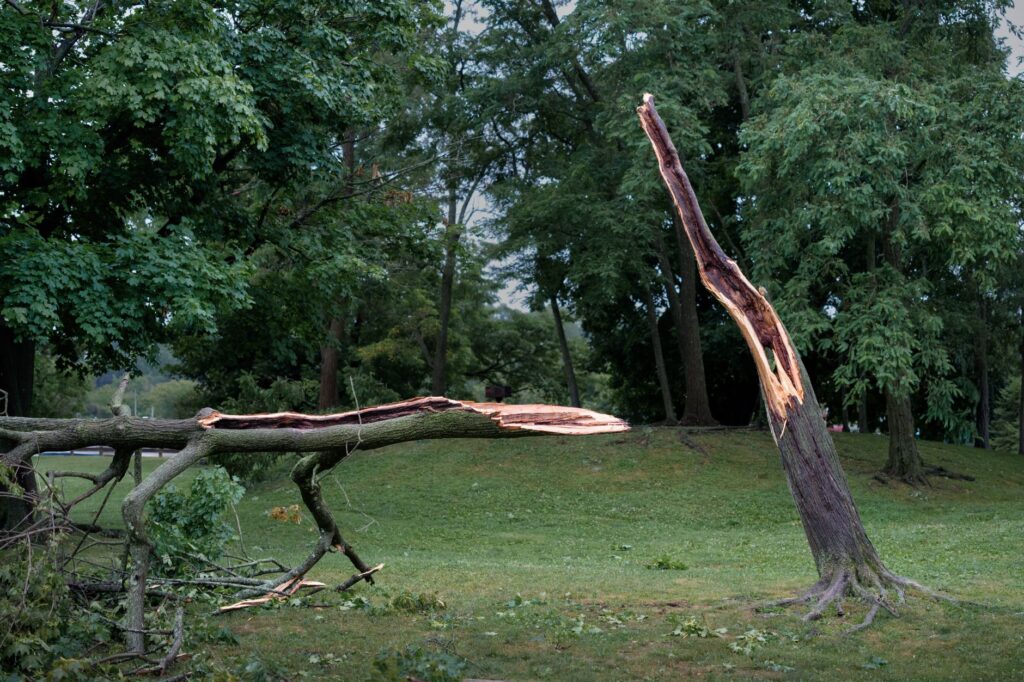
A single dead branch that snaps in a storm is a localized problem. A codominant union that fails is not. Because both stems are typically large — often each one is essentially a full-sized trunk carrying a major share of the canopy — a failure at that seam doesn’t drop a branch, it can split the tree in half, sometimes all the way down into the root collar. That’s a different order of risk for whatever happens to be underneath: a driveway, a roofline, a fence line shared with a neighbor.
Wind and ice load make the physics worse over time. Every storm that sways the crown works the included-bark seam like a hinge with no lubricant, prying the two stems apart microscopically. A nor’easter off the Raritan Bay or a summer microburst supplies exactly that kind of lateral load. Callery pear cultivars, including the Bradford pear planted heavily across New Jersey through the ’80s and ’90s, are a textbook example — their branch architecture is prone to tight, codominant unions, which is a major reason mature Bradford pears have a well-earned reputation for splitting apart in moderate storms rather than gradually declining like most species. Silver maples, Norway maples, and fast-growing London planes planted as young street trees without early structural pruning show the same pattern.
The U.S. Forest Service’s guide to how to prune trees goes into more detail on why strong branch unions matter structurally, and why included bark specifically undermines them.
Middletown's #1 Tree Expert Company
FREE Inspection & Estimate | Certified Arborists | Trimming, Pruning, Removal, More!
Sponsored
Spotting One in Your Own Yard
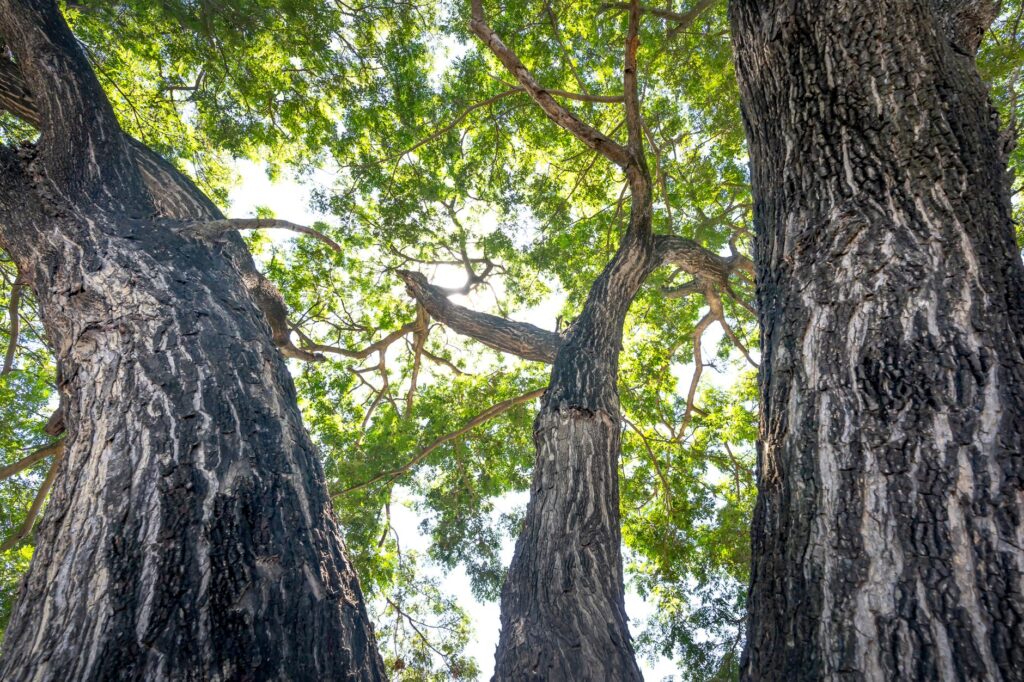
Finding a codominant union doesn’t require any special equipment, just a slow walk around the property and a look up into the structure of each tree rather than just the leaf canopy. A few things to check:
- Look for a Y-shaped fork somewhere in the lower or mid-trunk, typically within the first 15 to 20 feet of height, where two stems of similar thickness head off in different directions.
- Compare diameters. A healthy, subordinate branch is noticeably smaller than the trunk it’s attached to — as a rough guide, arborists get concerned when a side stem’s diameter climbs past roughly two-thirds of the main trunk’s diameter at that point.
- Look at the angle of the union. A tight V is far more likely to be hiding included bark than a wide, U-shaped union.
- Check for a visible bark ridge or seam running down into the crotch of the union, rather than smooth, continuous bark.
Young trees are worth checking especially closely. Nursery stock is sometimes sold with a codominant leader already established, and without early correction, that structure only gets more entrenched — and more dangerous to fix — every year the tree grows.
What Can Be Done — and When the Window Has Closed
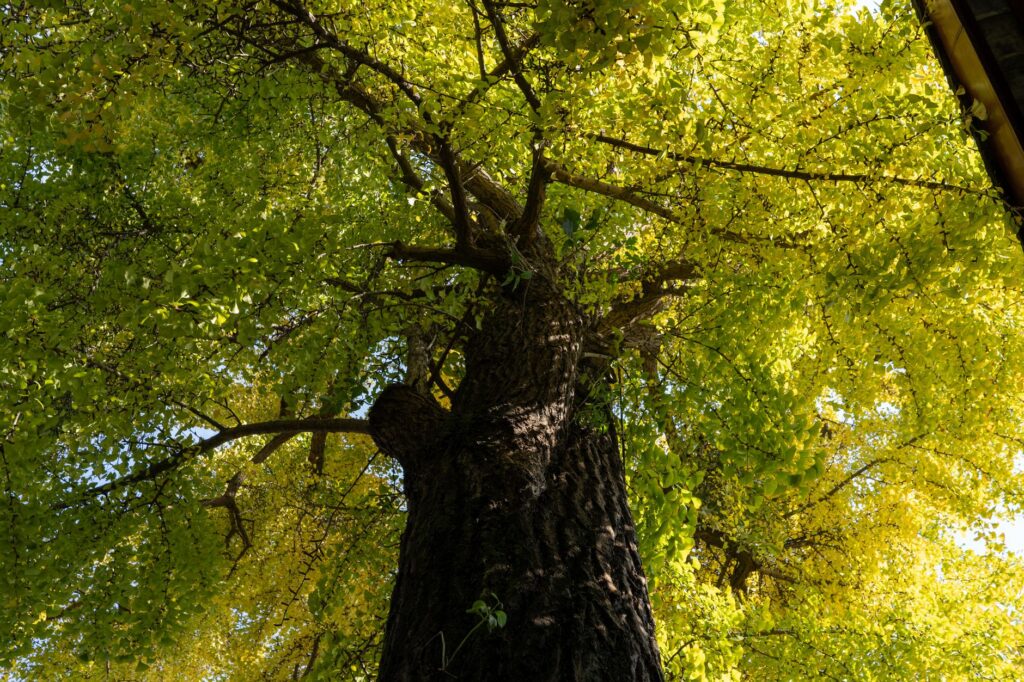
Timing changes everything here. On a young tree, correcting a codominant union is usually a straightforward pruning job: one stem gets selected as the permanent leader, and the competing stem is reduced — not removed outright, but cut back so it slows down and stops competing for dominance, eventually becoming a subordinate branch instead of a second trunk. This kind of structural pruning is most effective in a tree’s first five to ten years, while the stems are still small enough that correcting the imbalance doesn’t mean removing a huge amount of living wood at once. The International Society of Arboriculture’s guide to structural pruning lays out the reasoning behind selecting and training a single leader early.
Once a codominant union has been in place for decades and both stems have grown into full-sized trunks, options narrow considerably. Cabling systems can sometimes reduce the amount of movement at the union and lower the load each stem transfers to the other, buying time on a tree that’s otherwise healthy. In other cases, an arborist may recommend reducing the weight and wind-sail of the more exposed or more compromised stem rather than the whole tree, or, where the union shows clear signs of failure already underway — a widening bark seam, visible cracking, or included bark that’s begun to separate — removing one entire stem may be the only option that keeps the tree standing safely. None of those calls should be made from the ground by eye; a certified arborist can assess the extent of included bark, the condition of the wood at the union, and the load each stem is carrying before recommending a path forward.
Why This Matters More in Middletown Right Now
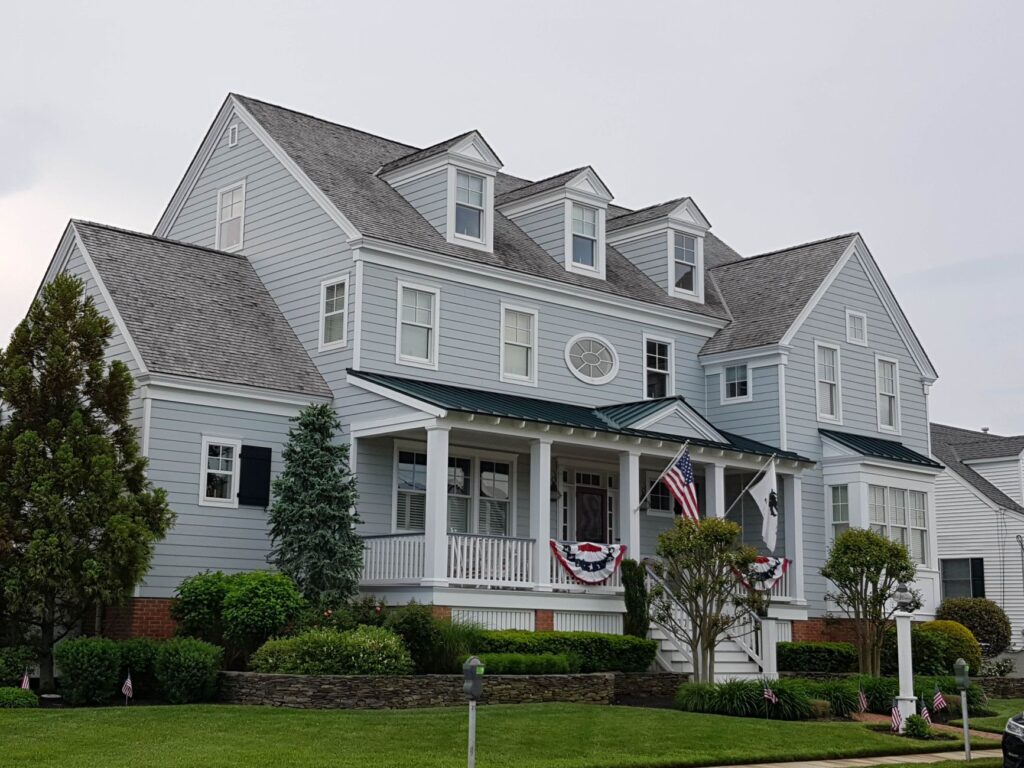
A lot of the shade canopy across Middletown Township — from the older sections of Belford and Port Monmouth to the postwar developments further inland — was planted in one concentrated era, which means a lot of trees are reaching structural maturity, and structural failure age, at roughly the same time. A codominant union that was invisible on a 15-foot sapling in 1975 is now sitting over a rooftop on a 60-foot shade tree. The same is true of the ornamental pear boom a couple of decades later, which put thousands of Callery pear cultivars with inherently weak branch structure into yards and street strips across Monmouth County.
August and September are worth paying particular attention to. Trees are carrying full leaf load, which adds significant wind resistance and weight right through the heart of Atlantic hurricane season, and a codominant union under that kind of load is exactly the failure point storms tend to find. A quick structural check now, before the next named storm tracks up the coast, costs nothing and takes only a few minutes per tree.
Middletown's #1 Tree Expert Company
FREE Inspection & Estimate | Certified Arborists | Trimming, Pruning, Removal, More!
Sponsored
Summary: A Five-Minute Check Worth Doing This Week
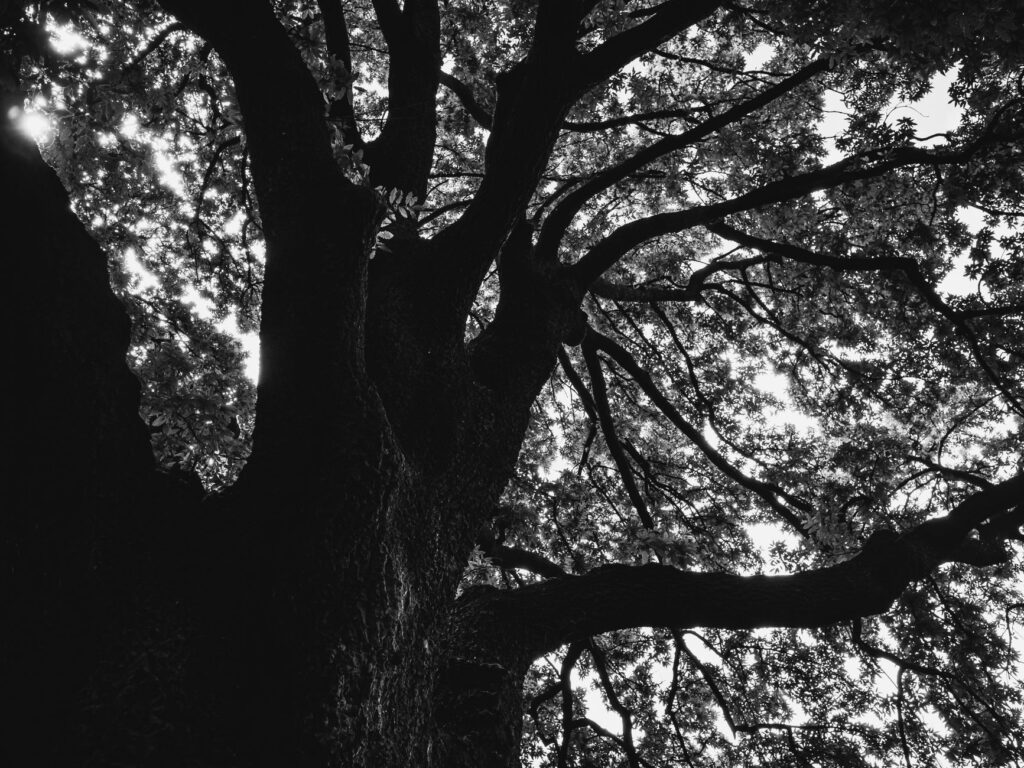
Codominant stems aren’t rare, and they aren’t automatically a crisis — plenty of trees carry one for a lifetime without incident, especially where the union is wide and free of included bark. What matters is knowing which kind of fork is sitting in a given tree, because the two look almost identical from the ground and behave very differently in a storm. A slow walk around the yard, looking up into the structure rather than just the leaves, is enough to flag a union worth a second opinion.
Any large, tight-angled fork on a tree near a house, driveway, or shared property line is worth having a certified arborist take a look at, particularly with hurricane season underway. An arborist trained in tree risk assessment can tell the difference between a union that simply needs monitoring and one that needs cabling, reduction, or more immediate action — and can time any correction so it protects the tree rather than just reacting to storm damage after the fact. The Rutgers Cooperative Extension guide to tree pruning and the ISA’s overview of recognizing hazard trees are both useful starting points for anyone who wants to understand what they’re looking at before that conversation.
Photo credits: Featured image by David Kanigan on Pexels; Section 1 by Essow K on Pexels; Section 2 by Darya Grey_Owl on Pexels; Section 3 by David Kanigan on Pexels; Section 4 by Quang Nguyen Vinh on Pexels; Section 5 by Peter Xie on Pexels; Section 6 by christianne on Pexels; Section 7 by Sonny Sixteen on Pexels.