
Middletown's #1 Tree Expert Company
FREE Inspection & Estimate | Certified Arborists | Trimming, Pruning, Removal, More!
Sponsored
The Sound a Healthy Tree Makes
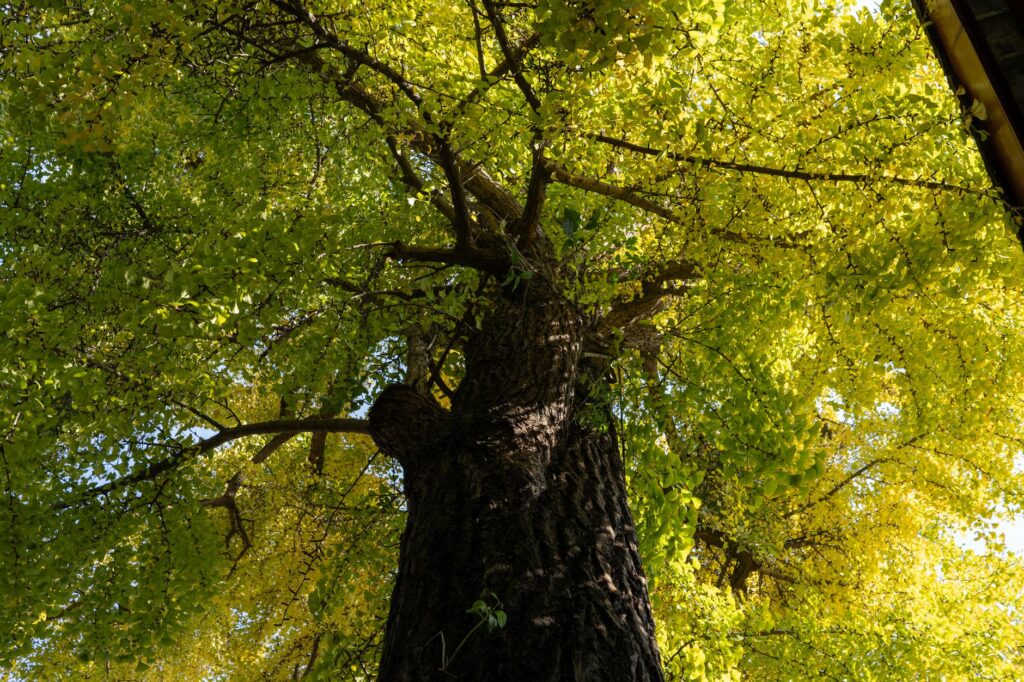
Walk through Hartshorne Woods on a quiet morning and knock your knuckles against a few different trunks. Most will give back a solid, almost dull thud — the sound of dense, continuous wood absorbing the impact and going nowhere. Every so often, though, a trunk answers with something hollower, a faint ring that carries a beat longer than it should. That difference in sound is one of the oldest diagnostic tools in arboriculture, and it still tells a trained ear more than most homeowners realize.
Sounding, as the technique is called, is exactly what it sounds like: tapping a trunk or scaffold limb with a mallet or the handle of a hand axe and listening for changes in resonance. A tree with a solid cross-section resonates evenly. A tree with a cavity, advanced decay, or a large void behaves more like a drum — the hollow space changes the pitch and duration of the sound. It is not a perfect test, and it depends heavily on the skill of the person swinging the mallet, but it remains the starting point for almost every internal decay investigation, from a backyard shade tree in Lincroft to an old-growth specimen along the Navesink.
Why Trees Hollow Out in the First Place
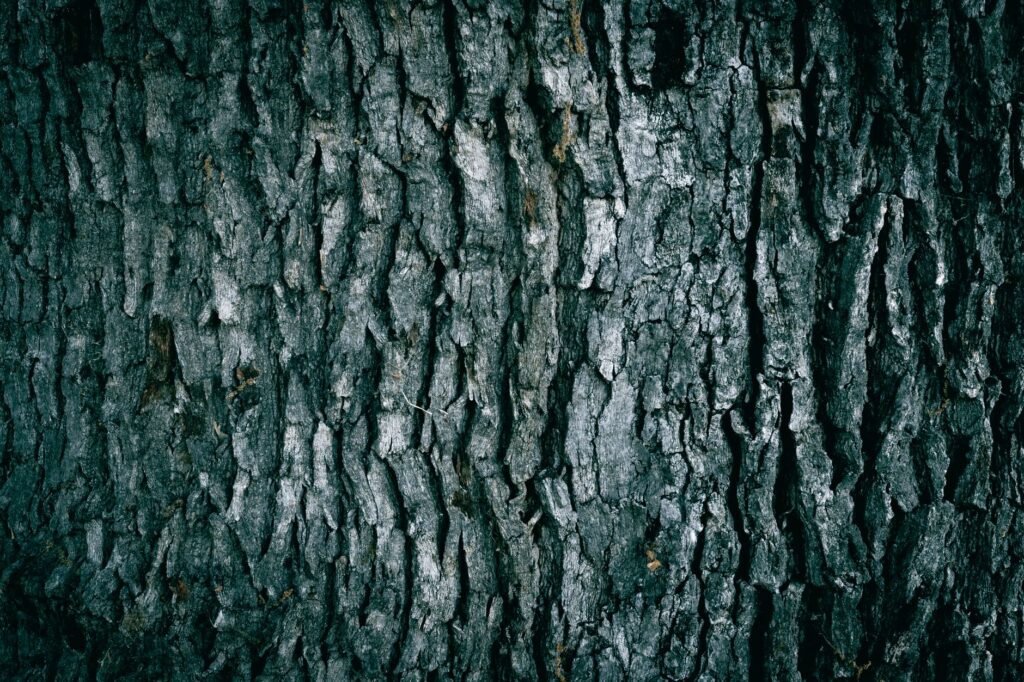
Trees don’t heal wounds the way animals do. When bark is breached — by a pruning cut, storm damage, a lawnmower strike, or a broken branch stub — the tree can’t regenerate the tissue underneath. Instead, it walls the injury off through a process called compartmentalization, often abbreviated CODIT (Compartmentalization Of Decay In Trees). The tree lays down chemical and physical barriers around the wound to keep decay fungi from spreading into healthy wood, then continues adding new growth rings around the outside of the old injury.
The result is a tree that can carry a column of decayed or hollow wood at its core for decades while the living shell around it — the outer sapwood, cambium, and bark — stays perfectly healthy. This is why a hollow tree isn’t automatically a dead or dangerous one. It’s also why sound and structure matter more than the presence of a cavity by itself. An arborist’s job in a decay investigation isn’t just to find the hollow spot; it’s to figure out how much sound wood is left holding the tree up.
Beyond the Mallet: Micro-Drilling for Real Numbers
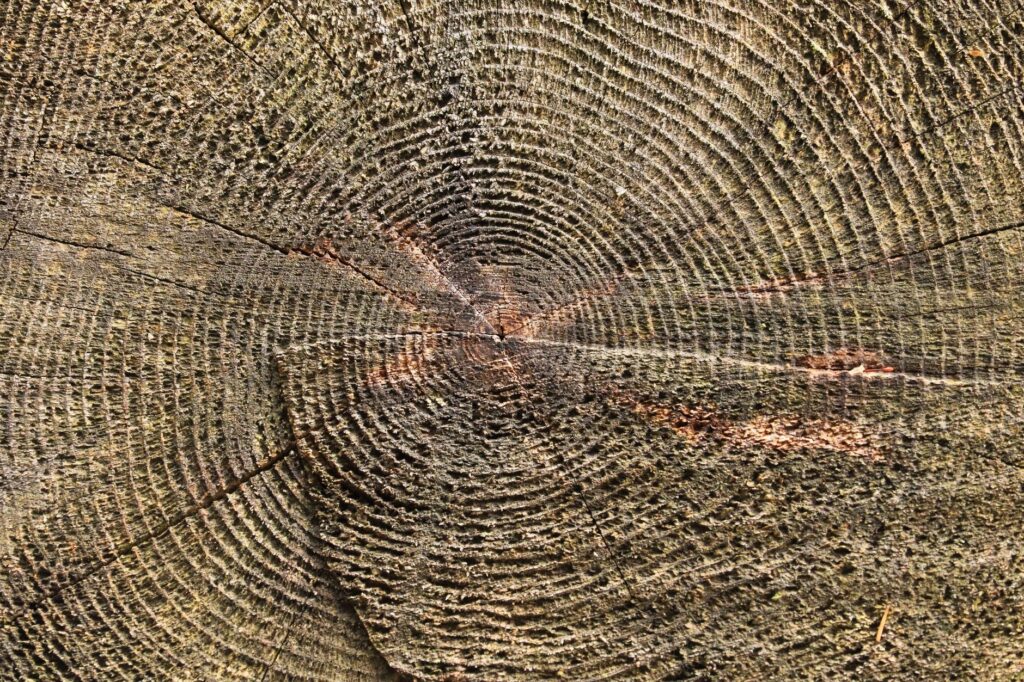
Sounding tells an arborist where to look closer. It doesn’t tell them how much wood is actually compromised, which is the number that matters for deciding whether a tree is a manageable risk or a genuine hazard. That’s where a resistance drill, often called a resistograph, comes in. The tool drives a very thin, long needle bit into the wood at a constant speed and measures how much resistance the wood puts up as it goes. Dense, healthy wood produces a jagged, high-resistance trace; decayed or hollow wood produces a flat line with little to no resistance.
Because the drill bit is only about as wide as a pencil lead, the test leaves a barely visible hole and does minimal additional damage to the tree — a meaningful advantage over older methods like coring with a larger increment borer. The USDA Forest Service’s guide to urban tree risk management outlines how this kind of internal assessment feeds into a broader concept called the one-third rule: when less than a third of a stem’s radius remains sound wood, the failure potential is generally considered high. That single number, measured at multiple points around and up the trunk, is often what turns a vague concern about an old tree into an actual decision.
Middletown's #1 Tree Expert Company
FREE Inspection & Estimate | Certified Arborists | Trimming, Pruning, Removal, More!
Sponsored
When Arborists Reach for a Tomograph

For high-value trees, or ones where the stakes of a wrong call are especially high — a specimen oak overhanging a house near the Bayshore, say, or a heritage tree on a public green — some assessments go a step further with sonic or electrical tomography. These tools send pulses (sound waves or a mild electrical current, depending on the technology) between sensors pinned around the circumference of the trunk and measure how quickly the signal travels through the wood between each pair. Sound and electricity both move faster through dense, intact wood and slower through decayed or hollow sections, and the device uses those travel times to build a cross-sectional map of the trunk’s interior, not unlike a CT scan.
It’s a more expensive and time-consuming step than sounding or resistance drilling, so it’s reserved for cases where the added precision changes the outcome — deciding between removal, structural pruning, or simply monitoring a tree for another season. Most residential assessments never need to go this far; the mallet and the resistograph answer the question in the vast majority of Middletown yards.
What a Homeowner Can Actually See Without Tools
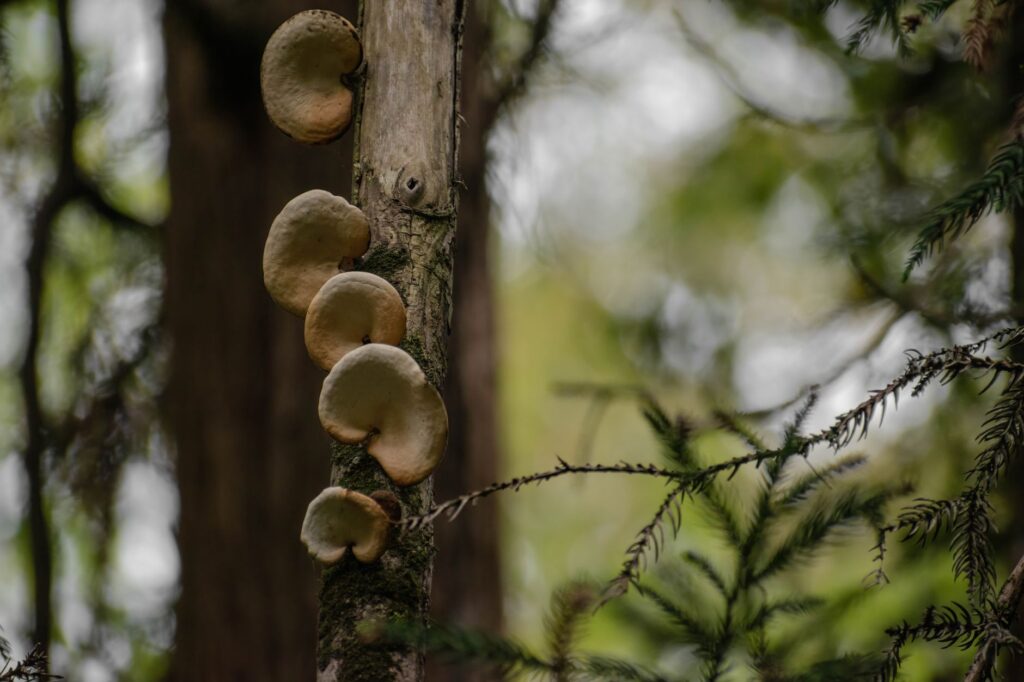
You don’t need a drill or a tomograph to notice the early warning signs that a trunk deserves a closer look. A few things are visible from the ground on an ordinary walk around the yard:
- Mushrooms or shelf-like conks growing directly out of the bark or at the root flare — these are fruiting bodies of wood-decay fungi and mean active decay is already present somewhere inside
- Old pruning wounds, storm scars, or cavities where bark never closed back over
- Vertical cracks in the bark that run with the grain rather than around it
- Sudden growth of small, thin shoots (epicormic sprouts) low on the trunk, which can signal a tree under stress
- Soft, punky wood you can dent with a thumbnail at the base of the trunk
Certain species common in Middletown yards are simply more prone to internal decay than others because of how their wood responds to wounding — silver maple, willow, and Bradford pear tend to compartmentalize decay poorly, while oaks, hickories, and black locust are generally more resistant. None of this means a tree with a conk or a cavity needs to come down tomorrow. It means it’s a candidate for a proper look, not a guess from the driveway.
A Hollow Tree Isn't Always a Doomed One
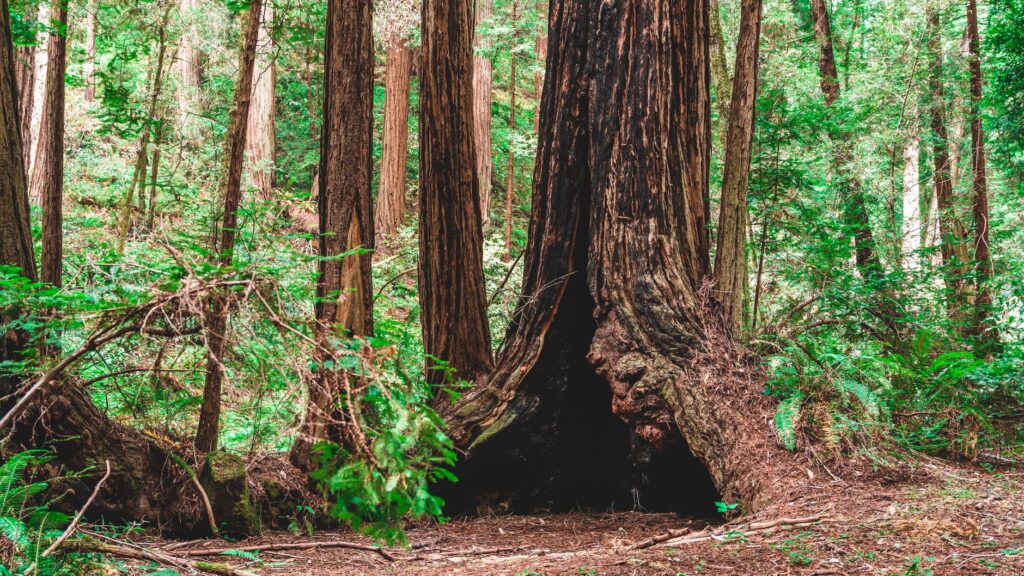
It’s worth resisting the instinct to treat every hollow as a death sentence. Engineering-wise, a tube is remarkably strong for the amount of material it uses — a hollow trunk with a thick, sound outer shell can still carry substantial structural load, which is exactly why so many centuries-old hollow trees are still standing in forests across the region. Some of the oldest, most character-filled trees along the trail systems at Hartshorne Woods Park almost certainly carry some degree of internal decay and have for years.
Hollow trees also do ecological work that solid ones can’t. Cavities become den sites for screech owls, flying squirrels, and raccoons; standing decayed wood feeds a whole food web of insects, woodpeckers, and fungi. Where a hollow tree isn’t posing a realistic risk to a structure, a driveway, or foot traffic, the more common professional recommendation is monitoring and periodic reassessment rather than removal — preserving both the tree and what depends on it.
Middletown's #1 Tree Expert Company
FREE Inspection & Estimate | Certified Arborists | Trimming, Pruning, Removal, More!
Sponsored
Getting a Real Answer, Not a Guess

If a tap test, a conk at the base, or a wound that never closed has you wondering what’s really going on inside a tree, the honest answer is that no homeowner-level inspection can substitute for a trained assessment. The value of sounding, resistance drilling, and tomography isn’t just the technology — it’s the training to interpret what the readings mean for that specific tree, its species, its lean, its target (what it would hit if it failed), and its site conditions.
A certified arborist can run through that full picture and translate it into a plain answer: monitor, prune to reduce load, cable and brace, or remove. Rutgers Cooperative Extension’s guide to hiring a tree care professional is a useful starting point for vetting credentials, and the International Society of Arboriculture’s page on managing tree hazards and risk lays out what a thorough risk assessment should actually cover. A tree that’s been standing for eighty years deserves a real diagnosis before anyone decides its fate.
Photo credits: Featured image by Peter Xie on Pexels; Section 1 by Wyxina Tresse on Pexels; Section 2 by MAURO FOSSATI on Pexels; Section 3 by Helena Jankovičová Kováčová on Pexels; Section 4 by MART PRODUCTION on Pexels; Section 5 by Karolina on Pexels; Section 6 by Chait Goli on Pexels; Section 7 by RDNE Stock project on Pexels.