Middletown's #1 Tree Expert Company
FREE Inspection & Estimate | Certified Arborists | Trimming, Pruning, Removal, More!
Sponsored
When the Wind Stops, the Paperwork Questions Start
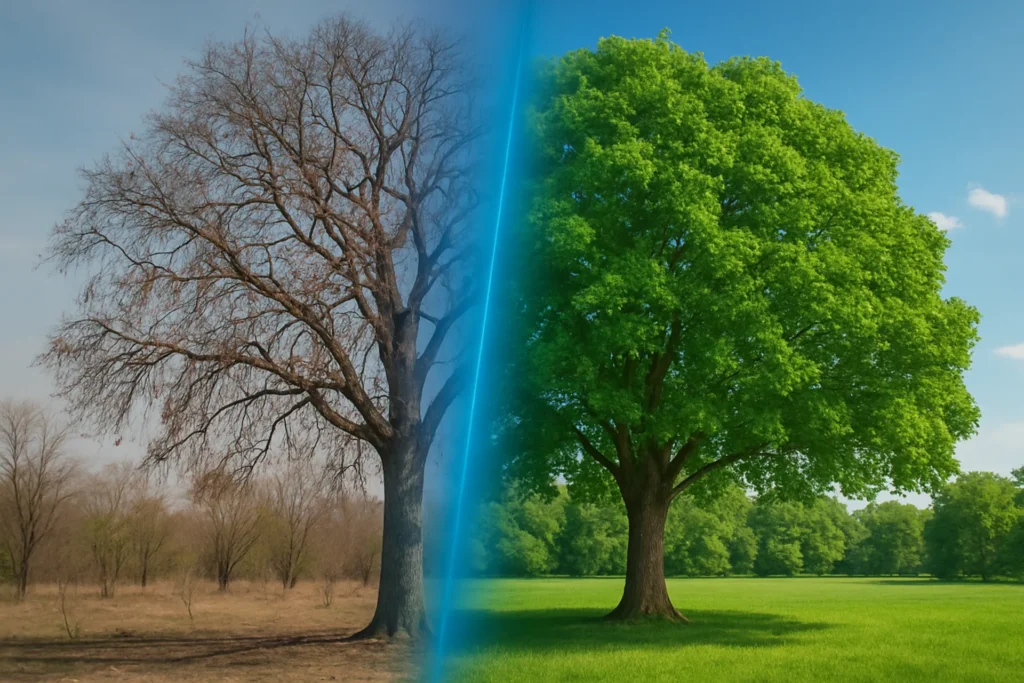
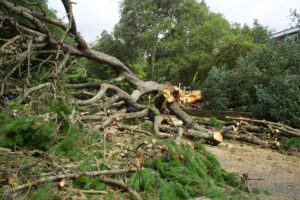
The morning after a August squall rolls up the Bayshore, the damage is usually obvious before the coffee’s ready — a split limb across the driveway in Port Monmouth, a leaning silver maple (Acer saccharinum) in Lincroft, a shagbark hickory (Carya ovata) that finally gave up a dead top it had been holding onto since last winter. What’s less obvious to most homeowners is what happens next on paper. Middletown Township regulates tree removal even when the storm did most of the work, and the rules that apply to a calm Tuesday in April don’t disappear just because a tree is already on the ground.
That surprises people. A tree that’s clearly hazardous still touches the same ordinance that governs routine removals, just with a faster, narrower path through it. Knowing which path applies — and having the paperwork to prove it — is the difference between a same-week cleanup and a call from code enforcement asking why a regulated tree came down without an application on file.
Storm season along the Raritan Bay isn’t a single event on the calendar — it stretches from the tail end of hurricane season through the nor’easters that roll in off the Atlantic in late fall. Any of those systems can turn a tree with a hidden defect into an urgent decision, which is exactly when it’s easiest to skip a step that matters.
What Actually Counts as a "Regulated Tree" in Middletown
Middletown’s tree removal and replacement ordinance doesn’t apply to every tree on a residential lot. It applies to what the Township defines as regulated trees, and the thresholds are specific:
- Street trees roughly 3 inches or more in diameter at breast height (DBH)
- Shade trees 24 inches DBH or larger
- Any evergreen tree 10 feet or taller
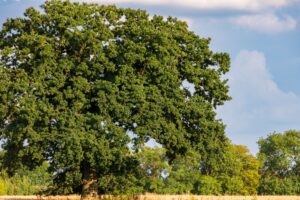
Cross one of those thresholds and, in most cases, removal requires an application through the Township’s permitting portal before work begins — and often triggers a replacement requirement. A young dogwood (Cornus florida) or a volunteer black cherry (Prunus serotina) under those sizes is generally exempt and can come down without a permit. The mature white oak (Quercus alba) that dropped the limb in the first place almost certainly isn’t. Full thresholds, exemptions, and the application process are laid out on the Township’s own Tree Removal Regulations page.
This is the detail that trips people up after a storm: the size of the tree, not the fact that it’s damaged, is what determines whether the ordinance is in play at all. A homeowner who measures the trunk before making any calls has already skipped past the most common mistake in the process.
The Hazard Tree Exemption — and Why Documentation Comes First
Middletown’s ordinance carves out a specific path for hazard trees. A regulated tree that poses a genuine threat to public health, safety, or welfare — or that’s actively damaging a foundation, sidewalk, or other structure — can typically be removed without the standard fee or replacement obligation. But that exemption isn’t self-declared. It requires written justification, and the Township looks to a licensed landscape architect, a certified arborist, or a licensed tree expert (LTE) to make that call.
In practice, that means the order of operations matters: get the written hazard assessment before the chainsaw shows up, not after. An ISA-certified arborist’s report — dated, specific about the defect, and clear about the risk — is what turns a storm-damaged tree into a documented hazard exemption instead of an unpermitted removal. The International Society of Arboriculture’s Find an Arborist tool is a reliable way to confirm a candidate actually holds current ISA certification before you hire them, and Rutgers Cooperative Extension’s guide to hiring a tree care professional covers what a legitimate written estimate and hazard assessment should include.
Middletown's #1 Tree Expert Company
FREE Inspection & Estimate | Certified Arborists | Trimming, Pruning, Removal, More!
Sponsored
When a Tree Is an Immediate Threat — the Emergency Path
There’s a narrower category above routine hazard removal: a tree that’s actively blocking a roadway, resting on power lines, or leaning onto a structure right now. In those situations involving the public right-of-way, Middletown doesn’t need to provide advance written notice — Township crews can act on the spot. What surprises property owners is that even in a true emergency, the cost of that removal is still the owner’s responsibility.
On private property, the same urgency logic applies in spirit even though the process differs: a tree actively failing over a bedroom roof doesn’t wait for a permit number. But not every storm-damaged tree needs to be an emergency. Rutgers Cooperative Extension’s guidance on assessing storm damage is a useful gut check here — a tree that’s lost less than roughly a third of its live crown is often salvageable with corrective pruning or cabling rather than removal, which matters both for the tree and for whether removal was actually the right call in the first place. That’s a judgment worth getting from a certified arborist rather than making from the driveway.
Replacement Requirements — and the Small-Lot Exemption
Removing a regulated tree usually triggers a replacement requirement under the ordinance — new plantings sized and sited to offset the canopy lost. But Middletown built in a practical exemption for smaller residential parcels: properties of roughly 10,000 square feet or less with an existing residential use are exempt from the replacement planting requirement itself, though the property owner still has to submit the removal application so the Township can confirm there’s no environmentally sensitive area, wetlands buffer, or restrictive covenant in play.
That distinction matters a lot depending on where in the Township you live. A tight lot in Port Monmouth or Belford is a different case than an acre-plus parcel off Navesink River Road in a wooded section near Hartshorne Woods Park. Same ordinance, different obligations, and the only way to know which one applies to a specific property is to actually check the lot size against the filing — not assume based on a neighbor’s experience.
Building Your Paper Trail Before You Call Anyone With a Chainsaw
The homeowners who move fastest after a storm — and avoid a code enforcement headache later — are the ones who document before they act, not after. A short list that covers most of it:
- Photograph the damage from several angles, and note the date and the storm that caused it
- Get a written hazard assessment from an ISA-certified arborist, specific about the defect and the risk it poses
- File the removal application through the Township’s portal, even for hazard-exempt trees, since the exemption is a fee and replacement waiver, not a paperwork waiver
- Keep a copy of the contractor’s certificate of insurance before any crew touches the property
That documentation does double duty. It’s what the Township wants to see if the removal is ever questioned, and it’s often exactly what a homeowners insurance carrier asks for when a storm claim involves a tree. Building the file once, at the start, is far less painful than reconstructing it after the fact.
Middletown's #1 Tree Expert Company
FREE Inspection & Estimate | Certified Arborists | Trimming, Pruning, Removal, More!
Sponsored
When to Bring in a Certified Arborist
Not every storm-damaged tree needs a permit fight or a hard removal decision. A lot of Middletown’s summer storm damage is a single torn limb on an otherwise sound tree, cleaned up with routine pruning and no ordinance question at all. But once a tree crosses into regulated size, has a defect that’s arguable rather than obvious, or sits anywhere near a property line, a roof, or the right-of-way, the smartest first call isn’t to a removal crew — it’s to a certified arborist who can assess the tree, document the finding in writing, and tell you honestly whether removal, restoration pruning, or simply monitoring is the right next step.
That written assessment is the piece that makes the rest of the process — permits, exemptions, insurance — go smoothly instead of becoming its own storm to weather. The trees that survive a Middletown summer intact are usually the ones whose owners knew, ahead of time, exactly what the rules required.
Photo credits: Featured image by David Kanigan on Pexels; Section 1 by Mike Bird on Pexels; Section 2 by cottonbro studio on Pexels; Section 3 by Helena Jankovičová Kováčová on Pexels; Section 4 by K on Pexels; Section 5 by Curtis Adams on Pexels; Section 6 by April Yang on Pexels; Section 7 by Bob Jenkin on Pexels.