Middletown's #1 Tree Expert Company
FREE Inspection & Estimate | Certified Arborists | Trimming, Pruning, Removal, More!
Sponsored
The Trees You Don't Notice Until You're Looking for Them
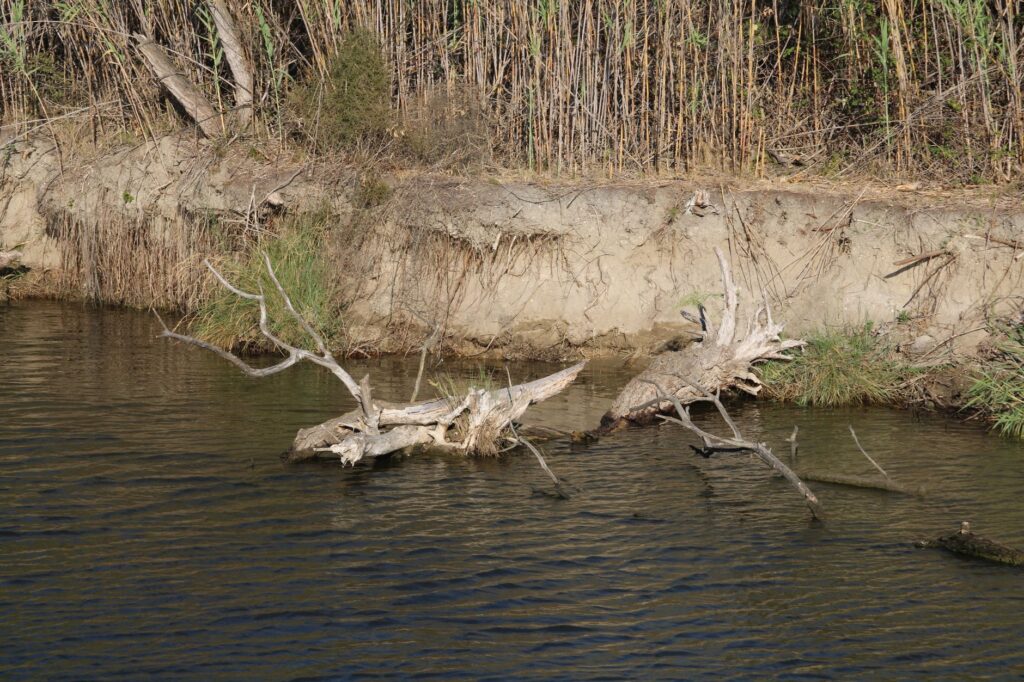
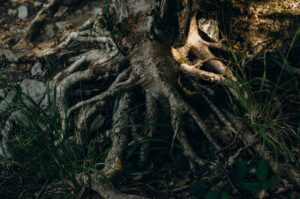
Walk the boardwalk at Poricy Park in early morning and you’ll pass a stretch of river birch (Betula nigra) and red maple (Acer rubrum) leaning out over Poricy Brook, roots half-exposed where the bank has worn away over decades. Most people walk right past them. I stop every time, because that tangle of roots is doing more work per square foot than almost anything else on the property.
Middletown Township sits at the bottom of a watershed that drains toward two very different bodies of water — the Navesink and Shrewsbury Rivers to the south and east, and Raritan Bay along the Bayshore to the north. Every creek, brook, and drainage swale in between eventually feeds one or the other. The trees growing along those edges, what foresters call a riparian buffer, aren’t just scenery. They’re filtering, cooling, and holding together the ground that keeps our local water clean.
This is one of those pieces of the landscape that’s easy to take for granted until a storm strips it away or a property owner clears it for a better water view. I want to walk through what these streamside trees are actually doing, and why it’s worth thinking twice before touching the ones on your own property.
What a Riparian Buffer Actually Is
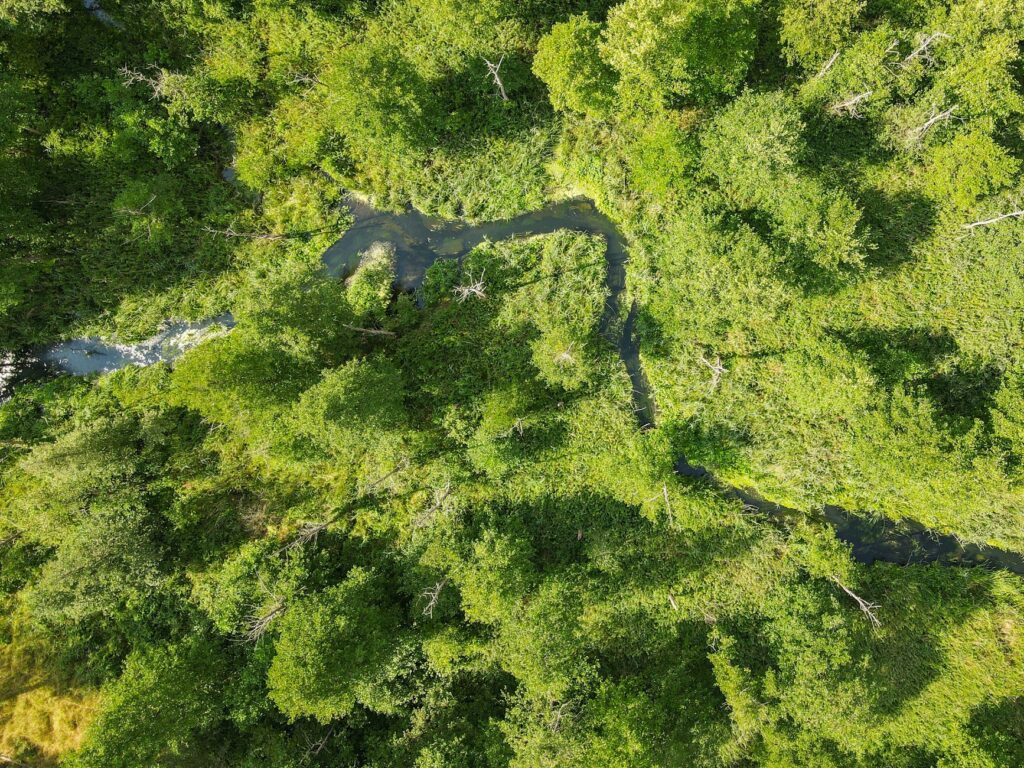
A riparian buffer is simply the strip of vegetation — trees, shrubs, and groundcover — growing along the edge of a stream, river, or tidal creek. In an undisturbed Bayshore watershed, that buffer would run continuous and deep, sometimes fifty or a hundred feet back from the water. In a built-out township like ours, it’s often reduced to a thin ribbon of trees between a backyard and a creek bank, or a narrow greenway preserved by the township or the Monmouth County Park System.
Even a narrow buffer does real work. The canopy intercepts rainfall before it hits the ground, slowing the rate at which water reaches the stream. The root network below holds soil particles in place against the pull of moving water. And the leaf litter that accumulates on the buffer floor acts like a sponge and filter combined, soaking up runoff and trapping sediment before it can reach the channel. The USDA Forest Service’s riparian buffer research documents this in detail — buffers as narrow as thirty feet still capture a meaningful share of sediment and nutrient runoff before it hits the water.
For Middletown specifically, that matters twice over. Our clay-loam soils shed water quickly once saturated, and our terrain slopes gently but steadily toward tidal water. Without buffer vegetation to slow and filter that runoff, everything picked up along the way — fertilizer, oil residue, pet waste, loose soil — travels largely unimpeded into Poricy Brook, the Navesink, or straight into Raritan Bay.
Roots Are the Real Erosion Control
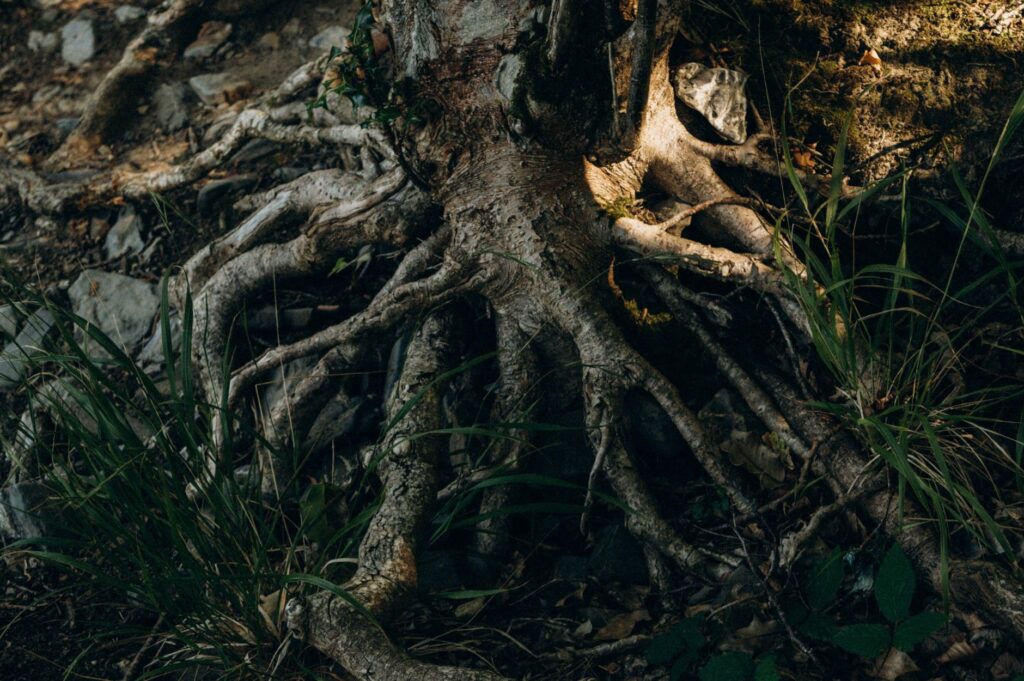
Streambanks erode naturally — that’s part of how a channel finds its shape over time. But bare or thinly vegetated banks erode far faster than tree-lined ones, and in a township that gets hit regularly by nor’easters and summer downpours, the difference shows up fast.
A mature tree’s root system does two things a lawn or a bare bank can’t. First, structural roots — the thick, woody roots radiating from the trunk — physically knit the soil together, resisting the shear force of moving water during high flow. Second, the finer root hairs throughout the upper soil layer increase what soil scientists call infiltration capacity, letting more rainwater soak in rather than sheet off the surface. Where I’ve seen streambank sections lose their tree cover, whether to storm damage or a property owner clearing for a view, the bank retreat afterward is often visible within a single season.
This is also why I get uneasy when a homeowner near water asks about removing a leaning or storm-stressed tree along the bank purely for tidiness. Sometimes removal really is the right call — a tree with significant root plate failure or major structural defects near a structure needs to come down regardless of location. But a streamside tree that’s simply grown at an angle chasing light, which is completely normal behavior along a creek edge, is often doing more good staying put than a homeowner realizes.
Middletown's #1 Tree Expert Company
FREE Inspection & Estimate | Certified Arborists | Trimming, Pruning, Removal, More!
Sponsored
Shade, Temperature, and What Lives Downstream
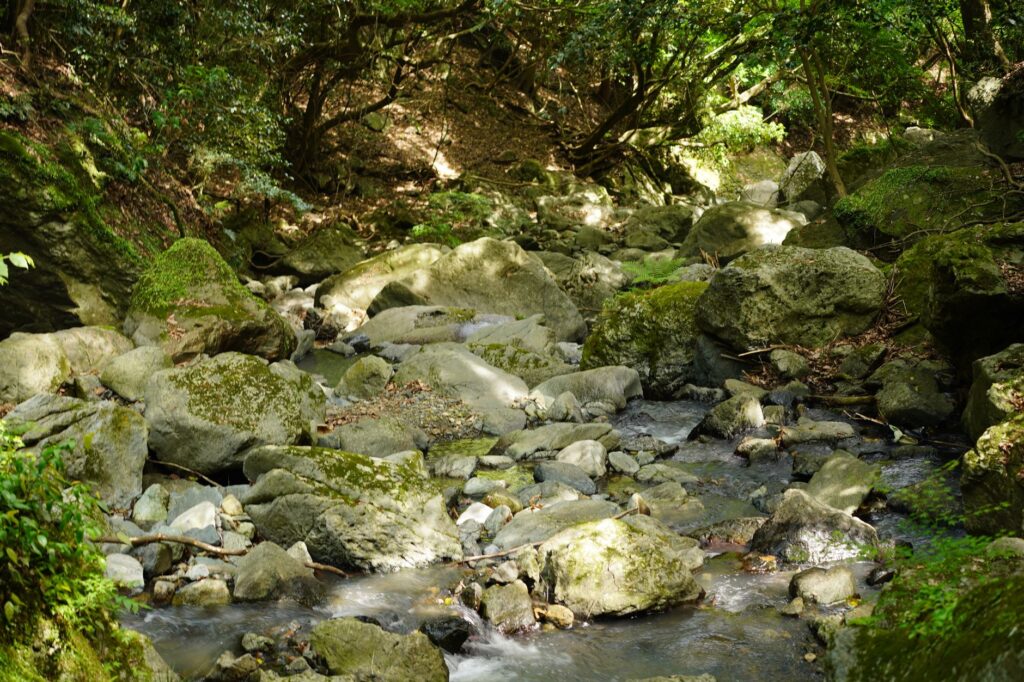
Here’s the piece most homeowners don’t think about: water temperature. Streams and tidal creeks that lose their canopy cover warm up noticeably in summer, and warmer water holds less dissolved oxygen. That matters a great deal along the Bayshore, where our creeks and marshes feed nursery habitat for the same fish, blue claw crabs, and shellfish beds that make Raritan Bay and the Navesink worth protecting in the first place.
Rutgers Cooperative Extension’s water resources research has tracked this relationship closely in New Jersey watersheds — shaded headwater streams consistently run cooler and support healthier aquatic life than exposed ones, even a few degrees of difference matters to sensitive species. A mature canopy over a Middletown creek isn’t just aesthetic; it’s functioning as a thermal regulator for everything living downstream of it.
The same canopy also intercepts airborne pollutants and traps particulate matter before it settles into the water, and the woody debris that naturally falls from streamside trees creates the small pools and structure that support insect life at the base of the local food web. It’s a lot of ecological function packed into a strip of trees most of us drive past without a second look.
The Right Trees for Middletown's Wet Edges
If you’ve got a low, seasonally wet corner of your property near a drainage swale or creek, it’s one of the better opportunities in the yard to plant something that actually wants those conditions instead of fighting them. A few natives that perform well along Middletown’s stream edges and clay-loam soils:
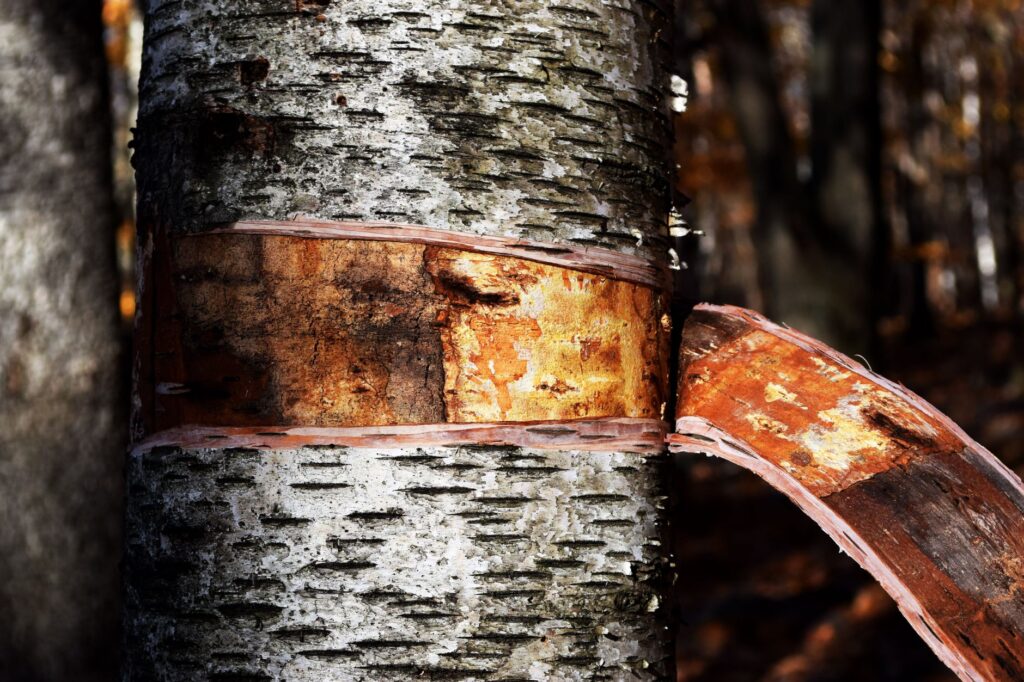
- River birch (Betula nigra) — fast-growing, attractive peeling bark, genuinely tolerant of wet feet and periodic flooding.
- Red maple (Acer rubrum) — adaptable to both wet and average soils, reliable fall color, one of the most common natives along our waterways for good reason.
- Black gum (Nyssa sylvatica) — slower-growing but exceptional wildlife value and some of the best fall color of any native tree in the region.
- American sycamore (Platanus occidentalis) — a true streamside specialist, often the tree you’ll see anchoring the outer bend of a creek where erosive force is highest.
The International Society of Arboriculture has good general guidance on matching species to site conditions, and it’s worth applying here specifically — a tree that struggles through wet springs in a poorly drained spot will never establish the root mass that makes a buffer effective in the first place.
What Property Owners Near Water Should Know
If your property borders a stream, creek, or tidal wetland, a few practical points are worth keeping in mind. New Jersey regulates activity within stream corridors and freshwater wetlands more tightly than a typical backyard, and clearing vegetation along a watercourse can require review depending on the water’s classification and your buffer’s width. Before undertaking any significant tree removal or land clearing near water, it’s worth a call to Middletown Township’s building and zoning offices, or a look at the township’s official ordinances, to understand what applies to your specific parcel.
On the maintenance side, a few small habits go a long way: leave a mowed lawn edge back from the water rather than running turf right to the bank, avoid applying fertilizer or herbicide within that buffer strip, and resist the urge to remove fallen leaves and small woody debris from the immediate bank area — that material is doing filtration work, not just sitting there untidily.
And if you’ve got a large or structurally compromised tree along your section of bank, that’s a case where a certified arborist assessment earns its keep. Streamside trees carry unique stresses — saturated soil, undercut root plates, higher wind exposure along open water — that make a professional risk evaluation more valuable than a guess from the yard.
Middletown's #1 Tree Expert Company
FREE Inspection & Estimate | Certified Arborists | Trimming, Pruning, Removal, More!
Sponsored
A Quiet System Worth Protecting
It’s easy to think about trees on a property-by-property basis — this oak, that maple, the one that needs pruning. But the trees along Middletown’s creeks and rivers only do their real work as a connected system, one backyard’s buffer feeding into the next, all of it eventually reaching the Navesink, the Shrewsbury, or the Bay itself. Losing even a short stretch of that buffer has consequences that show up well downstream of the property line where the tree actually stood.
The next time you’re at Poricy Park, along the Navesink, or anywhere the Bayshore’s waterways come close to a wooded edge, take a second look at what’s holding that bank together. If you’ve got a stressed, storm-damaged, or structurally uncertain tree along your own stretch of water and you’re not sure whether it needs attention or just needs to be left alone, that’s exactly the kind of judgment call a certified arborist is trained to make — and it’s worth getting right, for the tree and for everything downstream of it.
Photo credits: Featured image by LePei Visual on Pexels; Section 1 by Olivier Aznavour on Pexels; Section 2 by Mirek Kielar on Pexels; Section 3 by Liudmyla Shalimova on Pexels; Section 4 by Kata Tsumuri on Pexels; Section 5 by Robert Schrader on Pexels; Section 6 by Werner Redlich on Pexels; Section 7 by Alex Fu on Pexels.