Middletown's #1 Tree Expert Company
FREE Inspection & Estimate | Certified Arborists | Trimming, Pruning, Removal, More!
Sponsored
The Bare Ring Under Every Middletown Shade Tree
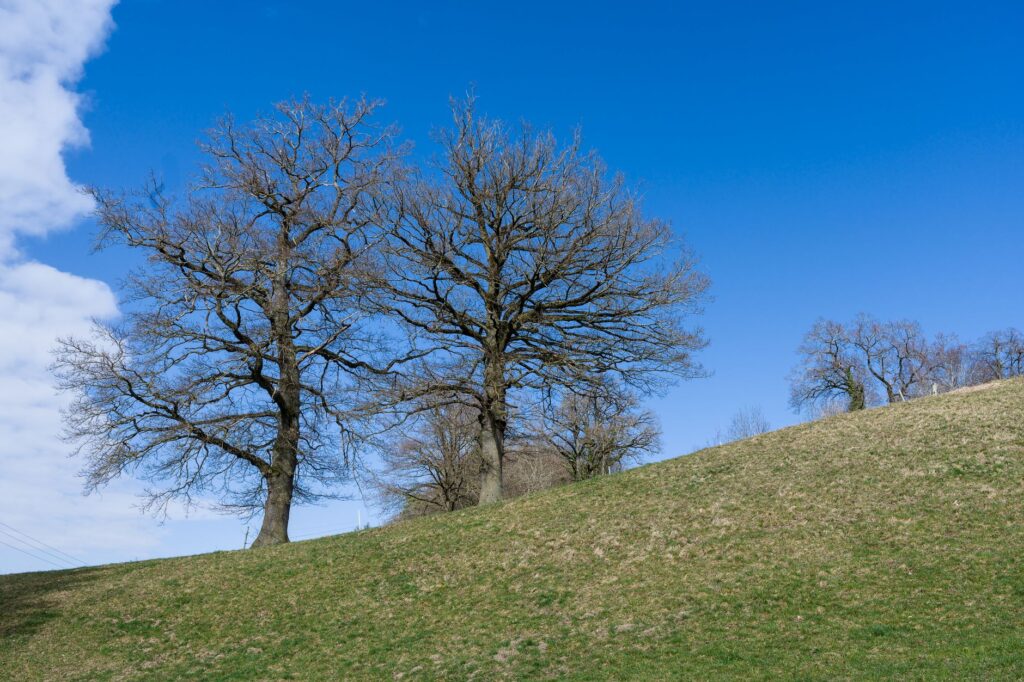
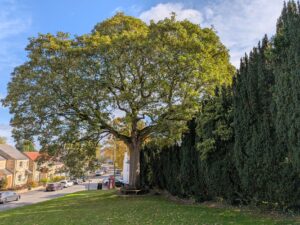
Drive through Lincroft or Oak Hill on a July evening and you’ll see the same pattern in yard after yard: a beautiful, decades-old white oak (Quercus alba) or red maple (Acer rubrum) presiding over a perfect green lawn — and a dead, bare ring of dry dirt or eroded mulch circling the trunk where nothing quite manages to grow. Homeowners usually assume it’s a light problem. It’s rarely light. It’s competition, compaction, and a root system that most people never actually think about until they try to plant something into it.
I get calls about this constantly, usually from someone who just spent a Saturday digging a bed under their shade tree and is wondering why the hostas wilted, the impatiens never took, or worse, why the tree itself started looking thin the following summer. The good news is that a mature tree’s root zone can absolutely support a beautiful planting bed. The bad news is that almost every instinct homeowners bring to a normal garden bed — dig deep, till the soil, mound the mulch, plant something showy and full-grown — is exactly wrong under a tree.
This is one of the most common questions I field from Middletown Township clients once their trees have leafed out fully for the season, and it deserves a real answer instead of a quick nursery-aisle guess.
Why the Ground Under a Tree Isn't Like the Rest of Your Yard

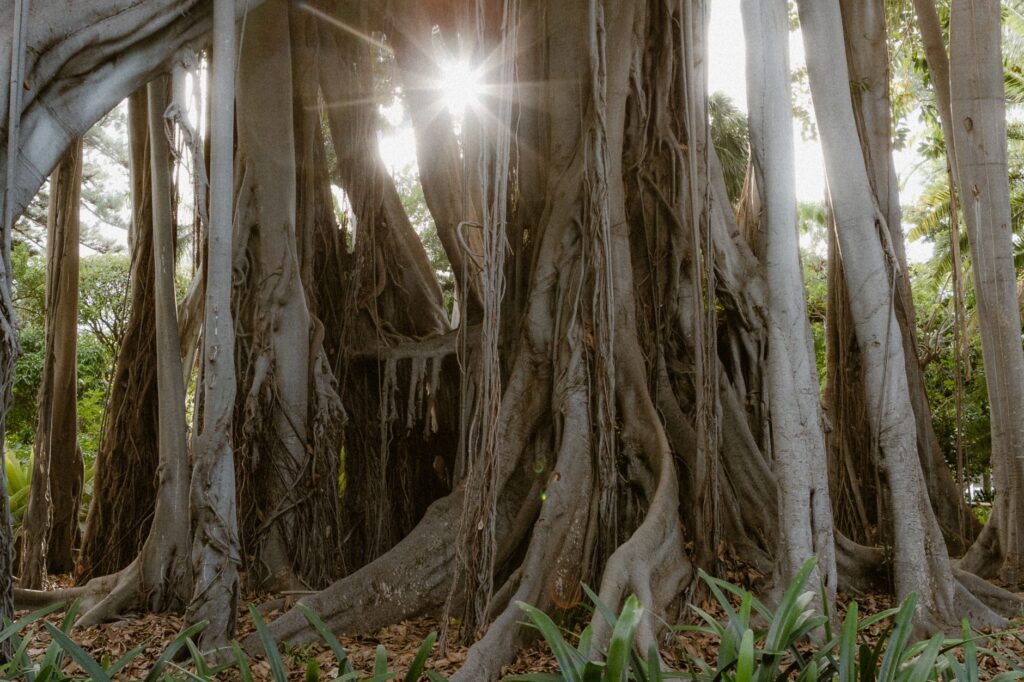
The mental model most people carry — a taproot plunging straight down, with the canopy’s real business happening underground far below — is backwards for almost every species we grow in Monmouth County. The vast majority of a tree’s fine, water-and-nutrient-absorbing feeder roots live in the top 6 to 18 inches of soil, and they typically extend well beyond the dripline, sometimes two to three times the radius of the canopy. USDA Forest Service research on urban tree root systems consistently finds this shallow, wide-spreading pattern in landscape trees, not the deep taproot most of us pictured as kids.
That matters enormously for underplanting. It means the soil six inches under your proposed hosta bed isn’t empty dirt waiting to be improved — it’s already threaded with living tree roots that are doing the actual work of keeping a 60-foot oak alive. Sever or smother enough of them and you’re not just failing to grow groundcover, you’re stressing the tree itself, sometimes in ways that don’t show up in the canopy for two or three years.
Our native clay-loam soils along the Bayshore compound the problem. Clay-loam compacts easily and drains slowly, so tree roots here tend to concentrate even closer to the surface than they would in a sandier soil, chasing the oxygen that gets squeezed out below. A planting bed that would be low-risk in well-drained, sandy Pine Barrens soil can be genuinely damaging in a Middletown yard on heavier ground.
The Underplanting Mistakes That Actually Hurt the Tree
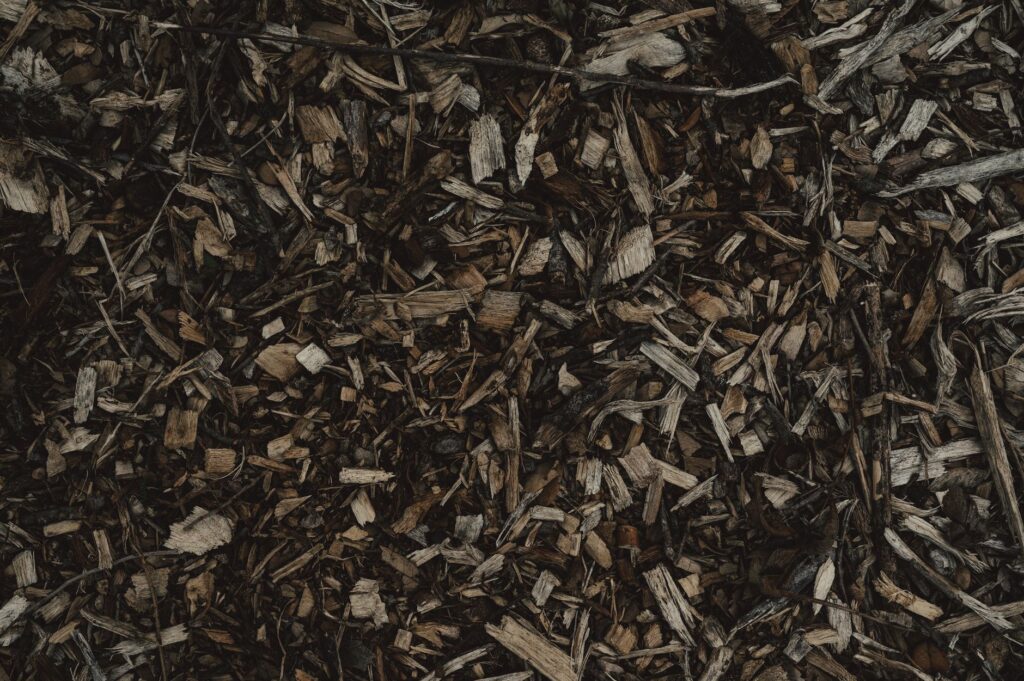
A few habits show up again and again in yards I visit, and they’re worth naming directly because they all look like reasonable garden maintenance:
- Rototilling the bed. A tiller doesn’t know the difference between soil and a feeder root, and a single pass can shred a significant fraction of a tree’s absorbing roots in the top few inches.
- Digging large planting holes for potted perennials or shrubs. Anything requiring a hole wider than a large fist risks cutting structural or major lateral roots close to the trunk.
- Building a raised bed or adding fill soil over the root zone. Even four to six inches of new soil can suffocate roots that depend on gas exchange at the original grade — a slow injury that often isn’t obvious until the tree declines a few seasons later.
- Mulch volcanoes. Piling mulch high against the trunk to “finish” a bed traps moisture against the bark, invites rot and pests, and encourages roots to grow up and around the trunk instead of outward.
- Heavy fertilizer or broadleaf herbicide use in the bed. Products formulated for turf or annuals can be far more concentrated than a tree’s root system tolerates, especially in the compacted, oxygen-poor soil common under mature canopies.
The Rutgers Cooperative Extension has published clear guidance on the physiological damage of grade changes and soil disturbance near established trees, and it’s worth a look before you break ground: njaes.rutgers.edu.
Middletown's #1 Tree Expert Company
FREE Inspection & Estimate | Certified Arborists | Trimming, Pruning, Removal, More!
Sponsored
What Actually Thrives in a Root Zone
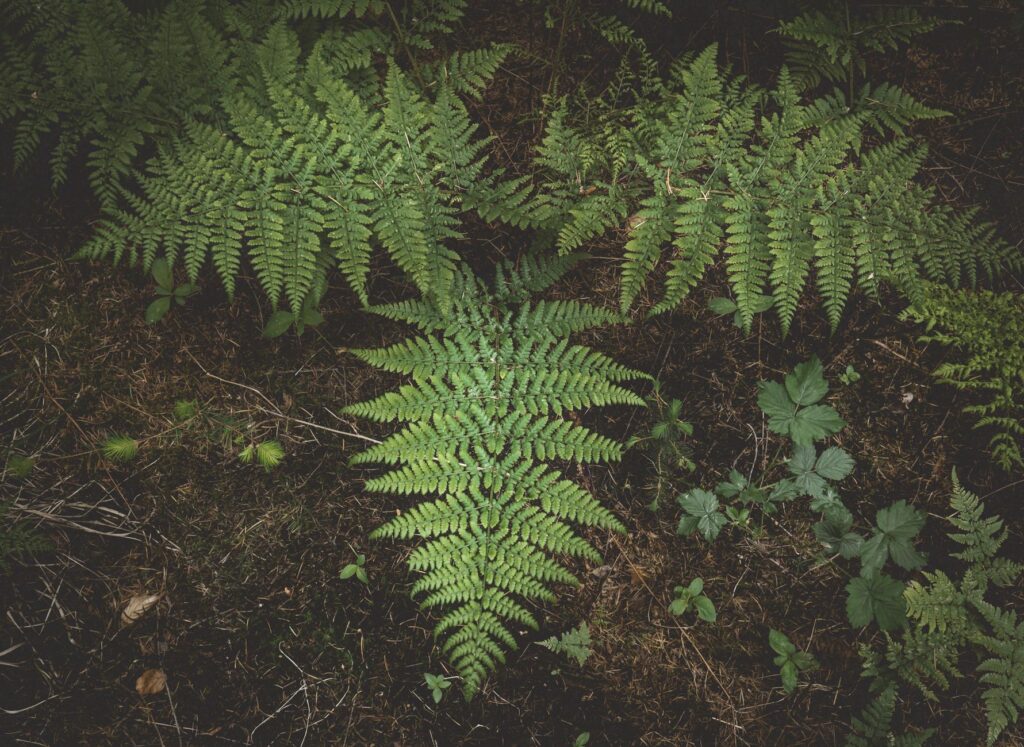
The plants that do well under a mature Middletown shade tree share three traits: shallow, fibrous (not aggressive taproot) root systems, genuine shade or part-shade tolerance, and a tolerance for competing with the tree for water during our drier stretches in July and August. Natives tend to win here because they evolved alongside exactly this kind of understory competition.
- Pennsylvania sedge (Carex pensylvanica) — a fine-textured, lawn-like native sedge that spreads slowly and needs almost no supplemental water once established.
- Foamflower (Tiarella cordifolia) — low, spring-blooming, and genuinely happy in dense shade.
- Wild ginger (Asarum canadense) — a dense, glossy groundcover for the deepest shade under a full canopy.
- Christmas fern (Polystichum acrostichoides) — evergreen structure, tough, and native to the woodland edges around Poricy Park and Hartshorne Woods.
- Woodland phlox (Phlox divaricata) — adds spring color without demanding rich, disturbed soil.
The International Society of Arboriculture maintains solid consumer-facing guidance on selecting understory plants that won’t compete destructively with tree roots, and it’s a good second opinion before you commit to a plant list.
How to Plant Without Fighting the Roots
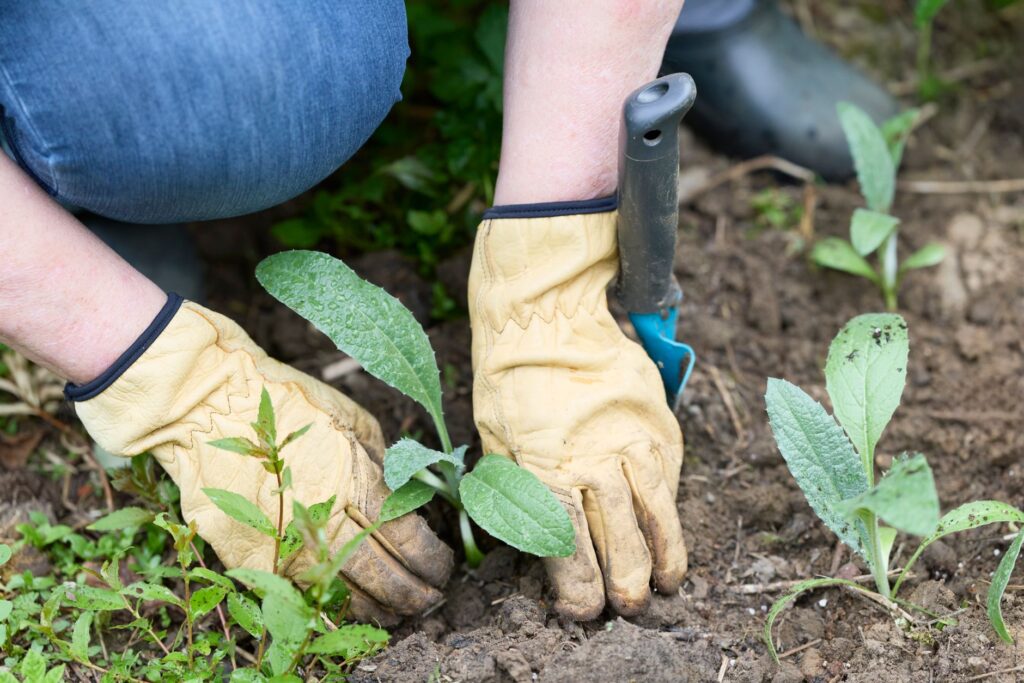
The technique matters as much as the plant list. A few rules I give clients:
Go small and shallow. Use plugs or small containers (quart or gallon size, not five-gallon shrubs) so each planting hole stays under six inches across. Hand-dig with a trowel or soil knife, and if you hit a root thicker than a pencil, move the plant a few inches rather than cutting through it.
Skip the tiller entirely. Loosen only the small planting pocket by hand. The rest of the bed doesn’t need to be turned over — most of these species establish fine in undisturbed native soil.
Mulch two to three inches deep, and keep it off the trunk. Leave a few inches of bare space right at the root flare so the bark stays dry. This single habit prevents most of the rot and pest problems I see in underplanted beds.
Water new plantings directly, not through the whole bed. A drip line or hand watering at the base of each new plant for the first season avoids oversaturating the tree’s root zone while the understory plants establish.
Skip fertilizer the first year. Established trees and native understory plants in reasonably healthy Middletown soil rarely need it, and a misapplied dose does more harm than a season of slower growth.
Not Every Tree Reads the Same
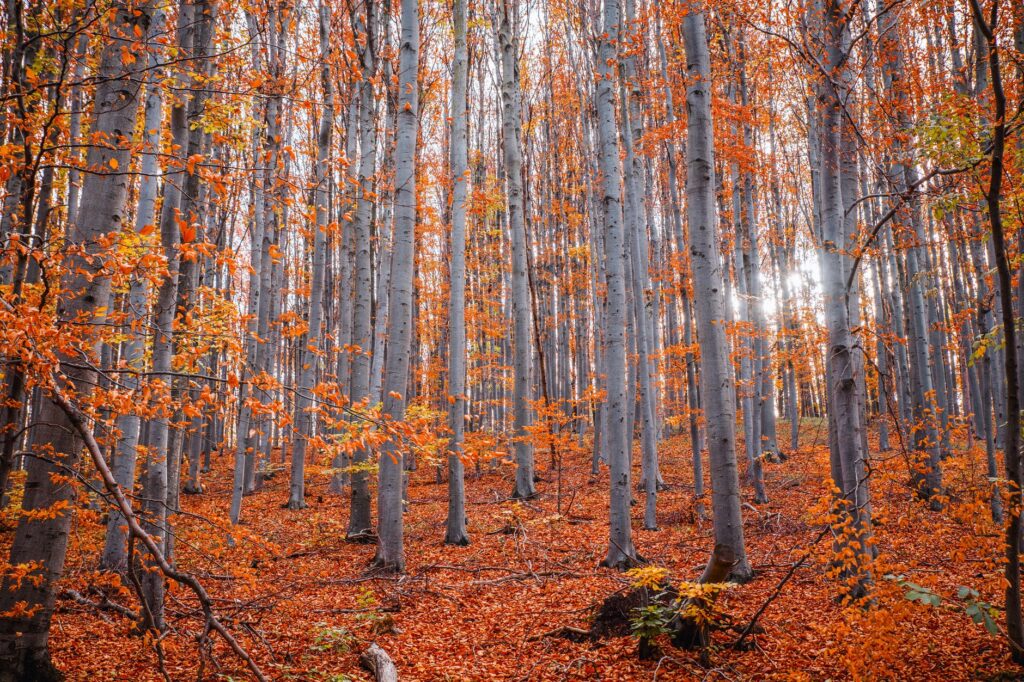
Species matters here. A white oak or tulip poplar (Liriodendron tulipifera) — two of the most common large shade trees in older Middletown neighborhoods — tends to have a wide, dense, shallow root mat that makes digging especially risky close to the trunk; stay toward the outer half of the dripline for anything requiring real disturbance. Red maples are a bit more forgiving but are notorious for surface roots in our clay-loam soils, which is often the real reason a bed “won’t take” — you’re planting into root, not soil.
Beech (Fagus grandifolia), by contrast, is famously intolerant of any soil disturbance in its root zone at all; if you’ve got a mature beech, I’d lean toward leaving the ground beneath it essentially untouched and let its natural leaf litter serve as the mulch. If you’re not sure which category your tree falls into, it’s a five-minute question for a certified arborist and can save you from an expensive mistake.
Middletown's #1 Tree Expert Company
FREE Inspection & Estimate | Certified Arborists | Trimming, Pruning, Removal, More!
Sponsored
When to Call a Pro Before You Dig
A few plugs of foamflower with a hand trowel is low-risk work any homeowner can do this weekend. But if you’re planning anything bigger — a full bed renovation, a raised border, adding several inches of new soil or mulch across a wide area, or you’ve noticed the tree already showing thin canopy, dieback, or fungal conks at the base — that’s the point to bring in a certified arborist before you touch a shovel. A root zone assessment can map out where the critical structural roots actually are, and it’s a lot cheaper than losing a fifty-year-old oak to a well-intentioned garden project.
Done right, underplanting a mature shade tree is one of the best investments you can make in a Middletown yard: it adds real curb appeal, cuts down on mowing right where mowers do the most root damage anyway, and gives a tree that’s been holding down your property for decades a little more room to breathe.
Photo credits: Featured image by frank minjarez on Pexels; Section 1 by Jean-Paul Wettstein on Pexels; Section 2 by Fayette Reynolds M.S. on Pexels; Section 3 by Alfo Medeiros on Pexels; Section 4 by Lukas Hartmann on Pexels; Section 5 by Erwin Bosman on Pexels; Section 6 by David Bartus on Pexels; Section 7 by Andreas Ebner on Pexels.