

Middletown's #1 Tree Expert Company
FREE Inspection & Estimate | Certified Arborists | Trimming, Pruning, Removal, More!
Sponsored
The Call I Get Every Late July
It’s almost always the same setup: a tree went into the ground sometime between last fall and this spring, it looked fine through June, and now — three weeks into a hot, humid stretch — the leaves are curling, browning at the edges, or dropping outright. The homeowner’s first instinct is that something is attacking it. Usually, though, what I’m looking at is transplant shock, not disease.
The distinction matters more than it sounds like it should. Transplant shock is a stress response to a disrupted root system trying to keep up with a full canopy’s water demand — it resolves with the right watering and patience. A fungal or bacterial problem needs a different response entirely, and treating shock like disease (or the reverse) wastes a season and sometimes costs the tree.
Middletown’s clay-loam soil makes this especially common. New root systems here spread slowly through dense ground, and a tree that had two years to establish before its first real heat wave is in a very different position than one still working through its first Bayshore July.
What Transplant Shock Actually Looks Like
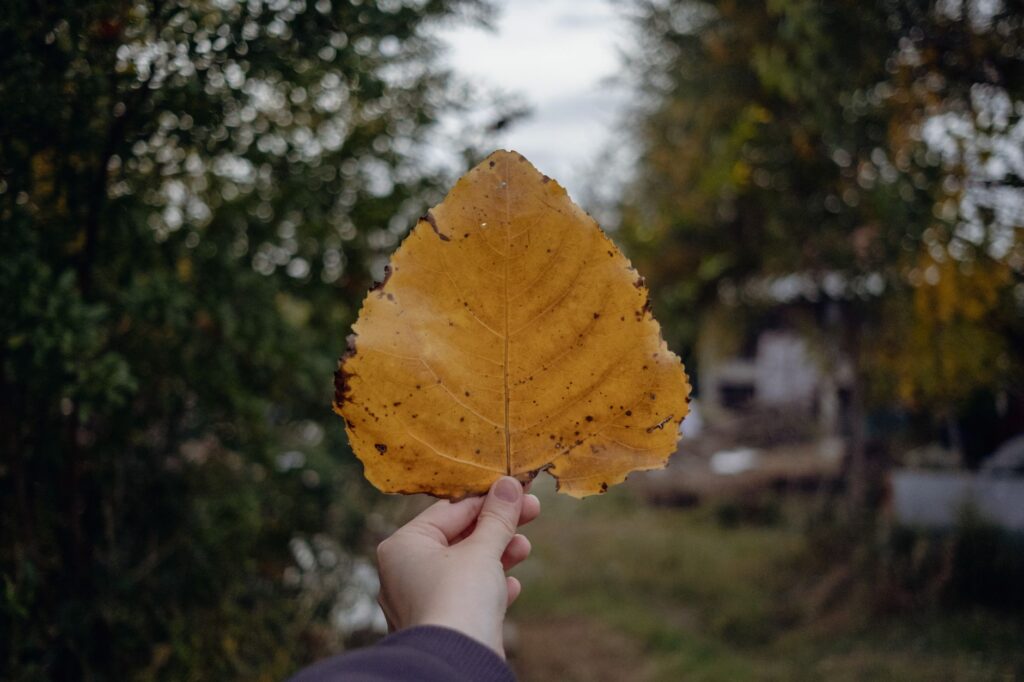
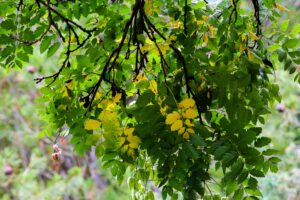
Classic transplant shock shows up as a fairly uniform pattern across the whole canopy: leaf margins browning evenly, leaves that feel dry and papery rather than mushy or spotted, and wilting that’s worst in the afternoon heat but partially recovers by morning. You’ll often see the tree hold onto brown leaves rather than dropping them cleanly, and new growth — if there is any — tends to be smaller and sparser than what the tree produced its first spring in the ground.
The root cause is straightforward: when a tree is dug, balled, and moved, it loses a large share of its fine absorbing roots — the ones actually responsible for water uptake. Rutgers Cooperative Extension notes that it can take two to five years for a transplanted tree’s root system to fully re-establish, depending on species and how large it was at planting. Until that happens, the canopy is essentially oversized for the roots supporting it, and any hot, dry stretch exposes the gap.
This is why a tree that sailed through last September can suddenly look terrible in its second or third July — the canopy has kept growing while the roots are still catching up underground, and this summer’s heat is the first real stress test it’s faced.
What Should Make You Suspect Disease Instead
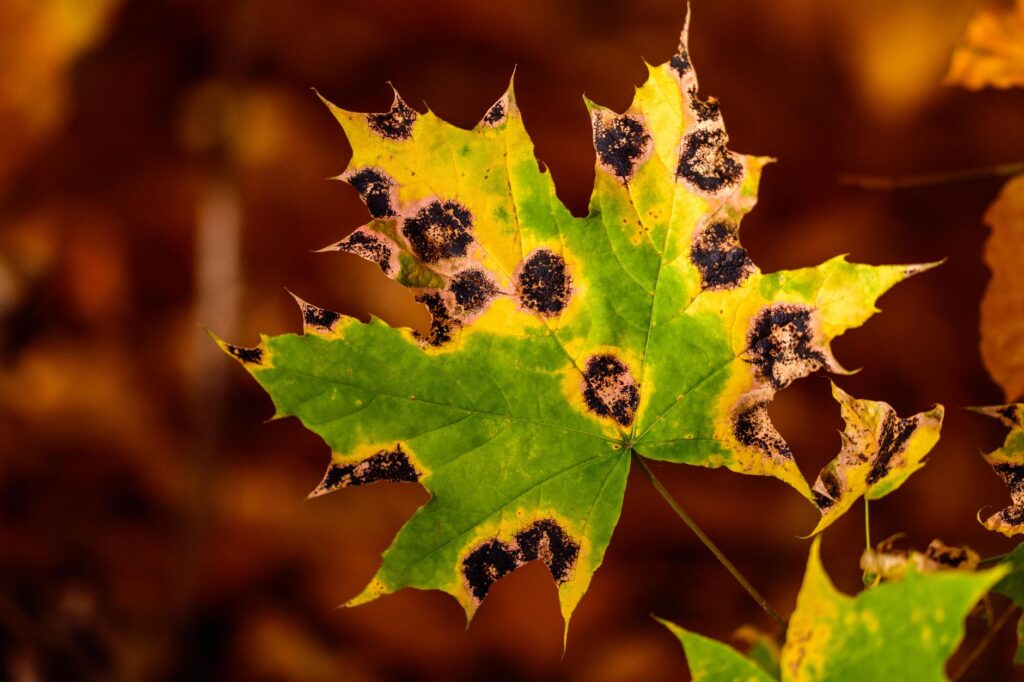
A few patterns should shift your thinking away from simple stress. Spotting or lesions with defined edges — especially with a yellow halo, or arranged in a ring or target pattern on the leaf — points toward a fungal or bacterial leaf disease rather than drought stress, which tends to affect whole leaf margins, not scattered spots. Symptoms concentrated on one side or one section of the canopy rather than spread evenly across the tree is another tell; shock usually hits the whole tree roughly equally, while a localized infection or a girdled root on one side often shows up as damage isolated to the branches it feeds.
Oozing, weeping, or sunken discoloration on the bark or at the base of the trunk is a stronger signal still — that’s not something drought stress produces on its own, and it warrants a closer look at canker or root disease rather than a watering fix. Sudden, rapid collapse of an otherwise healthy-looking tree over a matter of days, as opposed to a gradual decline over weeks, also points away from ordinary transplant stress and toward something more acute, like a vascular disease or a girdling root finally cutting off water flow entirely.
If you’re seeing any of these — irregular spotting, one-sided decline, trunk oozing, or a sudden crash — it’s worth a call to a certified arborist rather than assuming more water will fix it. The International Society of Arboriculture maintains a certified arborist locator if you don’t already have one you trust.
Middletown's #1 Tree Expert Company
FREE Inspection & Estimate | Certified Arborists | Trimming, Pruning, Removal, More!
Sponsored
The Field Test: Check the Roots and the Cambium
Two quick checks separate most shock cases from something more serious, and neither requires special equipment.
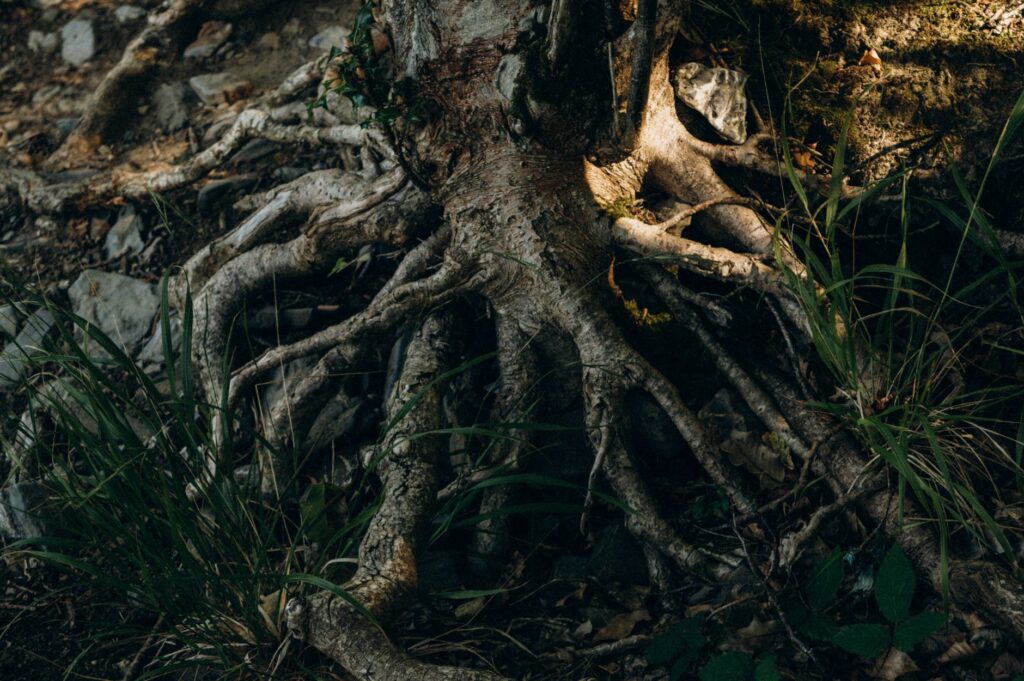
First, check soil moisture at root depth, not just the surface. Push a screwdriver or a long probe six to eight inches down near the drip line. If it’s bone dry and hard to push through, under-watering is likely driving what you’re seeing, and it’s an easy fix. If the soil is saturated and smells sour or swampy, you may be looking at root rot from overwatering or poor drainage — a very different problem with a very different treatment, and one Middletown’s clay-heavy pockets are particularly prone to when a planting hole was dug like a bathtub with nowhere for water to drain.
Second, scratch a small patch of bark on a suspect branch with a fingernail or a pocketknife. Living cambium underneath is green or white and moist. If it’s brown and dry, that section of branch is dead, and the question becomes how much of the tree that extends to. Test a few spots working back toward the trunk — a branch that’s dead at the tip but green closer to the trunk is a pruning problem, not a whole-tree emergency.
- Dry, hard soil at root depth → likely water stress, not disease
- Saturated, sour-smelling soil → possible root rot, stop watering and reassess drainage
- Green cambium under the scratch test → branch is alive, give it time
- Brown, dry cambium spreading toward the trunk → dieback is progressing, call an arborist
None of this replaces a professional diagnosis for a valuable or sentimental tree, but it will tell you within ten minutes whether you’re dealing with something a hose can fix or something that needs expert eyes.
Fixing Shock Without Overcorrecting
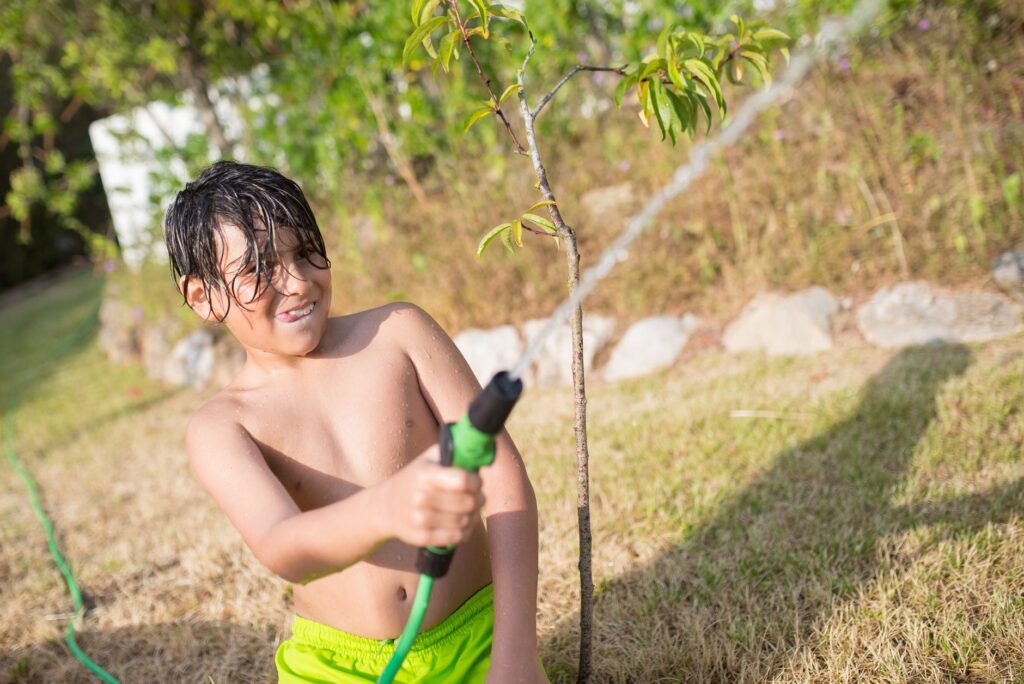
If the diagnosis points to transplant shock, the fix is almost always less dramatic than homeowners expect — and the most common mistake is doing too much rather than too little. Deep, infrequent watering beats daily light watering by a wide margin: aim for the equivalent of about an inch of water at the root zone once or twice a week during a dry stretch, delivered slowly enough to soak down rather than run off. A slow-drip hose or a five-gallon bucket with a small hole drilled near the bottom, left to empty near the trunk, works better than a sprinkler that wets the leaves and barely touches the soil below.
Mulch matters more here than almost anywhere else in tree care. A three-inch ring of wood chip mulch out to at least the drip line — kept a few inches clear of the trunk itself — moderates soil temperature and holds moisture between waterings, which is exactly what a compromised root system needs. Rutgers NJAES’s guide to keeping newly planted trees alive walks through this same watering-and-mulch approach in more detail, and it’s worth the five-minute read the first summer after any planting. Skip the fertilizer during an active shock episode; a stressed tree with a reduced root system can’t use the extra nitrogen, and pushing new top growth before the roots catch up just widens the imbalance that caused the problem.
Resist the urge to prune away every browned leaf or stressed-looking branch immediately. Give the tree through the end of the growing season to show you what’s actually dead versus just stressed, then prune dead wood during the dormant season when you can see the full structure clearly.
When It's Not the Tree's First Summer — But It's Acting Like It Is
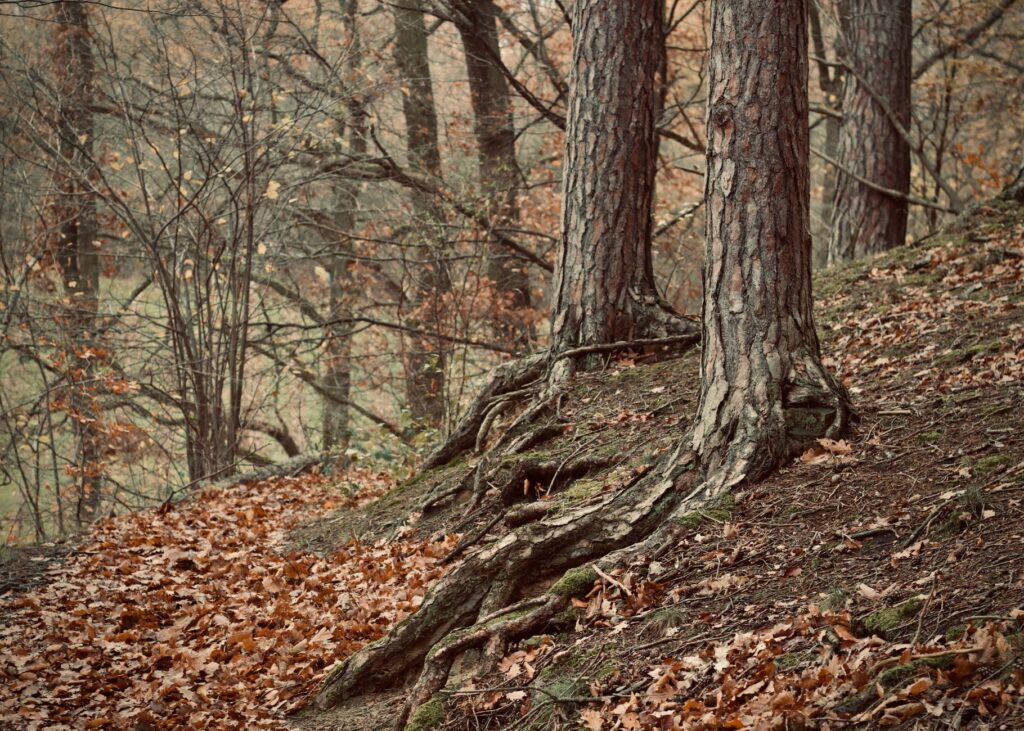
Sometimes the tree in question has been in the ground for three, four, even six years, and it’s suddenly showing shock-like symptoms with no recent transplant to blame. This usually points to something that’s been quietly limiting the root system all along without anyone noticing — a girdling root that’s finally choked off enough flow to matter, soil compaction from years of foot traffic or a driveway expansion nearby, or grade changes that buried the root flare a few inches too deep at planting and have been suffocating it slowly ever since.
These cases look like transplant shock because the underlying issue is the same — a root system that can’t keep up with canopy demand — but the fix is different. Watering more won’t solve a girdling root or an improperly buried root flare; it just buys time. If a tree several years past planting is suddenly struggling the way a first-year transplant would, that’s a signal to look below the mulch line at the base of the trunk for roots circling back against the trunk itself, rather than assuming it’s simple summer stress.
Middletown's #1 Tree Expert Company
FREE Inspection & Estimate | Certified Arborists | Trimming, Pruning, Removal, More!
Sponsored
When to Stop Guessing and Call a Pro

Most of what comes across as a struggling new tree in a Middletown July is transplant shock working itself out on a timeline measured in seasons, not days — and the right response is consistent deep watering, a good mulch ring, and patience rather than a trip to the garden center for a fungicide. But the checks above exist because the two conditions can look similar at a glance while needing opposite treatment, and guessing wrong costs a growing season you don’t get back.
If soil moisture and the cambium scratch test both point toward simple stress, keep watering deeply and check back in a few weeks. If you’re seeing irregular spotting, one-sided dieback, trunk oozing, or a fast collapse — or if a tree well past its transplant window is suddenly acting like a first-year shock case — that’s worth a certified arborist’s eyes before you commit to a treatment plan. A short visit to sort out which problem you actually have is almost always cheaper than a season spent treating the wrong one.
Photo credits: Featured image by Ethan Michael on Pexels; Section 1 by Helena Jankovičová Kováčová on Pexels; Section 2 by Nurefşan KOŞAR on Pexels; Section 3 by Diana ✨ on Pexels; Section 4 by Liudmyla Shalimova on Pexels; Section 5 by Kampus Production on Pexels; Section 6 by Peter Dyllong on Pexels; Section 7 by Grant on Pexels.