Middletown's #1 Tree Expert Company
FREE Inspection & Estimate | Certified Arborists | Trimming, Pruning, Removal, More!
Sponsored
The Job Looks Finished. The Root System Isn't.
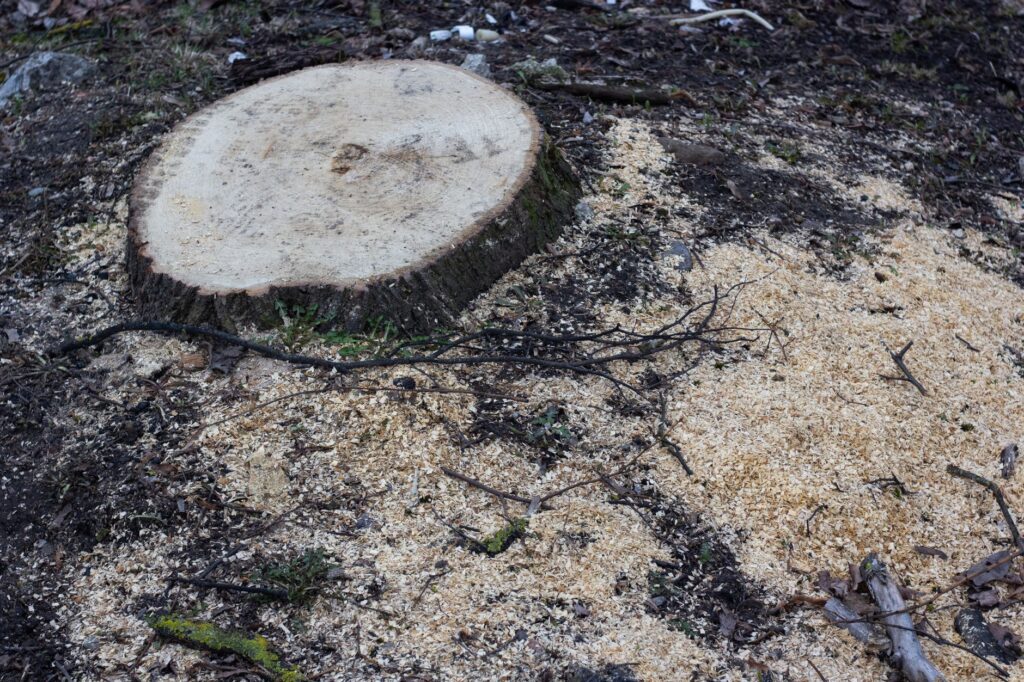
By late July, I’m usually finishing the season’s backlog of storm removals — the oaks and maples that came down in June’s wind events, cut into rounds and hauled off weeks ago. What’s left behind in a lot of Middletown yards right now is the stump: a flat, sawdust-ringed disc sitting flush with the lawn, looking like the job is done.
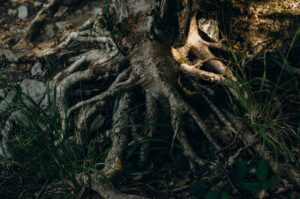
It isn’t. A mature shade tree’s root system can extend two to three times the width of its canopy, and grinding the visible stump down eight or ten inches does nothing to that lateral network. The roots are still out there, some as thick as a forearm, running under the driveway, the septic line, the neighbor’s fence. What happens to them next — whether they rot quietly, sprout aggressively, or sit inert for a decade — depends on the species, the soil, and choices most homeowners never think to ask about.
This is one of the more common calls I get after a removal: the stump is gone, but something is still coming up in the lawn, or the ground near where the tree stood is sinking a little every year. Both are the root system finishing what the chainsaw started.
Grinding vs. Full Removal — Two Very Different Jobs
Stump grinding and stump removal get used interchangeably by homeowners, but they’re not the same service, and the difference matters for what happens underground.
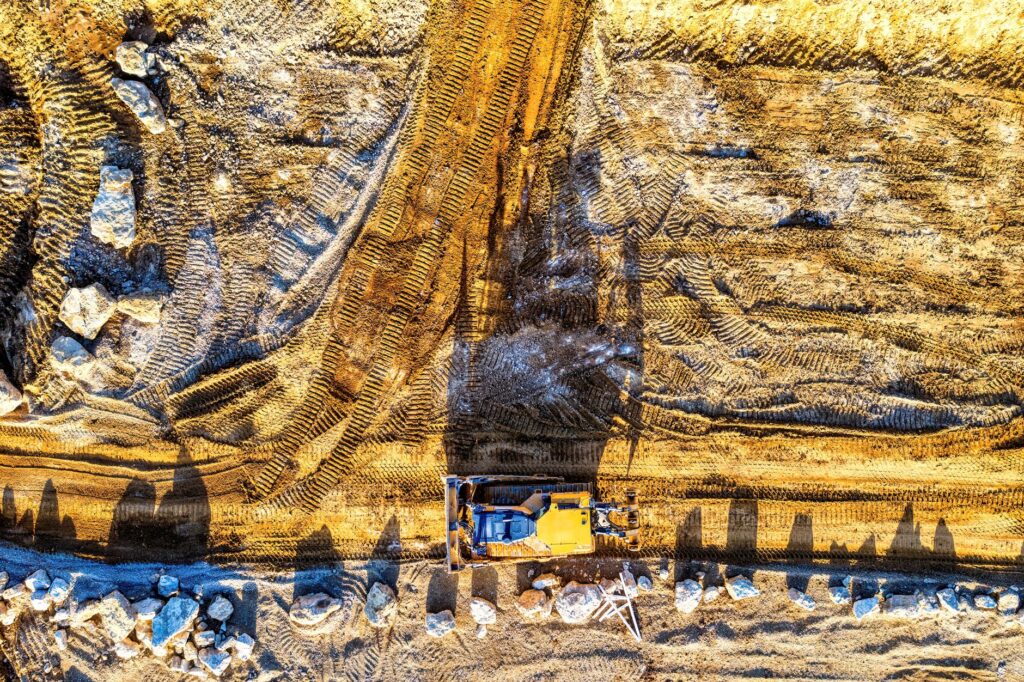
Grinding uses a wheel with carbide teeth to chew the stump and the topmost structural roots down into a bed of wood chips, typically to a depth of 8-12 inches. It’s fast, it’s what most tree services quote by default, and it’s enough if you just want the surface flat enough to mow or reseed. But the taproot area below the grind line and the lateral roots radiating outward are left completely intact and alive, at least for a while.
Full stump and root removal — pulling the root ball with an excavator, or hand-digging and cutting major roots — is slower, more disruptive to the surrounding soil, and considerably more expensive. It’s usually only worth it when you’re planting a new tree in the exact same spot, running new utility lines through that zone, or dealing with a species that’s a known aggressive sprouter (more on that below).
For most Middletown yards, grinding is the right call. The roots left in the ground will decompose over roughly 3-7 years depending on species and soil moisture, feeding soil biology in the process rather than fighting you the way a half-removed stump does.
Some Species Don't Go Quietly
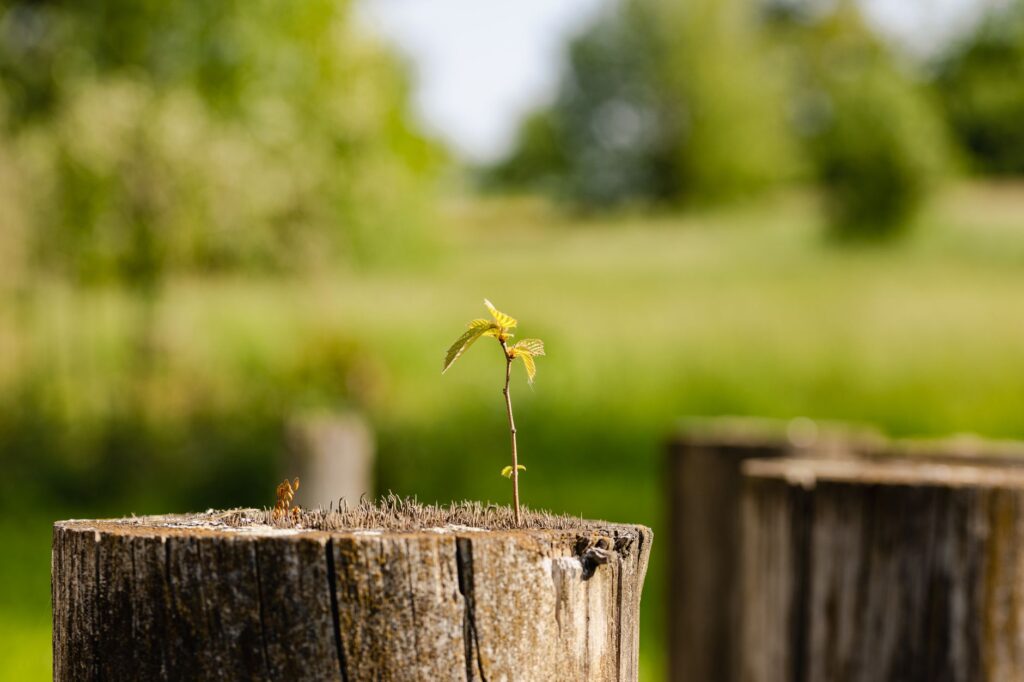
Whether a ground stump stays dormant or launches a summer of sucker growth comes down almost entirely to species. Trees that reproduce readily from root sprouts — Norway maple (Acer platanoides), black locust (Robinia pseudoacacia), and many willows and poplars — will often push up a thicket of whip-thin shoots from the cut roots for two or three growing seasons after removal, sometimes ten or fifteen feet from where the trunk stood. I’ve seen a single ground black locust stump send up root suckers across half a suburban lawn.
Species like most oaks (Quercus spp.), hickories, and dogwoods rarely sucker aggressively from a cut root system, so a ground stump from one of these tends to just sit and decompose without drama.
If you’re dealing with sprouts, mowing them repeatedly (rather than cutting once and walking away) is the most effective non-chemical control — it exhausts the stored root energy over a season or two. Herbicide applied directly to freshly cut sprout stems works faster if the sprouting is heavy, but broadcast spraying near a root zone that’s still supporting nearby landscape plants is a good way to create a second problem. This is exactly the kind of judgment call worth a phone call to a certified arborist before you reach for a sprayer.
Middletown's #1 Tree Expert Company
FREE Inspection & Estimate | Certified Arborists | Trimming, Pruning, Removal, More!
Sponsored
What's Actually Decomposing Down There
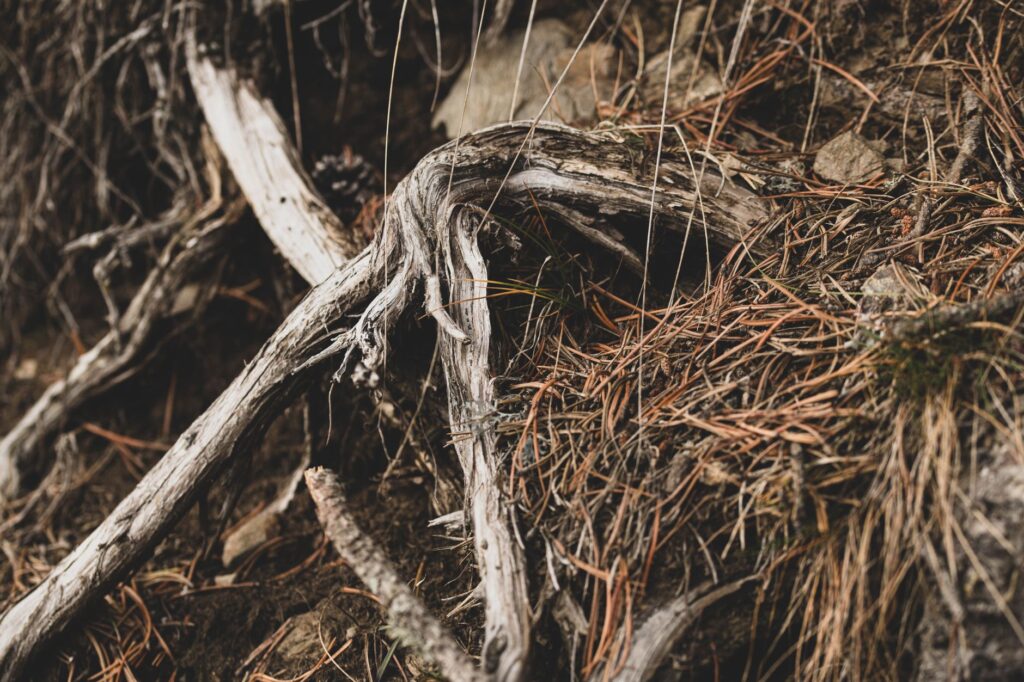
Root decay isn’t a passive process — it’s an active handoff to the soil food web. Fungi and bacteria colonize the dead root tissue, and in most healthy Middletown soils, mycorrhizal fungi that were already partnered with the living tree continue breaking down the woody structure for years afterward. Research from the USDA Forest Service’s urban forestry program has documented how this below-ground decomposition cycles nutrients back into the surrounding soil rather than simply disappearing — it’s part of why a decomposing root system, left alone, is a soil asset rather than just clutter.
The flip side is settling. As roots break down, the void they leave behind collapses, and the soil above it subsides — sometimes gradually, sometimes in a noticeable dip after a wet season. This is most common directly over where large structural roots ran near the surface, and it’s the reason a spot that seemed perfectly flat the year after removal can develop a soft or sunken patch three or four years later. If that area sits under a walkway, a patio edge, or a spot where you’re planning a shed, it’s worth accounting for before you build on it.
Clay-heavy soil, which covers a lot of Middletown and the broader Bayshore, holds moisture longer around decaying roots and tends to slow the whole process compared to the sandier soils found closer to Sandy Hook and the barrier areas. In practice that means a stump ground on a Lincroft clay-loam lot may take a year or two longer to fully break down than the same species removed from a sandy Port Monmouth yard.
Replanting on Top of an Old Root System
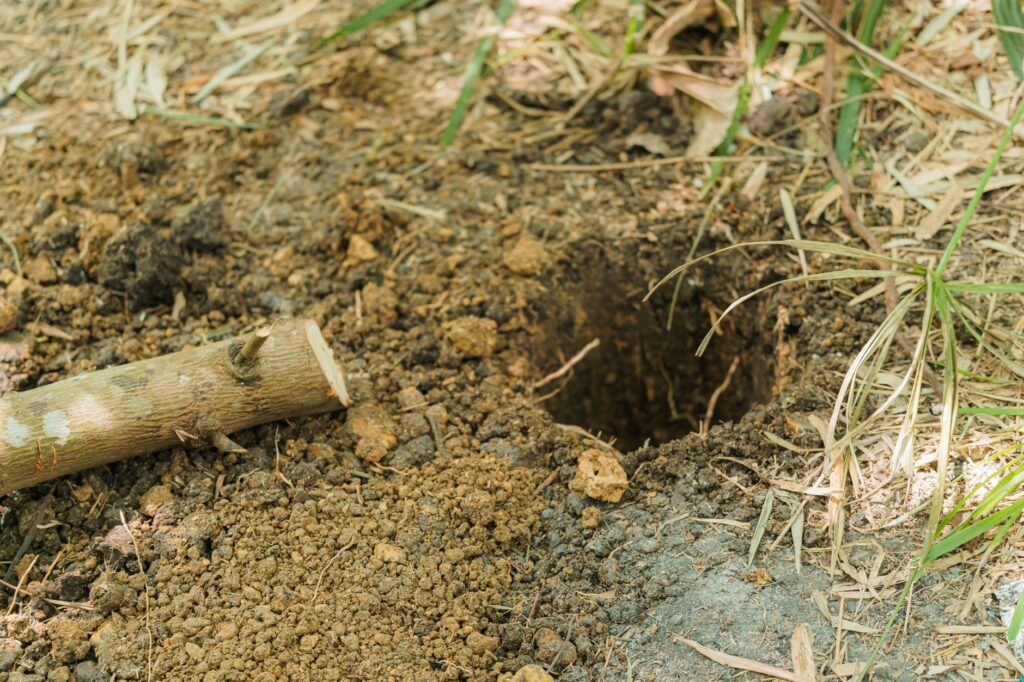
One of the most common questions I get in the weeks after a removal is whether it’s safe to plant a new tree in roughly the same spot. The honest answer is: it depends on timing and what you’re planting.
Putting a new tree’s root ball directly into a fresh grind pit, mixed in with a few inches of wood chips and undecomposed root fragments, isn’t ideal — the decomposing wood ties up soil nitrogen as it breaks down, competing with the new roots for the same nutrients, and can create air pockets that leave new roots poorly anchored. The International Society of Arboriculture recommends waiting at least one full growing season after grinding before planting a replacement tree in the same footprint, and shifting the new planting hole a few feet off-center from the old trunk location whenever the yard allows it, so the new root ball isn’t fighting old wood directly.
If you’re planting the same day as removal because the layout demands it, dig out and remove as much of the old root mass and chip debris as practical rather than planting into it, and backfill with native soil instead of the grindings. It’s more labor up front, but it avoids years of a stunted, poorly anchored replacement tree.
This is also the moment to reconsider whether the same spot is even the right call — soil compaction, old root competition, and utility conflicts sometimes make a location that failed once a poor bet for round two.
When the Roots Are a Structural, Not Just Cosmetic, Problem
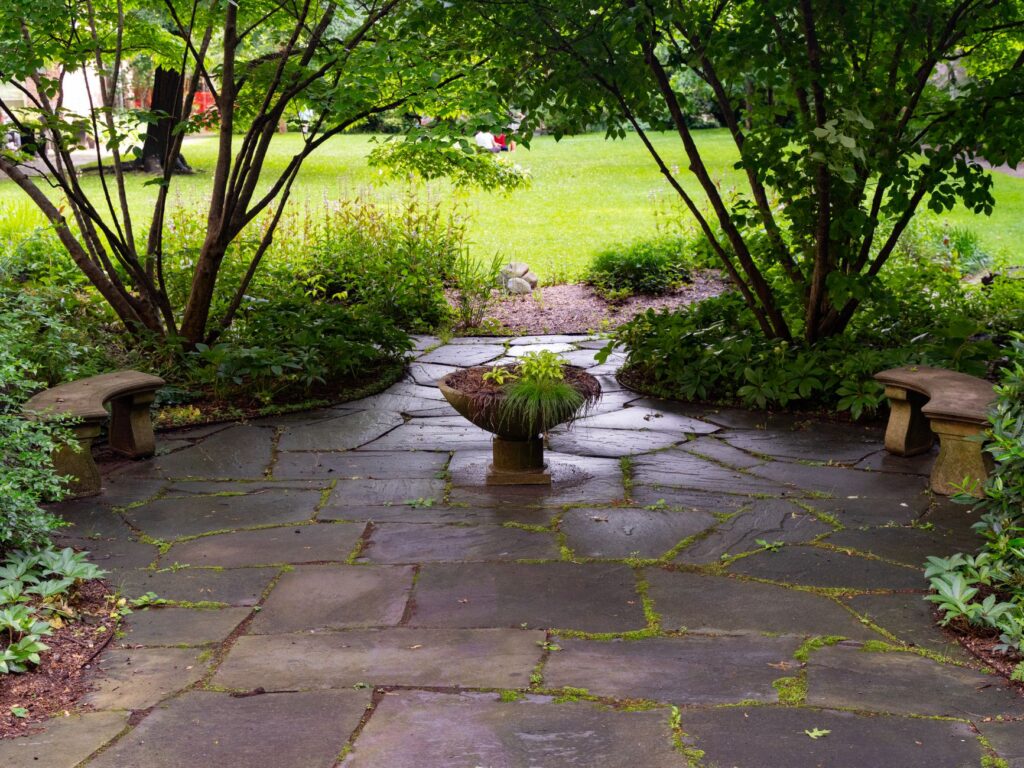
Decomposing roots occasionally cause more than a soft spot in the lawn. Large structural roots that ran under a patio, a shed footing, or a section of driveway can leave a genuine void as they break down, and that void can eventually cause cracking or settling in the hardscape above it. This shows up most often with trees that had been growing within 10-15 feet of a foundation or paved surface for decades before removal — the root diameter close to the old trunk is often four to six inches or more, and that’s real structural mass to lose underground.
If a removed tree was close to a structure, it’s worth having a certified arborist or a foundation-savvy contractor take a look at what root paths existed before assuming a settling issue years later is unrelated. It usually is related, and it’s a far cheaper fix to regrade and compact a soft spot proactively than to repair a cracked walkway after the fact.
Homeowners dealing with a stump near a property line should also check Middletown Township’s local ordinances before grinding — some easements and shared boundary situations have specific rules about root disturbance and notification that are easy to miss.
Middletown's #1 Tree Expert Company
FREE Inspection & Estimate | Certified Arborists | Trimming, Pruning, Removal, More!
Sponsored
The Bottom Line: Grind It, Then Give the Roots Time
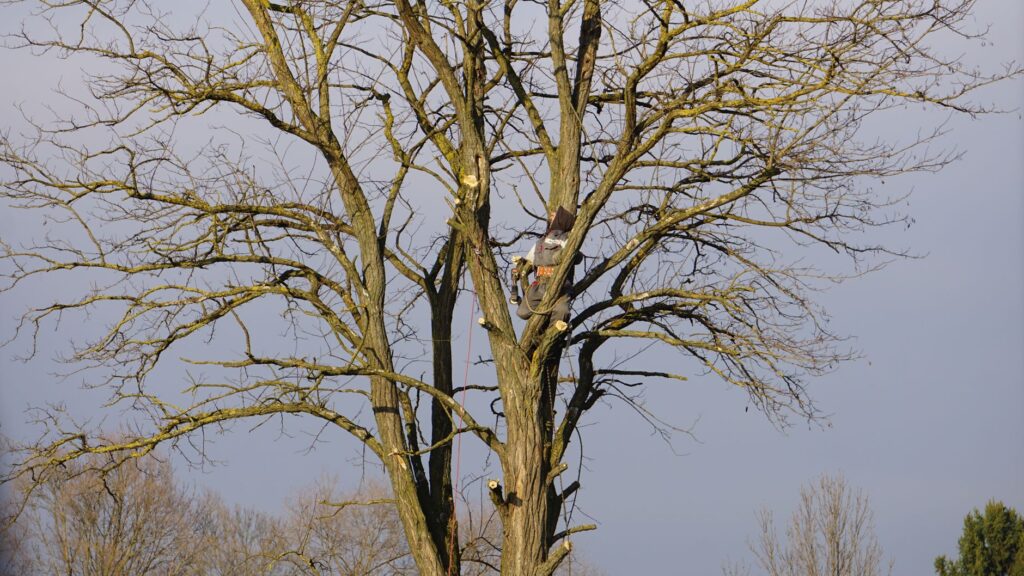
Stump grinding is quick, it’s the right call for the vast majority of Middletown removals, and it lets the wood chips and old root system do genuinely useful work feeding your soil over the following years. The mistake is treating a ground stump as a finished chapter. Watch for sprouts if you removed a known suckering species, expect some settling in the two to four years after grinding, and give the site at least a season to stabilize before you plant something new directly on top of it or build anything nearby.
If you’re not sure what you’re dealing with — a suckering species you can’t identify, a settling patch near your foundation, or just whether a spot is safe to replant — a certified arborist can look at what’s still happening below ground and tell you whether you’re looking at a lawn quirk or something worth addressing now. Most of the expensive root-related problems I get called for started as something small that got ignored for a few years too long.
Photo credits: Featured image by Plato Terentev on Pexels; Section 1 by Pixabay on Pexels; Section 2 by Tom Fisk on Pexels; Section 3 by Vaidas Vaiciulis on Pexels; Section 4 by Walter Cunha on Pexels; Section 5 by Nothing Ahead on Pexels; Section 6 by Brett A on Pexels; Section 7 by Dmytro Glazunov on Pexels.