Middletown's #1 Tree Expert Company
FREE Inspection & Estimate | Certified Arborists | Trimming, Pruning, Removal, More!
Sponsored
The Tree That Looks Fine Until Someone Actually Checks

Every summer I get a version of the same phone call. A homeowner near Port Monmouth or up along Kings Highway in Lincroft has been staring at a tree for a few weeks — maybe a lean that wasn’t there last year, maybe a crack running up the trunk, maybe just a gut feeling after watching a limb come down two yards over. They want to know if it’s dangerous. Usually they’ve already had a neighbor or a landscaper glance at it and shrug. “Looks okay to me.”
That’s the gap between a casual look and an actual tree risk assessment, and it matters more than most homeowners realize. A trained eye walking by can spot the obvious stuff — a dead top, an open cavity, a trunk split wide enough to see through. What it usually can’t do is tell you how likely that tree actually is to fail, what it would hit if it did, and what that combination means in practical terms. That’s a different exercise entirely, and it’s one with an actual name: a Tree Risk Assessment Qualification, or TRAQ, evaluation.
With Middletown heading into the thick of hurricane season and a string of trees around town already showing this year’s drought and heat stress, it’s worth understanding what a real assessment involves — and when a quick look really is enough.
What TRAQ Actually Means
TRAQ is a credential developed by the International Society of Arboriculture, and it exists because “that tree looks dangerous” is not, on its own, useful information. The qualification trains arborists to evaluate risk using a consistent, documented method rather than a gut call — the same way a home inspector follows a standard checklist instead of just wandering through a house.
Not every assessment needs to go to the same depth. The standard recognizes a few levels:
- Limited visual assessment — a quick walk-by, useful for spotting obvious hazards across a whole property or street.
- Basic assessment — a full 360-degree look at one tree, from root flare to canopy, the level most homeowner requests land on.
- Advanced assessment — brings in tools like resistance drilling or root crown excavation when the basic look raises a question the eye can’t answer.
A TRAQ-qualified arborist decides which level a given tree actually needs — they don’t default to the most expensive option, and a good one will tell you when a five-minute look is genuinely sufficient.
The Formula Behind the Recommendation
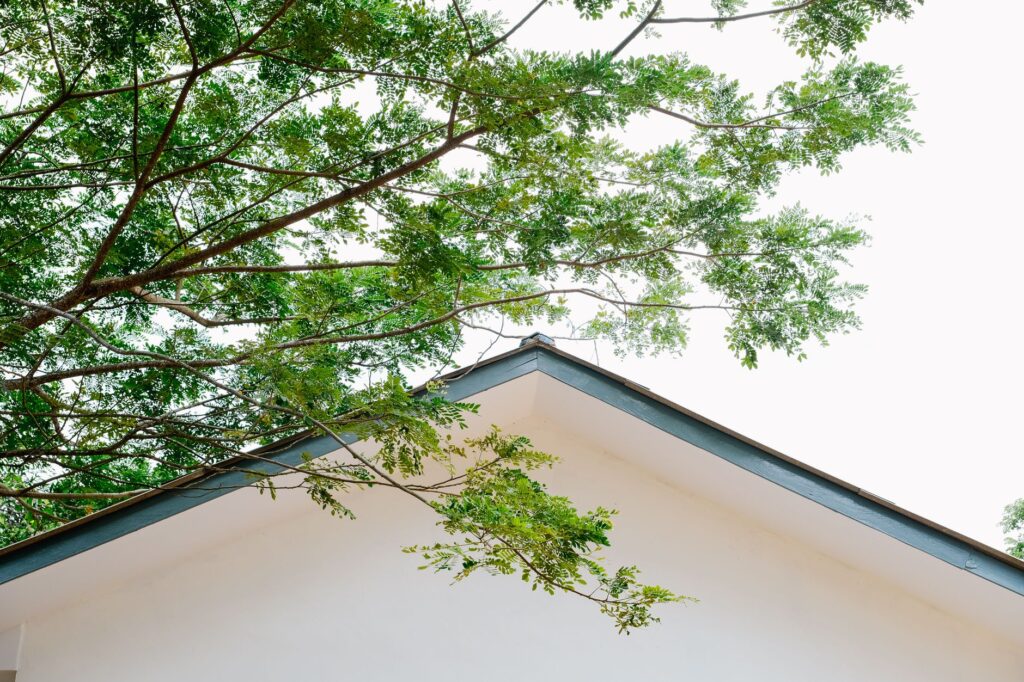
What separates a formal assessment from an opinion is that it’s built on three separate questions, evaluated one at a time rather than blended into a single impression.
- Likelihood of failure — based on defects in the tree itself: cracks, decay, poor branch attachments, root problems, lean.
- Likelihood of impact — if that part of the tree failed, what’s actually in the path? A tree over a wooded ravine in Hartshorne Woods and the same tree over a Lincroft driveway carry very different risk even with identical defects.
- Consequences — what would get hit, and how bad would that be? A garden shed is not a bedroom window; a back fence is not a power line feeding the block.
Those three factors combine into a risk rating — typically low, moderate, high, or extreme — and that rating drives the recommendation and the timeline. A high-likelihood failure over an empty side yard might get a “monitor annually.” A moderate-likelihood failure directly over where your kids wait for the school bus gets a very different answer, even though the tree defect itself might be less severe. This is the piece that’s easy to miss when someone just eyeballs a tree: risk isn’t only about how broken the tree is, it’s about what’s underneath it.
Middletown's #1 Tree Expert Company
FREE Inspection & Estimate | Certified Arborists | Trimming, Pruning, Removal, More!
Sponsored
What the Assessment Actually Looks At
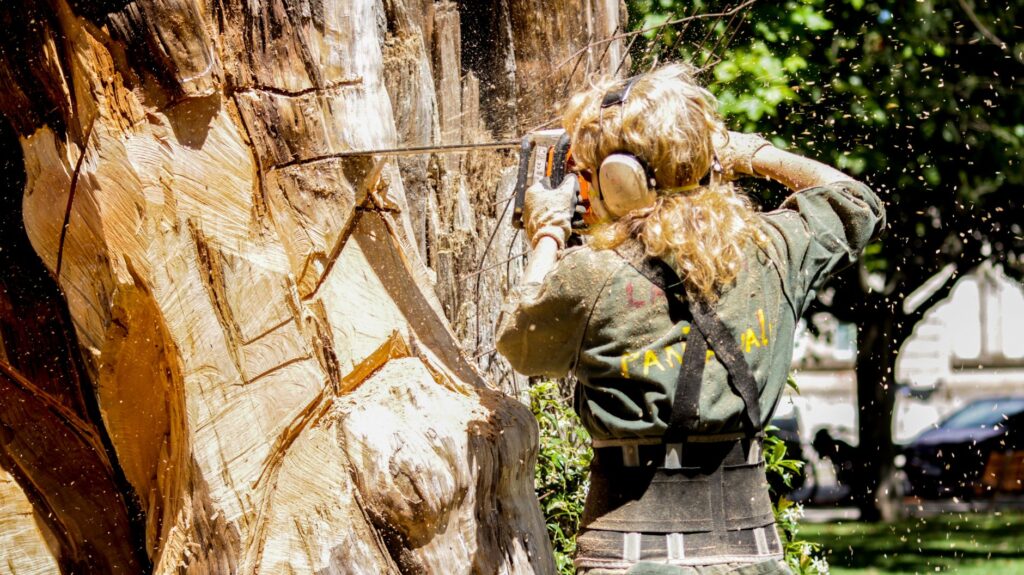
A basic assessment starts at the ground and works up. The root flare and root zone get checked for girdling roots, soil heaving, mushroom conks (a sign of active root or butt decay), and grade changes from nearby construction or grading work — something we see constantly given how much of Middletown’s clay-loam soil holds moisture right at the root crown after a wet spring, as covered in a Rutgers Cooperative Extension soil overview. From there the arborist moves up the trunk, sounding it with a mallet to listen for the hollow tone that suggests internal decay, and checking for cracks, cankers, included bark at branch unions, and old wounds that never closed properly.
The canopy gets checked last — deadwood, broken hangers, codominant stems, canopy density that’s unusually thin or unusually heavy for the season. If something in that walk-through raises a question the eye can’t settle, that’s when tools come out: a resistograph to measure internal wood density without doing real damage to the tree, or an air spade to expose root flare without tearing through roots the way a shovel would.
None of this is exotic equipment, and it’s not meant to be dramatic. It’s meant to turn “I think this might be a problem” into “here’s specifically what’s wrong, and here’s how confident I am in that.”
When Middletown Homeowners Actually Need One
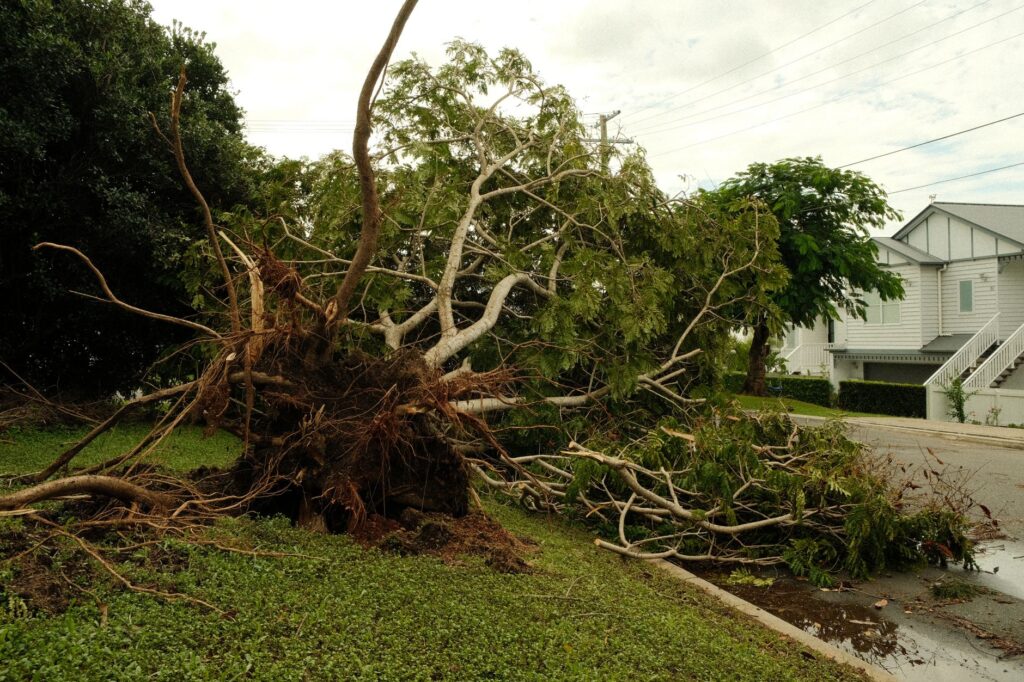
Most trees in most yards don’t need a formal TRAQ assessment — a seasonal walk-around catches the obvious stuff for the vast majority of healthy trees. A full assessment earns its cost in a handful of specific situations:
- After a storm, when a tree has visible new damage but it’s not obvious whether it’s still structurally sound or just waiting to fail.
- Before selling a home, especially with large trees near the house — buyers’ inspectors increasingly flag mature trees, and a documented assessment heads off a negotiation problem.
- When there’s a dispute with a neighbor over a tree near the property line — New Jersey tree law leans heavily on documentation, and a report from a qualified arborist carries far more weight than two neighbors disagreeing over a fence.
- When an HOA or property manager needs a defensible basis for removal or retention decisions across multiple trees.
- When an insurance claim or policy renewal specifically requests a professional risk evaluation.
Middletown Township’s own tree removal permit process, outlined on the township’s official site, is another place a written risk assessment matters — a documented hazard rating is exactly the kind of evidence that supports a permit application for removing a tree near a structure or right-of-way.
What You Actually Get at the End

A verbal “yeah, that one should probably come down” doesn’t hold up to much scrutiny, and it doesn’t help you if a limb fails six months later and an insurance adjuster or attorney starts asking what you knew and when. A formal assessment produces a written report: the specific defects found, the risk rating for each one, the target and consequence analysis, and a mitigation timeframe — immediate, short-term, or monitor-and-reassess.
That document is what makes the difference between a homeowner who acted reasonably on professional advice and one who’s left explaining why they ignored an obvious lean for two years. It’s also simply more useful day to day — instead of a binary “dangerous or not,” you get a prioritized list if there are several trees involved, which matters when a property has a dozen mature oaks and a limited landscaping budget for the season.
Middletown's #1 Tree Expert Company
FREE Inspection & Estimate | Certified Arborists | Trimming, Pruning, Removal, More!
Sponsored
Getting the Right Read on Your Trees
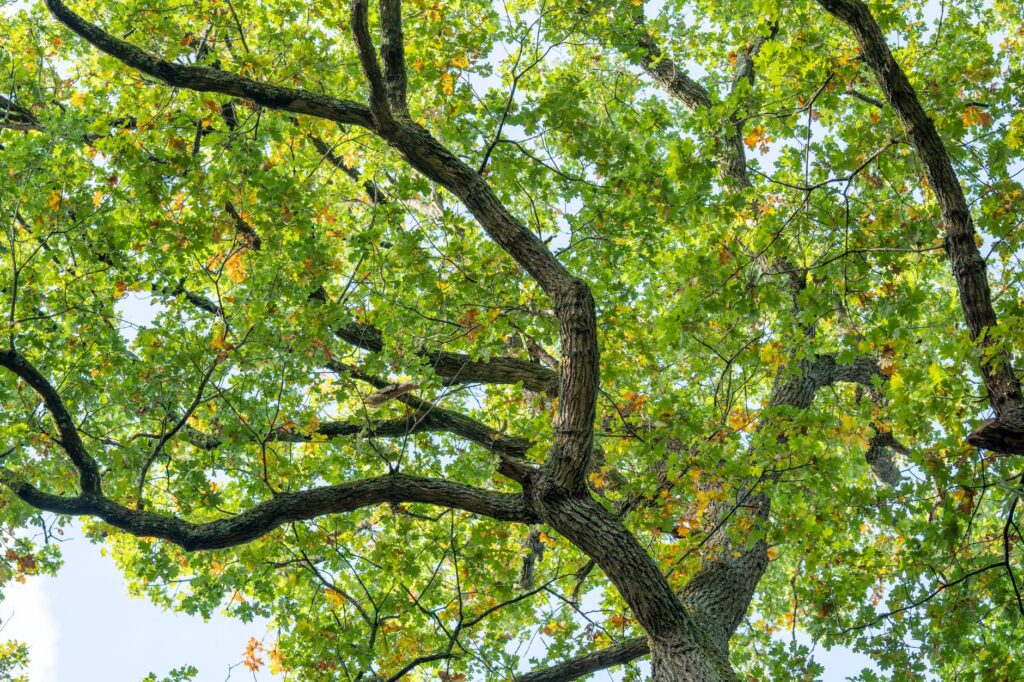
The trees around Middletown that cause real problems are rarely the ones that look obviously dead — those get removed before they become a story. It’s the trees that look mostly fine, with one detail that’s easy to talk yourself out of worrying about, that end up in the local news after a nor’easter. A five-minute walk-by from a friend or landscaper is a fine first filter. It isn’t a substitute for a trained assessment when there’s real money, real liability, or a structure sitting in the tree’s fall zone.
If you’ve got a tree that’s been nagging at you — a lean, a crack, a limb that looks heavier than the rest of the canopy can support — the reasonable move is a call to a certified arborist who holds the TRAQ credential and can walk you through exactly what they’re seeing and why, not just a thumbs up or down. It’s a small step that heads off a much larger problem, and this time of year, with storm season building along the Bayshore, it’s worth doing before the next system rolls through rather than after.
Photo credits: Featured image by Robert So on Pexels; Section 1 by Anete Lusina on Pexels; Section 2 by Peter Xie on Pexels; Section 3 by Ayyeee Ayyeee on Pexels; Section 4 by Gastón Mousist on Pexels; Section 5 by April Yang on Pexels; Section 6 by Mikhail Nilov on Pexels; Section 7 by Masood Aslami on Pexels.