
Middletown's #1 Tree Expert Company
FREE Inspection & Estimate | Certified Arborists | Trimming, Pruning, Removal, More!
Sponsored
The Storm Window Is Already Open

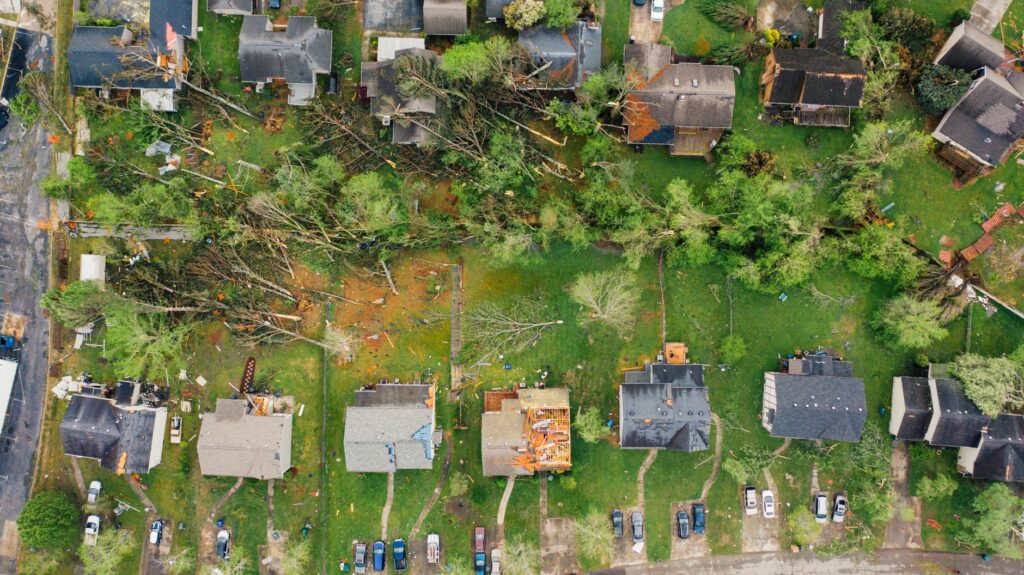
In my years working as an arborist in Monmouth County, I’ve noticed that homeowners think about their trees differently in early July than they do in late August. Right now, the canopy is full, the yard looks great, and storm season feels abstract. But July marks something else: we’re one month into Atlantic hurricane season, and the window I care most about — August through October — is six to twelve weeks away. That’s exactly the amount of time needed to do the tree work that actually matters before a storm arrives.
The Bayshore communities of Middletown Township — Port Monmouth, Leonardo, Keansburg, Belford — sit right on the edge of Raritan Bay. When a tropical system clips New Jersey, these neighborhoods feel the tree damage first. Sustained winds in the 50–80 mph range are enough to bring down any limb carrying a structural defect that could have been caught months earlier. I write this in early July because now, not three days before a storm appears on the forecast, is when the prep work should happen.
What Hurricane Season Actually Means for Middletown's Trees
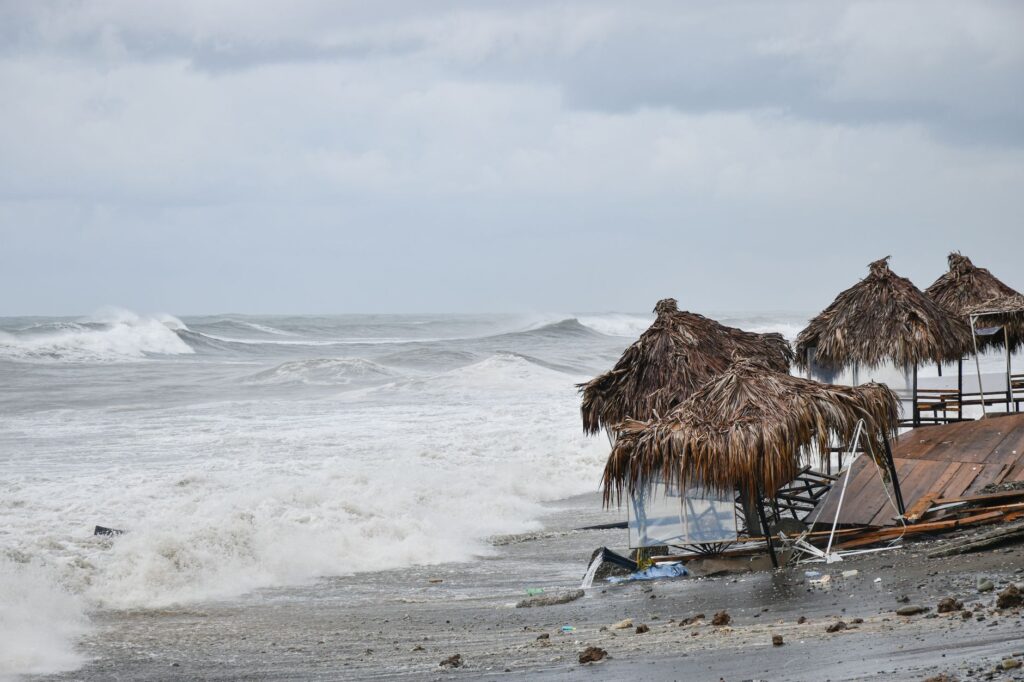
Not every tropical system that spins up in the Atlantic is heading for New Jersey — but the ones that do can be devastating. Irene in 2011, Sandy in 2012, Isaias in 2020, and Ida in 2021 all hit Monmouth County with significant wind and tree damage. These weren’t all major hurricanes at landfall; they were systems that interacted with the specific conditions here — saturated soils, full summer canopies, and structural defects that had never been addressed.
Rutgers New Jersey Agricultural Experiment Station has documented through post-storm research that it’s not always the most intense storms that cause the most tree damage. The interaction between soil saturation, heavy summer leaf load, and pre-existing structural defects in the tree’s architecture is consistently what drives the worst outcomes. In other words: the storm is often the trigger, but the vulnerability was there long before it arrived.
In Middletown’s clay-loam soils, this dynamic plays out clearly. These soils hold water well — which benefits summer drought tolerance, but becomes a liability when a storm arrives. Saturated clay reduces the frictional resistance of root systems. Trees that would hold in dry soil conditions can tip in wet ones. Understanding this helps explain why the same storm can leave one yard untouched and level the neighbor’s mature oak across the fence.
How to Read Your Own Trees for Storm Risk
Before calling anyone, walk your property and look for these specific conditions. This isn’t a substitute for a professional assessment, but it will help you identify which trees warrant a closer look before peak storm season.
- Codominant stems — two trunks of roughly equal size rising from the same point at a narrow V-angle. Where they meet, look for a dark, pinched crease in the bark. This is included bark: the tree has been trying to grow both stems simultaneously, and the union is far weaker than it appears. This is the single most common structural failure mode I see after storms in Monmouth County.
- Deadwood in the crown — dead branches have no leaves. On a sunny morning, step back and look up at the full canopy. Any bare branches over two inches in diameter, especially those overhanging a structure, driveway, or walkway, are a priority concern.
- Asymmetric crown weight — a tree that leans toward one side, or that has significantly more canopy mass on one side due to past pruning, crowding, or competition with a structure. Asymmetric trees pull toward their heavy side in sustained wind.
- Root zone signals — heaving soil on one side of the base, a lean that has developed or increased in recent months, or mushroom fruiting bodies at the base of the trunk. These can indicate compromised root anchorage that will become visible during a storm.
- Old wound sites and cavities — previous branch removal wounds that never closed properly, or cavities in the trunk where decay has progressed. These reduce the cross-sectional strength of the wood at precisely the points where storm stress concentrates.
If you find one or more of these conditions in a large tree near your home, a consultation with a certified arborist is the right next step — not because the tree necessarily needs to come down, but because understanding the actual risk level requires a trained eye and sometimes a climbing inspection to evaluate the crown from within.
Middletown's #1 Tree Expert Company
FREE Inspection & Estimate | Certified Arborists | Trimming, Pruning, Removal, More!
Sponsored
Which Middletown Tree Species Hold Up Best in a Storm
Wind resistance in trees comes down to a combination of root architecture, wood density, crown form, and branch attachment angles. No species is immune to hurricane damage, but there’s a real and meaningful difference between a well-rooted native white oak and a Bradford pear in a 70 mph wind event.
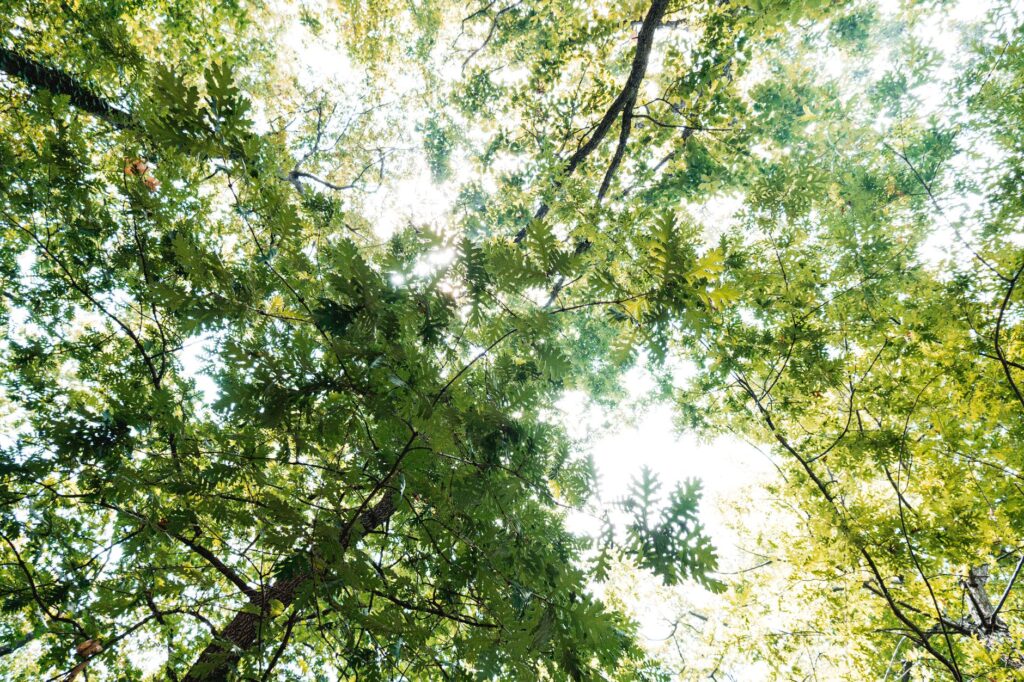
Research from the USDA Forest Service’s urban forestry program consistently shows that native oaks — white oak (Quercus alba), red oak (Quercus rubra), chestnut oak (Quercus montana) — outperform ornamentals and introduced species in post-storm assessments. Their lateral root systems run wide and deep in well-drained soils, and their dense, interlocking wood grain allows branches to flex under load rather than snap at weak unions.
Species that have struggled in Middletown’s storm history:
- Silver maple (Acer saccharinum) — fast-growing but with brittle wood and weak branch attachments. A full-canopy silver maple in a heavy wind event is one of the trees I worry about most in suburban Middletown yards, particularly near structures.
- Bradford pear (Pyrus calleryana ‘Bradford’) — their tight, upright branch structure creates narrow attachment angles throughout the crown. They fail predictably in storms, often splitting at the central leader before winds even reach their peak.
- Mature ash trees with EAB dieback — Middletown ash trees that survived emerald ash borer often carry extensive deadwood in the upper crown. That deadwood becomes airborne in a storm, posing a hazard well beyond the tree’s canopy.
- Trees transplanted within the past three years — root systems that haven’t fully established anchor less effectively in saturated storm soils. These deserve a stake evaluation and, in some cases, a modest crown reduction to reduce their sail area heading into storm season.
Native trees that consistently perform well in Monmouth County storm history include white oak, hickories (Carya spp.), and sweet gum (Liquidambar styraciflua). These are the species worth prioritizing if you’re rebuilding your canopy after storm losses.
What Professional Tree Work Makes Sense Right Now
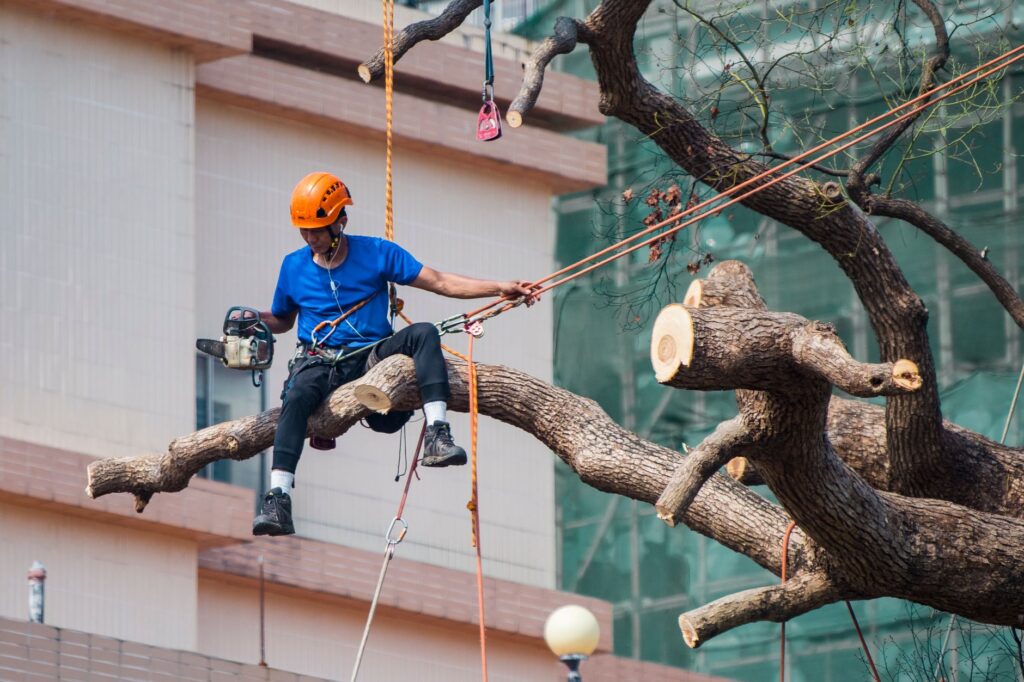
If your property assessment revealed trees with structural concerns near your home, here’s what a certified arborist can realistically do before the peak storm window arrives in August.
Crown thinning: Removing select interior branches to reduce the sail effect of the canopy without changing the tree’s overall form or size. Done correctly, thinning reduces wind resistance by 15–20% and meaningfully changes how the tree responds to gusts. This is the opposite of topping — it preserves the tree’s architecture while allowing wind to pass through more freely.
Deadwood removal: Removing dead, dying, and structurally compromised branches from the crown is standard arborist work that reduces the projectile hazard during a storm. Every dead branch over two inches in diameter is a potential missile in a 70 mph wind, and Middletown’s summer canopies often hide significant deadwood that only becomes visible when leaves drop.
Structural pruning for younger trees: On trees under about 25–30 feet tall, corrective pruning can redirect growth away from codominant stems and develop a more wind-resistant central leader form. This is the most cost-effective storm prep available — it prevents structural problems rather than managing them after they’ve matured.
Cabling and bracing: Supplemental support systems that limit the movement of codominant stems relative to each other. The International Society of Arboriculture recommends that cable systems be installed by ISA-certified arborists and inspected on an annual basis. If your trees have existing cables that haven’t been evaluated in the past two years, schedule that inspection before storm season peaks.
The critical point here is timing: tree work requires recovery time. A tree significantly pruned the week before a storm hasn’t had time to adapt to its new weight distribution. Schedule professional work in July, not when a named storm appears on the five-day forecast.
What Homeowners Can Do Themselves This Week
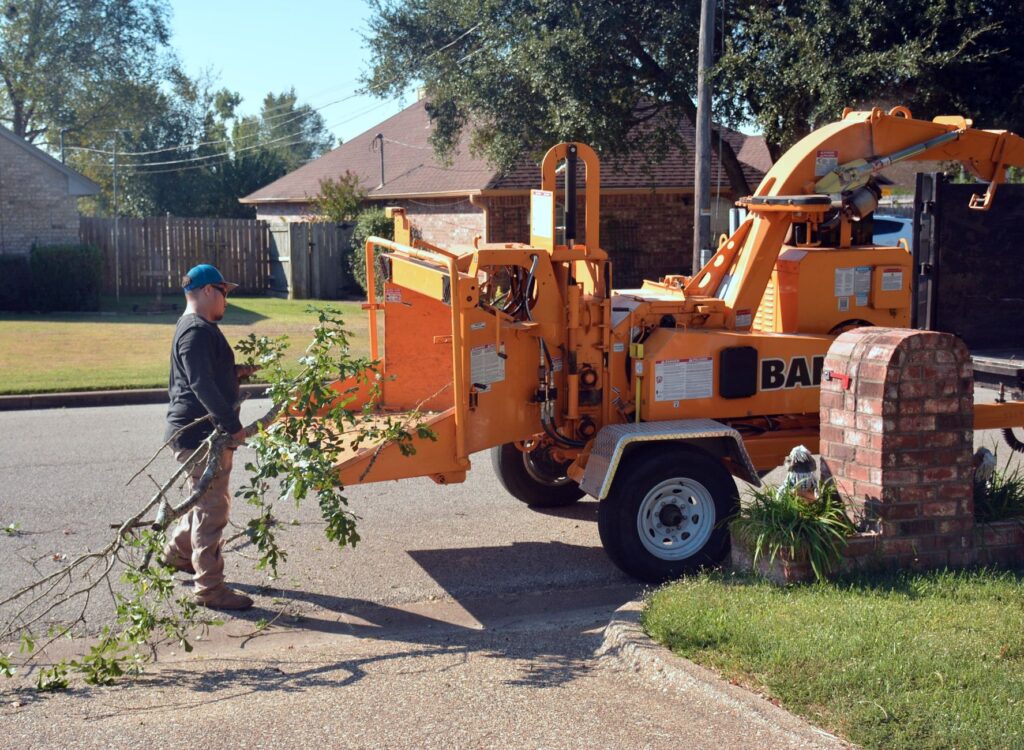
Not every hurricane prep task requires a professional. There are meaningful things you can do yourself right now to improve your trees’ resilience before the storm window peaks.
Refresh the mulch ring. A 3–4 inch layer of organic wood chips over the root zone helps maintain soil moisture and temperature through summer drought. Keep mulch 4–6 inches back from the trunk flare to prevent decay at the base, but extend it as far out as practical — ideally toward the dripline. Drought-stressed trees develop compromised root systems that anchor less effectively in the saturated storm soils that often accompany a hurricane’s passage.
Water deeply, not frequently. During dry stretches in July and August, run a soaker hose around the dripline for several hours rather than a lawn sprinkler for 20 minutes. The goal is wetting the soil 12–18 inches down, where feeder and anchor roots are most active. Well-hydrated trees maintain turgor in their cells, which makes wood more flexible under wind load. Drought-stressed trees are significantly more susceptible to wind throw and branch failure.
Photograph your trees now. If a storm damages your property, insurance adjusters want documentation of pre-storm tree condition. Walk your yard with a phone camera and capture all sides of your major trees, including any visible defects and proximity to structures. Date-stamp the photos. Store them somewhere you can access even if your phone is lost in a power outage.
Don’t top trees out of anxiety. Every summer before storm season, I see homeowners hire unqualified crews to top trees as a pre-storm measure. Topping removes the tree’s primary structural defense while creating large, weakly-attached water sprouts that are more dangerous in the next storm than the original canopy was. It’s one of the most counterproductive things you can do to a tree in the name of storm preparation.
Middletown's #1 Tree Expert Company
FREE Inspection & Estimate | Certified Arborists | Trimming, Pruning, Removal, More!
Sponsored
Summary: The Work to Do Before August Arrives
The Atlantic hurricane season’s statistical peak is six to twelve weeks away from early July. That’s enough lead time to do meaningful tree preparation — but only if you start now. The storm that appears on radar in August doesn’t give you a scheduling window for professional tree work; every certified arborist in Monmouth County will be preparing for emergency response or already responding to downed trees across the township.
Walk your property this week using the criteria above. Look for codominant stems with included bark, deadwood overhanging structures, asymmetric crown weight, and signs of root zone stress at the base of your trees. Take stock of the species on your property and consider their track record in NJ storm history — Bradford pears and silver maples near your house deserve a professional evaluation before peak season.
If you find conditions that concern you, the right move is a consultation with an ISA-certified arborist. A pre-storm assessment doesn’t automatically mean removal — in most cases, targeted crown thinning, deadwood removal, or a properly installed cabling system can extend a tree’s safe life while meaningfully reducing storm risk. The goal is to enter the storm window with your trees in the best possible structural condition, with your documentation complete and your professional work already done. That conversation is much easier to have in early July than on the morning after a storm comes through.
Photo credits: Featured image by K on Pexels; Section 1 by David Kanigan on Pexels; Section 2 by Artem Makarov on Pexels; Section 3 by Gastón Mousist on Pexels; Section 4 by Abdulvahap Demir on Pexels; Section 5 by Jimmy Chan on Pexels; Section 6 by John Robertson on Pexels; Section 7 by Peter Xie on Pexels.