
Middletown's #1 Tree Expert Company
FREE Inspection & Estimate | Certified Arborists | Trimming, Pruning, Removal, More!
Sponsored
Those Strange Shoots on Your Tree's Trunk Are Trying to Tell You Something
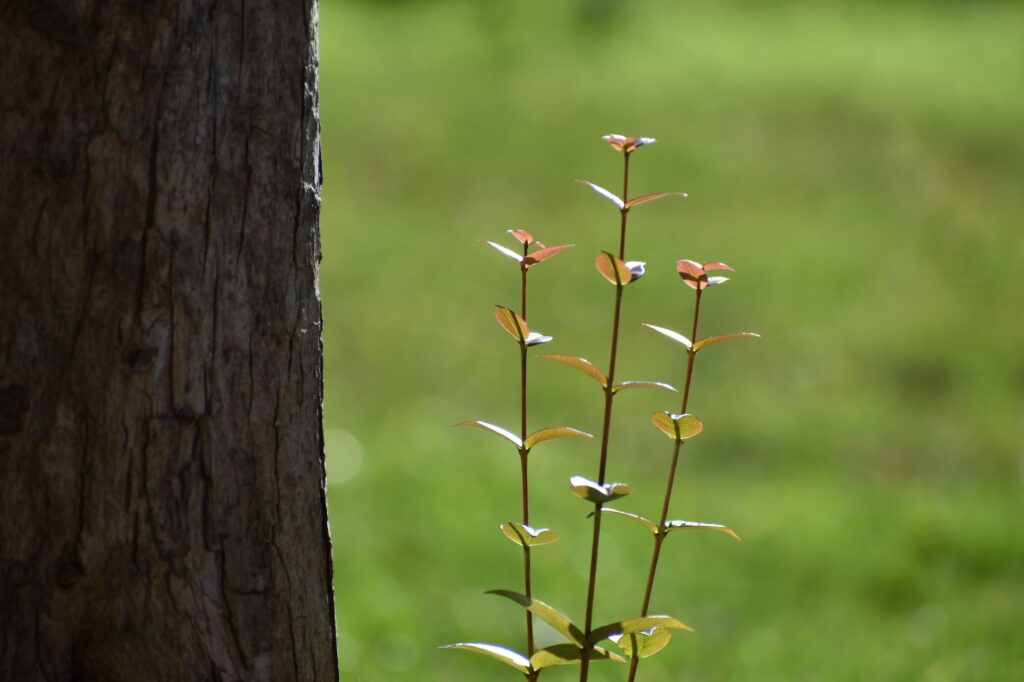
It usually happens in June or July, when you’re finally getting outside to enjoy the yard after the rain lets up. You walk past your big red maple or old white oak and notice something that wasn’t there in the spring: stubby little shoots, sometimes dozens of them, sprouting straight out of the bark along the trunk or from the base of the tree. They can look almost decorative at first glance. They’re not.
These are called epicormic sprouts — and in Middletown Township, I see them on trees all summer long. On oaks in Hartshorne Woods neighborhoods. On maples along the Bayshore. On tulip poplars that took a hit from last year’s nor’easter. They’re one of the clearest signals a tree can send, and most homeowners walk right past them without knowing what they’re seeing.
Understanding epicormic growth won’t make you a certified arborist. But it will make you a smarter tree owner — one who knows when to pull out a hand pruner and when to call in a professional to find out what’s driving the problem underneath.
Why Trees Keep Dormant Buds Hidden in Their Bark
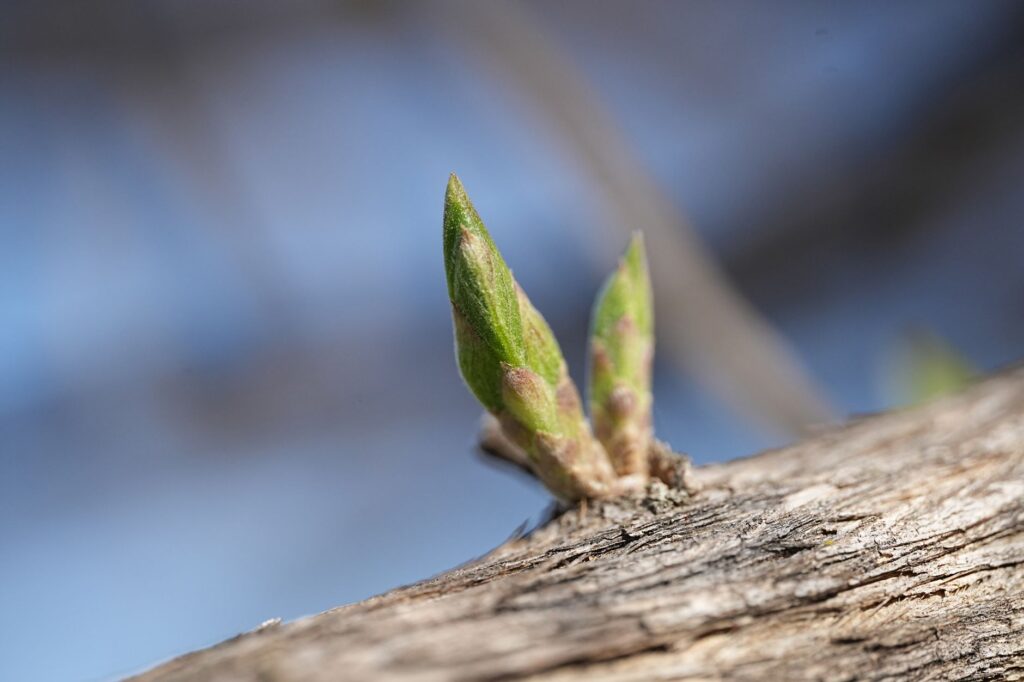
Every tree carries a reserve of what botanists call epicormic buds — dormant growing points embedded just beneath the bark, scattered along the trunk and major branches. Under normal conditions, these buds stay suppressed. The tree’s dominant growing points up in the crown release hormones, primarily auxin, that travel downward through the bark and chemically signal the epicormic buds to stay dormant.
When something disrupts that hormonal signal — whether it’s storm damage, drought stress, disease, or heavy pruning — the suppression weakens. Buds that have been waiting for years, sometimes decades, suddenly find their moment. They burst through the bark and grow rapidly, driven by the tree’s urgent need to put more photosynthesizing leaf surface back into production as quickly as possible.
Think of it as a tree’s emergency response. If a large branch fails in a summer storm, the tree doesn’t just wait for the remaining branches to fill the gap. It activates its backup system — those hidden buds along the trunk and limbs — trying to recover as much canopy as it can. According to the International Society of Arboriculture, epicormic growth is one of the tree’s primary mechanisms for recovering lost crown area after damage or significant stress events.
The same biology applies to root sprouts, which arborists call basal suckers. These emerge from the root collar or the roots themselves and behave differently from trunk watersprouts — but they’re part of the same underlying stress-response system. Both types are your tree’s way of hedging its bets.
The Common Stresses That Wake Up Dormant Buds on Middletown Trees
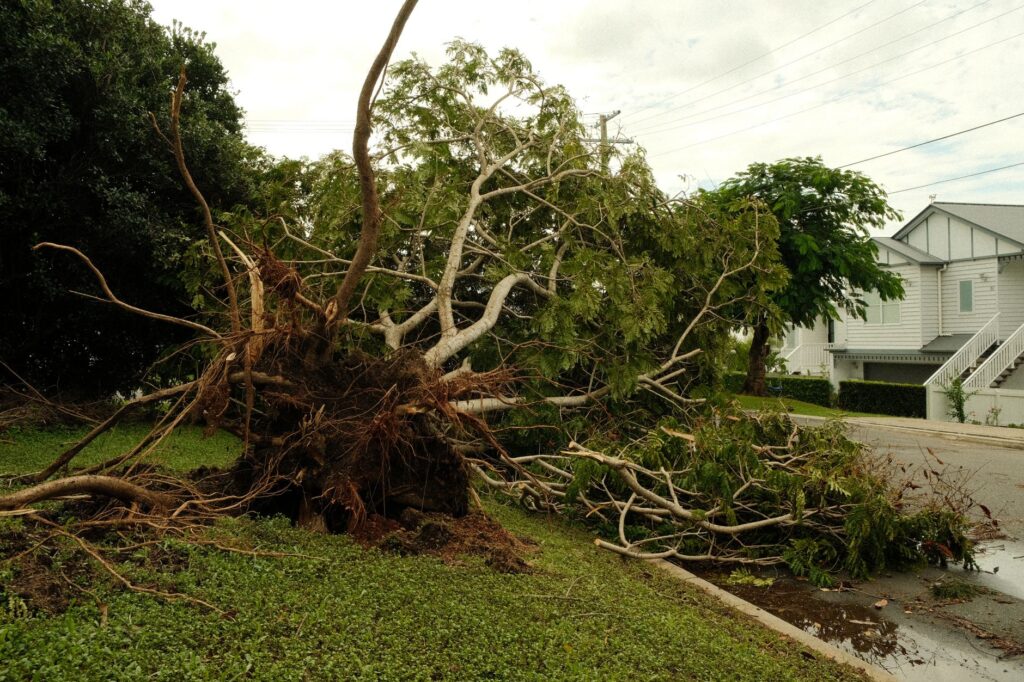
In Middletown Township, the most common triggers I see are storm damage, improper pruning, and summer drought. After a nor’easter or thunderstorm rolls through the Bayshore and strips a major limb from a white oak (Quercus alba), the tree almost always responds with heavy epicormic growth the following season. The same pattern follows ice storms in January and February — the tree assesses the damage and starts compensating as soon as temperatures allow growth to resume.
Improper pruning is an especially common trigger in this area. When a tree is “topped” — its central leader or major scaffold branches cut back hard without proper pruning cuts — the tree loses enormous photosynthetic capacity all at once. The hormonal suppression collapses, and epicormic buds explode into growth along the topped branches. These watersprouts grow fast, sometimes three to four feet in a single season, but they attach weakly to the parent branch compared to naturally developed limbs.
Drought stress is the subtler trigger. Monmouth County’s clay-loam soils hold moisture reasonably well in spring, but by late June and July, after several weeks without significant rain, even established trees show signs of drought stress. Root zone competition from turf grass, soil compaction around surface roots, and construction activity from prior years that reduced the root system all make a tree more vulnerable to summer drought — and all can trigger epicormic growth. Rutgers NJAES Cooperative Extension publishes tree care resources that document the relationship between root zone health and epicormic bud activation in landscape trees.
Root damage from grading, trenching, or driveway work is another significant driver in Middletown. A tree can look completely normal for two or three years after its root zone is disturbed, then begin pushing epicormic growth as the delayed effects of that injury begin to compound. By the time the sprouts appear, the underlying damage is well established.
Middletown's #1 Tree Expert Company
FREE Inspection & Estimate | Certified Arborists | Trimming, Pruning, Removal, More!
Sponsored
Location Matters: What Trunk, Branch, and Root Sprouts Each Mean
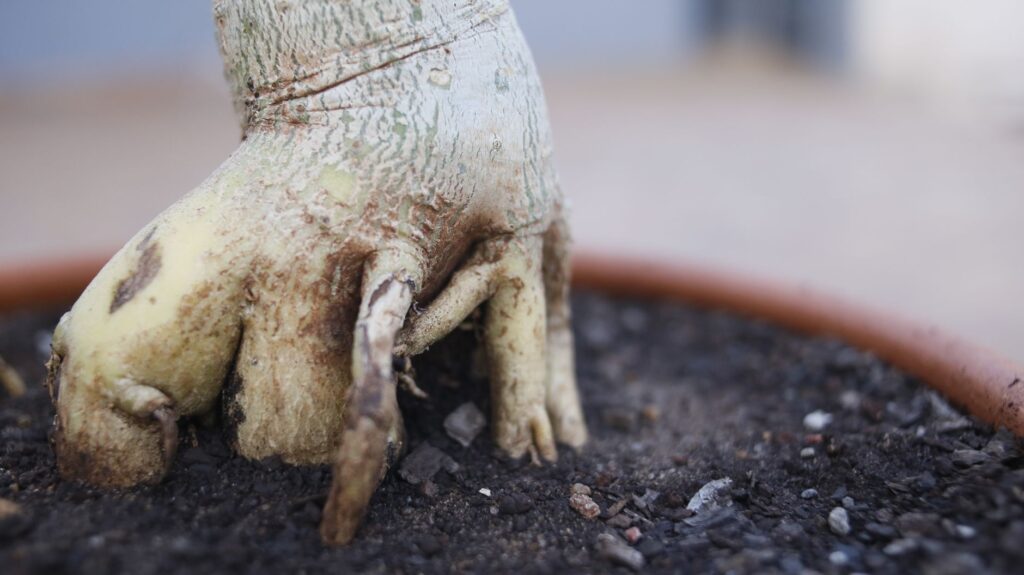
Not all epicormic sprouts carry the same message. Their location on the tree gives you important diagnostic information about what kind of stress is driving the response — and that changes what you should do next.
Trunk sprouts (watersprouts): Shoots along the trunk below the crown almost always point to a crown-level problem — storm damage, major limb failure, topping, or disease that has reduced the canopy above. The tree is compensating for what it lost up top. If you see dense clusters of trunk sprouts on a tree that otherwise looked healthy, check the crown carefully for hidden damage: a large dead limb, a crack in a main crotch, or significant dieback you hadn’t noticed from the ground.
Branch sprouts: Sprouts growing from the tops of branches — especially near the branch tips — often indicate that those branch tips are dying or have already died. The epicormic buds further back along the branch are responding to the loss of dominance from the growing tip. This pattern is common on oaks experiencing drought stress in their upper canopy, especially after a hot, dry July in Middletown neighborhoods where street trees compete with hardscaping for moisture.
Basal suckers and root crown sprouts: Shoots at or below the base of the trunk warrant the closest attention. They can indicate root stress, girdling roots, root rot, or Phytophthora infection at the root collar. They can also appear on grafted ornamental trees — like ornamental cherries or crabapples — when the rootstock begins to outgrow the graft, which is a different problem entirely requiring immediate removal. The USDA Forest Service’s urban forestry resources provide guidance on reading root zone symptoms as part of a broader tree health assessment framework.
Removing Epicormic Sprouts the Right Way — and the Wrong Way
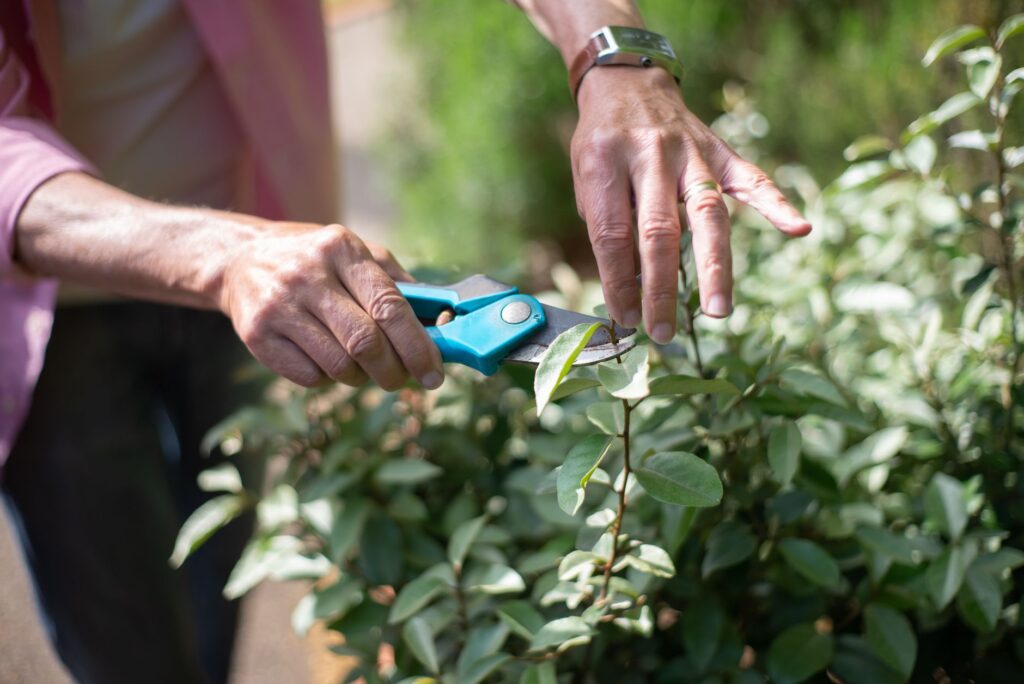
The first impulse most Middletown homeowners have is to cut off every epicormic sprout they see. That impulse is mostly right, but the timing and method matter considerably.
If a tree is responding to a stressful event — a big storm, a severe drought, recent construction — consider leaving the watersprouts alone for the first growing season. They are photosynthesizing actively and helping the tree regain its energy reserves after a loss. Removing them immediately can add additional stress on top of whatever the tree is already managing. Give the tree one full season to stabilize, then address the sprouts.
When you do remove them, do it cleanly. Very young sprouts — just a few inches long — can often be rubbed off by hand without leaving a wound that needs to heal. Older sprouts require a sharp, clean pruning tool. Cut flush with the parent bark without leaving a stub, but don’t cut so deep that you damage the branch collar or the surrounding bark. Never apply wound paint or sealant — the research is clear that these products do not help and can actually slow the tree’s natural compartmentalization response.
Timing matters too. The best window to remove watersprouts on most Middletown shade trees is late summer through early fall, after the tree has slowed its active growth but before fall foliage drop. Removing sprouts during peak growth in June and early July can stimulate a second flush of epicormic buds from the same area within weeks. Fall removal gives those reactivated buds far less time before dormancy sets in.
For trees with heavy epicormic growth, especially mature oaks that pushed dozens of sprouts after storm damage, don’t attempt to remove everything at once. A phased approach — removing no more than a quarter of the sprouts per season, starting with the most vigorous — is kinder to a tree that is already under stress.
When Epicormic Growth Signals a Problem That Goes Beyond Watersprouts
Removing sprouts on your own is appropriate for routine maintenance. But certain patterns of epicormic growth are your tree communicating something more serious — and those situations call for a trained set of eyes before you touch anything.
Sudden, dense epicormic sprouting across the entire trunk of a mature tree that had shown no such growth in prior years is a red flag. This pattern can indicate severe internal decay, a significant root system failure, or the early stages of a vascular disease like Verticillium wilt in maples or oak decline syndrome. The crown may look passable from a distance, but the tree’s vascular system is struggling to deliver water and nutrients to the upper canopy, and the epicormic system has kicked into high gear to compensate.
Basal suckers combined with declining crown density — thinner leaves, reduced leaf size, yellowing foliage, early fall color appearing in late summer — is a combination that should get an arborist scheduled quickly. Trees along Middletown streets and in established neighborhoods often have compromised root systems from decades of paving, grading, and soil compaction. Epicormic growth at the base is sometimes the first visible surface indicator that the tree’s vascular connection at the root collar is being disrupted.
Heavy watersprouts on a tree that was recently topped by an unqualified crew also warrant a professional assessment — not because the sprouts themselves are the main danger, but because topped trees are structurally weakened and the rapidly growing watersprouts that replace the crown attach with inferior structure. An arborist can assess whether corrective pruning over several seasons can rehabilitate the tree, or whether the structural compromise is too advanced to safely work back from.
Middletown's #1 Tree Expert Company
FREE Inspection & Estimate | Certified Arborists | Trimming, Pruning, Removal, More!
Sponsored
What to Do If You Find Epicormic Sprouts on Your Middletown Trees This Summer

If you’re walking your property this week and notice shoots sprouting from tree trunks, branches, or root collars, take a moment to look more carefully before you reach for a pruner. Ask yourself: when did they appear? Is this a tree that had storm damage, a heavy pruning job, or construction activity nearby in the last three or four years? Is the crown above the sprouts healthy and full, or is it showing signs of thinning and dieback? The answers will tell you more than the sprouts alone can.
For a handful of modest watersprouts on an otherwise vigorous tree — and especially if they appeared after a rough winter or a storm that took some limbs — careful observation and fall removal is often all that’s needed. Let the tree settle through the summer, then clean up the sprouts cleanly in September or October when the growth rush has passed.
For dense sprouting, basal suckers on mature shade trees, or epicormic growth combined with any other crown symptom, contact a certified arborist for a summer assessment. A professional can distinguish between a tree doing its best to compensate and a tree in genuine decline — and summer, when the canopy is fully leafed out, is one of the best times of year to make that call. Middletown’s trees deal with a lot — clay soils, coastal humidity, summer drought cycles, and the occasional serious storm. The ones that make it to 80 and 100 years do so partly because the homeowners who steward them pay attention to the quiet signals. Epicormic sprouts are one of the loudest ones.
Photo credits: Featured image by Cecilia Callier on Pexels; Section 1 by Wyxina Tresse on Pexels; Section 2 by Eve R on Pexels; Section 3 by April Yang on Pexels; Section 4 by Vidal Balielo Jr. on Pexels; Section 5 by Kampus Production on Pexels; Section 6 by Peter Xie on Pexels; Section 7 by Curtis Adams on Pexels.