Middletown's #1 Tree Expert Company
FREE Inspection & Estimate | Certified Arborists | Trimming, Pruning, Removal, More!
Sponsored
When Trees Start Talking in Late June

Every summer in Middletown Township, the pattern repeats itself. The first real stretch of hot, dry weather arrives around the solstice, and within a week I’m fielding calls from homeowners whose trees suddenly look wrong. Leaves are browning. They’re dropping early. Some are curling at the edges or hanging limp even in the morning. Some of those trees are drought-stressed and will bounce back with a deep drink of water and a little patience. Others are in the early stages of a fungal disease that started weeks ago and only became visible once the heat dialed things up. And a few — the ones that concern me most — are dealing with both at once, which is when things can get complicated fast.
Late June is one of the most diagnostic moments of the year for trees in Middletown and the broader Monmouth County area. The cumulative stress of the warm months is just beginning to surface, and the decisions you make now — whether to water more, hold off, treat for disease, or call a professional — can determine whether a struggling tree recovers or quietly declines through the rest of summer and into fall. This guide walks through how to tell drought stress, heat stress, and disease apart using your own eyes, and what those distinctions mean for your next step.
What Drought Stress Actually Looks Like
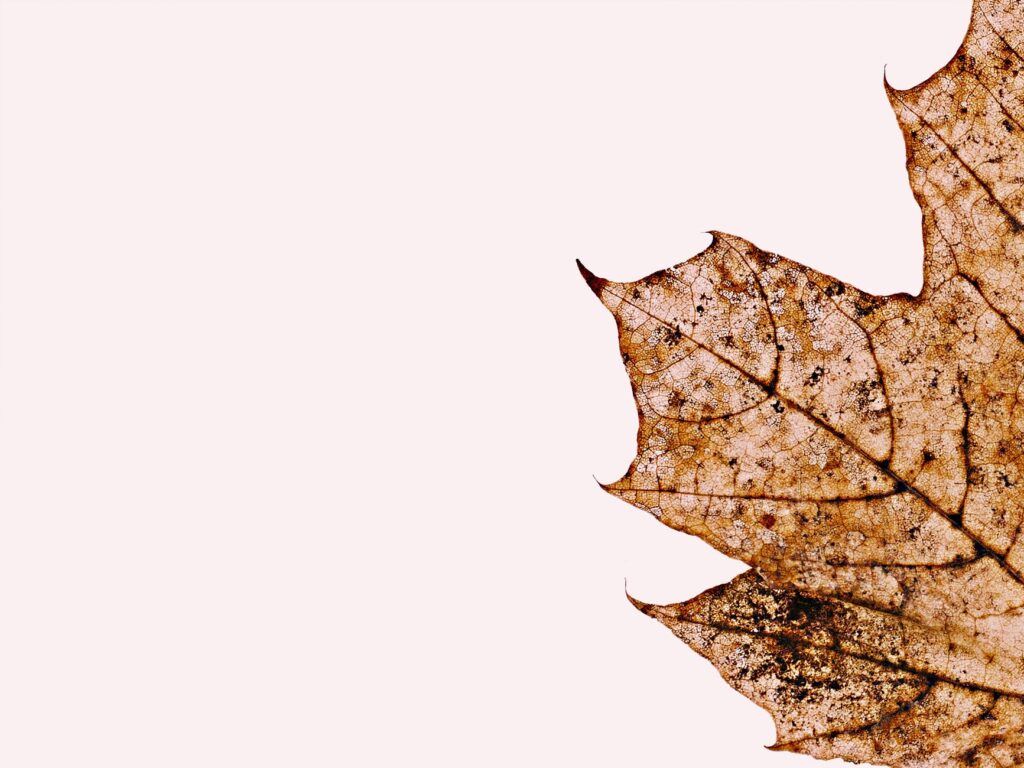
Drought stress is one of the most common conditions I diagnose in Monmouth County backyards, but it’s also one of the most frequently misread. Homeowners see a browning tree and assume it’s sick. In reality, it’s often just thirsty. The key is knowing where the browning starts and how it progresses.
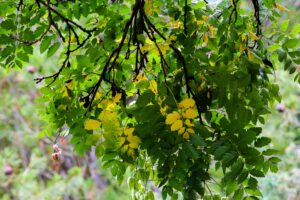
Classic drought stress symptoms follow a consistent pattern: leaves begin to scorch at their outer margins, then brown inward. The browning tends to be uniform across the canopy — hitting the outermost leaves, the most sun-exposed positions, and the branch tips first. In deciduous trees, you may also see leaves that are noticeably smaller than normal (a pre-emptive response the tree begins in early spring when root sensors detect low soil moisture), premature yellowing, and early leaf drop. Red maple (Acer rubrum), one of the most common trees in Middletown yards, will voluntarily shed a significant portion of its canopy in a bad drought — essentially reducing its water demand by cutting its leaf surface area.
Drought stress also shows up in the twigs. When a tree is very dry, new growth tips may die back, and the bark on small branches can feel papery or slightly shriveled rather than taut. A quick check: snap a pencil-thin twig. A drought-stressed branch often shows pale, dry cambium tissue rather than the vivid green you’d see in a well-hydrated tree. The International Society of Arboriculture notes that prolonged drought is among the leading causes of urban tree decline nationally — often because the early signals aren’t recognized until the tree has already lost considerable ground.
Heat Stress vs. Drought: Middletown's Soils Change the Equation
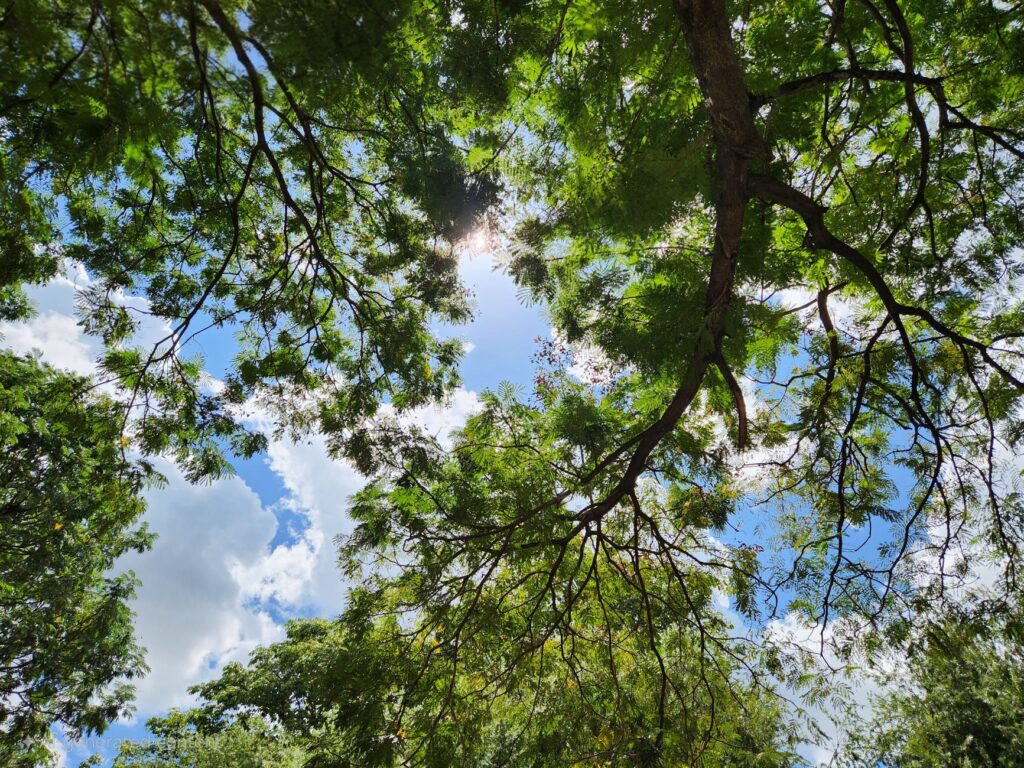
Heat stress and drought stress often travel together, but they’re not always the same thing — and in Middletown, the difference matters because of our soil. Much of Middletown Township sits on clay-loam soils that hold moisture reasonably well after a rain. A tree in a lawn that received good irrigation or benefited from a strong May storm may still have adequate moisture in its root zone even as afternoon air temperatures climb into the 90s. But that same tree can show heat stress symptoms that look almost identical to drought stress.
Heat stress happens when a tree’s transpiration system — its ability to pull water from roots up through the trunk and cool itself through leaf evaporation — is overwhelmed by ambient temperature and vapor pressure. Trees in heat-concentrated spots are especially vulnerable: south- and west-facing slopes, trees surrounded by asphalt or concrete (common near Leonard, Port Monmouth, and parts of Atlantic Highlands where commercial paving meets older residential plantings), or trees with compacted root zones that slow water uptake even when moisture is physically present in the soil.
The distinction: heat stress alone often produces wilting during the hottest part of the day that fully recovers by the next morning, along with leaf curl (especially in maples and cherries) and a general drooping or dull canopy tone — without the hard, crispy marginal browning of true drought. If leaves look wilted at 3 PM but look normal at 8 AM, heat stress without deep drought is genuinely possible. The fix in that case isn’t always to water more aggressively. Improving soil aeration so roots can move existing moisture is often equally important. Research published through the Rutgers New Jersey Agricultural Experiment Station on urban tree stress consistently shows that physical root zone conditions matter as much as raw moisture availability in suburban landscapes.
Middletown's #1 Tree Expert Company
FREE Inspection & Estimate | Certified Arborists | Trimming, Pruning, Removal, More!
Sponsored
When It's Not Stress — Spotting Disease Symptoms
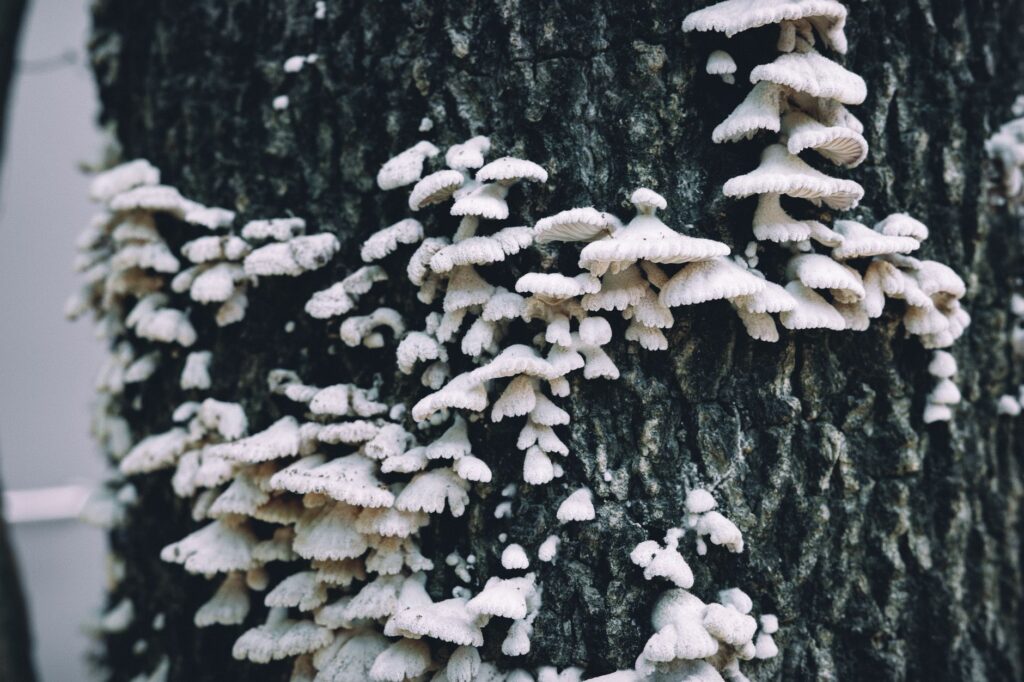
The key to separating environmental stress from disease is pattern. Drought and heat stress are systemic responses — they affect the whole tree fairly uniformly, hitting the most exposed parts first. Disease symptoms are more localized, more irregular, and often follow patterns that don’t match sun exposure or canopy position at all.
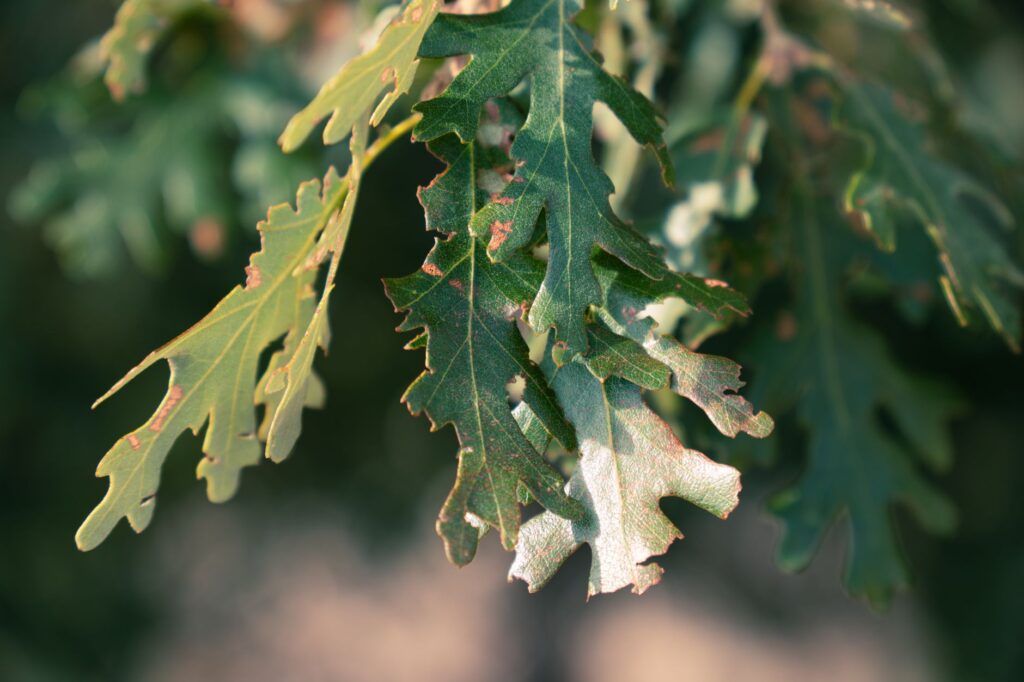
Fungal diseases typically produce spots with defined edges. Look for circular or angular lesions, often with a yellow halo around a dark brown center. You might see tissue that dies along leaf veins rather than at the margins — that’s anthracnose, which affects sycamores, oaks, and dogwoods across Middletown’s parks and backyards. Powdery mildew shows up as a white, flour-like coating on leaf surfaces, usually concentrated in the more humid, shadier parts of the canopy. These symptoms look nothing like the clean, edge-first browning of drought stress.
Bacterial problems often produce oozing — a wet, dark, sometimes foul-smelling seepage from bark, particularly at pruning wounds or old cracks. This is slime flux, and while it’s usually not immediately fatal, it signals stress and vulnerability. Verticillium wilt, a soil-borne fungus found in Monmouth County’s heavier clay soils, causes wilting that often starts on one side of the tree or in a single major scaffold branch — a lopsided symptom pattern that’s a reliable tip-off something systemic but non-hydrological is at work. Resources from the USDA Forest Service offer a useful framework for separating abiotic (environmental) from biotic (disease- or pest-driven) causes of tree decline — a distinction that shapes every treatment decision that follows.
The Five-Minute Soil Check Before You Do Anything Else
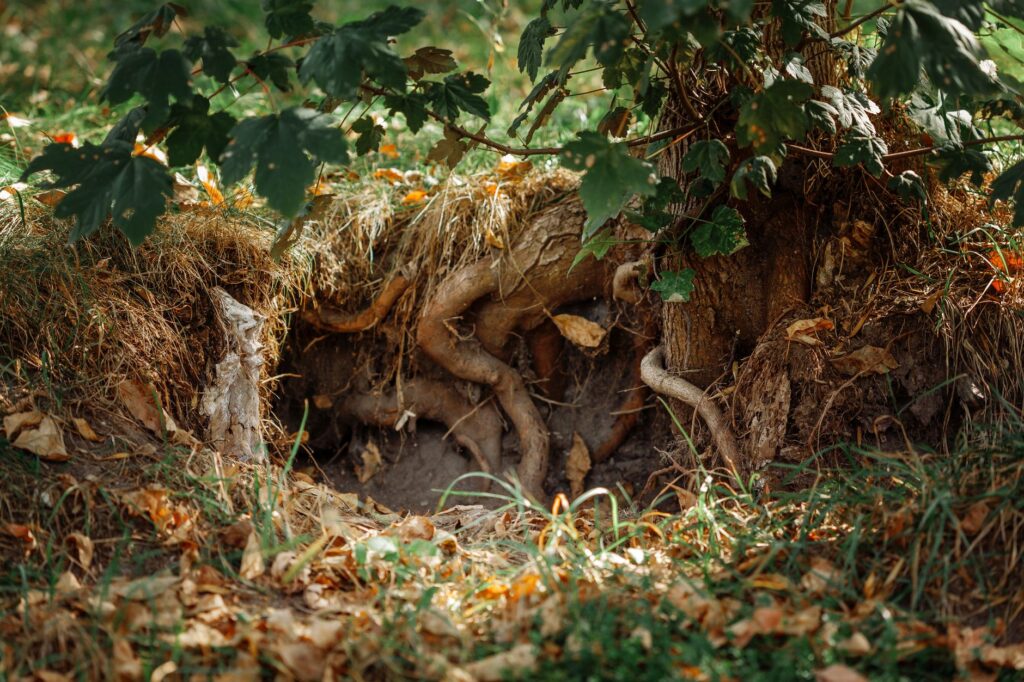
Before assuming your tree needs more water, check whether it actually does. Overwatering — especially in Middletown’s clay-loam soils — can be as damaging as underwatering. Clay holds moisture for a long time after rain, and roots sitting in consistently waterlogged soil can develop root rot symptoms that, paradoxically, look very similar to drought stress at the canopy level: wilting, premature yellowing, early leaf drop.
The simplest diagnostic: take a long screwdriver, a metal rod, or a soil probe and push it 6-8 inches into the ground within the root zone (remember, tree roots extend well beyond the drip line, not just under the trunk). If it slides in with moderate resistance, adequate moisture is likely present. If it hits hard, dry resistance similar to packed clay, the tree needs water. If it pushes in very easily and the soil around the probe feels wet and cold, hold off on watering and focus instead on soil drainage.
For a more precise check, pull a handful of soil from that 6-inch depth and squeeze it. Clay-loam that holds its shape but doesn’t feel saturated indicates reasonable moisture. Soil that crumbles immediately and has no cohesion is dry. This test is especially useful across Middletown’s variable soil landscape — the loamier soils near Poricy Park and the Navesink River corridor drain faster and dry out sooner than the heavier clays in the western parts of the township near Lincroft, and a single weekly watering schedule won’t work the same way in both spots.
The Danger Zone: When Drought and Disease Hit Together
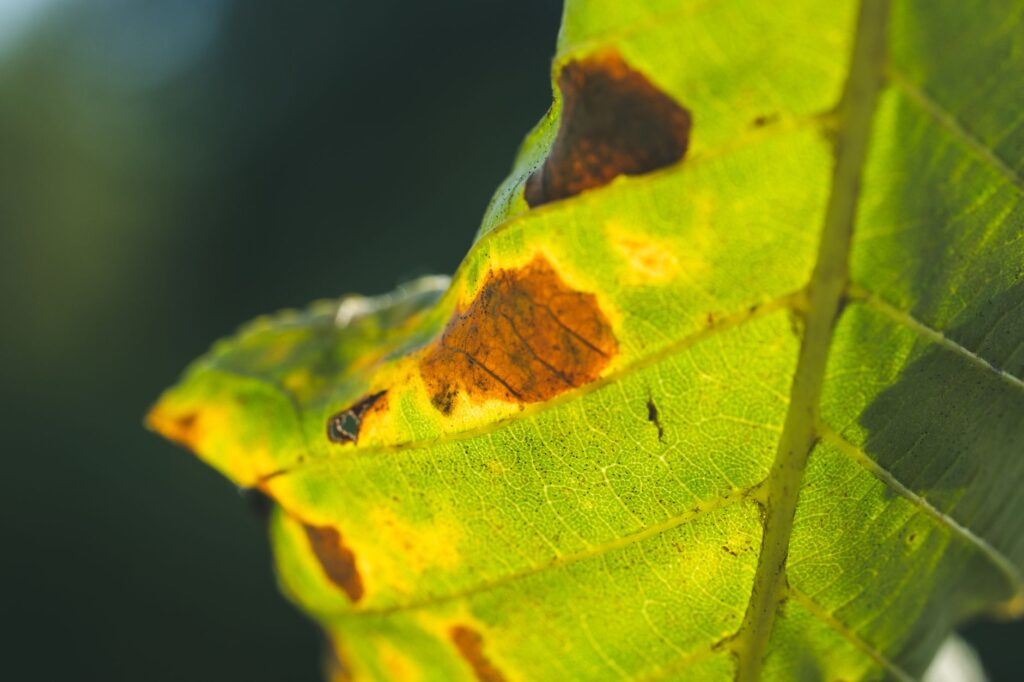
The hardest trees to diagnose — and the ones at highest risk — are trees dealing with both environmental stress and active disease simultaneously. This overlap is more common than most homeowners expect, because stress doesn’t just look bad: it actively weakens a tree’s chemical and physical defenses, making it susceptible to pathogens it would normally fight off or contain.
Trees in Middletown’s suburban landscape are particularly exposed to this cascade. A tree that spent spring already battling compacted soil or root damage from last year’s construction project, then entered June stressed by a dry May, is already running low on defensive reserves when an opportunistic fungal pathogen finds a wound or a dying branch tip to colonize. You might notice drought stress symptoms in late June, then see disease lesions appearing in July, then watch the tree enter rapid decline through August. Each factor compounds the next.
The warning signs of this dangerous overlap: stress symptoms that don’t respond normally to watering, disease lesions appearing on tissue that should have adequate soil moisture, or decline that’s moving faster than the weather alone could account for. Opportunistic pathogens — Cytospora canker in stressed spruces, Botryosphaeria canker in declining hardwoods — specifically target trees already under environmental pressure. The NJ DEP Division of Parks and Forestry tracks these stress-disease interaction patterns across New Jersey forests, and the pattern is consistent: environmental stress opens the door, and pathogens walk through it.
Middletown's #1 Tree Expert Company
FREE Inspection & Estimate | Certified Arborists | Trimming, Pruning, Removal, More!
Sponsored
When to Stop Guessing and Call a Certified Arborist

Most drought and heat stress, caught at this stage of summer, can be managed by a homeowner. A deep watering once a week during dry stretches — slow and long, to get water down 8-12 inches rather than just wetting the surface — combined with a 3-inch layer of wood chip mulch over the root zone will carry most established Middletown trees through the rest of summer in reasonable shape. The tree is signaling pressure, but it likely has the stored reserves to recover if the underlying problem is just water deficit.
There are situations, though, that genuinely require a professional eye. If you’ve verified soil moisture, adjusted your watering routine, and a tree continues to worsen, something else is happening at the root or vascular level that you won’t see from above. If the decline is asymmetrical — one major scaffold branch failing while the rest of the canopy holds — that’s a flag for vascular disease or a localized root problem. If you’re seeing oozing from the bark, unusual swellings, or bark that’s cracking and lifting in a way it wasn’t doing last year, those warrant a formal assessment before the pattern worsens.
A certified arborist can probe root zones, assess soil conditions, and use diagnostic experience to distinguish between a tree that’s stressed but recoverable and one in structural or systemic decline. Summer also changes the risk calculus: weakened wood is more likely to fail under the weight of leaves or in the July and August thunderstorms that regularly move through Middletown and the Raritan Bayshore. When you’re unsure of the diagnosis and there’s a structure or a person regularly under that canopy, that uncertainty is reason enough to make the call sooner rather than later.
Photo credits: Featured image by Cafer SEVİNÇ on Pexels; Section 1 by Michael Burrows on Pexels; Section 2 by Em Hopper on Pexels; Section 3 by Jelly Pancake on Pexels; Section 4 by Tony Wu on Pexels; Section 5 by Julia Filirovska on Pexels; Section 6 by Patrick on Pexels; Section 7 by Gustavo Fring on Pexels.