Middletown's #1 Tree Expert Company
FREE Inspection & Estimate | Certified Arborists | Trimming, Pruning, Removal, More!
Sponsored
The Tree Killer You Mow Past Every Saturday
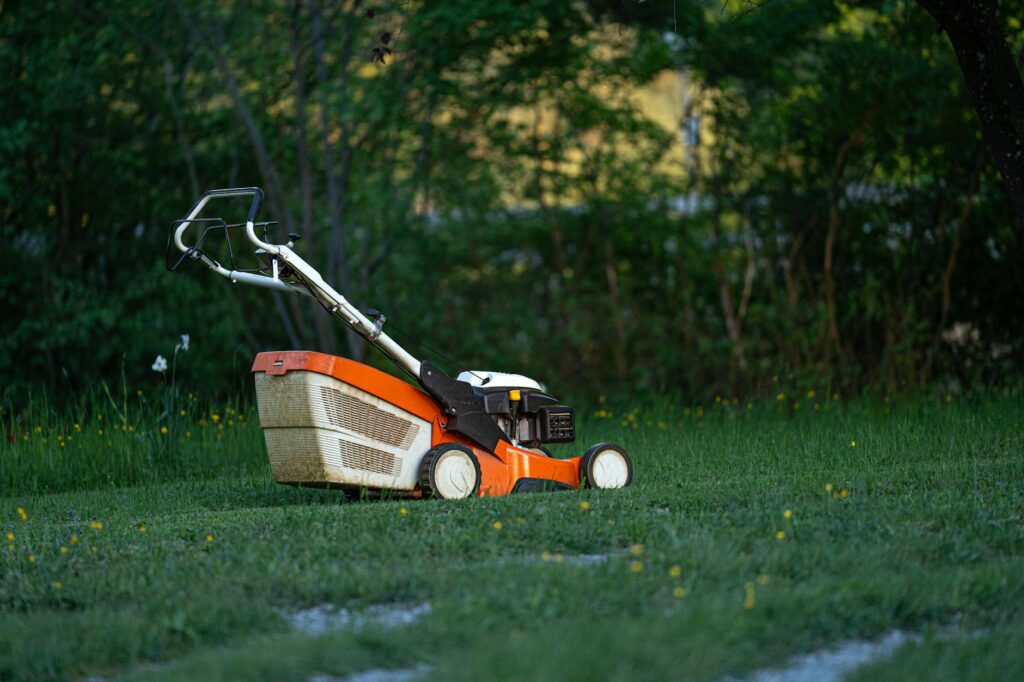
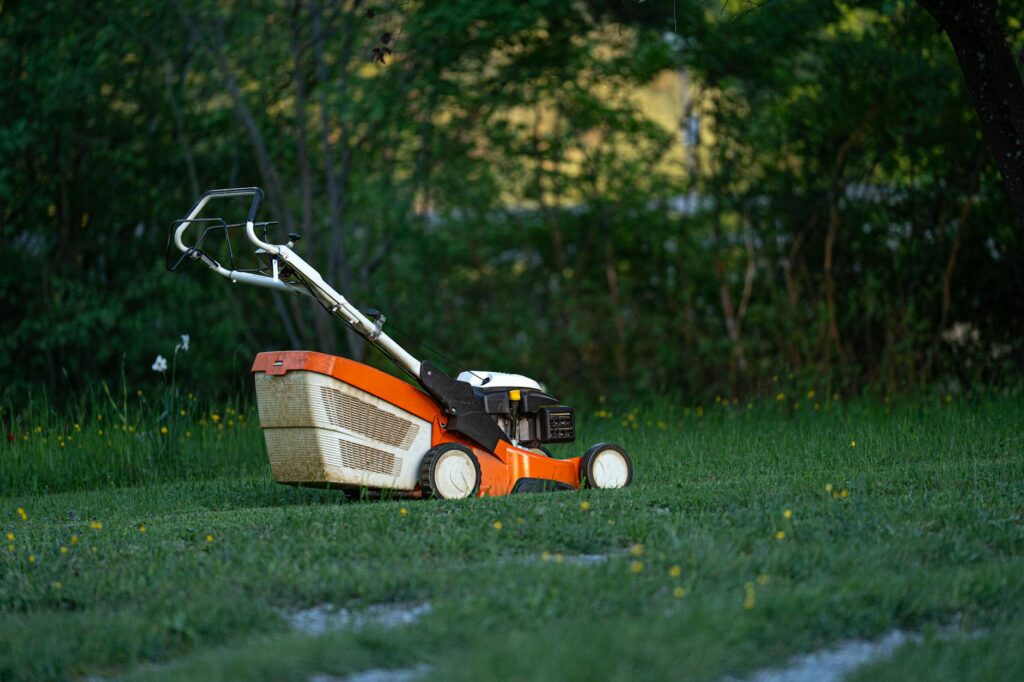
Every spring, I get calls about maples, dogwoods, and zelkovas that are dying for no obvious reason. The homeowner is baffled — no storm damage, no visible insects, the leaves were fine last year. Nine times out of ten, when I walk around the base of that tree, I find the answer right there on the trunk: a ring of pale, scarred bark at lawn-mower height, built up season after season until the tree couldn’t take it anymore.
In Middletown Township, where tight suburban lots mean trees and lawn mowers share the same ten feet of yard, mower and string trimmer damage is one of the most common — and most preventable — causes of tree decline I see. It rarely kills a tree outright. Instead, it does something worse: it chips away at the tree’s ability to defend itself, year after year, until the tree is so compromised that a dry summer or a mild fungal infection becomes a fatal wound.
If you mow around trees in your yard, this article is for you. Understanding what those seemingly minor nicks and scrapes actually do to a tree — and how easy it is to stop — can add decades to the life of a tree that might otherwise be gone before you know it.
Why Tree Bark Is Far More Vulnerable Than It Looks
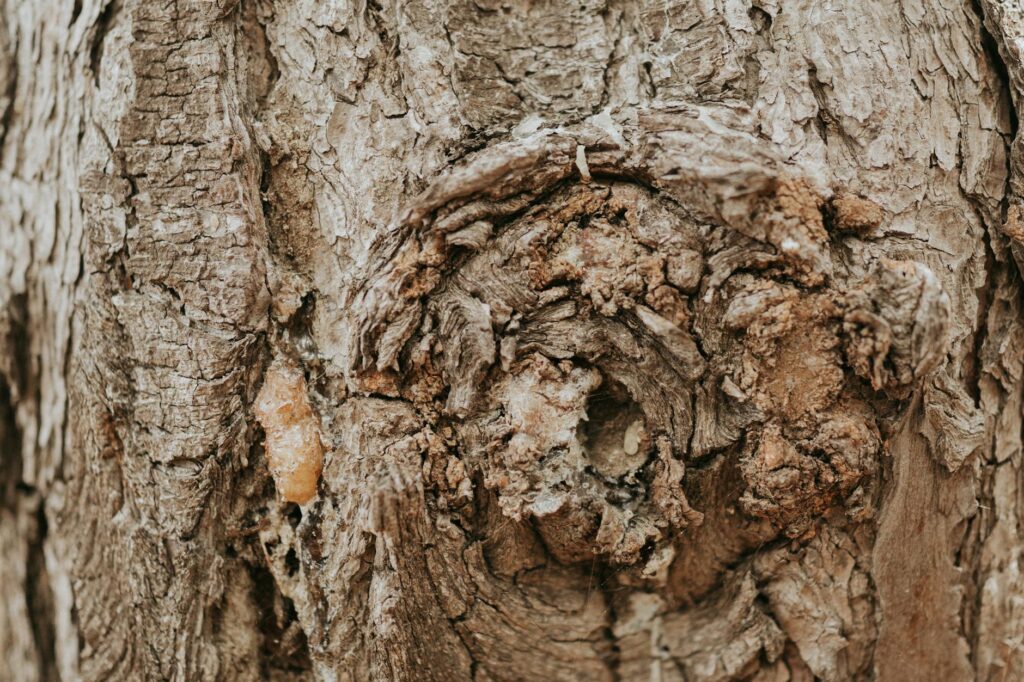
Most people think of bark as a tree’s armor. And in a sense, it is — but it’s incredibly thin armor, and the living layer underneath is almost absurdly delicate. Just beneath the rough outer bark is the cambium, a layer of cells only a few millimeters thick that is entirely responsible for two of a tree’s most critical functions: growing new wood inward and maintaining the phloem — the highway that moves sugars from the leaves down to the roots.
When a mower blade strikes the bark at trunk height, it doesn’t just scratch the surface. Even a glancing blow can crush or sever that cambium layer in a strip the width of the blade. On young trees, where the bark is thinner and the cambium is closer to the surface, even a single pass can be serious. On a mature white oak (Quercus alba) with thick, furrowed bark, repeated low-speed impacts over years can still penetrate to living tissue.
What makes this injury pattern so dangerous is that it compounds. A tree can compartmentalize a single small wound — walling it off with specialized cells and essentially treating it like a scar. But the compartmentalization process has limits. If mowing occurs every week from May through October, the tree never gets ahead of the damage. Each new scrape reopens or extends old wounds. Eventually, the strip of dead, non-conductive tissue around the base of the trunk grows wide enough to interrupt the entire flow of carbohydrates between crown and roots. The roots starve. The crown thins. The International Society of Arboriculture identifies mechanical damage from lawn equipment as one of the leading preventable causes of tree decline in residential landscapes.
String Trimmer Wounds: A Slow Girdling at Ground Level
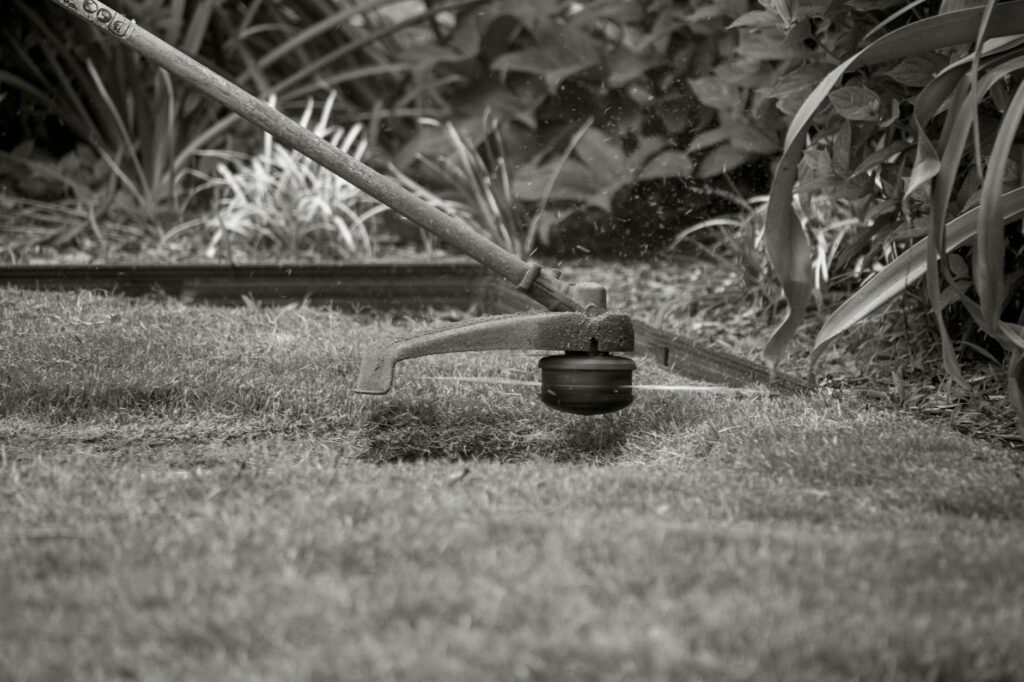
If mower blades deliver chronic stress, string trimmers apply an acute threat. The rotating monofilament line on a weed whacker strikes at a precise, consistent height — typically the lower 6 to 12 inches of the trunk, where the bark is thinnest and the root flare is just beginning to emerge from the soil. Unlike a mower’s glancing blow, a trimmer’s repeated whipping impacts can strip bark completely from a tree’s base in just a few growing seasons.
The real danger is girdling: when bark is removed all the way around a trunk’s circumference, the phloem pathway is completely severed. Sugar from photosynthesis can no longer travel downward to the roots. The root system — which depends entirely on that carbohydrate supply to grow, maintain itself, and absorb water — begins to decline. Above ground, the tree may look fine for a year, sometimes two. But the root dieback that begins below the surface will eventually show up as crown thinning, branch dieback, and ultimately, whole-tree failure.
In Middletown’s heavier clay-loam soils, common around neighborhoods like Lincroft and Chapel Hill, trees under trimmer stress tend to struggle more than those in sandier coastal ground. Waterlogging during wet springs combines with root-zone dieback to create a double stress load that accelerates decline. I’ve seen 30-year-old red maples (Acer rubrum) fail in their prime because of this combination — and in almost every case, the base of the trunk tells the story clearly.
Middletown's #1 Tree Expert Company
FREE Inspection & Estimate | Certified Arborists | Trimming, Pruning, Removal, More!
Sponsored
What Mower and Trimmer Damage Looks Like on Your Tree
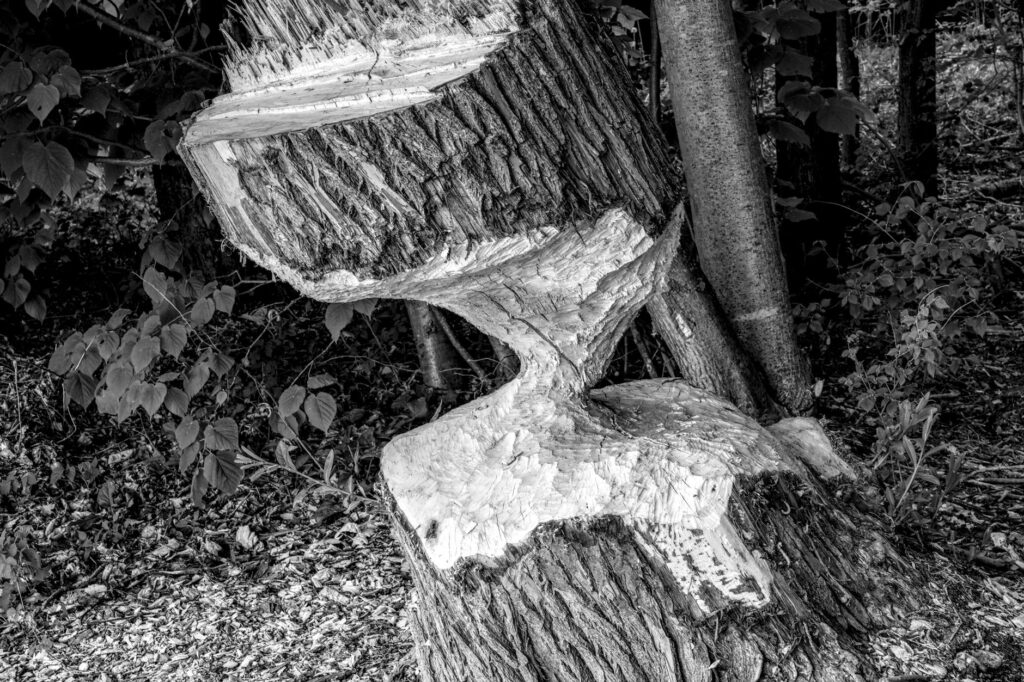
You don’t need to be an arborist to recognize the signs of mechanical trunk damage. Walk around the base of every tree in your yard and look closely at the lower 18 inches of the trunk. Here’s what to look for:
- Pale or discolored patches of bark — areas lighter than the surrounding bark often indicate dead or dying tissue underneath
- Raised callus ridges — wavy bark or raised seams running vertically up the trunk as the tree tries to grow over old wounds
- Depressed or sunken areas — where bark has died and the underlying wood is exposed or softened
- Bare wood at the trunk base — especially a ring of exposed wood at a consistent mowing height
- Crown thinning without an obvious cause — if branches are dying back from the top down and nothing else explains it, examine the root flare and lower trunk closely
Don’t confuse natural bark texture with damage. Oaks develop thick, furrowed bark that can look rough and irregular to an untrained eye. What you’re looking for is asymmetry — patches that look distinctly different from the rest of the trunk — and wounds that track around the base at a consistent height, the telltale signature of repeated equipment contact.
According to Rutgers Cooperative Extension, early identification of mechanical damage gives trees the best chance to recover through compartmentalization — the same biological process that walls off disease and decay in healthy trees. Once bark loss becomes extensive, recovery becomes far less certain.
The Simple Fix That Adds Years to Your Trees' Lives
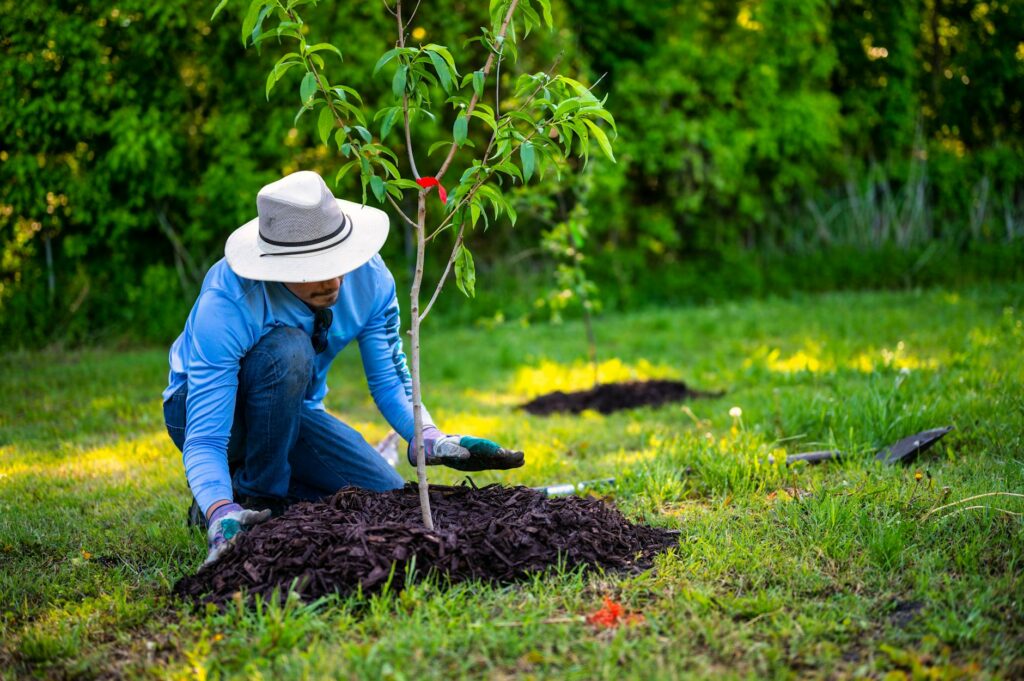
The single most effective thing a Middletown homeowner can do to protect their trees from mechanical damage costs almost nothing and takes twenty minutes: build a proper mulch ring.
A well-constructed mulch ring around the base of your tree does two things simultaneously. First, it creates a physical buffer zone that keeps mowers and trimmers at a safe distance from the trunk — if you’re mowing around the mulch ring rather than up to the tree, the equipment never touches bark. Second, a proper mulch ring improves the growing conditions for the root system: it moderates soil temperature, retains moisture through Middletown’s dry mid-summer stretches, and prevents the soil compaction that comes from repeated mower passes over the root zone.
The right way to build a mulch ring: extend it at least 3 to 4 feet out from the trunk (more is better for mature trees — ideally to the drip line or as far as practical), keep the mulch 2 to 4 inches deep, and leave a clear gap of 2 to 3 inches around the trunk itself. Do not pile mulch against the bark — this creates the moisture conditions that favor fungal pathogens and bark decay. The Rutgers NJAES mulching factsheet has detailed guidance on proper depth and ring construction that aligns with what certified arborists recommend in the field.
For young trees — those planted in the last three to five years — consider adding a flexible plastic or rubber tree guard around the lower trunk during the growing season. These guards add a meaningful layer of physical protection during the years when bark is thinnest. Check them each season and adjust as the trunk grows; a guard left too long can create a girdling problem of a different kind.
What to Do If Your Tree Already Has Trunk Damage
If you find bark damage on a tree in your yard, the first thing to do is not panic — and not reach for the wound sealant. For decades, the standard advice was to coat pruning wounds and bark damage with tar-based sealants. That advice has been thoroughly discredited by decades of arboricultural research. Wound sealants trap moisture and impair the tree’s natural compartmentalization response; clean, open wounds heal more effectively. The Tree Care Industry Association and the ISA both align on this point: leave wounds open and let the tree do its own work.
The right response depends on how much of the trunk’s circumference is affected:
- Under 25% of circumference affected: The tree will almost certainly compartmentalize successfully if you stop the damage now. Remove the cause of injury, build a mulch ring, and monitor annually.
- 25% to 50% affected: The tree can likely recover, but it’s under real stress. Stop the damage, improve growing conditions, and schedule an arborist evaluation to assess how deep the damage goes and whether the cambium is still viable.
- Over 50% affected: This is now a structural and health concern. A professional evaluation is needed to understand the tree’s trajectory. In some cases, bridge grafting — grafting small shoots across the damaged area to reconnect the phloem — can save a valuable tree.
Whatever the extent of the damage, the most important next step is the same: stop the ongoing damage. A mulch ring won’t reverse what’s already happened, but it will give the tree its best chance to wall off the injury and stabilize. Trees are remarkably good at surviving adversity when you simply remove the source of ongoing stress.
Middletown's #1 Tree Expert Company
FREE Inspection & Estimate | Certified Arborists | Trimming, Pruning, Removal, More!
Sponsored
When to Call a Certified Arborist
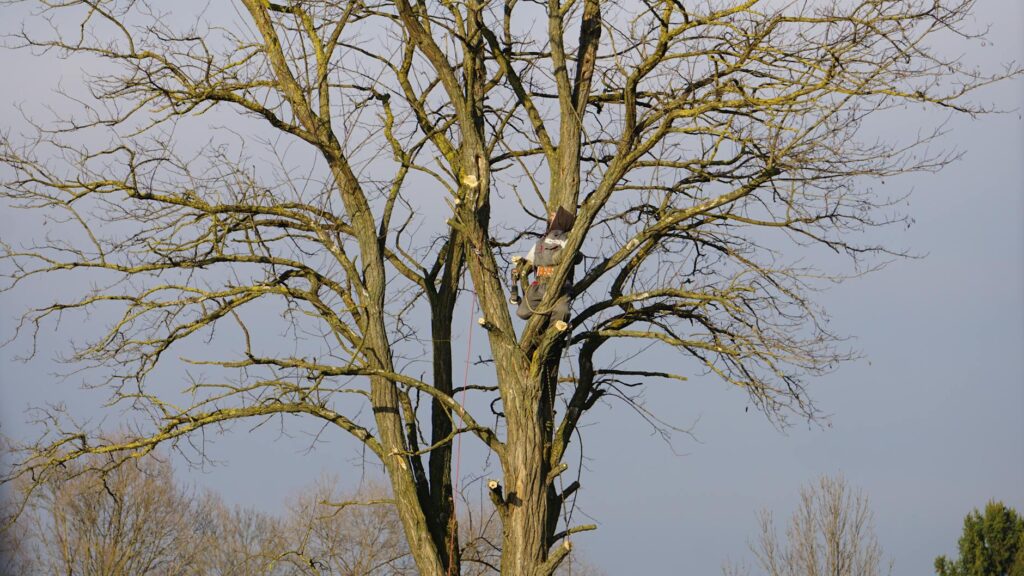
Most mower and trimmer damage is preventable and, if caught early, manageable. But if you’ve discovered significant bark loss on a tree — especially one that’s large, near a structure, or showing visible decline in the crown — a professional assessment is worth far more than its cost.
A certified ISA arborist can probe damaged bark to determine whether living cambium remains beneath the wound, evaluate how far the damage extends around the trunk’s circumference, and give you a realistic prognosis for the tree’s long-term health. They can also advise on whether structural support systems like cabling would reduce risk while the tree recovers, and they can document the tree’s condition — which matters if a declining tree near a fence or structure eventually becomes a liability question with a neighbor.
In Middletown Township, where mature oaks, maples, and dogwoods define the character of neighborhoods from Navesink to Port Monmouth and out to the Bayshore, a tree that’s been in your yard for thirty years is worth the cost of an expert opinion. If you find the kind of base damage described in this article, don’t wait for the decline to show from the street. By then, options are usually fewer and costs are higher. A mulch ring costs a few bags of hardwood chips and a Saturday morning — and if it saves a tree, it may be the best investment you make in your yard this season. When in doubt, consult a certified arborist before the problem outgrows a simple fix.
Photo credits: Featured image by Joel Hägele on Pexels; Section 1 by Joel Hägele on Pexels; Section 2 by Taryn Elliott on Pexels; Section 3 by Princess on Pexels; Section 4 by Jean-Paul Wettstein on Pexels; Section 5 by Alfo Medeiros on Pexels; Section 6 by sergeispas on Pexels; Section 7 by Dmytro Glazunov on Pexels.