
Middletown's #1 Tree Expert Company
FREE Inspection & Estimate | Certified Arborists | Trimming, Pruning, Removal, More!
Sponsored
When Your Crabapple Starts Dropping Leaves in May
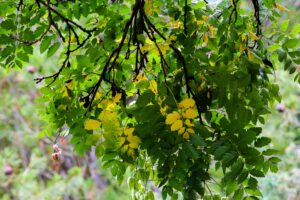
If you walked past your ornamental crabapple this week and noticed olive-colored or brown spots spreading across the leaves — or worse, a scattering of yellowed foliage already collecting under the tree in the first week of May — you’re watching apple scab (Venturia inaequalis) do exactly what it was designed to do. After a wet April and a persistently cool, humid stretch through early May, conditions across Middletown Township have been near-ideal for one of the most common fungal diseases affecting ornamental trees in Monmouth County.
Apple scab doesn’t kill trees outright, but it’s relentless and cumulative. A tree that defoliates heavily in May has to spend the rest of the growing season pushing out a second flush of leaves — an enormous energy drain that weakens the canopy, makes the tree more vulnerable to other stressors, and year after year leaves it struggling to stay vigorous. In this part of New Jersey, where cool, wet springs are the norm, susceptible crabapple cultivars almost never get a break.
Here’s what I tell homeowners along the Navesink and down toward Port Monmouth when they call in early May: the primary infections have already happened. The spots you’re seeing now trace back to two or three weeks ago, when temperatures hovered in the mid-50s and rain kept new leaves wet for hours at a stretch. Understanding when and how this disease works changes everything about how you manage it — and what you expect from your tree going forward.
What Is Apple Scab? The Fungus Behind the Spots
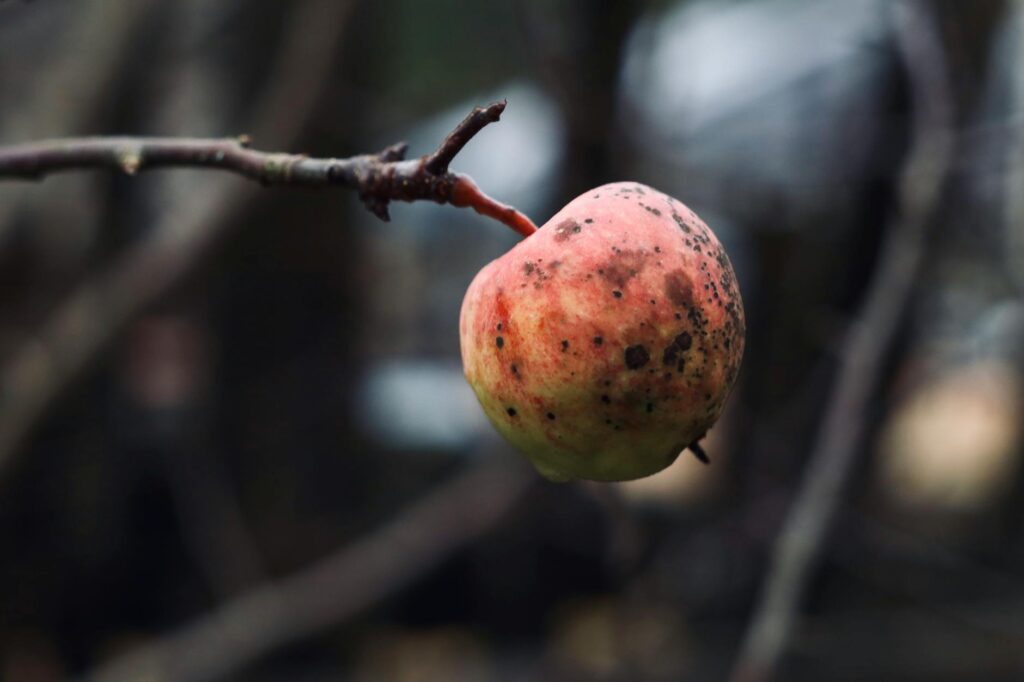
Apple scab is caused by the fungus Venturia inaequalis, a pathogen that has co-evolved with members of the rose family — apples, crabapples, pears, hawthorns, and mountain-ash — for centuries. In Middletown and across coastal Monmouth County, ornamental crabapples (Malus spp.) are by far the most common host in residential yards, and virtually every susceptible cultivar planted in this region will show some degree of scab in a wet spring.
The fungus overwinters in fallen leaf litter from the previous season. Those brown, spotted leaves your crabapple dropped last July and August are full of dormant fungal structures packed with ascospores that survive the winter ready to fire when spring arrives. As temperatures warm and new leaves emerge, spores are ejected during rain events and dispersed onto freshly developing tissue. The critical infection window opens at budbreak — typically mid-April in Middletown — and remains active through the first four to six weeks of leaf expansion.
If a leaf stays wet for as little as six to nine hours at 60°F, infection can occur. Secondary spores produced on visible lesions continue spreading infections through the summer, though the initial spring wave typically does the most damage. Rutgers Cooperative Extension’s Plant & Pest Advisory tracks apple scab development across New Jersey each spring, issuing timely updates that extension agents use to advise homeowners and orchardists throughout Monmouth County. Their 2026 reports confirmed active scab pressure throughout the primary infection window — consistent with what most of us are observing in yards across Middletown this week.
Reading the Symptoms on Your Tree
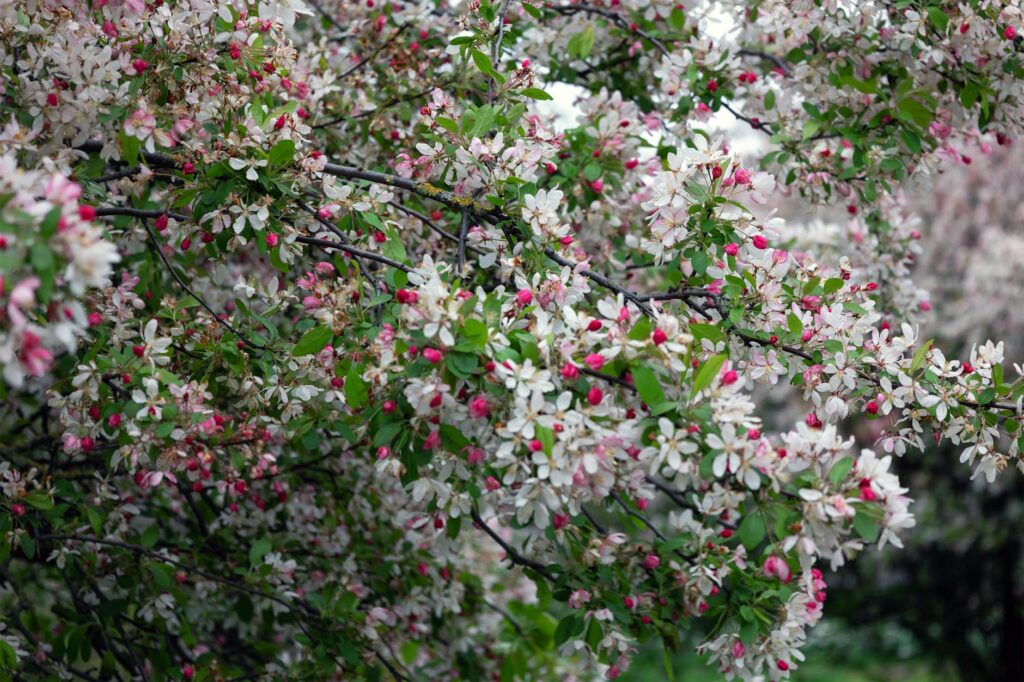
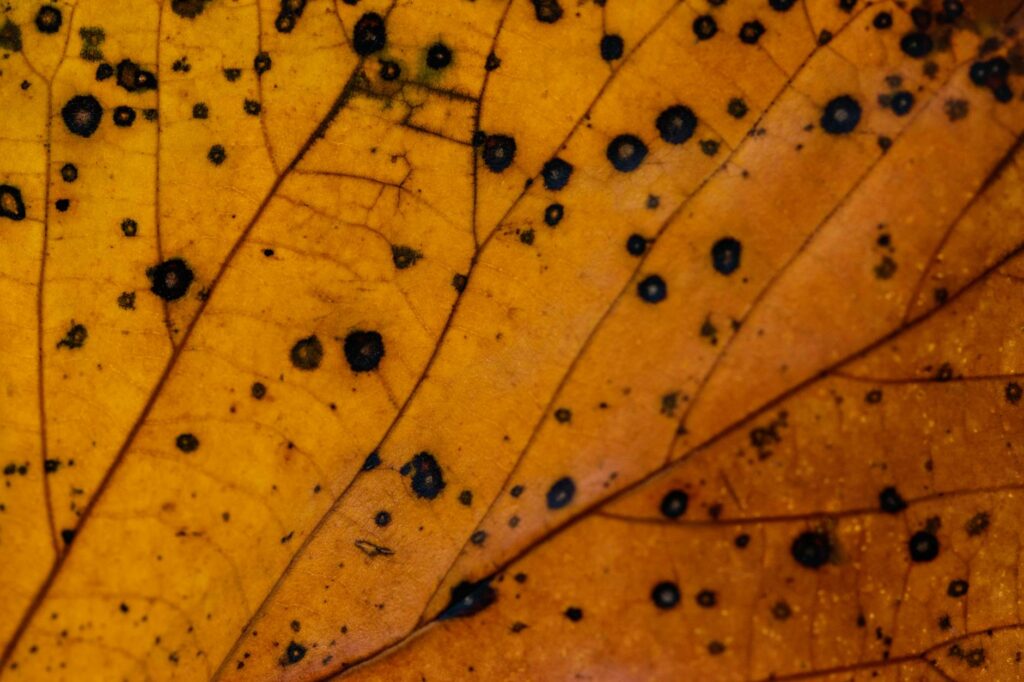
Apple scab symptoms typically become visible two to three weeks after infection. The spots showing up in early May most likely trace back to infection events during the wet stretch in mid-to-late April. On leaves, the signs follow a predictable progression:
- Olive-green to dark brown spots with feathery, irregular margins — often with a slightly velvety texture from the spore layer on the surface
- Yellowing of the tissue surrounding each lesion, which drives the characteristic early leaf drop that worries homeowners in May
- Spots appearing on both upper and lower leaf surfaces in severe infections
- Distorted or curled young leaves on shoots infected during the very first stages of leaf emergence
On fruit — if your crabapple produces persistent ornamental fruit — you may notice dark, corky scabs on the skin surface developing through summer and persisting on mummified fruit into fall. Severely infected trees can drop the majority of their foliage by June or July, leaving branches nearly bare during the peak of the growing season. It looks alarming, and it’s stressful for the tree, but it’s rarely fatal in a single year.
A mild infection — scattered spots, minimal defoliation — on an otherwise healthy, well-watered tree is manageable. Heavy defoliation year after year is a different story. Trees that lose most of their leaves repeatedly decline in vigor, become more vulnerable to secondary pathogens like cytospora canker, and gradually compromise their structural integrity. That’s when the conversation shifts from management to replacement.
Middletown's #1 Tree Expert Company
FREE Inspection & Estimate | Certified Arborists | Trimming, Pruning, Removal, More!
Sponsored
Why Middletown’s Spring Climate Creates Perfect Apple Scab Conditions
Middletown Township sits in USDA Hardiness Zone 7a, with a coastal climate strongly influenced by Raritan Bay and the Atlantic. Our springs tend to be cool and protracted — temperatures frequently linger in the mid-50s to low 60s well into May, with frontal systems pushing rain events through every five to ten days. It’s precisely the weather profile that Venturia inaequalis exploits most effectively.
Plant pathologists use the Mills Table — a tool developed in the 1940s that predicts apple scab infection risk based on temperature and continuous leaf wetness — to assess disease pressure each season. At 60°F, nine or more continuous hours of leaf wetness creates conditions for infection. At 55°F, the threshold stretches to around 14 hours. In a normal Middletown May, those thresholds are met repeatedly. In 2026, after the wet pattern that began in mid-April, most susceptible crabapples in the township have likely experienced multiple overlapping infection events before a single spot appeared.
Properties near the Bayshore — in Leonardo, Port Monmouth, and along the lower reaches of the Raritan — face added moisture stress. Morning fog from the bay can keep leaf surfaces wet well into mid-morning even without active rain, extending the infection window beyond what drier inland sites experience. The International Society of Arboriculture’s tree care library provides thorough background on how climate and environmental factors interact with fungal disease cycles — understanding this connection is what separates reactive treatment from genuinely effective year-ahead planning.
Timing Is Everything — Managing Apple Scab in Real Time
Here’s the honest truth about managing apple scab once you can see the spots: the primary treatment window has closed. Fungicide applications for apple scab are preventive, not curative. They protect newly emerging leaf tissue before the fungus makes contact — once spores have penetrated and symptoms appear, spraying won’t reverse the existing damage. What a well-timed mid-season application can do is reduce secondary infections through the remainder of the growing season.
For homeowners committed to managing a susceptible crabapple going forward, the effective spray window opens at green tip — the first visible sign of bud expansion — and runs through petal fall or approximately four to six weeks after budbreak. Applications should be timed before and shortly after predicted rain events. Fungicide options available to homeowners include products containing myclobutanil, propiconazole, or sulfur-based materials, all widely available at local garden centers. A seven-to-ten-day spray schedule during the critical window, with extra attention to forecasted stretches of cool, wet weather, makes up the core of a meaningful preventive program.
Cornell’s Integrated Pest Management apple scab fact sheet provides one of the most thorough breakdowns of infection risk, fungicide timing, and long-term management strategy available to homeowners and arborists. The consistent message from extension resources is that spray programs demand disciplined timing and realistic expectations — missing the window by even a few days during a wet spell can undermine the entire season’s effort.
In the meantime, fall leaf cleanup is your single most impactful cultural control. Removing and disposing of infected leaf litter — not composting it — breaks the overwintering cycle and meaningfully reduces the spore load available for next spring’s infections. Done consistently, this simple step can reduce disease pressure even on highly susceptible cultivars.
Resistant Varieties Worth Planting in Monmouth County Yards
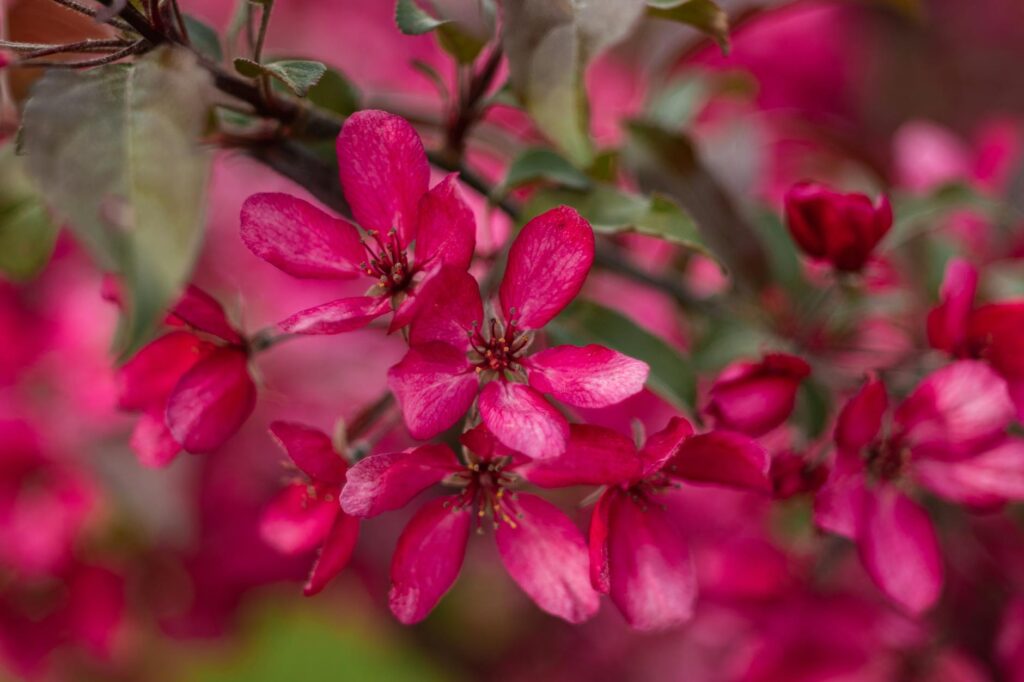
If your crabapple has been defoliating heavily every spring for two or more consecutive years, this season is the right time to start thinking seriously about replacement with a disease-resistant cultivar. Plant breeders have made remarkable progress developing crabapple selections with strong resistance to apple scab, fire blight, and powdery mildew — the three main diseases that trouble crabapples in the Mid-Atlantic region. Today’s resistant varieties offer the same ornamental value — spring bloom, persistent fruit, fall interest — without the annual defoliation cycle.
For Monmouth County conditions — Zone 7a, wet springs, moderate summer drought, coastal salt exposure near the Bayshore — the following cultivars consistently perform well:
- ‘Prairifire’ — Deep rose-red blooms, persistent dark red fruit, and excellent scab and fire blight resistance. Among the most widely recommended choices for New Jersey residential landscapes.
- ‘Donald Wyman’ — White blooms, bright red persistent fruit, and strong multi-disease resistance. Vigorous and adaptable to the heavier clay soils common in parts of Middletown Township.
- ‘Harvest Gold’ — White flowers and yellow fruit that persists through winter, drawing cedar waxwings and robins into December. Excellent resistance to all three main diseases.
- ‘Sugar Tyme’ — White blooms, persistent red fruit, and strong resistance ratings across the board. A reliable performer in Monmouth County extension demonstration plantings.
- ‘Royal Raindrops’ — Purple foliage, deep pink blooms, and disease resistance that holds up well in wet NJ springs. Adds a distinctive year-round presence in mixed borders.
When replanting, choose a site with good air circulation. The worst apple scab infections I see in Middletown yards are almost always on trees planted in low spots where air drainage is poor and leaves stay wet into the afternoon. Give a new crabapple open sky on at least two or three sides, and you’ll be starting it off with a meaningful structural advantage over the tree it’s replacing.
Middletown's #1 Tree Expert Company
FREE Inspection & Estimate | Certified Arborists | Trimming, Pruning, Removal, More!
Sponsored
Summary: Reading the Season and Knowing When to Call a Pro
Apple scab puts homeowners in a frustrating position: the infection happens before the symptoms appear, and by the time leaves are falling in early May, the primary prevention window has already closed. That’s not a reason to give up on your crabapple. It’s a reason to understand the disease well enough to get ahead of it for next spring — starting with the leaf cleanup you do this fall and the variety decision you make if the tree needs replacing.
If your crabapple has been struggling with apple scab for two or more seasons, or if you’re seeing heavy defoliation alongside other signs of decline — dead branches, canker wounds at the crotch, a thinning overall canopy — it’s worth having an ISA-certified arborist assess the tree before you invest another season of effort into spray applications. Sometimes the honest answer is that a given tree, in a given spot, has been through too many cumulative stress cycles to justify continued management. A certified arborist can give you an objective assessment of whether treatment, renewed cultural care, or strategic replacement makes the most long-term sense for your property and the rest of your landscape.
Apple scab season in Middletown peaks between budbreak and early June, but the decisions that determine how your crabapple looks next May are made right now — in the varieties you choose to plant, the infected leaves you clean up this fall, and the fungicide timing you commit to before next April’s first rain. Don’t let another wet spring catch you off guard.
Photo credits: Featured image by Jeff Wiles on Pexels; Section 1 by Diana ✨ on Pexels; Section 2 by Took A Snap on Pexels; Section 3 by Victoria Range on Pexels; Section 4 by David Kanigan on Pexels; Section 5 by Timberly Hawkins on Pexels; Section 6 by Tatjana on Pexels; Section 7 by Peter Xie on Pexels.