Middletown's #1 Tree Expert Company
FREE Inspection & Estimate | Certified Arborists | Trimming, Pruning, Removal, More!
Sponsored
When Pretty Spring Blossoms Turn Into Brown, Scorched Branches
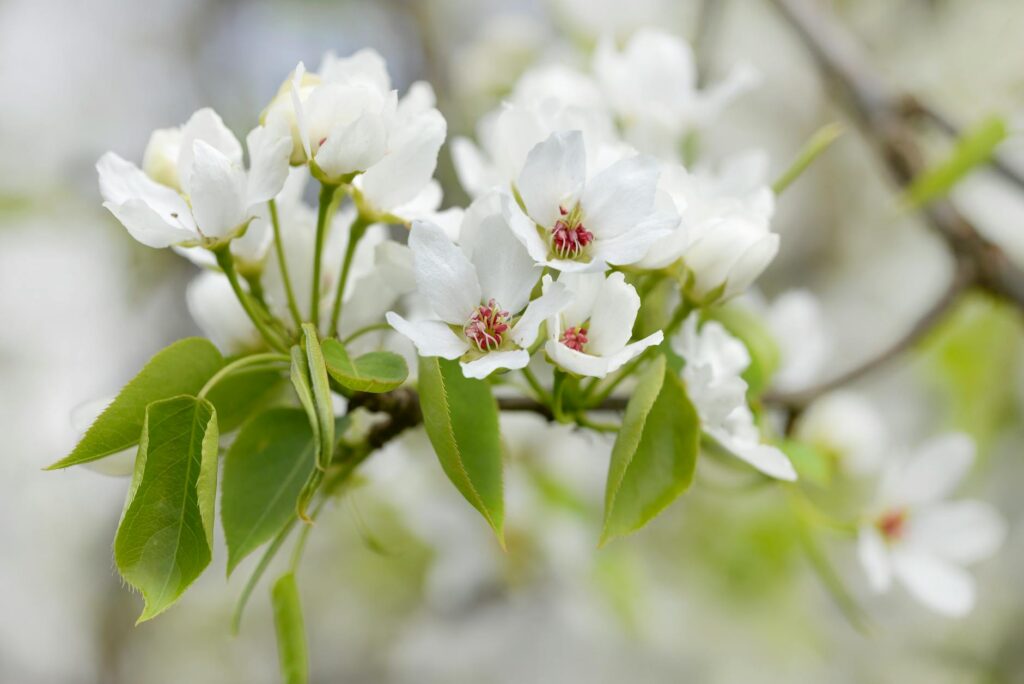
Every May in Middletown Township, I start getting calls from homeowners in Lincroft, Hazlet, and along the residential streets near Poricy Park — all saying the same thing: “My ornamental pear looked beautiful two weeks ago and now it looks like someone took a blowtorch to half of it.” They’re not wrong. The branch tips are brown and wilted, curled over at the tip like a shepherd’s crook, and the dead blossoms are still hanging there, frozen in place weeks after bloom should have ended. What they’re describing is fire blight, one of the most visually dramatic and destructive bacterial diseases in the suburban landscape.
May is when fire blight reveals its full damage across Monmouth County. The Bradford pears and crabapples that lined neighborhood streets in clouds of white blossoms just weeks ago are often the first to show symptoms. The disease doesn’t kill overnight — it moves through a tree methodically, shoot by shoot, limb by limb — but by early May, after the warm, wet weather typical of our late-April Bayshore springs, the damage becomes impossible to ignore.
The good news is that early action matters. Understanding what fire blight is, how it spreads, and what you can realistically do about it right now can be the difference between losing a limb and losing the whole tree.
What Is Fire Blight and Why New Jersey Springs Trigger It
Unlike most tree diseases Middletown homeowners encounter — oak wilt, beech leaf disease, sycamore anthracnose — fire blight is caused by a bacterium, not a fungus. The pathogen is Erwinia amylovora, and it has been attacking ornamental and fruit trees across North America for well over a century. The “fire” in the name describes exactly what infected trees look like: branch tips that appear scorched, as though held briefly over an open flame.
The disease strikes during a very specific weather window — what plant pathologists call the infection period. When daytime temperatures sit between 60°F and 75°F and moisture is present from rain, heavy dew, or humid sea air, the bacteria multiply explosively inside open blossoms. In central New Jersey, that window typically falls during late April through mid-May, right as ornamental pears and crabapples reach peak bloom. Our coastal Bayshore climate — mild, humid, with afternoon breezes off Raritan Bay carrying moisture inland — is unfortunately quite hospitable to this pathogen.
Rutgers Cooperative Extension’s Plant & Pest Advisory monitors fire blight risk levels through the growing season using regional temperature and moisture data. In a warm, wet spring like the one unfolding across Monmouth County this year, the infection risk is elevated from late April straight through May. If you have susceptible trees and noticed a stretch of rain and mild temperatures during bloom time, you should be checking those trees now.
Which Middletown Trees Are Most at Risk
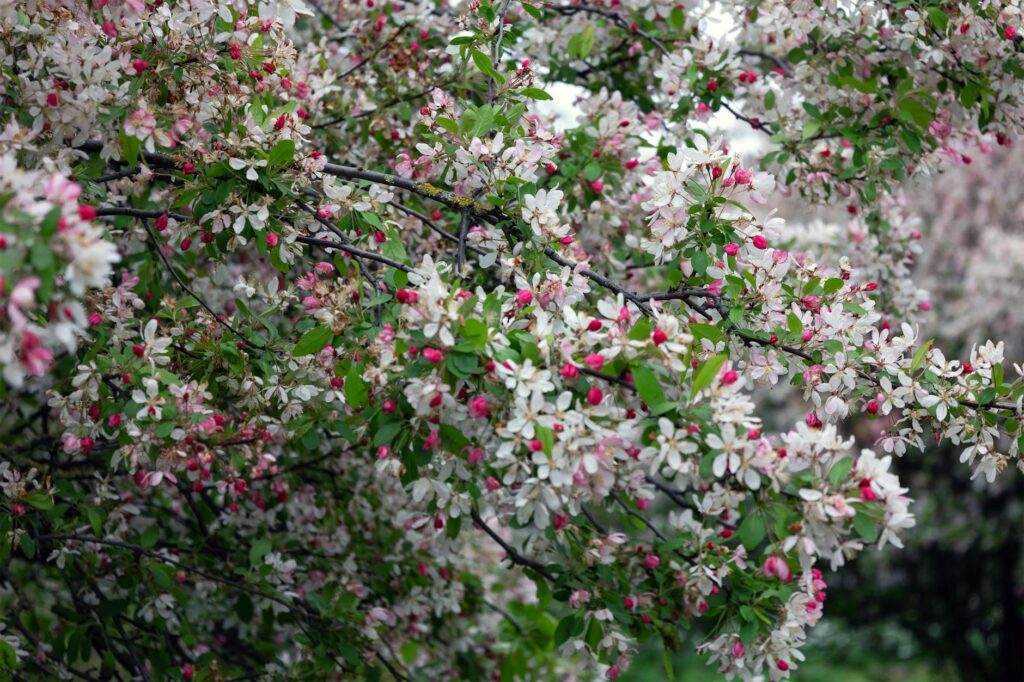
Fire blight only attacks members of the rose family — the Rosaceae — but that family is surprisingly large and common in the suburban Middletown landscape. The highest-risk species you’re likely to have in your yard or along your street include:
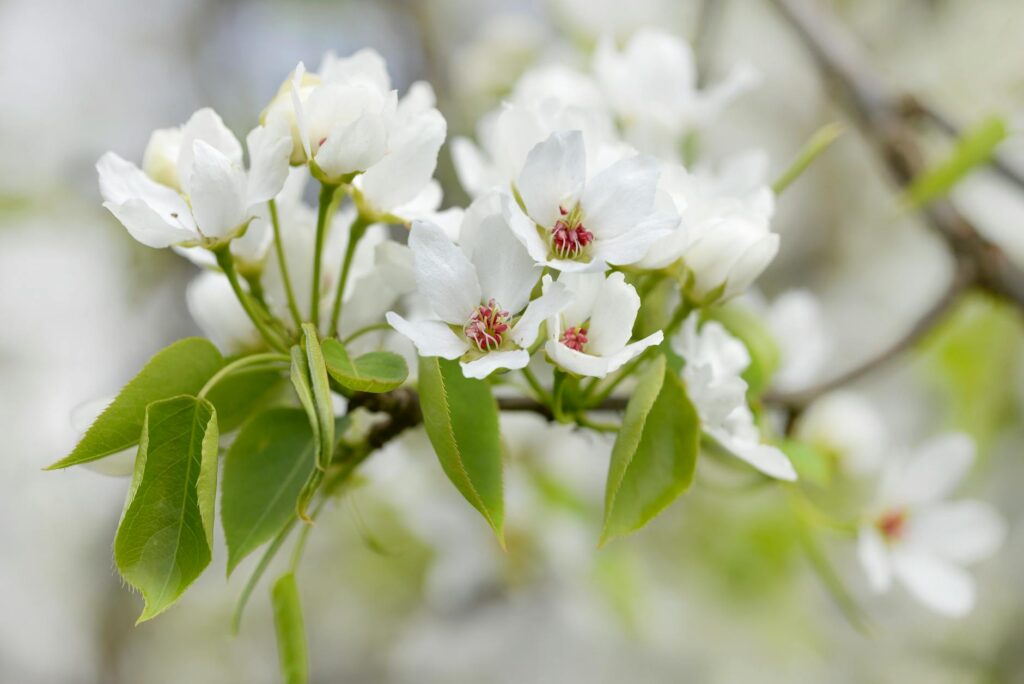
- Bradford pear / Callery pear (Pyrus calleryana) — the most common ornamental pear in older NJ subdivisions, and one of the most susceptible varieties. Bradford pears also have a second problem: they are invasive. The NJ Department of Agriculture lists Callery pear as a significant ecological threat, and many communities are encouraging homeowners to phase them out. A fire blight outbreak may be the natural moment to make that decision.
- Crabapple (Malus spp.) — susceptibility varies enormously by cultivar. Many older crabapple varieties planted in the 1980s and 1990s are quite vulnerable; newer disease-resistant cultivars like ‘Prairifire’ and ‘Sugar Tyme’ hold up much better. If you don’t know your cultivar, treat it as potentially at risk.
- Serviceberry / shadbush (Amelanchier canadensis) — a beautiful native understory tree common along Middletown’s wooded edges and increasingly popular in home landscapes. It can contract fire blight but is generally less severely affected than Bradford pear.
- Hawthorn (Crataegus spp.) — common along fence lines and naturalized areas, and moderately susceptible, especially during wet springs.
The short rule: if the tree produces white or pink flowers in early spring and small apple- or pear-like fruits in fall, it’s in the rose family and potentially at risk. When you walk your Middletown property this week, start with those trees first.
Middletown's #1 Tree Expert Company
FREE Inspection & Estimate | Certified Arborists | Trimming, Pruning, Removal, More!
Sponsored
How to Spot Fire Blight Before It Reaches the Trunk
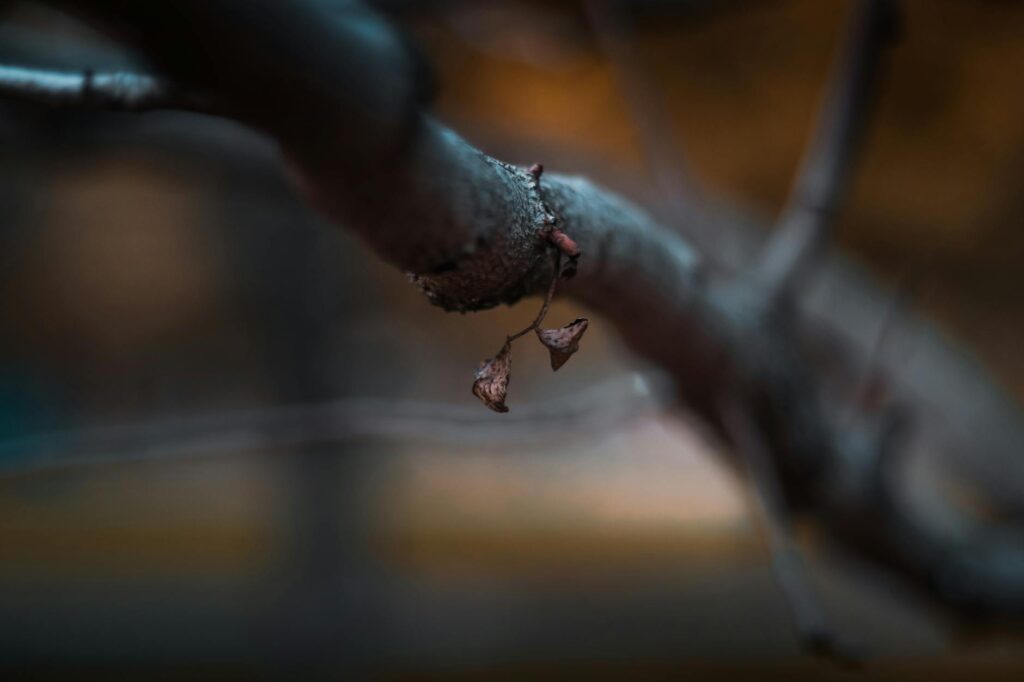
The earlier you catch fire blight, the better your options. Here’s what to look for as you walk your property this week:
- The shepherd’s crook — this is the signature symptom. New shoot tips wilt and curl into a characteristic hook at the end, resembling a shepherd’s staff. The wilted shoot stays attached to the branch rather than dropping off cleanly.
- Scorched blossoms — infected flowers turn brown and cling to the branch long past when they should have dropped. A cluster of dead, brown blossoms against green spring foliage is highly visible and diagnostic.
- Bacterial ooze — in warm, humid conditions, you may see an amber-colored, watery liquid seeping from infected bark. This ooze is loaded with live bacteria and is one of the primary short-distance spread mechanisms.
- Expanding cankers on larger limbs — as infection moves into larger wood, it creates sunken, darkened cankers on the bark with a visible boundary between infected and healthy tissue. If you shave a thin strip of bark near the canker margin, infected wood beneath will show a reddish-brown discoloration.
One thing I see Middletown homeowners frequently confuse with fire blight is late frost damage — both cause sudden browning of growing tips. The key difference: frost damage tends to hit the entire outer canopy somewhat uniformly after a cold night, while fire blight traces outward from bloom clusters in a more random, shoot-by-shoot pattern. The ISA’s tree health care resources offer useful guidance on distinguishing disease from environmental stress — or call a certified arborist who can give you a confident diagnosis on-site in a few minutes.
How Fire Blight Spreads — Including Through Pruning Tools
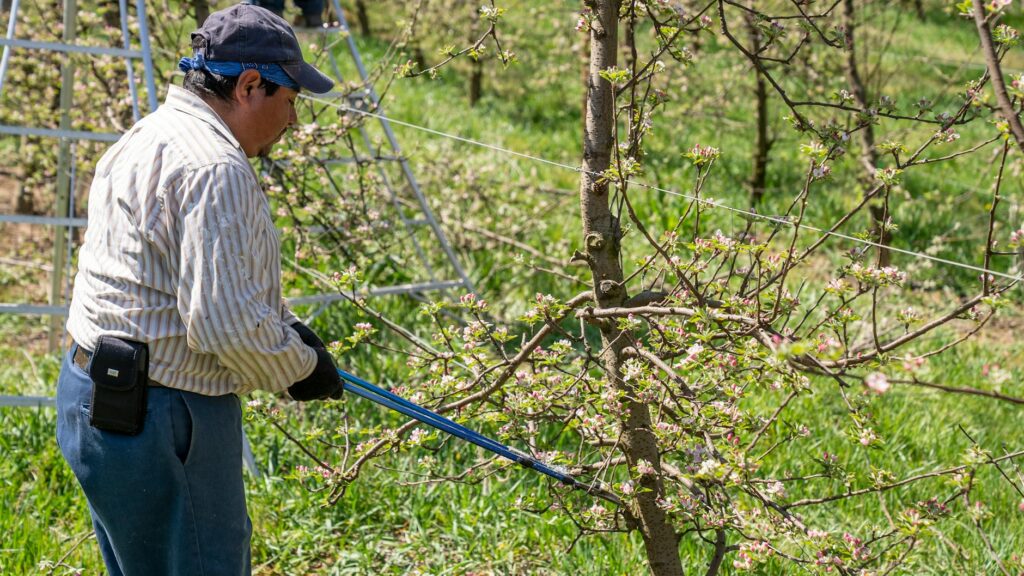
Understanding how fire blight moves is half the battle in managing it. The bacterium travels through several routes, and some of them are entirely preventable with the right approach.
Pollinators during bloom: Bees and other insects visiting infected flowers pick up bacteria and carry them to healthy flowers on the same tree or on neighboring trees. This is why entire blocks of Bradford pears can develop fire blight in the same spring season — your neighbor’s infected tree can infect yours through the pollinators working the whole street. When bloom time overlaps with warm, wet weather, this spread happens rapidly across a neighborhood.
Rain splash and wind: The bacterial ooze weeping from infected tissue gets picked up by rain and splashed onto nearby healthy shoot tips. A solid thunderstorm rolling off Raritan Bay during bloom time — not uncommon in late April or early May — can disperse the bacteria significantly within a single afternoon.
Pruning tools: This one surprises most homeowners. An unsterilized pruning saw or loppers can carry live bacteria from infected wood to healthy wood with every cut. This is the most common reason that well-intentioned pruning attempts actually accelerate fire blight through a tree faster than the disease would have moved on its own. Cornell Cooperative Extension emphasizes tool sterilization as one of the most critical cultural controls when working around trees infected with bacterial diseases — a principle that applies directly to how fire blight spreads during summer pruning.
What Middletown Homeowners Can Do Right Now
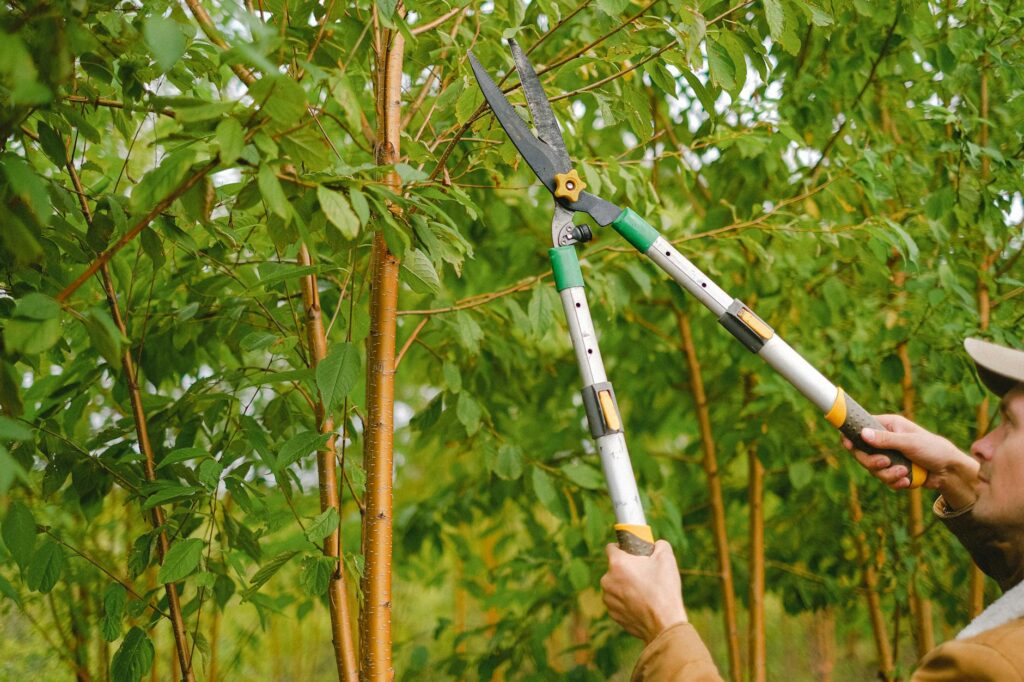
If you’ve caught fire blight early — when it’s still limited to shoot tips and small branches — you have real options. Here’s how to respond effectively:
Prune on a dry day. Wait for a dry afternoon when rain is not forecast for at least 24 hours. Cutting during wet weather risks spreading bacteria through water movement at the wound site. Use sharp bypass pruners or a pruning saw, and cut at least 8 to 12 inches below any visible sign of infection. You want to cut well into wood that looks and smells completely healthy. Infected wood often shows a reddish-brown discoloration just under the bark — use that visual cue as your guide.
Sterilize tools between every single cut. Keep a spray bottle of 70% isopropyl rubbing alcohol in your pocket and spritz the blade between cuts without exception. A 10% bleach solution also works, though it’s harder on metal over time. Do not skip this step. A contaminated tool is actively making the problem worse.
Remove and dispose of all infected material. Do not leave pruned branches on the ground beneath the tree. Bag infected material and put it in the trash — not the compost pile. The bacteria can persist in dead wood through the season.
Consider replacing Bradford pears with resistant natives. If your Bradford pear has had recurring fire blight infections or the disease has reached major scaffold branches, this may be the natural moment to plan for removal and replacement. Native serviceberry (Amelanchier), flowering dogwood (Cornus florida), and American hawthorn are beautiful, ecologically valuable alternatives without the same annual vulnerability. Rutgers NJAES offers excellent guidance on selecting appropriate native and adapted trees for central New Jersey landscapes.
Middletown's #1 Tree Expert Company
FREE Inspection & Estimate | Certified Arborists | Trimming, Pruning, Removal, More!
Sponsored
When to Call a Certified Arborist About Fire Blight
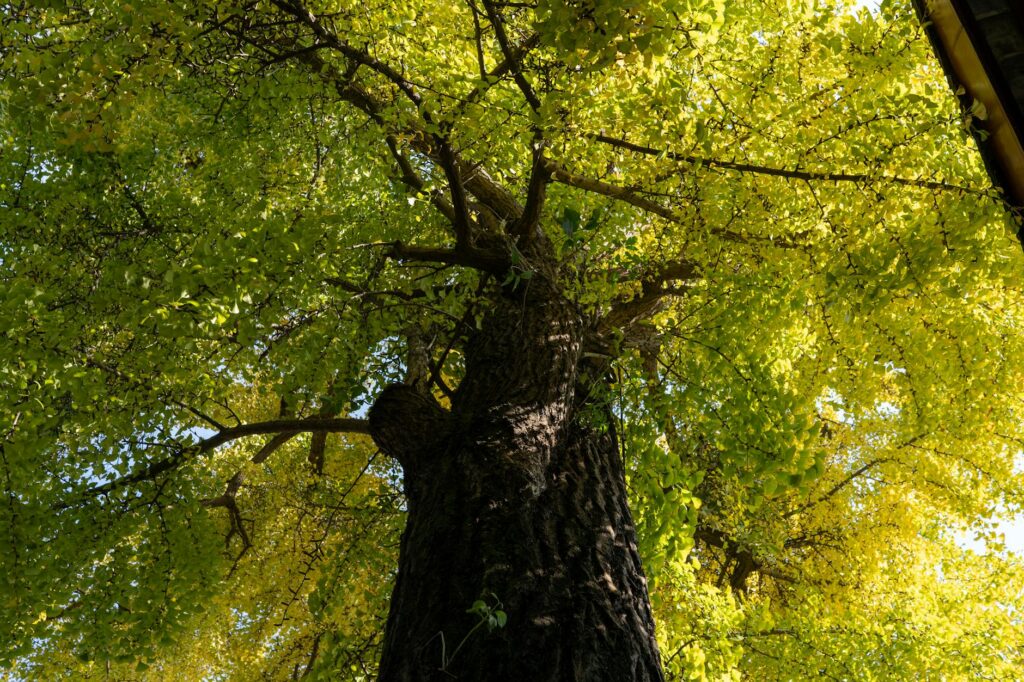
Not every fire blight infection is a do-it-yourself situation. When the disease has moved past the small shoots and into major scaffold branches — especially if you can see cankers expanding toward the main trunk — you need a professional assessment before you do anything else.
A fire blight canker that reaches the main trunk is often a death sentence for the tree, and an ISA-certified arborist can tell you definitively whether salvage pruning is worth attempting or whether removal is the more sensible call. There’s no shame in taking out a Bradford pear that has been struggling for years — and replacing it with something native, structurally sound, and properly placed is almost always the better long-term outcome for your property.
Arborists can also design preventive bactericide programs for ornamental trees with high landscape value. Copper-based sprays and some biological products registered for fire blight need to be applied precisely at the right stage of bloom to be effective — typically starting at first open bloom and continuing at regular intervals while the infection period lasts. Getting that timing right takes experience, and some products require a licensed pesticide applicator. A certified arborist can handle that for you while keeping the program safe and properly documented.
If you have Bradford pears, crabapples, or serviceberries that look scorched right now — or that have come back with fire blight year after year — a consultation with a certified arborist this month is time well spent. Catching the disease in the wood rather than waiting to see how bad it gets is almost always the faster and less expensive path forward.
Photo credits: Featured image by Elena Umyskova on Pexels; Section 1 by Elena Umyskova on Pexels; Section 2 by Erik Karits on Pexels; Section 3 by Victoria Range on Pexels; Section 4 by Hasan Albari on Pexels; Section 5 by Mark Stebnicki on Pexels; Section 6 by Anna Shvets on Pexels; Section 7 by Peter Xie on Pexels.