Middletown's #1 Tree Expert Company
FREE Inspection & Estimate | Certified Arborists | Trimming, Pruning, Removal, More!
Sponsored
The Sweet Smell of a Growing Problem
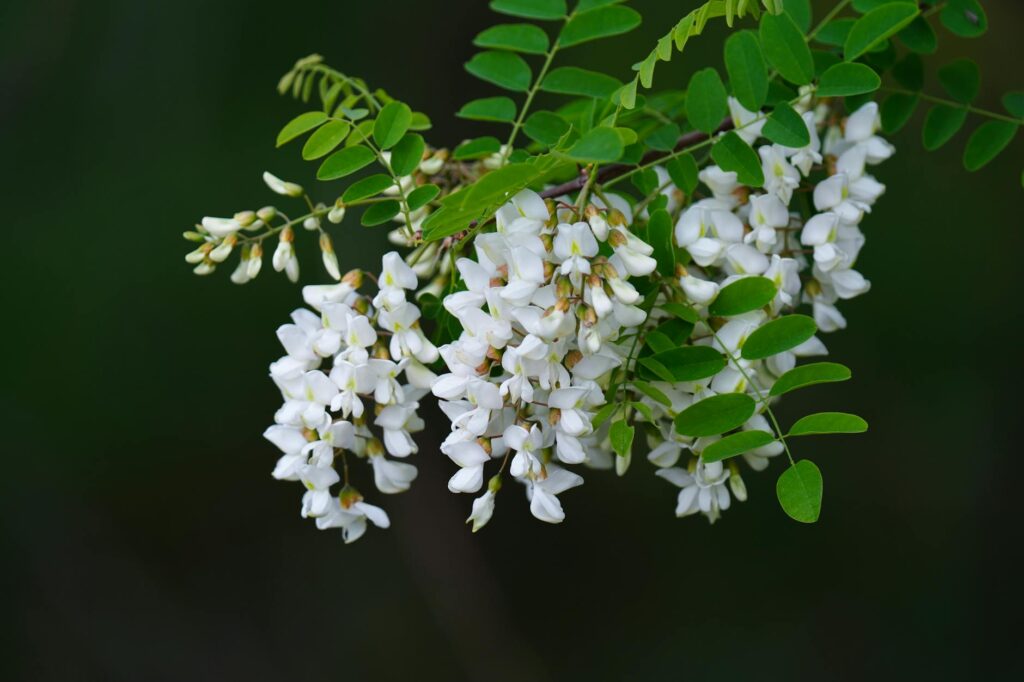
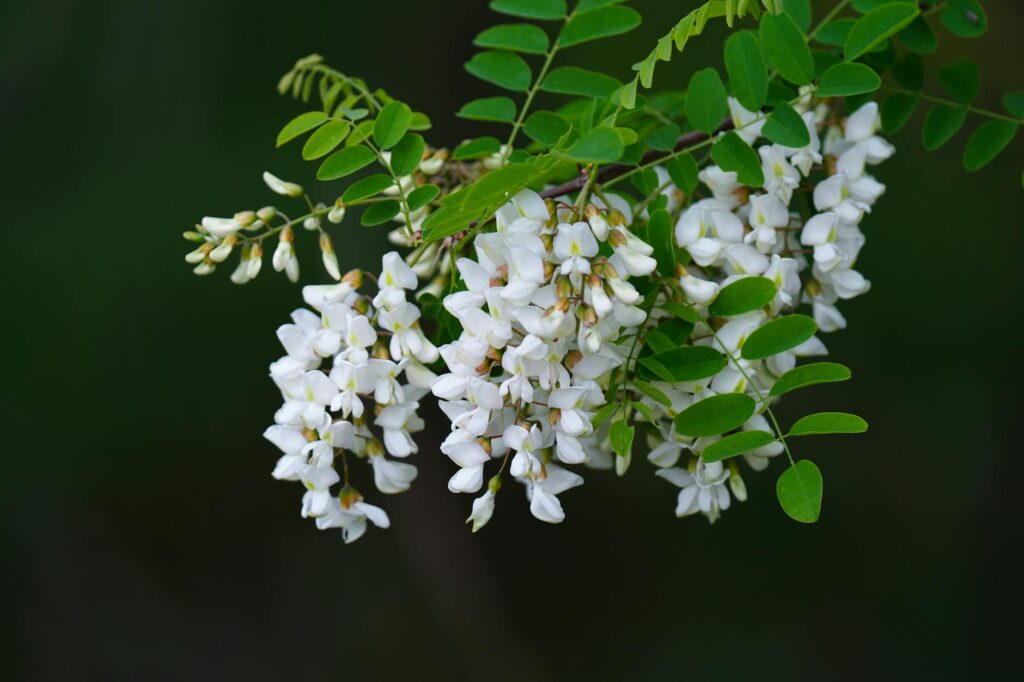
For about two weeks every May, something distinctive happens all across Middletown Township. Drive Route 36 toward the Bayshore, walk the weedy edges of Poricy Park, or pass through any older neighborhood in Lincroft or Leonardo, and you’ll catch it — a heavy, honey-sweet fragrance drifting through the air. Look up and you’ll find the source: long, drooping clusters of white blooms hanging from a fast-growing tree with feathery, compound leaves. That’s black locust, Robinia pseudoacacia, and in Monmouth County it is at peak flower right now.
The smell is genuinely lovely. The tree itself is a serious problem. Black locust is widely considered an invasive species throughout most of New Jersey, spreading aggressively from roadsides, fence lines, and woodland edges into yards, gardens, and natural areas where it was never planted. What starts as a single seedling along a back fence can become a dense, difficult-to-eradicate thicket within a decade, crowding out native vegetation and creating real structural hazards near buildings and utility lines.
If you have one on your property — or several creeping in from a neighbor’s lot — early May is exactly the right moment to understand what you’re dealing with. The bloom is the only polite thing about this tree’s annual expansion plan.
A Native Tree That Isn't Behaving Like One
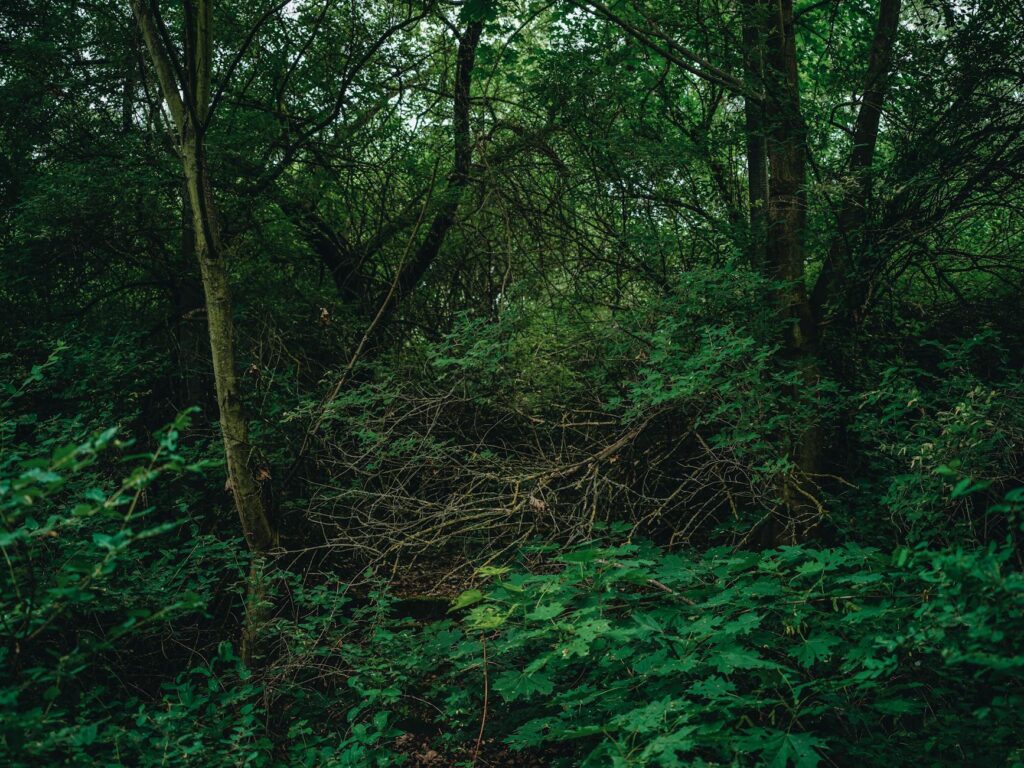
Here’s a nuance worth understanding: black locust isn’t entirely foreign. Its native range includes parts of the central Appalachians — the ridge-and-valley country of Virginia, West Virginia, and Pennsylvania. But New Jersey sits well outside that native corridor. A long history of planting black locust here for mine reclamation, erosion control, and fence posts has resulted in a tree that now acts every bit like an invasive: opportunistic, fast-growing, and fiercely competitive with the native plants that Monmouth County’s woodland edges, meadows, and coastal forests actually depend on.
The Rutgers New Jersey Agricultural Experiment Station and the NJ Invasive Species Council have both flagged black locust as a species of concern throughout the state. It outcompetes native understory plants, and its nitrogen-fixing root system can actually shift soil chemistry in ways that favor other invasives — mugwort, Japanese knotweed, and garlic mustard all benefit from the nitrogen enrichment black locust creates. Remove the tree above ground and the root system will often generate dozens of new shoots within a single growing season.
In Middletown’s particular mix of disturbed roadsides, coastal-zone lots, and second-growth woodland — exactly the environments black locust thrives in — this is a real and ongoing problem. The slopes above the Navesink River, the wooded edges of Hartshorne Woods, and the overgrown corners of older residential lots throughout the township are all prime habitat for spreading black locust populations.
How to Identify Black Locust This Month
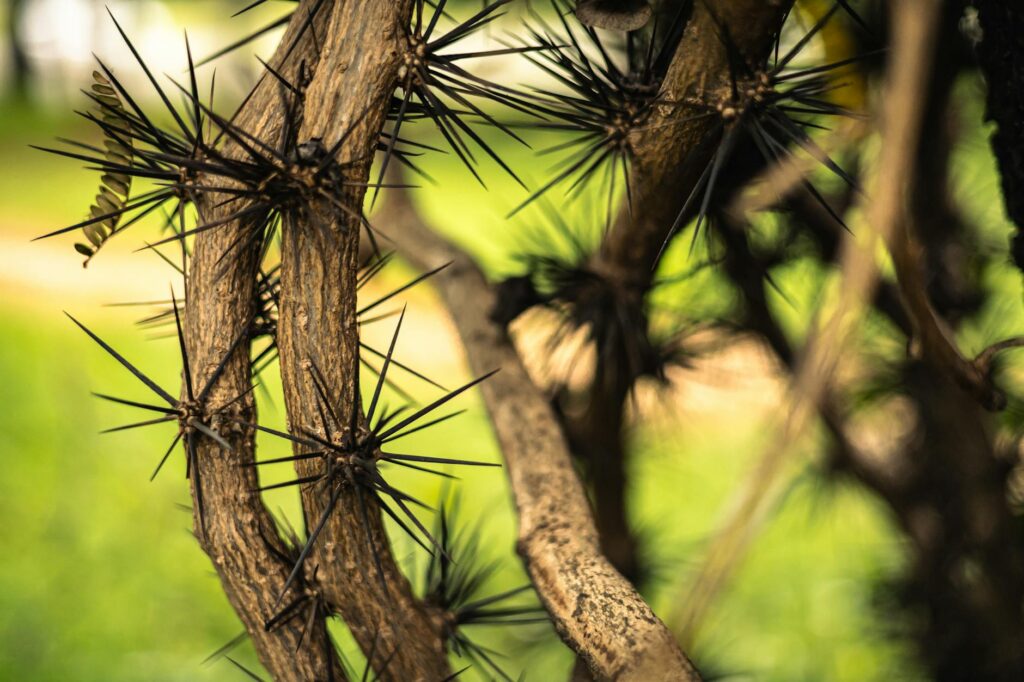
Knowing what you’re dealing with matters, especially because two trees commonly confused with black locust — honey locust (Gleditsia triacanthos) and Kentucky coffeetree (Gymnocladus dioicus) — have different management considerations. Black locust is the one with the spread problem.
In early May, the flower clusters are the easiest identifier: pendulous racemes of fragrant white blooms, structurally similar to wisteria, four to eight inches long, hanging from the branch tips. Outside of flowering season, look for these features:
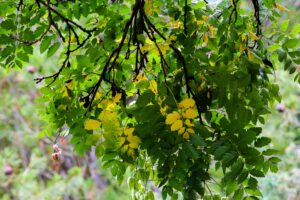
- Compound, alternate leaves with 7–19 oval leaflets — feathery and light green at leaf-out, turning yellow in fall
- Paired short thorns at the base of each leaf on young branches — modified stipules, small but sharp
- Deeply furrowed, rope-like gray-brown bark on mature trunks, almost braided in texture
- Small flat seed pods in fall and winter, 2–4 inches long, dark brown to black when ripe
- Oval to flat-topped crown on mature trees; young trees often lean aggressively toward available light
Don’t confuse it with honey locust, which carries dramatic compound thorns — sometimes 3 inches long and branched — directly on the trunk and main stems. Those prehistoric-looking trunk spines mean honey locust, not black. Honey locust is less aggressively invasive in Middletown’s landscape, though it still warrants management consideration near structures and utility lines.
Middletown's #1 Tree Expert Company
FREE Inspection & Estimate | Certified Arborists | Trimming, Pruning, Removal, More!
Sponsored
Why Cutting It Down Can Make Things Worse
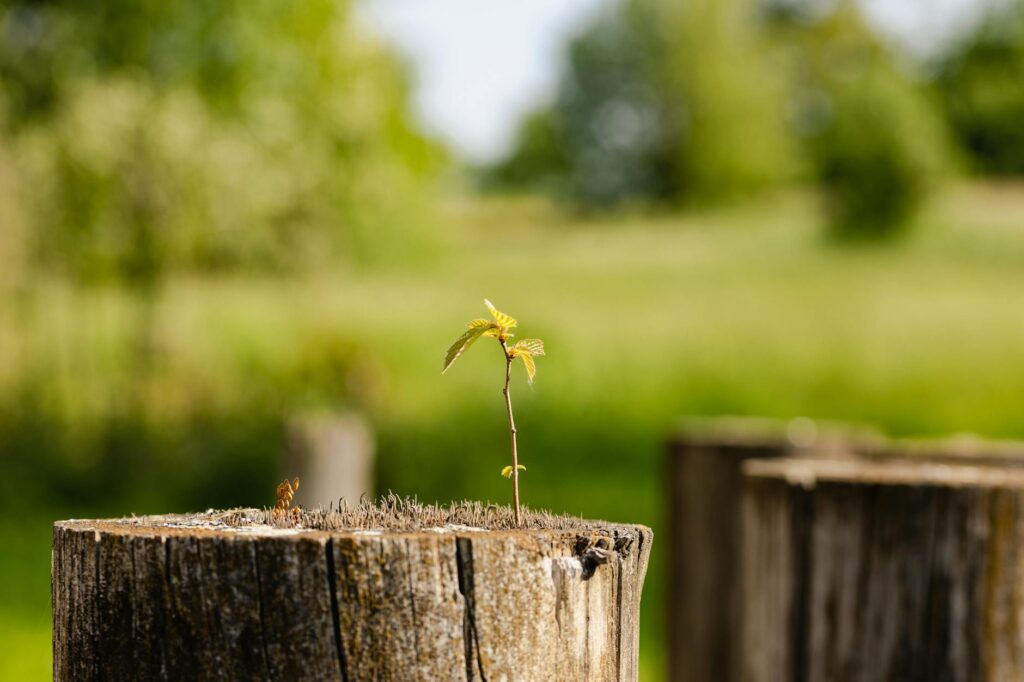
This is where Middletown homeowners most often run into trouble with black locust. You cut it down, grind the stump, and six months later there are a dozen new shoots pushing up from the root system. That’s not bad luck — it’s the tree’s core survival strategy, and it’s remarkably effective.
Black locust spreads through three primary mechanisms. First, it produces seed prolifically: a single mature tree can set hundreds of pods each year, and the hard-coated seeds can persist viable in the soil for twenty years or more, waiting for a disturbance that opens the canopy. Second, it spreads via root suckers — lateral roots send up vegetative shoots that become new trees, connected to the parent root system until they establish independently. Third, stem sprouting after cutting or damage is so aggressive that poorly timed or improperly executed removal actually stimulates denser regrowth than you started with.
The NJ Division of Parks and Forests and land managers throughout the Bayshore region have wrestled with this dynamic for decades along trail corridors and forest edges. On residential properties the challenge is the same: a tree on a neighbor’s lot sends roots under the fence, and suddenly you’ve got a thicket of locust shoots coming up through your garden bed with no obvious connection to any tree on your side of the property line.
Timing matters significantly in control. Treatments applied in mid to late summer — when the tree is actively moving photosynthate downward toward the root system — are substantially more effective than spring or early-summer work. A cut stump treated immediately with an appropriate systemic herbicide in late July or August intercepts that downward translocation and is far more likely to prevent resprouting than an untreated cut at any time of year.
What Black Locust Can Actually Do to Your Property
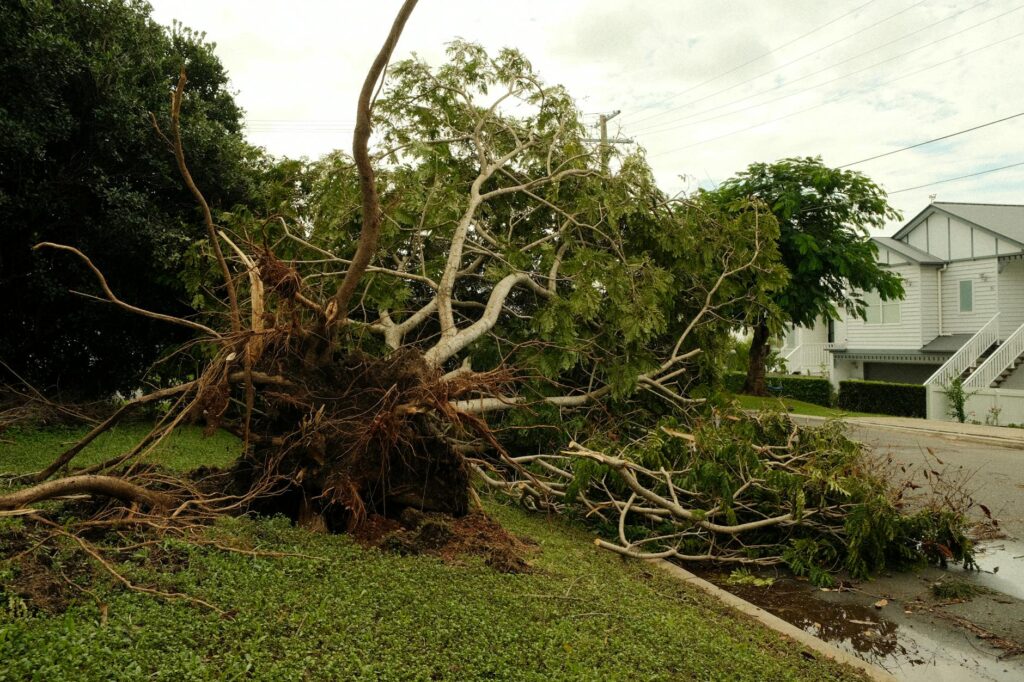
Beyond ecological spread, black locust presents real structural and liability considerations for Middletown homeowners. The wood is exceptionally hard and rot-resistant — it was historically valued for shipbuilding and fence posts for exactly this reason. But the tree grows fast, often developing poor branch structure with included bark and narrow branch angles that are prone to failure during wind events.
Monmouth County has seen more than enough nor’easters and summer thunderstorms to make this directly relevant. A black locust leaning over a roof or driveway with included bark in the main scaffold isn’t just an aesthetic concern — it’s a liability. The International Society of Arboriculture is consistent on this point: property owners bear responsibility for known hazards on their land. Documented structural defects in a tree that haven’t been addressed are exactly the kind of record that complicates insurance claims after storm damage.
Black locust also grows aggressively into overhead utility clearances, competing with power lines in a way that accelerates the need for utility trimming — often the severe, disfiguring cuts that leave trees structurally compromised and more vulnerable to future failure. Addressing a black locust near power lines proactively is almost always less disruptive and less expensive than reacting after storm damage or a utility-ordered emergency clearance job on short notice.
Root competition adds another layer. Black locust’s nitrogen-fixing root system, productive as it is for the tree, changes soil chemistry in ways that can undermine other landscape plantings and native groundcovers nearby. Homeowners trying to establish native understory plantings within twenty feet of an active black locust colony often find their efforts repeatedly set back by altered soil conditions and aggressive root competition.
What Actually Works for Black Locust Control
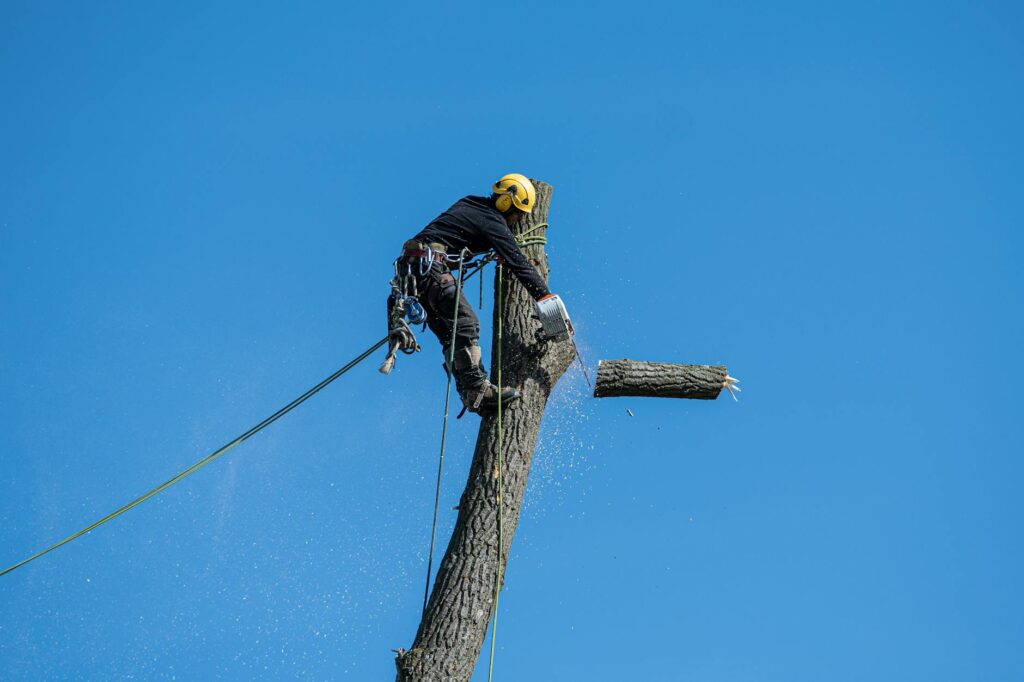
Effective management in a Middletown yard depends on what you’re trying to accomplish. Outright removal of a single problem tree near a structure is straightforward when done correctly. Controlling a spreading population on a larger lot — or one encroaching from adjacent land — requires a more systematic, multi-season approach.
For single trees near structures or in areas where clean control is the goal:
- Cut-stump treatment: Remove the tree, then immediately — within minutes of the cut — treat the fresh cut surface with a systemic herbicide labeled for woody plants. Late summer, from late July through September, is optimal timing because the tree is moving carbohydrates downward into the root system, carrying the treatment with them.
- Stump grinding alone will not stop black locust. The root system remains fully intact and actively sprouts. Grind the surface stump if you want it gone, but pair it with herbicide application to prevent the root system from regenerating.
- Basal bark treatment: A diluted systemic herbicide mixed with a penetrant oil and applied to the lower bark of standing stems can girdle and kill the tree over several weeks. Useful for larger stems or situations where felling isn’t immediately practical.
For managing a spreading colony in a naturalized area of your property, repeated stem cutting combined with late-summer herbicide application over two to three growing seasons is typically what it takes to exhaust the root system. Mowing alone will not control established black locust — it simply keeps the colony in persistent shrubby form rather than tree form, and the roots continue expanding beneath the surface.
Middletown's #1 Tree Expert Company
FREE Inspection & Estimate | Certified Arborists | Trimming, Pruning, Removal, More!
Sponsored
Summary: Don't Wait on Black Locust

The two weeks when black locust is in bloom are fleeting and, honestly, beautiful. The spread continues all year. If you’ve got black locust on your Middletown property — whether a single specimen near a structure or a growing colony in a back corner — May is a productive moment to assess what you have and start planning management, even if the actual removal or treatment happens later in the season when timing works in your favor.
The key points: identify the tree accurately before doing anything, understand that cutting alone often backfires with this species, and plan removal or treatment for late summer when systemic control is most effective. If the tree is large, overhanging a structure, near a utility line, or showing structural defects like included bark or dead scaffold branches, have a certified arborist evaluate it before you touch it.
A qualified ISA-certified arborist can assess whether a black locust represents a genuine hazard requiring prompt action, advise on the right management strategy for your property’s specific situation, and handle removal safely when warranted. In Middletown Township, that consultation can also clarify any permit requirements that might apply — some residential tree removals do require notification to the municipality, and a professional familiar with Monmouth County will know what applies to your lot.
Enjoy the bloom. Then make a plan.
Photo credits: Featured image by 대정 김 on Pexels; Section 1 by 대정 김 on Pexels; Section 2 by Egor Komarov on Pexels; Section 3 by Rafael Rodrigues on Pexels; Section 4 by Vaidas Vaiciulis on Pexels; Section 5 by April Yang on Pexels; Section 6 by Jacky on Pexels; Section 7 by RDNE Stock project on Pexels.