
Middletown's #1 Tree Expert Company
FREE Inspection & Estimate | Certified Arborists | Trimming, Pruning, Removal, More!
Sponsored
June in Middletown: When Storm Season Really Begins
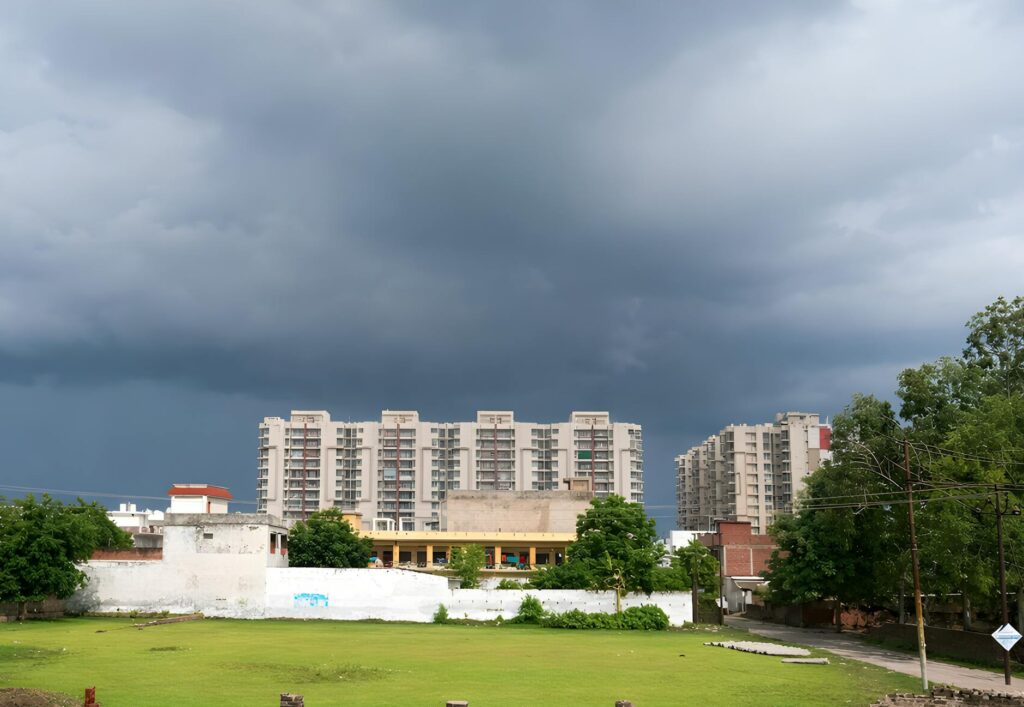
Walk around Hartshorne Woods on a clear June morning and the air already has that heavy, pre-storm density to it. By early afternoon, those white cumulus towers can stack into cumulonimbus anvils fast — and along the Bayshore, the Raritan Bay doesn’t slow those systems down. Middletown gets its share of fast-moving June thunderstorms, and every year they take trees that homeowners thought were fine.
Here’s what I’ve learned from two decades of post-storm calls in Monmouth County: the trees that fail aren’t always the sick ones. Sometimes it’s a perfectly leafed-out red maple with a hidden crack at the union where a major scaffold branch meets the trunk. Sometimes it’s a white oak (Quercus alba) that’s been slowly developing a cavity behind a callus roll nobody noticed. The storm doesn’t cause the failure — it reveals it.
That’s why the best time to deal with a storm-damaged tree is before the storm. June gives you a narrow window: the leaves are fully out, which shows you stress patterns clearly; the soil is still workable; and arborists’ schedules haven’t hit their peak-season crunch yet. Take a few hours now to walk your property with intention, and you’ll have a very different September than your neighbors who wait.
What Makes a Tree Fail in a Storm
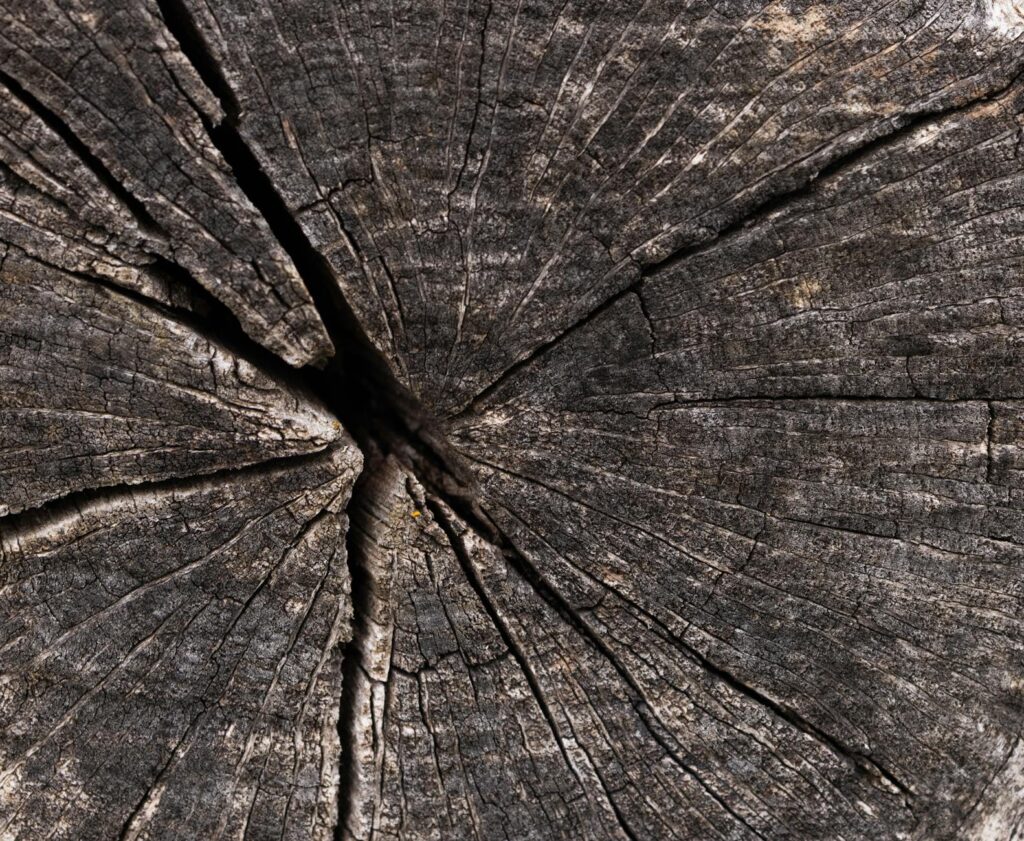
Trees don’t fail randomly. They fail at weak points — and those weak points usually develop over years before a storm ever arrives. Understanding the mechanics helps you know what you’re looking for when you walk your property.
The most common failure mode is what arborists call a co-dominant stem — two or more major branches of nearly equal size originating from the same point on the trunk. Unlike branches that angle off a single dominant trunk, co-dominant stems compete from the start, often forming a tight V-shaped union packed with included bark. That included bark is dead tissue wedged between the two stems, and it acts like a built-in split-point when lateral wind load hits. Species like silver maple (Acer saccharinum) and Bradford pear are notorious for this, but it shows up in red maples, tulip poplars, and oaks too.
Root failure is the other big one in Middletown’s landscape. Our soils shift from sandy loam near the Bayshore to heavier clay toward Lincroft and Holmdel, and trees in compacted or seasonally saturated soils often develop shallow, horizontal root systems that don’t anchor deep. Heavy rain saturates those soils just as wind load peaks — and a tree that looks perfectly healthy above ground can simply lean and topple. According to USDA Forest Service research on urban tree failure, root-zone problems account for a substantial portion of whole-tree failures, yet they’re the least visible issue from the street.
Finally, there’s decay — internal cavities, fungal conks, and dead wood that’s lost structural strength. A tree can wall off decay through compartmentalization, but it can’t reverse it. The question is always: how much structural wood remains, and is it enough?
A DIY Pre-Storm Walk: What to Look For on Your Property
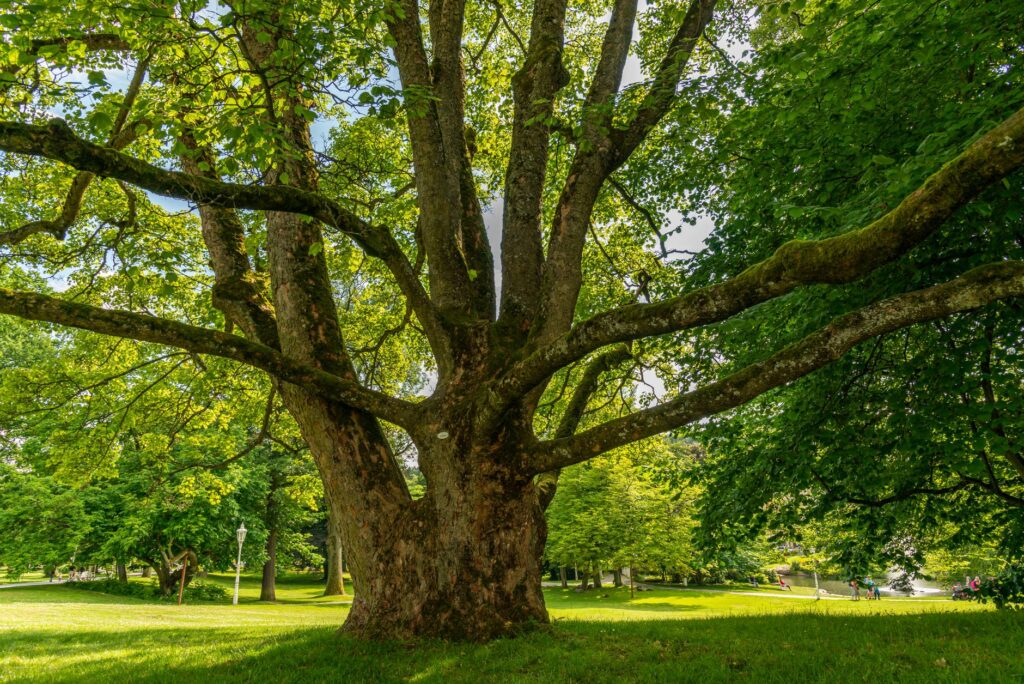
You don’t need to be an arborist to do a useful first-pass assessment of your trees. What you’re looking for are red flags — conditions that tell you a professional needs to take a closer look before storm season hits. Walk around each significant tree on your property and look for the following.
Crown: dead wood and asymmetry. Look up into the canopy. Dead branches — the ones with no leaves, or dry curling leaves that never broke dormancy — are a priority. Deadwood is the first thing that falls, and a 20-pound branch dropping from 50 feet carries enough energy to punch through a roof. Asymmetrical crowns can signal one-sided root loss or structural lean, especially if the tree is visibly tilting more than it did last year.
Trunk: cracks, cavities, and conks. Run your hand along the bark. Vertical cracks can be normal (frost cracks) or alarming (shear cracks under load). Cavities — even small holes — may indicate internal decay far larger than the surface suggests. Fungal fruiting bodies (conks, shelf fungi, mushrooms at the base) are a serious warning sign; they mean active decay is well underway inside the wood. Rutgers NJAES has useful guidance on identifying common fungal pathogens of NJ trees.
Root zone: heave, soil cracks, and lean. Check the soil at the base of the tree. Raised or cracked soil on one side of the trunk often means roots are pulling free on the opposite side — a precursor to uprooting. Any recent change in lean warrants a call.
- Dead or dying branches in the upper canopy
- Bark cracks, cavities, or weeping sap on the trunk
- Fungal conks or mushrooms at the base
- Tight V-shaped crotches between major limbs
- Soil heaving or cracking at the base of the trunk
- Visible lean that has increased recently
Anything that raises concern is worth flagging for a certified arborist — not because every imperfect tree is dangerous, but because the cost of a consultation is a fraction of what emergency removal and roof repair costs after the fact.
Middletown's #1 Tree Expert Company
FREE Inspection & Estimate | Certified Arborists | Trimming, Pruning, Removal, More!
Sponsored
Storm-Proofing Pruning: What Works and What Doesn't
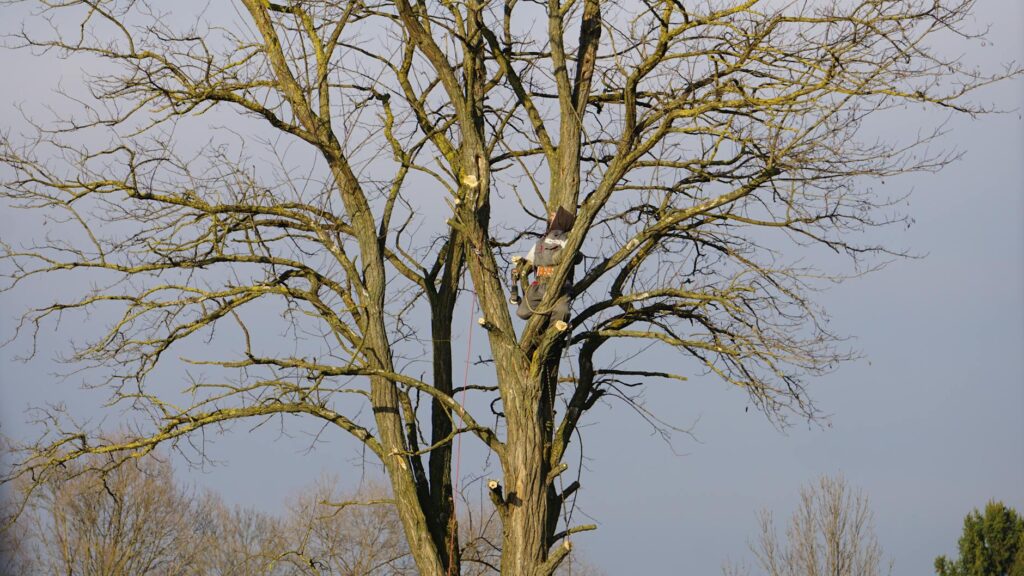
One of the most persistent myths in tree care is that aggressively thinning a tree makes it wind-resistant. The logic sounds right: less leaf surface, less wind resistance, safer tree. But it doesn’t hold up. Research on windstorm damage consistently shows that over-pruned trees — especially those that have been topped — actually fail more often, not less.
Topping, the practice of cutting back large branches to stubs, triggers a flush of vigorous but weakly attached sprouts called epicormic growth. These sprouts are more likely to snap in a storm than the original branch structure would have been. If you see a tree in your neighborhood with multiple upright sprouts coming from old cut stubs, that tree has been topped — and it is significantly more hazardous than before the work was done. The International Society of Arboriculture’s position on topping is clear: it is harmful to trees and creates safety hazards rather than resolving them.
What does help is structural pruning — removing dead, diseased, and crossing branches, reducing co-dominant stems where possible, and improving weight distribution in a heavy crown. Done right, structural pruning keeps a crown intact and flexible under wind load. It’s skilled work: cutting the wrong branch at the wrong point can create as many problems as it solves, which is why June pruning of large trees is best left to a certified arborist who understands both the mechanics and the biology.
Cable Bracing: What It Can — and Can't — Do
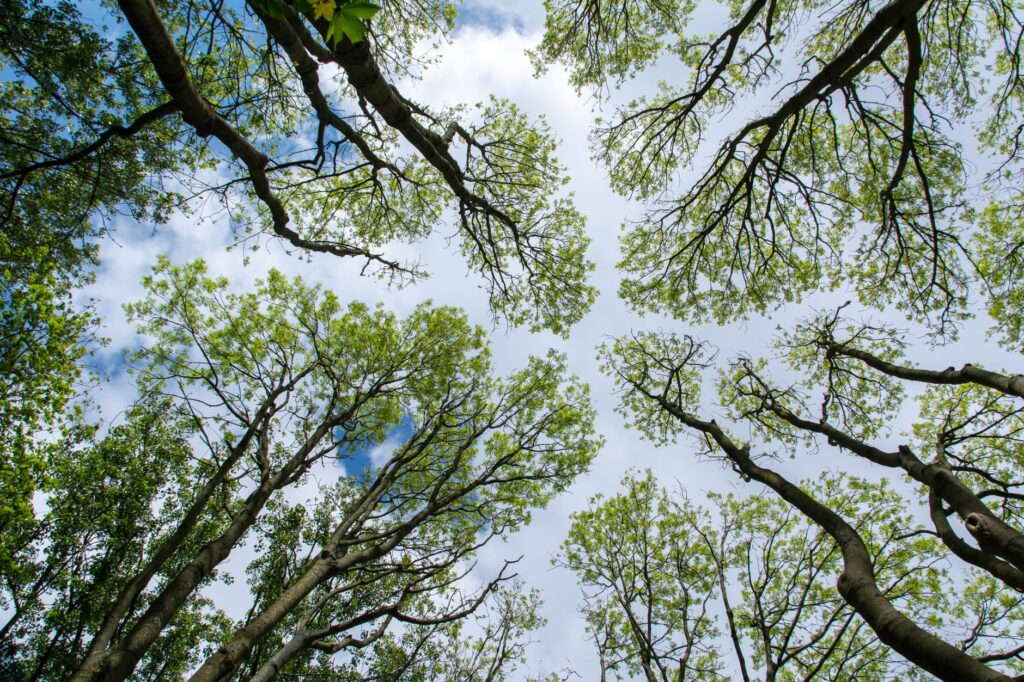
For co-dominant stems and heavy leaders with structural cracks, dynamic cabling is sometimes the right tool. A steel or synthetic cable installed high in the crown between two co-dominant stems limits how far they can move apart under wind load — it doesn’t prevent all movement, but it significantly reduces the load at the union and can add years to a tree that would otherwise need removal.
But cabling has limits. It works best when installed proactively — when there’s still substantial sound wood at the union. Once decay is advanced, the union itself may no longer be strong enough to hold the cable anchors under stress. And cabling is not a permanent fix: cables need periodic inspection and eventual replacement. A cable installed 15 years ago and never re-evaluated is a false sense of security, not a safety feature.
If you have a tree with a cabled union you’ve never thought about since the cable went in, this is a good time to have it inspected. The Tree Care Industry Association recommends that cabling systems be inspected by a qualified arborist regularly, and that hardware be replaced when it shows signs of corrosion or fatigue. Given how much load a June thunderstorm can put on that hardware, it’s not a detail to skip before storm season.
Document Your Trees Now — Before the First Storm

Before storm season gets underway, spend 10 minutes with your phone doing something most homeowners never think to do: photograph your trees. Walk around each significant tree and take photos of the crown, the trunk base, and a wide shot showing the tree in relation to your house, garage, and property line. Geotag the photos if your phone supports it, and save them somewhere you’ll actually find them — a dedicated folder in cloud storage or a dated album.
Why does this matter? After a storm, disputes with insurance companies and neighbors often hinge on the pre-storm condition of the tree. If a neighbor’s tree comes down on your fence, or your tree drops a limb on a shared structure, documentation of prior condition becomes evidence. A folder of dated photos showing you monitored your trees — or showing that a neighbor’s diseased limb was visible and unreported — can make a meaningful difference in how a claim resolves.
Beyond photos, keep a simple record of any professional tree work done on your property: who did it, when, what they did, and any follow-up recommendations. An arborist’s written report noting a potential hazard that you then acted on shows due diligence. Under NJ case law, property owners can be held liable for foreseeable harm from hazardous trees — but documentation that you assessed, hired a professional, and acted on their recommendations significantly changes the legal picture. Middletown Township’s property maintenance guidelines are available at middletownnj.org for homeowners who want to review local code requirements.
Middletown's #1 Tree Expert Company
FREE Inspection & Estimate | Certified Arborists | Trimming, Pruning, Removal, More!
Sponsored
When to Call a Pro — and Why Now Is the Right Time

There’s a version of this where you walk your property, see nothing obvious, and move on with your summer. That’s the right outcome for most homeowners — healthy trees on well-managed properties don’t need annual arborist visits. But if your walk turns up any of the warning signs described above — dead wood in the crown, a split or cracked union, fungal conks, changed lean, or a cabled tree that hasn’t been inspected in years — don’t wait for the first storm to confirm your concern.
Early June is genuinely one of the best times to schedule a tree risk assessment. Arborists can see the full canopy in leaf, which tells a different story than the bare-winter look. Scheduling is still manageable before the summer backlog peaks. And if work is recommended, it can typically be completed before the heart of storm season. Waiting until August, when every tree service in Monmouth County is juggling post-storm calls, is a much harder place to be.
A certified arborist can also help you think through priority: which trees are near targets — your house, a neighbor’s structure, a power line — versus which are in open space where a failure is far less consequential. Not every imperfect tree needs to come down. Good arboriculture is about understanding which risks are acceptable and which aren’t. Having that conversation now, before the storm, is the most useful thing you can do for your trees this summer. If you have questions about what to look for or whether a tree on your property warrants attention, a certified arborist is the right place to start.
Photo credits: Featured image by Rahe Nijat on Pexels; Section 1 by Curtis Adams on Pexels; Section 2 by Ellie Burgin on Pexels; Section 3 by Petr Ganaj on Pexels; Section 4 by Dmytro Glazunov on Pexels; Section 5 by Jan van der Wolf on Pexels; Section 6 by Markus Spiske on Pexels; Section 7 by Kindel Media on Pexels.