Middletown's #1 Tree Expert Company
FREE Inspection & Estimate | Certified Arborists | Trimming, Pruning, Removal, More!
Sponsored
When a Summer Storm Finds Your Tree
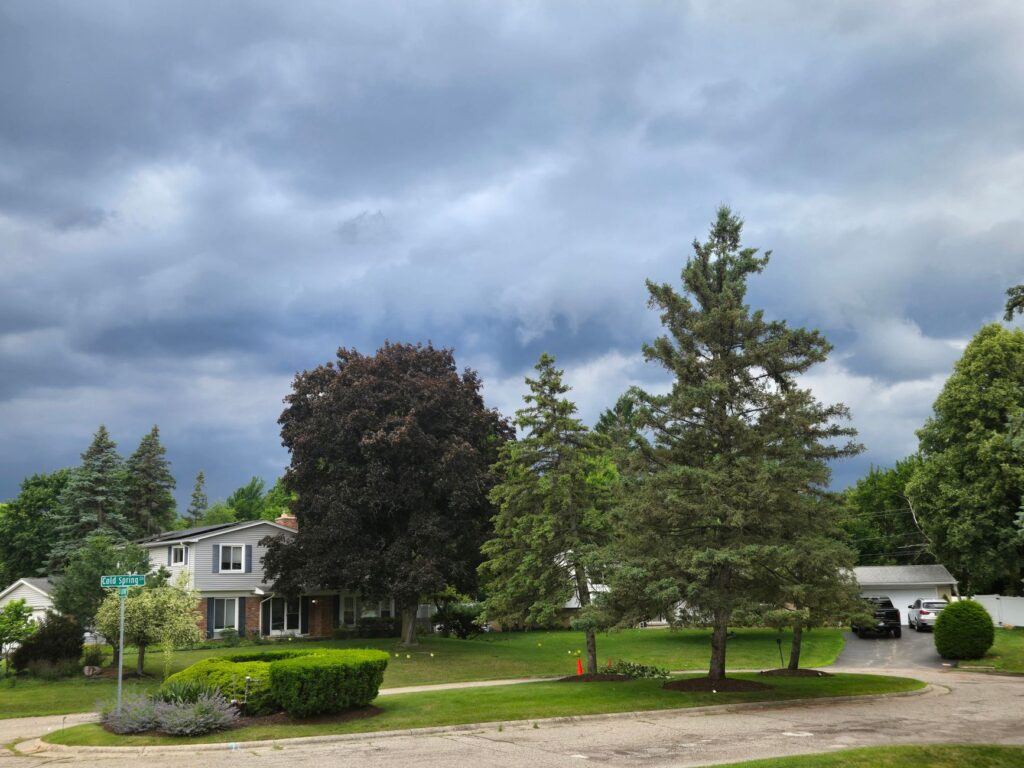
Summer thunderstorms in Middletown arrive fast and hit hard. A nor’easter gives you a day’s warning; a June squall can roll off Raritan Bay in under an hour, drop an inch of rain with 50-mile-an-hour gusts, and be gone before dinner. Most of the time your trees come through fine. But every so often, you look out the window to find a raw white scar running the full length of your white oak (Quercus alba), or smoke rising from a silver maple near the corner of the house.
In 25 years walking properties in Monmouth County — from backyards in Lincroft to the wooded hillsides above Hartshorne Woods in Atlantic Highlands — I’ve assessed dozens of lightning-struck trees. The first question every homeowner asks is the right one: can this tree be saved? The answer isn’t always what they expect. Some trees struck by lightning recover fully. Others look fine for six months and then fail without warning in a summer heat wave. The difference comes down to what the strike actually did to the tree’s vascular system — and how quickly you respond.
This guide walks through what lightning does to a tree, how to safely read the initial damage from the ground, what to do and not do in the first 48 hours, and when to bring in a certified arborist for a formal assessment.
What Lightning Does Inside a Tree
A lightning bolt carries an enormous electrical charge — and it follows the fastest path to ground. A tall, moisture-rich tree standing in an open Middletown yard is an excellent conductor. The charge enters at or near the crown and travels downward through the cambium, the thin layer of living tissue just beneath the bark that the tree depends on to move water and nutrients from roots to leaves. The sap in that cambium layer is water-based, and when a massive charge passes through it in a fraction of a second, it flashes to steam.
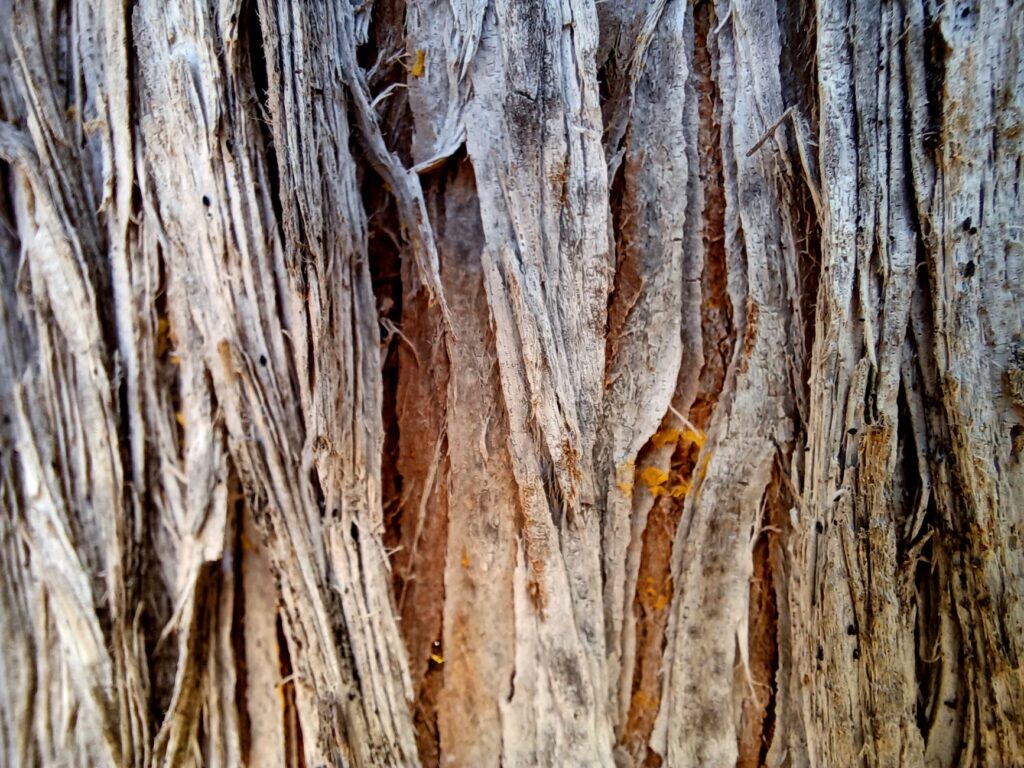
That instantaneous steam explosion is what blows the bark off. You’ll see strips of bark peeled back — sometimes in a spiral pattern that follows the wood grain, sometimes in a straight vertical line, sometimes in a ring that wraps partway around the trunk. The depth of the damage matters enormously. If the strike followed the outer cambium and the bulk of the sapwood is intact, the tree has a real fighting chance. If the bolt penetrated into the heartwood, you’re dealing with internal structural damage that may not fully reveal itself for months.
Different species behave differently. Oaks, hickories (Carya spp.), and tulip poplars (Liriodendron tulipifera) — all common in Middletown yards — often show dramatic bark splits but can recover if the vascular damage is limited. Beech (Fagus grandifolia) tends to be more vulnerable, and smooth-barked species in general offer less of a spiral escape path for the current. According to the International Society of Arboriculture, trees with high moisture content in the outer wood layers are especially susceptible to severe cambial damage during a strike.
Reading the Damage: A Safe Ground-Level Assessment
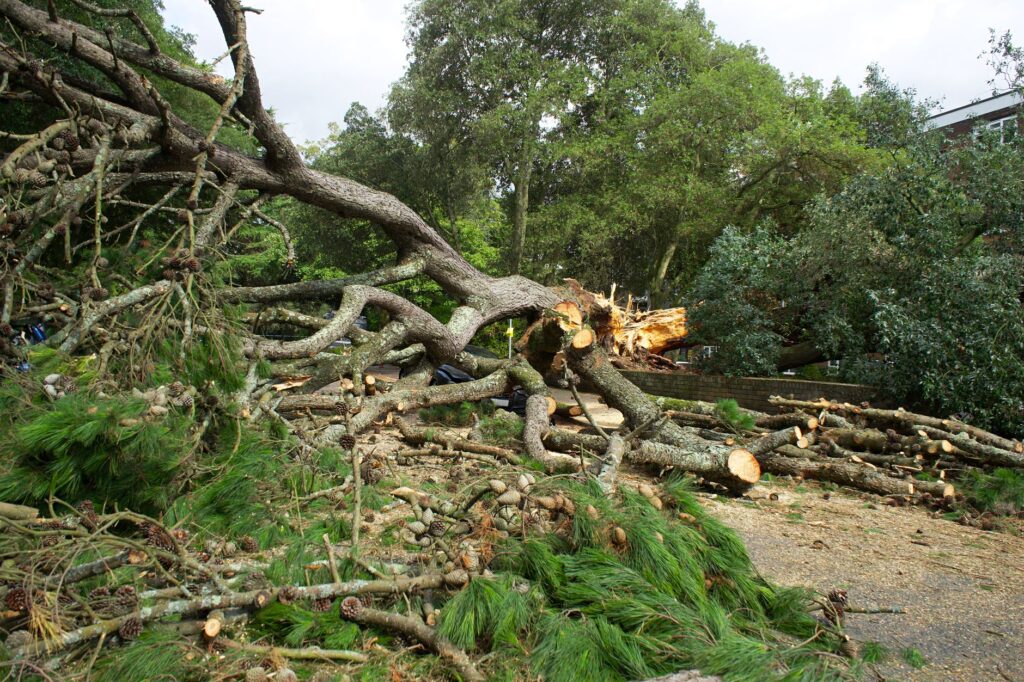
Before you approach a struck tree, stand back and look up. Lightning can compromise large limbs that remain visually attached to the tree but are being held only by residual bark — what arborists call hanging failures or widow-makers. These can drop without any visible warning, especially as temperatures rise and wood dries in the hours after the strike. Look for any limbs that appear cracked, displaced, or hanging at an odd angle before you walk underneath.
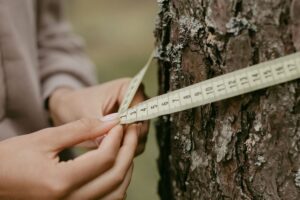
From a safe distance, assess the trunk. The rough field rule of thumb: if less than 25 percent of the bark around the trunk’s circumference was stripped, the tree has a strong chance of recovery. Between 25 and 50 percent, the outcome is uncertain — the tree may survive but needs close monitoring. More than 50 percent, and the vascular disruption is likely severe enough to cause gradual decline, even if the crown looks perfectly normal today.
Check the crown as well. Are the leaves still attached and green? That’s a good sign the canopy had adequate moisture before the strike disrupted the supply. Scorched, wilted, or suddenly brown leaves in the upper canopy above the wound zone suggest a more complete vascular disruption. Finally, look at the ground surface around the base — soil disturbance, scorched grass radiating outward, or cracks in nearby pavement can indicate the charge traveled through the root system, potentially damaging roots well beyond what you can see at the trunk.
Photograph everything from multiple angles: the full trunk, the wound zone, the crown, the ground surface. That documentation matters both for your arborist consultation and for any homeowner’s insurance claim you may need to file.
Middletown's #1 Tree Expert Company
FREE Inspection & Estimate | Certified Arborists | Trimming, Pruning, Removal, More!
Sponsored
The First 48 Hours: What to Do and What to Avoid
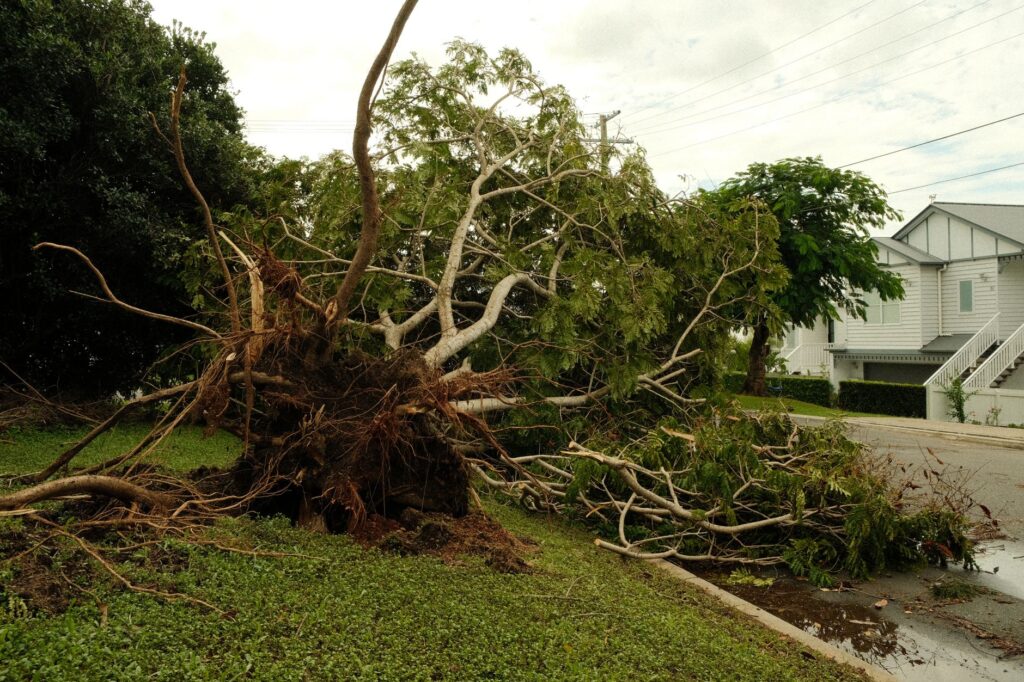
The most important thing to understand in the immediate aftermath of a lightning strike is this: you don’t need to make any major decisions right away, and you shouldn’t. A tree that is not posing an immediate falling hazard can wait for a proper assessment. The impulse to call a crew to remove it on day one is understandable — but it’s often premature. Some trees that appear badly damaged recover well with time and minimal intervention.
What you should do in the first 48 hours: keep everyone away from the tree — children, pets, neighbors. Establish a clear zone beneath and around the canopy. Water the tree deeply if the soil is dry; the root system just experienced severe shock, and maintaining soil moisture in the root zone reduces additional drought stress on an already stressed tree. A slow drip at the drip line for two to three hours accomplishes far more than a sprinkler run for twenty minutes. Contact your homeowner’s insurance company to report the strike and document the damage while everything is fresh.
What you should not do: don’t apply wound sealers, pruning paint, or any kind of coating to the exposed wood. This advice was common decades ago but has been thoroughly discredited. The Rutgers New Jersey Agricultural Experiment Station and current arboricultural research are in agreement that wound sealants can trap moisture and create conditions favorable to pathogens, while offering no benefit to the tree’s own compartmentalization response. Let the tree work. Don’t rush a removal decision you can’t undo.
Recovery or Decline: Reading the Tree Over the Coming Months
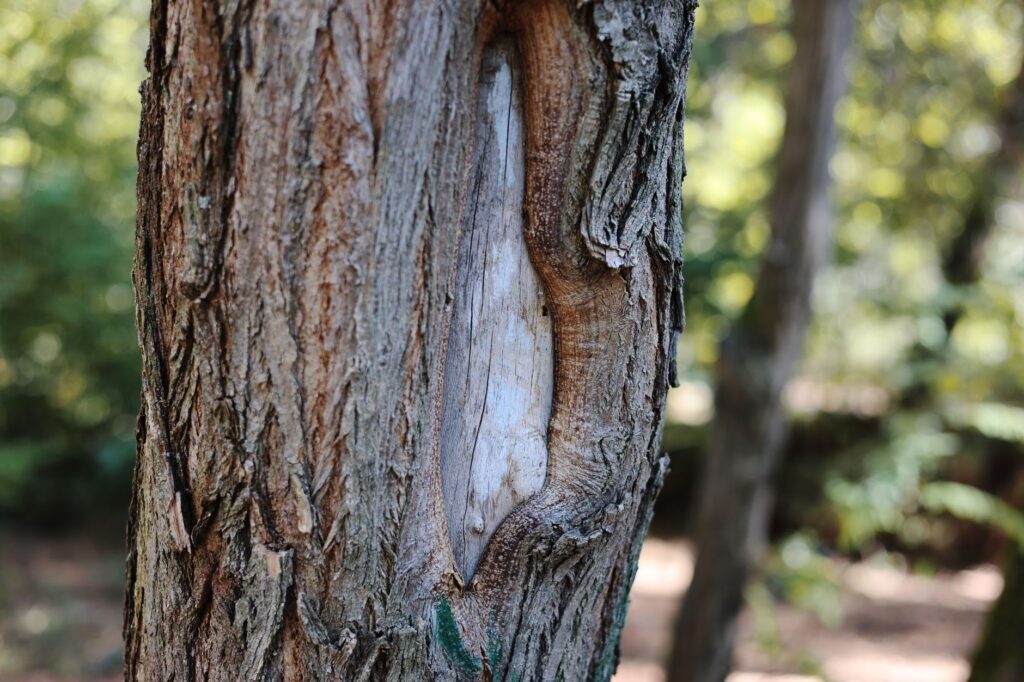
The weeks following a lightning strike are when you’ll get the real picture of your tree’s future. Recovery and decline each have a recognizable signature — once you know what you’re looking for.
Signs of recovery: within two to four weeks, surviving branches should show continued normal leaf development. As midsummer progresses, watch the edges of the wound zone for callus tissue — a slight rolling or ridging at the wound margins. This is the tree’s CODIT response (Compartmentalization of Decay in Trees), the biological mechanism by which trees build chemical and structural barriers around wounds to wall off decay and infection. A wound with actively growing callus margins is a wound being successfully managed. By the following spring, a recovering tree will typically break bud normally on undamaged portions of the crown and show vigorous new growth.
Signs of decline: progressive dieback moving downward from the top of the crown — what arborists call top-down dieback — is a serious warning sign. Weeping sap or unusual oozing from the wound zone suggests secondary bacterial or fungal infection is taking hold. Bark that continues to separate from the wood in the weeks after the strike indicates the cambium behind it has died. Secondary pests are also a real risk in Middletown’s summer heat: bark beetles and wood borers are powerfully attracted to stressed and dying trees, and a declining lightning-struck oak or maple can draw them quickly once the tree’s internal defenses weaken.
The full picture often requires a full growing season to reveal. I recommend scheduling a follow-up arborist assessment each fall after a summer strike, when deciduous trees begin to show their true leaf-out pattern and any dieback is clearly visible in the bare canopy structure.
Lightning Protection Systems: Worth It for Your Best Trees?
If you have a specimen tree on your Middletown property — a 60-year-old white oak close to the house, a heritage American beech in the backyard, a towering tulip poplar near the corner of the roof — it’s worth asking whether a lightning protection system makes sense before the next storm arrives. These systems are far less common than they should be in Monmouth County, and most homeowners don’t know they exist.
A properly installed lightning protection system consists of a copper conductor cable attached at the highest point of the crown and routed down the trunk to a grounding rod driven deep into the soil. When lightning strikes, the charge follows the copper conductor rather than the tree’s cambium, bypassing the living tissue almost entirely. The system doesn’t prevent lightning from hitting the tree — it redirects the strike so the tree survives it. Installations follow ANSI A300 standards published by the Tree Care Industry Association and must be correctly sized and positioned for the tree’s species, height, and proximity to structures.
The economics make sense for high-value trees. A mature white oak or red oak (Quercus rubra) in a Middletown yard can represent $10,000 to $40,000 in appraised landscape value — and that doesn’t account for the decades it would take to grow a replacement. A professionally installed lightning protection system typically runs $500 to $1,500 depending on tree height and complexity. That’s a reasonable premium on a tree you’ve lived with for decades and that defines the character of your property.
Lightning protection systems must be installed by a certified arborist trained in their application. Incorrect grounding can actually increase root damage in a future strike. If you have tall, valuable trees near your home, it’s worth raising the question at your next professional tree consultation.
Middletown's #1 Tree Expert Company
FREE Inspection & Estimate | Certified Arborists | Trimming, Pruning, Removal, More!
Sponsored
When to Call a Pro — and What to Ask For
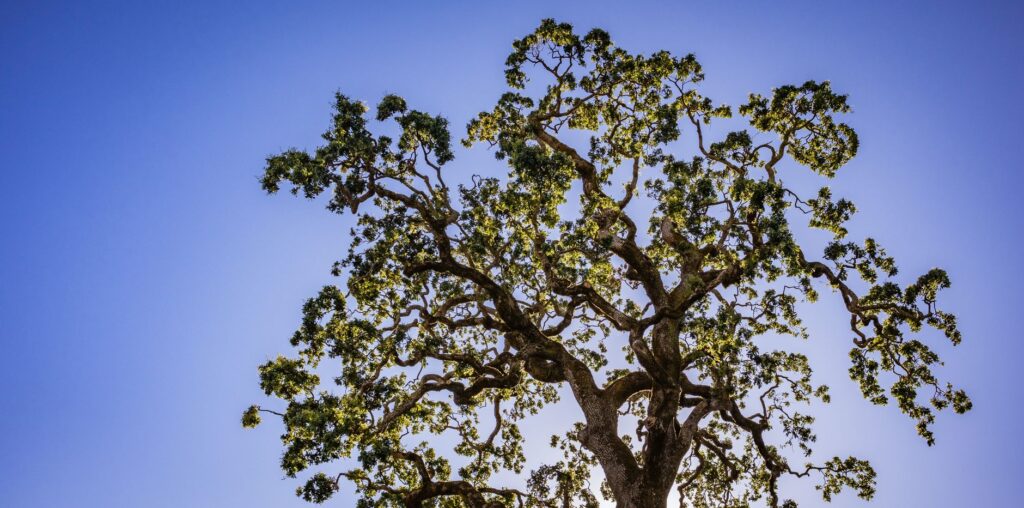
A lightning-struck tree is not automatically a dead tree. Middletown homeowners who respond thoughtfully — documenting the damage, keeping the root zone watered, staying out from under the canopy, and scheduling a professional assessment — give their trees the best possible chance at recovery. The key is not rushing toward removal and not ignoring the strike either.
There are situations, however, where you shouldn’t wait to call a certified arborist. If the struck tree has large hanging limbs over a structure, a deck, a play area, or a path where people walk, that is an immediate hazard that needs professional attention within hours, not days. If more than half the bark circumference was stripped, the tree needs structural evaluation before the next storm adds load to compromised wood. If the tree is within falling distance of your house and you’re uncertain about its integrity, get eyes on it — a formal tree risk assessment is far cheaper than a roof repair.
The International Society of Arboriculture’s consumer resource has tools for finding ISA-certified arborists in Monmouth County who are qualified to perform post-storm risk assessments and provide documented findings your insurance company can use. A professional assessment after a lightning strike is one of the best investments you can make — it gives you clear information rather than the anxiety of guessing, and it may save a tree you’d otherwise lose to an uninformed removal decision made under stress.
Photo credits: Featured image by Castorly Stock on Pexels; Section 1 by Kevin Early on Pexels; Section 2 by Antoine Conotte on Pexels; Section 3 by Mike Bird on Pexels; Section 4 by April Yang on Pexels; Section 5 by Ivan Georgiev on Pexels; Section 6 by Kindel Media on Pexels; Section 7 by Robert So on Pexels.