
Middletown's #1 Tree Expert Company
FREE Inspection & Estimate | Certified Arborists | Trimming, Pruning, Removal, More!
Sponsored
Why Your New Tree Is Fighting for Its Life Right Now
The first week of June in Middletown usually brings that first real stretch of heat — temperatures climbing into the upper 80s, the humidity rolling in off Raritan Bay, and the sun hitting pavement hard enough to blur the horizon. For established trees, it’s nothing they haven’t handled for decades. For a tree you planted this past spring — or one that went in last fall and just leafed out for the first time — it’s a different story entirely.
That tree is in crisis management right now. Every leaf on its canopy is pulling water upward through a root system that’s a fraction of what it needs. Whether you planted a red maple (Acer rubrum), a river birch (Betula nigra), or a native swamp white oak (Quercus bicolor) near the Bayshore, the clock is ticking on whether it survives its first summer. Middletown’s clay-loam soils make this harder — they drain poorly when saturated but become concrete-hard when they dry out, swinging between two extremes that stress roots at every step.
June isn’t just a nice time to enjoy a new tree. It’s the most critical month in that tree’s life. The good news: what you do right now — how you water, how you mulch, whether you catch stress signs early — makes the difference between a tree that establishes strong and one that limps along for years or quietly dies. This guide covers what Middletown homeowners need to know in the next few weeks.
What Transplant Shock Is — and Why June Amplifies It
When a tree is dug from a nursery or moved from a container into your yard, it loses a significant portion of its root system in the process. A balled-and-burlapped tree might carry 80 to 90 percent fewer root tips than it had growing in the ground — and those root tips are the working end of the root system, responsible for pulling water and nutrients from soil. The canopy, meanwhile, is still the same size. It’s still demanding water through every one of its leaves. That mismatch is transplant shock.
According to Rutgers NJAES Fact Sheet FS920 on tree and shrub planting, it can take one year of establishment for every inch of trunk diameter before a tree is fully settled into its new site. A two-inch caliper red maple might take two full growing seasons before it’s operating on its own resources. During that window, the tree depends entirely on what you give it.
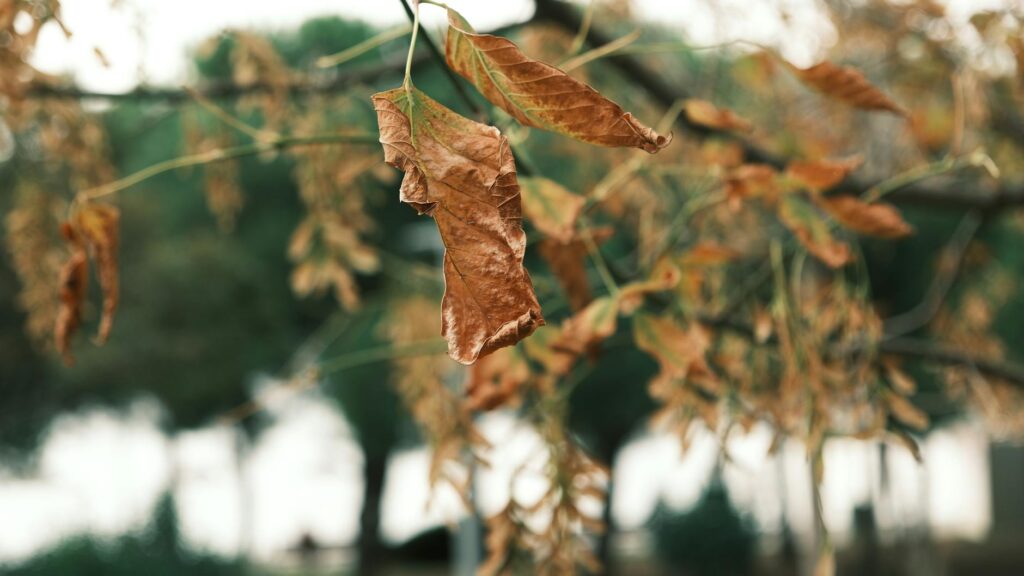
In Middletown’s early summer heat, transplant shock can escalate fast. The symptoms — wilting despite wet soil, browning leaf margins, early leaf drop, sparse new growth — are easy to misread. Many homeowners overwater at this stage, drowning roots that are already stressed. Others underwater because the soil surface looks dry while the root zone is waterlogged underneath. Knowing what’s actually happening inside the root zone is what separates a tree that thrives from one that slowly declines.
Deep and Slow: How to Water a Newly Planted Tree in Summer
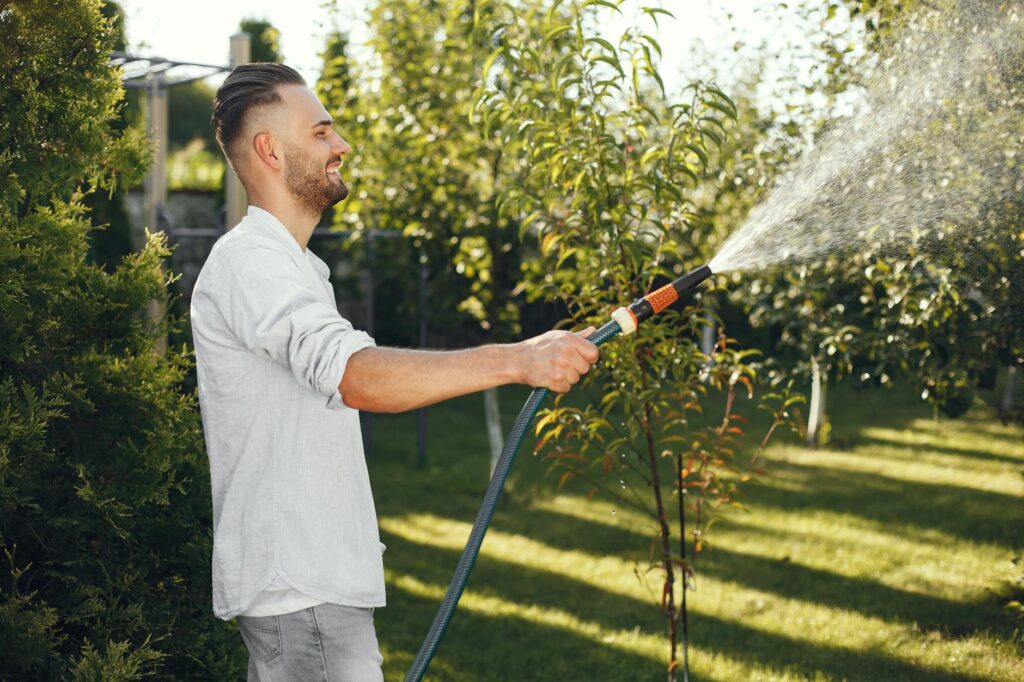
Lawn sprinklers are the enemy of a newly planted tree. They’re designed to apply a shallow, frequent layer of moisture across a large area — exactly the opposite of what a new tree needs. Shallow watering keeps roots near the surface, where they’re exposed to heat and drought. What a new tree needs is deep, infrequent watering that pushes moisture down through the soil profile and trains roots to follow it downward.
The target for a newly planted tree in summer is about 1 to 1.5 inches of water per week, delivered slowly over a 30-to-60-minute window rather than a quick blast. In Middletown’s clay-loam soils, a slow application matters because water moves laterally more than it percolates straight down — you need time for it to seep in rather than sheet off. A soaker hose laid in a ring around the drip line, or a slow trickle from a garden hose moved around the root zone, works far better than any sprinkler head. Gator bags — the green zipper reservoirs you’ve probably seen on new street trees along Route 35 through Leonardo — deliver water slowly over six to eight hours and eliminate the guesswork of manual timing.
Before each watering cycle, run a quick check: push a screwdriver or moisture probe into the soil about four inches deep near the root flare. The International Society of Arboriculture’s tree owner resources recommend this simple test to avoid the overwatering trap. If the probe resists and comes out dry, it’s time to water. If it slides in and comes out moist, hold off another day.
A quick reference for summer watering of a new tree:
- Target: 1–1.5 inches of water per week
- Method: soaker hose, gator bag, or slow trickle from a hose
- Depth check: probe 4 inches before each cycle
- Timing: early morning only — never evening or midday
Morning watering gives moisture time to settle into the root zone before peak heat. Evening watering leaves foliage wet overnight, encouraging the fungal issues that thrive in Middletown’s coastal humidity. Midday watering evaporates before it reaches the roots.
Middletown's #1 Tree Expert Company
FREE Inspection & Estimate | Certified Arborists | Trimming, Pruning, Removal, More!
Sponsored
Mulch Is Your New Tree's Best Friend This Summer
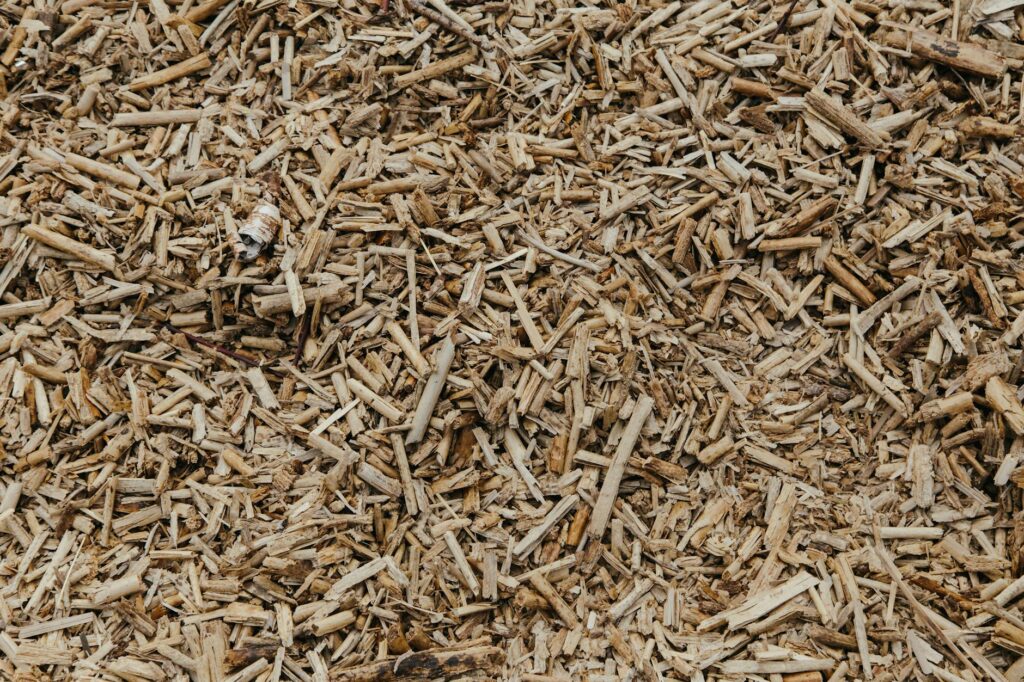
A proper mulch ring is the single most effective thing a Middletown homeowner can do for a newly planted tree in summer. Done right, it does three things simultaneously: it moderates soil temperature (the surface can exceed 120°F on a July afternoon without cover), retains moisture between watering cycles, and gradually feeds the microbial community that supports root health. It’s essentially free tree care that pays dividends all season.
Apply two to four inches of coarse wood mulch in a ring extending at least three to four feet from the trunk in every direction. Further is better — research consistently shows that wider mulch rings improve establishment. The one non-negotiable: do not let mulch touch the bark. Pull it back two to three inches from the root flare. The mounded look you see all over NJ landscapes — mulch heaped against the trunk like a little hill — creates chronic moisture stress at the bark, invites disease, and can kill a tree over several years. A tree in its first summer absolutely cannot afford that start.
Use arborist wood chips if you can source them — the variable particle size creates excellent moisture retention and air space for root growth. Coarse bark mulch works well too. Avoid rubber mulch, stone, or fine sawdust around trees. In Middletown’s warm summers, the mulch ring will break down faster than you’d expect; top it off once in midsummer if the layer compresses to less than two inches.
Staking a New Tree: The Rules Middletown Homeowners Break Most
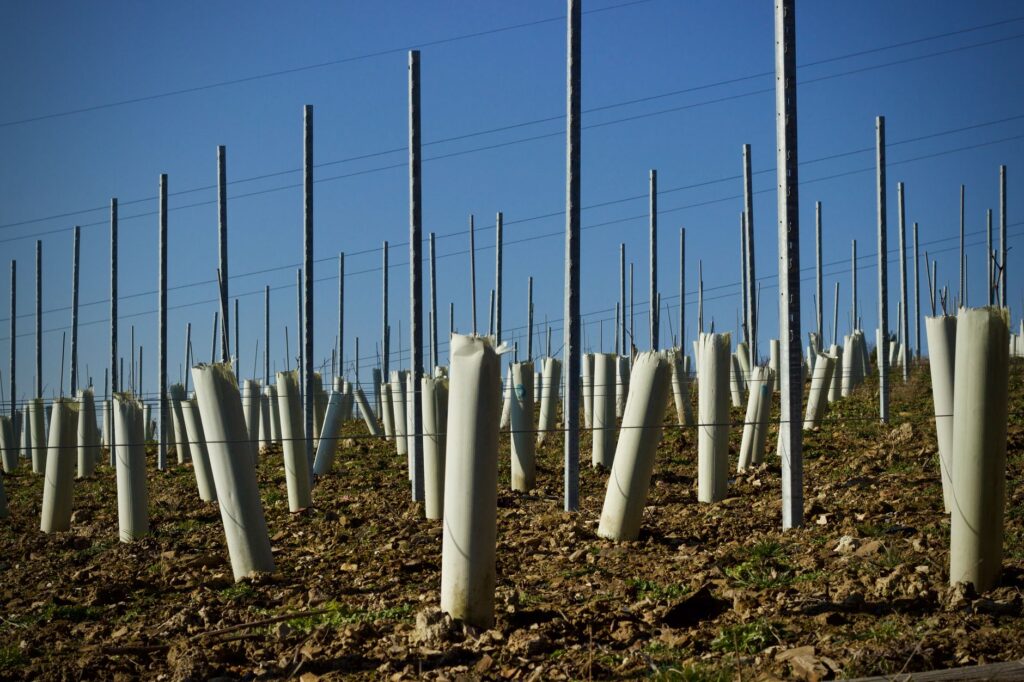
The most common staking mistake I see in Middletown yards is a tree still tied to its original nursery stakes two or three years after planting — sometimes with the wire-in-garden-hose hardware that came with the tree from the nursery. By that point, the ties have often girdled the bark, or the stakes have become crutches that prevent the trunk from developing the structural taper it needs to stand on its own.
Here’s the reality: most trees planted from a nursery container don’t need staking at all, provided they’re planted correctly and the root ball is set solidly in the ground. The ISA’s guidance on planting and staking is clear that stakes are only warranted when a tree cannot stand upright on its own, when it’s exposed to persistent strong winds, or when it’s a particularly top-heavy specimen in an exposed Bayshore location where summer sea breezes put real lateral pressure on a young trunk.
When staking is genuinely needed, follow these rules:
- Use two short stakes placed outside the root ball, not through it
- Connect them to the trunk with wide, flat, flexible ties — not wire, zip ties, or rope
- Attach the tie at the lowest point on the trunk where the tree can stand
- Leave enough slack for the tree to sway gently in the wind
- Set a calendar reminder to remove everything by 12 months after planting
That slight movement is not a problem — it’s the point. Trunk flex builds the structural wood and root anchoring that allow the tree to stand unassisted. A tree that’s strapped rigid to stakes for two years hasn’t built that strength. When the stakes finally come out, it often can’t hold itself up. Remove stakes early, not late.
What Your New Tree Is Trying to Tell You This Summer
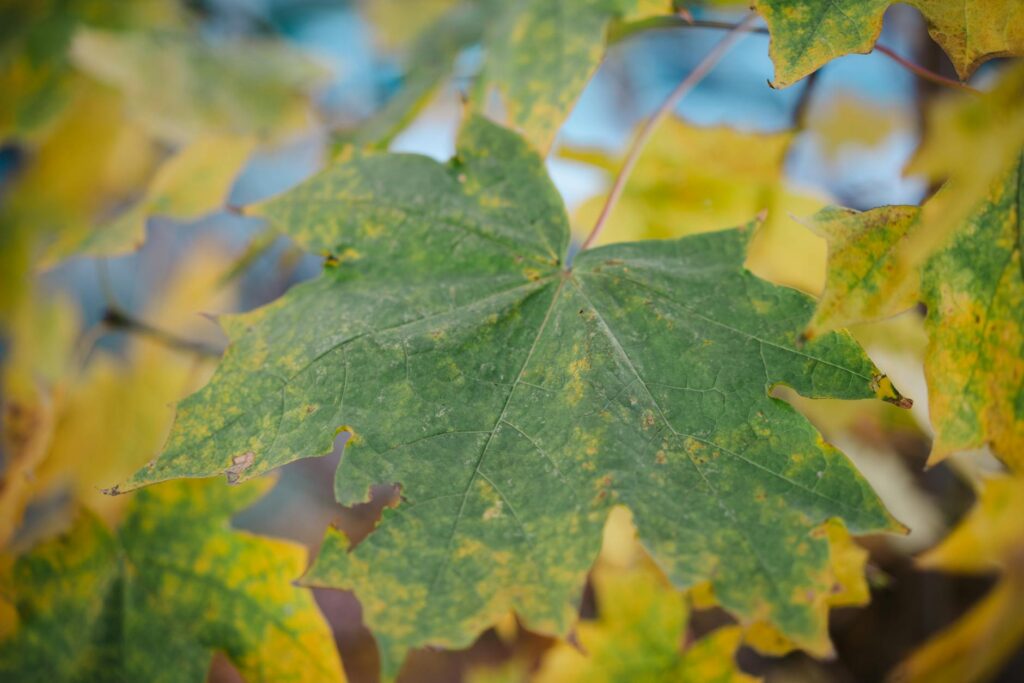
A newly planted tree will signal what it needs — if you know how to read the signs. The challenge is that stress symptoms in a young tree can look alarming without meaning the tree is in crisis, or they can be subtle warnings of a serious problem. Context matters.
Wilting in the afternoon on a hot day is normal: a tree closes its stomata under high heat and water demand, and leaves droop. Wilting that persists into the morning, or wilting on a cool overcast day, means the root zone is too dry — or occasionally too wet. Waterlogged roots can actually mimic drought symptoms because drowning roots can’t function any better than dry ones. Leaf scorch — brown, crispy edges on otherwise green leaves — typically points to moisture stress, and near the Bayshore, it can also mean salt wind burn after a summer storm pushes marine air inland across Port Monmouth or Atlantic Highlands.
Early leaf drop in July or August often alarms homeowners, but on a tree in its first summer, it’s frequently a survival strategy — shedding foliage to reduce the canopy’s water demand to a level the roots can actually meet. Watch whether new growth continues on remaining branches. If so, the tree is coping. If the entire canopy browns and drops at once, that’s a different situation.
Yellow leaves on a new tree planted in Middletown’s heavier clay soils sometimes indicate waterlogging rather than drought. The USDA Forest Service’s urban and community forestry program identifies root oxygen deprivation as one of the leading causes of failure in newly planted landscape trees, particularly in fine-textured soils like those across much of Monmouth County. If your yard drains slowly after rain and your new tree is yellowing, the problem may be drainage — not lack of water.
Middletown's #1 Tree Expert Company
FREE Inspection & Estimate | Certified Arborists | Trimming, Pruning, Removal, More!
Sponsored
When Summer Stress Becomes Something a Certified Arborist Should See
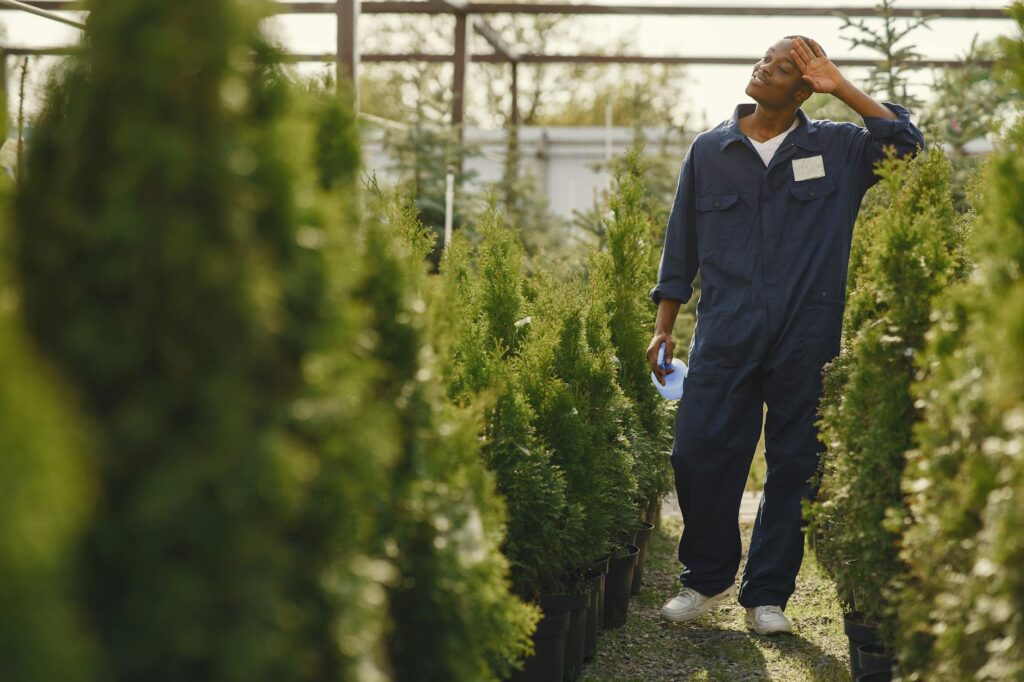
Most first-summer stress is manageable if you act early. But some signals go beyond what watering and mulching can fix, and those are the moments to get a professional evaluation before the season is over and the damage is done.
If wilting persists despite consistent deep watering, the problem is likely below ground — root rot, a tree planted too deep, soil that drains so poorly the roots are effectively drowning, or a stake or wire still pressing against the root flare. An arborist can probe the root zone, assess planting depth, and recommend corrective action while the tree still has a chance. Many planting-depth problems can be corrected in year one. By year three, the damage is often permanent.
If new growth stalls completely by mid-July — no extension, no new leaves, just the spring flush sitting static on the branches — the tree’s root system isn’t keeping up with the canopy. That imbalance needs a professional assessment, not more patience.
If the bark on a young tree is cracking, weeping, or showing sunken discolored patches, that’s a canker — a wound response to stress or fungal invasion. On a tree in its first season, cankers can spread quickly when the tree lacks the energy to compartmentalize them. That’s not a wait-and-see situation.
An arborist evaluation on a struggling new tree typically costs far less than replacing the tree — and replacement means starting the establishment clock over from scratch. If you planted something meaningful this spring, or invested in a large caliper specimen for a front yard in Chapel Hill or Lincroft, a professional visit is cheap insurance. Find an ISA-certified arborist through the ISA’s Find an Arborist tool to locate someone qualified to work in the Middletown area.
Photo credits: Featured image by Chris F on Pexels; Section 1 by Craig Adderley on Pexels; Section 2 by hubbugaye on Pexels; Section 3 by Gustavo Fring on Pexels; Section 4 by Ron Lach on Pexels; Section 5 by Peter Dyllong on Pexels; Section 6 by Markus Winkler on Pexels; Section 7 by Gustavo Fring on Pexels.