Middletown's #1 Tree Expert Company
FREE Inspection & Estimate | Certified Arborists | Trimming, Pruning, Removal, More!
Sponsored
That Sickly Sycamore Probably Isn't Dying
Every May, I get calls from homeowners across Middletown Township who are convinced their sycamore is dying. The tree looked fine last fall, but now it’s dropping brown, shriveled leaves before they’ve even fully opened — whole branch tips look scorched, the canopy is thin and blotchy, and nearby trees are lush and green while this one stands there looking like it barely survived winter.
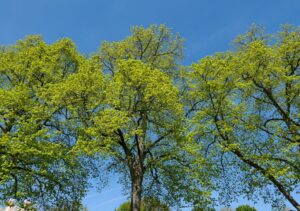
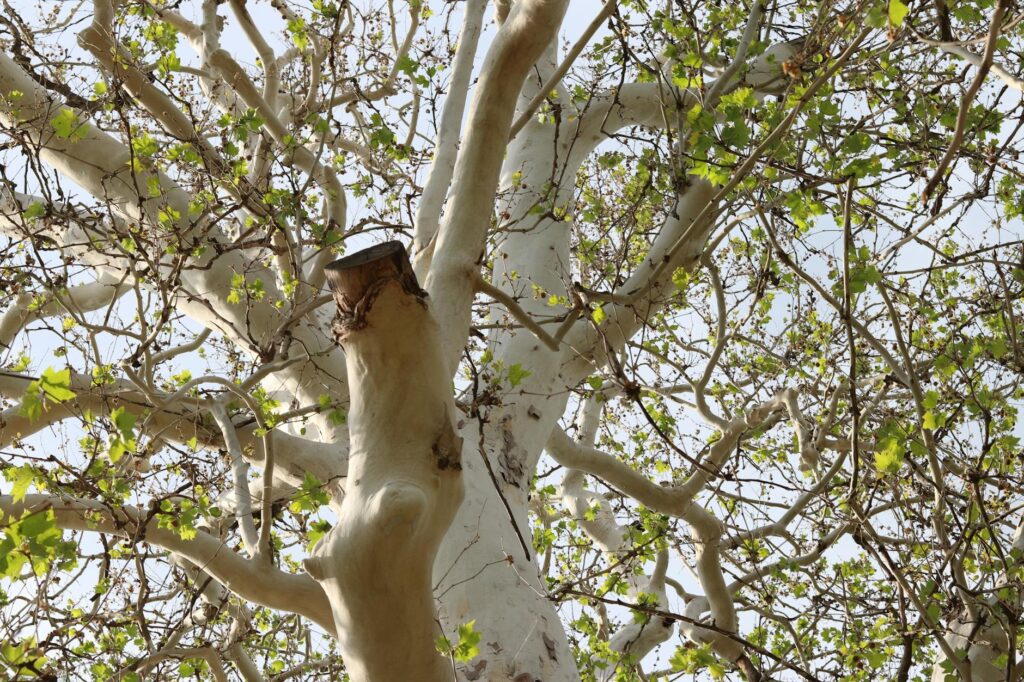
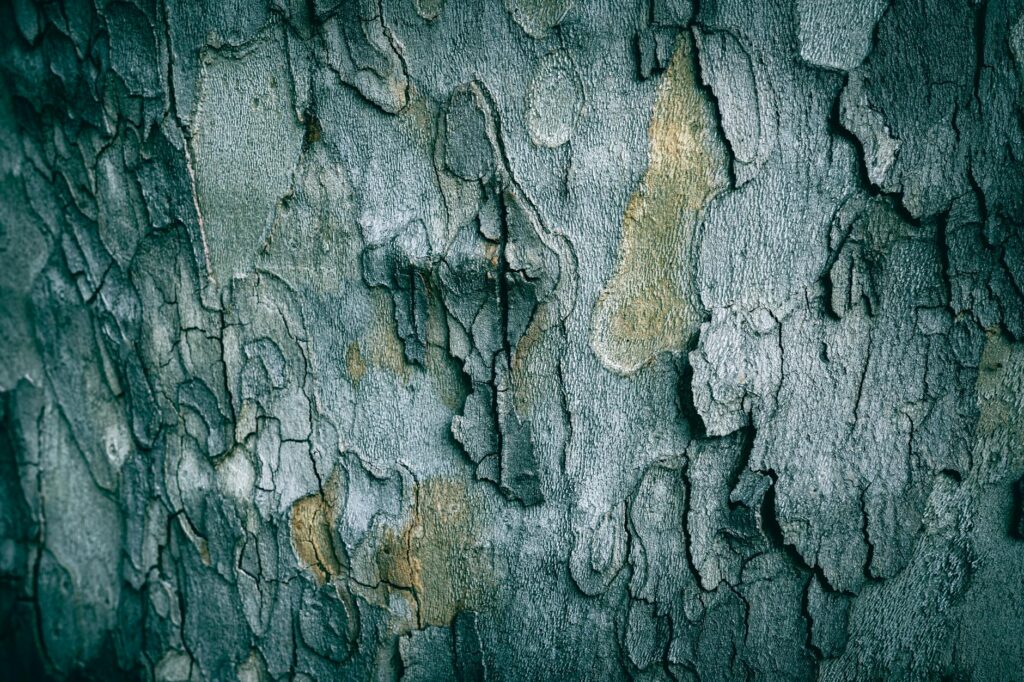
The American sycamore (Platanus occidentalis) is one of the most iconic trees in Monmouth County. You know it by its bark — that pale, peeling patchwork of cream, tan, and olive-green revealing smooth white limbs underneath, often towering over a creek corridor in Poricy Park, anchoring the edge of an older property in Lincroft, or standing sentinel along a stream in Atlantic Highlands. These trees can live for centuries and grow massive. When yours looks ravaged in early May, the alarm is understandable.
In almost every case, what you’re looking at is sycamore anthracnose — a fungal disease that ambushes new leaf tissue during the cool, wet springs that Monmouth County’s coastal plain delivers with some regularity. It’s been cycling through local sycamores for decades. Understanding why it happens, how to read its progress through the season, and whether you actually need to do anything about it can save you from unnecessary worry — and from spending money on treatments that may not be warranted.
What Anthracnose Actually Is — And How It Works
Sycamore anthracnose is caused by the fungus Apiognomonia veneta, a pathogen that targets members of the plane tree family. The native American sycamore is more susceptible than the London plane tree (Platanus × acerifolia), a hybrid commonly planted in parks and along roadsides that was bred in part for improved disease resistance. If your tree is a straight-species American sycamore — which most of the older specimens in Middletown are — it will be more vulnerable in a bad spring.
The fungus overwinters in infected twig tissue and in decomposing leaf litter left over from the prior season. When cool, wet weather coincides with the critical window of spring budbreak — typically late April through mid-May along coastal Monmouth County — the pathogen releases spores that travel by rain splash to newly emerging leaves and shoots. Young, tender tissue at this stage has almost no defensive capacity. Infection causes brown, water-soaked lesions that expand rapidly, killing leaf tissue before it ever fully expands. Infected shoots die back from the tips, which is why you see what looks like scorched, twig-dead clusters distributed throughout the crown.
The Rutgers Plant & Pest Advisory, which tracks plant disease pressure across New Jersey each season, consistently notes that anthracnose severity tracks tightly with spring weather patterns — cool, extended wet periods during budbreak produce heavy infections, while warmer or drier springs may pass with minimal symptoms. In some years the disease is barely noticeable; in others, the sycamores on your street look like they were hit with a flamethrower.
Reading the Symptoms: What to Look For
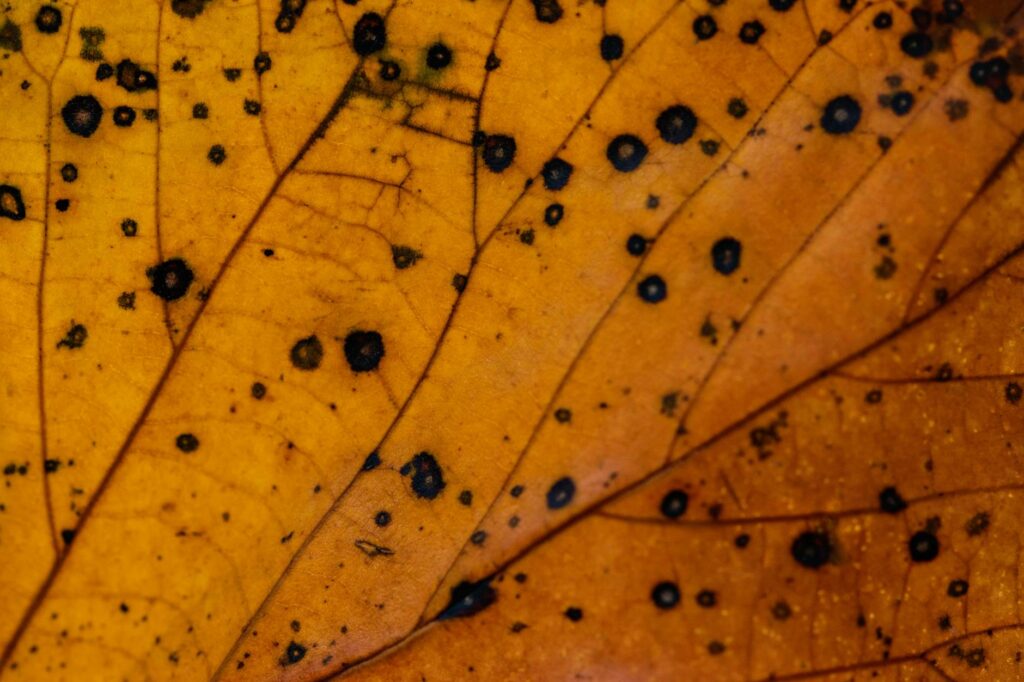
Sycamore anthracnose produces a fairly recognizable set of symptoms once you know the pattern. The first sign is usually small, brown to tan lesions on newly emerged leaves, often following the leaf veins and concentrated near the midrib. As the infection spreads, entire leaves may brown and shrivel, dropping prematurely — at first glance this can look identical to late frost damage, and in a cold spring the two can even occur at the same time, compounding the visual mess.
As you scan the canopy, look for a zoned pattern: lower and interior branches, which bud out slightly earlier and get hit by the first wave of spores, may be nearly defoliated while upper branches — which leafed out a bit later when temperatures had risen slightly — show milder symptoms or none at all. This vertical gradient is a useful diagnostic clue. If the tree were truly dead or in severe systemic decline, you’d expect more uniform dieback across the whole crown rather than that patchy, elevation-dependent pattern you see with anthracnose.
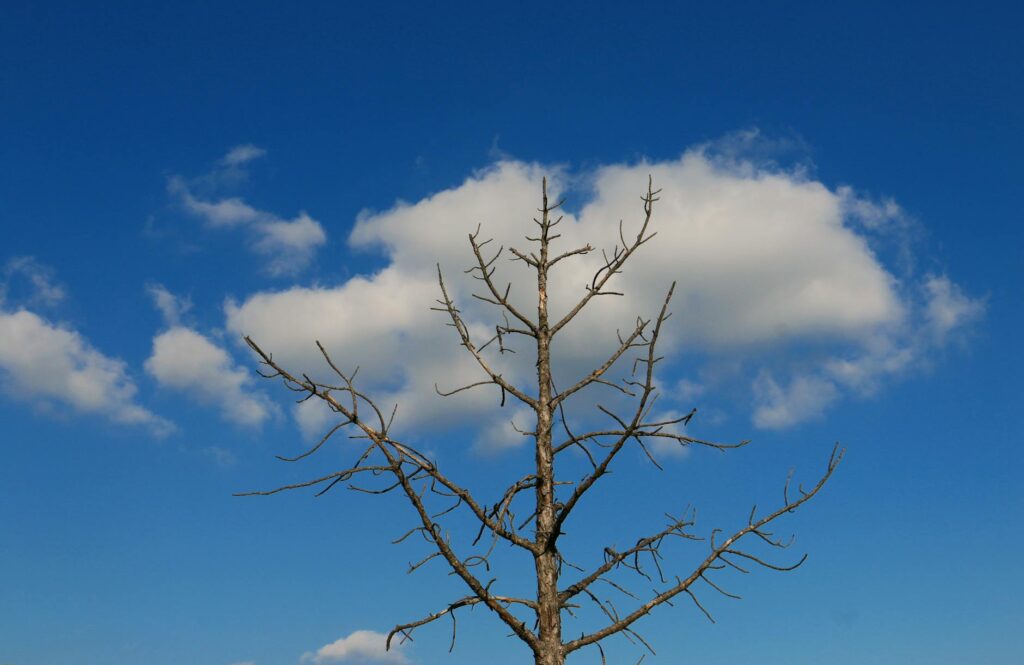
Twig death is another key marker. Anthracnose kills the tips of current-season shoots, leaving them blackened and curled. In a bad infection year, an affected sycamore can lose multiple feet of twig growth from dozens of branch tips simultaneously. The International Society of Arboriculture notes that while this level of damage is visually dramatic, established trees with good root structure routinely push through it and produce a second flush of growth within weeks.
Middletown's #1 Tree Expert Company
FREE Inspection & Estimate | Certified Arborists | Trimming, Pruning, Removal, More!
Sponsored
Why Middletown's Spring Climate Sets the Stage
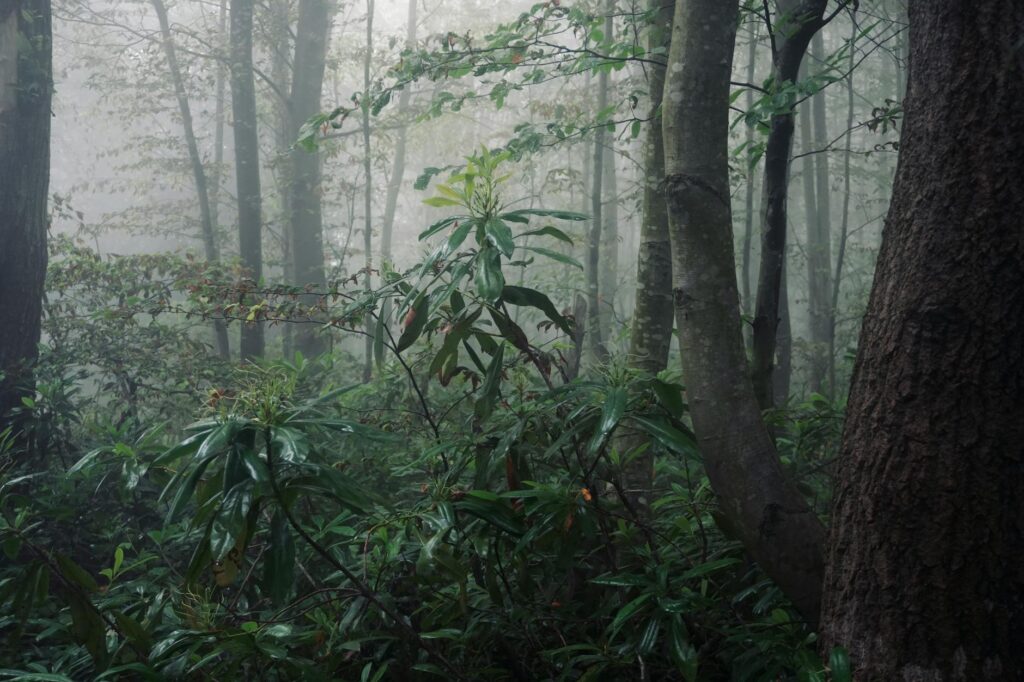
Middletown Township sits in an interesting climatic pocket. The Raritan Bayshore moderates temperatures year-round — winters are milder than inland Monmouth County, but springs tend to be wetter and foggier, with marine air holding humidity against the coastal plain well into May. This is ideal anthracnose weather. Cool temperatures during budbreak slow the tree’s own defensive responses, and persistent moisture gives the fungal spores exactly the splash-dispersal conditions they need to move from infected twig tissue to newly expanding leaf surfaces.
The county’s mature urban tree canopy also amplifies the problem. Sycamores growing in close proximity — along stream corridors, in established neighborhoods, in parks like Poricy Park near Red Hill Road — create micro-environments where infected leaf debris from one season can inoculate nearby trees in the next. The pathogen doesn’t require an insect vector or an unusual weather event to cycle forward. It simply persists in dead twigs and last season’s leaf litter, waiting for conditions to return. This is why properties with poor air circulation around their sycamores, or those in low-lying frost pockets near streams, tend to see heavier infections almost every year.
It’s also worth noting that New Jersey’s springs have grown more variable in recent years, with extended cool, wet stretches disrupting normal phenological timing. When budbreak is delayed and then temperatures stay low and wet for weeks, the disease window stretches — and the cumulative spore pressure on emerging leaves rises accordingly.
The Summer Recovery You Should Expect
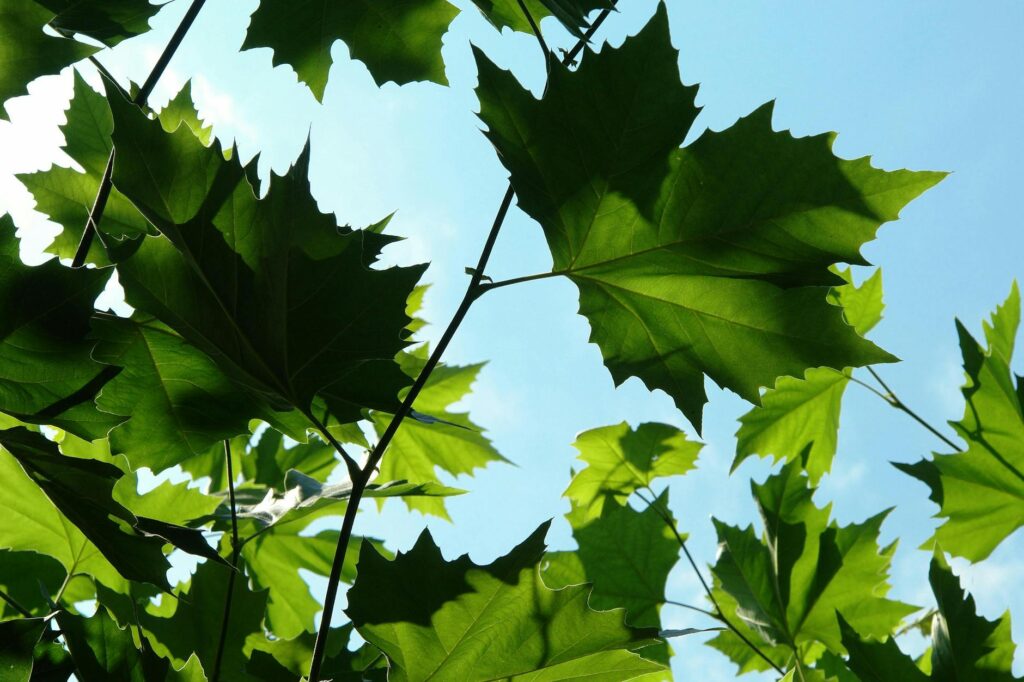
Once temperatures climb reliably into the 60s and 70s and the wet spring weather gives way to the drier air of June, the anthracnose cycle typically stalls. The fungal pathogen needs that specific window of cool, moist conditions during budbreak — once that window closes, new infections don’t establish as readily, and the tree’s own physiological defenses catch up. Trees that looked alarming in early May begin pushing out a second flush of healthy leaves from latent buds, and by midsummer many are presenting a reasonably full canopy, even if thinner than in an unaffected year.
That said, years with repeated severe defoliation do take a cumulative toll. A sycamore that gets hit hard two or three consecutive springs — especially while simultaneously managing drought stress, compacted soils, root competition from pavement or construction, or secondary pest pressure — will carry those stresses forward. Crown dieback that fails to recover by July, unusual twig mortality persisting into summer, or weeping canker-like lesions appearing on larger branches can indicate that the tree has moved beyond simple seasonal anthracnose into something that warrants closer evaluation. The USDA Forest Service Forest Health Protection program specifically flags multi-year anthracnose defoliation as a known predisposing factor for secondary canker and wood decay pathogens in sycamore and plane trees — the weakened tissue opens doors for further infection.
Management: What Actually Helps (and What Doesn't)
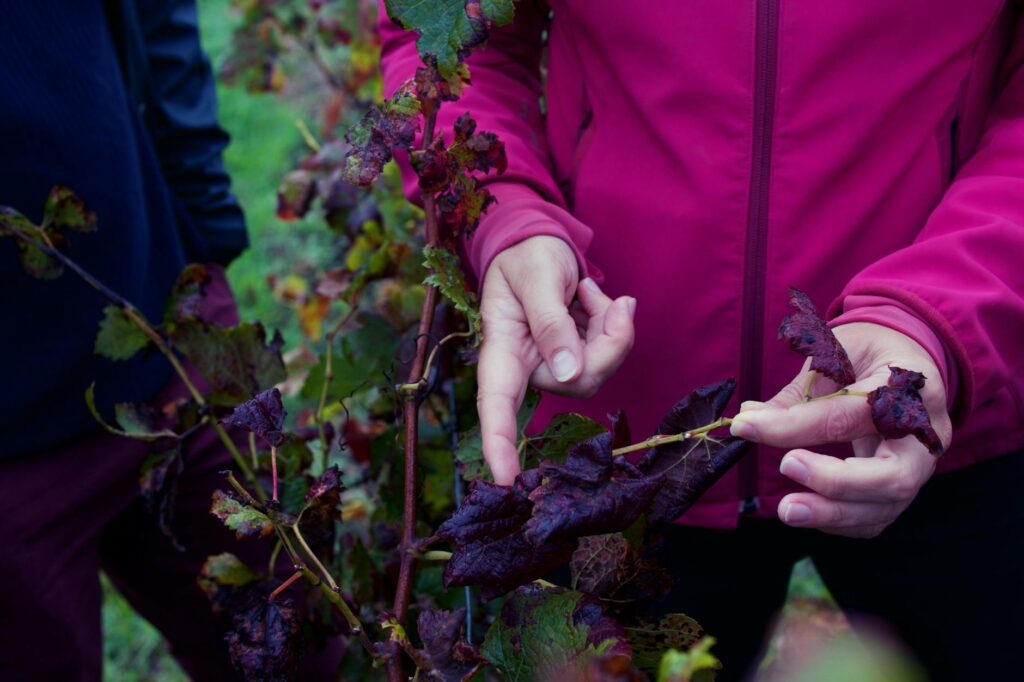
For most established sycamores in Middletown, the honest answer is: do relatively little, and the tree will manage on its own. Anthracnose is chronic and cosmetically alarming, but a healthy, well-established sycamore with good root structure and adequate soil moisture is generally resilient enough to cycle through bad spring infections without lasting harm. The temptation to treat aggressively after a scary-looking May is understandable, but often unnecessary.
There are practical steps that genuinely reduce disease pressure, and most involve good autumn habits:
- Rake and remove fallen leaves and infected twigs in autumn — this is your single most effective tool. Reducing the overwintering inoculum in and around your yard reduces the following spring’s pathogen load significantly.
- Avoid overhead irrigation during spring budbreak — wet foliage extends the disease window. Water deeply at the root zone instead, especially in dry spells between rain events.
- Maintain soil health around the tree. Sycamores dealing with chronically compacted soil, construction root damage, or repeated drought are hit harder and recover more slowly.
- Improve air circulation where possible. Heavy encroaching shrubs or structures that trap moisture around the crown lengthen the damp conditions the fungus needs.
Fungicide treatments exist and are effective if applied correctly — typically three to four timed applications starting at budbreak, using registered active ingredients such as thiophanate-methyl or chlorothalonil. But the timing requirements are demanding, most mature sycamores are too large for homeowner-grade application equipment, and the window for effective treatment is narrow. This is a job for a licensed applicator with appropriate spray equipment. The Rutgers New Jersey Agricultural Experiment Station maintains current guidance on registered fungicide options and application timing for ornamental trees in New Jersey — their recommendations are updated regularly and serve as the baseline for commercial applicators working in the state. Fungicide is rarely worth pursuing after a single bad season on an otherwise healthy tree, but repeated severe defoliation year after year is a legitimate reason to consider it.
Middletown's #1 Tree Expert Company
FREE Inspection & Estimate | Certified Arborists | Trimming, Pruning, Removal, More!
Sponsored
Summary / When to Call a Pro
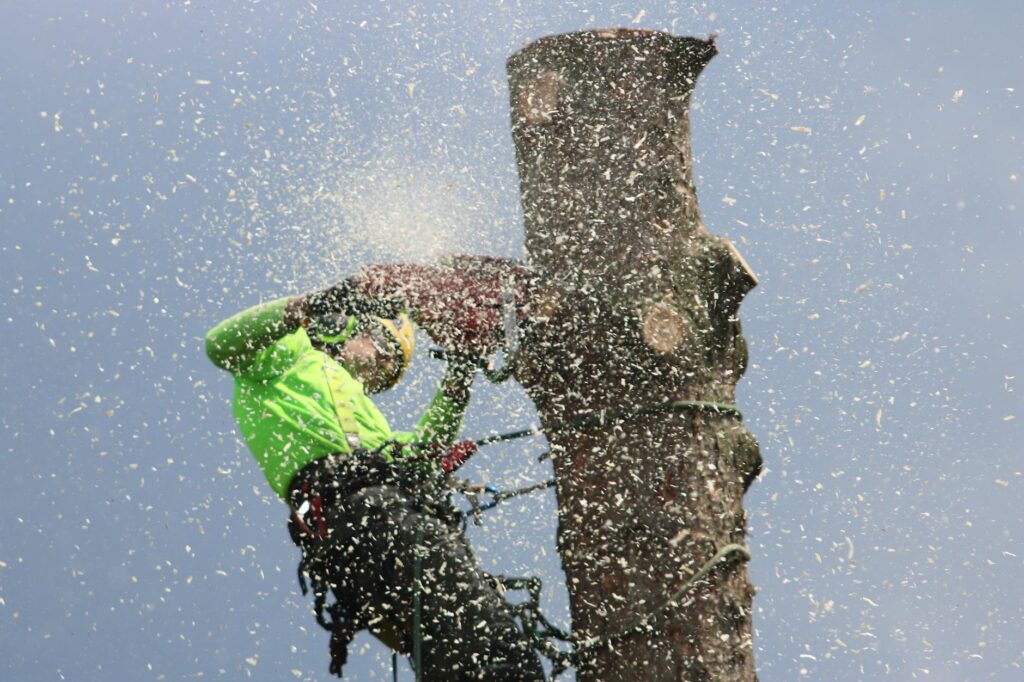
If your sycamore looked alarming this May — brown, shriveled leaves, thin canopy, scorched branch tips — there’s a strong chance you’re looking at a seasonal anthracnose cycle, not a dying tree. Monitor it through June. If healthy new growth fills in and the canopy thickens back up, the tree is doing what Monmouth County sycamores have done through countless cool, wet Bayshore springs. No intervention needed beyond good autumn cleanup and root-zone care.
The situations that warrant a professional consultation are more specific: significant crown dieback that doesn’t recover by midsummer, a pattern of severe defoliation for the second or third year running, visible cankers or weeping lesions on major branches, unusual trunk decay, or a tree that’s also dealing with construction disturbance or soil compaction. In those cases, an ISA-certified arborist can assess whether the tree is dealing with compounded stress factors, whether targeted fungicide management makes sense for your specific situation, and whether any structural concerns have developed alongside the disease pressure.
American sycamores are among the most tenacious native trees in eastern North America. They’ve been anchoring stream banks and shading Middletown properties for generations. Understanding what they look like when they’re stressed — and what they look like when they’re simply doing their seasonal dance with a well-known fungus — is the first step in taking care of them for the long term.
Photo credits: Featured image by Fotografia Lui Vlad on Pexels; Section 1 by Wyxina Tresse on Pexels; Section 2 by Diana ✨ on Pexels; Section 3 by Can ÜSEVER on Pexels; Section 4 by İlayda Mutlu on Pexels; Section 5 by Bor Jinson on Pexels; Section 6 by Liv Kao on Pexels; Section 7 by Henk Schuurmans on Pexels.