Middletown's #1 Tree Expert Company
FREE Inspection & Estimate | Certified Arborists | Trimming, Pruning, Removal, More!
Sponsored
The Call Nobody Expects After a Calm Summer Day
Every June, I field the same kind of call — and it always catches homeowners completely off guard. “There wasn’t even any wind. It was 85 degrees, completely still, and I heard this crack and a huge branch came down in the backyard.” They assume a storm must have weakened the tree months ago. Sometimes that’s true. But just as often, the tree’s own biology pulled the trigger.
Summer branch drop — sometimes called sudden limb failure — is a well-documented phenomenon that occurs precisely during the hot, still days of late spring and early summer. It peaks in June and July across the Northeast, including right here in Middletown Township, where a combination of heat, humidity, and our particular mix of large native hardwoods creates the right conditions for limbs to fail without warning.
Understanding why this happens won’t turn you into an arborist, but it can help you identify the trees and limbs in your yard that deserve a closer look before the summer really heats up. If you have large oaks near the Navesink waterfront, mature sycamores lining an older street, or a spreading tulip poplar behind the garage, now is the time to pay attention.
What Is Summer Branch Drop, and Why Does It Happen?
Summer branch drop is exactly what it sounds like: large, apparently healthy limbs falling from trees on calm days during hot weather. Unlike storm damage — where the cause is obvious — these failures often happen in the early to mid-afternoon when temperatures peak and skies are clear.
The mechanisms aren’t completely understood, even by researchers. The International Society of Arboriculture notes that several factors likely contribute: rapid water uptake during heat causes limbs to become temporarily heavier than their attachment points can support; wood may dry and crack internally in ways invisible from the outside; and limbs with poor attachment angles are essentially waiting for any additional stress to tip them past their structural limit.
What makes summer branch drop particularly alarming is that the trees involved often look perfectly healthy from the outside. Full leaf canopy, no visible deadwood, no cracks you can see from the ground — just a limb that was quietly overloaded by its own weight and geometry and finally let go. Afternoon heat is the most consistent trigger. As temperatures climb into the mid-80s, the combination of thermal stress and peak sap pressure can push a marginal attachment point past its limit.
In Middletown, June brings exactly these conditions: humid, hot afternoons following the spring rains that load the foliage with water weight and keep the soil saturated. Trees draw that moisture up into their canopies, and heavy horizontal limbs feel the strain most acutely.
The Trees Most Prone to Summer Branch Drop in Monmouth County
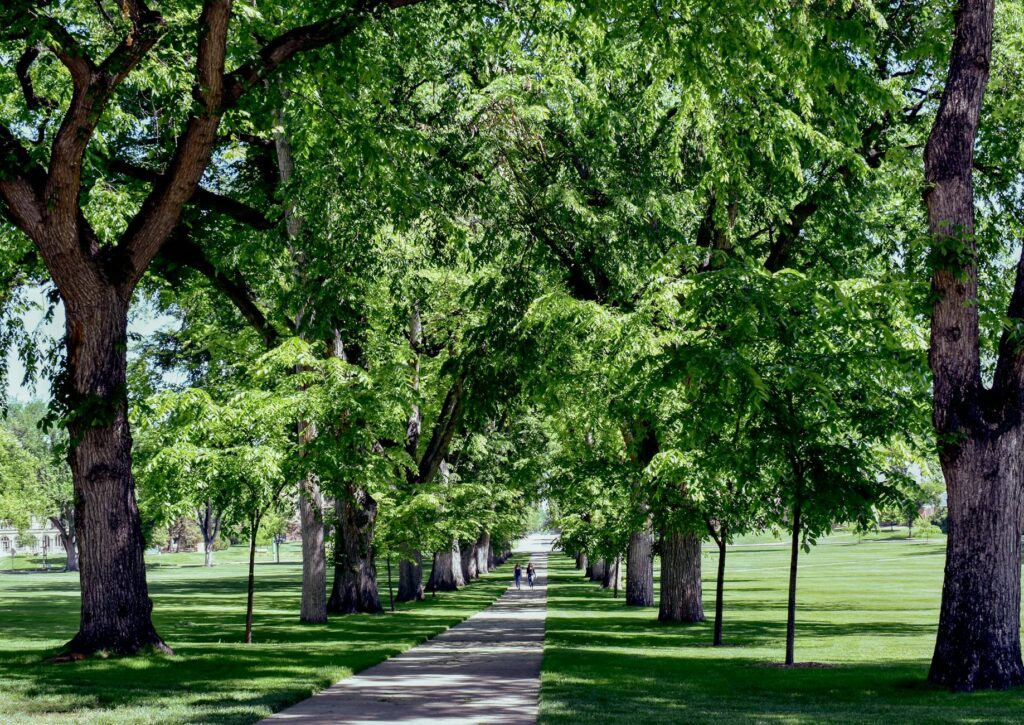
Not all trees fail equally. Rutgers Cooperative Extension and urban forest researchers have documented that certain species — especially older, larger specimens — account for a disproportionate share of summer limb failures. In Middletown and across Monmouth County, the species I watch most carefully include:
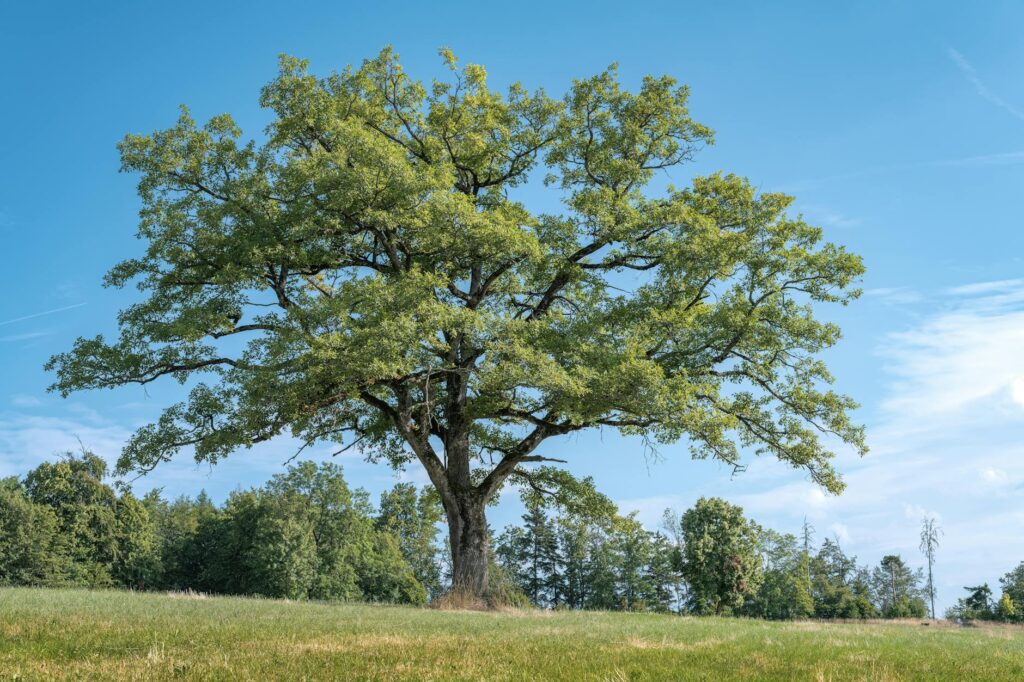
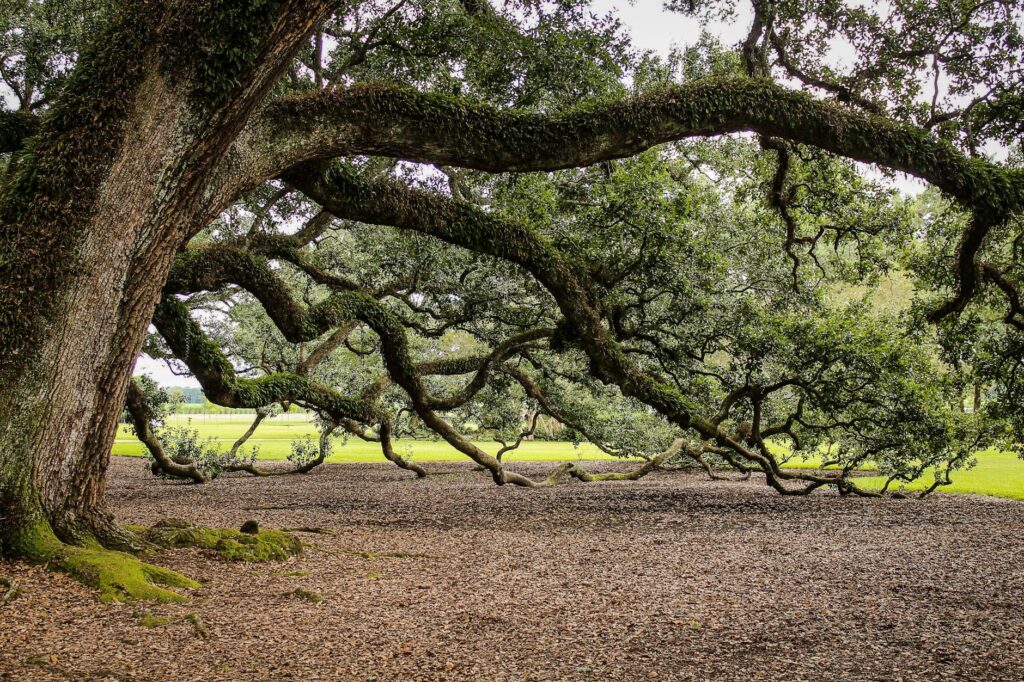
- White oaks (Quercus alba) — Some of the largest trees in Hartshorne Woods Park and along the Navesink waterfront are white oaks. Their long, heavy lateral limbs are classic candidates for summer drop, especially when those limbs have decades of horizontal growth over a yard or driveway.
- American elms (Ulmus americana) — The graceful vase shape creates horizontal or arching limbs that can become overextended over time, particularly in open-grown specimens with room to spread wide.
- Sycamores (Platanus occidentalis) and London planes — Common along older Middletown streets and near stream corridors, these trees frequently develop included bark at major branch unions — a structural flaw that makes summer drop more likely.
- Tulip poplars (Liriodendron tulipifera) — These beautiful native trees grow fast and develop heavy limbs with sometimes-weak attachment angles, particularly in specimens over 40 feet tall.
- American beeches (Fagus grandifolia) — In Poricy Park and Tatum Park, mature beeches carry impressively large lateral limbs that deserve professional evaluation before each summer season.
The common thread is large, older trees with heavy horizontal limbs and some form of weak attachment — whether from included bark, extended reach, or past wounding that was never fully assessed.
Middletown's #1 Tree Expert Company
FREE Inspection & Estimate | Certified Arborists | Trimming, Pruning, Removal, More!
Sponsored
The Anatomy of a Limb Waiting to Fail
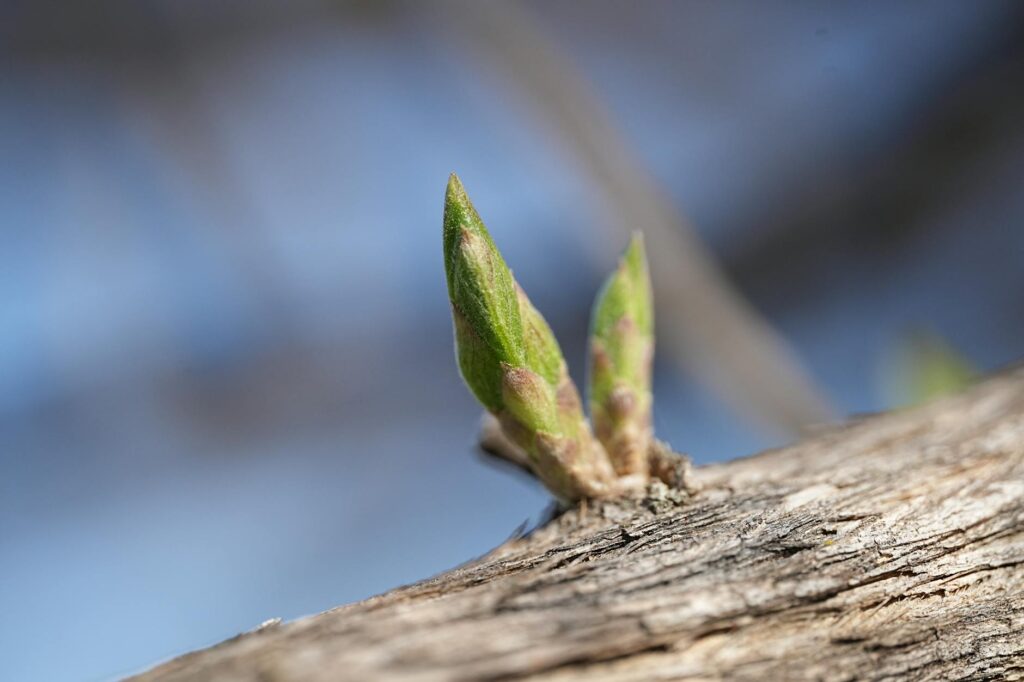
Understanding a few basic structural features helps you look at your own trees more critically. You don’t need specialized equipment — just your eyes and some basic knowledge of what to look for when you glance up into the canopy.
Included bark is the most important hazard to recognize from the ground. When two stems or a major limb and the trunk grow so closely together that bark gets trapped between them, the wood cannot form a solid union. From below, included bark looks like a pinched crease or V-shaped seam running down into the crotch of the branch union — rather than a smooth, rounded collar where wood and bark flow together. This is a structural red flag regardless of season.
Long horizontal limbs — especially those that have grown heavier on the ends over the years — create serious leverage problems. Physics matters here: a branch extending 20 feet horizontally from the trunk exerts far more bending force on its attachment point than one growing at a 45-degree upward angle. In summer, when leaves are fully expanded and carry moisture, that weight increases significantly.
Prior wounds and decay matter too. USDA Forest Service urban forestry research consistently finds that internal decay is a hidden factor in summer branch failures that appear to come from nowhere. A limb that was cut back years ago, has a visible cavity, or shows cracking bark near the union may be carrying significantly weaker wood than its external appearance suggests.
What Middletown Homeowners Can Check From the Ground
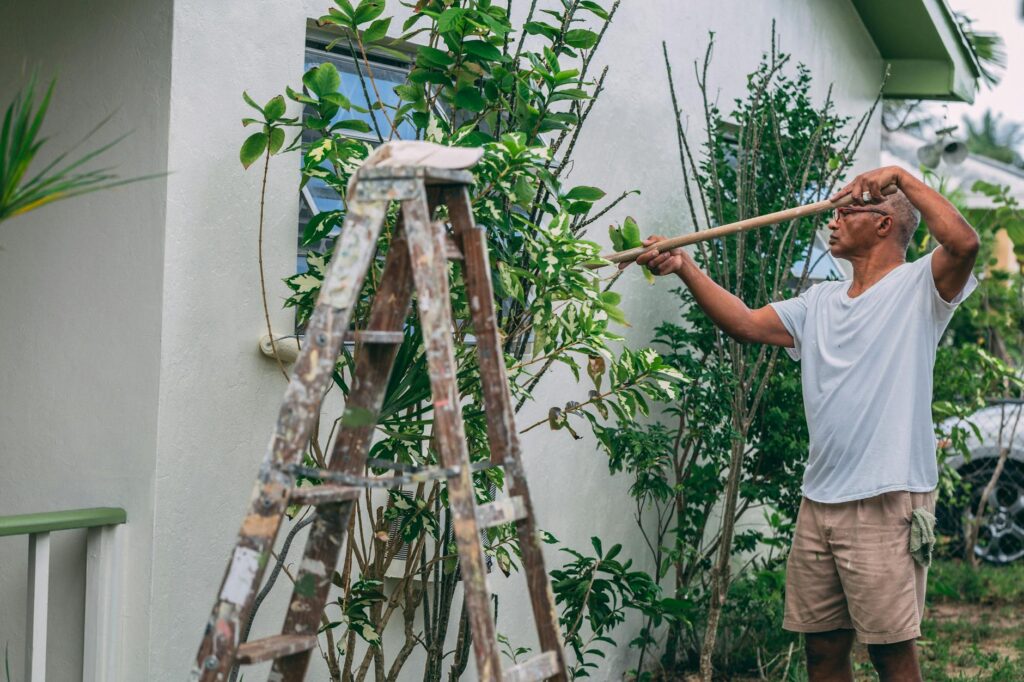
You don’t need to climb anything to do a useful first assessment of your trees. Here’s what I’d tell any Middletown homeowner to do during a slow walk around the yard in early June.
Look for the seam. Walk around the base of each large tree and look up at where major limbs leave the trunk. Is the union smooth and rounded with a visible branch collar? Or do you see a tight, pinched seam where bark appears trapped? That seam — that V-shaped crease — is included bark. Document it with a photo and share it with a certified arborist.
Note the lean and extension. Heavy limbs that extend far horizontally over the house, driveway, or a neighbor’s property are worth photographing from a fixed spot. Comparing photos over time reveals slow changes you’d otherwise miss.
Check for longitudinal cracks. Cracks running with the grain along the top of a large horizontal limb are hard to see from straight below but may be visible from a deck, second-story window, or an angle. Any crack line running along the top of a heavy limb is worth having looked at before July.
Notice recent changes. A limb that seems to sit lower than it used to, bark that is cracking near a union, or any visible gap opening at an attachment point — all worth noting. Even if you can’t identify a problem precisely, large mature trees with long horizontal limbs over occupied space deserve a professional evaluation at least every three to five years.
What a Certified Arborist Can See That You Can't
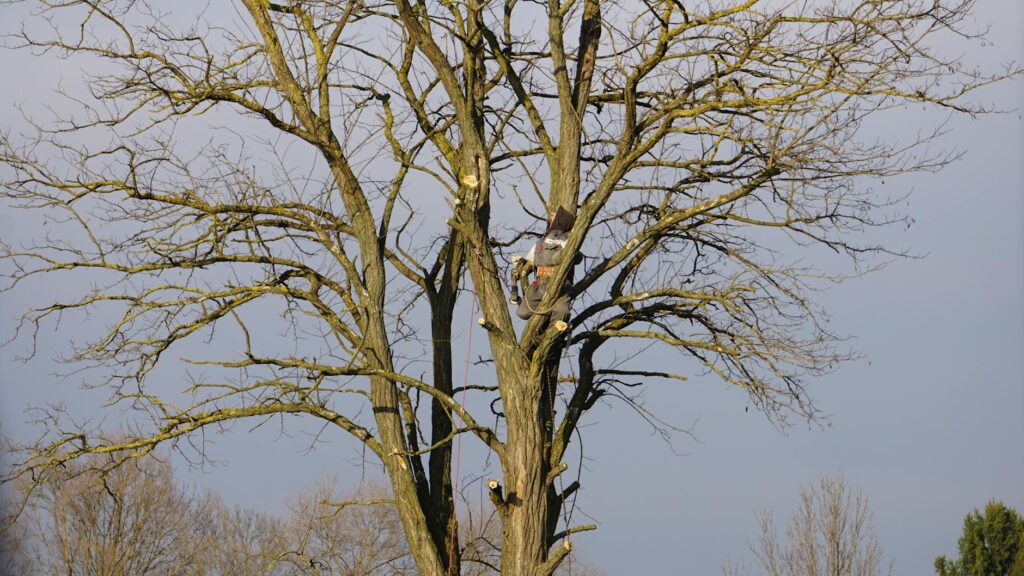
A certified arborist doing a structural evaluation goes significantly deeper than a ground-level visual check. With climbing access and specialized equipment, an arborist can assess factors that are simply invisible from below.
Sounding and decay detection identify internal weakness. Tapping the wood and listening for hollow resonance is a basic first step; for larger limbs, a resistograph — a small drill that measures wood density as it penetrates — can map internal structure with surprising precision. A limb can look perfectly solid from outside while carrying a zone of internal decay that compromises its structural integrity.
Attachment angle and included bark severity are assessed up close and in context. Not all included bark requires action; a certified arborist evaluates the severity, the load on that union, and the history of the tree before making any recommendation.
Cable and brace systems are sometimes the right solution for a structurally valuable tree with a repairable defect. High-strength supplemental support cables installed between major stems can prevent a limb from failing while preserving the tree for decades. This is only appropriate for specific situations — it’s not a universal fix — but in the right case it’s an excellent alternative to removal.
Crown reduction removes end weight from overextended limbs, reducing the leverage that drives failure. Done correctly by a certified arborist, this differs fundamentally from topping — it follows natural branch points and preserves the tree’s long-term structure and health while meaningfully reducing the load on a suspect attachment.
Middletown's #1 Tree Expert Company
FREE Inspection & Estimate | Certified Arborists | Trimming, Pruning, Removal, More!
Sponsored
Summary / When to Call a Pro

Summer branch drop is one of those tree hazards that catches Middletown homeowners completely off guard precisely because it doesn’t require a storm. A perfectly calm June afternoon, a tree that looks healthy and full — and then a branch the size of a small car is on the ground. Understanding that this phenomenon exists, knowing which species are most prone to it, and being able to recognize the basic warning signs from the ground can help you prioritize which trees in your yard deserve professional attention before the summer heat peaks.
If you have large, mature oaks, elms, sycamores, tulip poplars, or beeches on your property — especially with long horizontal limbs over rooflines, driveways, play areas, or shared property lines — early June is the ideal time to have a certified arborist evaluate them. The window before the hottest weeks of July and August is exactly when that evaluation does the most good.
A certified arborist can tell you whether you have a stable tree, a manageable structural issue, or a limb that needs to come down before it comes down on its own terms. That conversation is almost always less expensive — and far less stressful — than the alternative.
Photo credits: Featured image by Thomas P on Pexels; Section 1 by Efrem Efre on Pexels; Section 2 by Pixabay on Pexels; Section 3 by Kristen Long on Pexels; Section 4 by Eve R on Pexels; Section 5 by Craig Adderley on Pexels; Section 6 by Dmytro Glazunov on Pexels; Section 7 by Thirdman on Pexels.