
Middletown's #1 Tree Expert Company
FREE Inspection & Estimate | Certified Arborists | Trimming, Pruning, Removal, More!
Sponsored
The Question Most Middletown Homeowners Eventually Ask

Most of the calls I get start with the same pause before the question: “I’m not sure if this is a big deal, but…” The homeowner has been watching something for weeks — a lean they hadn’t noticed until the leaves came in, a crack in the bark that’s been seeping sap, or a branch over the roof that looks different than it did before last winter’s nor’easters. They’ve Googled it. They’ve asked a neighbor. Now they want someone who can give them a real answer.
That’s what a certified arborist assessment is for. It isn’t just a preliminary to getting a removal quote — a proper assessment, conducted by an ISA-certified arborist, is a structured, methodical evaluation of a tree’s structure, health, and the risk it poses to people and property nearby. In Middletown Township, where mature white oaks, red maples, and tulip poplars are common and summer storms roll in hard off Raritan Bay, knowing what you’re actually dealing with has real consequences.
This article walks through what a professional assessment actually looks like — from the moment the arborist gets out of the truck to the written report that follows.
What Usually Prompts a Professional Tree Assessment
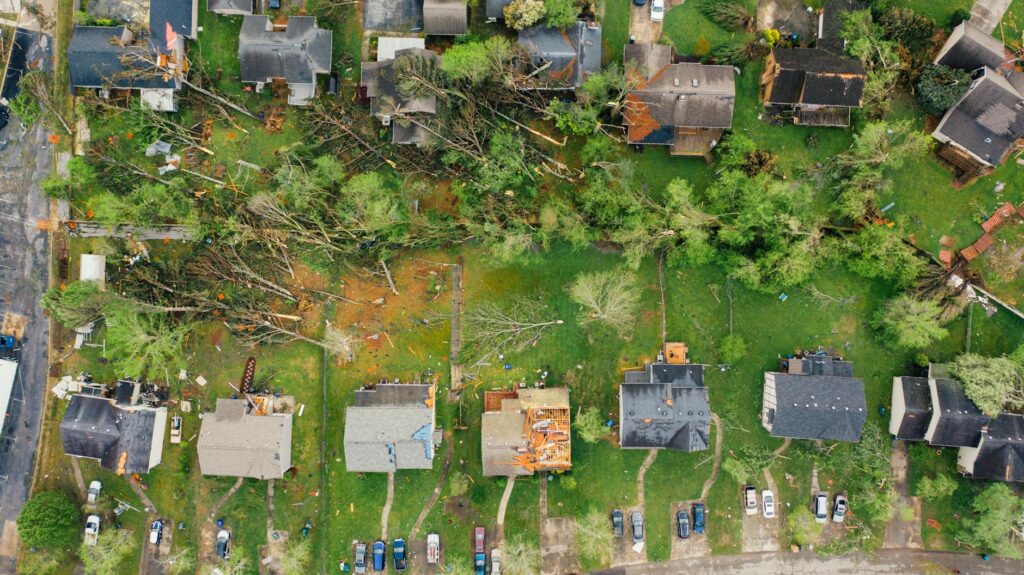
Homeowners in Middletown reach for the phone under a handful of specific circumstances. The most common trigger is storm aftermath. After a summer squall or a nor’easter rolls through the Bayshore, limbs come down, trunks split, and sometimes a tree survives but is visibly changed — leaning slightly more, a new crack in the main stem, or a scaffold branch that’s hanging by a thread of bark. That’s exactly the right moment to get professional eyes on it.
The second trigger is the slow-creep worry: a tree that has looked off for a season or two. Reduced leaf coverage on one side. A fungal conk at the base that wasn’t there last spring. Bark separating in a way that feels wrong. These gradual symptoms are often more serious than sudden storm damage, because they usually represent structural or systemic problems that have been developing quietly for years.
Construction is another prompt that’s easy to overlook. If you’ve had a pool, patio, driveway extension, or addition built near a mature tree in the past two to five years, scheduling an assessment is worthwhile even if the tree looks healthy. Root system damage from soil compaction, grade changes, and trench cuts can take years to express visibly — by which point, the problem is already advanced.
Finally, homeowners sometimes want an independent assessment when a neighbor’s tree is showing signs of failure, or before listing a property for sale.
The First Look: What an Arborist Sees Before Getting Close
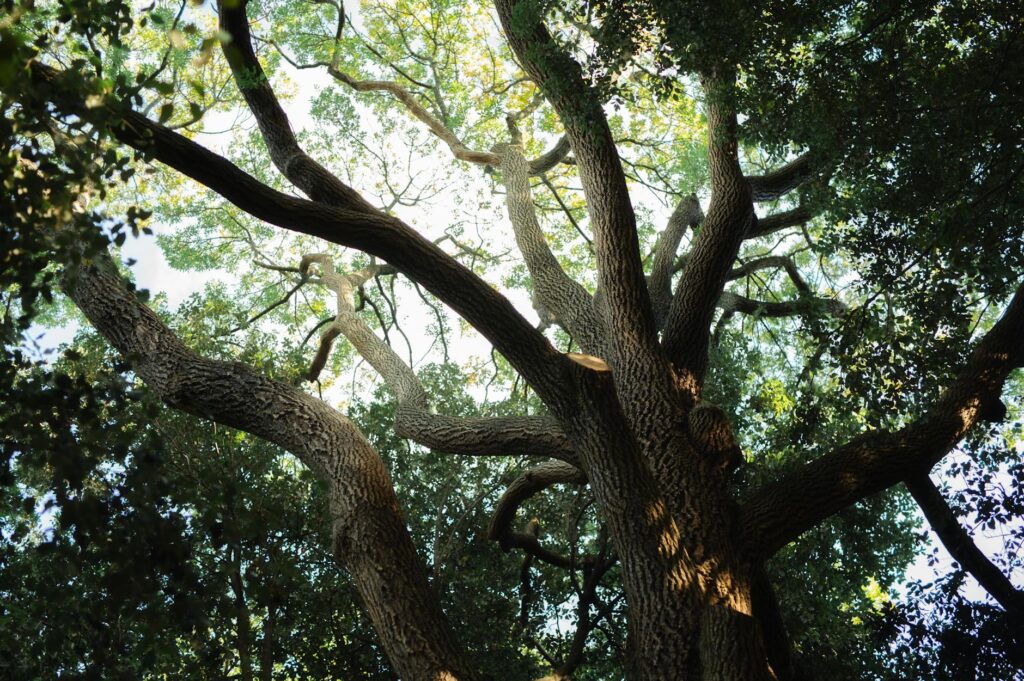
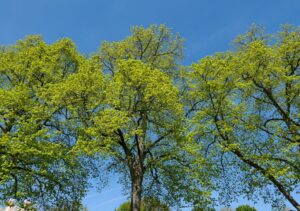
Before I get within twenty feet of a tree, I’m already building a picture. Standing back 50 to 100 feet and looking at the whole canopy tells you more than most people expect. Is the crown symmetrical for the species, or is one quadrant noticeably sparser? Is there a lean, and if so, is there soil upheaval at the base suggesting root failure? Is the crown progressively dying back from the outer tips inward, or from one side only?
This wide-angle read follows the structured methodology behind the ISA’s tree risk assessment framework, which trains arborists to begin with a site-level overview before focusing on individual parts of the tree. Starting close and working outward misses things that are only visible from a distance — particularly asymmetric crown die-back and whole-tree lean.
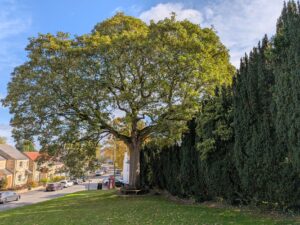
Species knowledge shapes every observation here. A tulip poplar (Liriodendron tulipifera) with a tight double leader high in the crown carries a different risk profile than a solitary white oak (Quercus alba) with a single dominant stem and a wide, open crown. Knowing what a healthy version of each species looks like — and what failure typically looks like — is the foundation the whole assessment rests on.
Middletown's #1 Tree Expert Company
FREE Inspection & Estimate | Certified Arborists | Trimming, Pruning, Removal, More!
Sponsored
Reading the Trunk and Bark Up Close
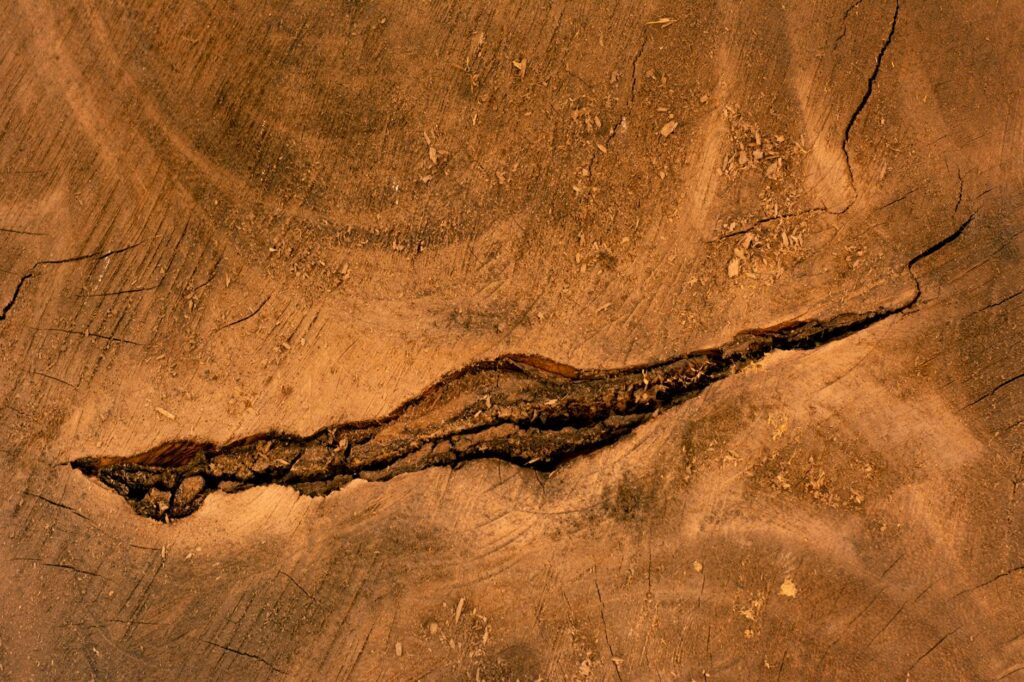
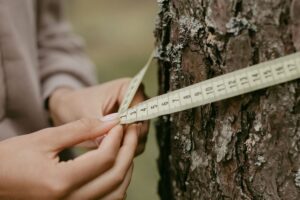
Once the overview is complete, I move to the tree itself. The trunk is where the story gets specific. Bark should be consistent in texture and continuity with what’s normal for the species. Cracks, cankers, and cavities are obvious concerns, but subtler signs matter too: a long vertical seam that’s started to callus over, or a hollow sound when the trunk is tapped firmly with a mallet.
Included bark in a codominant stem is one of the most common structural defects I find on Middletown properties. When two main leaders grow at a narrow angle, bark gets trapped in the junction rather than allowing solid wood-to-wood contact. From the street, the tree can look balanced and healthy. Up close at the crotch, you can see the bark wedge. Under ice load or a high-wind event, that junction is a predictable failure point — and it’s one of the most fixable problems if caught early, typically through cable bracing.
I also examine for weeping sap, fungal fruiting bodies, and insect exit holes. Borer activity on stressed oaks is worth flagging with care — small exit holes paired with crown dieback above that junction are a combination that always warrants closer attention. The Rutgers Plant Diagnostic Lab is the go-to regional resource for confirming specific pest or disease identifications when an assessment turns up something unusual, and they offer submission kits for homeowners and contractors alike.
The Root Zone: The Part of the Assessment Most Homeowners Miss

The part of the walk-around that surprises most homeowners is how much time goes to the ground. Root problems are implicated in a very high percentage of tree failures — and they’re almost always invisible until something breaks.
I start at the base and look for the root flare: the characteristic swell where the trunk transitions to surface roots. A healthy root flare is visible — the base of the tree broadens as it meets the soil. If a tree rises from the ground like a telephone pole with no visible swell, that’s a flag. It almost always means the root collar is buried, either from being planted too deep originally or from soil and mulch accumulating at the base over the years. A buried root collar creates persistently moist conditions at the bark that favor decay fungi and set the stage for girdling root development.
Girdling roots are surface or subsurface roots that encircle the trunk and constrict it as the tree grows. They’re more common in Middletown’s clay-loam soils because roots tend to deflect horizontally rather than penetrating through dense, compacted layers. I probe around the base with a root hook or soil probe to check for them. They can often be addressed with air spading and root pruning — but only if found in time.
Soil compaction in the root zone is the final major ground-level check. Construction traffic, lawn equipment, and paved surfaces compress the soil pore space that roots depend on for oxygen and water. Rutgers Cooperative Extension offers practical guidance on soil health and tree care for New Jersey landscape trees — worth consulting if construction has happened anywhere near a mature tree on your property in recent years.
The Written Report: Understanding Your Tree's Risk Rating
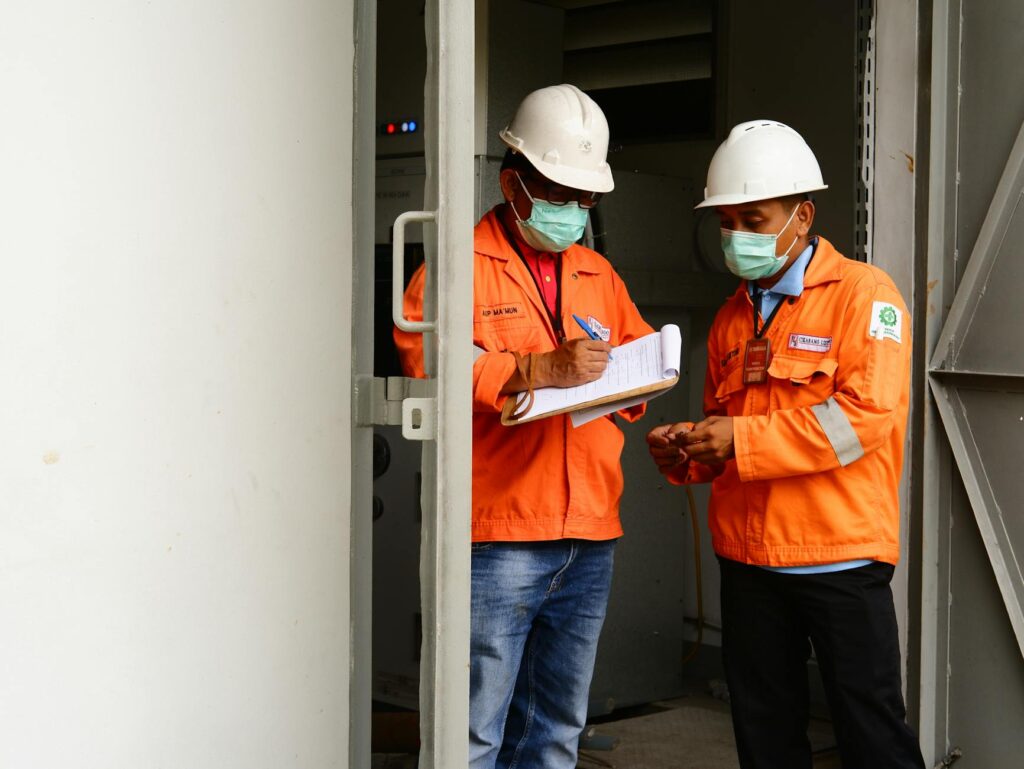
A professional assessment doesn’t end when the arborist walks back to the truck. A thorough evaluation produces a written report — and that document is where a verbal impression becomes actionable information you can use.
The industry standard for tree risk assessment is the TRAQ framework developed by the International Society of Arboriculture. It evaluates risk across three dimensions: the likelihood that a defect leads to failure, the likelihood that a failure strikes a target (a person, vehicle, or structure), and the consequence of that impact. The combination produces a risk rating — low, moderate, high, or extreme — that tells you where to focus your attention and budget.
A good written report identifies each defect observed, explains what it means structurally, names the part of the tree affected, and recommends a specific action with a priority window. ‘Address within 30 days’ is a very different recommendation than ‘monitor annually and reassess in two years.’ Having those distinctions in writing protects you legally, helps you communicate with your insurance carrier if a claim ever arises, and gives you a meaningful basis for comparison at future assessments.
The Tree Care Industry Association recommends maintaining written arborist reports as part of a property’s ongoing tree documentation. In Middletown, where mature trees and residential structures are often within a few feet of each other, that paper trail has genuine practical value — especially after a storm generates insurance questions.
Middletown's #1 Tree Expert Company
FREE Inspection & Estimate | Certified Arborists | Trimming, Pruning, Removal, More!
Sponsored
When to Schedule — and What Comes Next

Late May and early June is actually one of the best windows for a comprehensive assessment. Leaves are fully out, which makes canopy density and symmetry readable. Stress symptoms that were invisible in April — reduced leaf size, early drop on individual branches, off-color foliage — show themselves now. Root zone conditions after a wet spring are often at their most informative. If you’ve been putting off a call, the timing right now is working in your favor.
You don’t need to wait for a branch to come down before having a professional look at your trees. The whole point of a risk assessment is to know what you have before something happens. For a tree that hangs over a house, a deck, or a play area, that knowledge is worth having. And often, the report is more reassuring than the homeowner expected — a tree that looks worrying from the street turns out to need a deadwood cleanup and a note to reassess next year.
When significant work is recommended — cable bracing, root collar excavation with an air spade, selective removal — a certified arborist walks you through the options and the reasoning behind each recommendation. The assessment is the foundation for that conversation. Start with knowing what you’re actually dealing with.
To find a certified arborist serving Middletown Township and Monmouth County, use the ISA’s Find an Arborist tool at treesaregood.org — filter by credentials and zip code to see who’s qualified and working in your area.
Photo credits: Featured image by Dmytro Glazunov on Pexels; Section 1 by Craig Adderley on Pexels; Section 2 by K on Pexels; Section 3 by Grigoriy on Pexels; Section 4 by Los Muertos Crew on Pexels; Section 5 by Walter Cunha on Pexels; Section 6 by Annas Zakaria on Pexels; Section 7 by Kindel Media on Pexels.