Middletown's #1 Tree Expert Company
FREE Inspection & Estimate | Certified Arborists | Trimming, Pruning, Removal, More!
Sponsored
The Picture in Your Head Is Wrong
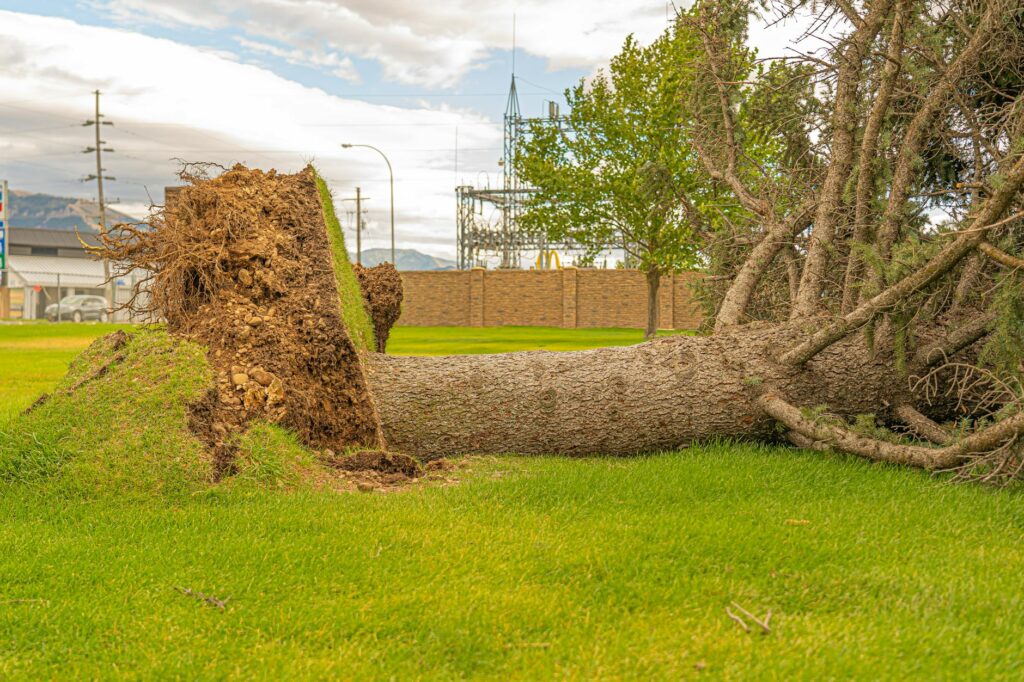
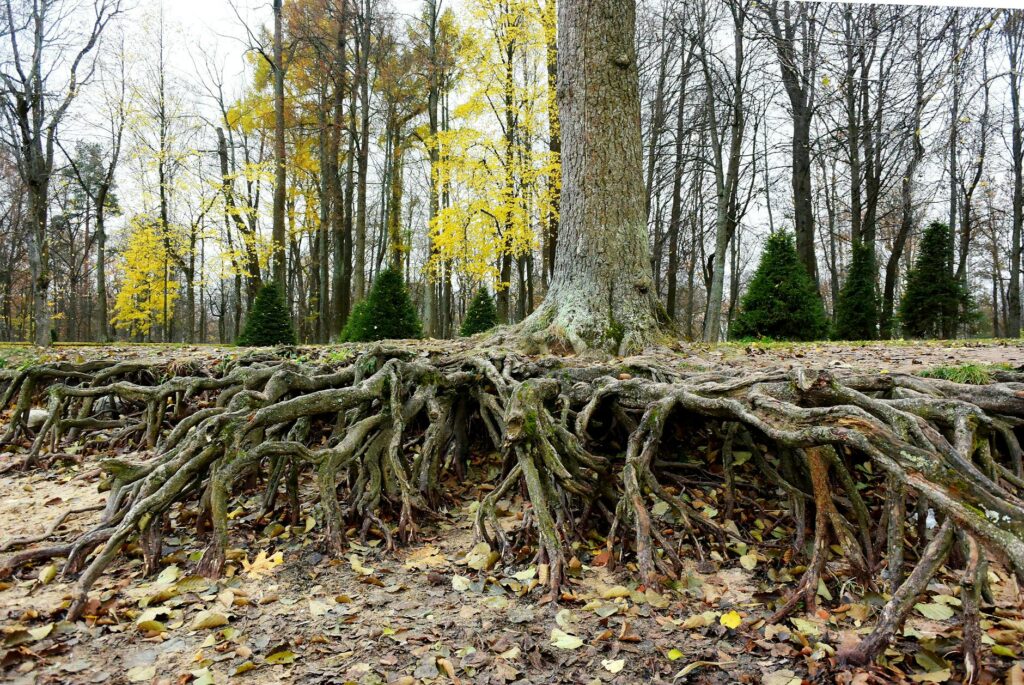
Ask most homeowners to sketch where their tree’s roots are, and you’ll get roughly the same drawing: a fat taproot plunging straight down from the trunk, with smaller laterals fanning out symmetrically below, the whole system contained within a neat oval roughly the shape of the canopy above. It’s a reasonable guess. It’s also almost completely wrong — and the gap between that mental picture and the reality underground is responsible for some of the most expensive tree mistakes homeowners make in Middletown Township every year.
The real root architecture of a mature tree is flatter, wider, and stranger than most people expect. Understanding it changes how you think about construction projects, lawn maintenance, mulching, paving, and basically anything that involves the soil within 50 to 100 feet of a mature tree. It also explains why trees that seemed perfectly healthy three years ago are now in decline, why the tree surgeon says the problem started at the roots even though the symptoms are in the crown, and why that new driveway apron you poured last fall may have already done damage you won’t see until next summer.
This is tree biology that every Middletown homeowner should understand — not to become an arborist, but to stop accidentally damaging the trees that shade your property, anchor your landscape, and add significant value to your home.
The Taproot: Real in Seedlings, Gone by Maturity
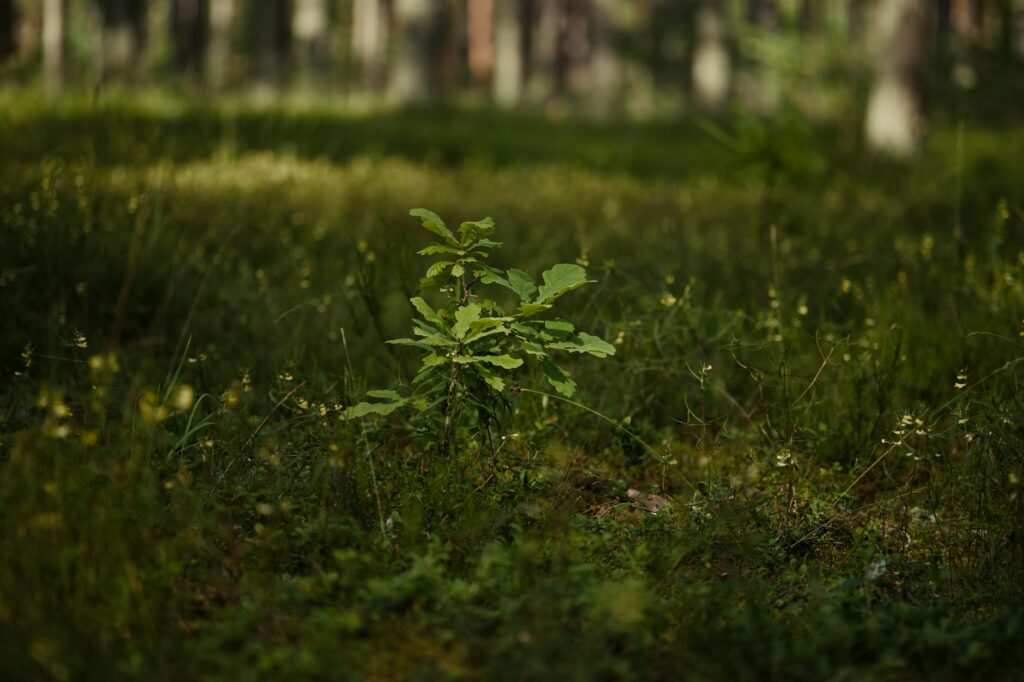
Taproots are real. A white oak (Quercus alba) seedling has a prominent taproot that can reach 12 to 18 inches deep in its first growing season — sometimes deeper. The same is true for red oaks, hickories, and many other hardwood species common in Middletown. In the tree’s earliest years, this taproot is a survival anchor: it drives toward deeper moisture during dry spells and helps a young tree establish before its lateral root system can spread.
But in most species, something shifts. As the tree matures, lateral roots — which grow horizontally through the oxygen-rich upper soil layers — begin to outperform the taproot for water and nutrient absorption. The lateral roots have access to more soil volume, more oxygen, and more of the biologically active zone where decomposing organic matter releases nutrients. They branch exponentially, creating an enormous absorptive surface area. The taproot, meanwhile, often becomes structurally subordinate — present, but not the primary player most people imagine.
By the time a typical red maple or white oak in a Middletown backyard is 20 or 30 years old, it is anchored and fed primarily by a wide-spreading lateral root system, not a deep central taproot. Some species — certain hickories, longleaf pines, some oaks in very well-drained sandy soils — do maintain meaningful deep roots throughout their lives. But even these rarely match the depth the public imagines, and the bulk of even their absorptive root system is shallow.
Where the Roots Actually Are: Wide and Shallow

Two numbers describe mature tree root systems better than any diagram. The first is width: tree roots typically extend two to three times the canopy radius from the trunk. A large white oak with a 50-foot canopy spread has a root system that may extend 75 to 150 feet from the trunk in all directions. The roots don’t stop at the drip line. They don’t even slow down at the drip line. The drip line — the edge of the canopy shadow — is a useful rough landmark for the minimum extent of the root zone, not the boundary of it.
The second number is depth. Despite the popular image of deep, penetrating roots, most fine feeder roots — the small-diameter, actively absorbing roots responsible for the bulk of a tree’s water and nutrient uptake — are concentrated in the top 12 to 18 inches of soil. This is where oxygen levels are adequate, where biological activity is highest, and where water is most available after rainfall. The Rutgers NJAES publication on tree root systems documents how most of a tree’s absorptive root mass is within the top foot of soil, with significant concentration in the top 6 inches — a finding that consistently surprises homeowners who assumed the important roots were deep.
Larger structural roots go deeper and do extend the tree’s anchoring capacity, but they are not the primary uptake roots. Think of the root system as a wide, shallow plate, not a deep anchor — and that plate extends well beyond what you can see from above.
Middletown's #1 Tree Expert Company
FREE Inspection & Estimate | Certified Arborists | Trimming, Pruning, Removal, More!
Sponsored
Why Middletown's Clay Soils Push Roots Even Shallower
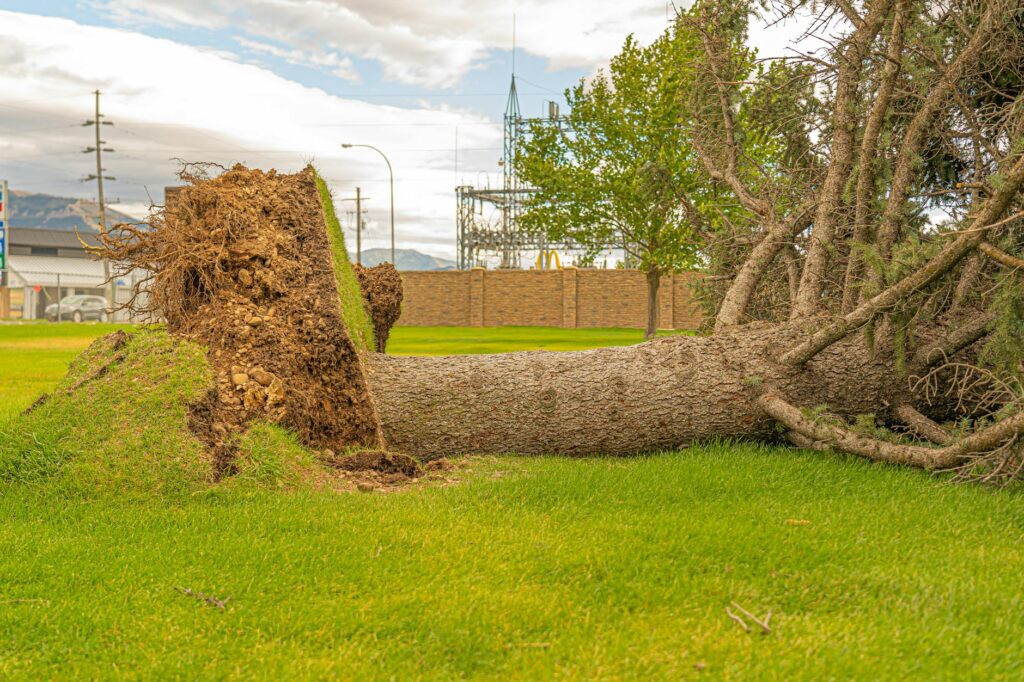
Tree roots need oxygen. This surprises people who associate roots primarily with water — but roots are actively respiring, consuming oxygen and releasing carbon dioxide just as leaves do above ground. In well-aerated sandy or loamy soil, oxygen levels remain adequate at depths of 2 to 3 feet or more. In Middletown’s predominant clay-loam soils, oxygen levels drop off much more sharply below the surface, particularly in areas with any degree of compaction.
The consequence is that tree roots in Monmouth County’s typical suburban clay soils are often even shallower than the general rule would suggest. When oxygen levels become limiting at 10 to 12 inches — as they frequently do in compacted suburban clay — roots don’t push through that boundary. They spread laterally at the depth where conditions remain tolerable, creating a root plate that is wide, dense, and extremely shallow. Surface roots visible above the soil level in older suburban trees are often the result of this process: roots that started below the surface gradually rising as soil compaction squeezed the oxygenated zone closer and closer to the surface.
The NJ DEP Forest Service identifies compaction-driven shallow root systems as a primary vulnerability factor for urban and suburban trees across New Jersey — trees that look structurally sound from above may be operating on a compressed root system that has dramatically less anchoring capacity and absorptive surface area than the canopy’s size would suggest.
What Those Roots Are Actually Doing Down There
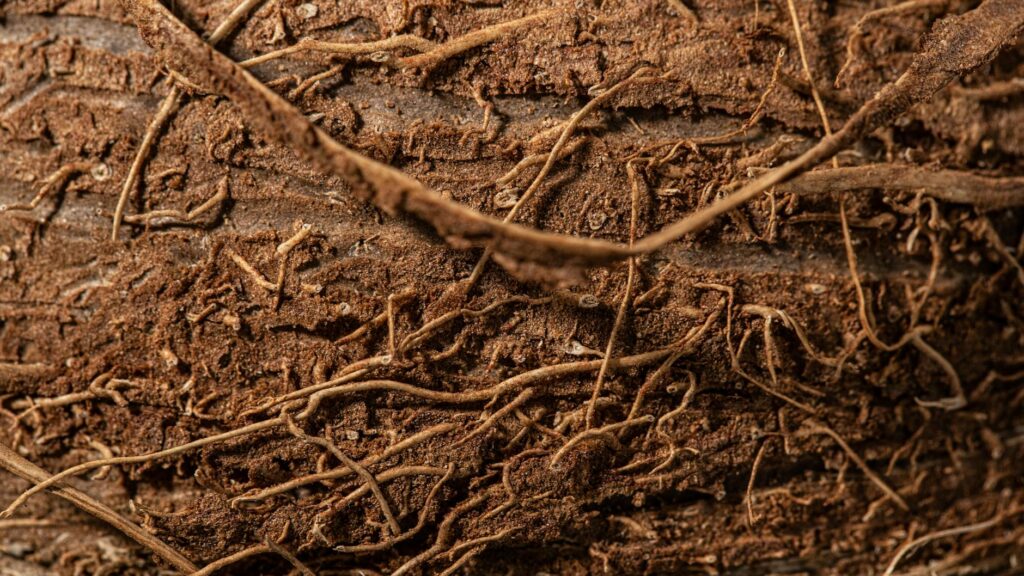
The root system has four distinct jobs, and understanding them helps explain why root zone disturbance can cause problems that show up years later in the crown.
Water and nutrient absorption: Fine feeder roots — hair-thin, highly branched, often ephemeral — do most of this work. They are produced in enormous quantities during the growing season and are replaced continuously. Most feeder roots live only weeks to months before dying and being replaced. This is the root system’s most metabolically active layer, and it’s almost entirely in the shallow surface zone.
Structural anchoring: Large scaffold roots — woody, long-lived, often visible at the root flare — anchor the tree against wind loading. These roots don’t do much absorbing; their job is to keep the tree upright. Severing multiple large scaffold roots on the windward side of a tree is a serious structural risk.
Carbohydrate storage: Roots store the sugars and starches that power spring budbreak and support the tree through stress events. A tree that loses significant root mass — from construction, drought, or disease — often shows the crown effects the following season, when stored reserves prove insufficient to support the full leaf-out.
Soil chemistry and communication: Trees release compounds through their roots that affect the soil biology around them and influence neighboring plants. The International Society of Arboriculture notes that mycorrhizal networks — fungal threads that connect tree roots across the soil — facilitate resource sharing and chemical signaling in ways that researchers are still characterizing. The root zone is not passive storage; it’s biologically dynamic in ways that affect the health of multiple trees at once.
Why This Changes How You Treat Your Property
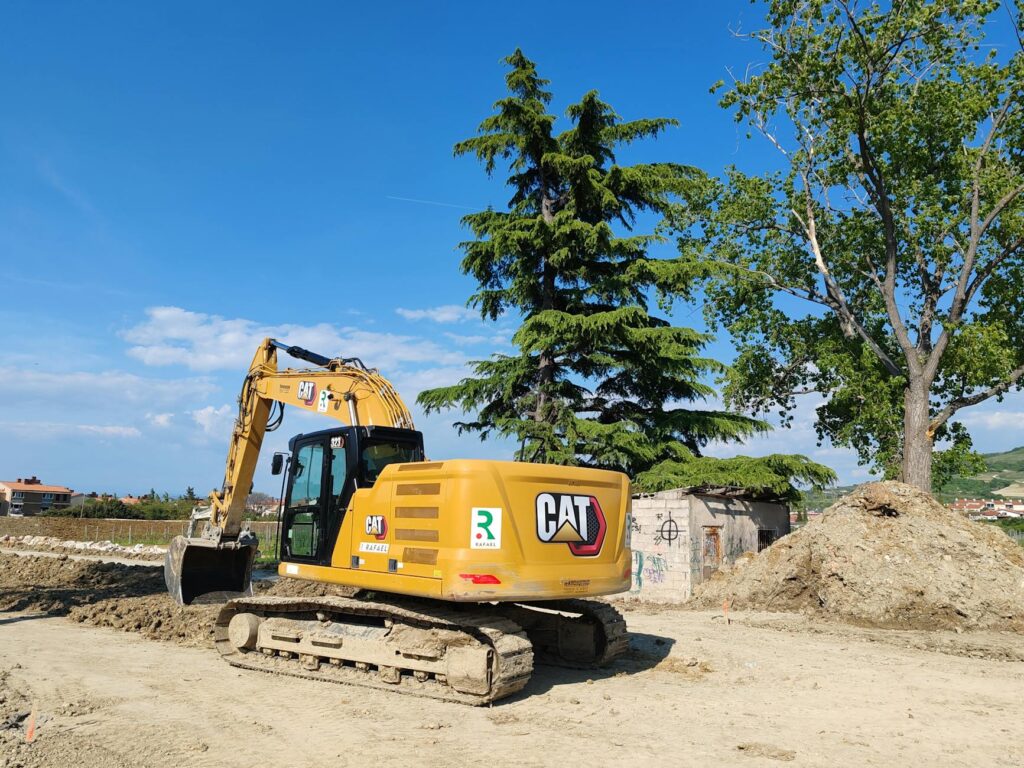
The practical implications of understanding real root architecture are significant. Each of the following common homeowner activities looks different once you understand that roots are wide, shallow, and extend far beyond what you can see.
Construction and excavation: "Outside the drip line" is not a safe margin for construction activity near trees. A large red oak with a 40-foot canopy radius likely has significant feeder roots extending 60 to 120 feet from the trunk. Trenching for utilities, grading for a driveway extension, or excavating a pool foundation that occurs within that zone cuts roots — and the damage may not appear in the crown until one or two growing seasons later, long after anyone connects it to the construction. Before any excavation within 100 feet of a large tree, consult an arborist.
Compaction from equipment: Even without cutting roots, heavy equipment driving repeatedly across a root zone compacts the soil, collapsing pore space and cutting off oxygen to feeder roots. A single pass of a loaded concrete truck over a root zone can cause compaction damage that takes years to fully manifest in the canopy. The critical zone extends well beyond where you’d think twice about it.
Paving and impervious surfaces: Asphalt and concrete over root zones permanently exclude oxygen and prevent water infiltration. Roots under pavement that was added over an established tree’s root zone will eventually weaken, and the crown will decline — often slowly, in ways that look like general aging or disease before anyone identifies the pavement as the cause.
Mulching and mowing: Now that you know most feeder roots are in the top 6 to 12 inches, the reason to keep mowers and string trimmers away from the root zone should be obvious. And the reason a proper mulch ring should extend to the drip line — or further — is that it’s protecting a root zone far larger than most homeowners realize.
Middletown's #1 Tree Expert Company
FREE Inspection & Estimate | Certified Arborists | Trimming, Pruning, Removal, More!
Sponsored
Summary: What You Can't See Is Often What Matters Most
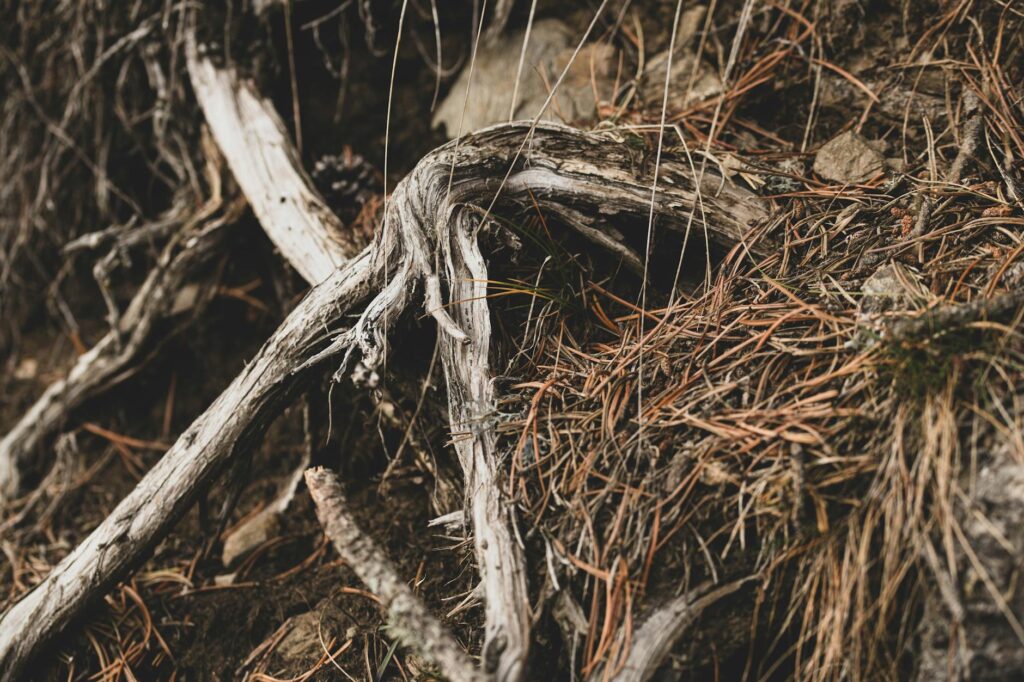
The taproot picture most homeowners carry is a fiction — useful for tree logo designs, not for understanding actual tree biology. Real tree roots are wide, shallow, and extend far beyond the canopy into territory most homeowners never think of as tree territory. In Middletown’s clay-loam soils, compaction pushes that system shallower still, making the already-vulnerable root zone even more exposed to the disturbances of suburban life.
Understanding this doesn’t make you an arborist. But it should change how you think before you call the excavation crew, how wide you make your mulch ring, and whether that new driveway expansion needs a conversation with someone who can map the root zone first. Root damage is deferred damage — by the time it shows up in the crown, months or years have already passed since the insult occurred, and the cause is nearly impossible to diagnose without knowing the history.
If you have mature trees on your Middletown property and have done any significant ground disturbance in the last several years — construction, grading, paving, even deep aeration — it’s worth having a certified arborist assess the root zone and canopy together. The crown is the symptom. The root zone is often the story. A qualified arborist can tell you what’s actually happening below the surface before the signs above it get worse.
Photo credits: Featured image by RinaS on Pexels; Section 1 by Castorly Stock on Pexels; Section 2 by Lauri Poldre on Pexels; Section 3 by Liudmyla Shalimova on Pexels; Section 4 by Castorly Stock on Pexels; Section 5 by Mikhail Nilov on Pexels; Section 6 by Janez Temlin on Pexels; Section 7 by Walter Cunha on Pexels.