Middletown's #1 Tree Expert Company
FREE Inspection & Estimate | Certified Arborists | Trimming, Pruning, Removal, More!
Sponsored
The Branch Over Your Roof Isn't Going Away on Its Own
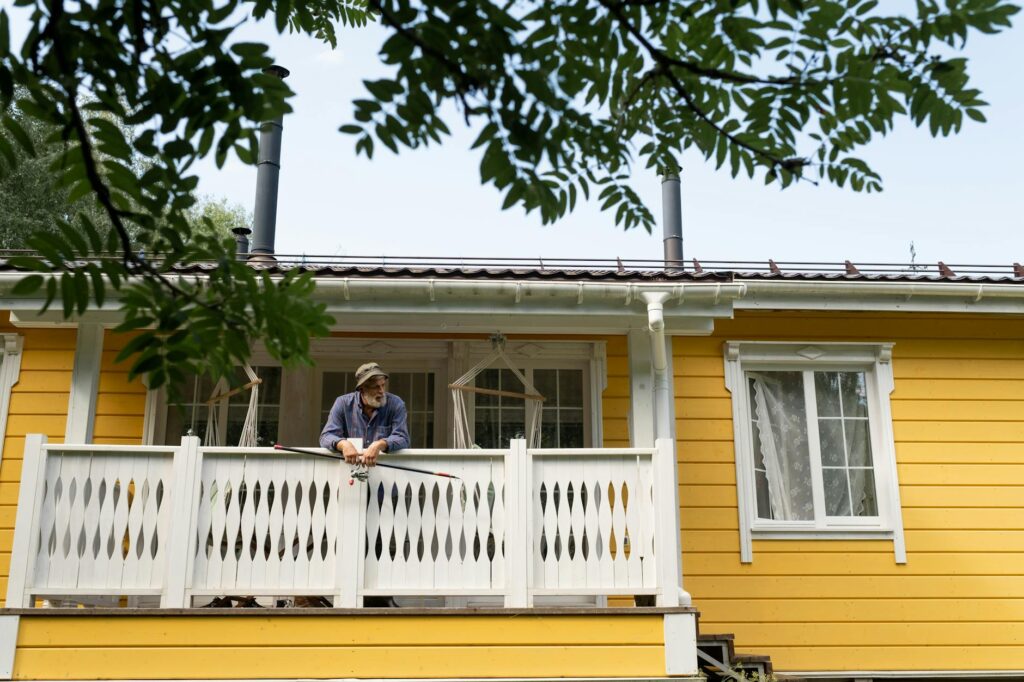
Every spring in Middletown, once the canopy leafs back in and storm season starts warming up on the horizon, I get a version of the same call. A homeowner is standing in the backyard, neck craned up, staring at a gray, leafless limb positioned directly over the corner of the house. “It’s been like that since last August. Is it going to fall on us?”
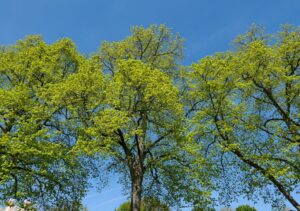
The honest answer is: it depends — on things you can learn to evaluate from the ground, and on a few things that genuinely require a trained eye. What you probably shouldn’t do is look up, feel vaguely worried, and go back inside. Atlantic storm season officially opens June 1. Middletown sits in exactly the kind of coastal-plain terrain that channels thunderstorm activity off the Raritan Bay, and the neighborhoods along the Navesink, through Lincroft and up toward Hartshorne Woods, have mature tree canopies — oaks, maples, tulip poplars — that have been growing for a century or more. Some of them are carrying dead wood in positions you never think about until a storm makes the decision for you.
This guide walks through what you can assess yourself from the ground, what warning signs should trigger a call to a certified arborist before the next major storm, and how professionals actually think about limb risk when they’re making a recommendation. The goal isn’t to alarm you — it’s to help you make a sound, informed decision about a tree you probably want to keep.
Why Dead Wood Fails Without Warning
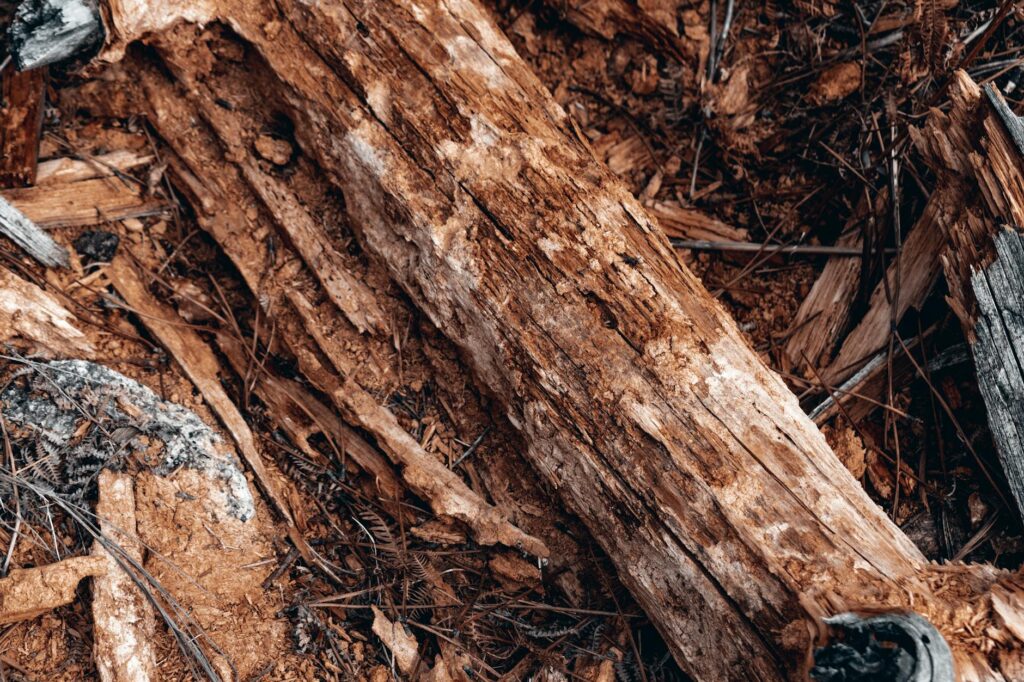
The first thing to understand is that a dead limb doesn’t stay structurally intact forever — or even close to it. Live wood is flexible. The cells are full of water, and the lignin and cellulose that make up the cell walls work together to absorb and redistribute mechanical stress when wind loads the branch. When a branch dies, that cellular water is gone. The wood begins to dry and, in New Jersey’s humid climate, to decay. What was once a branch that could bend in a 40 mph gust without failing becomes increasingly brittle over successive seasons, until the attachment point has lost enough structural integrity that a comparatively mild wind event is all it takes.
The part that catches homeowners off guard is the invisibility of this process. A dead limb can look exactly the same from March through October. The gray bark, the dry twigs, the fixed position — none of it changes from the outside while the decay column inside expands steadily. By the time the branch falls, there was nothing visually new to see. The tree didn’t send a warning.
The rate of decay varies significantly. A branch that died last fall, in a species with naturally rot-resistant heartwood — a white oak (Quercus alba), for instance — may remain structurally sound for several years. A branch that’s been dead for four or five seasons on a silver maple (Acer saccharinum), a species with softer wood and poor decay resistance, is a much more urgent concern. New Jersey’s wet winters and humid summers accelerate fungal colonization, which is the primary driver of structural wood breakdown once a branch is dead.
What You Can Assess from the Ground — No Ladder Required

A careful homeowner can gather a surprising amount of useful information about a suspect limb without leaving the ground. Here is the walk-around I recommend when a homeowner calls with a concern.
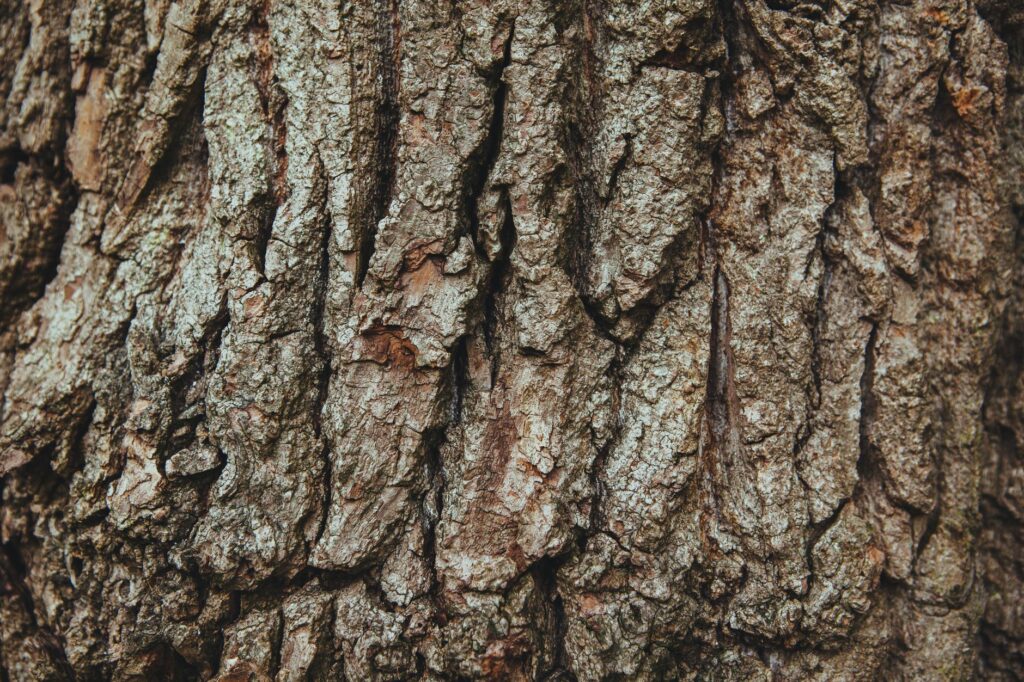
Look at the bark: Live bark on most species has slight elasticity and adheres firmly to the wood. Dead bark loses moisture, contracts, and begins to gap from the wood beneath it. If you see bark that’s peeling back, hanging loose, or crisscrossed with lengthwise cracks, that branch is well past newly dead.
Look at the tip color and texture: In late May, every live branch tip in the canopy should be showing new growth or full leaves. A dead branch will be gray-brown, with no swelling buds or leafing, and the fine outermost twigs will have begun to snap off over winter. Contrast it against the surrounding crown — if a section is visibly gray and bare while everything around it is leafed out, that section is dead.
Look for fungal fruiting bodies: Conks — the hard, shelf-like brackets that wood-decay fungi produce — on or near the base of a limb, or on the main trunk adjacent to it, are among the most serious visual indicators of structural compromise. They signal that fungal colonization is already well established inside the wood. The International Society of Arboriculture lists visible fungal fruiting bodies as a primary trigger for professional evaluation.
Look at the union angle: Where the branch attaches to the trunk matters. A wide, U-shaped union is structurally stronger than a tight, V-shaped crotch. If the suspect branch has a V-shaped union with a visible dark crack or crevice at the junction, that crotch is the most likely failure point — and it weakens faster than the branch itself.
- Bark peeling from a large-diameter limb: moderate concern, watch closely
- V-shaped union with a visible crack or dark staining: high concern
- Fungal conks at the limb base or nearby trunk: high concern
- Limb hanging at an abnormal angle, appearing to rest on adjacent branches: urgent
A pair of binoculars makes this assessment far more useful. The difference between seeing “there’s something going on at that crotch” and clearly observing a crack or included bark can be the difference between a monitoring situation and an urgent call.
Middletown's #1 Tree Expert Company
FREE Inspection & Estimate | Certified Arborists | Trimming, Pruning, Removal, More!
Sponsored
These Signs Mean Call an Arborist Before the Next Storm
Some things you can observe from the ground move the situation out of “keep an eye on it” territory. These are the indicators that, in my experience, warrant a phone call to a certified arborist before the next June thunderstorm comes through Middletown.
Included bark at a major union: When two large stems or a major branch and the main trunk grow tightly together, bark can get folded and trapped at the junction as both stems expand. This included bark prevents wood-to-wood bonding and creates a structurally weak seam that the naked eye can often detect as a dark, ingrown crease — not the smooth raised collar you’d see at a healthy union. This is one of the most common causes of catastrophic stem failure in storms, and it’s frequently found in mature red maples (Acer rubrum), ashes (Fraxinus spp.), and ornamental trees planted in Middletown yards decades ago.
A hanger — also called a widow-maker: A dead branch that has already partially separated and is now resting in the canopy, suspended by adjacent branches rather than attached to the tree, can fall with almost no trigger — a bird landing, the vibration from a passing truck, a shift in temperature. If a limb looks like it’s resting on other branches rather than originating from a clear attachment point, treat it as urgent.
Soft or sunken wood at the branch collar: The branch collar — the slightly raised, ridged tissue encircling the base of every healthy branch — is the structural anchor. If that zone shows discolored, sunken, or soft wood, press gently on it with a stick. Sponginess means decay has reached the attachment tissue itself, which is the worst possible location for it.
Cracks in the trunk below the branch: Spiral or lengthwise cracks in the main stem below a heavy dead limb suggest the trunk is responding to load stress, or that prior damage has allowed decay to enter the wood column. According to Rutgers Cooperative Extension, bark cracks that are more than superficial or that are accompanied by weeping sap are among the most urgent structural signs a homeowner can observe.
Large-diameter dead wood over a structure or occupied area: Diameter is a proxy for mass — and mass determines the energy released if the branch falls. A dead limb of 3 inches or more in diameter, positioned directly over a roof, deck, vehicle, or area where people regularly spend time, warrants professional evaluation regardless of how stable it appears. This threshold matters in practice, and in liability terms.
The Risk Equation: It's Not Just the Tree, It's What's Below It
One of the most useful concepts I share with homeowners is that tree hazard isn’t just a property of the tree — it’s a function of the relationship between the tree and what’s in the drop zone beneath it. The formal ISA Tree Risk Assessment framework defines risk as the product of three factors: the likelihood of failure, the likelihood that a failing part would strike a target, and the consequences to that target if it does.
This means the same limb in two different locations carries a very different risk profile. A 12-inch-diameter dead branch over an unmowed field at the back of a Middletown property may have a high likelihood of eventual failure — but low target exposure and modest consequences. The identical branch positioned directly over a bedroom or a patio furniture area used every evening is a high-risk situation, because the consequence of failure is severe injury or worse.
Homeowners naturally focus on the first question: how likely is it to fall? Arborists weigh all three. Before you call, do a quick mental inventory of your specific situation. Does the limb directly overlie a structure, vehicle, or space where your family spends regular time? Is there a secondary target — a fence line that would concentrate the impact on a garage just beyond it? What time of day does your family use that area? Answering these questions helps you communicate urgency accurately, and it helps an arborist triage when scheduling is tight in June and July.
How to Document a Hazard Limb Before Your Arborist Visit

Good documentation serves two purposes: it helps an arborist understand the situation before they arrive on-site, and it creates a record that can matter for your homeowner’s insurance if the situation deteriorates before you can address it.
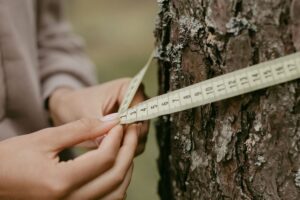
A few minutes with your phone camera is enough. Take photos from multiple angles: a wide shot showing the full tree and the structure below, a medium shot at the branch attachment point, and close-ups of anything specific you noticed — bark gaps, cracks, fungal bodies, the angle of the branch relative to the trunk. Note the approximate height of the attachment and the rough diameter of the limb. You can estimate diameter by comparing it visually to a known reference in the same frame — a gutter width, a window frame.
If you’ve been watching the limb for a while, note when you first observed the problem. “That section stopped leafing out about two seasons ago” gives an arborist useful information about the progression rate. A branch that’s been dead for three New Jersey winters is structurally worse off than one that died last fall — and the estimate matters for how urgently they’ll want to schedule.
The USDA Forest Service has documented that homeowners who maintain records of professional hazard assessments are better positioned when navigating insurance and liability questions following a storm event. If a neighbor’s tree overhangs your property, written notification to that neighbor about the observed hazard is also worth keeping on file — under New Jersey’s tree law, documented notification changes the liability picture if damage later occurs.
Middletown's #1 Tree Expert Company
FREE Inspection & Estimate | Certified Arborists | Trimming, Pruning, Removal, More!
Sponsored
When to Call a Pro — and What to Ask For
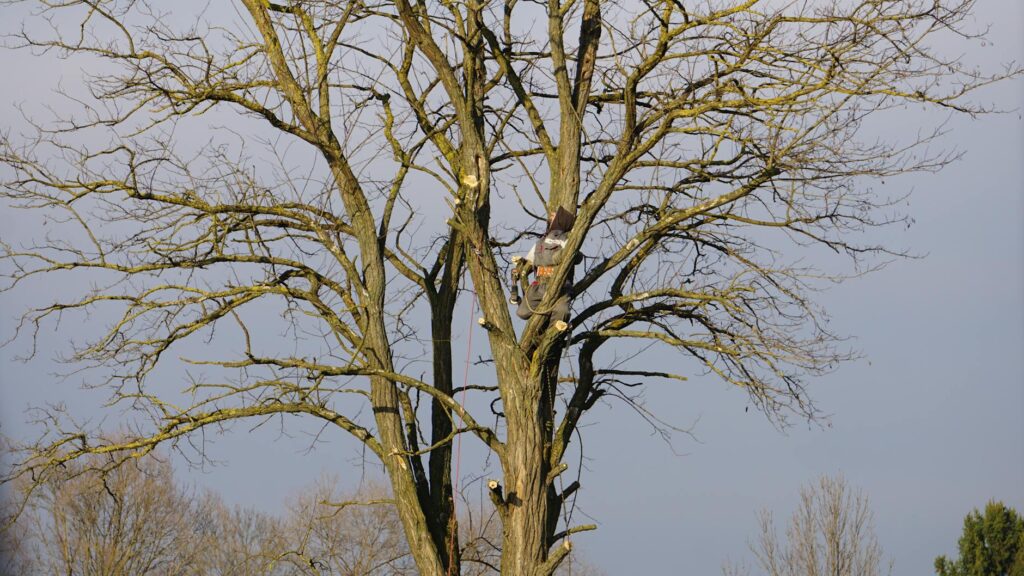
If anything in the sections above matches what you’re seeing in your yard, a professional evaluation is the right next step. You don’t need to commit to removing the tree — you need an expert assessment that tells you clearly what you’re dealing with and what, if anything, needs to happen before storm season is in full swing.
When you call, ask specifically for an arborist with an ISA Tree Risk Assessment Qualification (TRAQ). Not every ISA-certified arborist carries this credential — it’s a specialized certification in formal risk methodology, and it means the arborist is working from a standardized framework rather than informal opinion. A TRAQ-qualified arborist can provide a written Level 2 risk assessment that identifies the specific defect, assigns a risk rating, and outlines remediation options: removal, targeted pruning, cable bracing, or periodic monitoring. That written report is yours, and it holds weight with insurance companies.
Middletown’s mature tree canopy — the old white oaks in the Lincroft neighborhoods, the tulip poplars over back fences near Poricy Park, the sweeping maples in the lots along the Navesink — is one of the things that makes this area worth living in. It takes generations to build and is irreplaceable on any useful timeline. Getting a professional assessment of a suspect limb isn’t paranoia. It’s the kind of informed stewardship that lets you keep large trees on your property safely for as long as they can safely stay there. A good arborist’s first goal is never to sell you a removal — it’s to give you the information you need to make a sound decision about a tree you want to keep.
Photo credits: Featured image by Boys in Bristol Photography on Pexels; Section 1 by Ron Lach on Pexels; Section 2 by Vadym Alyekseyenko on Pexels; Section 3 by Breno Cardoso on Pexels; Section 4 by Little Visuals on Pexels; Section 5 by SHOX ART on Pexels; Section 6 by Thao Zabey on Pexels; Section 7 by Dmytro Glazunov on Pexels.