
Middletown's #1 Tree Expert Company
FREE Inspection & Estimate | Certified Arborists | Trimming, Pruning, Removal, More!
Sponsored
When the Problem Is Underground
Somewhere in a Middletown backyard — maybe near Poricy Park, maybe tucked behind a fence in Lincroft — there’s a red maple that has been looking off for two summers running. The leaves are a little smaller than they used to be. A few branches didn’t fully leaf out this spring. The homeowner has checked for insects, watered more carefully, added mulch. Nothing seems to help.
An arborist walks the root zone, kneels at the base of the trunk, and says: I think we need to look underground.
That’s the scenario where air spading earns its keep. In early June, as Middletown’s trees finish their spring flush and prepare for summer heat, the root zone quietly determines which trees thrive and which ones silently struggle. Problems buried just a few inches below grade — girdling roots, compacted soil, buried root collars — can remain invisible for years, then suddenly accelerate into serious decline. Above-ground symptoms are the tree’s signal for help. The cause is often somewhere you can’t see without the right tool.
A Powerful Tool That Doesn't Break Roots
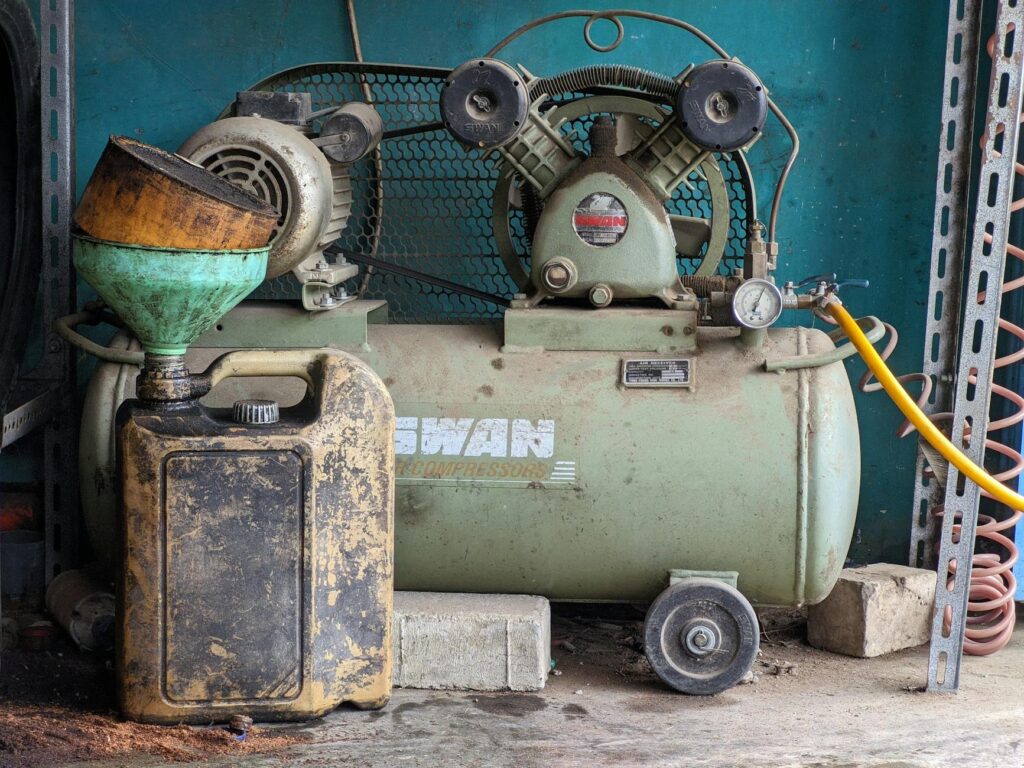
An air spade — sometimes called a pneumatic excavation tool or air knife — uses a highly pressurized blast of air to fracture and displace soil without cutting or tearing the woody roots hidden within it. The technology was originally developed for utility work, where digging near buried cables and pipes demanded precision. Arborists recognized quickly that it was also ideal for exposing tree root zones without the hatchet-like damage that shovels and backhoes cause.
The tool works by fracturing the soil matrix — the spaces between soil particles — and blowing it away from roots that remain intact and undamaged. A certified arborist can expose the entire base of a large tree, mapping the root flare and first-order structural roots, in far less time than hand tools would allow and with dramatically less collateral root damage. The International Society of Arboriculture recognizes root zone management as one of the highest-leverage interventions available for long-term tree health, and air spading has become the standard of care for root zone excavation work among ISA-certified professionals.
The soil that gets displaced is collected and can be sifted for debris, amended with compost or coarse organic material, and returned to the site in improved condition. In the best cases, excavation and remediation happen in a single visit.
What Arborists Find Below the Surface
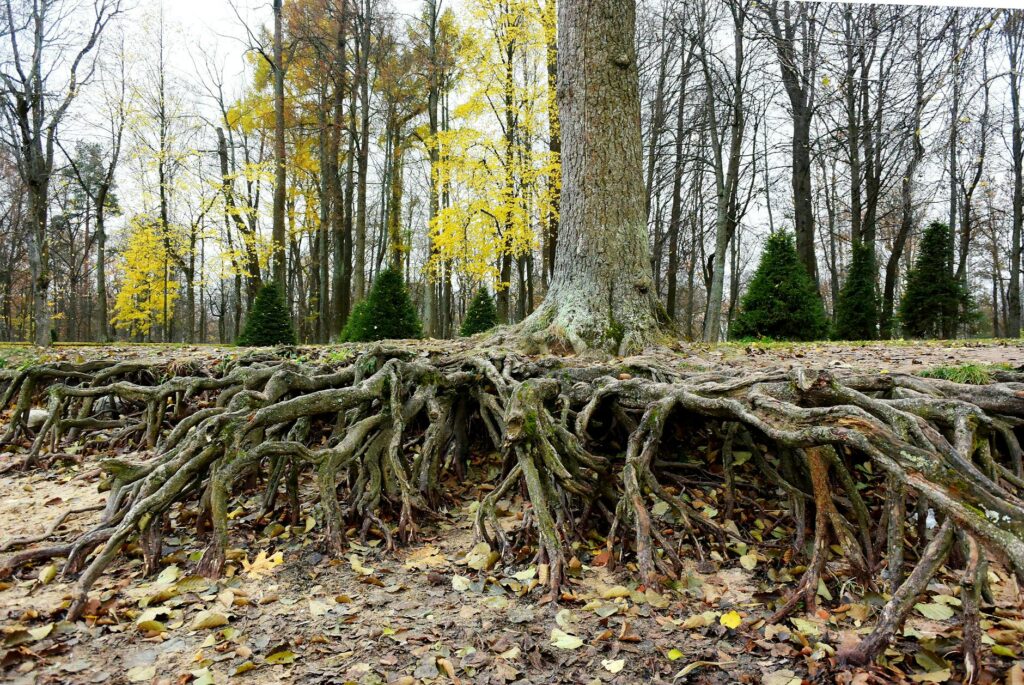
What gets uncovered when an arborist opens a root zone often surprises homeowners. The list of common findings in Middletown’s suburban yards includes far more than most people expect:
- Roots that have circled back and are now pressing against the trunk, slowly compressing the tissue that carries water and nutrients
- Root collars buried two, four, or even six inches below grade from decades of mulch accumulation, settled soil, or planting depth errors
- Soil so compacted it holds virtually no air pockets or water movement, forcing fine feeder roots toward the surface where they’re vulnerable to foot traffic and mower damage
- Old construction fill — gravel, brick rubble, hardpan clay — placed decades ago during home construction and never removed
- Early decay or fungal activity at the root flare, hidden completely from view until the soil is cleared away
Rutgers NJAES Cooperative Extension notes that improper planting depth and unresolved root collar issues are among the most common contributing factors in residential tree failures — problems that go undetected for years precisely because they’re out of sight. In Middletown’s clay-loam soils, which drain slowly after heavy spring rains and then compact hard as summer arrives, the conditions are particularly favorable for this kind of hidden root zone stress. Sandy pockets near the Bayshore can have the opposite problem: roots fan out in all directions searching for moisture, sometimes crossing each other and beginning to compete for the same space.
Middletown's #1 Tree Expert Company
FREE Inspection & Estimate | Certified Arborists | Trimming, Pruning, Removal, More!
Sponsored
Girdling Roots: When a Tree's Own Roots Become Its Enemy
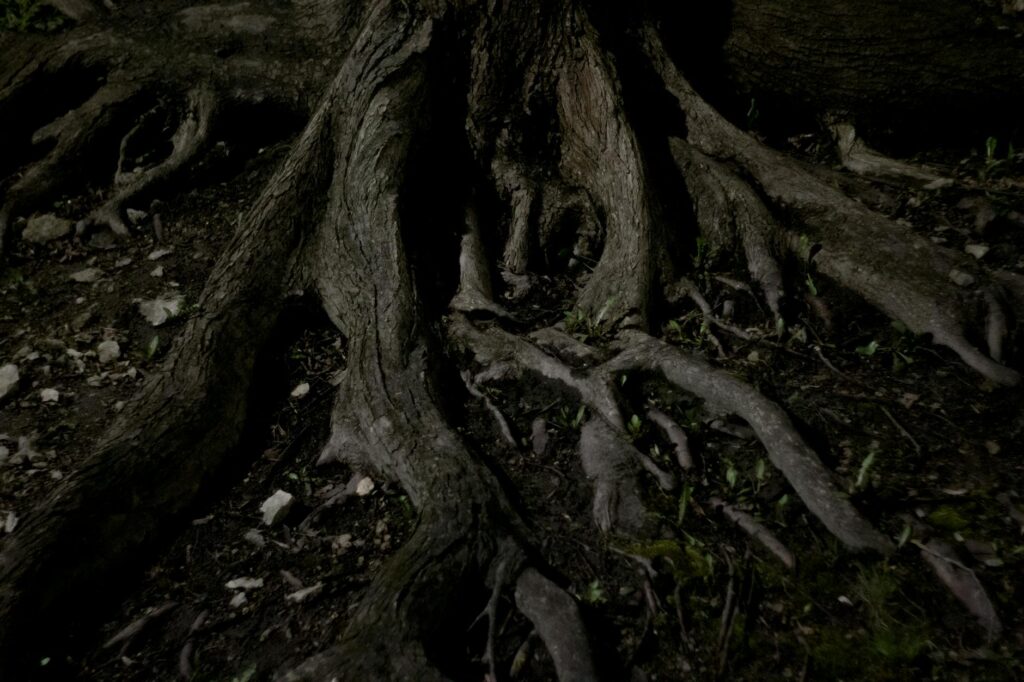
Girdling roots are one of the most underdiagnosed causes of tree decline in residential landscapes. They develop when a root — often a circling root from a container-grown tree that was never corrected at planting — wraps around the trunk and begins to compress the cambium as both the root and trunk enlarge over years. The compression eventually restricts the flow of water and nutrients through the tree’s vascular tissue, causing a slow, progressive decline that can look like a dozen other problems.
Early signs include a trunk that tapers straight into the ground rather than flaring naturally at the base, asymmetrical canopy decline, leaves that are smaller than expected, and dieback that begins at branch tips and works inward. By the time these signs are noticeable, the girdling root has usually been doing damage for years. This is especially common in Middletown’s older neighborhoods, where many trees were planted in the 1970s and 1980s and are now entering their mature size — the stage when a girdling root that seemed harmless at planting begins to cause real problems.
Air spading allows an arborist to map these roots precisely, then decide whether they can be safely severed or require more careful management. Research cited through the USDA Forest Service’s urban forest program indicates that girdling root removal, done correctly before vascular damage is extensive, can meaningfully extend a tree’s functional lifespan. The key phrase is before damage is extensive — which is why a root zone evaluation is worth doing when a tree first starts showing subtle signs of decline, not after years of watching it worsen.
Soil Compaction and Root Zone Venting
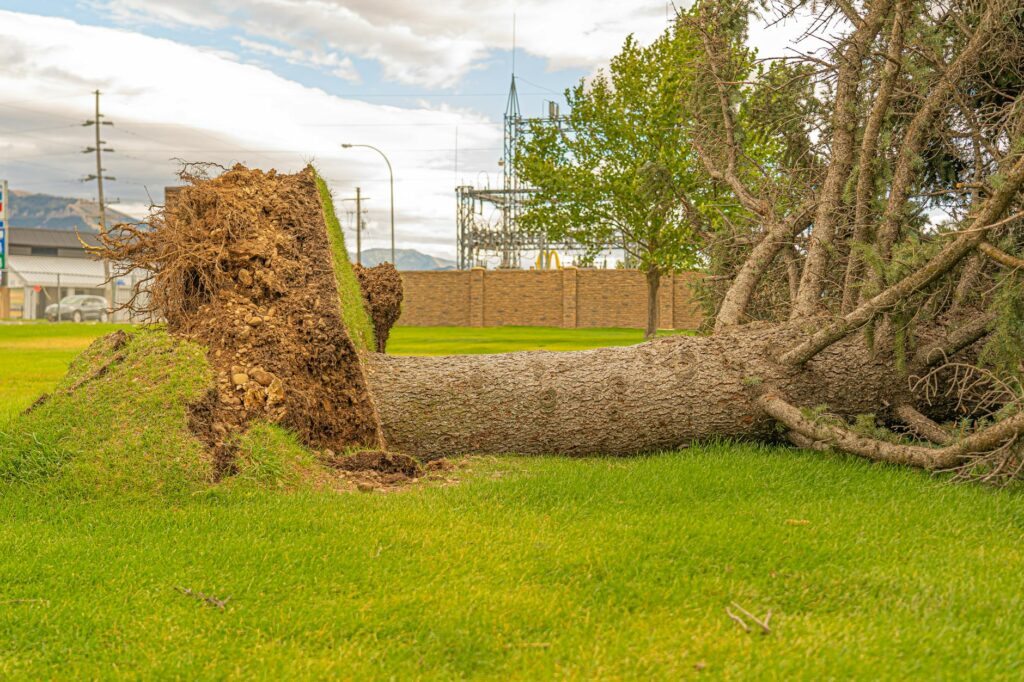
Trees need oxygen at their roots as much as they need water. A soil that has been compacted by foot traffic, heavy equipment, or years of clay settling can have almost no pore space — nowhere for air to move, nowhere for water to drain, nowhere for fine feeder roots to expand. Trees in compacted soils look chronically stressed: thin canopy, reduced annual growth, early fall color, and general decline that resists every above-ground treatment because the real problem is structural.
Air spading addresses this in two ways. The excavation itself fractures the compacted layer, restoring pore space and allowing roots to breathe. The opened soil can then be backfilled with a blend of compost and coarse organic material — an approach sometimes called radial trenching or vertical mulching — that maintains improved soil structure long after the visit. Rutgers Cooperative Extension’s urban tree care resources recommend addressing soil compaction proactively in high-traffic areas around established trees rather than waiting for visible decline to become severe.
In Middletown, properties near the Bayshore frequently deal with layers of fill soil placed decades ago — sometimes to raise grade near the water, sometimes as part of old construction work. Below that fill layer, the original soil may be significantly healthier. Air spading can reveal what’s actually present and allow an arborist to design a remediation plan that works with the site’s real conditions rather than guessing from the surface.
Is Air Spading Right for Your Tree?
Air spading isn’t the answer to every tree problem, and a good arborist will tell you that honestly. If a tree has already lost the majority of its canopy to disease, or if root decay is so extensive that the tree represents a hazard, excavating the root zone may only confirm what removal has already made necessary.
But for trees that show moderate decline without an obvious above-ground cause — the oak at the edge of a patio that’s been looking thin for two seasons, the cherry tree that hasn’t produced well in years, the old maple whose canopy has been shrinking slowly — air spading can be both diagnostic and curative. It’s also valuable before construction projects. If you’re planning to extend a driveway, add a patio, or build within the drip line of an established tree, having an arborist air spade the root zone beforehand gives you a precise map of what’s there and what the tree can tolerate losing.
The procedure requires specialized equipment and is performed by certified arborists or trained tree care crews. Costs vary with tree size and site access, but the information gained often prevents far more expensive decisions — including premature removal of trees that could have been saved. If you’re uncertain whether air spading makes sense for a specific tree, start with a consultation from an ISA-certified arborist who can assess the situation and give you a straight answer.
Middletown's #1 Tree Expert Company
FREE Inspection & Estimate | Certified Arborists | Trimming, Pruning, Removal, More!
Sponsored
Summary / When to Call a Pro
A declining tree is asking for help, but it can’t point to what’s wrong. Surface symptoms — thin canopy, dead branch tips, smaller-than-normal leaves — are the tree’s language for a dozen different problems, many of which are buried where you can’t see them. Air spading gives a certified arborist the ability to look directly at the root zone without the damage that traditional digging causes, turning a guess into a diagnosis and sometimes turning a declining tree into a recovering one.
If you have a tree in Middletown that has been showing signs of decline for more than one growing season — especially if you can’t find an obvious above-ground cause — it’s worth asking an ISA-certified arborist whether root zone evaluation makes sense. The Tree Care Industry Association maintains a directory of member companies with certified staff and appropriate equipment for this kind of work.
Root zone intervention works best done early. A tree that has been quietly struggling for two summers still has a good chance of meaningful recovery. One that has been silently strangled or suffocated for a decade may not. Early June, while trees are actively growing and sending visible stress signals, is one of the best times of year to have that conversation with an arborist. The root zone problem that gets caught now, before another summer of heat and drought adds to the stress load, is the one most likely to have a good ending.
Photo credits: Featured image by Liudmyla Shalimova on Pexels; Section 1 by Paris Lopez on Pexels; Section 2 by Eky Rima Nurya Ganda on Pexels; Section 3 by RinaS on Pexels; Section 4 by Plato Terentev on Pexels; Section 5 by Castorly Stock on Pexels; Section 6 by Dmytro Glazunov on Pexels; Section 7 by This And No Internet 25 on Pexels.