
Middletown's #1 Tree Expert Company
FREE Inspection & Estimate | Certified Arborists | Trimming, Pruning, Removal, More!
Sponsored
The Clock Is Ticking on Spongy Moth in Middletown
Right now — in the last week of April — thousands of spongy moth egg masses scattered across Middletown Township are beginning to stir. By the time the oaks along the Navesink River bluffs and the woodland edges of Hartshorne Woods Park reach full leaf-out, the tiny caterpillars inside those buff-colored masses will be hatching. Once they do, the damage clock starts, and it does not stop until the canopy has been stripped bare.
Spongy moth (Lymantria dispar dispar) is one of the most destructive invasive forest insects in the northeastern United States. You may remember it by its former name — gypsy moth — but the Entomological Society of America officially renamed it in 2022. The new name is a far better descriptor of those unmistakable velvety egg masses you will find plastered to bark, stone walls, and patio furniture throughout the region.
As an arborist who has worked in Monmouth County through multiple outbreak cycles, I can tell you with certainty: the homeowners who act in late April almost always fare better than those who wait until caterpillars are already stripping canopies in June. This article is a field guide. By the time you finish it, you will know how to find egg masses on your property, which trees are most at risk, and what your options are for protecting them. The window is narrow — let’s use it.
Understanding the Pest: Spongy Moth in New Jersey's History
Spongy moth is not native to North America. It was introduced near Boston in 1869 by a French scientist experimenting with silk production. By the early twentieth century it had spread across the Northeast, and by the 1970s and 1980s it was cycling through New Jersey’s oak forests in devastating outbreak years. Monmouth County — with its mix of coastal oak woodlands, pitch pine edges near Cheesequake State Park, and older suburban hardwood plantings — has experienced repeated cycles ever since.
The insect completes one generation per year. It overwinters as eggs inside those spongy tan-colored masses, hatches in April or May depending on temperatures, feeds aggressively through June, pupates in early July, and emerges as adult moths by late summer. The female moth — a large cream-colored creature that cannot fly — lays new egg masses before she dies, and the cycle begins again. By the time you see moths fluttering around porch lights in August, the feeding damage for that year is already done.
New Jersey’s outbreak years tend to follow dry springs, which reduce the spread of Entomophaga maimaiga, a naturally occurring soil fungus that helps suppress spongy moth populations in normal years. The NJ DEP Division of Parks and Forests Forest Health Program tracks annual population pressure and publishes county-level data homeowners can consult when making treatment decisions. This is a page worth bookmarking for the season ahead.
How to Find and Count Egg Masses on Your Property
Egg mass scouting is something any homeowner can do in thirty minutes, and late April is precisely the right moment — before any eggs have hatched and while physical removal is still possible. Each mass ranges roughly from the size of a quarter to a silver dollar, tan to buff in color, with a dense felt-like texture. A single mass may contain between 100 and 1,500 eggs. On a heavily infested tree, you may find dozens of masses clustered at the base of the trunk and along lower scaffold limbs.
Here is how to conduct a systematic property survey:
- Check the lower trunk of every oak, birch, apple, and crabapple from the base up to about head height.
- Examine the undersides of low horizontal branches, especially at branch unions where bark is rough or deeply furrowed.
- Survey non-tree surfaces too — stone retaining walls, fence posts, firewood piles, and the undersides of outdoor furniture. Egg masses hitchhike on vehicles and firewood and turn up in unexpected places.
- Scrape any masses you find into a container of soapy water and soak for 48 hours before discarding. Crushing alone is not reliable — the eggs are surprisingly resilient.
Rutgers NJAES Fact Sheet FS004 on spongy moth provides detailed guidance on interpreting egg mass counts and thresholds for residential properties — including the density at which populations become self-sustaining even with natural controls present. It is one of the most practical resources available to New Jersey homeowners and is well worth reading before you decide whether treatment is warranted this season.
Middletown's #1 Tree Expert Company
FREE Inspection & Estimate | Certified Arborists | Trimming, Pruning, Removal, More!
Sponsored
Which Middletown Trees Are Most at Risk
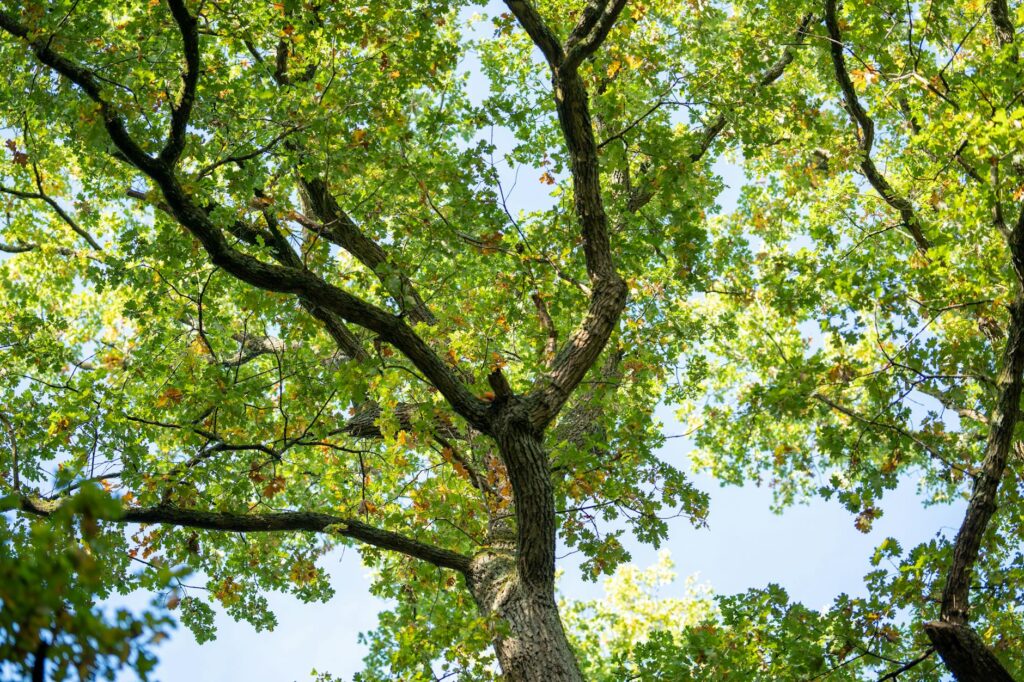
Spongy moth caterpillars are generalist feeders with strong host preferences. Understanding what you have on your property lets you prioritize your scouting and any treatment decisions before the hatch window arrives.
The strongly preferred hosts — the trees that will be eaten first and hardest — are oaks (Quercus spp.), birches (Betula spp.), and apple and crabapple (Malus spp.). In Middletown Township, that covers a substantial portion of the residential and park landscape. The red oaks (Quercus rubra) and chestnut oaks (Quercus montana) on the slopes above the Navesink, the mature white oaks (Quercus alba) in older neighborhoods like Lincroft and Leonardo, and ornamental birches along driveways throughout the township are all prime targets during an outbreak year.
Secondary hosts — trees that will be eaten when preferred species are already stripped — include:
- Sweetgum (Liquidambar styraciflua)
- American linden / basswood (Tilia americana)
- Gray birch (Betula populifolia), very common along Bayshore edges and disturbed woodland margins near Port Monmouth and Belford
- Willows (Salix spp.) near Middletown’s wetland corridors and stream margins
- Hornbeam (Carpinus caroliniana) in understory positions
Trees largely avoided by spongy moth include tulip poplar (Liriodendron tulipifera), flowering dogwood (Cornus florida), and most conifers — though under severe outbreak pressure, caterpillars will consume almost anything when preferred hosts run out. If your property is oak-heavy or backs up to a wooded edge, treat the current scouting window as a high priority.
Btk, Burlap Bands, and Timing: What Actually Works
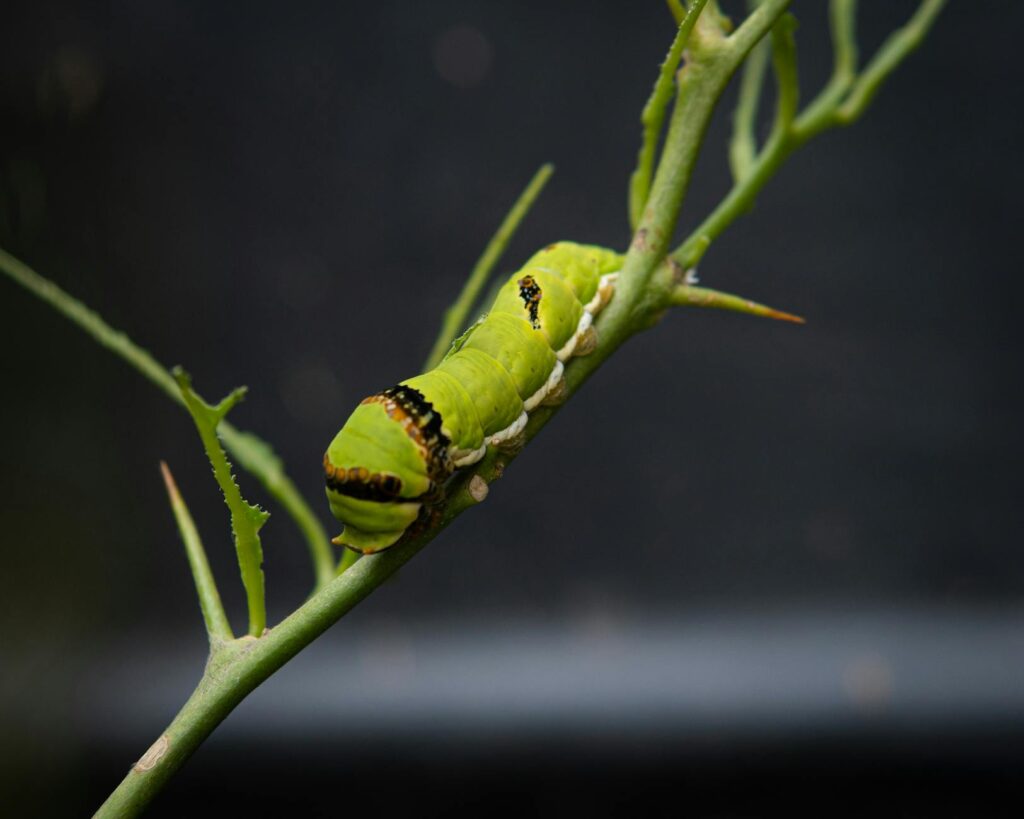
The single most important thing I tell homeowners every spring is this: treatment timing is everything. The biological control that works best against spongy moth — Bacillus thuringiensis var. kurstaki, universally known as Btk — is effective only on young caterpillars in their first and second instar stages. That means applications must happen shortly after hatch, when caterpillars are still small and just beginning to feed. By the time they reach the third instar (roughly thumbnail size), Btk has largely lost its effectiveness and you are left watching.
In Monmouth County, the hatch window typically falls in early to mid-May, though warm Aprils can push it earlier. Watch for the signal: when the edges of egg masses begin to show a darkening or slight moisture absorption, hatch is days away. That is your window to apply Btk if you are treating on your own.
Btk is a naturally occurring soil bacterium, non-toxic to birds, mammals, bees, and most beneficial insects when applied as directed. It is widely available at garden centers for homeowner use on individual trees. For neighborhood-scale or aerial applications, the New Jersey Department of Agriculture administers a Spongy Moth Suppression Program that coordinates large-scale treatment on qualifying residential and municipal lands — worth checking if egg mass pressure in your neighborhood appears high.
For individual specimen trees, burlap banding is a reliable supplemental tool:
- Wrap a 12-inch band of burlap around the trunk at about chest height.
- Fold the top half of the band down over the bottom to create a loose skirt that caterpillars shelter under during the heat of the afternoon.
- Each day around dusk, lift the fold and collect the sheltering caterpillars into a container of soapy water.
Banding will not eliminate an infestation, but on a high-value oak or birch it meaningfully reduces the feeding load on that specific tree. A certified arborist can also evaluate systemic options — trunk injections or soil-applied systemic insecticides — for trees where the stakes are especially high. These have their own timing requirements and are most effective when planned well before hatch begins.
After Defoliation: Recovery, Stress, and What to Watch For
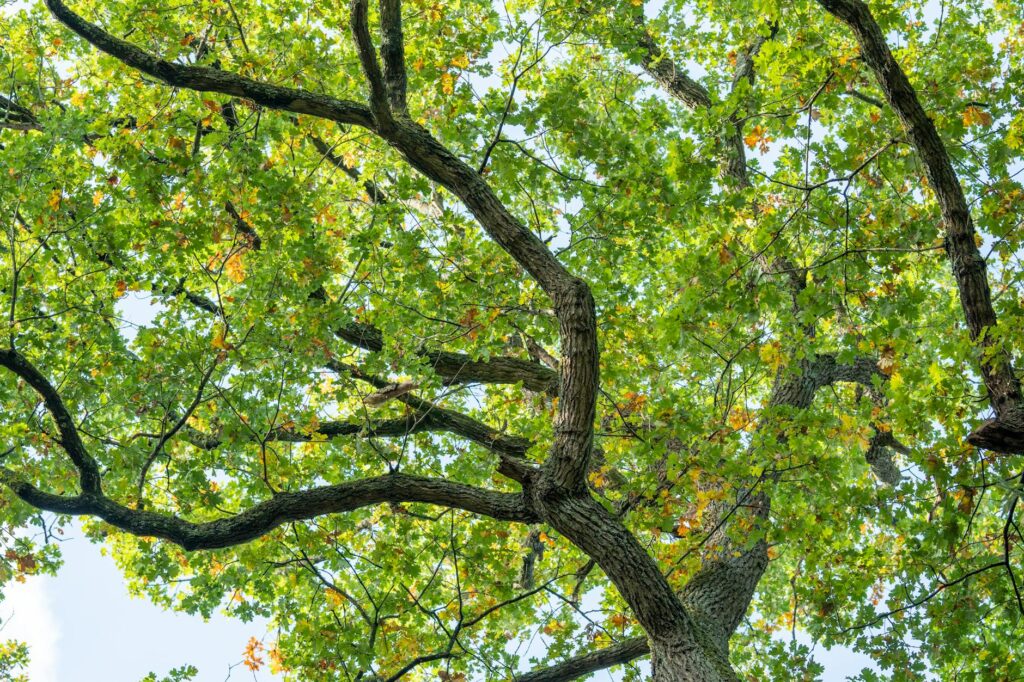
Even if spongy moth caterpillars get ahead of you this season and your oaks are stripped bare by June, the story does not end with bare branches. Most healthy deciduous trees will re-leaf by midsummer through a process called Lammas growth — a second flush of foliage that draws on root energy reserves. You will see it happening: pale green new growth appearing on trees that looked skeletal in early June, with partial canopies restored by August.
But that recovery carries a cost. A defoliated oak has spent its entire spring carbohydrate reserve, drawn down its root energy bank, and is running lean going into the dormant season. The trees most likely to decline after defoliation are those already under stress — drought-prone specimens in thin or sandy soils, street trees with limited root volumes, and older trees with existing structural decay or root disturbance from past construction or grading.
After a defoliation event, watch for these warning signs in late summer and fall:
- Sparse or pale second-flush foliage that does not reach normal canopy density
- Crown dieback beginning in the upper scaffold branches
- Leaves dropping in August before normal color change begins
- Small round entry holes appearing in the bark — bark beetle activity capitalizing on a stressed and weakened tree
Trees showing these symptoms after defoliation deserve a professional assessment in fall or early the following spring. Deep-root fertilization applied in late fall — after the feeding season has closed but while soil temperatures still support root activity — can meaningfully support recovery by replenishing soil nutrients and stimulating fine root development heading into the next growing season. Avoid fertilizing immediately after defoliation in summer, which risks pushing soft, stress-vulnerable growth at precisely the wrong time.
Middletown's #1 Tree Expert Company
FREE Inspection & Estimate | Certified Arborists | Trimming, Pruning, Removal, More!
Sponsored
The Bottom Line: Act in April, Not June
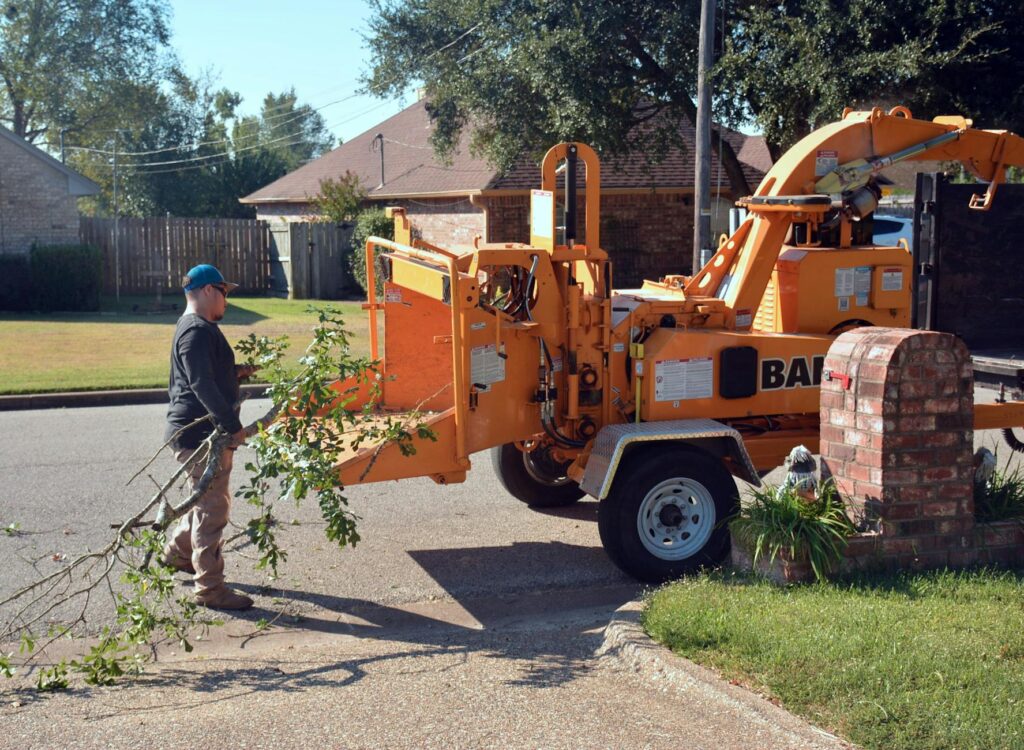
Late April is the best moment in the entire spongy moth calendar to take meaningful action on your Middletown property. Egg masses can still be scraped and destroyed before a single caterpillar hatches. Treatment programs — whether you are applying Btk yourself or having a professional handle a high-value specimen — can be planned and lined up ahead of the hatch window. And a trained eye walking your property now can catch concentrations that a quick glance would miss entirely.
If you have mature oaks, birches, or established shade trees that define your property, this is the week to walk the yard with a bucket of soapy water and a flat-edged scraper. A half-hour of effort in late April can prevent weeks of watching a prized canopy get stripped and the uncertainty that follows about whether the tree will recover fully.
A certified arborist should be in the picture any time egg mass density is high — more than five to ten masses per tree on your specimen oaks or birches — when defoliation occurred last year and you are watching for cumulative stress effects, or when you want systemic treatment options evaluated for a tree that matters too much to manage casually. A qualified arborist can assess the full picture: soil conditions, root health, tree structure, and the treatment options best suited to your specific Middletown property and its coastal plain soils and exposures.
The ISA’s Find an Arborist tool at treesaregood.org can help you locate a certified professional in Monmouth County. The best possible outcome this summer is a property that goes into July with its canopy intact — and the window to make that happen is open right now.
Photo credits: Featured image by Radosław Krupa on Pexels; Section 1 by Radosław Krupa on Pexels; Section 2 by Thomas Elliott on Pexels; Section 3 by Petr Ganaj on Pexels; Section 4 by Masood Aslami on Pexels; Section 5 by Andy Coffie on Pexels; Section 6 by Masood Aslami on Pexels; Section 7 by John Robertson on Pexels.