Middletown's #1 Tree Expert Company
FREE Inspection & Estimate | Certified Arborists | Trimming, Pruning, Removal, More!
Sponsored
Walk Through Hartshorne Woods This Week and Look Up
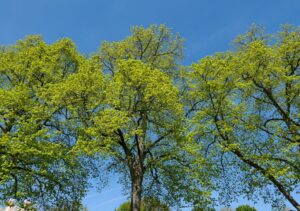
There is a specific trick for diagnosing beech leaf disease, and it only works for about three weeks a year. Those three weeks are happening right now in Middletown Township. You stand under an American beech (Fagus grandifolia), you look up at the newly expanded leaves, and you see whether the interveinal tissue, the flat green parts between the leaf veins, is banded with dark green-to-black stripes. On a healthy beech, the leaf is a uniform pale green with clean parallel veins. On an infected beech, those dark bands look almost painted on, following the vein structure like a zebra’s stripes.
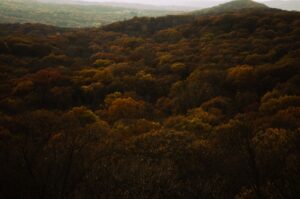
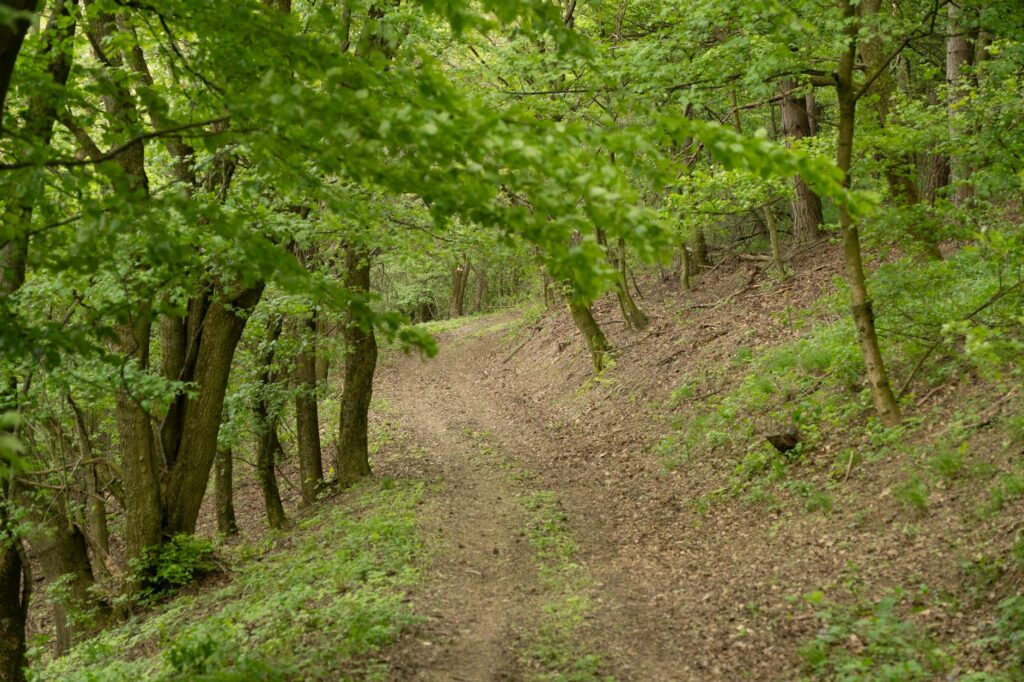
Walk the blue trail in Hartshorne Woods Park, or the old-growth section at Tatum Park, or the beech corner of Thompson Park, and you will find the striping. Drive the older streets in Rumson, Lincroft, or along Navesink River Road where mature copper beeches (Fagus sylvatica) were planted on Victorian-era estates a century ago, and you will find it there too. Beech leaf disease arrived in New Jersey only a few years ago and it is now confirmed in every county that still has meaningful beech population. Monmouth County is a hot zone.
This article is a quick field guide to what beech leaf disease actually is, why Middletown’s beech trees matter, what to look for on your property this week specifically, and what a homeowner can and cannot do about it.
A Brief Biology of a Very Strange Disease
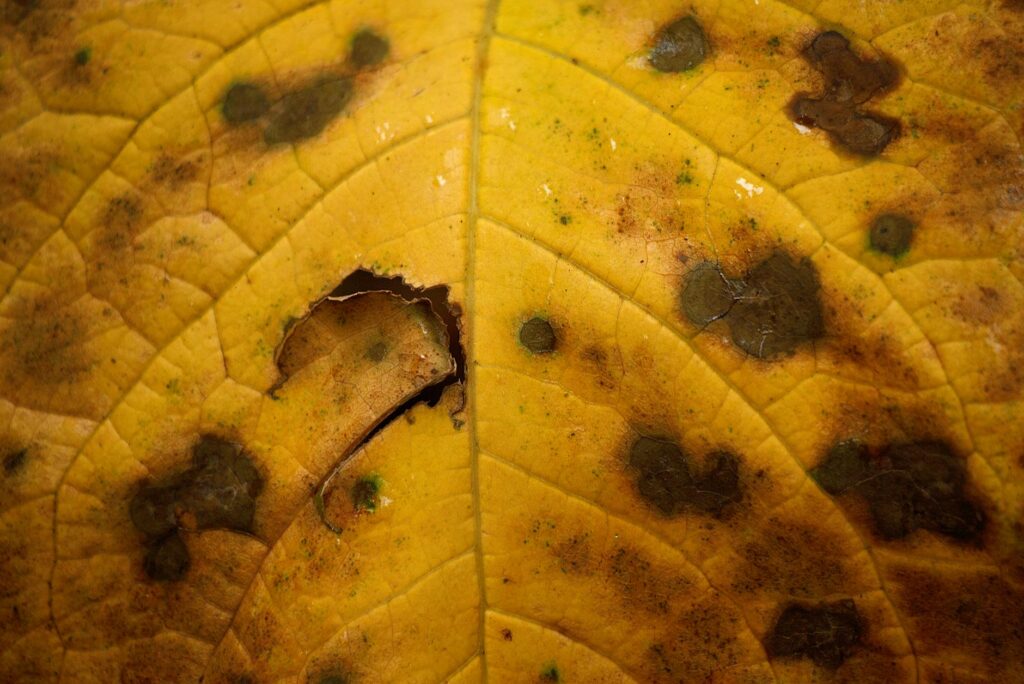
Beech leaf disease, or BLD, was first described in Ohio in 2012. The culprit turned out to be microscopic: a nematode, Litylenchus crenatae mccannii, that lives and reproduces inside the leaf tissue itself. The nematodes colonize the buds before they open, so the damage is already in place when the leaf unfurls in April. That is why the symptom window is so narrow. By midsummer, the distinctive banding pattern is harder to see because the whole leaf looks off.
A heavily infected leaf turns leathery, curled, and eventually falls. An infected tree produces fewer leaves each year, fewer buds, and less energy reserve. Young beeches, especially saplings under ten feet, can die in two to five years. Large mature trees decline more slowly, over five to fifteen years, but the trajectory in an untreated infection is still downward.
The USDA Animal and Plant Health Inspection Service and the New Jersey Department of Environmental Protection are actively tracking the spread, and Rutgers NJAES cooperative extension has published identification guides. Research into how the nematode moves between trees is ongoing. Birds, insects, wind, and human movement of nursery stock are all suspected vectors.
Why Middletown Has a Lot to Lose
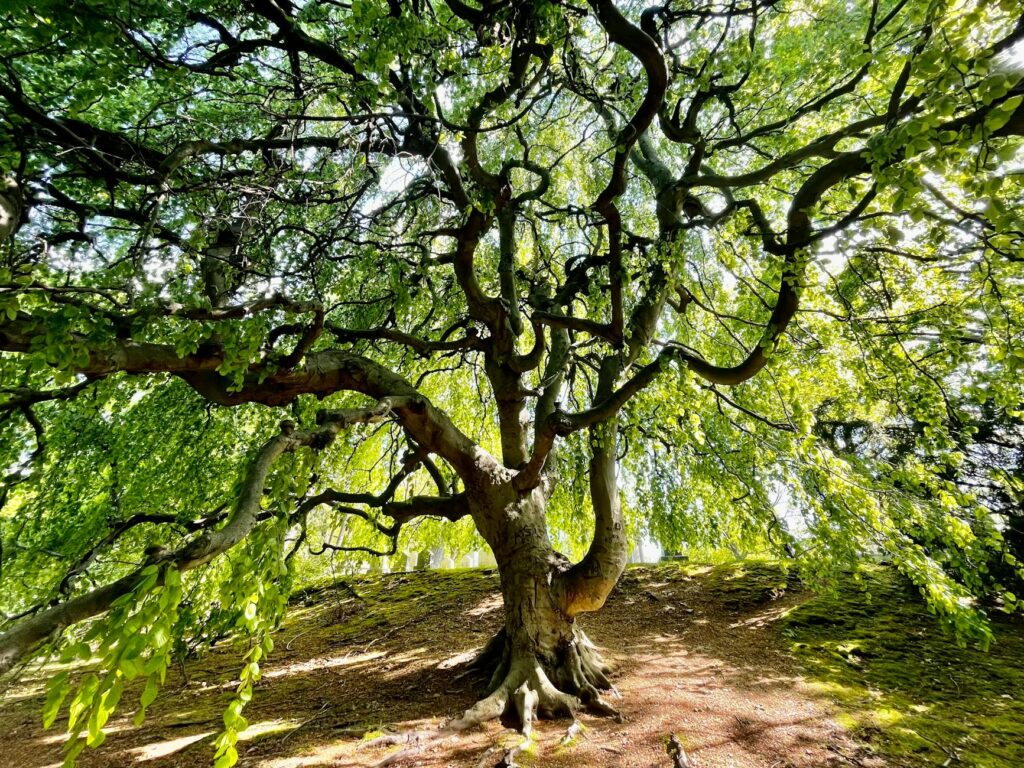
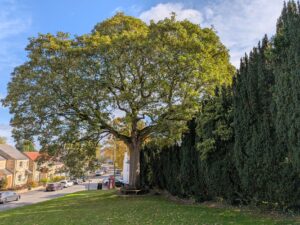
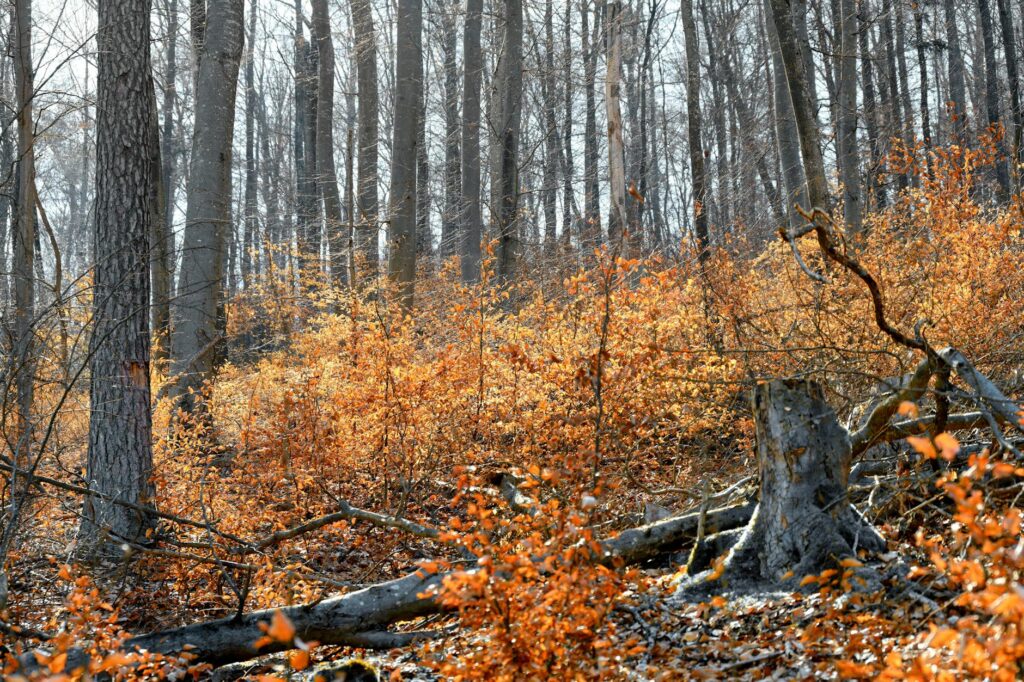
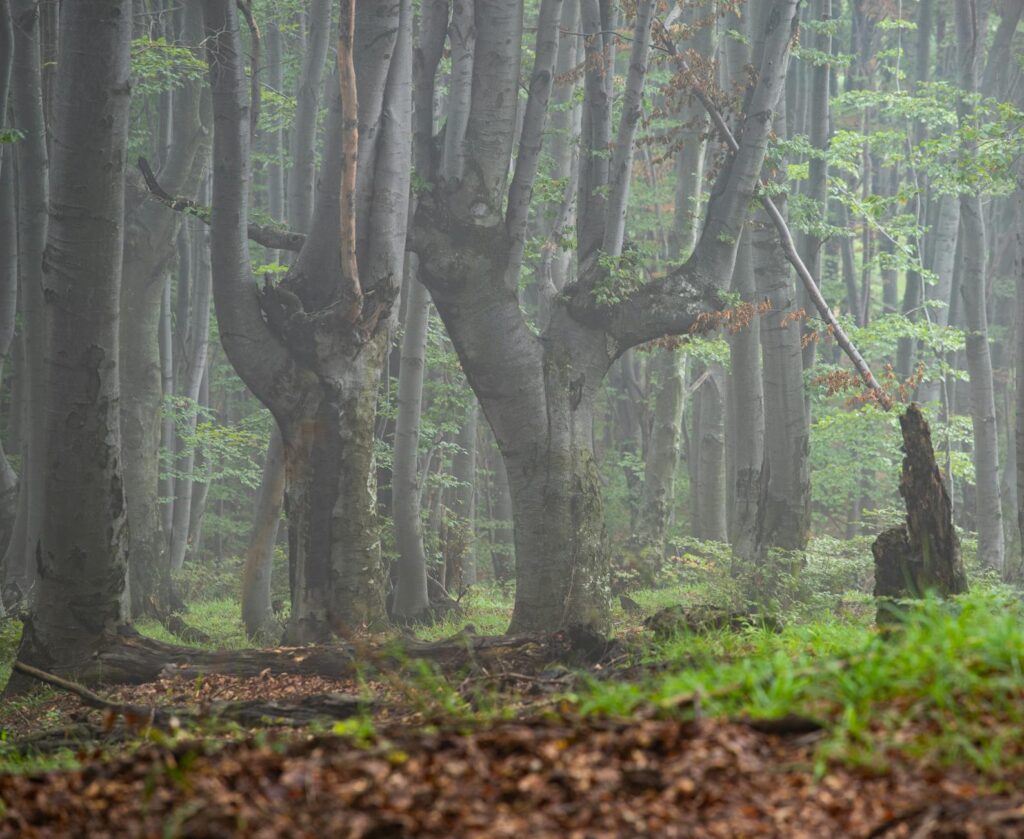
American beech is a keystone species in our regional forest. It is one of the climax hardwoods in mature Monmouth County woodlands and it supports a deep web of wildlife. The smooth gray bark, the distinctive long-pointed buds, the way the dead leaves hang on through winter in coppery sheets — these are signatures of a healthy Middletown woodlot.
Beyond the wild forest, we have significant beech investment in the built landscape. Copper beeches and weeping beeches were planted as estate trees across the Navesink-Rumson-Middletown corridor during the Gilded Age, and many of those specimens are still standing as the centerpiece trees of properties now worth millions. A single mature copper beech is frequently the most valuable single plant on a property, both ecologically and financially. Beech leaf disease does not distinguish between a wild American beech in Hartshorne Woods and a one-hundred-and-twenty-year-old copper beech in front of a historic home.
The dominance of beech in a few of our local parks means that if the disease runs its full course unchecked, the structure of those woodlands will change significantly within a generation. That is a long-view concern for the township, but on a shorter timeline, it is also a practical concern for any homeowner whose property value leans on a mature beech.
Middletown's #1 Tree Expert Company
FREE Inspection & Estimate | Certified Arborists | Trimming, Pruning, Removal, More!
Sponsored
How to Spot It This Week on Your Property
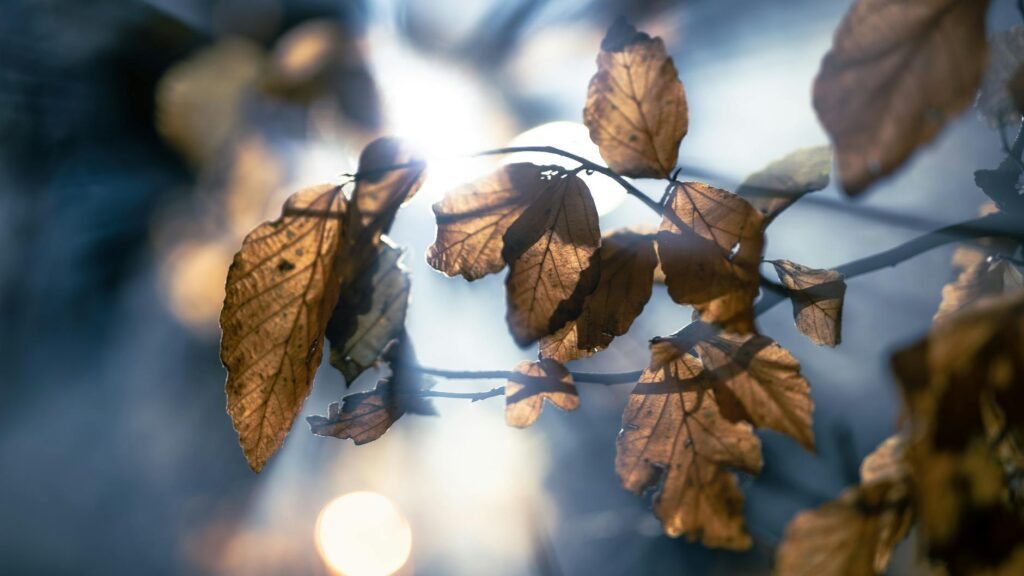
The diagnostic window in New Jersey runs from the point when beech leaves finish expanding in late April through about mid-June. After that, secondary stresses on the leaf make the specific BLD pattern harder to call. So this week is genuinely the right week for a five-minute walk-around inspection.
Here is what to look for:
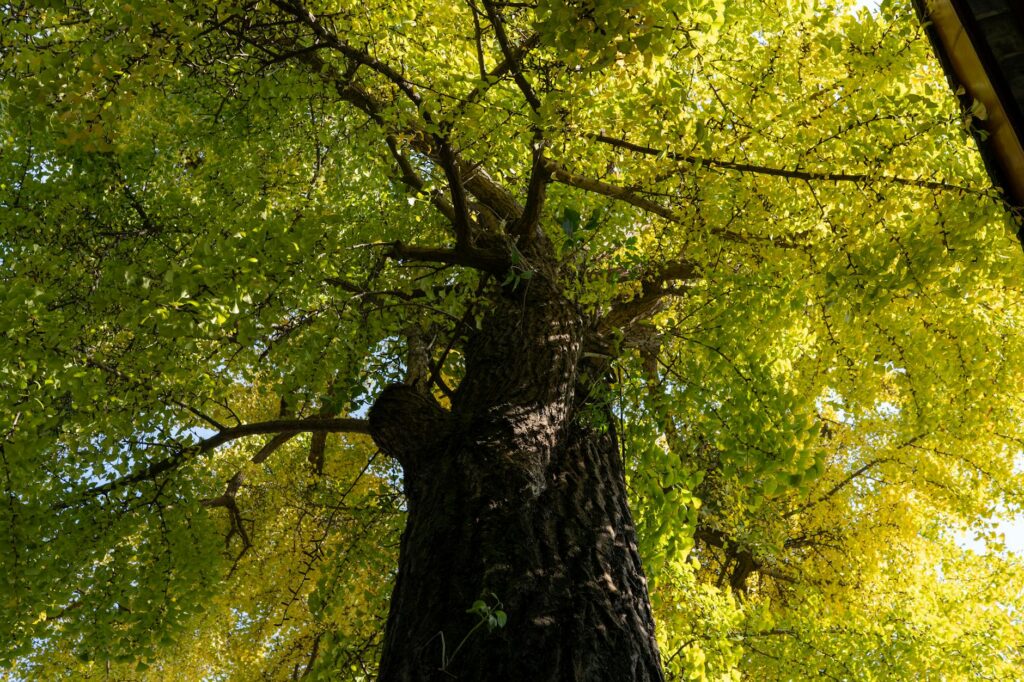
- Stand under the tree and look up toward the sky. Backlit leaves reveal the banding best.
- Healthy leaf: uniform green between the veins, veins themselves a slightly lighter green.
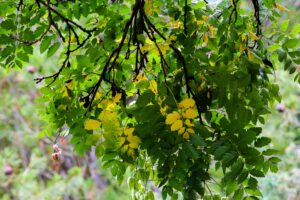
- BLD leaf: dark green-to-black bands running parallel to the lateral veins, giving the leaf a striped appearance.
- Advanced BLD: leathery texture, curled margins, yellowing between bands, leaves noticeably smaller than in past years.
- Overall canopy: sparser than you remember, with gaps that were not there last year.
Check both American beeches, which are the common wild species with smooth pale-gray bark, and any ornamental beeches on the property, including copper beech (purple leaves), weeping beech (cascading branches), and fernleaf beech. All Fagus species are susceptible.
If you find symptoms, photograph the leaves against the sky. Report confirmed or suspected sightings to Rutgers NJAES extension or the NJ Forest Service. Citizen-science mapping is how the spread is being tracked.
What Homeowners Can and Cannot Do
There is no reliable cure for beech leaf disease yet. That is the honest answer, and a homeowner should be skeptical of any service promising one. What does exist is a set of management practices that slow progression and give a valuable tree the best chance.
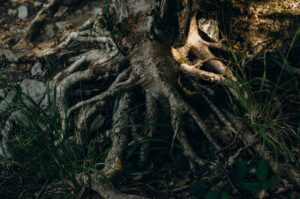
Tree health matters. A beech growing on a stressed site, with compacted soil, buried root flare, drought stress, or competing turf pressure, declines faster under BLD than a beech with a well-mulched root zone, good irrigation during drought, and no mechanical damage. The tree cannot fight the nematode, but it can better tolerate the damage if everything else is in its favor.
Phosphite treatments, applied as foliar sprays or soil drenches during the growing season, have shown promise in early research conducted by Bartlett Tree Research and by university extension programs. They are not a cure, but studies indicate they reduce symptom severity and may extend tree life. These treatments must be applied by a licensed pesticide applicator. The International Society of Arboriculture and the Tree Care Industry Association both maintain directories of qualified professionals.
Avoid moving infected plant material. Do not transplant beech saplings from one property to another. Do not mulch other trees with leaves raked from under an infected beech. Sanitize pruning tools with isopropyl alcohol between trees if you are working on multiple beeches.
The Conversation You Should Have About Your Prized Beech
If you have a single high-value beech, a copper beech on the front lawn, an enormous old American beech in the back yard, a weeping beech that anchors a garden, it deserves a conversation with a certified arborist this spring. The conversation should cover:
- Current symptom severity and an honest prognosis
- Site conditions that can be improved (root flare exposure, soil decompaction, watering plan)
- Whether phosphite treatment makes sense for this specific tree given its value and condition
- A monitoring plan, usually an annual spring inspection at the diagnostic window
- A long-horizon plan if the tree is already in advanced decline, including preservation priorities and eventual replacement
For forest and woodland beech on larger acreage, the calculus is different. You are managing a stand rather than a single specimen. Selective treatment of the largest, most ecologically valuable trees and genetic seed-source trees is a reasonable strategy. Saving every beech on a ten-acre woodlot is not realistic.
Middletown's #1 Tree Expert Company
FREE Inspection & Estimate | Certified Arborists | Trimming, Pruning, Removal, More!
Sponsored
When to Call a Certified Arborist
Three clear triggers for a professional visit this spring:
- You can see BLD symptoms on a significant beech on your property
- You have a mature, high-value beech and have never had a baseline health assessment done
- You are planning any site work (construction, driveway, grading, tree removal nearby) within the root zone of a beech and want to protect it properly
Middletown Township’s mature trees, especially our beeches, are not replaceable on any useful timescale. A century-old copper beech is not something you plant and wait for. The best defense against beech leaf disease for homeowners is simple: pay attention, reduce other stressors, and get a qualified set of eyes on prized specimens before symptoms progress. The disease is not going away, but with careful management, individual trees can still have long, healthy lives ahead of them.
If you are not sure whether what you are seeing on your beech is BLD or something else, do not guess. Several other beech problems, including sun-scorch, anthracnose, and early drought stress, can produce symptoms that look similar to an untrained eye. A certified arborist with BLD diagnostic experience can tell you quickly and give you a defensible plan.
Photo credits: Featured image by Gu Bra on Pexels; Section 1 by Linda Photos on Pexels; Section 2 by Bram on Pexels; Section 3 by Alireza AM on Pexels; Section 4 by Claudiu Breaban on Pexels; Section 5 by Ron Lach on Pexels; Section 6 by Peter Xie on Pexels; Section 7 by Amel Uzunovic on Pexels.